
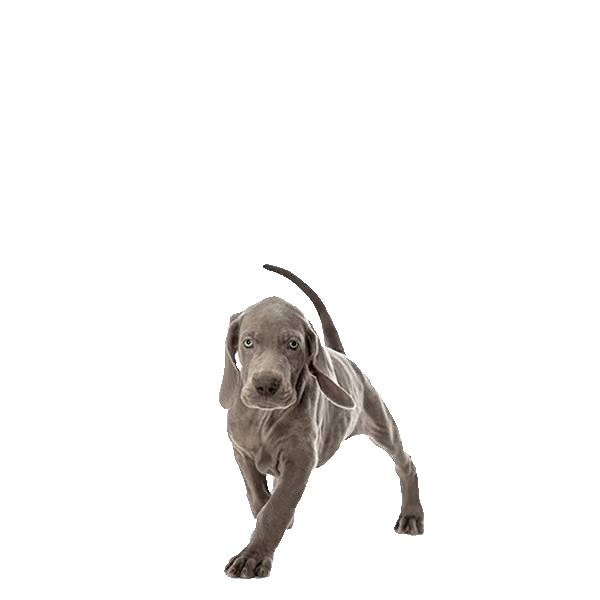
Weimaraner
Also known as Grey Ghost and Weim
The Weimaraner is a devoted, fearless hunting companion known for its sleek silver-gray coat and boundless energy.
- Size
- Large
- Lifespan
- 10–13 years
- Origin
- Germany
- Temperament
- Devoted
- Standard colors
- Gray and Silver
Characteristics
Coat and grooming
How the Weimaraner coat is built, and what that means when you groom it.
- Coat layers
- Single coat
- Coat texture
- Smooth
- Coat length
- Short
- Shedding
- Moderate shedding
Registry Recognition
Fédération Cynologique Internationale
- Pointers and Setters
American Kennel Club
- Sporting Group
Canadian Kennel Club
- Sporting Group
United Pet Club
- Pointers and SettersPrimary
Weimaraner colors and patterns
What each club's breed standard says about every Weimaraner color and pattern. Point at a ruling to see the club's own wording.
Breed standards describe the Weimaraner in Gray and Silver. Standard patterns: Solid.
| Color or pattern | FCI | AKC | UKC | KC | KUSA |
|---|---|---|---|---|---|
| Gray | Standard (“roe or mouse grey”) | Standard (“Gray”) | Standard (“mouse-gray”) | Standard (“shades of mouse or roe grey”) | Standard (“roe, or mouse-grey”) |
| Silver | Standard (“silver”) | Standard (“Silver Gray”) | Standard (“silver-gray”) | Standard (“silver grey”) | Standard (“silver”) |
| Black | Disqualifying | Disqualifying (“A distinctly blue or black coat”) | Disqualifying (“distinctly black-colored coat”) | Not recognized | Disqualifying |
| Albino | Disqualifying | No ruling | Disqualifying (“albinism”) | Not recognized | Disqualifying |
| Blue | Disqualifying (“blue colouring”) | Disqualifying (“Blue”) | Disqualifying (“distinctly blue-colored coat”) | Not recognized (“Blue”) | Disqualifying (“blue colouring”) |
| Patterns | |||||
| Solid | Standard | Standard (“solid color”) | Standard (“solid colors”) | Standard | Standard |
| Tan point | Disqualifying (“tan brand”) | No ruling | Fault (“tan or brown markings”) | Not recognized | Disqualifying (“tan”) |

%22%3E%3Ccircle%20cx%3D%2212%22%20cy%3D%2217.2%22%20r%3D%221.25%22%20fill%3D%22%23C4996A%22%2F%3E%3Cpath%20d%3D%22M1.5%2021.2L9%2018.6L12.6%2021L12.2%2026.2L3.5%2024.4Z%22%20fill%3D%22%23C4996A%22%2F%3E%3Cpath%20d%3D%22M10%2026L14.5%2026.4L18.2%2029.2L13.5%2029.8Z%22%20fill%3D%22%23C4996A%22%2F%3E%3Cellipse%20cx%3D%2221.2%22%20cy%3D%2230.6%22%20rx%3D%221.6%22%20ry%3D%222.3%22%20fill%3D%22%23C4996A%22%2F%3E%3Crect%20x%3D%220%22%20y%3D%2247%22%20width%3D%2264%22%20height%3D%2217%22%20fill%3D%22%23C4996A%22%2F%3E%3Cpath%20d%3D%22M51.5%2024.5L55%2027L54.2%2032L50.5%2028.5Z%22%20fill%3D%22%23C4996A%22%2F%3E%3Cpath%20d%3D%22M45%2038.5L48%2039L48.5%2047L45.5%2047Z%22%20fill%3D%22%23C4996A%22%2F%3E%3C%2Fg%3E%3Cuse%20href%3D%22%23s%22%20fill%3D%22none%22%20stroke%3D%22%233B2A20%22%20stroke-opacity%3D%220.6%22%20stroke-width%3D%221%22%20stroke-linejoin%3D%22round%22%2F%3E%3Cellipse%20cx%3D%223.2%22%20cy%3D%2221.7%22%20rx%3D%221.3%22%20ry%3D%221.2%22%20fill%3D%22%231C1C1C%22%2F%3E%3Ccircle%20cx%3D%2210.8%22%20cy%3D%2219.3%22%20r%3D%221.1%22%20fill%3D%22%231C1C1C%22%2F%3E%3C%2Fsvg%3E)
| Color or pattern | FCI | AKC | UKC | KC | KUSA |
|---|---|---|---|---|---|
| Gray | No ruling | Standard (“gray”) | Standard (“gray”) | No ruling | No ruling |
| Blue | No ruling | Standard (“blue-gray”) | Standard (“blue-gray”) | Standard (“blue-grey”) | No ruling |
| Amber | Standard (“amber colour, dark to pale”) | Standard (“light amber”) | Standard (“light amber”) | Standard (“shades of amber”) | Standard (“amber colour, dark to pale”) |
| Color or pattern | FCI | AKC | UKC | KC | KUSA |
|---|---|---|---|---|---|
| Slate | No ruling | Standard (“gray”) | Standard (“gray”) | Standard (“grey”) | No ruling |
| Pink | Standard (“Dark flesh colour, merging gradually into gray towards the rear”) | Fault (“pink nose”) | Fault (“pink nose”) | No ruling | Standard (“dark flesh colour, merging gradually into grey towards the rear”) |
What the rulings mean
- Standard
- Described by the club's breed standard.
- Fault
- Named by the club's breed standard as a fault: the animal can be shown but is penalized.
- Disqualifying
- The club's breed standard disqualifies an animal of this color or pattern.
- Not recognized
- The club does not accept this color or pattern for the breed.
Color changes
How a Weimaraner's colors can change over its life.
Brindlechanges toSolid
Coat · With age · from 0 to 1 weeks
Tan pointchanges toSaddle
Coat · With age · from 6 to 156 weeks
Bluechanges toDark brown
Eyes · With age · from 2 weeks
Bluechanges toBrown
Eyes · With age · from 2 weeks
Bluechanges toLight brown
Eyes · With age · from 2 weeks
Bluechanges toAmber
Eyes · With age · from 2 weeks
Bluechanges toHazel
Eyes · With age · from 2 weeks
Bluechanges toYellow
Eyes · With age · from 2 weeks
Bluechanges toAmber
Eyes · With age · from 2 weeks
Bluechanges toGray
Eyes · With age · from 2 weeks
%22%3E%3Cg%20fill%3D%22%231C1C1C%22%3E%3Cpath%20d%3D%22M-3.7%20-4L-4.5%200.5L-5.6%205L-5.7%209.5L-6.7%2014L-8.2%2018.5L-8.6%2023L-9.1%2027.5L-10.7%2032L-10.5%2036.5L-10.7%2041L-11%2045.5L-11%2050L-11.4%2054.5L-11.4%2059L-12.6%2063.5L-13.3%2068L-11.5%2068L-10.1%2063.5L-9.9%2059L-9.2%2054.5L-9%2050L-9.6%2045.5L-9%2041L-8.8%2036.5L-9.1%2032L-6.9%2027.5L-7%2023L-6.2%2018.5L-4.6%2014L-3.1%209.5L-3%205L-3.3%200.5L-1.3%20-4ZM1.6%20-4L0.1%200.5L0.6%205L-1.5%209.5L-2.6%2014L-4%2018.5L-4.3%2023L-5.6%2027.5L-4.7%2032L-4.2%2036.5L-4.7%2041L-4.9%2045.5L-5%2050L-6.1%2054.5L-6.5%2059L-7.8%2063.5L-8.5%2068L-6.9%2068L-5.7%2063.5L-4.8%2059L-3.3%2054.5L-2.1%2050L-2.9%2045.5L-3.1%2041L-3.1%2036.5L-2.3%2032L-2.5%2027.5L-1.6%2023L-1.9%2018.5L-0.6%2014L1%209.5L1.7%205L2.6%200.5L3%20-4ZM7.6%20-4L6.6%200.5L5.6%205L5.2%209.5L3.7%2014L3.4%2018.5L3.5%2023L2.5%2027.5L3%2032L3%2036.5L1.9%2041L2.7%2045.5L1.8%2050L0.3%2054.5L-1.7%2059L-1%2063.5L-3.7%2068L-1.6%2068L0.3%2063.5L0.8%2059L2.7%2054.5L3.2%2050L4.2%2045.5L4.2%2041L4.4%2036.5L4.7%2032L3.8%2027.5L4.8%2023L5.3%2018.5L4.9%2014L6.6%209.5L7.9%205L7.6%200.5L9.7%20-4ZM11.3%20-4L10.8%200.5L11.7%205L11.3%209.5L11.2%2014L10.3%2018.5L10%2023L10.6%2027.5L9.2%2032L8.2%2036.5L7.6%2041L6%2045.5L4.7%2050L5.1%2054.5L3.6%2059L3.8%2063.5L3.7%2068L6.2%2068L5.8%2063.5L5.6%2059L7.4%2054.5L7.3%2050L8.3%2045.5L10%2041L11.1%2036.5L10.8%2032L12.8%2027.5L12.6%2023L13.1%2018.5L12.7%2014L13%209.5L13.6%205L13%200.5L12.9%20-4ZM19.6%20-4L19.4%200.5L18.1%205L18.4%209.5L17.8%2014L16.7%2018.5L15%2023L13.8%2027.5L13.2%2032L13.3%2036.5L11.7%2041L10.9%2045.5L11.9%2050L12.2%2054.5L12.5%2059L11.6%2063.5L11%2068L12.8%2068L13.4%2063.5L14.2%2059L14.8%2054.5L13.3%2050L13.7%2045.5L14.5%2041L14.8%2036.5L14.8%2032L16%2027.5L16.6%2023L18.5%2018.5L19.2%2014L19.3%209.5L20.7%205L21.3%200.5L22.1%20-4ZM23.6%20-4L24.4%200.5L23.9%205L22.2%209.5L21.1%2014L20.3%2018.5L19.2%2023L17.6%2027.5L17.9%2032L18.3%2036.5L17.7%2041L18.3%2045.5L17.9%2050L17.9%2054.5L16.4%2059L15.3%2063.5L14.5%2068L16.5%2068L18.3%2063.5L19.5%2059L19.5%2054.5L20%2050L19.9%2045.5L19.8%2041L19.6%2036.5L21.1%2032L19.9%2027.5L20.6%2023L21.8%2018.5L22.9%2014L24.2%209.5L25.5%205L26.4%200.5L26.7%20-4Z%22%2F%3E%3Cpath%20d%3D%22M28%20-4L27.5%200.5L26.9%205L28.2%209.5L27.2%2014L26.3%2018.5L26.3%2023L25.6%2027.5L25.5%2032L23.2%2036.5L22.1%2041L22.2%2045.5L20.1%2050L20.8%2054.5L19.2%2059L20.6%2063.5L20.3%2068L21.2%2068L22.7%2063.5L22%2059L22.4%2054.5L22.7%2050L23.4%2045.5L25.1%2041L25.7%2036.5L26.9%2032L27.8%2027.5L28.9%2023L29.1%2018.5L28.5%2014L29.9%209.5L29.8%205L29.3%200.5L30.5%20-4ZM36.6%20-4L35.8%20-1.1L35.9%201.7L35.2%204.6L34.6%207.5L33.8%2010.3L32.3%2013.2L33%2016.1L31.7%2018.9L32.1%2018.9L33.8%2016.1L35.3%2013.2L35%2010.3L36.6%207.5L36.6%204.6L37%201.7L37.9%20-1.1L36.8%20-4ZM32.2%2025.4L30.7%2030.7L29.8%2036.1L29.6%2041.4L28.4%2046.7L28.6%2052L28.3%2057.4L29.5%2062.7L28.3%2068L29.2%2068L30.3%2062.7L30.8%2057.4L29.9%2052L30.1%2046.7L30.7%2041.4L31.5%2036.1L32.3%2030.7L32.8%2025.4ZM39%20-4L39.4%200.5L39.3%205L39.2%209.5L40.1%2014L38.4%2018.5L38.6%2023L37.8%2027.5L35.7%2032L35.6%2036.5L34.1%2041L33.6%2045.5L32.8%2050L31.9%2054.5L32.5%2059L32.7%2063.5L32.1%2068L34.9%2068L34.1%2063.5L34.7%2059L35%2054.5L34.9%2050L35%2045.5L37%2041L38.1%2036.5L38.7%2032L39.8%2027.5L39.6%2023L40.8%2018.5L41.2%2014L41.7%209.5L42.1%205L40.6%200.5L42.3%20-4ZM45.7%20-4L43.6%200.1L42.2%204.1L42.7%208.2L40.7%2012.3L41%2016.4L39.5%2020.4L39.9%2024.5L41.2%2028.6L42.1%2028.6L42.7%2024.5L42.5%2020.4L42.8%2016.4L42.6%2012.3L43.4%208.2L45.5%204.1L45.2%200.1L45.8%20-4ZM41.4%2033.9L39%2038.1L39.6%2042.4L37.5%2046.7L37.2%2050.9L36.1%2055.2L35.8%2059.5L35.7%2063.7L36.6%2068L37.1%2068L37.8%2063.7L38.1%2059.5L38.4%2055.2L39%2050.9L39.2%2046.7L40.8%2042.4L41.7%2038.1L42.1%2033.9ZM48.6%20-4L48.4%200.5L48.1%205L47.5%209.5L48%2014L47.5%2018.5L47%2023L47.1%2027.5L47%2032L46.1%2036.5L44.4%2041L43.8%2045.5L42.8%2050L41.1%2054.5L41.2%2059L41.1%2063.5L40.5%2068L41.5%2068L42.4%2063.5L42.8%2059L42.7%2054.5L45%2050L46.3%2045.5L46.2%2041L47.4%2036.5L49%2032L49.8%2027.5L48.9%2023L48.7%2018.5L49.6%2014L49.6%209.5L50%205L49.9%200.5L49.8%20-4ZM57.8%20-4L56.6%200.5L56.8%205.1L55%209.6L53.2%2014.1L52.3%2018.6L51.2%2023.2L51.5%2027.7L52.6%2032.2L53%2032.2L53.7%2027.7L54.3%2023.2L54.7%2018.6L55.7%2014.1L56.4%209.6L58.1%205.1L58.9%200.5L58.7%20-4ZM53.1%2035.2L52.1%2039.3L51.5%2043.4L52%2047.5L51.3%2051.6L50.8%2055.7L50%2059.8L48.8%2063.9L49.2%2068L49.6%2068L50.6%2063.9L51.8%2059.8L52.8%2055.7L53.4%2051.6L53.2%2047.5L53.7%2043.4L54.3%2039.3L53.1%2035.2Z%22%2F%3E%3Cpath%20d%3D%22M61.6%20-4L61.1%200.5L60.4%205L59.9%209.5L58.6%2014L58.3%2018.5L56.8%2023L55.6%2027.5L55.6%2032L54%2036.5L54.7%2041L54.9%2045.5L54.2%2050L54.7%2054.5L54%2059L52.9%2063.5L52.2%2068L55.2%2068L54.9%2063.5L56.9%2059L56.8%2054.5L56.5%2050L56.9%2045.5L57.6%2041L56.9%2036.5L57.3%2032L57.3%2027.5L58.9%2023L59.8%2018.5L60.3%2014L62.3%209.5L62.7%205L63.8%200.5L63.9%20-4ZM67.3%20-4L66.1%201.5L66.8%207L66.3%2012.5L64.8%2018L64%2023.5L62.7%2029L62.2%2034.4L61.4%2039.9L61.8%2039.9L63.8%2034.4L64.9%2029L66.7%2023.5L67.2%2018L67.6%2012.5L68.6%207L68%201.5L67.4%20-4ZM60.6%2044.4L59%2047.3L57.4%2050.3L57.4%2053.2L58%2056.2L57.2%2059.1L57.5%2062.1L57.8%2065L58.1%2068L58.3%2068L59.6%2065L58.8%2062.1L59.5%2059.1L59.8%2056.2L60.2%2053.2L60.3%2050.3L61.6%2047.3L61.2%2044.4Z%22%2F%3E%3C%2Fg%3E%3C%2Fg%3E%3Cuse%20href%3D%22%23s%22%20fill%3D%22none%22%20stroke%3D%22%233B2A20%22%20stroke-opacity%3D%220.6%22%20stroke-width%3D%221%22%20stroke-linejoin%3D%22round%22%2F%3E%3Cellipse%20cx%3D%223.2%22%20cy%3D%2221.7%22%20rx%3D%221.3%22%20ry%3D%221.2%22%20fill%3D%22%231C1C1C%22%2F%3E%3Ccircle%20cx%3D%2210.8%22%20cy%3D%2219.3%22%20r%3D%221.1%22%20fill%3D%22%231C1C1C%22%2F%3E%3C%2Fsvg%3E)
%22%3E%3Cpath%20d%3D%22M22.5%2018.5Q24%2021%2025%2021.5L47%2022.5Q50%2022.5%2051.5%2023.5L54%2026Q55%2032%2053%2034Q46%2031.5%2038%2033Q30%2034.5%2025.5%2032Q22.5%2026%2022.5%2018.5Z%22%20fill%3D%22%231C1C1C%22%2F%3E%3Cpath%20d%3D%22M51%2024L56%209L63%209L61%2019L54.5%2028Z%22%20fill%3D%22%231C1C1C%22%2F%3E%3Cpath%20d%3D%22M2%2021.2L7.5%2019.2L8.5%2023.6L3.5%2024.2Z%22%20fill%3D%22%231C1C1C%22%20fill-opacity%3D%220.85%22%2F%3E%3C%2Fg%3E%3Cuse%20href%3D%22%23s%22%20fill%3D%22none%22%20stroke%3D%22%233B2A20%22%20stroke-opacity%3D%220.6%22%20stroke-width%3D%221%22%20stroke-linejoin%3D%22round%22%2F%3E%3Cellipse%20cx%3D%223.2%22%20cy%3D%2221.7%22%20rx%3D%221.3%22%20ry%3D%221.2%22%20fill%3D%22%231C1C1C%22%2F%3E%3Ccircle%20cx%3D%2210.8%22%20cy%3D%2219.3%22%20r%3D%221.1%22%20fill%3D%22%231C1C1C%22%2F%3E%3C%2Fsvg%3E)
Sources
Each ruling comes from the club's published breed standard or color list.
Health
Conditions recorded as more common in the Weimaraner than in its species as a whole. A higher risk is not a diagnosis: many never develop any of them, and your vet can say which screening tests are worth doing.
High risk
- Gastrointestinal system
Gastric dilatation-volvulus
Also called Bloat
Moderate evidence
This content is for educational purposes and is not a substitute for professional veterinary advice. If you are worried about your pet, contact your veterinarian.
All health conditionsMeet some of our Weimaraner
A few of the Weimaraner profiles members have added to United Pet Club.
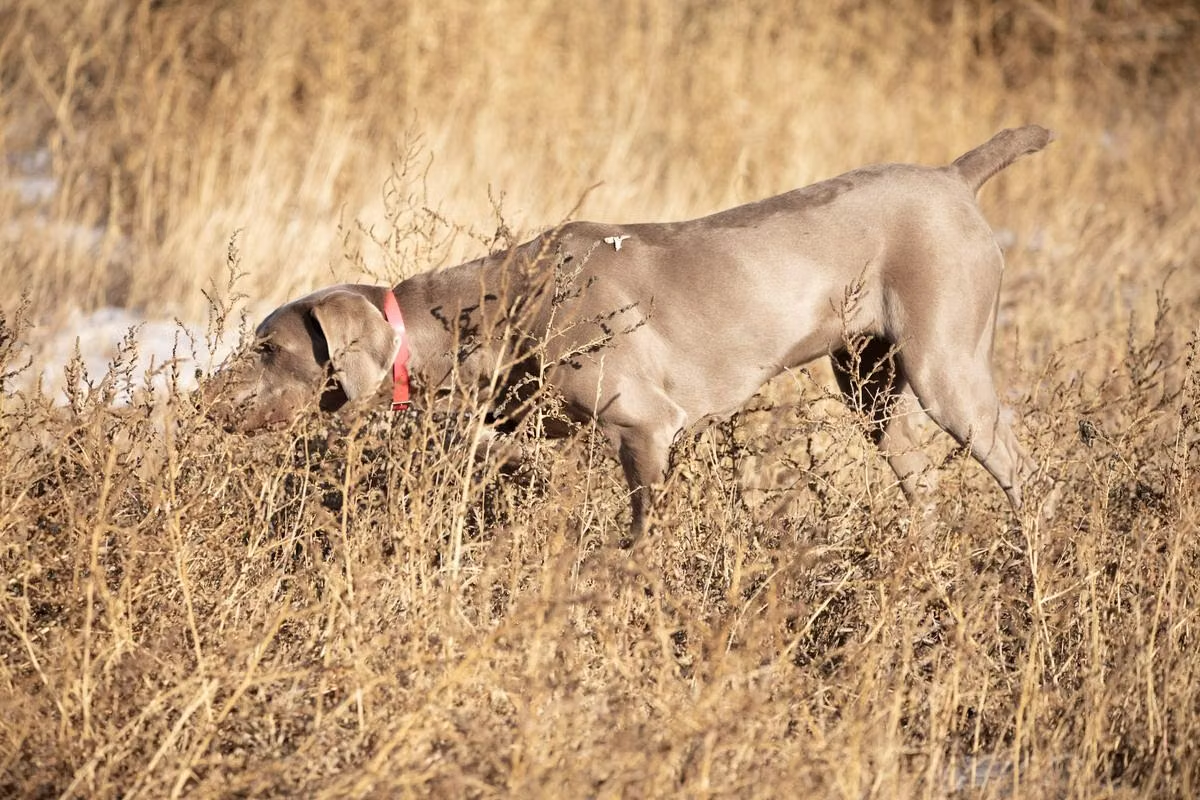

About the Weimaraner
The Weimaraner is a large German gun dog with a silver-gray coat, high energy, and a strong attachment to its people.
The Weimaraner is a large hunting dog developed in Germany for tracking and retrieving game. It stands out for its short silver-gray coat and pale amber or blue-gray eyes, a combination that earned it the nickname the Gray Ghost.
This is an athletic, fast-moving breed bred to work all day in the field. Adults typically weigh 25 to 40 kg and need a great deal of exercise to stay settled at home. Without enough activity and company, a Weimaraner can become restless and destructive.
The breed is devoted to its family and forms close bonds, often following one person from room to room. It is intelligent and alert, which makes it trainable but also prone to boredom. It tends to be reserved with strangers and can be protective of its household.
| Attribute | Detail |
|---|---|
| Origin | Germany |
| Size | Large |
| Lifespan | 10 to 13 years |
| Group / role | Sporting / pointing and retrieving gun dog |
| Good with | Active families and experienced owners; needs supervision around small pets |
Who it suits
The Weimaraner suits owners who can commit to daily vigorous exercise and want a dog that stays close. It does best in an active household where it is rarely left alone for long periods. It is less suited to apartment life, first-time owners, or homes that are away most of the day.
History and origin
The Weimaraner was developed in early 19th century Germany at the court of Weimar as an all-purpose hunting dog for large game and later for birds.
The breed takes its name from the court of Weimar in the Grand Duchy of Saxe-Weimar-Eisenach, in what is now central Germany. Nobles there are credited with shaping the dog in the early 1800s as a hunting companion for their estates.
Early Weimaraners were used on large game such as deer, boar, and bear. As those animals became scarcer across Germany, hunters redirected the breed toward birds and smaller game, and it developed into a pointing and retrieving gun dog that worked both upland and water.
The German breed club for the Weimaraner was established in 1897, and breeding was tightly controlled. Ownership was restricted to club members, which kept the population small and the type consistent for decades.
The breed reached the United States in the late 1920s and 1930s. The American Kennel Club recognized the Weimaraner in 1943. Its striking color and trainability brought it wider popularity in the years after the Second World War.
Appearance
The Weimaraner is a large, athletic dog with a short silver-gray coat, an aristocratic head, and light amber or blue-gray eyes.
The Weimaraner has a streamlined, muscular build made for speed and stamina. The body is moderately long with a deep chest, a level topline, and long limbs that give it an effortless, ground-covering trot.
The head is clean and refined with long, folded ears set high on the skull. The eyes range from light amber to gray or blue-gray and contribute to the breed's distinctive expression. The tail is traditionally docked in some countries, though docking is restricted or banned in others, where the natural tail is left long and tapering.
| Trait | Detail |
|---|---|
| Height | Males 59 to 70 cm, females 57 to 65 cm at the shoulder |
| Weight | Males 30 to 40 kg, females 25 to 35 kg |
| Coat | Short, smooth, and sleek; a rarer long-haired variety also exists |
| Colors | Shades of gray, from silver-gray to mouse-gray |
| Eyes | Light amber, gray, or blue-gray |
Coat and colors
The standard coat is short, hard, and close-lying, and lies in shades of gray that often look almost metallic in good light. A small white mark on the chest is permitted in most standards. A long-haired variety occurs, with a coat of 3 to 5 cm and feathering on the ears, legs, and tail. The short coat sheds steadily year round despite its length.
Temperament
The Weimaraner is devoted, intelligent, and energetic, deeply attached to its family but reserved with strangers and demanding of attention.
The Weimaraner is intensely people-oriented and wants to be part of everything its family does. This closeness makes it affectionate and responsive, but it also means the breed does not cope well with being left alone. Separation can lead to barking, pacing, and damage to the home.
With its own family the breed is playful and devoted. It is generally good with older children who understand how to handle a strong, bouncy dog, though its size and energy can overwhelm toddlers. It tends to be alert and reserved with strangers, and it will often bark to announce visitors.
The Weimaraner has a strong prey drive rooted in its hunting background. It can live alongside other dogs with proper introductions but may chase cats, rabbits, birds, and other small animals. Early and consistent socialization helps temper its wariness and its drive.
| Trait | Rating |
|---|---|
| Affection | 5 |
| Energy | 5 |
| Trainability | 4 |
| Vocalness | 3 |
| Shedding | 3 |
Care and grooming
The Weimaraner needs little grooming but a large amount of daily exercise and close human company to stay healthy and well behaved.
The short coat is easy to maintain, but the breed's exercise and companionship needs are high and non-negotiable. A Weimaraner that is under-exercised or left alone too often will usually develop problem behavior.
Grooming
- Brush the short coat weekly with a rubber curry or bristle brush to control steady shedding
- Bathe only when needed, since frequent washing strips the coat oils
- Check and clean the folded ears regularly to prevent infection
- Trim nails every few weeks and brush the teeth several times a week
- Brush the long-haired variety two or three times a week to prevent tangles
Exercise
- Provide at least 1.5 to 2 hours of vigorous activity each day
- Include running, fetch, swimming, or off-lead exercise in a safe area
- Add training games, scent work, or dog sports to work the mind
- Avoid hard, repetitive exercise on hard surfaces in young dogs while joints develop
Environment
The Weimaraner is best suited to a home with a securely fenced yard and people who are around for much of the day. It is not an outdoor kennel dog; it needs to live indoors with its family. Fences should be high and solid, as the breed can jump and is a capable escape artist when bored.
Nutrition and feeding
The Weimaraner needs a complete, balanced diet suited to a large active dog, split across the day to lower the risk of bloat.
Feed a complete diet formulated for large, active breeds, with quality protein to support muscle and steady energy. Adjust portions to body condition rather than feeding to a fixed figure, since working and active dogs burn more than sedentary ones. Because the breed is deep-chested and prone to bloat, meals should be divided and never given right before or after hard exercise.
| Life stage | Amount per day | Meals |
|---|---|---|
| Puppy (2 to 6 months) | Per product guide for growth, divided | 3 to 4 |
| Junior (6 to 12 months) | Roughly 300 to 400 g of quality dry food | 2 to 3 |
| Adult (1 to 7 years) | Roughly 350 to 450 g of quality dry food | 2 |
| Senior (7 years and older) | Reduced calories to match lower activity | 2 |
Treats and supplements
Keep treats to no more than about 10 percent of daily calories so the diet stays balanced. A dog on a complete commercial food usually needs no extra supplements; discuss joint support or other additions with a veterinarian before starting them. Fresh water should be available at all times.
Health
The Weimaraner is generally healthy with a lifespan of 10 to 13 years, but is prone to bloat and a few inherited conditions.
The Weimaraner is a robust working breed and typically lives 10 to 13 years. Its deep chest puts it at higher risk of gastric dilatation-volvulus, commonly called bloat, which is a sudden and life-threatening emergency. Buying from breeders who screen for inherited problems lowers the chance of several common conditions.
| Condition | Signs | Note |
|---|---|---|
| Gastric dilatation-volvulus (bloat) | Swollen, hard abdomen, retching without vomiting, restlessness | A veterinary emergency; act immediately |
| Hip dysplasia | Stiffness, limping, reluctance to rise or jump | Reduced by hip screening of breeding stock |
| Hypothyroidism | Weight gain, lethargy, coat and skin changes | Managed with daily medication |
| Von Willebrand disease | Excess bleeding after injury or surgery | An inherited clotting disorder; DNA testing available |
| Entropion | Eye irritation, squinting, tearing | Inward-rolling eyelid; may need surgery |
Preventive care
- Keep vaccinations and parasite control up to date
- Feed smaller, divided meals and rest the dog around exercise to lower bloat risk
- Maintain a lean body condition to protect the joints
- Schedule annual veterinary checks, with twice-yearly visits for seniors
- Choose breeders who provide hip and eye screening and clotting test results
Training
The Weimaraner is intelligent and eager to work, which makes it highly trainable for owners who are consistent and start early.
The Weimaraner learns quickly and enjoys having a job, but its intelligence and energy mean it needs early, consistent training to stay manageable. Bored or under-exercised dogs are far harder to handle, so training works best alongside plenty of physical activity. Short, varied sessions hold the breed's attention better than long repetitive drills. Early socialization to people, dogs, and everyday situations is important given the breed's natural wariness and high prey drive.
Basics
- Begin socialization and gentle handling in puppyhood
- Teach a reliable recall early, before the prey drive strengthens
- Establish house manners such as settle, wait, and leave it
- Work on calm behavior when alone to reduce separation problems
- Build toward field work, scent games, or a dog sport to channel the energy
Breeding
The Weimaraner reaches breeding maturity at around two years, carries an average litter of six to eight puppies, and needs health-tested parents.
Responsible breeding waits until both parents are physically and mentally mature, usually around two years of age, even though dogs can reproduce earlier. Breeding stock should be screened for hip dysplasia, eye conditions, and clotting disorders before mating, since several inherited problems run in the breed.
Gestation lasts about 63 days. Litters are typically six to eight puppies, though they can be larger. The mother and pups need a quiet, warm whelping space and close monitoring during and after birth. Puppies should stay with the dam and littermates until at least eight weeks, with early socialization and handling beginning while still with the litter to set up well-adjusted adults.
| Metric | Value |
|---|---|
| Breeding maturity | Around 2 years |
| Gestation period | About 63 days |
| Average litter size | 6 to 8 puppies |
| Weaning age | About 6 to 8 weeks |
| Recommended go-home age | 8 weeks or later |
Registering your Weimaraner and its microchip
Register your Weimaraner free for life with United Pet Club, and put its microchip number on a record American shelters can actually find.
How to register a Weimaraner in the United States
Start with the profile. Add your Weimaraner's name, birth date, and a clear photo, attach your phone number and email, and save. That is the whole job, and it costs nothing for life. Dog registration works with or without a microchip, so there is no reason to wait for a vet visit.
Chipped already? The implant is half the job. Until the 15-digit number sits in a registry with your name beside it, a scanner reads digits that lead nowhere. Microchip registration is free for life at United Pet Club, takes any manufacturer's chip, and keeps the record searchable through the AAHA lookup shelters rely on. Sign up free, and both records are done tonight.
How do I register my Weimaraner in the United States?
Open a free United Pet Club account, enter your Weimaraner's name, birth date, and a photo, and save. The profile is free for life, works with or without a microchip, and you can attach a chip number later.
How do I register my Weimaraner's microchip?
Type the 15-digit chip number into your free United Pet Club account together with your current phone number and address. The lifetime plan is free, covers every future update, and accepts any chip brand a US vet implants.
Does my Weimaraner have to be microchipped in the United States?
No federal law says a Weimaraner must carry a chip, but plenty of city and county licensing rules do, and shelters routinely chip before adoption. What the law never does is register the chip for you; that part is yours.
How much does it cost to register a Weimaraner?
Nothing. United Pet Club's lifetime plan covers the dog's profile, the microchip registration, and every update at no charge, with no renewal fees.
Frequently asked questions
Common questions about the Weimaraner's size, temperament, care needs, lifespan, and suitability as a pet.
How big does a Weimaraner get?
It is a large breed. Males stand about 59 to 70 cm at the shoulder and weigh 30 to 40 kg, while females are slightly smaller at 57 to 65 cm and 25 to 35 kg.
What is the Weimaraner's temperament like?
It is devoted, intelligent, energetic, alert, and fearless. It bonds closely with its family, tends to be reserved with strangers, and has a strong prey drive.
Is the Weimaraner hard to care for?
Grooming is easy thanks to the short coat, but the breed is demanding overall. It needs 1.5 to 2 hours of vigorous exercise a day and close human company, so it is best for experienced, active owners.
How long do Weimaraners live?
The typical lifespan is 10 to 13 years. Good diet, regular exercise, and routine veterinary care help a dog reach the upper end of that range.
Is a Weimaraner a good family dog?
It can be an excellent family dog for active households with older children. Its size and energy can overwhelm very young children, and it should be supervised around small pets.
Can a Weimaraner be left alone?
Not for long. The breed is prone to separation anxiety and can become destructive or noisy when left alone too often, so it suits homes where someone is around much of the day.
Why is the Weimaraner called the Gray Ghost?
The nickname comes from its sleek silver-gray coat combined with light amber or blue-gray eyes, which give it a pale, ghostly appearance.
From the community
Ask about the WeimaranerNo questions about the Weimaraner yet. Be the first to ask.
Browse Dog breeds