
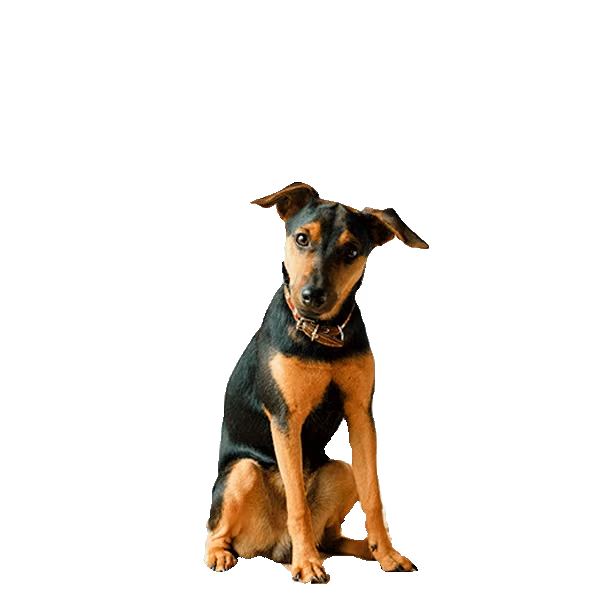
Transylvanian Hound
The Transylvanian Hound is a good-natured, determined Hungarian scenthound prized for its courage and tracking endurance.
- Size
- Medium
- Lifespan
- 10–14 years
- Origin
- Hungary
- Temperament
- Good-natured
- Standard colors
- Black, White, Tan, and Red
Characteristics
Coat and grooming
How the Transylvanian Hound coat is built, and what that means when you groom it.
- Coat layers
- Double coat
- Coat texture
- Smooth
- Coat length
- Short
- Shedding
- Seasonal shedding
Grooming guidance
Critical: A Transylvanian Hound should not be shaved.
The undercoat keeps heat out as well as in, and the outer coat shields the skin from sun and insect bites. Clipping the whole coat off removes both. It often grows back patchy, soft or a different colour, and in some animals the guard hairs never return properly. Brush the undercoat out instead of cutting it off.
Information: A Transylvanian Hound drops its undercoat in heavy bursts.
The undercoat comes out in heavy bursts over a few weeks. An undercoat rake, or a bath followed by a proper blow-dry, clears it far faster than daily brushing. Clipping the coat down is not a shortcut for this.
Registry Recognition
Fédération Cynologique Internationale
- Scent Hounds and Related Breeds
American Kennel Club
- Hound Group
Canadian Kennel Club
- Hound Group
United Pet Club
- Scent Hounds and Related BreedsPrimary
Transylvanian Hound colors and patterns
What each club's breed standard says about every Transylvanian Hound color and pattern. Point at a ruling to see the club's own wording.
Breed standards describe the Transylvanian Hound in Black, White, Tan, and Red. Standard patterns: Bicolor, Tricolor, and Tan point.
| Color or pattern | FCI | AKC | UKC |
|---|---|---|---|
| Black | Standard (“The primary colour of the Hungarian Hound is black”) | Standard (“Black & Tan”) | Standard (“a black base color”) |
| White | Standard (“a white marking may occur”) | Standard (“Black Tan & White”) | Standard (“white markings on the head, neck, chest, lower legs and tip of tail”) |
| Tan | Standard (“Tan markings on muzzle and legs”) | Standard (“Black & Tan”) | Standard (“tan on the muzzle, legs and eyebrows”) |
| Red | No ruling | Standard (“Red & White”) | No ruling |
| Albino | No ruling | No ruling | Disqualifying (“Albinism”) |
| Blue | Disqualifying (“blue colour with markings”) | Disqualifying (“blue colour with markings”) | Disqualifying (“blue base color”) |
| Brown | Disqualifying (“Brown ... colour with markings”) | Disqualifying (“Brown ... colour with markings”) | Disqualifying (“Brown ... base color”) |
| Patterns | |||
| Bicolor | No ruling | Standard (“Red & White”) | No ruling |
| Tricolor | Standard (“On the nose, a white marking may occur”) | Standard (“Black Tan & White”) | Standard (“Tri-color”) |
| Tan point | Standard (“Tan markings on muzzle and legs”) | Standard (“Black & Tan”) | Standard (“tan on the muzzle, legs and eyebrows”) |


| Color or pattern | FCI | AKC | UKC |
|---|---|---|---|
| Dark brown | Standard (“The colour is dark brown”) | Standard (“The colour is dark brown”) | Standard (“dark brown in color”) |
| Color or pattern | FCI | AKC | UKC |
|---|---|---|---|
| Black | Standard (“the colour is black”) | Standard (“the colour is black”) | Standard (“The nose is wide and black”) |
What the rulings mean
- Standard
- Described by the club's breed standard.
- Disqualifying
- The club's breed standard disqualifies an animal of this color or pattern.
Color changes
How a Transylvanian Hound's colors can change over its life.
Blackchanges toRust
Coat · With body condition · can change back
Blackchanges toGray
Coat · Progressive
Blackchanges toBrown
Coat · In the sun · can change back
Whitechanges toRoan
Coat · With age · from 2 weeks
Tan pointchanges toSaddle
Coat · With age · from 6 to 156 weeks
Blackchanges toSnow nose
Nose · With the season · can change back
Blackchanges toPink
Nose · With the season · can change back


Sources
Each ruling comes from the club's published breed standard or color list.
About the Transylvanian Hound
The Transylvanian Hound is a medium-sized Hungarian scenthound, good-natured and determined, known for its courage and tracking endurance over rough terrain.
The Transylvanian Hound is a medium-sized scenthound from Hungary, bred to track game across the forests and hills of the Carpathian region. It is a working dog first, with the stamina to follow a scent line for hours and the nerve to hold its ground against large quarry. Owners describe it as steady and good-natured at home, alert and focused once it picks up a trail.
The breed carries a short, dense coat that is usually black with tan markings on the face, chest, and legs. Build is athletic rather than heavy, with a deep chest and strong legs suited to long days outdoors in cold weather. Adults typically stand in the medium range and weigh enough to push through brush and snow without tiring quickly.
This is a dog that bonds closely with its family and tolerates children well, but it keeps the independent streak common to hounds. It needs daily activity and a job to focus on. In a quiet home with no outlet for its drive, it can grow restless and vocal.
| Attribute | Detail |
|---|---|
| Origin | Hungary |
| Size | Medium |
| Lifespan | 10 to 14 years |
| Group / role | Scenthound, tracking and hunting |
| Good with | Families, older children, and other dogs when socialized |
Who it suits
The Transylvanian Hound fits an active household that can give it real exercise and time outdoors. It does well with people who hunt, hike, or run, and with owners who enjoy scent work or tracking sports. It is less suited to apartment life or to homes where it would be left alone for long stretches. Early socialization helps it settle around small pets, since its prey drive is strong.
History of the Transylvanian Hound
The Transylvanian Hound developed in the Carpathian Basin as a hunting dog of Hungarian nobility, declined sharply in the twentieth century, and was rebuilt through a focused recovery effort.
The Transylvanian Hound traces back to the medieval Kingdom of Hungary, where it was used to hunt game across the Carpathian Basin. The region's mix of high mountains, dense forest, and open valleys shaped a dog that could work different ground, and over time two forms developed: a taller variety for big game such as bison, bear, and boar, and a shorter-legged variety for fox and hare.
For centuries the breed was associated with Hungarian and Transylvanian nobility, who valued its nose and its courage on demanding hunts. As hunting practices changed and the large game it once pursued grew scarce, demand for the dog fell. By the early twentieth century its numbers had dropped sharply, and the short-legged variety effectively disappeared.
The breed reached a low point around the middle of the twentieth century, when the population came close to vanishing. A deliberate recovery program began in Hungary to gather the remaining dogs and rebuild the line, concentrating on the tall variety that had survived in small numbers in remote areas.
Through that effort the breed was stabilized and standardized, and it is recognized today as a national breed of Hungary. It remains uncommon outside its home region, kept mainly by hunters and by enthusiasts working to keep the bloodlines healthy.
Appearance of the Transylvanian Hound
The Transylvanian Hound is an athletic medium-sized dog with a short black-and-tan coat, a deep chest, and the lean, balanced build of a working scenthound.
The Transylvanian Hound has the clean, functional outline of a scenthound built for endurance. The body is slightly longer than it is tall, with a deep chest, level back, and well-muscled hindquarters. The head is elongated with a moderate stop, and the ears hang flat against the cheeks. The overall impression is of a strong but not bulky dog, able to cover ground for hours.
| Trait | Standard |
|---|---|
| Height | About 55 to 65 cm (22 to 26 in) at the shoulder |
| Weight | About 25 to 35 kg (55 to 77 lb) |
| Coat | Short, dense, smooth double coat that lies flat |
| Colors | Black with tan markings; tan points over the eyes, on the muzzle, chest, and legs |
| Eyes | Dark brown, oval, with an alert and calm expression |
Coat and colors
The coat is short and weather-resistant, with a dense undercoat that protects the dog during cold, wet hunts. The standard color is black with clearly defined tan markings, including spots above the eyes that give the face its characteristic look, along with tan on the muzzle, chest, lower legs, and under the tail. A small white mark on the chest or toes is sometimes seen. The coat needs little upkeep beyond regular brushing and stays close to the body year round, with heavier shedding during seasonal changes.
Temperament of the Transylvanian Hound
The Transylvanian Hound is good-natured and devoted at home, courageous and single-minded on a trail, and generally friendly toward people and other dogs.
At home the Transylvanian Hound is even-tempered and affectionate, forming a strong bond with its family. It is patient with children and usually gets along with other dogs, especially when raised alongside them. With strangers it tends to be reserved rather than aggressive, watching first and warming up once it judges the situation safe. This watchfulness makes it a capable alert dog, though it is not a guard dog by nature.
The working side of its character shows on a trail. Once it locks onto a scent it becomes focused and determined, and it can be hard to call off. This same drive means it will chase small animals, so a secure yard and a reliable recall matter. The breed is intelligent and learns quickly, but it keeps the independent thinking of a hound and responds best to patient, consistent handling rather than heavy correction. Boredom tends to surface as digging, escaping, or extended baying.
| Trait | Rating |
|---|---|
| Affection | 4 |
| Energy | 4 |
| Trainability | 3 |
| Vocalness | 4 |
| Shedding | 3 |
Caring for a Transylvanian Hound
The Transylvanian Hound needs a low-maintenance coat routine, substantial daily exercise, and a secure outdoor space to stay healthy and content.
Grooming
- Brush the short coat once a week to remove loose hair and spread skin oils
- Increase brushing during spring and autumn shedding periods
- Bathe only when the dog is dirty, since frequent washing strips the coat
- Check and clean the drop ears regularly to prevent moisture and infection
- Trim nails every few weeks and brush teeth several times a week
Exercise
- Provide at least 60 to 90 minutes of activity each day
- Mix walking or running with off-leash time in a safe, enclosed area
- Offer scent games, tracking work, or canine sports to use the dog's nose
- Keep the dog on leash or fenced in open spaces, since a scent can override recall
Environment
The Transylvanian Hound suits a home with a securely fenced yard and access to outdoor space. The dense coat handles cold and wet weather well, so it is comfortable working outdoors in winter, but it should live indoors with its family rather than being kennelled alone. Fences need to be solid and tall enough to stop a determined climber or digger. The breed adapts poorly to apartments and to long periods left by itself.
Feeding a Transylvanian Hound
The Transylvanian Hound does well on a balanced diet matched to its activity level, fed in measured meals to keep the dog lean and to lower bloat risk.
As an active medium-sized working dog, the Transylvanian Hound needs a complete, balanced diet with enough protein and fat to support stamina. Working or hunting dogs burn more energy and may need larger portions during active seasons, while a less active dog can gain weight quickly if overfed. Feed an amount appropriate to age, weight, and workload, and adjust based on body condition rather than the bag alone. Fresh water should always be available.
| Life stage | Amount per day | Meals |
|---|---|---|
| Puppy (2 to 6 months) | Per puppy-formula guidance, by weight | 3 to 4 |
| Junior (6 to 12 months) | Tapering toward adult portion | 2 to 3 |
| Adult (1 to 7 years) | About 250 to 400 g of quality dry food | 2 |
| Senior (8+ years) | Slightly reduced, watch weight | 2 |
Treats and supplements
Keep treats to roughly ten percent of daily calories and reduce the main meal to match, especially when using food rewards in training. Most dogs on a complete diet need no supplements; only add joint, skin, or other supplements on a veterinarian's advice. Because deep-chested dogs can be prone to bloat, avoid heavy exercise right before and after meals and consider splitting food into two servings.
Health of the Transylvanian Hound
The Transylvanian Hound is a generally hardy breed with a 10 to 14 year lifespan, though it shares the joint and ear concerns common to active drop-eared dogs.
The Transylvanian Hound is regarded as a robust, healthy breed, a product of its working history and the careful recovery program that rebuilt it. With good care most dogs live 10 to 14 years. The narrow gene pool from the breed's near-extinction means responsible breeders pay close attention to genetic diversity and screening. As with any active drop-eared dog, the main day-to-day concerns are joints and ears.
| Condition | Signs | Note |
|---|---|---|
| Hip dysplasia | Stiffness, limping, reluctance to jump or climb | Screen breeding stock; keep the dog lean |
| Elbow dysplasia | Foreleg lameness, especially after exercise | More likely in larger, active dogs |
| Ear infections | Head shaking, odor, scratching at the ears | Drop ears trap moisture; clean and dry regularly |
| Bloat (gastric torsion) | Swollen abdomen, retching, restlessness | Deep-chested build raises risk; an emergency |
Preventive care
- Keep vaccinations and parasite control current, including ticks given outdoor work
- Maintain a lean body condition to protect the joints
- Clean and dry the ears after wet outings
- Schedule annual checkups, with more frequent visits for senior dogs
- Use hip and elbow screening when choosing breeding dogs
Training a Transylvanian Hound
The Transylvanian Hound is intelligent and willing but independent, so it learns best with early, consistent, reward-based training and a strong focus on recall.
The Transylvanian Hound is a smart dog that picks up commands quickly, but it carries the independent mindset of a scenthound. It works with a handler it respects and tends to tune out repetitive drilling or harsh handling. Short, varied sessions with clear rewards hold its attention better than long ones. Start training and socialization early, while the puppy is most open to new people, dogs, and situations.
Recall deserves special effort. Once this hound catches a scent it can become deaf to commands, so a reliable recall and a secure environment are safety priorities. Channeling the breed's nose into tracking or scent sports gives the mental work it craves and makes the dog easier to live with.
Basics
- Socialize early with varied people, dogs, places, and sounds
- Teach name response and attention before anything else
- Build a strong recall using high-value rewards in low-distraction settings, then add difficulty
- Establish leash manners to manage the dog's pulling toward scents
- Add scent or tracking games to give the nose a constructive outlet
Breeding the Transylvanian Hound
Breeding the Transylvanian Hound calls for health screening and careful pairing because of the breed's limited gene pool, with litters and rearing typical of a medium working dog.
Breeding the Transylvanian Hound is a careful undertaking because the breed nearly disappeared in the twentieth century and was rebuilt from a small number of dogs. Responsible breeders work to preserve genetic diversity, avoid close matings, and screen for hip and elbow problems before pairing. Bitches reach physical maturity before breeding, and a mating is normally planned around the female's heat cycle.
Gestation in dogs runs about 63 days. Litters are typical for a medium breed, and the dam usually manages whelping and early rearing with little intervention, though a quiet, warm whelping area and veterinary support on hand are wise. Puppies are weaned gradually onto solid food and should begin socialization early, since exposure during the first weeks shapes the calm, confident temperament the breed is known for. Because the breed is uncommon, prospective owners often join a waiting list with a recognized breeder.
| Metric | Value |
|---|---|
| Sexual maturity | About 6 to 12 months (breed later) |
| Recommended breeding age | From about 2 years, after health screening |
| Cycle | Female comes into heat roughly twice a year |
| Gestation | About 63 days |
| Average litter size | Around 6 to 8 puppies |
| Weaning | About 6 to 8 weeks |
Registering your Transylvanian Hound and its microchip
Register your Transylvanian Hound free for life with United Pet Club, and put its microchip number on a record American shelters can actually find.
How to register a Transylvanian Hound in the United States
Start with the profile. Add your Transylvanian Hound's name, birth date, and a clear photo, attach your phone number and email, and save. That is the whole job, and it costs nothing for life. Dog registration works with or without a microchip, so there is no reason to wait for a vet visit.
Chipped already? The implant is half the job. Until the 15-digit number sits in a registry with your name beside it, a scanner reads digits that lead nowhere. Microchip registration is free for life at United Pet Club, takes any manufacturer's chip, and keeps the record searchable through the AAHA lookup shelters rely on. Sign up free, and both records are done tonight.
How do I register my Transylvanian Hound in the United States?
Open a free United Pet Club account, enter your Transylvanian Hound's name, birth date, and a photo, and save. The profile is free for life, works with or without a microchip, and you can attach a chip number later.
How do I register my Transylvanian Hound's microchip?
Type the 15-digit chip number into your free United Pet Club account together with your current phone number and address. The lifetime plan is free, covers every future update, and accepts any chip brand a US vet implants.
Does my Transylvanian Hound have to be microchipped in the United States?
No federal law says a Transylvanian Hound must carry a chip, but plenty of city and county licensing rules do, and shelters routinely chip before adoption. What the law never does is register the chip for you; that part is yours.
How much does it cost to register a Transylvanian Hound?
Nothing. United Pet Club's lifetime plan covers the dog's profile, the microchip registration, and every update at no charge, with no renewal fees.
Transylvanian Hound frequently asked questions
Common questions about the Transylvanian Hound cover its size, temperament, care needs, lifespan, suitability as a pet, and how hard it is to find.
How big does a Transylvanian Hound get?
It is a medium-sized dog, standing roughly 55 to 65 cm (22 to 26 in) at the shoulder and weighing about 25 to 35 kg (55 to 77 lb) when fully grown.
What is the Transylvanian Hound's temperament like?
It is good-natured and devoted at home, patient with children, and usually friendly with other dogs. On a trail it becomes focused and courageous, with the independent streak common to scenthounds.
Is the Transylvanian Hound hard to care for?
Coat care is simple, but exercise needs are high. It requires daily activity, a secure yard, and ideally a job for its nose. It is not well suited to apartments or to being left alone for long periods.
How long do Transylvanian Hounds live?
Most live 10 to 14 years with good nutrition, regular veterinary care, and a healthy weight.
Does the Transylvanian Hound make a good family pet?
Yes, for an active family that can meet its exercise needs. It bonds closely with its people and tolerates children well. Its prey drive means small pets need careful introductions and supervision.
Is the Transylvanian Hound easy to find?
No. It is uncommon outside Hungary and the surrounding region, and buyers often wait for a litter from a recognized breeder. Always choose a breeder who health-screens and works to maintain genetic diversity.
Are Transylvanian Hounds vocal?
They can be. As a scenthound the breed will bay and bark, especially when bored or when tracking, so an outlet for its energy and nose helps keep noise down.
From the community
Ask about the Transylvanian HoundNo questions about the Transylvanian Hound yet. Be the first to ask.
Browse Dog breeds