The Spinone Italiano is a gentle, sociable gundog with a wiry coat and a calm, devoted disposition.
How the Spinone Italiano coat is built, and what that means when you groom it.
Caution: A Spinone Italiano coat should be hand-stripped rather than clipped.
A wire coat is meant to be pulled out at the root once the hair is ready to release. Clippers cut it off part way instead, leaving the soft undercoat behind. The result is a coat that grows back limp and faded, and the weatherproof texture only returns after the hair is stripped out again.
A few of the Spinone Italiano profiles members have added to United Pet Club.
The Spinone Italiano is a large Italian gundog with a wiry coat and a gentle, sociable temperament, bred to point and retrieve across varied terrain.
The Spinone Italiano is a large hunting dog from Italy, built for steady work in the field rather than speed. It belongs to the pointing breeds, dogs trained to locate game and freeze in place to mark its position for the hunter. A dense, wiry coat and a heavily whiskered face give the breed a distinctive look that sets it apart from sleeker pointers and setters.
The breed is known for a calm, even disposition. Spinoni tend to move at a measured, trotting pace and rarely show the nervous energy seen in some sporting breeds. They form close attachments to the people they live with and generally remain patient and tolerant around children and other animals.
Adult males stand among the larger gundogs, and the coat requires regular attention to stay in good condition. Owners should expect a dog that is friendly with visitors, slow to take offense, and happiest when included in family activity rather than left alone for long stretches.
| Attribute | Detail |
|---|---|
| Origin | Italy |
| Size | Large |
| Lifespan | 10 to 12 years |
| Group / role | Sporting / pointing gundog |
| Good with | Children, other dogs, families |
The Spinone Italiano suits households that can offer daily exercise and steady companionship. It fits active families, walkers, and hunters who want a versatile field dog with an easygoing manner at home. It is less suited to owners who are away for most of the day or who want a low-maintenance coat, since the breed needs both company and regular grooming.
The Spinone Italiano is an old Italian pointing breed associated with the Piedmont region, developed as a hardy all-purpose gundog for difficult terrain.
The Spinone Italiano is one of Italy's traditional pointing breeds and is most closely associated with the Piedmont region in the north-west of the country. Its exact ancestry is not documented with certainty, and several theories link it to older coarse-haired hunting dogs found across the Italian peninsula and neighboring areas.
The breed was valued as an all-purpose gundog able to work fields, woodland, and marshland. Its dense wiry coat and thick skin gave it protection in thorny cover and cold water, and its steady pace allowed hunters on foot to keep up over long days. These working traits, rather than appearance alone, shaped the dog over generations.
Like many European hunting breeds, the Spinone declined sharply during the two world wars, when breeding stock was scattered and food was scarce. Italian breeders worked to rebuild the population in the decades that followed, drawing on the dogs that remained to restore type and working ability.
The breed later spread beyond Italy and gained recognition with kennel clubs in other countries, where it is kept both as a working gundog and as a companion. It remains less common than many other pointing breeds outside its homeland.
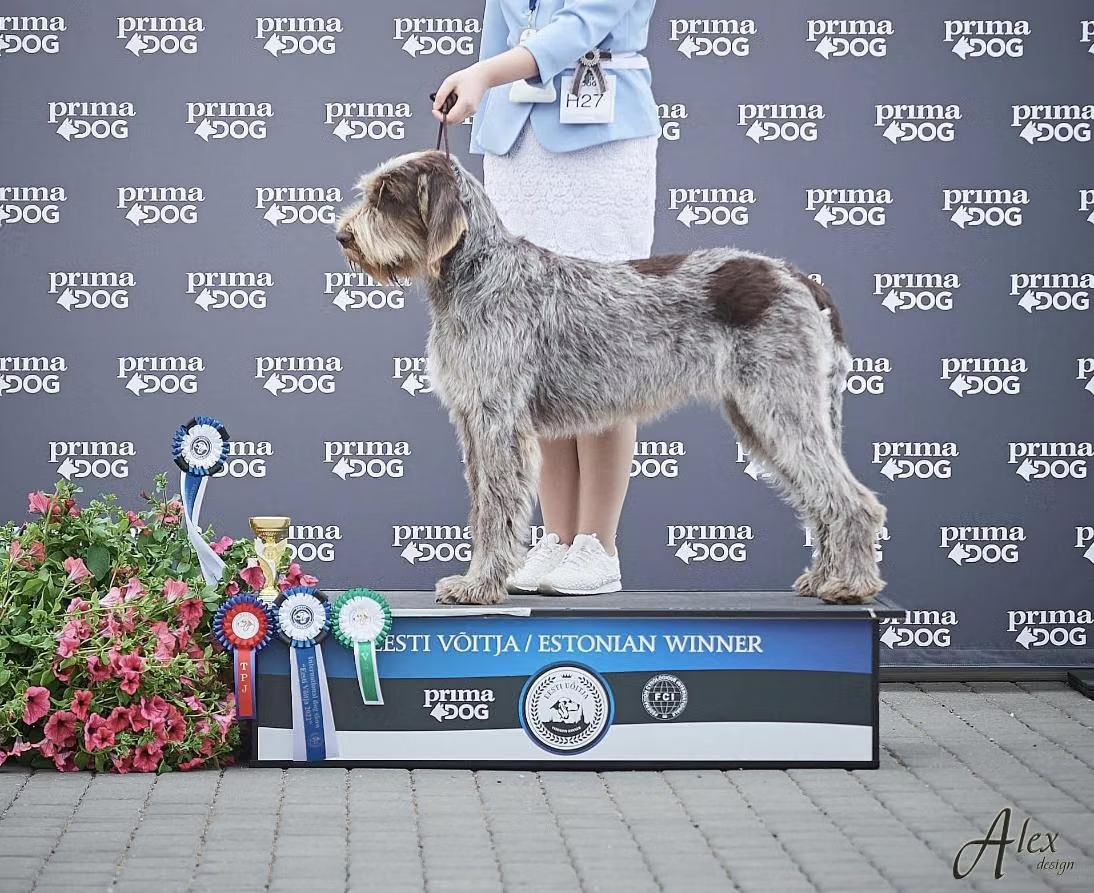
The Spinone Italiano is a large, solidly built dog with a single dense wiry coat, pronounced facial whiskers and eyebrows, and an ochre or brown roan coloring.
The Spinone Italiano is a large, square-to-rectangular dog with strong bone and a muscular, robust frame. The head is long, with a domed skull and a profile that is straight or slightly down-faced. The coat carries the breed's most recognizable feature: a wiry, dense single coat with bushy eyebrows, a moustache, and a beard that frame the face. The expression is soft and good-natured, helped by large oval eyes set well apart.
| Trait | Typical range |
|---|---|
| Height | Males about 60 to 70 cm; females about 58 to 65 cm at the withers |
| Weight | About 28 to 39 kg, varying by sex and build |
| Coat | Single, dense, wiry and somewhat coarse; about 4 to 6 cm on the body |
| Colors | White, white with orange markings, orange roan, white with brown markings, brown roan |
| Eyes | Large, rounded, ochre to brown depending on coat color |
The coat is harsh to the touch and lies close to the body, with no soft undercoat. It does not feel silky and is meant to shed water and resist brush and thorn. Accepted colors center on white as a base, with orange or brown markings and roan patterns that mix colored and white hairs. The facial furnishings stay prominent across all colors and give the breed its characteristic bearded look.
The Spinone Italiano is gentle, calm, and devoted, friendly with strangers and tolerant of children and other pets, with a sociable nature that dislikes being left alone.
The Spinone Italiano has a famously even temperament. It is gentle and patient at home, slow to react with aggression, and generally affectionate toward its family. The breed tends to bond closely with its people and prefers to stay near them, which makes it a poor choice for owners who are out for long hours.
With strangers the Spinone is usually friendly or politely reserved rather than suspicious, and it is not a strong guard dog. It typically gets along with children and tolerates the activity of a busy household. Most Spinoni also coexist well with other dogs, though their hunting background means small pets should be introduced and supervised with care.
The breed can show an independent streak in training and may work at its own pace. It responds best to patient, consistent handling. Left without company or stimulation, a Spinone can become bored and may dig, chew, or become restless.
| Trait | Rating |
|---|---|
| Affection | 5 |
| Energy | 3 |
| Trainability | 3 |
| Vocalness | 2 |
| Shedding | 3 |
The Spinone Italiano needs regular brushing of its wiry coat, daily exercise to stay fit and settled, and a home where it can be part of family life.
The Spinone does best in a home with space and a securely fenced yard, though it can adapt to less if given enough daily exercise. It is an indoor companion that wants to be with its family and should not be kept isolated outdoors. The beard means a Spinone often drips water around the house after drinking.
The Spinone Italiano needs a balanced diet suited to a large active dog, fed in measured meals to support its frame and guard against overfeeding.
A complete dog food formulated for large breeds suits the Spinone Italiano at most life stages. Because the breed is large and deep-chested, feeding amounts should match the dog's age, weight, and activity rather than a fixed scoop. Working dogs in the field need more energy than companions kept mainly at home, so portions should be adjusted to keep the dog at a healthy weight with a visible waist and ribs that are easy to feel.
| Life stage | Amount per day | Meals |
|---|---|---|
| Puppy (2 to 6 months) | Per product guide for projected adult weight | 3 to 4 |
| Junior (6 to 12 months) | Per product guide, tapering as growth slows | 2 to 3 |
| Adult | About 350 to 500 g of dry food, by size and activity | 2 |
| Senior | Adult amount reduced for lower activity | 2 |
Keep treats to a small share of daily calories and use them mainly for training. Most Spinoni on a complete diet need no routine supplements, though a vet may advise joint support for older or hard-working dogs. Splitting the daily ration into two meals and avoiding heavy exercise right after eating are sensible precautions for a deep-chested breed.
The Spinone Italiano typically lives 10 to 12 years and is generally robust, though it can be affected by hip dysplasia, bloat, and certain ear and neurological conditions.
The Spinone Italiano is generally a hardy breed with a typical lifespan of 10 to 12 years. As with most large dogs, joint health and digestive risks deserve attention, and responsible breeders screen breeding stock for known hereditary problems. Buying from a breeder who health-tests parents lowers the risk of inherited disease.
| Condition | Signs | Note |
|---|---|---|
| Hip dysplasia | Stiffness, limping, trouble rising | Screened by hip scoring in breeding dogs |
| Gastric dilatation-volvulus (bloat) | Swollen abdomen, retching, distress | A medical emergency; seek a vet at once |
| Ear infections | Head shaking, odor, scratching | Linked to drop ears that trap moisture |
| Cerebellar ataxia | Loss of coordination, wobbly gait | An inherited neurological disorder with available DNA testing in the breed |
| Elbow dysplasia | Foreleg lameness, reluctance to exercise | Also assessed through orthopedic screening |
The Spinone Italiano is intelligent but independent and sensitive, and it learns best through patient, consistent, reward-based training started early.
The Spinone Italiano is a thinking dog that can learn a wide range of tasks, but it often works at its own pace and may seem stubborn to handlers expecting instant obedience. The breed is sensitive and does not respond well to harsh corrections, which can make it shut down or grow anxious. Short, varied sessions hold its attention better than long repetitive drills. Early socialization with people, dogs, and everyday situations helps the natural friendliness develop into steady adult behavior.
Spinone Italiano breeding should wait until full maturity, follow health screening of both parents, and account for typical litters of several puppies.
Breeding a Spinone Italiano should be approached carefully and only with health-tested parents. Both dogs should be screened for hip and elbow status and for breed-relevant inherited conditions, including cerebellar ataxia, before any mating is planned. Bitches should reach full physical and mental maturity before a first litter rather than being bred at their earliest season.
Gestation in dogs runs about 63 days from conception. Litter size in the breed is commonly mid-range for a large dog, often around four to eight puppies, though individual litters vary. Raising the young calls for a clean whelping area, careful monitoring of the dam and pups in the first weeks, and early gentle handling and socialization once the puppies are old enough.
Puppies are usually weaned over several weeks and should stay with the dam and littermates until they are ready to go to new homes, which helps them learn normal canine behavior. Responsible breeders place puppies with appropriate vaccinations, worming, and records of parental health testing.
| Metric | Value |
|---|---|
| Sexual maturity | Around 6 to 12 months, but breeding deferred to full maturity |
| Gestation | About 63 days |
| Typical litter size | About 4 to 8 puppies |
| Weaning age | About 6 to 8 weeks |
| Recommended pre-breeding screening | Hips, elbows, and breed DNA tests |
Register your Spinone Italiano free for life with United Pet Club, and put its microchip number on a record American shelters can actually find.
Start with the profile. Add your Spinone Italiano's name, birth date, and a clear photo, attach your phone number and email, and save. That is the whole job, and it costs nothing for life. Dog registration works with or without a microchip, so there is no reason to wait for a vet visit.
The microchip needs its own registration. A vet implants the chip, but the number stays anonymous until you file it, and an anonymous chip cannot point anyone at you. Register the microchip with United Pet Club on the free lifetime plan: every brand a US vet implants qualifies, updates cost nothing after a move, and the record shows up in the AAHA universal lookup American shelters check first. Create your free account and finish both steps in one sitting.
Open a free United Pet Club account, enter your Spinone Italiano's name, birth date, and a photo, and save. The profile is free for life, works with or without a microchip, and you can attach a chip number later.
Type the 15-digit chip number into your free United Pet Club account together with your current phone number and address. The lifetime plan is free, covers every future update, and accepts any chip brand a US vet implants.
No federal law says a Spinone Italiano must carry a chip, but plenty of city and county licensing rules do, and shelters routinely chip before adoption. What the law never does is register the chip for you; that part is yours.
Nothing. United Pet Club's lifetime plan covers the dog's profile, the microchip registration, and every update at no charge, with no renewal fees.
Common questions about the Spinone Italiano cover its size, temperament, grooming needs, lifespan, family suitability, and availability.
It is a large breed. Males generally stand about 60 to 70 cm at the withers and females about 58 to 65 cm, with weights commonly between 28 and 39 kg depending on sex and build.
Yes. The breed is gentle, patient, and sociable, and it usually does well with children and other dogs. It bonds closely with its family and prefers not to be left alone for long periods.
Care is moderate. The wiry coat needs brushing once or twice a week plus occasional tidying, the beard needs frequent cleaning, and the dog needs at least an hour of exercise a day along with regular company.
The typical lifespan is 10 to 12 years. Good weight management, joint care, and buying from health-tested parents support a healthy life.
It is intelligent but independent and sensitive. It learns well with patient, reward-based methods and short sessions, but harsh handling tends to backfire.
The breed is less common than many other gundogs outside Italy, so prospective owners may need to wait for a litter from a reputable breeder who health-tests their dogs.
Not particularly. It tends to be friendly or politely reserved with strangers rather than protective, which suits a companion better than a guard role.