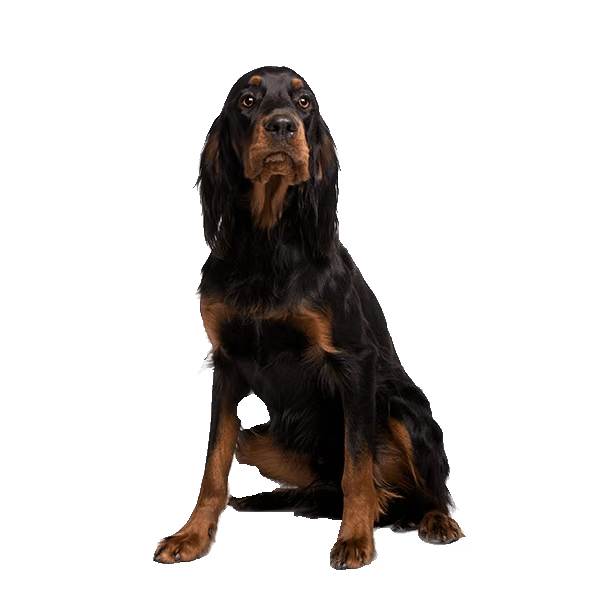
The Slovensky Kopov is a determined black-and-tan scenthound known for its courage and single-minded tracking ability.
How the Slovensky Kopov coat is built, and what that means when you groom it.
Critical: A Slovensky Kopov should not be shaved.
The undercoat keeps heat out as well as in, and the outer coat shields the skin from sun and insect bites. Clipping the whole coat off removes both. It often grows back patchy, soft or a different colour, and in some animals the guard hairs never return properly. Brush the undercoat out instead of cutting it off.
Information: A Slovensky Kopov drops its undercoat in heavy bursts.
The undercoat comes out in heavy bursts over a few weeks. An undercoat rake, or a bath followed by a proper blow-dry, clears it far faster than daily brushing. Clipping the coat down is not a shortcut for this.
The Slovensky Kopov is a medium-sized black-and-tan scenthound from Slovakia, bred to track wild boar and other game over rough terrain.
The Slovensky Kopov, also called the Slovak Hound, is a medium-sized scenthound developed in Slovakia for hunting in mountainous forest. The breed is built for stamina rather than speed, and it works close to the ground, following a scent trail with steady focus. Its coat is always black with tan markings, a pattern shared with several Central European hounds.
This is a working dog first. The Slovensky Kopov was bred to find and hold large game, including wild boar, and it shows the independence and persistence that task requires. Dogs of this breed tend to be devoted to their handler, alert to their surroundings, and willing to keep tracking long after a trail goes cold. They are vocal on the trail, giving voice when they pick up a scent.
Away from work, the Slovensky Kopov is even-tempered and loyal. It bonds closely with its household and is watchful without being aggressive toward people it knows.
| Attribute | Detail |
|---|---|
| Origin | Slovakia |
| Size | Medium |
| Lifespan | 12 to 14 years |
| Group / role | Scenthound, big-game tracking |
| Good with | Experienced active owners, older children, dogs it is raised with |
The Slovensky Kopov suits an active owner who can give it daily exercise and a job to do. It is a strong fit for hunting households and for people who enjoy long walks, scent work, or tracking sports. The breed needs space and mental occupation, so it is a poor match for a sedentary home or a small apartment with little time for activity. Early socialization helps, and its hunting drive means small pets and free-roaming with recall need careful management.
The Slovensky Kopov developed in Slovakia as a forest scenthound for wild boar and was recognized internationally in the 1960s.
The Slovensky Kopov comes from the forested, mountainous regions of Slovakia, where hunters needed a hardy hound able to track large game over difficult ground. The breed belongs to the wider family of Central European black-and-tan scenthounds, and dogs of this type have worked the Carpathian region for generations.
The breed was shaped mainly through working selection. Hunters favored dogs that tracked reliably, gave voice on a trail, and had the nerve to face wild boar. Appearance was a secondary concern, so the modern Slovensky Kopov reflects function: a sound, weather-resistant frame and a focused temperament rather than a fixed decorative look.
A written standard was drawn up in the twentieth century to stabilize the type. The Federation Cynologique Internationale recognized the Slovensky Kopov in 1963, placing it among the scenthounds and giving the breed a formal description used for registration and judging.
The breed remains closely tied to its homeland. It is still used as a hunting dog in Slovakia and neighboring countries, and it is far less common as a companion outside that region. Numbers abroad stay low, and most dogs are owned by hunters or by people involved in scent and tracking work.
The Slovensky Kopov is a medium, lightly built scenthound with a short, dense black coat marked with tan.
The Slovensky Kopov is a medium-sized, lightly built hound with a rectangular outline that is slightly longer than tall. The frame is lean and athletic, made for endurance over rough forest ground rather than for bulk. The head is moderately long with a domed skull, dark eyes, and ears of medium length set fairly high and hanging close to the cheeks. The tail is carried low at rest and raised when the dog is working a trail.
| Trait | Standard |
|---|---|
| Height | Approximately 40 to 50 cm (16 to 20 in) at the withers |
| Weight | Approximately 15 to 20 kg (33 to 44 lb) |
| Coat | Short to medium, dense, coarse, with a thicker undercoat |
| Colors | Black with tan markings on the legs, chest, muzzle, and over the eyes |
| Eyes | Dark, oval, alert expression |
The color is fixed: a black base with defined tan markings, typically on the lower legs, chest, muzzle, and as points above the eyes. The coat lies close to the body and is about 2 to 4 cm long, with a denser undercoat that gives protection in cold weather and dense undergrowth. The texture is coarse rather than soft. Grooming needs are low because of the short length, though the coat does shed.
The Slovensky Kopov is devoted, courageous, and single-minded on a scent, loyal at home but strongly driven to hunt.
The Slovensky Kopov is a determined, focused dog with a strong hunting drive. On a trail it is persistent and courageous, willing to track for long periods and to confront large game such as wild boar. That same focus can make it appear stubborn in everyday life, since a dog that has caught a scent will often prioritize the trail over a recall command.
With its own family the breed is devoted and affectionate. It forms a close bond with its handler and is loyal and steady in the home. It is alert and naturally watchful, which makes it a capable alarm dog, though it is not bred for guarding or aggression toward people.
With strangers the Slovensky Kopov is usually reserved rather than fearful or hostile, warming up once it accepts a person. With other dogs it is generally sociable, especially with dogs it lives or hunts alongside. Small pets are a different matter: the strong prey drive means cats, rabbits, and similar animals can trigger a chase, so careful introductions and supervision are needed. The breed is vocal and will give voice on a scent.
| Trait | Rating |
|---|---|
| Affection | 4 |
| Energy | 5 |
| Trainability | 3 |
| Vocalness | 4 |
| Shedding | 3 |
The Slovensky Kopov is low-maintenance to groom but needs substantial daily exercise and mental work to stay settled.
The breed does best with access to a secure, well-fenced outdoor space and a household that is active and often outdoors. It tolerates cold and rough weather well thanks to its dense coat. It is not suited to small homes with limited exercise or to owners who are away for long hours without making other arrangements for activity.
Feed the Slovensky Kopov a complete, balanced diet sized to its medium build and high activity, split across two meals a day.
The Slovensky Kopov is an active medium dog, so its diet should provide enough quality protein and fat to fuel daily work without leading to weight gain in quieter periods. A complete, balanced commercial food suited to the dog's life stage and activity level works well. Working dogs in heavy hunting seasons may need more calories than the same dog during the off season, so adjust portions to body condition rather than feeding a fixed amount year-round.
The amounts below are general guidelines. Actual needs vary with age, metabolism, and workload, so use the feeding guide on your chosen food and your veterinarian's advice.
| Life stage | Amount per day | Meals |
|---|---|---|
| Puppy (2 to 6 months) | Per product guide, fed to growth needs | 3 to 4 |
| Junior (6 to 12 months) | Per product guide, adjusted to growth | 2 to 3 |
| Adult (working/active) | Approximately 200 to 350 g of quality dry food | 2 |
| Adult (lower activity) | Reduced portion to maintain condition | 2 |
| Senior (7+ years) | Slightly reduced, adjusted to activity | 2 |
Keep treats to about 10 percent of daily calories so the main diet stays balanced. High-value treats are useful for recall and tracking training, which this breed needs reinforced. A healthy adult on a complete food usually needs no extra supplements; discuss joint or skin supplements with a veterinarian before adding them. Provide constant access to fresh water, especially after long days of work.
The Slovensky Kopov is generally a hardy, healthy breed with a typical lifespan of 12 to 14 years.
The Slovensky Kopov is generally a robust, healthy breed, a result of long selection for working ability over appearance. Most dogs live 12 to 14 years. As with any breed, some health issues can occur, and routine veterinary care plus attention to fitness and diet supports a long working life. Because the breed is uncommon outside its homeland, breed-specific health data is limited, so the conditions below reflect issues seen in active medium hounds generally.
| Condition | Signs | Note |
|---|---|---|
| Ear infections | Head shaking, odor, scratching at ears | Drop ears trap moisture; clean and check regularly |
| Hip dysplasia | Stiffness, reduced activity, limping | Less common in lean working lines; keep weight controlled |
| Injuries from work | Cuts, paw damage, strains | Check the dog after rough-terrain hunting or tracking |
| Obesity | Weight gain, lower stamina | Risk if exercise drops in the off season |
The Slovensky Kopov is intelligent and capable but independent, so training takes patience, consistency, and strong motivation.
The Slovensky Kopov is intelligent and learns well, but it was bred to work independently on a scent, so it does not follow commands as readily as some companion breeds. Recall is the main challenge: once the dog locks onto a trail, it can be hard to call off. Training works best when it starts early, stays consistent, and uses motivation the dog values, such as food rewards or the chance to track.
This breed responds to a calm, firm handler and loses interest with repetitive drilling. Short, varied sessions hold attention better than long ones. Early and ongoing socialization with people, other dogs, and everyday situations helps the dog settle into family life and reduces wariness with strangers.
The Slovensky Kopov reaches maturity around one to two years, with a typical canine gestation of about 63 days and modest litters.
Breeding the Slovensky Kopov should be done by experienced breeders who prioritize working ability, temperament, and health. Dogs generally reach sexual maturity within the first year, but responsible breeders wait until full physical and mental maturity, often around 18 to 24 months, before breeding. Because the breed is uncommon outside Slovakia, finding suitable mates and maintaining genetic diversity takes planning.
Gestation in dogs lasts about 63 days. Litters are moderate in size for a medium hound. The dam usually whelps without unusual difficulty, but a quiet, warm whelping area and veterinary support should be arranged in advance.
Raising puppies for this breed means early handling and socialization, since the adult dog is independent and benefits from broad early experience. Puppies destined for hunting homes are often introduced gradually to scent and game under supervision once they are old enough. Health screening of breeding stock and matching puppies to active, capable homes help keep the breed sound and true to its working purpose.
| Metric | Value |
|---|---|
| Sexual maturity | Around 6 to 12 months |
| Recommended breeding age | About 18 to 24 months |
| Gestation | Approximately 63 days |
| Typical litter size | About 4 to 8 puppies |
| Weaning | Around 6 to 8 weeks |
Register your Slovensky Kopov free for life with United Pet Club, and put its microchip number on a record American shelters can actually find.
Start with the profile. Add your Slovensky Kopov's name, birth date, and a clear photo, attach your phone number and email, and save. That is the whole job, and it costs nothing for life. Dog registration works with or without a microchip, so there is no reason to wait for a vet visit.
The microchip needs its own registration. A vet implants the chip, but the number stays anonymous until you file it, and an anonymous chip cannot point anyone at you. Register the microchip with United Pet Club on the free lifetime plan: every brand a US vet implants qualifies, updates cost nothing after a move, and the record shows up in the AAHA universal lookup American shelters check first. Create your free account and finish both steps in one sitting.
Open a free United Pet Club account, enter your Slovensky Kopov's name, birth date, and a photo, and save. The profile is free for life, works with or without a microchip, and you can attach a chip number later.
Type the 15-digit chip number into your free United Pet Club account together with your current phone number and address. The lifetime plan is free, covers every future update, and accepts any chip brand a US vet implants.
No federal law says a Slovensky Kopov must carry a chip, but plenty of city and county licensing rules do, and shelters routinely chip before adoption. What the law never does is register the chip for you; that part is yours.
Nothing. United Pet Club's lifetime plan covers the dog's profile, the microchip registration, and every update at no charge, with no renewal fees.
Common questions about the Slovensky Kopov, covering size, temperament, care needs, lifespan, suitability, and availability.
It is a medium-sized hound, standing about 40 to 50 cm (16 to 20 in) at the shoulder and weighing roughly 15 to 20 kg (33 to 44 lb). The build is lean and athletic rather than heavy.
It is devoted and loyal to its family, alert, and courageous. On a scent it is single-minded and persistent, which is great for tracking but can read as stubborn in everyday training.
Grooming is easy thanks to the short coat, but the breed has high exercise and mental needs. It is best for active owners who can give it a job, such as walking, scent work, or hunting.
The typical lifespan is 12 to 14 years. The breed is generally hardy, and routine veterinary care plus a lean, active lifestyle supports a long life.
It can be, in an active household. It bonds closely with its family and is good with older children and dogs it is raised with. Its strong prey drive means small pets need careful management.
It is a vocal scenthound that gives voice on a trail and is naturally alert. It is not the quietest breed, so it suits homes where some baying and watchful barking are acceptable.
They are uncommon outside Slovakia and neighboring countries, where they are still used as hunting dogs. Outside that region they are rare, so finding a puppy can take time and research.
