

Siberian Husky
Also known as Chukotka Sled Dog, Husky, and Siberian Huskie
The Siberian Husky is a friendly, outgoing sled dog known for its boundless energy, free spirit, and good-natured sociability.
- Size
- Medium
- Lifespan
- 12–14 years
- Origin
- Russia
- Temperament
- Friendly
- Standard colors
- Black, White, and Gray and 6 more
- Popularity
- No. 26 of 201
Characteristics
Coat and grooming
How the Siberian Husky coat is built, and what that means when you groom it.
- Coat layers
- Double coat
- Coat texture
- Plush
- Coat length
- Medium
- Shedding
- Seasonal shedding
Grooming guidance
Critical: A Siberian Husky should not be shaved.
The undercoat keeps heat out as well as in, and the outer coat shields the skin from sun and insect bites. Clipping the whole coat off removes both. It often grows back patchy, soft or a different colour, and in some animals the guard hairs never return properly. Brush the undercoat out instead of cutting it off.
Information: A Siberian Husky drops its undercoat in heavy bursts.
The undercoat comes out in heavy bursts over a few weeks. An undercoat rake, or a bath followed by a proper blow-dry, clears it far faster than daily brushing. Clipping the coat down is not a shortcut for this.
Registry Recognition
Fédération Cynologique Internationale
- Spitz and Primitive Types
American Kennel Club
- Non-Sporting Group
Canadian Kennel Club
- Non-Sporting Group
United Pet Club
- Spitz and Primitive TypesPrimary
Siberian Husky colors and patterns
What each club's breed standard says about every Siberian Husky color and pattern. Point at a ruling to see the club's own wording.
Breed standards describe the Siberian Husky in Black, White, Gray, Silver, Brown, Tan, Red, Copper, and Cream. Standard patterns: Solid, Bicolor, Tricolor, Piebald, Sable, and Agouti.
| Color or pattern | FCI | AKC | UKC | KC | KUSA |
|---|---|---|---|---|---|
| Black | Standard (“black”) | Standard (“Black”) | Standard (“all colors, from black to pure white”) | Standard (“Black & White”) | Standard (“black”) |
| White | Standard (“white”) | Standard (“White”) | Standard (“all colors, from black to pure white”) | Standard (“including white”) | Standard (“white”) |
| Gray | Standard (“grey”) | Standard (“Gray & White”) | Standard (“all colors, from black to pure white”) | Standard (“Light Grey & White”) | Standard (“grey”) |
| Silver | Standard (“all ranges of the allowable colours”) | Standard (“all ranges of the allowable colors”) | Standard (“all colors, from black to pure white”) | Standard (“Silver Grey & White”) | Standard (“all ranges of the allowable colours”) |
| Brown | Not recognized | Standard (“Brown & White”) | Standard (“all colors, from black to pure white”) | Standard (“all colours”) | Not recognized |
| Tan | Not recognized | Standard (“Black Tan & White”) | Standard (“black in black, gray or tan dogs”) | Standard (“black in grey, tan or black dogs”) | Not recognized |
| Red | Standard (“red”) | Standard (“Red & White”) | Standard (“all colors, from black to pure white”) | Standard (“Red & White”) | Standard (“red”) |
| Copper | Standard (“All ranges of the allowable colours which are black, grey, agouti, sable, red and white”) | Standard (“All ranges of the allowable colors which are black, gray, agouti, sable, red, and white”) | Standard (“liver-colored in copper dogs”) | Standard (“liver in copper dogs”) | Standard (“All ranges of the allowable colours, which are black, grey, agouti, sable, red, and white”) |
| Cream | Standard (“all ranges of the allowable colours”) | Standard (“all ranges of the allowable colors”) | Standard (“all colors, from black to pure white”) | Standard (“Cream & White”) | Standard (“all ranges of the allowable colours”) |
| Albino | Not recognized | Not recognized | Disqualifying (“albinism”) | No ruling | Not recognized |
| Patterns | |||||
| Solid | Standard (“may be solid coloured”) | Standard (“may be solid colored”) | No ruling | Standard (“White”) | Standard (“may be solid-coloured”) |
| Bicolor | Standard (“may have white markings”) | Standard (“Black & White”) | No ruling | Standard (“Black & White”) | Standard (“may have white markings”) |
| Tricolor | No ruling | Standard (“Black Tan & White”) | No ruling | Standard (“Black Grey & White”) | No ruling |
| Piebald | Standard (“including piebald”) | Standard (“Piebald”) | No ruling | Standard (“Black & White Piebald”) | Standard (“including piebald”) |
| Sable | Standard (“sable”) | Standard (“Sable & White”) | No ruling | Standard (“Sable & White”) | Standard (“sable”) |
| Agouti | Standard (“agouti”) | Standard (“Agouti & White”) | No ruling | Standard (“Agouti & White”) | Standard (“agouti”) |
| Brindle | Disqualifying (“brindle patterns are not allowable and are to be disqualified”) | Disqualifying (“brindle patterns are not allowable and are to be disqualified”) | No ruling | No ruling | Disqualifying (“brindle patterns are not allowable and are to be disqualified”) |
| Merle | Disqualifying (“merle ... patterns are not allowable and are to be disqualified”) | Disqualifying (“merle ... patterns are not allowable and are to be disqualified”) | No ruling | Not recognized (“except merle which is unacceptable”) | Disqualifying (“merle ... patterns are not allowable and are to be disqualified”) |
| Reverse brindle | Disqualifying (“brindle patterns are not allowable and are to be disqualified”) | Disqualifying (“brindle patterns are not allowable and are to be disqualified”) | No ruling | No ruling | Disqualifying (“brindle patterns are not allowable and are to be disqualified”) |
| Double merle | No ruling | No ruling | No ruling | No ruling | No ruling |


| Color or pattern | FCI | AKC | UKC | KC | KUSA |
|---|---|---|---|---|---|
| Blue | Standard (“blue”) | Standard (“blue”) | Standard (“blue”) | Standard (“any shade of blue”) | Standard (“blue”) |
| Brown | Standard (“brown”) | Standard (“brown”) | Standard (“brown”) | Standard (“any shade of ... brown”) | Standard (“brown”) |
| Patterns | |||||
| Odd-eyed | Standard (“one of each”) | Standard (“one of each”) | Standard (“one eye of each color”) | Standard (“one of each colour”) | Standard (“one of each”) |
| Sectoral | Standard (“particoloured”) | Standard (“parti-colored”) | Standard (“parti-colored eyes”) | Standard (“parti-colours”) | Standard (“parti-coloured”) |


| Color or pattern | FCI | AKC | UKC | KC | KUSA |
|---|---|---|---|---|---|
| Black | Standard (“black in black, grey, sable or agouti dogs”) | Standard (“black in black, gray, sable, or agouti dogs”) | Standard (“black in black, gray or tan dogs”) | Standard (“black in grey, tan or black dogs”) | Standard (“black in black, grey, sable, or agouti dogs”) |
| Liver | Standard (“liver in red dogs”) | Standard (“liver in red dogs”) | Standard (“liver-colored in copper dogs”) | Standard (“liver in copper dogs”) | Standard (“liver in red dogs”) |
| Pink | Standard (“flesh-coloured in pure white dogs”) | Standard (“flesh-colored in white dogs”) | Standard (“flesh colored in pure white dogs”) | Standard (“may be flesh-coloured in pure white”) | Standard (“flesh-coloured in pure white dogs”) |
| Patterns | |||||
| Snow nose | Standard (“the lighter-streaked « snow nose » is equally acceptable”) | Standard (“the lighter-streaked "snow nose" is equally acceptable”) | Standard (“the snow nose, which is pink streaked, is also acceptable”) | Standard (“in winter, pink-streaked 'snow nose' is acceptable”) | Standard (“the lighter-streaked "snow nose" is equally acceptable”) |

What the rulings mean
- Standard
- Described by the club's breed standard.
- Disqualifying
- The club's breed standard disqualifies an animal of this color or pattern.
- Not recognized
- The club does not accept this color or pattern for the breed.
Color changes
How a Siberian Husky's colors can change over its life.
Blackchanges toRust
Coat · With body condition · can change back
Blackchanges toGray
Coat · Progressive
Blackchanges toBrown
Coat · In the sun · can change back
Whitechanges toRoan
Coat · With age · from 2 weeks
Bluechanges toDark brown
Eyes · With age · from 2 weeks
Bluechanges toBrown
Eyes · With age · from 2 weeks
Bluechanges toLight brown
Eyes · With age · from 2 weeks
Bluechanges toAmber
Eyes · With age · from 2 weeks
Bluechanges toHazel
Eyes · With age · from 2 weeks
Bluechanges toYellow
Eyes · With age · from 2 weeks
Blackchanges toSnow nose
Nose · With the season · can change back
Blackchanges toPink
Nose · With the season · can change back
Blackchanges toSnow nose
Nose · With the season · can change back

Sources
Each ruling comes from the club's published breed standard or color list.
Meet some of our Siberian Husky
A few of the Siberian Husky profiles members have added to United Pet Club.
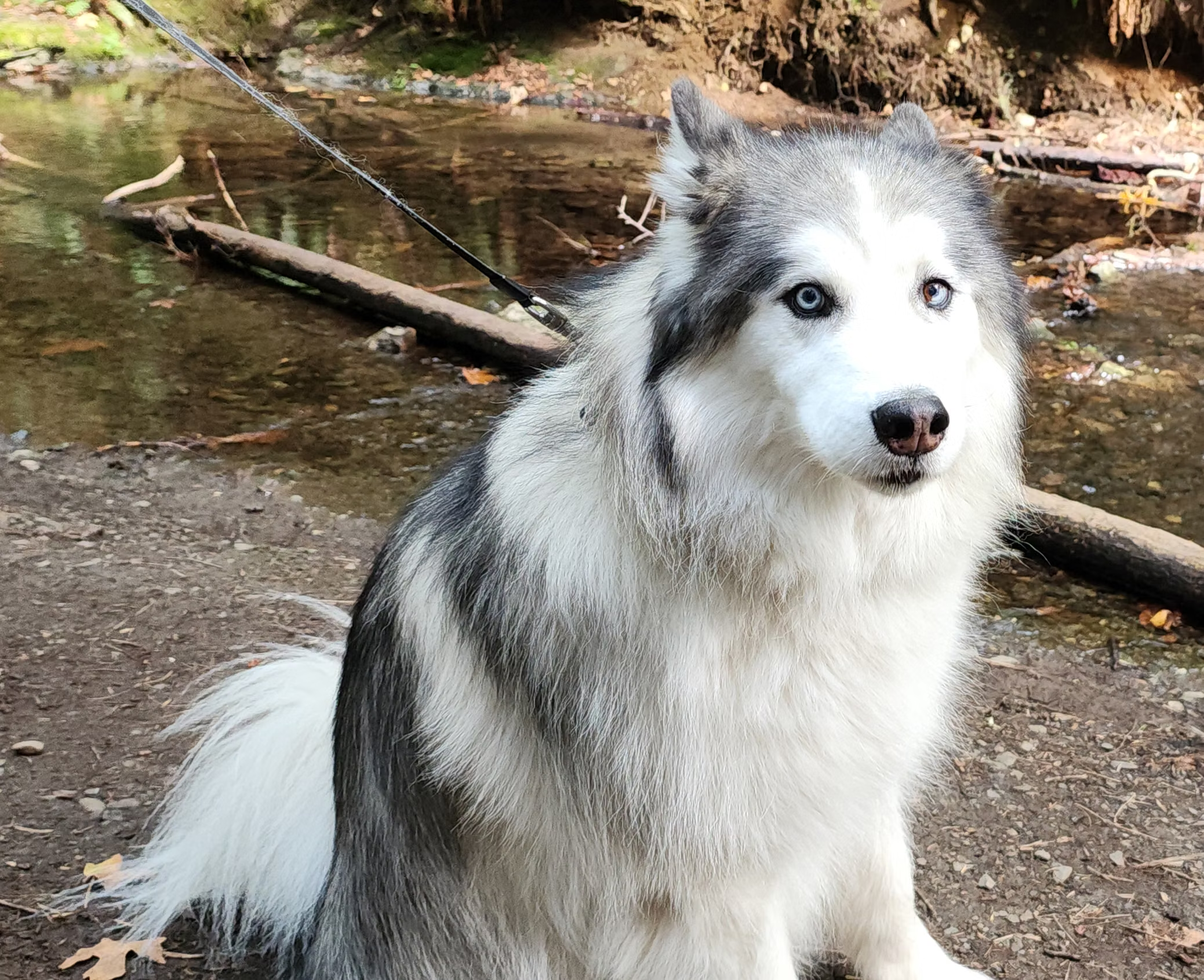

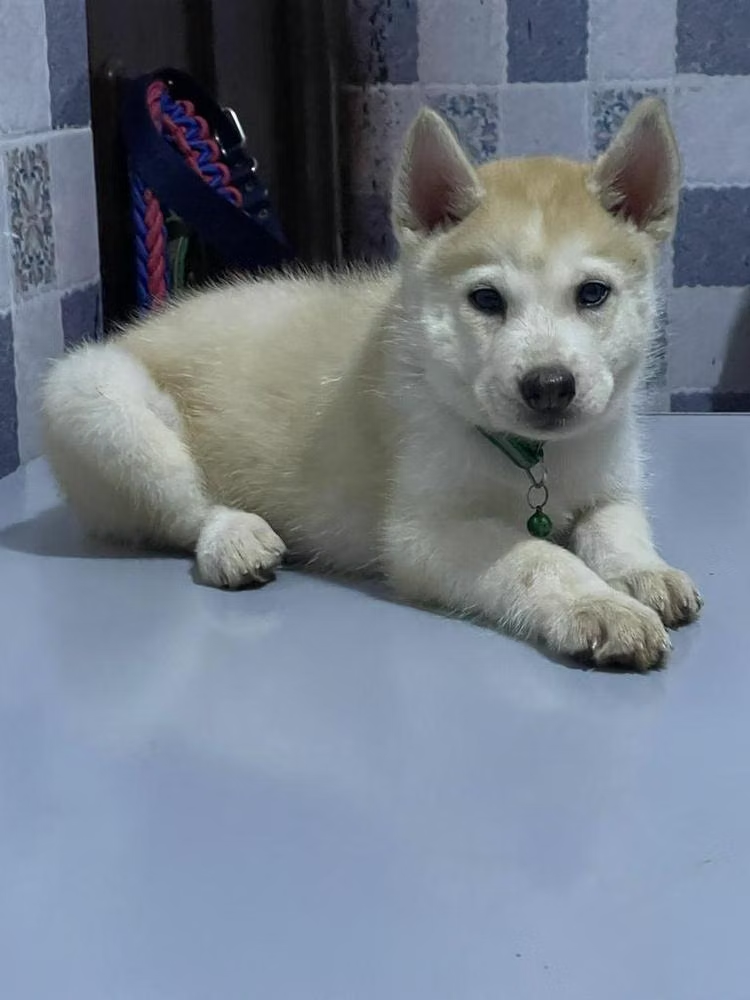


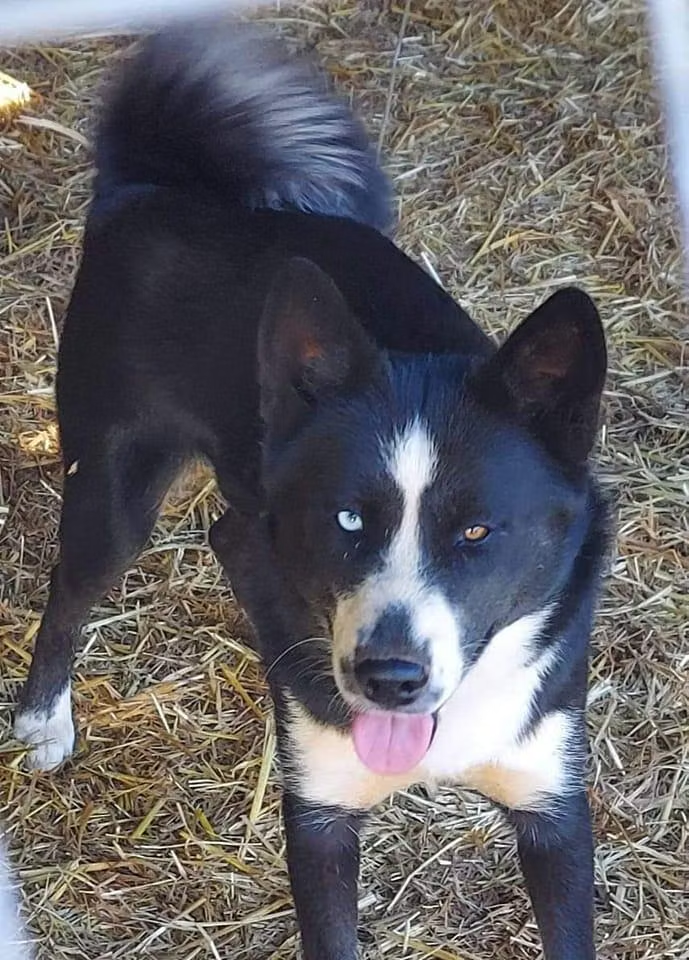
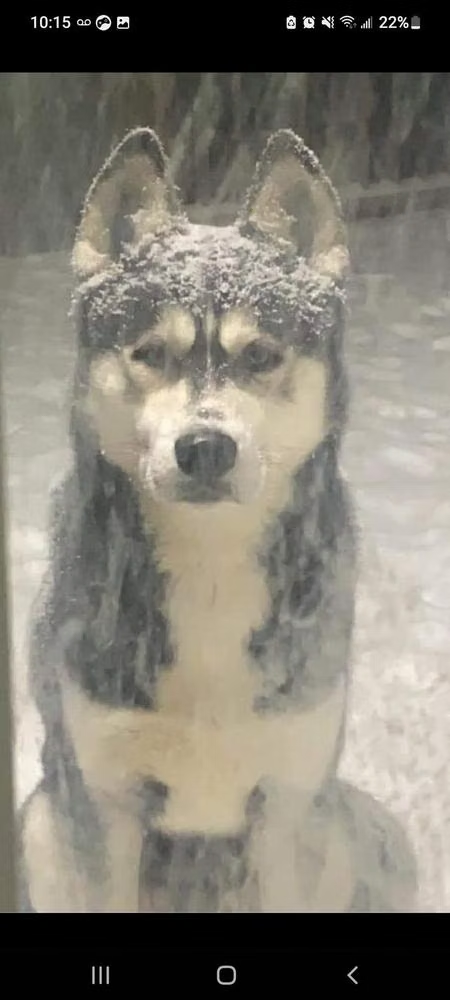

About the Siberian Husky
The Siberian Husky is a medium-sized working sled dog from Russia, known for its friendly, outgoing nature and high energy.
The Siberian Husky is a medium-sized working dog bred to pull light loads over long distances in cold climates. It originated with the Chukchi people of northeastern Russia, who relied on the breed for transport across frozen terrain. Adult dogs typically stand 20 to 23.5 inches at the shoulder and weigh 35 to 60 pounds, with males larger than females.
The breed is friendly and good-natured, with little of the territorial guarding instinct seen in many working dogs. Huskies are sociable with people, including strangers, which makes them poor watchdogs but easy companions in a busy household. They are also independent and were bred to make decisions on the trail, a trait that shows up as stubbornness during training.
Energy is the defining feature. A Husky that does not get enough exercise will often dig, howl, or escape. The breed suits owners who can provide daily vigorous activity and a securely fenced space.
| Attribute | Detail |
|---|---|
| Origin | Russia |
| Size | Medium (35 to 60 lb) |
| Lifespan | 12 to 14 years |
| Group/role | Working dog, sled puller |
| Good with | Families, children, other dogs |
Who it suits
The Siberian Husky fits active owners and families who enjoy daily exercise and outdoor time. It does well in cool climates and homes with a secure yard. It is a poor match for people who want a guard dog, who are away for long hours, or who cannot tolerate shedding and vocal behavior.
History and origin
The Siberian Husky was developed by the Chukchi people of northeastern Siberia as a sled dog, then brought to Alaska in the early 1900s.
The breed traces to the Chukchi people of the Chukotka region in northeastern Siberia. They needed a dog that could pull light sled loads across long distances on limited food, and they bred for endurance, an even temperament, and the ability to live in close contact with families. The dogs slept among children and were valued for cooperation rather than aggression.
In 1908 sled dogs from Siberia were imported to Alaska, where they were used for transport and for sled racing during the gold rush era. The dogs proved fast and durable in long-distance races, which built their reputation among mushers in the region.
The breed gained wider attention in 1925 during the serum run to Nome, when relay teams of sled dogs carried diphtheria antitoxin to the town across hundreds of miles of frozen terrain. Several Siberian Huskies took part in the effort, and the event drew public interest to the breed.
The American Kennel Club recognized the Siberian Husky in 1930. Since then the breed has spread well beyond its working roots and is now kept mainly as a companion, though it retains its drive to run and pull.
Appearance
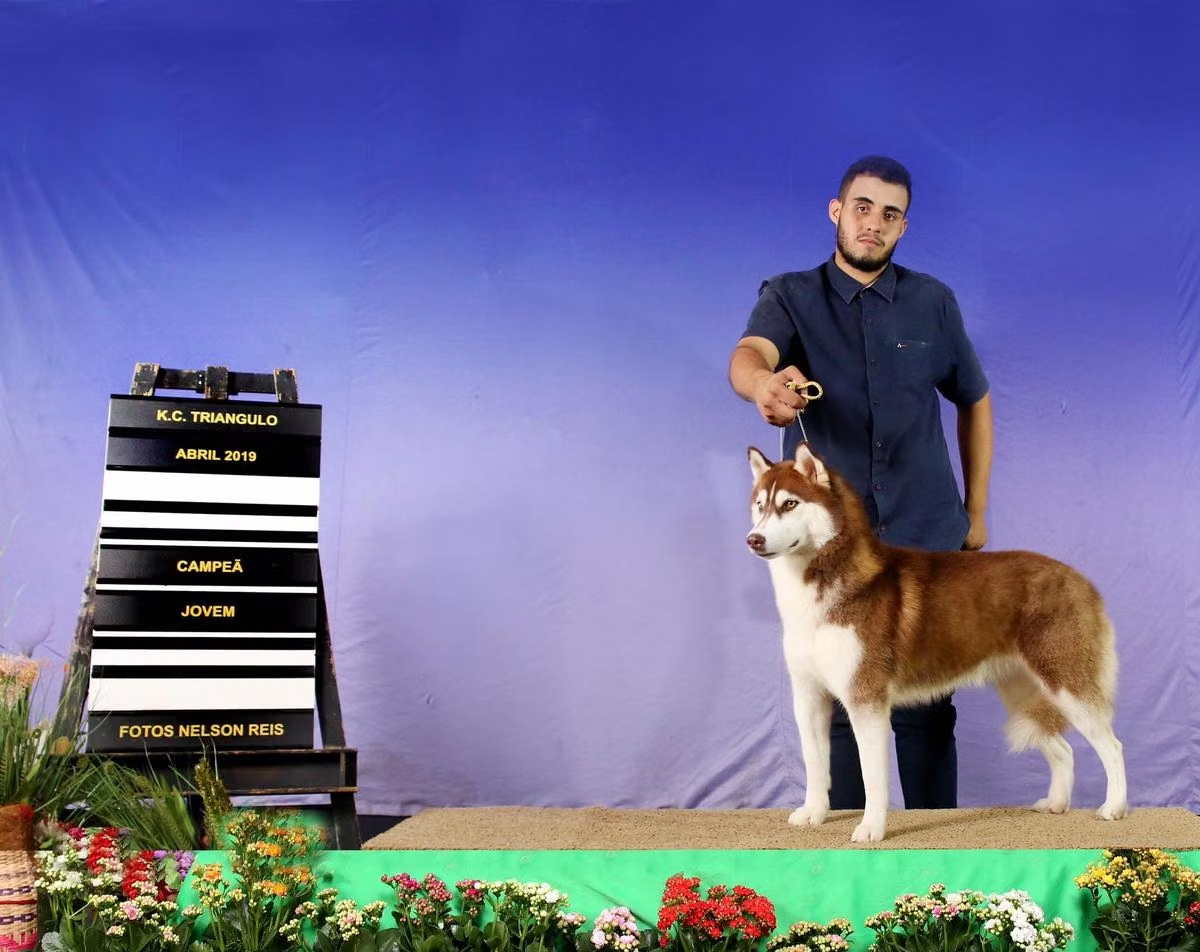
The Siberian Husky is a medium-sized, balanced dog with erect ears, a thick double coat, and almond-shaped eyes that may be blue, brown, or one of each.
The Siberian Husky has a compact, balanced build that reflects its sled-pulling purpose. The body is slightly longer than tall, the chest is deep but not broad, and the legs are straight and well-muscled. The tail is well-furred and carried in a sickle curve when the dog is alert, often dropping when relaxed. Movement is smooth and seemingly effortless, with a light, springy gait.
| Trait | Detail |
|---|---|
| Height | 21 to 23.5 in (males), 20 to 22 in (females) |
| Weight | 45 to 60 lb (males), 35 to 50 lb (females) |
| Coat | Medium-length double coat, dense and straight |
| Colors | Black, gray, red, sable, agouti, and white, often with markings |
| Eyes | Almond-shaped; blue, brown, amber, or mixed |
Coat and colors
The double coat has a soft, dense undercoat and a straight outer coat that lies flat against the body. The undercoat sheds heavily twice a year in a process owners call blowing coat. Colors range from pure white through gray, black, red, sable, and agouti, usually paired with white on the legs, chest, and face. Facial markings are common and vary widely between dogs. Eye color is independent of coat color, and one blue eye with one brown eye, known as heterochromia, is accepted in the breed.
Temperament
The Siberian Husky is friendly, outgoing, and good-natured, sociable with people and other dogs but independent and prone to roaming.
The Siberian Husky is friendly and even-tempered. The breed was developed to live closely with families and shows affection toward people of all ages, which makes it a good companion for households with children. It greets strangers warmly rather than warily, so it rarely works as a guard dog.
With other dogs the Husky is usually sociable, a reflection of its history living and working in teams. Its strong prey drive means it may chase cats, small animals, and livestock, so early socialization and supervision matter in mixed-pet homes.
Independence is a core trait. Huskies were bred to think on the trail, and that self-reliance reads as stubbornness at home. They are intelligent but not eager to please in the way some breeds are, and they need patient, consistent handling. Many are vocal, using howls and a distinctive talking sound rather than frequent barking. A bored or under-exercised Husky often digs, escapes, or howls, so mental and physical stimulation are necessary.
| Trait | Rating |
|---|---|
| Affection | 4 |
| Energy | 5 |
| Trainability | 2 |
| Vocalness | 4 |
| Shedding | 5 |
Care
The Siberian Husky needs heavy daily exercise, regular brushing through seasonal coat blows, and a securely fenced space to prevent escape.
The Siberian Husky is a high-maintenance breed in terms of activity and containment, though its coat is fairly easy to keep clean between sheds. The breed does best in cooler climates and needs protection from heat in warm regions.
Grooming
- Brush the coat once or twice a week to manage normal shedding.
- Brush daily during the twice-yearly coat blow, when the undercoat sheds heavily.
- Bathe only occasionally, as the coat is largely self-cleaning.
- Trim nails every few weeks and check ears for debris.
- Do not shave the double coat, which protects against both cold and heat.
Exercise
- Provide at least one to two hours of vigorous activity each day.
- Use running, hiking, sledding, or canicross to satisfy the drive to pull.
- Keep the dog leashed in open areas because of the strong prey drive.
- Add puzzle feeders and training games for mental work.
Environment
A secure home with a tall, sunk-bottom fence suits the breed best. Huskies are known escape artists that climb, jump, and dig under barriers. They tolerate cold well but need shade and water in heat. Apartment living is possible only with committed daily exercise.
Nutrition
The Siberian Husky is an efficient eater that needs a balanced diet matched to its high activity, fed in measured meals to avoid weight gain.
The Siberian Husky is often described as an efficient feeder, meaning it can maintain condition on less food than its size suggests. This trait comes from its history of working hard on limited rations. A complete and balanced diet suited to the dog's life stage and activity level meets its needs. Working or sledding dogs may require more calories and higher fat during heavy activity, while pet Huskies need careful portion control to stay lean.
| Life stage | Amount per day | Meals |
|---|---|---|
| Puppy (2 to 6 months) | 1 to 2 cups | 3 to 4 |
| Junior (6 to 12 months) | 1.5 to 2.5 cups | 2 to 3 |
| Adult | 1.5 to 2 cups | 2 |
| Senior | 1 to 1.75 cups | 2 |
Treats and supplements
Keep treats to about 10 percent of daily calories to prevent weight gain. Most Huskies on a complete diet need no supplements, though a veterinarian may recommend omega fatty acids for coat condition or joint support in older dogs. Provide fresh water at all times, especially after exercise.
Health
The Siberian Husky is generally a hardy breed with a 12 to 14 year lifespan, though it is prone to certain eye conditions and hip dysplasia.
The Siberian Husky is a generally healthy and hardy breed, a result of its development under demanding working conditions. Most live 12 to 14 years. The main concerns are inherited eye disorders and joint conditions, which responsible breeders screen for. Regular veterinary care and a sensible exercise routine help keep the breed sound.
| Condition | Signs | Note |
|---|---|---|
| Cataracts | Cloudy eye, vision loss | Can appear in young adults; screen breeding stock |
| Progressive retinal atrophy | Night blindness, declining vision | Inherited; DNA tests available |
| Corneal dystrophy | Hazy spots on the cornea | Often mild; affects appearance more than vision |
| Hip dysplasia | Limping, stiffness, reluctance to exercise | Lower incidence than in many breeds |
| Hypothyroidism | Weight gain, coat changes, low energy | Managed with daily medication |
Preventive care
- Schedule annual veterinary exams and keep vaccinations current.
- Have breeding dogs screened for hip and eye conditions.
- Keep the dog at a lean weight to protect the joints.
- Maintain a parasite prevention plan.
- Brush teeth regularly and provide dental checks.
Training
The Siberian Husky is intelligent but independent, so training takes patience, consistency, and reward-based methods rather than repetition drills.
The Siberian Husky is intelligent and learns quickly, but its independent nature means it does not always choose to comply. The breed was developed to work with some autonomy, so handlers should expect a degree of stubbornness. Short, varied, reward-based sessions work better than long, repetitive ones, which bore the dog. Recall is a particular challenge because of the strong prey drive and the urge to run, and many owners never trust a Husky off leash in open areas. Early socialization with people, dogs, and handling sets the foundation for a well-adjusted adult.
Basics
- Begin socialization and gentle handling in puppyhood.
- Teach name response and attention first.
- Build a reliable sit, down, and stay with food rewards.
- Work recall intensively, but keep the dog leashed or long-lined outdoors.
- Introduce leash manners early to manage the breed's pulling instinct.
- Keep sessions short and end on a success.
Breeding
Siberian Huskies reach breeding maturity around two years, with a roughly 63-day pregnancy and average litters of four to six puppies.
Responsible breeding of Siberian Huskies centers on health screening and temperament. Although dogs become physically capable earlier, most breeders wait until at least two years of age so that hip and eye health can be evaluated before mating. Females typically come into season twice a year. Pregnancy lasts about 63 days from conception, and litters average four to six puppies, though larger litters occur.
Newborn puppies depend entirely on the mother for warmth and nutrition during the first weeks. Eyes open around two weeks, and weaning begins near four weeks as the puppies start on solid food. The socialization window from about three to twelve weeks is important for this independent breed, so early exposure to people, sounds, and gentle handling shapes adult behavior. Most breeders place puppies in new homes at eight weeks or later. Prospective breeders should confirm health clearances on both parents and have a plan for placing every puppy.
| Metric | Value |
|---|---|
| Breeding maturity | Around 2 years |
| Heat cycle | Twice per year |
| Gestation | About 63 days |
| Average litter | 4 to 6 puppies |
| Eyes open | About 14 days |
| Weaning | Around 4 to 6 weeks |
| Go-home age | 8 weeks or older |
Registering your Siberian Husky and its microchip
Register your Siberian Husky free for life with United Pet Club, and put its microchip number on a record American shelters can actually find.
How to register a Siberian Husky in the United States
Shelters across the US scan every dog that comes through the door, and what happens next depends on paperwork. A scan that ends at a current record gets your Siberian Husky home; a scan that ends nowhere starts a holding period. Register your dog with United Pet Club and that record exists, free, for the rest of your dog's life.
The microchip needs its own registration. A vet implants the chip, but the number stays anonymous until you file it, and an anonymous chip cannot point anyone at you. Register the microchip with United Pet Club on the free lifetime plan: every brand a US vet implants qualifies, updates cost nothing after a move, and the record shows up in the AAHA universal lookup American shelters check first. Create your free account and finish both steps in one sitting.
How do I register my Siberian Husky in the United States?
Open a free United Pet Club account, enter your Siberian Husky's name, birth date, and a photo, and save. The profile is free for life, works with or without a microchip, and you can attach a chip number later.
How do I register my Siberian Husky's microchip?
Type the 15-digit chip number into your free United Pet Club account together with your current phone number and address. The lifetime plan is free, covers every future update, and accepts any chip brand a US vet implants.
Does my Siberian Husky have to be microchipped in the United States?
No federal law says a Siberian Husky must carry a chip, but plenty of city and county licensing rules do, and shelters routinely chip before adoption. What the law never does is register the chip for you; that part is yours.
How much does it cost to register a Siberian Husky?
Nothing. United Pet Club's lifetime plan covers the dog's profile, the microchip registration, and every update at no charge, with no renewal fees.
Frequently asked questions
Common questions about the Siberian Husky cover its size, temperament, care needs, lifespan, and suitability for families and first-time owners.
How big does a Siberian Husky get?
It is a medium-sized breed. Males stand 21 to 23.5 inches and weigh 45 to 60 pounds, while females stand 20 to 22 inches and weigh 35 to 50 pounds.
Is the Siberian Husky good with families and children?
Yes. The breed is friendly and good-natured and was bred to live closely with families, so it generally does well with children. It is sociable with strangers, which means it does not make a good guard dog.
Is a Husky hard to care for?
It is demanding in exercise and containment. A Husky needs one to two hours of vigorous activity daily, a securely fenced yard, and regular brushing, especially during its twice-yearly heavy shedding.
How long do Siberian Huskies live?
Most live 12 to 14 years. The breed is generally hardy, with inherited eye conditions and hip dysplasia being the main health concerns.
Are Siberian Huskies easy to train?
They are intelligent but independent, so training takes patience and consistency. Short, reward-based sessions work best, and recall is difficult because of the strong prey drive and urge to run.
Is a Husky a good choice for a first-time owner?
It can be challenging for a first-time owner. The breed's energy, independence, escape ability, and vocal nature suit experienced, active owners who can commit to daily exercise and firm, consistent handling.
Do Siberian Huskies bark a lot?
They bark less than many breeds but are vocal in other ways, often howling and producing a distinctive talking sound. A bored or under-exercised Husky tends to be noisier.
From the community
Ask about the Siberian HuskyNo questions about the Siberian Husky yet. Be the first to ask.
Browse Dog breeds