
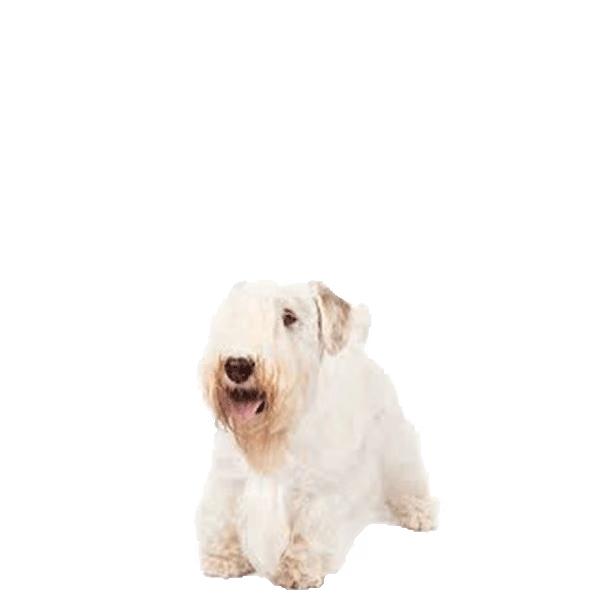
Sealyham Terrier
The Sealyham Terrier is a calm, dignified Welsh terrier with a charming white coat, balancing alert courage with an easygoing nature.
- Size
- Small
- Lifespan
- 12–14 years
- Origin
- Wales
- Temperament
- Calm
- Standard colors
- White, Blue, Brown, and Lemon
Characteristics
Coat and grooming
How the Sealyham Terrier coat is built, and what that means when you groom it.
- Coat layers
- Double coat
- Coat texture
- Wire
- Coat length
- Medium
- Shedding
- Low shedding
Grooming guidance
Caution: A Sealyham Terrier coat should be hand-stripped rather than clipped.
A wire coat is meant to be pulled out at the root once the hair is ready to release. Clippers cut it off part way instead, leaving the soft undercoat behind. The result is a coat that grows back limp and faded, and the weatherproof texture only returns after the hair is stripped out again.
Registry Recognition
Fédération Cynologique Internationale
- Terriers
American Kennel Club
- Terrier Group
Canadian Kennel Club
- Terrier Group
United Pet Club
- TerriersPrimary
Sealyham Terrier colors and patterns
What each club's breed standard says about every Sealyham Terrier color and pattern. Point at a ruling to see the club's own wording.
Breed standards describe the Sealyham Terrier in White, Blue, Brown, and Lemon. Standard patterns: Solid and Piebald.
| Color or pattern | FCI | AKC | UKC | KC | KUSA |
|---|---|---|---|---|---|
| White | Standard (“All white”) | Standard (“White”) | Standard (“All white”) | Standard (“All white”) | Standard (“All white”) |
| Blue | Standard (“blue”) | Not recognized | Standard (“blue”) | Standard (“blue”) | Standard (“blue”) |
| Brown | Standard (“brown”) | Standard (“tan”) | Standard (“brown”) | Standard (“brown”) | Standard (“brown”) |
| Lemon | Standard (“lemon”) | Standard (“lemon”) | Standard (“lemon”) | Standard (“lemon”) | Standard (“lemon”) |
| Black | Fault (“Much black ... undesirable”) | Not recognized | Fault (“Heavy black markings”) | Fault (“Black patches ... on body undesirable”) | Fault (“Much black ... undesirable”) |
| Albino | Not recognized | Not recognized | Disqualifying (“Albinism”) | Not recognized | Not recognized |
| Patterns | |||||
| Solid | Standard (“All white”) | Standard (“All white”) | Standard (“All white”) | Standard (“All white”) | Standard (“All white”) |
| Piebald | Standard (“white with lemon, brown, blue or badger pied markings on head and ears”) | Standard (“with lemon, tan or badger markings on head and ears”) | Standard (“predominately white with lemon, brown, blue or badger markings”) | Standard (“white with lemon, brown, blue or badger pied markings on head and ears”) | Standard (“white with lemon, brown, blue or badger pied markings on head and ears”) |
| Roan | Fault (“heavy ticking undesirable”) | Fault (“excessive ticking should be discouraged”) | Fault (“Ticking on the body”) | Fault (“heavy ticking on body undesirable”) | Fault (“heavy ticking undesirable”) |


| Color or pattern | FCI | AKC | UKC | KC | KUSA |
|---|---|---|---|---|---|
| Dark brown | Standard (“Dark”) | Standard (“Very dark”) | Standard (“Very dark in color”) | Standard (“Dark”) | Standard (“Dark”) |
| Light brown | No ruling | Fault (“Light ... eye bad faults”) | No ruling | No ruling | No ruling |
| Color or pattern | FCI | AKC | UKC | KC | KUSA |
|---|---|---|---|---|---|
| Black | Standard (“Black”) | Standard (“Black”) | Standard (“Fully pigmented, black in color”) | Standard (“Nose black”) | Standard (“Black”) |
| Red | No ruling | Fault (“cherry ... bad faults”) | No ruling | No ruling | No ruling |
| Pink | No ruling | Fault (“White ... bad faults”) | No ruling | No ruling | No ruling |
| Patterns | |||||
| Butterfly nose | No ruling | Fault (“butterfly bad faults”) | No ruling | No ruling | No ruling |

What the rulings mean
- Standard
- Described by the club's breed standard.
- Fault
- Named by the club's breed standard as a fault: the animal can be shown but is penalized.
- Disqualifying
- The club's breed standard disqualifies an animal of this color or pattern.
- Not recognized
- The club does not accept this color or pattern for the breed.
Color changes
How a Sealyham Terrier's colors can change over its life.
Blackchanges toRust
Coat · With body condition · can change back
Blackchanges toGray
Coat · Progressive
Blackchanges toBrown
Coat · In the sun · can change back
Whitechanges toRoan
Coat · With age · from 2 weeks
Blackchanges toSnow nose
Nose · With the season · can change back
Blackchanges toPink
Nose · With the season · can change back

Sources
Each ruling comes from the club's published breed standard or color list.
Meet some of our Sealyham Terrier
A few of the Sealyham Terrier profiles members have added to United Pet Club.


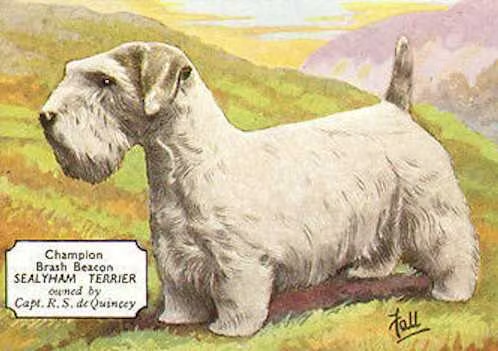


About the Sealyham Terrier
The Sealyham Terrier is a small white working terrier from Wales, calm and dignified at home while keeping the alert courage of its hunting roots.
The Sealyham Terrier is a short-legged, sturdy terrier developed in Wales for hunting badgers, otters, and other quarry that went to ground. It stands low and broad through the chest, carries a mostly white coat, and has a long head framed by folded ears and a generous beard. Adults usually weigh around 23 to 24 pounds, which makes the breed heavier and more substantial than its modest height suggests.
Temperament is the main reason the Sealyham stands apart from livelier terriers. The breed is calm, loyal, and good-natured indoors, content to rest near its people for much of the day. The alert, confident terrier character is still present, and a Sealyham will bark at unfamiliar sounds and stand its ground, but the default mood is steady rather than frantic.
The Sealyham Terrier is now uncommon and appears on several national lists of rare or vulnerable native breeds. People who own one tend to describe a dog that is big in personality but easy to live with.
| Attribute | Detail |
|---|---|
| Origin | Wales |
| Size | Small (about 23 to 24 lb) |
| Lifespan | 12 to 14 years |
| Group/role | Terrier, originally a working earth dog |
| Good with | Families and considerate older children; can share a home with other pets when socialized early |
Who it suits
The Sealyham Terrier fits owners who want a small dog with terrier spirit but a calmer daily temperament. The breed adapts well to apartments and houses alike because its exercise needs are moderate. First-time owners can manage a Sealyham if they are consistent, since the breed is independent and can be stubborn. The white coat needs regular grooming, so the dog suits people willing to brush several times a week and arrange periodic trimming.
History and origin
The Sealyham Terrier was created in the 1800s at the Sealyham estate in Pembrokeshire, Wales, as a small white dog that could face badgers and otters underground.
The breed takes its name from Sealyham, an estate near Haverfordwest in Pembrokeshire, Wales. The development is usually credited to Captain John Edwardes, who bred working terriers there during the middle and later 1800s. His goal was a compact, hard dog that could go to ground after badger and otter and work alongside larger hounds.
Edwardes selected for a white or mostly white coat so the dog could be seen clearly in the field and told apart from the quarry. The exact crosses he used were not recorded in detail, but writers have linked the Sealyham to several West Country and Welsh terrier types of the period, along with possible white terrier and other working strains. The result was a low, strong dog with powerful jaws relative to its size.
The breed moved from a private working line to a recognized show dog in the early 1900s. A breed club was formed in Britain in 1908, and recognition by the major kennel clubs followed in the years after, including recognition in the United States in 1911. Through the 1920s and 1930s the Sealyham became fashionable and appeared in show rings and in portraits of well-known owners.
Popularity later declined steeply. By the 21st century the Sealyham Terrier was among the least numerous native breeds in Britain and is now listed as vulnerable or rare by several kennel organizations. Dedicated breeders continue to maintain the line.
Appearance
The Sealyham Terrier is a low, broad, sturdy white terrier with a long head, folded ears, a weather-resistant double coat, and a notable beard.
The Sealyham Terrier gives an impression of substance on short legs. The body is longer than it is tall, the chest is deep and broad, and the bone is heavy for the dog's height. The head is long and broad in the skull, with a strong, square muzzle and folded ears that fall close to the cheek. Dark, deep-set eyes and a full beard and leg furnishings complete the look. The overall outline is balanced and workmanlike rather than delicate.
| Trait | Standard |
|---|---|
| Height | About 10 to 11 in (25 to 28 cm) at the shoulder |
| Weight | About 23 to 24 lb (10 to 11 kg) |
| Coat | Double coat: soft, dense undercoat with a hard, wiry outer coat |
| Colors | Mainly white; may carry lemon, tan, badger, or brindle markings on the head and ears |
| Eyes | Dark, medium size, set fairly wide and deep |
Coat and colors
The weather-resistant double coat protected the dog during underground work and in wet country. The body coat is predominantly white. Many Sealyhams show colored markings limited to the head and ears, ranging from pale lemon and tan through badger gray to brindle. Heavy body patches are not typical of the breed. The hard outer coat is traditionally maintained by hand-stripping for show dogs, while many companion dogs are clipped, which softens the texture over time.
Temperament and personality
The Sealyham Terrier is calm, loyal, and good-natured at home, while staying alert and confident enough to act as a watchful small guard.
The Sealyham Terrier has a steadier temperament than many terriers. At home it is calm and affectionate with its family and often settles quietly for long stretches. The breed forms close bonds and tends to attach to the whole household rather than a single person.
With strangers the Sealyham is alert and reserved at first. It will announce visitors with a deep bark that is louder than the dog's size implies, which makes it an effective watchdog. Once introductions are made, most Sealyhams relax. The underlying terrier confidence means the breed is not timid and will stand its ground if pressed.
With other animals results depend on early socialization. A Sealyham raised alongside other dogs and cats can live with them peacefully, but the hunting background means small pets such as rodents may trigger chase instinct. The breed is good with considerate children and patient by terrier standards, though rough handling is best avoided. Independence and a stubborn streak are normal, so the dog responds better to motivation than to repetition.
| Trait | Rating |
|---|---|
| Affection | 4 |
| Energy | 2 |
| Trainability | 3 |
| Vocalness | 3 |
| Shedding | 2 |
Care and grooming
The Sealyham Terrier needs regular coat care including brushing several times a week and periodic trimming or stripping, plus moderate daily exercise.
The Sealyham Terrier is moderate in its overall care needs, with grooming the most time-consuming part. The double coat does not shed heavily, but it mats and picks up debris if neglected, and the white furnishings stain without attention.
Grooming
- Brush the body coat and furnishings two to three times a week to prevent mats.
- Have the coat hand-stripped or clipped every few months; show dogs are usually stripped, companions are often clipped.
- Clean the beard after meals and water, since it collects food and moisture.
- Trim around the eyes and check the folded ears for wax and moisture.
- Bathe as needed and keep nails short with regular trimming.
Exercise
- Provide one or two short to moderate walks each day.
- Add play and scent or digging games that use the terrier instinct.
- Keep the dog on lead or in a secure area, because prey drive can override recall.
- Avoid overexertion; the breed is happy with steady activity rather than long runs.
Environment
The Sealyham Terrier adapts well to apartments and houses. Its calm indoor manner and moderate exercise needs suit smaller homes. A secure yard is welcome, but fencing should be solid and dug-proof because the breed will dig. The dog tolerates a range of climates thanks to its weather-resistant coat, though it should not be left outdoors in extremes.
Nutrition and feeding
The Sealyham Terrier does well on a complete diet for small breeds, fed in measured portions across two meals a day to guard against weight gain.
The Sealyham Terrier needs a complete, balanced diet suited to a small to medium breed with moderate activity. Because the breed is solidly built and not highly active, it can gain weight if fed too freely. Measure portions and adjust to the individual dog's age, weight, and activity rather than free-feeding. Fresh water should always be available.
| Life stage | Amount per day | Meals |
|---|---|---|
| Puppy (2 to 6 months) | Per puppy food label, split small | 3 to 4 |
| Junior (6 to 12 months) | Per label, transitioning toward adult | 2 to 3 |
| Adult | About 3/4 to 1.25 cups of quality dry food | 2 |
| Senior | Slightly reduced, watch weight | 2 |
Treats and supplements
Keep treats to roughly 10 percent of daily calories to protect against weight gain, which the breed is prone to. Use small, low-fat treats for training. Most Sealyhams on a complete commercial diet need no extra supplements; discuss any joint, skin, or coat supplements with a veterinarian before adding them.
Health and lifespan
The Sealyham Terrier is generally healthy with a lifespan of 12 to 14 years, though eye conditions, lens luxation, and skin issues are seen in the breed.
The Sealyham Terrier is a generally hardy breed with a typical lifespan of 12 to 14 years. As with many purebred dogs, a number of inherited conditions appear in the line, and responsible breeders screen for the most significant ones. Buying from a breeder who health-tests the parents reduces the risk of the conditions below.
| Condition | Signs | Note |
|---|---|---|
| Primary lens luxation | Cloudy or painful eye, sudden vision change | Inherited; DNA testing of breeding stock is available |
| Retinal and other eye disorders | Night vision loss, bumping into objects | Eye screening of parents is recommended |
| Skin and allergy issues | Itching, redness, recurrent ear problems | Manage with diet, grooming, and veterinary care |
| Joint problems | Stiffness, reluctance to jump | Keep the dog at a healthy weight |
Preventive care
- Keep vaccinations and parasite control up to date.
- Schedule annual veterinary checks, with eye examinations given the breed's eye risks.
- Maintain a healthy weight to protect joints and overall health.
- Brush teeth regularly and arrange dental care as needed.
- Choose puppies from parents with documented health screening.
Training
The Sealyham Terrier is intelligent but independent, so training works best with short, motivating, reward-based sessions started early.
The Sealyham Terrier is intelligent and capable, but its independent, slightly stubborn nature means it does not drill endlessly the way some breeds do. The dog learns quickly when it sees a reason to cooperate and loses interest in dull repetition. Calm consistency works far better than force. Early socialization with people, places, and other animals helps the breed settle into the relaxed adult temperament it is known for. Because prey drive is strong, reliable recall takes patience, and many owners keep the dog on lead near small animals or traffic.
Basics
- Start socialization and gentle handling in puppyhood.
- Teach name response and a marker word, then reward generously.
- Build sit, down, and stay in short sessions of a few minutes.
- Work recall on a long line before trusting it off lead.
- Add house manners and crate or settle training for calm indoor behavior.
- Channel digging and chasing instincts into games rather than suppressing them.
Breeding
Sealyham Terriers reach maturity at one to two years, carry litters of about three to five puppies after a roughly 63-day pregnancy, and should be bred only from health-tested parents.
Breeding the Sealyham Terrier is a careful undertaking because the breed is rare and the gene pool is small. Responsible breeders prioritize health screening, sound temperament, and genetic diversity over volume. Dogs reach physical and behavioral maturity between one and two years of age, and breeding is best delayed until the dog is mature and has passed relevant health tests, including DNA testing for primary lens luxation and eye examinations.
Mating follows the standard canine pattern, and pregnancy lasts about 63 days from conception. Litters are usually small, commonly around three to five puppies. Because of the breed's broad head and chest, breeders monitor whelping closely and involve a veterinarian. Puppies are weaned over several weeks and stay with the dam and littermates through an important socialization window before going to new homes, typically at around eight weeks or later. Given the breed's vulnerable status, anyone considering breeding should work with breed clubs and experienced mentors.
| Metric | Value |
|---|---|
| Sexual maturity | About 1 to 2 years (breed when mature and health-tested) |
| Gestation | About 63 days |
| Typical litter size | About 3 to 5 puppies |
| Weaning | About 6 to 8 weeks |
| Recommended screening | Eye examination and lens luxation DNA test |
Registering your Sealyham Terrier and its microchip
Register your Sealyham Terrier free for life with United Pet Club, and put its microchip number on a record American shelters can actually find.
How to register a Sealyham Terrier in the United States
Shelters across the US scan every dog that comes through the door, and what happens next depends on paperwork. A scan that ends at a current record gets your Sealyham Terrier home; a scan that ends nowhere starts a holding period. Register your dog with United Pet Club and that record exists, free, for the rest of your dog's life.
Chipped already? The implant is half the job. Until the 15-digit number sits in a registry with your name beside it, a scanner reads digits that lead nowhere. Microchip registration is free for life at United Pet Club, takes any manufacturer's chip, and keeps the record searchable through the AAHA lookup shelters rely on. Sign up free, and both records are done tonight.
How do I register my Sealyham Terrier in the United States?
Open a free United Pet Club account, enter your Sealyham Terrier's name, birth date, and a photo, and save. The profile is free for life, works with or without a microchip, and you can attach a chip number later.
How do I register my Sealyham Terrier's microchip?
Type the 15-digit chip number into your free United Pet Club account together with your current phone number and address. The lifetime plan is free, covers every future update, and accepts any chip brand a US vet implants.
Does my Sealyham Terrier have to be microchipped in the United States?
No federal law says a Sealyham Terrier must carry a chip, but plenty of city and county licensing rules do, and shelters routinely chip before adoption. What the law never does is register the chip for you; that part is yours.
How much does it cost to register a Sealyham Terrier?
Nothing. United Pet Club's lifetime plan covers the dog's profile, the microchip registration, and every update at no charge, with no renewal fees.
Frequently asked questions
Common questions about the Sealyham Terrier cover its size, temperament, grooming demands, lifespan, suitability, and how hard the breed is to find.
How big does a Sealyham Terrier get?
The Sealyham is a small breed, standing about 10 to 11 inches at the shoulder and weighing roughly 23 to 24 pounds. It is short-legged but heavily built, so it is more substantial than its height suggests.
What is the Sealyham Terrier's temperament like?
It is calm, loyal, and good-natured at home while staying alert and confident. The breed is steadier than many terriers, bonds closely with its family, and makes a watchful small guard dog.
Is the Sealyham Terrier hard to care for?
Care is moderate overall, with grooming the main demand. Plan to brush several times a week and have the coat stripped or clipped every few months. Exercise needs are modest, so the breed suits apartments and houses.
How long do Sealyham Terriers live?
The typical lifespan is 12 to 14 years. Keeping the dog at a healthy weight, staying current on veterinary and eye checks, and buying from health-tested parents all support a long life.
Is the Sealyham Terrier good for families and first-time owners?
Yes for many households. It is good with considerate older children and can live with other pets when socialized early. First-time owners can manage one with consistent, reward-based training, since the breed is independent and can be stubborn.
Are Sealyham Terriers rare?
Yes. The breed is now uncommon and is listed as vulnerable or rare by several kennel organizations. Expect to wait for a puppy and to work with a recognized breeder or breed club.
From the community
Ask about the Sealyham TerrierNo questions about the Sealyham Terrier yet. Be the first to ask.
Browse Dog breeds