
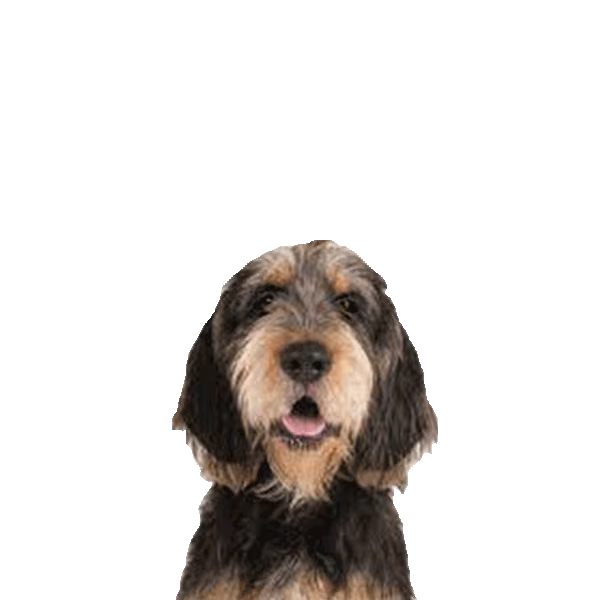
Schipperke
Also known as Little Captain
The Schipperke is a curious, foxy little Belgian dog with boundless energy and a sharp, watchful nature that makes it a tireless little watchdog.
- Size
- Small
- Lifespan
- 13–15 years
- Origin
- Belgium
- Temperament
- Curious
- Standard colors
- Black, Brown, and Red and 3 more
Characteristics
Coat and grooming
How the Schipperke coat is built, and what that means when you groom it.
- Coat layers
- Double coat
- Coat texture
- Rough
- Coat length
- Medium
- Shedding
- Seasonal shedding
Grooming guidance
Critical: A Schipperke should not be shaved.
The undercoat keeps heat out as well as in, and the outer coat shields the skin from sun and insect bites. Clipping the whole coat off removes both. It often grows back patchy, soft or a different colour, and in some animals the guard hairs never return properly. Brush the undercoat out instead of cutting it off.
Information: A Schipperke drops its undercoat in heavy bursts.
The undercoat comes out in heavy bursts over a few weeks. An undercoat rake, or a bath followed by a proper blow-dry, clears it far faster than daily brushing. Clipping the coat down is not a shortcut for this.
Registry Recognition
Fédération Cynologique Internationale
- Sheepdogs and Cattledogs
American Kennel Club
- Herding Group
Canadian Kennel Club
- Herding Group
United Pet Club
- Sheepdogs and CattledogsPrimary
Schipperke colors and patterns
What each club's breed standard says about every Schipperke color and pattern. Point at a ruling to see the club's own wording.
Breed standards describe the Schipperke in Black, Brown, Red, Gold, Cream, and Fawn. Standard patterns: Solid.
| Color or pattern | FCI | AKC | UKC | KC | KUSA |
|---|---|---|---|---|---|
| Black | Standard (“Totally black”) | Standard (“Black”) | Standard (“solid black”) | Standard (“jet black”) | Standard (“jet black”) |
| Brown | Fault (“Grey, brownish or reddish tones in the top coat”) | Disqualifying (“Chocolate”) | Standard (“brown (light mocha to dark chocolate)”) | Not recognized | Not recognized |
| Red | Fault (“Grey, brownish or reddish tones in the top coat”) | Fault (“a transitory reddish cast, which is to be penalized”) | Not recognized | Standard (“range from pale ivory through shades of cream, fawn and gold to light red”) | Standard (“range from pale ivory through shades of cream, fawn and gold to light red”) |
| Gold | Disqualifying | Disqualifying | Not recognized | Standard (“shades of cream, fawn and gold”) | Standard (“shades of cream, fawn and gold”) |
| Cream | Disqualifying | Disqualifying (“Cream”) | Standard (“blonde (platinum to strawberry)”) | Standard (“Cream”) | Standard (“Cream”) |
| Fawn | Disqualifying | Disqualifying (“Fawn”) | Not recognized | Standard (“shades of cream, fawn and gold”) | Standard (“shades of cream, fawn and gold”) |
| Gray | Fault (“Grey, brownish or reddish tones in the top coat”) | Disqualifying (“Gray”) | Disqualifying (“Dilute colors such as grey, blue, or blue-cream”) | Not recognized | Not recognized |
| White | Disqualifying (“with tiny white spots, even on the toes”) | Disqualifying (“White”) | Disqualifying (“Any white markings”) | Not recognized | Not recognized |
| Albino | Disqualifying | Disqualifying | Disqualifying (“Albinism”) | Not recognized | Not recognized |
| Blue | Disqualifying | Disqualifying (“Blue”) | Disqualifying (“Dilute colors such as grey, blue, or blue-cream”) | Not recognized | Not recognized |
| Tan | Disqualifying | Disqualifying (“Black & Tan”) | Disqualifying (“Bi-colored dogs such as black and tan”) | Not recognized | Not recognized |
| Apricot | Disqualifying | Disqualifying (“Apricot”) | Not recognized | Not recognized | Not recognized |
| Patterns | |||||
| Solid | Standard (“Totally black”) | Standard (“Black”) | Standard (“solid black”) | Standard (“jet black”) | Standard (“jet black”) |
| Bicolor | No ruling | No ruling | Disqualifying (“Bi-colored dogs such as black and tan”) | Not recognized | Not recognized |
| Tan point | No ruling | Disqualifying (“Black & Tan”) | Disqualifying (“Bi-colored dogs such as black and tan”) | Not recognized | Not recognized |

%22%3E%3Cpath%20d%3D%22M0%2023L9.5%2020.4L14%2025.4L19%2029.6Q21%2035%2023.5%2035.5Q36%2033%2050%2036L56%2040V64H0Z%22%20fill%3D%22%23F5F5F0%22%2F%3E%3C%2Fg%3E%3Cuse%20href%3D%22%23s%22%20fill%3D%22none%22%20stroke%3D%22%233B2A20%22%20stroke-opacity%3D%220.6%22%20stroke-width%3D%221%22%20stroke-linejoin%3D%22round%22%2F%3E%3Cellipse%20cx%3D%223.2%22%20cy%3D%2221.7%22%20rx%3D%221.3%22%20ry%3D%221.2%22%20fill%3D%22%231C1C1C%22%2F%3E%3Ccircle%20cx%3D%2210.8%22%20cy%3D%2219.3%22%20r%3D%221.1%22%20fill%3D%22%231C1C1C%22%2F%3E%3C%2Fsvg%3E)
%22%3E%3Ccircle%20cx%3D%2212%22%20cy%3D%2217.2%22%20r%3D%221.25%22%20fill%3D%22%23C4996A%22%2F%3E%3Cpath%20d%3D%22M1.5%2021.2L9%2018.6L12.6%2021L12.2%2026.2L3.5%2024.4Z%22%20fill%3D%22%23C4996A%22%2F%3E%3Cpath%20d%3D%22M10%2026L14.5%2026.4L18.2%2029.2L13.5%2029.8Z%22%20fill%3D%22%23C4996A%22%2F%3E%3Cellipse%20cx%3D%2221.2%22%20cy%3D%2230.6%22%20rx%3D%221.6%22%20ry%3D%222.3%22%20fill%3D%22%23C4996A%22%2F%3E%3Crect%20x%3D%220%22%20y%3D%2247%22%20width%3D%2264%22%20height%3D%2217%22%20fill%3D%22%23C4996A%22%2F%3E%3Cpath%20d%3D%22M51.5%2024.5L55%2027L54.2%2032L50.5%2028.5Z%22%20fill%3D%22%23C4996A%22%2F%3E%3Cpath%20d%3D%22M45%2038.5L48%2039L48.5%2047L45.5%2047Z%22%20fill%3D%22%23C4996A%22%2F%3E%3C%2Fg%3E%3Cuse%20href%3D%22%23s%22%20fill%3D%22none%22%20stroke%3D%22%233B2A20%22%20stroke-opacity%3D%220.6%22%20stroke-width%3D%221%22%20stroke-linejoin%3D%22round%22%2F%3E%3Cellipse%20cx%3D%223.2%22%20cy%3D%2221.7%22%20rx%3D%221.3%22%20ry%3D%221.2%22%20fill%3D%22%231C1C1C%22%2F%3E%3Ccircle%20cx%3D%2210.8%22%20cy%3D%2219.3%22%20r%3D%221.1%22%20fill%3D%22%231C1C1C%22%2F%3E%3C%2Fsvg%3E)
| Color or pattern | FCI | AKC | UKC | KC | KUSA |
|---|---|---|---|---|---|
| Dark brown | Standard (“Dark brown in colour”) | Standard (“dark brown”) | Standard (“eyes are dark brown”) | Standard (“Dark brown”) | Standard (“Dark brown”) |
| Hazel | Standard (“hazel eyes still acceptable”) | No ruling | No ruling | No ruling | No ruling |
| Light brown | Fault (“light in colour”) | No ruling | Fault (“Light eyes”) | No ruling | No ruling |
| Pink / red | No ruling | No ruling | Disqualifying (“Pink eyes”) | No ruling | No ruling |
| Color or pattern | FCI | AKC | UKC | KC | KUSA |
|---|---|---|---|---|---|
| Black | Standard (“nose leather always black”) | Standard (“The nose is small and black”) | Standard (“black for the black and blonde”) | Standard (“Nose black”) | Standard (“Nose black”) |
| Liver | No ruling | No ruling | Standard (“self-colored on the brown dogs”) | Standard (“Nose may be black or dark brown”) | Standard (“Nose may be black or dark brown”) |
| Pink | Disqualifying (“Lack of pigment on nose, lips and eyelids”) | No ruling | Disqualifying (“Pink nose”) | No ruling | No ruling |
What the rulings mean
- Standard
- Described by the club's breed standard.
- Fault
- Named by the club's breed standard as a fault: the animal can be shown but is penalized.
- Disqualifying
- The club's breed standard disqualifies an animal of this color or pattern.
- Not recognized
- The club does not accept this color or pattern for the breed.
Color changes
How a Schipperke's colors can change over its life.
Blackchanges toRust
Coat · With body condition · can change back
Blackchanges toGray
Coat · Progressive
Blackchanges toBrown
Coat · In the sun · can change back
Blackchanges toSnow nose
Nose · With the season · can change back
Blackchanges toPink
Nose · With the season · can change back
%22%3E%3Crect%20x%3D%2217%22%20y%3D%2210%22%20width%3D%2230%22%20height%3D%2242%22%20fill%3D%22url(%23g)%22%2F%3E%3C%2Fg%3E%3Cuse%20href%3D%22%23s%22%20fill%3D%22none%22%20stroke%3D%22%233B2A20%22%20stroke-opacity%3D%220.6%22%20stroke-width%3D%221%22%20stroke-linejoin%3D%22round%22%2F%3E%3Cpath%20d%3D%22M12.5%2037Q13%2032%2018.5%2032Q23.5%2032.5%2023.5%2036.5Q20.5%2035.5%2018.8%2037Q17.4%2038.6%2018%2041.5Q13.6%2040.4%2012.5%2037Z%22%20fill%3D%22%231C1C1C%22%20fill-opacity%3D%220.8%22%20stroke%3D%22%23F5F5F0%22%20stroke-opacity%3D%220.4%22%20stroke-width%3D%220.9%22%2F%3E%3Cpath%20d%3D%22M51.5%2037Q51%2032%2045.5%2032Q40.5%2032.5%2040.5%2036.5Q43.5%2035.5%2045.2%2037Q46.6%2038.6%2046%2041.5Q50.4%2040.4%2051.5%2037Z%22%20fill%3D%22%231C1C1C%22%20fill-opacity%3D%220.8%22%20stroke%3D%22%23F5F5F0%22%20stroke-opacity%3D%220.4%22%20stroke-width%3D%220.9%22%2F%3E%3Cpath%20d%3D%22M32%2040V50%22%20fill%3D%22none%22%20stroke%3D%22%231C1C1C%22%20stroke-width%3D%221.3%22%20stroke-opacity%3D%220.5%22%20stroke-linecap%3D%22round%22%20stroke-linejoin%3D%22round%22%2F%3E%3Cellipse%20cx%3D%2232%22%20cy%3D%2221%22%20rx%3D%2212%22%20ry%3D%223.5%22%20fill%3D%22%23F5F5F0%22%20fill-opacity%3D%220.18%22%2F%3E%3C%2Fsvg%3E)
Sources
Each ruling comes from the club's published breed standard or color list.
Meet some of our Schipperke
A few of the Schipperke profiles members have added to United Pet Club.


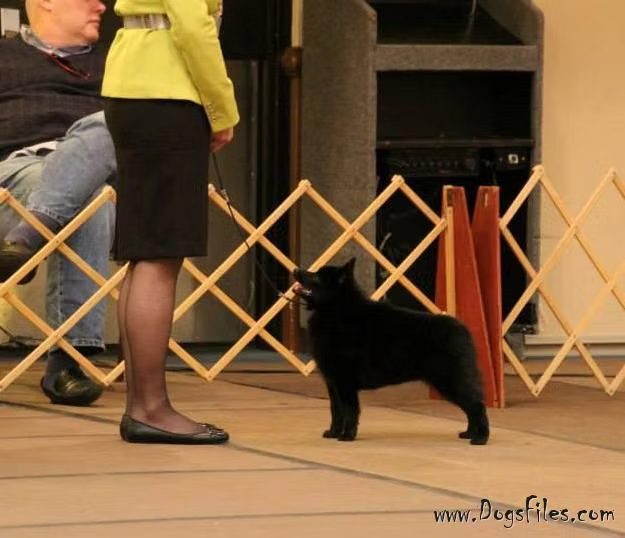


About the Schipperke
The Schipperke is a small Belgian dog with a fox-like face, a thick black coat, and a watchful, high-energy temperament that suits active homes.
The Schipperke is a small dog from Belgium, where it worked as a watchdog and rat catcher on barges and in workshops. Adults usually weigh between 3 and 7 kilograms and stand roughly 25 to 33 centimeters at the shoulder. The breed is known for a pointed, fox-like head, a dense black coat, and a confident, busy manner.
Despite its size, the Schipperke behaves like a much larger dog. It is curious, alert, and quick to sound an alarm at anything new. Owners often describe it as a small package with a big personality. The breed forms close bonds with its family and tends to stay involved in whatever the household is doing.
This is an active dog that needs daily exercise and something to occupy its mind. It can adapt to apartments or houses, provided it gets enough stimulation. Left bored, a Schipperke will find its own entertainment, which is not always welcome.
| Attribute | Detail |
|---|---|
| Origin | Belgium |
| Size | Small (3 to 7 kg) |
| Lifespan | 13 to 15 years |
| Group/role | Companion and watchdog (historically a barge and shop guard) |
| Good with | Families and older children; active households |
Who it suits
The Schipperke fits owners who want an alert, lively companion and can meet its need for activity. It rewards people who enjoy training and games. Households that want a quiet, low-effort dog may find its energy and alarm-barking demanding.
History and origin
The Schipperke developed in Belgium as a small black working dog used as a watchdog and ratter, gaining a formal name and standard in the late 1800s.
The Schipperke comes from the Flemish region of Belgium. It is generally regarded as a descendant of a larger black Belgian sheepdog type, with the smaller dogs selected over time for work in tighter spaces.
For much of its early history the breed was a working animal for tradespeople. Schipperkes guarded workshops, homes, and canal barges and kept rodents under control. The connection to barge life is reflected in the name, which is often translated as a reference to a small boat or boatman, though the exact origin of the word has been debated.
The breed gained wider attention in Belgium during the nineteenth century. A breed club was formed in Belgium in 1888, and a written standard followed, which helped fix the type that is recognized today.
From Belgium the Schipperke spread to other countries, including Britain and the United States, where it was taken up as a companion and small watchdog. It remains a relatively uncommon breed kept mainly by enthusiasts.
Appearance
The Schipperke is a small, thickset black dog with a fox-like head, pricked ears, and a dense double coat that forms a distinct ruff around the neck.
The Schipperke has a compact, square outline with a deep chest and a level back. The head is fox-like, with a tapering muzzle, small erect triangular ears, and dark oval eyes that give an alert expression. The overall impression is of a busy, agile little dog.
| Trait | Typical range |
|---|---|
| Height | 25 to 33 cm at the shoulder |
| Weight | 3 to 7 kg |
| Coat | Dense double coat; short on the face and front of the legs, longer around the neck, chest, and rear |
| Colors | Solid black is the traditional and most common color |
| Eyes | Small, oval, dark brown |
Coat and colors
The coat stands off the body and forms several distinct areas of longer hair: a ruff around the neck, a cape over the shoulders, and longer feathering at the rear that is often called the culottes. Solid black is the classic color and the one most associated with the breed. Some registries and regions accept other solid colors, but black remains the standard expectation. The double coat sheds steadily and goes through heavier seasonal sheds.
Temperament
The Schipperke is confident, curious, and alert, devoted to its family but wary of strangers and quick to bark, which makes it an effective small watchdog.
The Schipperke is bold and self-assured for its size. It is deeply attached to its family and likes to be in the middle of household activity. With people it knows well it is affectionate and playful.
With strangers the breed tends to be reserved and watchful. It notices changes in its environment quickly and will bark to announce visitors or unusual sounds, a trait that traces back to its work as a watchdog. Early and ongoing socialization helps keep this wariness from tipping into excessive suspicion.
Around other pets the Schipperke can do well, especially when raised with them, though its strong prey drive means small animals such as rodents may be chased. It is generally good with respectful older children. Its energy and quick reactions mean interactions with very young children should be supervised.
| Trait | Rating |
|---|---|
| Affection | 4 |
| Energy | 5 |
| Trainability | 4 |
| Vocalness | 5 |
| Shedding | 3 |
Care and grooming
The Schipperke needs regular brushing for its double coat, daily exercise and mental work, and a secure environment that contains its curiosity.
Grooming
- Brush the double coat once or twice a week to remove loose hair and prevent matting in the ruff and rear feathering.
- Increase brushing to several times a week during seasonal sheds, when the undercoat blows.
- Bathe only when needed; the coat sheds dirt fairly easily.
- Trim nails every few weeks and check ears for wax or debris.
- Brush teeth regularly to support dental health.
Exercise
- Provide at least 45 to 60 minutes of activity per day across walks and play.
- Add mental work such as training games, scent games, or puzzle toys.
- Use a securely fenced area for off-lead play, since the breed is agile and inclined to explore.
- Consider dog sports such as agility or obedience, which suit the breed's drive.
Environment
The Schipperke adapts to apartments or houses as long as its exercise needs are met. It does best with a secure yard or a reliable routine of walks. Because it is curious and can be a climber and escape artist, fencing and gates should be checked for gaps.
Nutrition and feeding
The Schipperke does well on a complete diet sized to its small frame and high activity, fed in measured meals to prevent weight gain.
The Schipperke needs a complete and balanced diet suited to its life stage. Because it is small and active, portion control matters: it is easy to overfeed a dog this size, and extra weight stresses the joints and back. Choose a food formulated for small breeds or one with appropriately sized kibble, and adjust amounts to keep the dog lean.
| Life stage | Amount per day | Meals |
|---|---|---|
| Puppy (2 to 6 months) | Per product guide for weight, split small | 3 to 4 |
| Puppy (6 to 12 months) | Per product guide for weight | 2 to 3 |
| Adult | Roughly 70 to 150 g of dry food by weight and activity | 2 |
| Senior | Adult amount, reduced if less active | 2 |
Treats and supplements
Keep treats to a small share of daily calories and account for them when measuring meals. Most Schipperkes on a complete diet need no supplements. Discuss any joint, skin, or other supplement with a veterinarian before adding it, and provide fresh water at all times.
Health and lifespan
The Schipperke is generally hardy with a lifespan of 13 to 15 years, though it has a few known inherited conditions worth screening for.
The Schipperke is a generally healthy, long-lived breed, with a typical lifespan of 13 to 15 years. Responsible breeding and routine veterinary care support this longevity. As with any breed, a few inherited and age-related conditions appear more often and are worth knowing about.
| Condition | Signs | Note |
|---|---|---|
| MPS IIIB (a storage disease) | Progressive loss of coordination and balance in adulthood | A genetic test is available; reputable breeders screen for it |
| Luxating patella | Skipping gait, intermittent hind-leg lameness | Ranges from mild to surgical |
| Hip dysplasia | Stiffness, reduced activity, lameness | Screened by hip evaluation |
| Eye disorders | Cloudiness or changes in vision | Routine eye checks help with early detection |
| Hypothyroidism | Weight gain, low energy, coat changes | Managed with daily medication |
Preventive care
- Keep core vaccinations and parasite prevention up to date.
- Schedule annual checkups, with more frequent visits for senior dogs.
- Maintain a lean body condition to protect joints and the back.
- Keep up dental care to prevent periodontal disease.
- Choose puppies from breeders who test for known inherited conditions.
Training
The Schipperke is intelligent and quick to learn, but its independence and energy call for consistent, reward-based training and early socialization.
The Schipperke is bright and learns quickly, which makes training rewarding when it is consistent. The same intelligence comes with an independent streak, so the dog will test boundaries and lose interest in repetitive drills. Short, varied, motivating sessions work best. Early socialization is important to temper the breed's natural wariness of strangers and to manage its alarm-barking before it becomes a habit.
Basics
- Start socialization early, exposing the puppy to people, places, and other animals.
- Teach a reliable recall, since the breed is curious and prone to wander.
- Establish house manners and crate or boundary training from the start.
- Introduce a quiet or settle cue to manage barking.
- Build duration and distraction gradually, keeping sessions short and upbeat.
Breeding
Schipperkes typically have small to medium litters, and responsible breeding depends on health screening of both parents for known inherited conditions.
Schipperkes reach physical maturity in the first year, though breeders generally wait until a dog is fully mature and health-tested before breeding. Bitches are bred on a sound, well-spaced schedule with attention to their condition and age. Gestation in dogs runs about 63 days on average.
Litters are commonly small to medium in size. The dam usually manages whelping and early care, but a quiet, warm whelping area and attentive monitoring help, particularly in a small breed where puppies are tiny at birth. Puppies are weaned over several weeks and benefit from early, gentle handling and socialization to support the breed's temperament.
Responsible breeding centers on health. Both parents should be screened for conditions known in the breed, including the genetic test for MPS IIIB, along with patella, hip, and eye evaluations. Matching dogs for temperament and structure helps maintain the breed's working character.
| Metric | Value |
|---|---|
| Sexual maturity | Around 6 to 12 months (breeding deferred to full maturity) |
| Gestation | About 63 days |
| Litter size | Small to medium, commonly a few puppies |
| Weaning | About 6 to 8 weeks |
| Key health tests | MPS IIIB genetic test, patella, hip, and eye evaluations |
Registering your Schipperke and its microchip
Register your Schipperke free for life with United Pet Club, and put its microchip number on a record American shelters can actually find.
How to register a Schipperke in the United States
Shelters across the US scan every dog that comes through the door, and what happens next depends on paperwork. A scan that ends at a current record gets your Schipperke home; a scan that ends nowhere starts a holding period. Register your dog with United Pet Club and that record exists, free, for the rest of your dog's life.
Chipped already? The implant is half the job. Until the 15-digit number sits in a registry with your name beside it, a scanner reads digits that lead nowhere. Microchip registration is free for life at United Pet Club, takes any manufacturer's chip, and keeps the record searchable through the AAHA lookup shelters rely on. Sign up free, and both records are done tonight.
How do I register my Schipperke in the United States?
Open a free United Pet Club account, enter your Schipperke's name, birth date, and a photo, and save. The profile is free for life, works with or without a microchip, and you can attach a chip number later.
How do I register my Schipperke's microchip?
Type the 15-digit chip number into your free United Pet Club account together with your current phone number and address. The lifetime plan is free, covers every future update, and accepts any chip brand a US vet implants.
Does my Schipperke have to be microchipped in the United States?
No federal law says a Schipperke must carry a chip, but plenty of city and county licensing rules do, and shelters routinely chip before adoption. What the law never does is register the chip for you; that part is yours.
How much does it cost to register a Schipperke?
Nothing. United Pet Club's lifetime plan covers the dog's profile, the microchip registration, and every update at no charge, with no renewal fees.
Frequently asked questions
Common questions about the Schipperke's size, temperament, care needs, lifespan, suitability, and availability.
How big does a Schipperke get?
It is a small breed, usually 3 to 7 kilograms and about 25 to 33 centimeters at the shoulder, though it carries itself like a larger dog.
What is the Schipperke's temperament like?
Confident, curious, and alert. It is affectionate with its family, reserved with strangers, and quick to bark, which makes it a capable little watchdog.
Is the Schipperke hard to care for?
Care is moderate. The double coat needs weekly brushing with heavier shedding seasons, and the dog needs daily exercise and mental stimulation to stay content.
How long do Schipperkes live?
Typically 13 to 15 years, which is long-lived for a dog and reflects the breed's general hardiness.
Is the Schipperke a good family dog?
Yes, for active households. It bonds closely with its family and does well with respectful older children, though its energy and prey drive mean supervision around very young children and small pets.
Are Schipperkes easy to find?
They are relatively uncommon and kept mainly by enthusiasts, so finding a puppy from a health-testing breeder may involve a waiting list.
Do Schipperkes bark a lot?
They are vocal by nature and bark to alert. Early training and a quiet cue help keep barking manageable.
From the community
Ask about the SchipperkeNo questions about the Schipperke yet. Be the first to ask.
Browse Dog breeds