
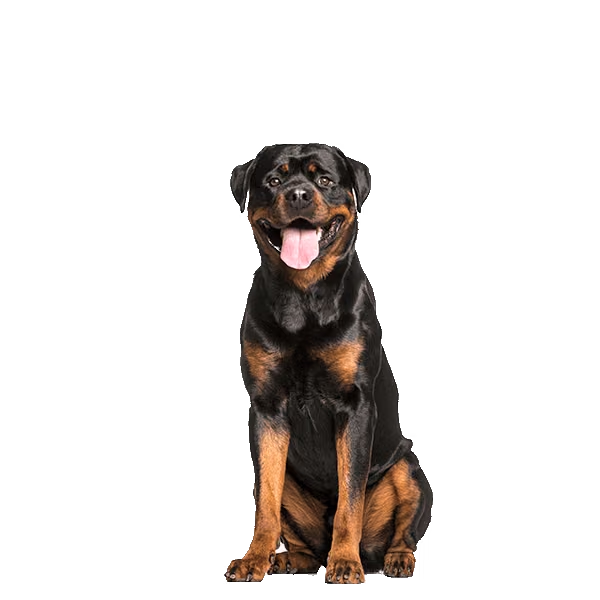
Rottweiler
Also known as Rott and Rottie
The Rottweiler is a confident, loyal guardian known for its intelligence, protective devotion, and calm self-assurance.
- Size
- Large
- Lifespan
- 9–10 years
- Origin
- Germany
- Temperament
- Confident
- Standard colors
- Black and Tan
- Popularity
- No. 8 of 201
Characteristics
Coat and grooming
How the Rottweiler coat is built, and what that means when you groom it.
- Coat layers
- Double coat
- Coat texture
- Smooth
- Coat length
- Short
- Shedding
- Seasonal shedding
Grooming guidance
Critical: A Rottweiler should not be shaved.
The undercoat keeps heat out as well as in, and the outer coat shields the skin from sun and insect bites. Clipping the whole coat off removes both. It often grows back patchy, soft or a different colour, and in some animals the guard hairs never return properly. Brush the undercoat out instead of cutting it off.
Information: A Rottweiler drops its undercoat in heavy bursts.
The undercoat comes out in heavy bursts over a few weeks. An undercoat rake, or a bath followed by a proper blow-dry, clears it far faster than daily brushing. Clipping the coat down is not a shortcut for this.
Registry Recognition
Fédération Cynologique Internationale
- Pinscher and Schnauzer / Molossoid / Swiss Mountain
American Kennel Club
- Working Group
Canadian Kennel Club
- Working Group
United Pet Club
- Pinscher and Schnauzer / Molossoid / Swiss MountainPrimary
- Working Group
- Guard Dogs
Rottweiler colors and patterns
What each club's breed standard says about every Rottweiler color and pattern. Point at a ruling to see the club's own wording.
Breed standards describe the Rottweiler in Black and Tan. Standard patterns: Tan point.
| Color or pattern | FCI | AKC | UKC | KC | KUSA |
|---|---|---|---|---|---|
| Black | Standard (“Black”) | Standard (“Black & Tan”) | Standard (“black”) | Standard (“Black”) | Standard (“Black”) |
| Tan | Standard (“markings of a rich tan”) | Standard (“Black & Tan”) | Standard (“rich tan markings”) | Standard (“Colour of markings from rich tan to mahogany”) | Standard (“markings of a rich tan”) |
| White | Disqualifying (“White markings”) | Fault (“white marking any place on dog”) | Disqualifying (“White markings anywhere on the dog”) | Fault (“White marking is highly undesirable”) | Disqualifying (“White markings”) |
| Albino | Disqualifying | Disqualifying | Disqualifying (“Albinism”) | Not recognized | Disqualifying |
| Blue | Disqualifying | Disqualifying | No ruling | Not recognized | Disqualifying |
| Red | Disqualifying | Disqualifying | No ruling | Not recognized | Disqualifying |
| Patterns | |||||
| Tan point | Standard (“Black with clearly defined markings of a rich tan”) | Standard (“Black & Tan”) | Standard (“black with clearly-defined rich tan markings”) | Standard (“Black & Tan”) | Standard (“Black with clearly defined markings of a rich tan”) |
| Sable | Disqualifying | Fault (“sooty markings”) | Disqualifying | Not recognized | Disqualifying |
| Solid | Disqualifying | Disqualifying (“absence of all markings”) | Disqualifying | Not recognized | Disqualifying |
%22%3E%3Ccircle%20cx%3D%2212%22%20cy%3D%2217.2%22%20r%3D%221.25%22%20fill%3D%22%23C4996A%22%2F%3E%3Cpath%20d%3D%22M1.5%2021.2L9%2018.6L12.6%2021L12.2%2026.2L3.5%2024.4Z%22%20fill%3D%22%23C4996A%22%2F%3E%3Cpath%20d%3D%22M10%2026L14.5%2026.4L18.2%2029.2L13.5%2029.8Z%22%20fill%3D%22%23C4996A%22%2F%3E%3Cellipse%20cx%3D%2221.2%22%20cy%3D%2230.6%22%20rx%3D%221.6%22%20ry%3D%222.3%22%20fill%3D%22%23C4996A%22%2F%3E%3Crect%20x%3D%220%22%20y%3D%2247%22%20width%3D%2264%22%20height%3D%2217%22%20fill%3D%22%23C4996A%22%2F%3E%3Cpath%20d%3D%22M51.5%2024.5L55%2027L54.2%2032L50.5%2028.5Z%22%20fill%3D%22%23C4996A%22%2F%3E%3Cpath%20d%3D%22M45%2038.5L48%2039L48.5%2047L45.5%2047Z%22%20fill%3D%22%23C4996A%22%2F%3E%3C%2Fg%3E%3Cuse%20href%3D%22%23s%22%20fill%3D%22none%22%20stroke%3D%22%233B2A20%22%20stroke-opacity%3D%220.6%22%20stroke-width%3D%221%22%20stroke-linejoin%3D%22round%22%2F%3E%3Cellipse%20cx%3D%223.2%22%20cy%3D%2221.7%22%20rx%3D%221.3%22%20ry%3D%221.2%22%20fill%3D%22%231C1C1C%22%2F%3E%3Ccircle%20cx%3D%2210.8%22%20cy%3D%2219.3%22%20r%3D%221.1%22%20fill%3D%22%231C1C1C%22%2F%3E%3C%2Fsvg%3E)
%22%3E%3Crect%20x%3D%220%22%20y%3D%220%22%20width%3D%2264%22%20height%3D%2264%22%20fill%3D%22url(%23g)%22%2F%3E%3Cg%20fill%3D%22none%22%20stroke%3D%22%231C1C1C%22%20stroke-width%3D%221%22%20stroke-linecap%3D%22round%22%20stroke-linejoin%3D%22round%22%3E%3Cpath%20d%3D%22M15.7%2014.8l1.9%203.6M26.4%2024.1l1.2%204.1M42.7%2029.5l0.1%203.3M35.9%2025l1.6%203.2M31.3%2028.1l0.7%203.7M15.5%2011.1l1.6%203.6M41.1%2023.8l0.6%203.2M12.1%2020.7l1.2%203M15.4%2011.2l0.8%203.8M42.9%2027.3l0.7%202.9M48.2%2033.2l0.5%204.1M23.1%2024.7l1.4%203.4M51.9%2036.1l0.3%204.3M18.7%2023.9l1.2%203.7M50.4%2027.4l0.5%204.1M18.4%2020.4l0.1%203.1M55.6%2021.4l1.1%203.9M18.6%2024.9l1.7%203.8M8.3%2023.2l1.7%202.9M18.7%2024.2l0.2%203.1M46.4%2022.7l0.6%202.6M14.3%207l0.9%203.5M50.5%2024.9l0.5%203.7M23.2%2024.7l1.2%204.3M10.5%2022.3l1.6%203.4M56.9%2018.2l1.1%202.5M20.8%2021.7l1.1%203.5M10.9%2020.2l0.2%203.9M6.6%2023.3l1%202.4M54.5%2021.7l0.9%203.8M13.3%2021l0.4%203M11.7%2019.5l0.3%204M39%2023.2l0.7%202.5M20.8%2016.7l0%202.6M18.4%2016l0.2%202.6M46.4%2038.2l1.4%203.2M12.9%2022.6l0.6%203.3M13%2020.9l0.3%204.3M35.3%2024.9l1.3%202.3M29.5%2022.1l0.5%202.8M36.6%2023.4l0.2%204.3M20.5%2017.6l0.7%204.1M18.3%2020.6l0.6%203M20.5%2025.8l0.5%203.8M23.5%2040.2l1.1%202.9M22.8%2024.9l1.5%203M25.5%2023.1l0.5%203.3M47.7%2024.7l1.5%203.7M12.9%2018.4l1.9%203.8M29.5%2023.7l0.5%204.1M37.7%2026.5l0%202.9M16.8%2016.4l0.1%203.3M49.8%2028l1.7%203.8M29.4%2025.5l0.5%203.6M9.3%2023l1.3%203.1M47.4%2025.6l0.5%203.5M48.1%2023.8l1.6%203.2M9.9%2018.3l1.3%202.5M12.2%2016.6l0.4%203.2M22%2022.1l1.4%202.7M43.9%2024.7l1.4%203.9M14.3%2020l1.8%203.2M46.3%2040.1l0.3%203.6M14.9%207l0.3%204M17.5%2016.7l1.2%202.4M54.6%2040l1%203.5M13.3%2013.9l1.6%204.2M15.3%2016.5l1.2%202.9M23.8%2038.5l0.2%203.8M18.2%2019l0.6%203M11.2%2023.6l0.7%204.1M33.1%2023.2l0.9%204.3M13.6%2019.9l0.4%204.5M19.7%2023.1l1.9%203.7M50.5%2027.1l0.3%204.1M28.2%2028.5l0.2%203.8M29%2028.4l0.1%204M47.7%2024.5l0.6%202.5M10.7%2017.2l1.4%202.7M25.5%2040.3l0.6%204.1M37.6%2022.8l0.7%204.4M57%2018.6l0.2%203.4M16.9%2022.2l1.7%203.8M43.5%2024.7l1.8%203.4M49.2%2026l1.5%203.6M47.7%2032.3l0.4%203.7M35.4%2030.8l0.5%202.7M47%2026.1l1%203.9M24.3%2028.1l1.5%204.2M50.5%2023.8l1.3%203.4M58.1%2014.1l0.3%202.6M13.9%2018.2l0.7%202.5M8.2%2021l0.7%202.9M41.4%2026.4l0.4%202.7M16.3%2020.4l0.5%204.3M43.4%2025.9l1.2%203.2M32.3%2022.4l0.3%203.9M43.6%2025.9l2.1%203.8M33.5%2026.3l1.5%203M48.3%2030.6l1.4%203.4M44.2%2024.7l0.9%203.2M12.3%2017.7l0.9%203.7M46.2%2032l1.9%203.4M51%2028.3l0.1%203.7M30.4%2023.1l1.1%203.2M52.6%2022.6l0.9%204.3M16.6%2015.4l0.9%203.1M58.4%2012.8l0.3%202.8M42.8%2032.5l1.8%203.2%22%2F%3E%3Cpath%20d%3D%22M16.4%2026.1l0.1%204.3M14%2017.1l1.3%202.8M36.9%2027.2l1.3%202.6M38.6%2025.8l0.4%203.6M57.6%2014.3l0.3%203.9M14.7%208.2l1%204.3M53.4%2023l1.9%203.4M51.5%2030.3l0.8%202.7M56.2%2020l1.9%203.5M15.9%2010l0.2%202.8M15.8%2022.6l1.8%203.9%22%2F%3E%3C%2Fg%3E%3C%2Fg%3E%3Cuse%20href%3D%22%23s%22%20fill%3D%22none%22%20stroke%3D%22%233B2A20%22%20stroke-opacity%3D%220.6%22%20stroke-width%3D%221%22%20stroke-linejoin%3D%22round%22%2F%3E%3Cellipse%20cx%3D%223.2%22%20cy%3D%2221.7%22%20rx%3D%221.3%22%20ry%3D%221.2%22%20fill%3D%22%231C1C1C%22%2F%3E%3Ccircle%20cx%3D%2210.8%22%20cy%3D%2219.3%22%20r%3D%221.1%22%20fill%3D%22%231C1C1C%22%2F%3E%3C%2Fsvg%3E)

| Color or pattern | FCI | AKC | UKC | KC | KUSA |
|---|---|---|---|---|---|
| Dark brown | Standard (“dark brown in colour”) | Standard (“The desired color is a uniform dark brown”) | Standard (“dark brown in color”) | Standard (“dark brown in colour”) | Standard (“dark brown in colour”) |
| Light brown | No ruling | No ruling | No ruling | Fault (“light eye undesirable”) | No ruling |
| Yellow | Disqualifying (“yellow eyes”) | Fault (“Yellow (bird of prey) eyes”) | Fault (“Yellow eyes”) | No ruling | Disqualifying (“yellow eyes”) |
| Patterns | |||||
| Odd-eyed | Disqualifying (“different coloured eyes”) | Fault (“eyes of different color or size”) | Fault (“Eyes of different color or size”) | No ruling | Disqualifying (“different-coloured eyes”) |
%22%3E%3Ccircle%20cx%3D%2216%22%20cy%3D%2232%22%20r%3D%228%22%20fill%3D%22%23D9C3A0%22%2F%3E%3Ccircle%20cx%3D%2216%22%20cy%3D%2232%22%20r%3D%223.4%22%20fill%3D%22%231C1C1C%22%2F%3E%3Ccircle%20cx%3D%2213.6%22%20cy%3D%2229.6%22%20r%3D%221.3%22%20fill%3D%22%23F5F5F0%22%2F%3E%3C%2Fg%3E%3Cpath%20d%3D%22M3%2032Q16%2017%2029%2032Q16%2047%203%2032Z%22%20fill%3D%22none%22%20stroke%3D%22%233B2A20%22%20stroke-opacity%3D%220.75%22%20stroke-width%3D%221.4%22%20stroke-linejoin%3D%22round%22%2F%3E%3Cpath%20d%3D%22M35%2032Q48%2017%2061%2032Q48%2047%2035%2032Z%22%20fill%3D%22%23F5F5F0%22%2F%3E%3Cg%20clip-path%3D%22url(%23e1)%22%3E%3Ccircle%20cx%3D%2248%22%20cy%3D%2232%22%20r%3D%228%22%20fill%3D%22%23847865%22%2F%3E%3Ccircle%20cx%3D%2248%22%20cy%3D%2232%22%20r%3D%223.4%22%20fill%3D%22%231C1C1C%22%2F%3E%3Ccircle%20cx%3D%2245.6%22%20cy%3D%2229.6%22%20r%3D%221.3%22%20fill%3D%22%23F5F5F0%22%2F%3E%3C%2Fg%3E%3Cpath%20d%3D%22M35%2032Q48%2017%2061%2032Q48%2047%2035%2032Z%22%20fill%3D%22none%22%20stroke%3D%22%233B2A20%22%20stroke-opacity%3D%220.75%22%20stroke-width%3D%221.4%22%20stroke-linejoin%3D%22round%22%2F%3E%3C%2Fsvg%3E)
| Color or pattern | FCI | AKC | UKC | KC | KUSA |
|---|---|---|---|---|---|
| Black | Standard (“always black”) | Standard (“always black”) | Standard (“The nose is broad and black in color”) | Standard (“always black”) | Standard (“always black”) |
| Pink | Fault (“pale or spotted nose”) | No ruling | No ruling | No ruling | Fault (“pale or spotted nose”) |
| Patterns | |||||
| Butterfly nose | Fault (“spotted nose (butterfly nose)”) | No ruling | No ruling | No ruling | Fault (“spotted nose (butterfly nose)”) |
%22%3E%3Cpath%20d%3D%22M28.4%2019.1C29.9%2017.7%2032.2%2016.4%2034%2016C35.8%2015.6%2037.4%2016%2039.2%2016.6C41.1%2017.2%2044.4%2018.5%2045.1%2019.5C45.8%2020.6%2044.3%2021.9%2043.3%2023.1C42.2%2024.3%2040.9%2025.9%2039%2026.6C37.1%2027.2%2034.3%2027.3%2032%2026.9C29.6%2026.4%2025.6%2025.3%2025%2024C24.4%2022.7%2026.9%2020.4%2028.4%2019.1Z%22%20fill%3D%22%23E8A0B4%22%2F%3E%3Cpath%20d%3D%22M23.8%2037.7C24.6%2037.5%2026.2%2037.9%2027.4%2038.1C28.5%2038.2%2030.2%2037.9%2030.8%2038.4C31.4%2039%2031.2%2040.7%2030.9%2041.5C30.7%2042.3%2029.9%2042.9%2029.1%2043.3C28.4%2043.8%2027.4%2044.6%2026.4%2044.4C25.4%2044.2%2023.8%2042.9%2023.1%2042.1C22.4%2041.3%2022.2%2040.2%2022.3%2039.5C22.4%2038.8%2022.9%2038%2023.8%2037.7Z%22%20fill%3D%22%23E8A0B4%22%2F%3E%3Cpath%20d%3D%22M10.5%2027.2C10.4%2026.7%2010.4%2025.4%2011%2025C11.5%2024.6%2013%2024.6%2013.9%2024.6C14.8%2024.6%2015.6%2024.5%2016.1%2024.9C16.6%2025.3%2017%2026.2%2017%2026.9C17.1%2027.7%2016.8%2028.8%2016.4%2029.4C15.9%2029.9%2014.9%2030.4%2014.2%2030.3C13.4%2030.1%2012.3%2028.8%2011.7%2028.3C11.1%2027.8%2010.6%2027.8%2010.5%2027.2Z%22%20fill%3D%22%23E8A0B4%22%2F%3E%3C%2Fg%3E%3Cuse%20href%3D%22%23s%22%20fill%3D%22none%22%20stroke%3D%22%233B2A20%22%20stroke-opacity%3D%220.6%22%20stroke-width%3D%221%22%20stroke-linejoin%3D%22round%22%2F%3E%3Cpath%20d%3D%22M12.5%2037Q13%2032%2018.5%2032Q23.5%2032.5%2023.5%2036.5Q20.5%2035.5%2018.8%2037Q17.4%2038.6%2018%2041.5Q13.6%2040.4%2012.5%2037Z%22%20fill%3D%22%231C1C1C%22%20fill-opacity%3D%220.8%22%20stroke%3D%22%23F5F5F0%22%20stroke-opacity%3D%220.4%22%20stroke-width%3D%220.9%22%2F%3E%3Cpath%20d%3D%22M51.5%2037Q51%2032%2045.5%2032Q40.5%2032.5%2040.5%2036.5Q43.5%2035.5%2045.2%2037Q46.6%2038.6%2046%2041.5Q50.4%2040.4%2051.5%2037Z%22%20fill%3D%22%231C1C1C%22%20fill-opacity%3D%220.8%22%20stroke%3D%22%23F5F5F0%22%20stroke-opacity%3D%220.4%22%20stroke-width%3D%220.9%22%2F%3E%3Cpath%20d%3D%22M32%2040V50%22%20fill%3D%22none%22%20stroke%3D%22%231C1C1C%22%20stroke-width%3D%221.3%22%20stroke-opacity%3D%220.5%22%20stroke-linecap%3D%22round%22%20stroke-linejoin%3D%22round%22%2F%3E%3Cellipse%20cx%3D%2232%22%20cy%3D%2221%22%20rx%3D%2212%22%20ry%3D%223.5%22%20fill%3D%22%23F5F5F0%22%20fill-opacity%3D%220.18%22%2F%3E%3C%2Fsvg%3E)
What the rulings mean
- Standard
- Described by the club's breed standard.
- Fault
- Named by the club's breed standard as a fault: the animal can be shown but is penalized.
- Disqualifying
- The club's breed standard disqualifies an animal of this color or pattern.
- Not recognized
- The club does not accept this color or pattern for the breed.
Color changes
How a Rottweiler's colors can change over its life.
Blackchanges toRust
Coat · With body condition · can change back
Blackchanges toGray
Coat · Progressive
Blackchanges toBrown
Coat · In the sun · can change back
Whitechanges toRoan
Coat · With age · from 2 weeks
Tan pointchanges toSaddle
Coat · With age · from 6 to 156 weeks
Blackchanges toSnow nose
Nose · With the season · can change back
Blackchanges toPink
Nose · With the season · can change back
%22%3E%3Cg%20fill%3D%22none%22%20stroke%3D%22%23F5F5F0%22%20stroke-width%3D%221.15%22%20stroke-linecap%3D%22round%22%20stroke-linejoin%3D%22round%22%3E%3Cpath%20d%3D%22M28.6%2025h.1M51.3%2028.8h.1M34.7%2024.3h.1M34.2%2041.6h.1M51%2044.2h.1M55.9%2024.7h.1M27.5%2026.3h.1M18.5%2028.6h.1M25.2%2028.9h.1M24.2%2019.3h.1M20.6%2017.6h.1M34.1%2030.6h.1M57.3%2023.3h.1M23.5%2030.7h.1M26.5%2023.1h.1M40%2031.5h.1M51.7%2038.6h.1M20.2%2022.1h.1M40.4%2037.8h.1M35%2043.1h.1M20.6%2031.7h.1M27.8%2031.9h.1M17.2%2021.1h.1M38.1%2037.7h.1M25.3%2040.5h.1M32%2029.3h.1M41.6%2039.5h.1M23.6%2024h.1M26.4%2018.6h.1M30.3%2031.9h.1M31.2%2035.2h.1M36.5%2043.7h.1M35.2%2026.3h.1M55.6%2019.1h.1M22.4%2036.8h.1M39.2%2020h.1M49.5%2039.1h.1M33.6%2033.5h.1M36.4%2032.4h.1M56.3%2042.4h.1M54.8%2031.2h.1M36.9%2023.2h.1M52.7%2019.1h.1M21.5%2033.8h.1M48.6%2028h.1M36.6%2017.5h.1M45.6%2031.3h.1M37.9%2030.5h.1M17%2031.8h.1M21.1%2043.1h.1M55.7%2021.1h.1M30.8%2041.9h.1M57.4%2038.4h.1M54.8%2026.9h.1M29.1%2017.5h.1M24.3%2037.7h.1M26%2032h.1M39.3%2022.8h.1M53.5%2029h.1M53.3%2023.3h.1M20%2038.4h.1M28.3%2044.7h.1M28.6%2039.8h.1M51.9%2041.1h.1M52.3%2033.7h.1M19.6%2042.2h.1M19%2033h.1M47.8%2021.7h.1M45.7%2024.8h.1M24.6%2035.5h.1M29.8%2036.8h.1M50.7%2032h.1M29.5%2043.5h.1M28.2%2041.5h.1M47.4%2034.8h.1M25.4%2033.7h.1M50.2%2041.2h.1M27.7%2029.5h.1M21.5%2024.8h.1M55.5%2017.5h.1M41.2%2044.3h.1M39.2%2018.4h.1M41.1%2042.5h.1M54.7%2035.3h.1M42.8%2034.5h.1M30.1%2023h.1M42.6%2025.1h.1M32.9%2024.4h.1M42.4%2032.4h.1M49.7%2022.2h.1M49.1%2043.1h.1M38%2035.2h.1M47.7%2043.8h.1M43.1%2022.4h.1M22.4%2040.4h.1M44.4%2019.8h.1M53.3%2040.1h.1M20.7%2029.3h.1M55.6%2043.9h.1M17.6%2039.2h.1M41.7%2028.9h.1M44.1%2036.3h.1M24.3%2043.6h.1M26.4%2038.1h.1M30.3%2029.2h.1M31.5%2030.8h.1M32.1%2023h.1M18.3%2040.9h.1M48%2033.4h.1M36.4%2038.7h.1M31.9%2020.8h.1M32.6%2026.2h.1M22%2031.2h.1M53.4%2021.7h.1M41.9%2017.7h.1M53.3%2037.3h.1M47.7%2040.3h.1M54.4%2033.7h.1M33.6%2037.5h.1M25.3%2017.2h.1M37.6%2019.7h.1M31.6%2019h.1M29.2%2019.6h.1M50.7%2027.3h.1M22%2022.1h.1M31%2037.8h.1M56.5%2026.6h.1M34.7%2039.5h.1M56.5%2040.8h.1M47.6%2038h.1M48.6%2026.1h.1M49.7%2034.2h.1M45.4%2027.4h.1M22.6%2038.9h.1M56.5%2035.3h.1M35.1%2021h.1M41.9%2020.1h.1M37.6%2040h.1M32.6%2044.4h.1M37.9%2025.2h.1M26.6%2043h.1M18.9%2036.7h.1M47.2%2028.9h.1M30.5%2026.2h.1M17.4%2027.3h.1M47.1%2017.2h.1M22.3%2044.3h.1M32.5%2042.4h.1M23.6%2025.7h.1M31.4%2024.9h.1%22%2F%3E%3Cpath%20d%3D%22M26%2020.9h.1M41.2%2023.8h.1M39.9%2026.4h.1M28.5%2033.4h.1M42.8%2043.8h.1M17.6%2034.3h.1M34%2017.1h.1M31.2%2017.2h.1M46.5%2036.1h.1M25.1%2022.1h.1M50.3%2023.7h.1M20.2%2026.6h.1M20.8%2020.4h.1M50.9%2017.3h.1M49.5%2020.2h.1M52.9%2044.1h.1M23.9%2017.8h.1M43.2%2028.1h.1M57.6%2030h.1M52%2025.6h.1M19.2%2019.1h.1M19.5%2024.4h.1M32.8%2040.1h.1M36.1%2027.7h.1M39.6%2029.5h.1M38.4%2041.5h.1M47.9%2019.4h.1M49.1%2031.7h.1M55.9%2036.9h.1M29.2%2027.2h.1M46%2043.5h.1M44.6%2028.8h.1M47.5%2031.5h.1M22.8%2020h.1M27.6%2017.1h.1M43.1%2018.6h.1M54.3%2020h.1M57.2%2033.8h.1M44.5%2043.8h.1M27.1%2035.5h.1M45.3%2041.8h.1M56.7%2028.8h.1M36.7%2021.4h.1M43.3%2042.3h.1M17.3%2022.9h.1M32.7%2035.5h.1M30.5%2039.8h.1M29.1%2021.2h.1M34.5%2018.8h.1M25.8%2027h.1%22%2F%3E%3C%2Fg%3E%3Cpath%20d%3D%22M56.3%2038.4l0%201.2M40%2027.2l-0.3%201.3M32.6%2043.6l-0.4%201.5M29%2023.3l0.8%201.5M55.1%2044l0.4%201.1M47.5%2022.5l-0.2%201.6M42.9%2038.6l0.7%201.2M35.2%2041.8l-0.5%201.7M26.9%2040l-0.1%201.2M41%2042.8l-0.1%201.6M18.4%2021.2l0.7%201.3M49.4%2019.3l-0.5%201.4M50.1%2041.7l0%201.8M28.2%2041.8l-0.6%201.2M55.5%2027.1l0.2%201.2M44.7%2019.3l0.5%201.7M48.6%2020.5l-0.8%201.4M43.7%2039.6l0.3%201.1M22.1%2033.8l-0.6%201.6M50.1%2038.1l-0.5%201.3M51.8%2044.1l-0.1%201.8M39%2017.5l0%201.4M30.2%2026.7l0.2%201.4M25.8%2031.2l0.2%201.6M29.6%2043.5l0.1%201M43.7%2018.3l0.1%201.5M29.6%2018.2l0.3%201.6M24.4%2017.6l0.3%201.1M22%2028.2l-0.6%201.6M25.9%2043.3l-0.3%201.4M22.2%2024.3l0.3%201.3M47.3%2029.2l-0.2%201.4M21.8%2033.2l0.5%200.9M32.9%2037l0.4%201M40%2029.9l0.8%201.4M17.4%2038.3l0.2%201.3M31%2039.2l0%201.2M37.3%2033.7l0.3%201.5M48.1%2040.5l0%201.6M33.9%2031.2l0.1%201.2M29.8%2035.2l-0.4%201M25.1%2037.3l-0.2%201.5M30.2%2039.8l0.5%201M44.6%2034.8l0.4%200.9M55.3%2034.2l0%201.7M50.6%2017.9l0.4%201M30.2%2034.9l-0.4%201.4M19.5%2035.7l-0.5%201.7M40.7%2028.7l0.8%201.4M23.3%2029l-0.4%201.4M17%2040.5l-0.2%201M48.4%2023.2l-0.3%201M37.3%2025.1l-0.4%201.3M23%2021.4l-0.4%201.3M20.4%2017.2l-0.1%201.3M42.3%2020.4l0.6%201.4M41%2031.8l0.6%201.2M45.4%2034.3l-0.1%201.2M32.5%2018l0%201.3M46.2%2021.6l0.1%201.4M30.5%2022.3l0.5%201.1M58%2044.6l0.3%201.5M57.1%2033.9l0.8%201.4M18.3%2042.6l0.3%201M40.5%2035.1l-0.6%201.4M38.8%2044.3l-0.3%201.1%22%20fill%3D%22none%22%20stroke%3D%22%23F5F5F0%22%20stroke-width%3D%220.8%22%20stroke-linecap%3D%22round%22%20stroke-linejoin%3D%22round%22%2F%3E%3C%2Fg%3E%3Cuse%20href%3D%22%23s%22%20fill%3D%22none%22%20stroke%3D%22%233B2A20%22%20stroke-opacity%3D%220.6%22%20stroke-width%3D%221%22%20stroke-linejoin%3D%22round%22%2F%3E%3Crect%20x%3D%2220%22%20y%3D%2258%22%20width%3D%223.6%22%20height%3D%222%22%20fill%3D%22%234A4038%22%2F%3E%3Crect%20x%3D%2226%22%20y%3D%2258%22%20width%3D%223.6%22%20height%3D%222%22%20fill%3D%22%234A4038%22%2F%3E%3Crect%20x%3D%2244%22%20y%3D%2258%22%20width%3D%223.6%22%20height%3D%222%22%20fill%3D%22%234A4038%22%2F%3E%3Crect%20x%3D%2250%22%20y%3D%2258%22%20width%3D%223.6%22%20height%3D%222%22%20fill%3D%22%234A4038%22%2F%3E%3Ccircle%20cx%3D%229.5%22%20cy%3D%2211.5%22%20r%3D%221.1%22%20fill%3D%22%231C1C1C%22%2F%3E%3C%2Fsvg%3E)
%22%3E%3Cpath%20d%3D%22M22.5%2018.5Q24%2021%2025%2021.5L47%2022.5Q50%2022.5%2051.5%2023.5L54%2026Q55%2032%2053%2034Q46%2031.5%2038%2033Q30%2034.5%2025.5%2032Q22.5%2026%2022.5%2018.5Z%22%20fill%3D%22%231C1C1C%22%2F%3E%3Cpath%20d%3D%22M51%2024L56%209L63%209L61%2019L54.5%2028Z%22%20fill%3D%22%231C1C1C%22%2F%3E%3Cpath%20d%3D%22M2%2021.2L7.5%2019.2L8.5%2023.6L3.5%2024.2Z%22%20fill%3D%22%231C1C1C%22%20fill-opacity%3D%220.85%22%2F%3E%3C%2Fg%3E%3Cuse%20href%3D%22%23s%22%20fill%3D%22none%22%20stroke%3D%22%233B2A20%22%20stroke-opacity%3D%220.6%22%20stroke-width%3D%221%22%20stroke-linejoin%3D%22round%22%2F%3E%3Cellipse%20cx%3D%223.2%22%20cy%3D%2221.7%22%20rx%3D%221.3%22%20ry%3D%221.2%22%20fill%3D%22%231C1C1C%22%2F%3E%3Ccircle%20cx%3D%2210.8%22%20cy%3D%2219.3%22%20r%3D%221.1%22%20fill%3D%22%231C1C1C%22%2F%3E%3C%2Fsvg%3E)
%22%3E%3Crect%20x%3D%2217%22%20y%3D%2210%22%20width%3D%2230%22%20height%3D%2242%22%20fill%3D%22url(%23g)%22%2F%3E%3C%2Fg%3E%3Cuse%20href%3D%22%23s%22%20fill%3D%22none%22%20stroke%3D%22%233B2A20%22%20stroke-opacity%3D%220.6%22%20stroke-width%3D%221%22%20stroke-linejoin%3D%22round%22%2F%3E%3Cpath%20d%3D%22M12.5%2037Q13%2032%2018.5%2032Q23.5%2032.5%2023.5%2036.5Q20.5%2035.5%2018.8%2037Q17.4%2038.6%2018%2041.5Q13.6%2040.4%2012.5%2037Z%22%20fill%3D%22%231C1C1C%22%20fill-opacity%3D%220.8%22%20stroke%3D%22%23F5F5F0%22%20stroke-opacity%3D%220.4%22%20stroke-width%3D%220.9%22%2F%3E%3Cpath%20d%3D%22M51.5%2037Q51%2032%2045.5%2032Q40.5%2032.5%2040.5%2036.5Q43.5%2035.5%2045.2%2037Q46.6%2038.6%2046%2041.5Q50.4%2040.4%2051.5%2037Z%22%20fill%3D%22%231C1C1C%22%20fill-opacity%3D%220.8%22%20stroke%3D%22%23F5F5F0%22%20stroke-opacity%3D%220.4%22%20stroke-width%3D%220.9%22%2F%3E%3Cpath%20d%3D%22M32%2040V50%22%20fill%3D%22none%22%20stroke%3D%22%231C1C1C%22%20stroke-width%3D%221.3%22%20stroke-opacity%3D%220.5%22%20stroke-linecap%3D%22round%22%20stroke-linejoin%3D%22round%22%2F%3E%3Cellipse%20cx%3D%2232%22%20cy%3D%2221%22%20rx%3D%2212%22%20ry%3D%223.5%22%20fill%3D%22%23F5F5F0%22%20fill-opacity%3D%220.18%22%2F%3E%3C%2Fsvg%3E)
Sources
Each ruling comes from the club's published breed standard or color list.
Health
Conditions recorded as more common in the Rottweiler than in its species as a whole. A higher risk is not a diagnosis: many never develop any of them, and your vet can say which screening tests are worth doing.
High risk
- Musculoskeletal system
Canine elbow dysplasia
Strong evidenceHereditaryInheritance: Polygenic - Musculoskeletal system
Canine hip dysplasia
Also called Bad hips
Strong evidenceHereditaryInheritance: Polygenic - Skeletal
Osteosarcoma
Also called Bone cancer
Strong evidence - Musculoskeletal system
Cranial cruciate ligament disease
Also called Torn knee ligament (ACL)
Moderate evidence
This content is for educational purposes and is not a substitute for professional veterinary advice. If you are worried about your pet, contact your veterinarian.
All health conditionsMeet some of our Rottweiler
A few of the Rottweiler profiles members have added to United Pet Club.
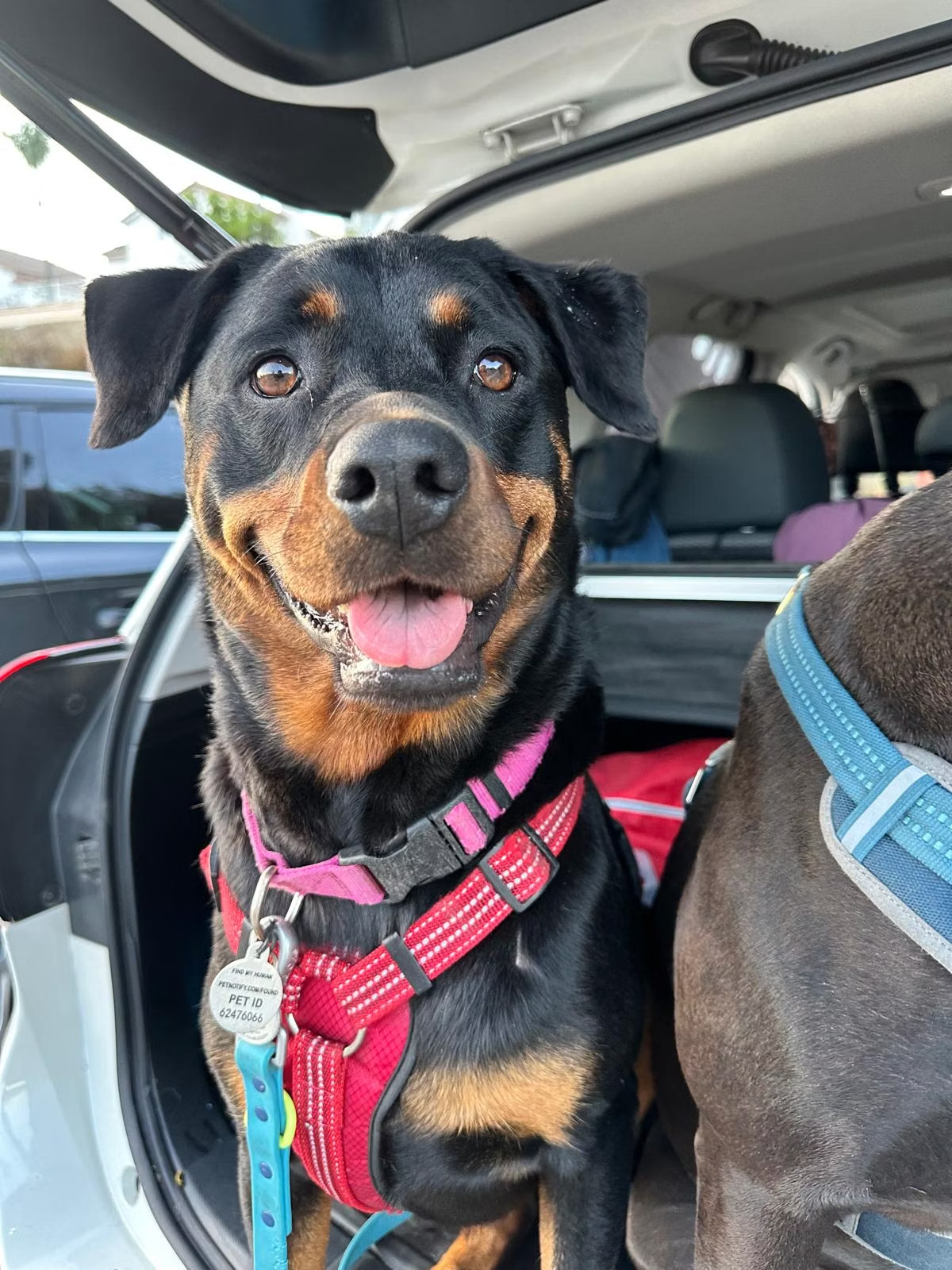
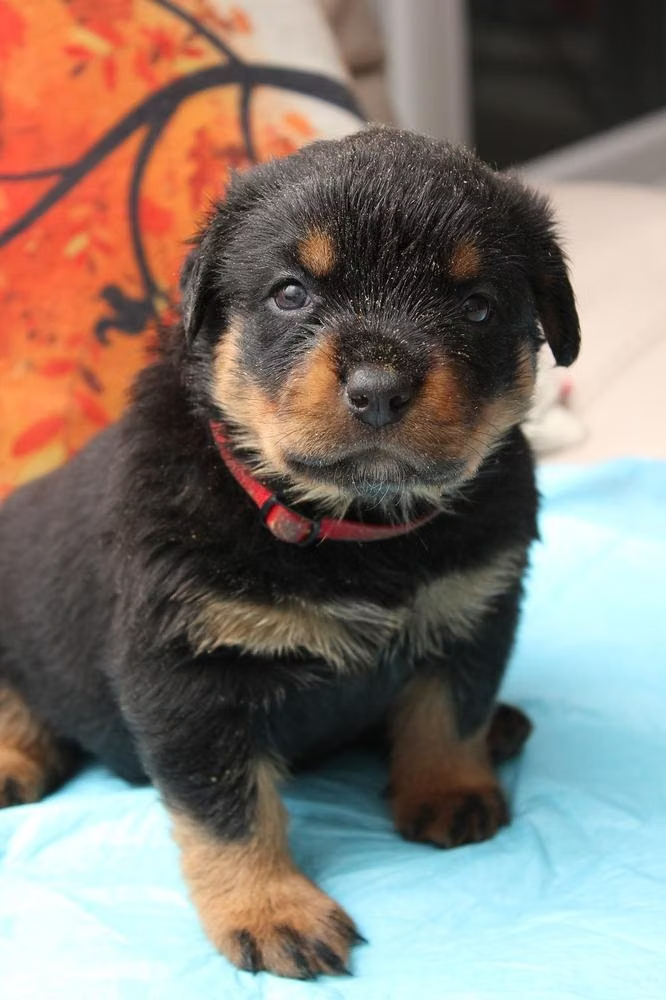


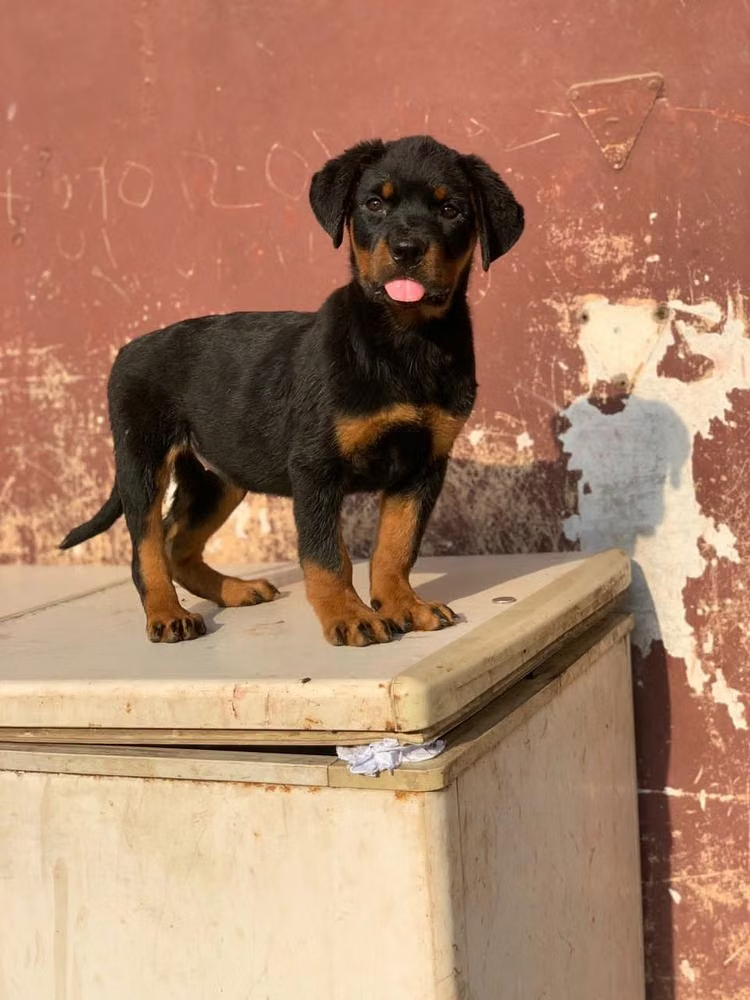


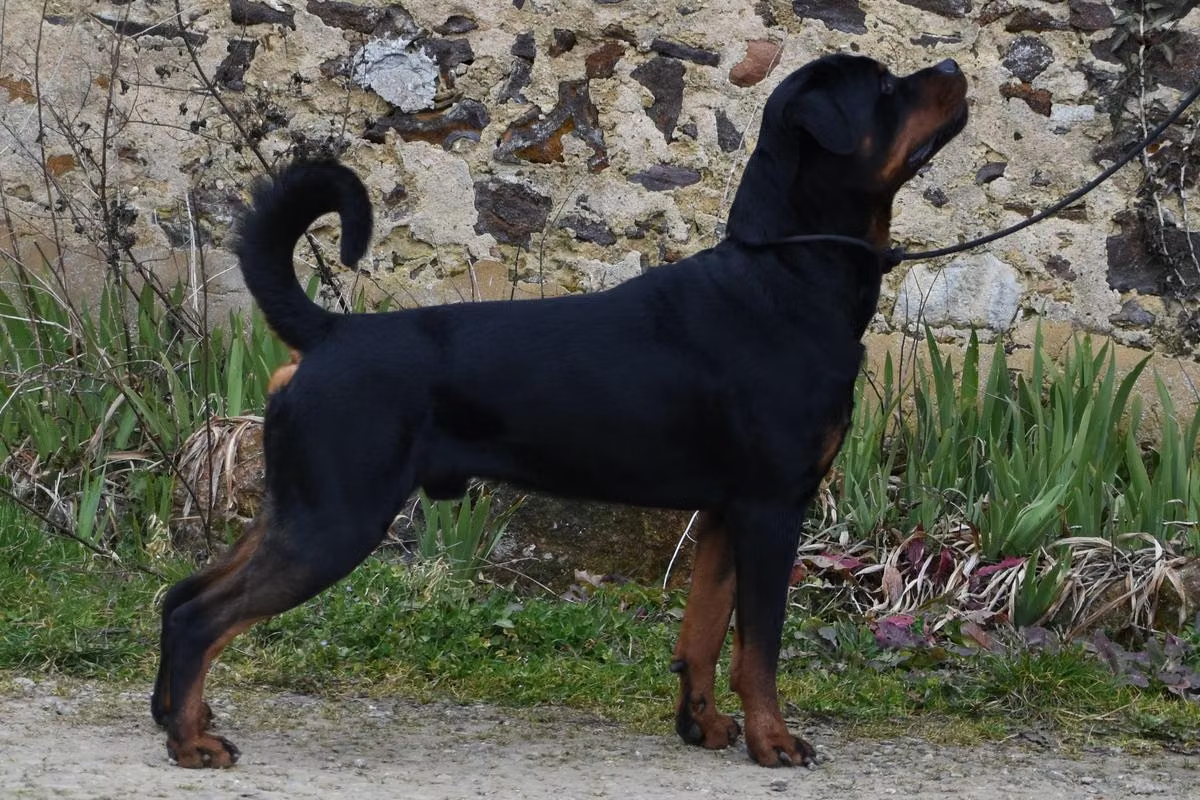
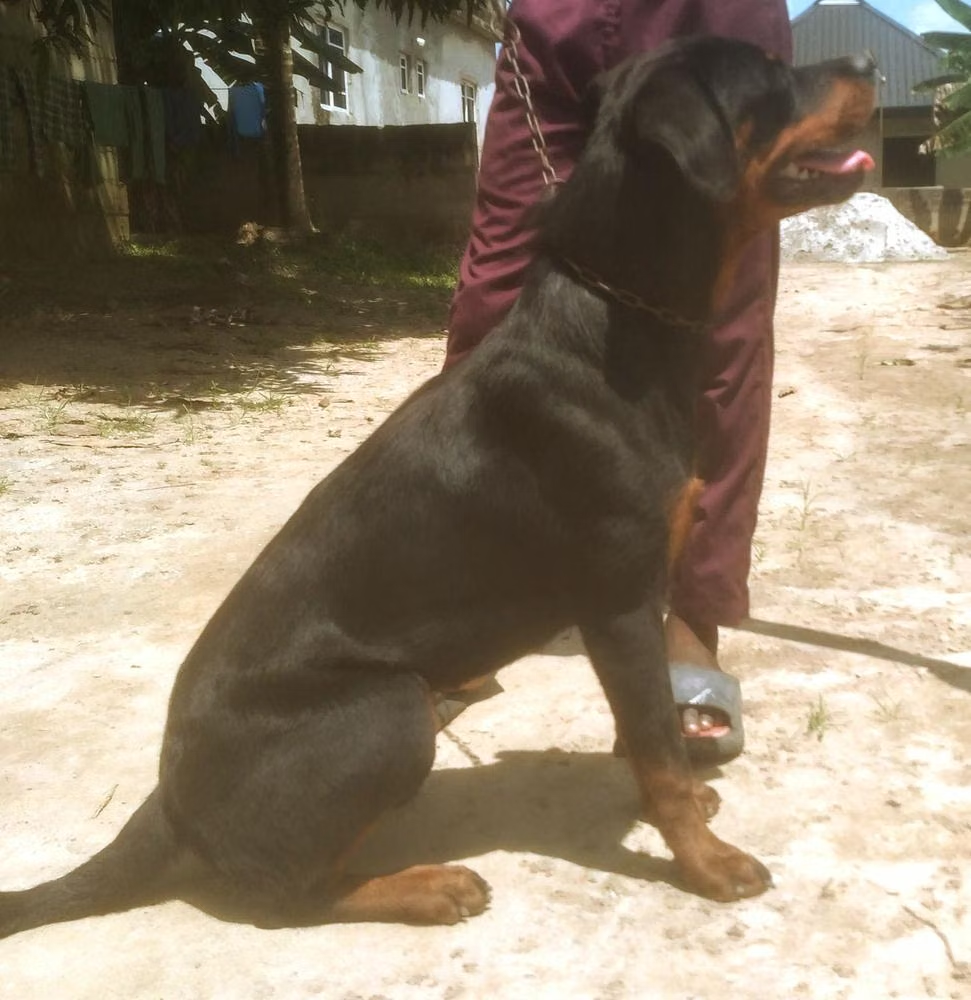

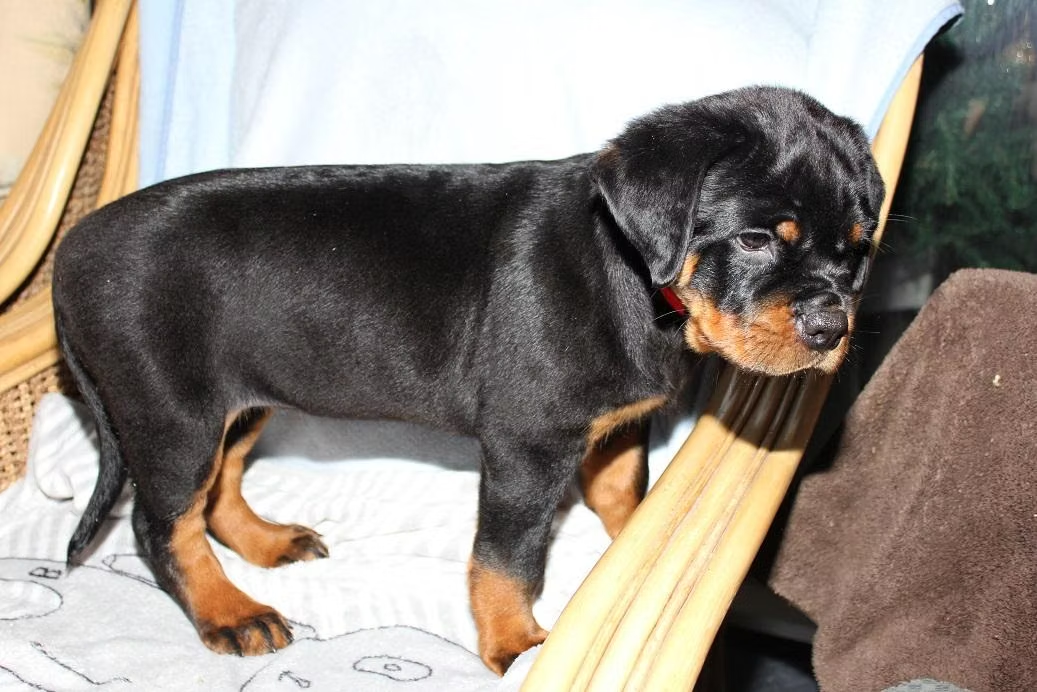
About the Rottweiler
The Rottweiler is a large German working dog known for its calm confidence, loyalty, and protective devotion to its family.
The Rottweiler is a large, powerfully built working dog that originated in Germany. It carries a broad chest, heavy bone, and a black coat with clearly defined rust to mahogany markings. Adults stand roughly 22 to 27 inches at the shoulder and weigh between 80 and 135 pounds, with males noticeably heavier than females. Despite the size, a well-bred Rottweiler moves with balance and surprising agility.
The breed is calm and self-assured rather than nervous or hyperactive. A Rottweiler that is raised and socialized well tends to be steady around its household, watchful with strangers, and deeply attached to the people it lives with. Many owners describe the breed as a quiet presence at home that becomes alert and responsive the moment something is out of place.
The Rottweiler was bred to work. It pulled carts, drove cattle, and later took on roles in police, military, search, and service work. That working background shapes the dog today: it needs a job, daily exercise, and an owner who provides consistent structure and training.
| Attribute | Detail |
|---|---|
| Origin | Germany |
| Size | Large (80 to 135 lb) |
| Lifespan | 9 to 10 years |
| Group / role | Working dog, guardian and herder |
| Good with | Family and children when socialized and supervised |
Who the Rottweiler suits
The Rottweiler fits an active, committed owner who can give it daily exercise, early socialization, and firm but fair training. It does best in a home where someone is present often and willing to set clear rules. The breed is a poor match for a first-time owner who wants a low-effort pet, for a household with no time for training, or for anyone unable to manage a strong, large dog. Given the right home, the Rottweiler is a steady and loyal companion.
History and origin
The Rottweiler descends from Roman drover dogs and takes its name from the German town of Rottweil, where it worked as a cattle dog and cart puller.
The Rottweiler traces back to the drover dogs of the Roman Empire. As Roman legions moved north through Europe, they brought mastiff-type dogs to herd and guard the cattle that fed the troops. These dogs were left behind in the regions the Romans settled, including the area of southern Germany that later became the town of Rottweil.
Rottweil grew into a busy cattle-trading center during the Middle Ages. The local dogs, descended from the Roman drovers crossed with native herding stock, were used to drive cattle to market and to guard the herds and their owners along the way. Butchers in the town also used the dogs to pull carts loaded with meat. The breed became known as the Rottweiler Metzgerhund, meaning the butcher's dog of Rottweil.
The arrival of railways in the 19th century ended the practice of driving cattle long distances on foot, and the demand for drover dogs collapsed. The breed nearly disappeared by the late 1800s. Interest revived in the early 20th century, partly because the dog proved well suited to police and military service. The first German Rottweiler clubs formed in the early 1900s, and a unified breed standard followed.
The Rottweiler spread beyond Germany through the 20th century and gained wide recognition as both a working dog and a companion. It remains valued today in police, military, search and rescue, and service roles, while also being kept widely as a family guardian.
Appearance and breed standard
The Rottweiler is a large, robust dog with a black coat, rust to mahogany markings, a broad head, and a short double coat.
The Rottweiler is a substantial, compact dog that is slightly longer than it is tall. The body is muscular and deep through the chest, the back is straight and strong, and the overall outline gives an impression of strength and stamina. The head is broad with a moderately arched skull, a well-developed muzzle, and dark, almond-shaped eyes that give a calm, attentive expression. The ears are medium, triangular, and carried forward against the head.
| Trait | Standard |
|---|---|
| Height | Males 24 to 27 in, females 22 to 25 in |
| Weight | Males 95 to 135 lb, females 80 to 100 lb |
| Coat | Short, dense double coat with a flat outer coat |
| Colors | Black with rust to mahogany markings |
| Eyes | Dark brown, almond-shaped |
Coat and colors
The Rottweiler has a short, straight, dense outer coat over a softer undercoat. The undercoat is heaviest around the neck and thighs and varies with climate. The coat lies flat and is easy to keep clean. The only accepted color is black with sharply defined markings that range from rust to deep mahogany. These markings appear in a consistent pattern: spots over each eye, on the cheeks, on the muzzle, on the chest and legs, and under the tail. Clear, well-defined markings are preferred in the breed standard. The tail was traditionally docked, though many regions now leave it natural, in which case it is carried level with the back when the dog is moving.
Temperament and personality
The Rottweiler is confident, loyal, and protective, calm at home and watchful with strangers, and needs early socialization to be balanced.
The Rottweiler is a confident and self-assured dog rather than a fearful or excitable one. At home it tends to be calm and even-tempered, content to stay near its people. The breed forms strong bonds with its family and is often affectionate and playful with those it trusts. Many Rottweilers like physical closeness and will lean against or follow a favored person.
With strangers the breed is naturally reserved and watchful. A Rottweiler typically takes time to accept new people and will assess a situation before reacting. This guarding instinct is part of the breed and is one reason early, ongoing socialization matters. A dog exposed to many people, places, and other animals while young grows up more relaxed and discerning, while one kept isolated may become suspicious or reactive.
With children in its own family, a well-raised Rottweiler is usually gentle and tolerant, though its size means interactions with small children should always be supervised. Around other dogs and pets, results vary. Same-sex aggression can occur, especially between intact males, but a Rottweiler raised alongside other animals often coexists with them well. The breed's intelligence and strong will mean it needs an owner who provides clear, consistent leadership.
| Trait | Rating |
|---|---|
| Affection | 4 |
| Energy | 3 |
| Trainability | 5 |
| Vocalness | 2 |
| Shedding | 3 |
Care and grooming
The Rottweiler needs modest grooming, daily exercise, and a structured home, with attention to weight, heat, and mental stimulation.
The Rottweiler is straightforward to maintain in terms of coat, but it is a demanding dog when it comes to exercise, training, and structure. Its short coat sheds moderately year round and more heavily during seasonal coat changes, usually twice a year.
Grooming
- Brush once or twice a week with a firm bristle brush or rubber curry to remove loose hair, more often during seasonal shedding.
- Bathe occasionally, roughly every two to three months or when the dog is dirty.
- Trim nails every three to four weeks if they do not wear down naturally.
- Check and clean the ears regularly and brush the teeth several times a week.
Exercise
- Provide at least one to two hours of activity each day through walks, play, and training.
- Include mental work such as obedience drills, scent games, or puzzle feeders, since the breed bores easily.
- Channel the working drive into structured activities like tracking, carting, or protection sports where appropriate.
- Avoid heavy, repetitive exercise on hard surfaces in young dogs while the joints are still developing.
Environment
The Rottweiler does best in a home with secure fencing and enough space to move, and it should live indoors as part of the household rather than alone outside. It tolerates cool weather better than heat, so exercise should be limited during hot parts of the day. The breed needs daily human contact and tends to develop problem behaviors if left alone or under-stimulated for long periods.
Nutrition and feeding
Rottweilers need a balanced large-breed diet with careful portion control to protect joints and prevent the weight gain the breed is prone to.
The Rottweiler does well on a complete, balanced diet formulated for large breeds. Because the breed gains weight easily and carries a heavy frame, portion control is important to protect the joints and reduce strain on the heart. Feed a measured amount based on the dog's age, weight, and activity level rather than leaving food out all day. Puppies should be fed a large-breed puppy formula, which controls calcium and energy to support steady, controlled growth and lower the risk of joint problems.
| Life stage | Amount per day | Meals |
|---|---|---|
| Puppy (2 to 6 months) | 3 to 5 cups, split | 3 to 4 |
| Puppy (6 to 12 months) | 4 to 6 cups, split | 2 to 3 |
| Adult | 4 to 8 cups | 2 |
| Senior | 3 to 6 cups, adjusted for activity | 2 |
Treats and supplements
Keep treats to no more than about 10 percent of daily calories to avoid weight gain. Many owners give joint supplements containing glucosamine and chondroitin, and some add omega-3 fatty acids for the coat and joints, but supplements should be discussed with a veterinarian first. Fresh water should always be available. Because the breed has a deep chest, feeding two smaller meals rather than one large one and avoiding hard exercise right after eating may help reduce the risk of bloat.
Health and common conditions
The Rottweiler lives about 9 to 10 years and is prone to joint dysplasia, certain cancers, heart conditions, and bloat.
The Rottweiler is a generally robust breed, but as a large dog it has a shorter average lifespan of about 9 to 10 years and several health conditions to watch for. Responsible breeders screen breeding dogs for hip and elbow dysplasia and for heart problems, which lowers the risk of passing these conditions on. Keeping the dog at a healthy weight is one of the most effective ways to protect its joints and overall health.
| Condition | Signs | Note |
|---|---|---|
| Hip and elbow dysplasia | Limping, stiffness, trouble rising | Screen breeding stock, manage weight |
| Osteosarcoma (bone cancer) | Lameness, swelling on a limb | The breed has elevated risk |
| Aortic stenosis | Fatigue, fainting, heart murmur | Detected on cardiac screening |
| Gastric dilatation-volvulus (bloat) | Swollen belly, retching, distress | A medical emergency |
| Hypothyroidism | Weight gain, low energy, coat changes | Managed with daily medication |
Preventive care
- Schedule annual veterinary checkups, with more frequent visits for senior dogs.
- Keep vaccinations and parasite prevention current.
- Maintain a lean body weight to reduce joint and heart strain.
- Provide regular dental care and routine joint monitoring as the dog ages.
- Buy from breeders who provide hip, elbow, and cardiac screening results.
Training
Rottweilers are highly intelligent and trainable but strong-willed, so they need early, consistent, reward-based training from a confident owner.
The Rottweiler is one of the more trainable working breeds. It is intelligent, learns quickly, and is eager to work with an owner it respects. That same intelligence comes with a strong, independent will, so the breed needs an owner who is calm, consistent, and clearly in charge. Harsh or inconsistent handling tends to backfire and can produce a stubborn or reactive dog. Early socialization and obedience training are essential, both to manage the dog's size and strength and to direct its guarding instinct in a controlled way.
Basics
- Begin socialization in puppyhood by exposing the dog to many people, places, sounds, and other animals.
- Teach core obedience cues such as sit, down, stay, come, and loose-leash walking early.
- Keep sessions short, frequent, and positive to hold the dog's focus.
- Set consistent household rules that everyone in the home follows.
- Progress to advanced work such as tracking, carting, or protection sports to satisfy the working drive.
- Continue training and reinforcement throughout the dog's life rather than stopping after puppyhood.
Breeding
Rottweilers reach breeding maturity around two years, carry litters of about 6 to 12 puppies, and require health screening before breeding.
Responsible Rottweiler breeding centers on health and temperament rather than appearance alone. Although dogs reach physical maturity earlier, most breeders wait until around two years of age before breeding, by which point hip, elbow, and cardiac screening can be completed and the dog's adult temperament is clear. Females come into heat roughly twice a year. After a successful mating, gestation lasts about 63 days.
Litters are typically large, often in the range of 6 to 12 puppies, which reflects the breed's size. Whelping a large breed can carry complications, so breeders often plan for veterinary support during the birth. Newborn puppies depend entirely on the mother for warmth and feeding in the first weeks, and the breeder's role is to keep the whelping area clean, warm, and quiet while monitoring weight gain.
Early handling and socialization begin in the litter. Puppies are usually weaned by around seven to eight weeks and benefit from gentle exposure to handling, sounds, and new experiences before they go to their homes. Given the breed's strength and guarding nature, matching puppies to suitable owners is an important part of responsible breeding.
| Metric | Value |
|---|---|
| Breeding maturity | Around 2 years |
| Heat cycle | About twice per year |
| Gestation | About 63 days |
| Average litter size | 6 to 12 puppies |
| Weaning age | About 7 to 8 weeks |
Registering your Rottweiler and its microchip
Register your Rottweiler free for life with United Pet Club, and put its microchip number on a record American shelters can actually find.
How to register a Rottweiler in the United States
Shelters across the US scan every dog that comes through the door, and what happens next depends on paperwork. A scan that ends at a current record gets your Rottweiler home; a scan that ends nowhere starts a holding period. Register your dog with United Pet Club and that record exists, free, for the rest of your dog's life.
Chipped already? The implant is half the job. Until the 15-digit number sits in a registry with your name beside it, a scanner reads digits that lead nowhere. Microchip registration is free for life at United Pet Club, takes any manufacturer's chip, and keeps the record searchable through the AAHA lookup shelters rely on. Sign up free, and both records are done tonight.
How do I register my Rottweiler in the United States?
Open a free United Pet Club account, enter your Rottweiler's name, birth date, and a photo, and save. The profile is free for life, works with or without a microchip, and you can attach a chip number later.
How do I register my Rottweiler's microchip?
Type the 15-digit chip number into your free United Pet Club account together with your current phone number and address. The lifetime plan is free, covers every future update, and accepts any chip brand a US vet implants.
Does my Rottweiler have to be microchipped in the United States?
No federal law says a Rottweiler must carry a chip, but plenty of city and county licensing rules do, and shelters routinely chip before adoption. What the law never does is register the chip for you; that part is yours.
How much does it cost to register a Rottweiler?
Nothing. United Pet Club's lifetime plan covers the dog's profile, the microchip registration, and every update at no charge, with no renewal fees.
Frequently asked questions
Common questions about the Rottweiler's size, temperament, care needs, lifespan, and suitability as a family dog.
How big does a Rottweiler get?
Rottweilers are a large breed. Males generally stand 24 to 27 inches at the shoulder and weigh 95 to 135 pounds, while females stand 22 to 25 inches and weigh 80 to 100 pounds.
Are Rottweilers good family dogs?
Yes, when properly raised. A well-socialized and trained Rottweiler is loyal, calm, and protective of its family and is usually gentle with children in its own home. Supervision is still important because of the dog's size and strength.
Are Rottweilers hard to care for?
Grooming is simple thanks to the short coat, but the breed is demanding in other ways. It needs daily exercise, mental work, early socialization, and consistent training, which makes it a poor fit for an owner who cannot commit the time.
How long do Rottweilers live?
The average lifespan is about 9 to 10 years, which is typical for a dog of this size. Healthy weight, regular veterinary care, and buying from health-screened breeding lines support a longer, healthier life.
Are Rottweilers good for first-time owners?
The breed is best suited to experienced or committed owners. Its strength, guarding instinct, and strong will require confident, consistent handling. A first-time owner can succeed with training support, but it is not a low-effort pet.
Do Rottweilers shed a lot?
They shed a moderate amount year round and more heavily during seasonal coat changes about twice a year. Weekly brushing keeps loose hair under control, with more frequent brushing during shedding periods.
Are Rottweilers aggressive?
Rottweilers are naturally protective and reserved with strangers, not inherently aggressive. With early socialization, training, and responsible ownership, they are typically stable and discerning. Behavior problems usually trace back to poor breeding, lack of socialization, or inconsistent handling.
From the community
Ask about the RottweilerNo questions about the Rottweiler yet. Be the first to ask.
Browse Dog breeds