The Rhodesian Ridgeback is a strong, loyal hound known for the distinctive ridge along its back and its dignified, protective devotion.
How the Rhodesian Ridgeback coat is built, and what that means when you groom it.
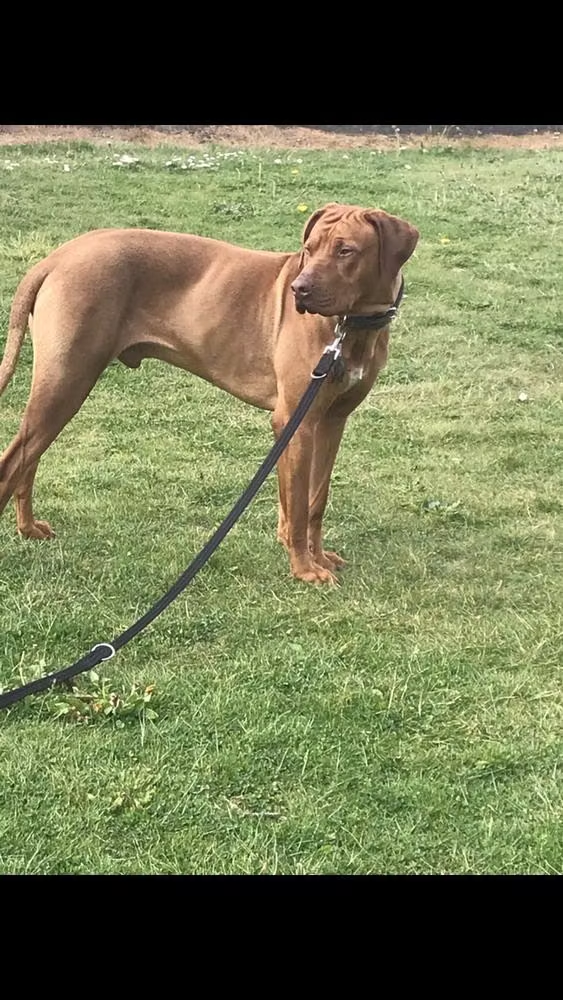
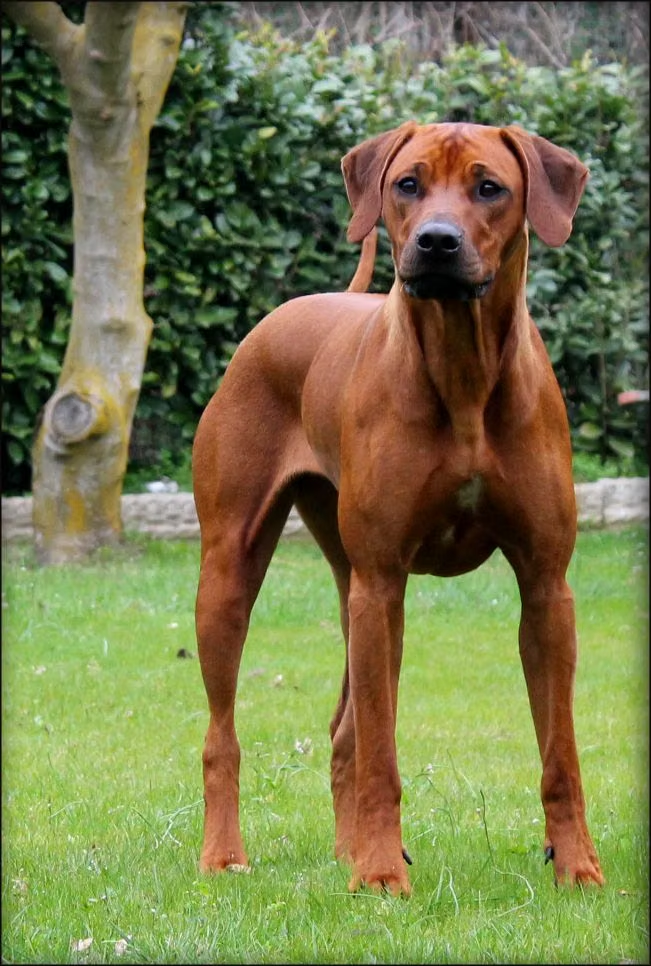
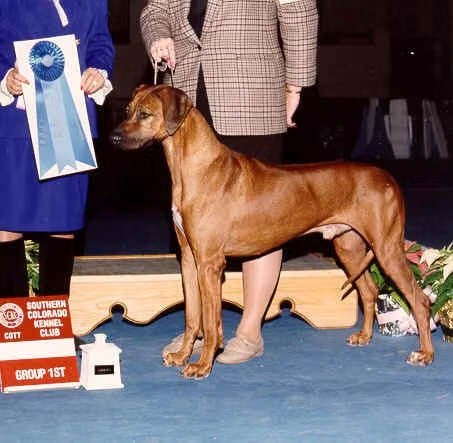
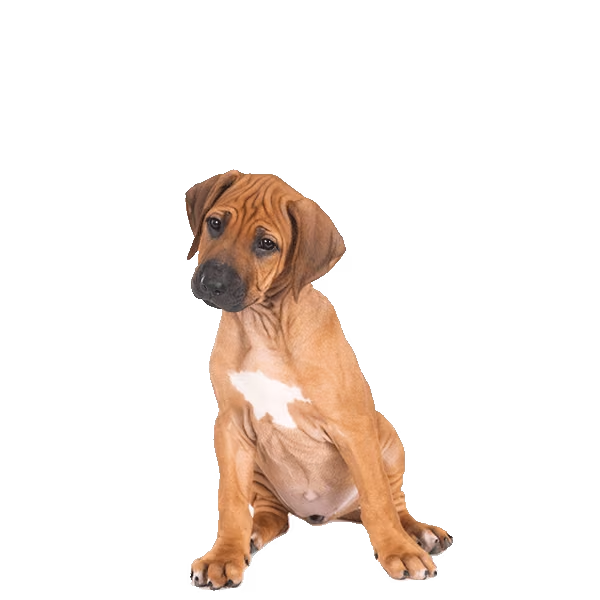
A few of the Rhodesian Ridgeback profiles members have added to United Pet Club.
The Rhodesian Ridgeback is a large, loyal South African hound recognized by the ridge of backward-growing hair along its spine and a dignified, protective nature.
The Rhodesian Ridgeback is a large hound that originated in southern Africa, where it was used to track and hold game and to guard the home. Its most identifiable feature is the ridge of hair down the back, which grows in the opposite direction to the surrounding coat. This ridge is the trait the breed is named for and a defining mark of the standard.
Adults typically weigh between 32 and 39 kg and stand 61 to 69 cm at the shoulder. The coat is short, dense, and one shade of wheaten, from light to red. The build is muscular and balanced, suited to covering ground at speed and over long distances.
In temperament the Ridgeback is loyal and devoted to its family, independent in its thinking, and reserved with people it does not know. It is quiet at home and rarely barks without reason, but it remains alert and will act as a watchful guardian. The combination of strength, intelligence, and a strong will means it does best with an owner who provides consistent structure and early socialization.
| Attribute | Detail |
|---|---|
| Origin | South Africa |
| Size | Large (32 to 39 kg) |
| Lifespan | 10 to 12 years |
| Group/role | Hound, hunting and guarding |
| Good with | Families with older children and experienced owners |
The Rhodesian Ridgeback fits an active household that can give it daily exercise and firm, fair leadership. It suits owners who value a calm indoor companion that is also a capable guardian. Because of its size, strength, and independent streak, it is a better match for people with some dog experience than for a first-time owner who wants an easy, biddable pet. Homes with secure outdoor space and time for training and company will get the most from the breed.
The Rhodesian Ridgeback developed in southern Africa from European hunting dogs crossed with ridged native dogs kept by the Khoikhoi, and the breed standard was set in Rhodesia in the 1920s.
The breed traces to the Cape Colony of southern Africa, where European settlers from the 17th century onward brought hunting and guarding dogs such as mastiffs, greyhounds, and various scenthounds. These dogs were crossed with semi-domesticated ridged dogs kept by the Khoikhoi people. The ridged native dogs passed on both the hardiness needed for the climate and the distinctive line of reversed hair along the spine.
The resulting dogs were prized by farmers and hunters for their ability to work in heat, tolerate scarce water, and guard property at night. They were used to locate and bay large game, holding the quarry at a distance until the hunter arrived. This work is the source of the older name "African Lion Hound," though the dogs did not kill lions themselves.
In the 1870s several of these dogs were taken north into what was then Rhodesia, where big-game hunting was common. There the type was further selected for the work. In 1922 a group of breeders in Bulawayo met to agree a written standard, taking the Dalmatian standard as a model for format. The breed was named the Rhodesian Ridgeback after the region and its signature feature.
From the 1920s onward the standard spread to kennel clubs abroad, and the breed gained recognition in Britain and the United States over the following decades. The ridge remained the central requirement of the standard throughout, and the breed kept its dual reputation as both a hunting hound and a family guardian.
The Rhodesian Ridgeback is a muscular, symmetrical hound with a short wheaten coat and the defining ridge of reversed hair running along its back.
The Rhodesian Ridgeback is a large, athletic dog built for speed and endurance. The body is slightly longer than it is tall, with a deep chest, strong loin, and clean, powerful legs. The overall impression is one of balance and quiet strength rather than bulk. The head is of fair length with a flat skull, and the muzzle is long and deep.
The defining feature is the ridge, a strip of hair along the spine that grows forward against the lie of the rest of the coat. It begins behind the shoulders and tapers toward the hips. The standard ridge is clearly defined and symmetrical, starting with two matched crowns, or whorls, of equal size set opposite each other near the top.
| Trait | Standard |
|---|---|
| Height | Males 63 to 69 cm, females 61 to 66 cm |
| Weight | Males about 36 to 39 kg, females about 32 to 34 kg |
| Coat | Short, dense, sleek, and glossy |
| Colors | Light wheaten to red wheaten |
| Eyes | Round, set well apart, color matching the coat |
The coat is short and lies flat against the body, giving little protection from cold but suiting a warm climate. Accepted color is wheaten in any shade from light to red. A small amount of white on the chest and toes is permitted by most standards, while excessive white is a fault. Some dogs carry a dark muzzle and ears. The nose is brown or black depending on coat shade, and eye color follows the nose color, with darker eyes paired with a black nose and amber eyes with a brown nose.
The Rhodesian Ridgeback is loyal and devoted to its family, calm and quiet indoors, independent in mind, and naturally reserved with strangers.
The Rhodesian Ridgeback is deeply attached to its own family and tends to bond closely with the household. At home it is usually calm, even-tempered, and quiet, and it is not a dog that barks for no reason. That same quiet confidence makes it a watchful guardian: it is alert to changes around the property and will position itself between the family and a perceived threat.
With strangers the breed is aloof rather than friendly, holding back until it has assessed a newcomer. This reserve is normal for the type and is one reason early, broad socialization matters. With children in its own family it is generally patient and gentle, though its size means it is better suited to homes with older children who can handle a strong dog.
The Ridgeback is intelligent and independent, and it was bred to make decisions on its own while working at a distance from the handler. This means it can be strong-willed and will test boundaries. It is not stubborn so much as self-reliant, and it responds best to an owner who is consistent and fair. With other dogs it can be sociable when raised with them, though some individuals, particularly males, can be assertive with dogs of the same sex. Its hunting background can give it a strong drive to chase smaller animals.
| Trait | Rating |
|---|---|
| Affection | 4 |
| Energy | 4 |
| Trainability | 3 |
| Vocalness | 2 |
| Shedding | 2 |
The Rhodesian Ridgeback is low-maintenance to groom but needs substantial daily exercise and secure space to stay balanced and content.
The short coat is simple to maintain and sheds at a low level for a dog of this size.
This is an athletic breed that needs real physical activity each day. Without enough exercise it can become restless and destructive.
The Rhodesian Ridgeback does best in a home with secure outdoor space and a tall, solid fence, since it can jump and is athletic enough to clear low barriers. It prefers warm conditions and feels the cold because of its thin coat, so it needs shelter and warmth in winter. It is an indoor dog at heart and should live with the family rather than being left alone outside for long periods.
The Rhodesian Ridgeback needs a balanced diet suited to a large, active dog, fed in measured meals to keep it lean and protect its joints.
A Rhodesian Ridgeback does well on a complete, balanced diet formulated for large, active breeds. Look for a food with quality animal protein as the main ingredient and an appropriate fat level to fuel its activity. Because the breed is deep-chested, feeding measured meals rather than one large meal helps reduce the risk of bloat. Keep the dog lean: extra weight strains the joints and the heart. Adjust the amount to the individual dog's age, weight, and activity rather than feeding by appetite alone, and always provide fresh water.
| Life stage | Amount per day | Meals |
|---|---|---|
| Puppy (2 to 6 months) | Per growth formula, divided | 3 to 4 |
| Junior (6 to 12 months) | About 3 to 4 cups | 2 to 3 |
| Adult | About 3 to 4.5 cups | 2 |
| Senior | About 2.5 to 3.5 cups | 2 |
Keep treats to no more than about ten percent of daily calories and account for them in the total food amount. Healthy options include small pieces of plain cooked meat or commercial low-fat training treats. Most Ridgebacks on a complete diet need no supplements, but a vet may suggest joint support for older dogs or those under heavy work. Introduce any dietary change gradually over several days to avoid stomach upset.
The Rhodesian Ridgeback is generally a healthy breed with a 10 to 12 year lifespan, though it is prone to a few inherited conditions including dermoid sinus and hip dysplasia.
The Rhodesian Ridgeback is a hardy breed and most individuals enjoy good health, with a typical lifespan of 10 to 12 years. Responsible breeding and routine veterinary care reduce the risk of the conditions known in the breed. As a deep-chested dog it carries a higher than average risk of bloat, so owners should learn the warning signs. The points below cover the issues seen most often.
| Condition | Signs | Note |
|---|---|---|
| Dermoid sinus | Tube-like opening in the skin along the spine or neck | A breed-specific neural-tube defect, present from birth |
| Hip dysplasia | Stiffness, limping, trouble rising | Inherited joint malformation; screen breeding stock |
| Elbow dysplasia | Front-leg lameness, reluctance to exercise | Managed with weight control and veterinary care |
| Bloat (gastric torsion) | Swollen belly, retching, restlessness, distress | A life-threatening emergency in deep-chested dogs |
| Hypothyroidism | Weight gain, low energy, coat changes | Diagnosed by blood test, managed with medication |
The Rhodesian Ridgeback is intelligent but independent, so it learns best with early socialization and consistent, reward-based training from a confident owner.
The Rhodesian Ridgeback is clever and learns quickly, but it was bred to work alone and think for itself, so it does not obey simply to please. It needs an owner who is calm, consistent, and clear about the rules. Harsh or heavy-handed methods tend to make the breed withdraw or dig in, while fair, reward-based training earns its cooperation. Start training and socialization in puppyhood, exposing the dog to many people, places, and other animals so its natural reserve with strangers does not tip into wariness. Keep sessions short and varied to hold its interest.
Rhodesian Ridgeback breeding requires health-tested parents and careful checks for dermoid sinus, with litters typically of six to nine puppies after a roughly nine-week pregnancy.
Rhodesian Ridgebacks reach sexual maturity by around one year, but responsible breeders wait until a dog is physically and mentally mature, usually about two years, before breeding. Both parents should pass health screening for hip and elbow dysplasia and thyroid function, and the breeding pair should have sound temperaments true to the breed.
The female's pregnancy lasts about 63 days. Litters are typically six to nine puppies, though larger litters occur. Every newborn should be examined for dermoid sinus, the inherited defect along the spine, because it can be present from birth and may need veterinary attention. Newborn puppies depend fully on the mother for warmth and feeding in the first weeks.
From around three weeks the puppies begin to explore and should be handled gently and exposed to ordinary household sights and sounds. This early period shapes much of the adult temperament. Puppies are usually weaned by six to eight weeks and should stay with the mother and littermates until at least eight weeks so they learn normal dog behavior. Breeding this large, strong breed is a serious undertaking and should only be done with the welfare of the parents and puppies as the first concern.
| Metric | Value |
|---|---|
| Sexual maturity | About 12 months |
| Recommended breeding age | About 2 years |
| Pregnancy length | About 63 days |
| Average litter size | 6 to 9 puppies |
| Weaning age | 6 to 8 weeks |
| Earliest rehoming | 8 weeks and older |
Register your Rhodesian Ridgeback free for life with United Pet Club, and put its microchip number on a record American shelters can actually find.
Start with the profile. Add your Rhodesian Ridgeback's name, birth date, and a clear photo, attach your phone number and email, and save. That is the whole job, and it costs nothing for life. Dog registration works with or without a microchip, so there is no reason to wait for a vet visit.
Chipped already? The implant is half the job. Until the 15-digit number sits in a registry with your name beside it, a scanner reads digits that lead nowhere. Microchip registration is free for life at United Pet Club, takes any manufacturer's chip, and keeps the record searchable through the AAHA lookup shelters rely on. Sign up free, and both records are done tonight.
Open a free United Pet Club account, enter your Rhodesian Ridgeback's name, birth date, and a photo, and save. The profile is free for life, works with or without a microchip, and you can attach a chip number later.
Type the 15-digit chip number into your free United Pet Club account together with your current phone number and address. The lifetime plan is free, covers every future update, and accepts any chip brand a US vet implants.
No federal law says a Rhodesian Ridgeback must carry a chip, but plenty of city and county licensing rules do, and shelters routinely chip before adoption. What the law never does is register the chip for you; that part is yours.
Nothing. United Pet Club's lifetime plan covers the dog's profile, the microchip registration, and every update at no charge, with no renewal fees.
Common questions about the Rhodesian Ridgeback cover its size, temperament, care needs, lifespan, suitability, and availability.
It is a large breed. Males stand 63 to 69 cm at the shoulder and weigh about 36 to 39 kg, while females stand 61 to 66 cm and weigh about 32 to 34 kg.
It is loyal and devoted to its family, calm and quiet at home, independent in its thinking, and reserved with strangers. It is also a natural guardian that stays alert to its surroundings.
Grooming is easy thanks to the short coat, but the breed needs substantial daily exercise and firm, consistent training. The main demands are physical activity and clear leadership rather than coat care.
The typical lifespan is 10 to 12 years. Good breeding, a lean weight, and routine veterinary care help a Ridgeback reach the upper end of that range.
It can be an excellent family dog for an active household with older children. Because of its size, strength, and independent nature it suits experienced owners better than first-time dog owners.
Raised with other dogs it can be sociable, though some males can be assertive with other males. Its hunting background gives it a strong urge to chase, so care is needed around small animals and cats.
They are an established breed available through dedicated breeders, though they are less common than many popular breeds. Expect to research carefully and choose a breeder who health-tests the parents and checks puppies for dermoid sinus.