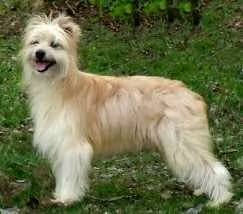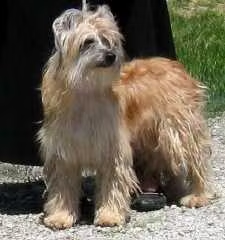
The Pyrenean Shepherd is a tireless, devoted herding dog known for its boundless energy and intense bond with its handler.
How the Pyrenean Shepherd coat is built, and what that means when you groom it.
Critical: A Pyrenean Shepherd should not be shaved.
The undercoat keeps heat out as well as in, and the outer coat shields the skin from sun and insect bites. Clipping the whole coat off removes both. It often grows back patchy, soft or a different colour, and in some animals the guard hairs never return properly. Brush the undercoat out instead of cutting it off.
A few of the Pyrenean Shepherd profiles members have added to United Pet Club.
The Pyrenean Shepherd is a small to medium herding dog from the French Pyrenees, prized for its energy, intelligence, and close bond with one handler.
The Pyrenean Shepherd is a lightweight herding dog developed in the mountains of southern France. It worked for centuries alongside the larger Great Pyrenees, with the big white dog guarding the flock against predators while the smaller Pyrenean Shepherd moved and gathered the sheep. The breed is one of the smallest of the herding dogs, yet it is among the most active.
Two coat varieties exist within the same breed: the rough-faced (smooth-faced is the other recognized form. Both share the same wiry build, light frame, and quick, almost cat-like movement. A working adult typically weighs between 15 and 30 pounds and stands roughly 15 to 21 inches at the shoulder depending on variety and sex.
Devoted to its person, the breed forms an intense attachment to one handler and reads body language closely. It is alert and reserved with strangers, which made it a capable watchdog as well as a herder. Owners describe a dog that is rarely still and always looking for a task.
| Attribute | Detail |
|---|---|
| Origin | France (Pyrenees mountains) |
| Size | Medium (15 to 30 lb, 15 to 21 in) |
| Lifespan | 15 to 17 years |
| Group/role | Herding dog |
| Good with | Its family and active homes; reserved with strangers |
This breed fits an active owner who can offer daily physical exercise and a job to do. It does well in dog sports such as agility, herding trials, and obedience. It is less suited to a quiet household or to someone away from home for long hours, because the breed needs interaction and movement to stay settled.
The Pyrenean Shepherd is an ancient French herding dog from the Pyrenees that worked the high pastures for centuries and gained wider attention after the First World War.
The breed comes from the Pyrenees mountains along the border of France and Spain, where shepherds used small, fast dogs to move flocks across steep terrain. Its exact origins are not recorded, since these were working farm dogs rather than show animals, but the type is considered one of the oldest in France. For generations the Pyrenean Shepherd paired with the Great Pyrenees: the small dog herded while the large dog guarded.
The breed remained largely unknown outside its home region until the early twentieth century. During the First World War, Pyrenean Shepherds were used by the French army as couriers, search dogs, and sentries, and this service brought them wider recognition.
A breed standard was drawn up in France in 1921, and the Reunion des Amateurs de Chiens Pyreneens was formed to protect the type. The standard recognized two varieties based on the coat of the face: rough-faced and smooth-faced.
The breed reached the United States in the 1980s, and the American Kennel Club granted full recognition in the Herding Group in 2009. It remains relatively uncommon outside working and dog-sport circles.
The Pyrenean Shepherd is a small, lean, lightly built herder with a wiry coat, an expressive face, and quick, ground-covering movement.
The Pyrenean Shepherd is a small, sinewy dog built for stamina rather than power. The body is slightly longer than it is tall, the bone is light, and the overall impression is of an alert, energetic animal in constant readiness. The two varieties differ mainly in the face: the rough-faced type has longer hair and a windswept look, while the smooth-faced type has short, fine hair on the muzzle and a more open expression.
| Trait | Standard |
|---|---|
| Height | Rough-faced 15.5 to 18.5 in; smooth-faced 15.5 to 21 in |
| Weight | Roughly 15 to 30 lb |
| Coat | Rough-faced: long to demi-long, flat or slightly wavy, harsh, woolly. Smooth-faced: short and fine |
| Colors | Fawn, brindle, grey, blue merle, black, and black with white markings |
| Eyes | Almond-shaped, dark brown; merles may have blue or partly blue eyes |
Fawn and grey are the most common colors, ranging from pale to charcoal, and brindle and merle patterns also occur. Limited white markings on the chest and feet are permitted. The rough-faced coat may cord lightly over time if left untrimmed. Ears are traditionally semi-prick, and the tail may be natural, docked, or naturally short depending on region and standard.
The Pyrenean Shepherd is devoted, intelligent, and high-energy, deeply bonded to its handler and naturally wary of strangers.
The Pyrenean Shepherd is intensely devoted to its primary person and bonds closely with the whole family. It is intelligent and quick to learn, but that same sharpness means it grows bored and restless without a job. The breed is athletic and almost always in motion, and it brings a lively, sometimes mischievous personality to the home.
With strangers the breed is reserved and watchful, traits that make it an effective watchdog. Early and ongoing socialization is important so this caution does not tip into shyness or reactivity. With children in its own family it is usually affectionate, though its herding instinct can lead it to chase or nip at running feet, so supervision with young children helps.
With other dogs and pets it can do well when raised together, but its drive to move and control may turn smaller animals into targets for herding. The breed is alert and vocal, and it will sound off at unfamiliar sights and sounds.
| Trait | Rating |
|---|---|
| Affection | 5 |
| Energy | 5 |
| Trainability | 5 |
| Vocalness | 4 |
| Shedding | 2 |
The Pyrenean Shepherd needs heavy daily exercise and mental work, with moderate grooming that varies by coat variety.
The breed adapts to most climates thanks to its weatherproof coat, and it can live in a home of any size if its exercise needs are met. It is happiest with access to open space and a daily task. Long stretches alone tend to produce stress and unwanted behavior.
The Pyrenean Shepherd is an active small to medium dog that needs a complete, energy-appropriate diet portioned to its workload.
The Pyrenean Shepherd does well on a complete and balanced dog food formulated for active small to medium breeds. Because it burns a lot of energy, a working or sport dog may need more calories than a pet kept at lighter activity. Match the amount to age, weight, and daily output rather than the bag's average, and adjust as the dog's routine changes. Fresh water should always be available.
| Life stage | Amount per day | Meals |
|---|---|---|
| Puppy (2 to 6 months) | Per puppy-food label, by weight | 3 to 4 |
| Adolescent (6 to 12 months) | Roughly 1 to 1.5 cups | 2 to 3 |
| Adult (1 to 7 years) | Roughly 1 to 1.75 cups | 2 |
| Senior (8+ years) | Adjust down for lower activity | 2 |
Keep treats to about ten percent of daily calories so the dog stays lean; an overweight Pyrenean Shepherd loses the agility the breed depends on. Most dogs on a complete diet need no supplements, but ask a veterinarian before adding anything, especially for a hard-working or aging dog.
The Pyrenean Shepherd is a hardy, long-lived breed averaging 15 to 17 years, with a few inherited conditions worth screening for.
The Pyrenean Shepherd is one of the longest-lived dog breeds, with a typical lifespan of 15 to 17 years. It is generally robust, a reflection of its origins as a hardy working dog, but like all breeds it carries some inherited risks. Buying from a breeder who screens breeding stock lowers the chance of these problems.
| Condition | Signs | Note |
|---|---|---|
| Hip dysplasia | Stiffness, limping, reluctance to jump | Less common than in large breeds; screen parents |
| Patellar luxation | Skipping gait, intermittent hind-leg lameness | Seen in small breeds; surgery in severe cases |
| Epilepsy | Seizures, often starting in young adulthood | Managed with medication in most cases |
| Eye disorders (PRA, retinal issues) | Night blindness, vision loss | Annual eye exams help catch early |
| Patent ductus arteriosus | Heart murmur, poor growth, fatigue | Congenital; detected by vet on exam |
The Pyrenean Shepherd is highly trainable and eager to work, but its sharp mind and sensitivity call for early, consistent, reward-based handling.
The Pyrenean Shepherd is quick to learn and keen to work with its handler, which makes it one of the more trainable herding breeds. That intelligence cuts both ways: a bored dog invents its own activities, and a harshly handled one shuts down, since the breed is sensitive to its person's mood. Short, varied, upbeat sessions hold its attention better than long drills. Early socialization is as important as obedience, because the breed's natural wariness of strangers needs steady, positive exposure to settle into confidence.
The Pyrenean Shepherd is a small breed with modest litters, and responsible breeding focuses on health screening and the breed's working temperament.
Female Pyrenean Shepherds usually reach physical maturity around 18 to 24 months, and breeding is best delayed until the dog is fully grown and has cleared health screening. Like most dogs, the female comes into season about twice a year, and gestation runs roughly 63 days from conception.
Litters are small, in keeping with the breed's size, and commonly number 3 to 6 puppies. Because the two coat varieties can appear within a single litter, breeders track and record which type each puppy carries. Responsible breeders test for hip, knee, eye, and heart conditions before pairing, and they prioritize the breed's sound working temperament and stable nerves.
Puppies should stay with the dam until at least 8 weeks of age. Early handling and gentle exposure to everyday sights and sounds during this period set the foundation for the confident, well-socialized adult the breed is meant to be.
| Metric | Value |
|---|---|
| Sexual maturity | About 18 to 24 months (recommended breeding age) |
| Season frequency | Roughly twice a year |
| Gestation | About 63 days |
| Litter size | 3 to 6 puppies |
| Weaning age | Around 6 to 8 weeks |
| Leave dam | 8 weeks or later |
Register your Pyrenean Shepherd free for life with United Pet Club, and put its microchip number on a record American shelters can actually find.
A Pyrenean Shepherd can hold a free lifetime profile in the United Pet Club registry whether or not it carries a chip. The profile pairs your contact details with your dog's photo, birth date, and markings, so whoever finds it knows exactly who to call. Registering your dog takes a few minutes, and nothing about it expires or renews.
Chipped already? The implant is half the job. Until the 15-digit number sits in a registry with your name beside it, a scanner reads digits that lead nowhere. Microchip registration is free for life at United Pet Club, takes any manufacturer's chip, and keeps the record searchable through the AAHA lookup shelters rely on. Sign up free, and both records are done tonight.
Open a free United Pet Club account, enter your Pyrenean Shepherd's name, birth date, and a photo, and save. The profile is free for life, works with or without a microchip, and you can attach a chip number later.
Type the 15-digit chip number into your free United Pet Club account together with your current phone number and address. The lifetime plan is free, covers every future update, and accepts any chip brand a US vet implants.
No federal law says a Pyrenean Shepherd must carry a chip, but plenty of city and county licensing rules do, and shelters routinely chip before adoption. What the law never does is register the chip for you; that part is yours.
Nothing. United Pet Club's lifetime plan covers the dog's profile, the microchip registration, and every update at no charge, with no renewal fees.
Common questions about the Pyrenean Shepherd's size, temperament, care needs, lifespan, suitability, and availability.
It is a small to medium dog, generally 15 to 30 pounds and 15 to 21 inches at the shoulder. The smooth-faced variety can stand a little taller than the rough-faced variety.
It is devoted, intelligent, athletic, energetic, and alert. It bonds intensely with its handler and is affectionate at home, while staying reserved and watchful around strangers.
Grooming is moderate and varies by coat, but the exercise and mental demands are high. The breed needs 60 to 90 minutes of activity plus a daily task, which makes it more demanding than an average pet dog.
They are among the longest-lived dog breeds, typically reaching 15 to 17 years with good care.
It can be, in an active household. It is affectionate with its own family, but its herding instinct may lead it to chase running children, so supervision and early training help.
It often does when raised with them, though its drive to herd can make it chase smaller animals. Early socialization improves the odds of a calm household.
They are relatively uncommon outside working and dog-sport circles. Finding a puppy usually means contacting a breed club or a dedicated breeder and joining a waitlist.