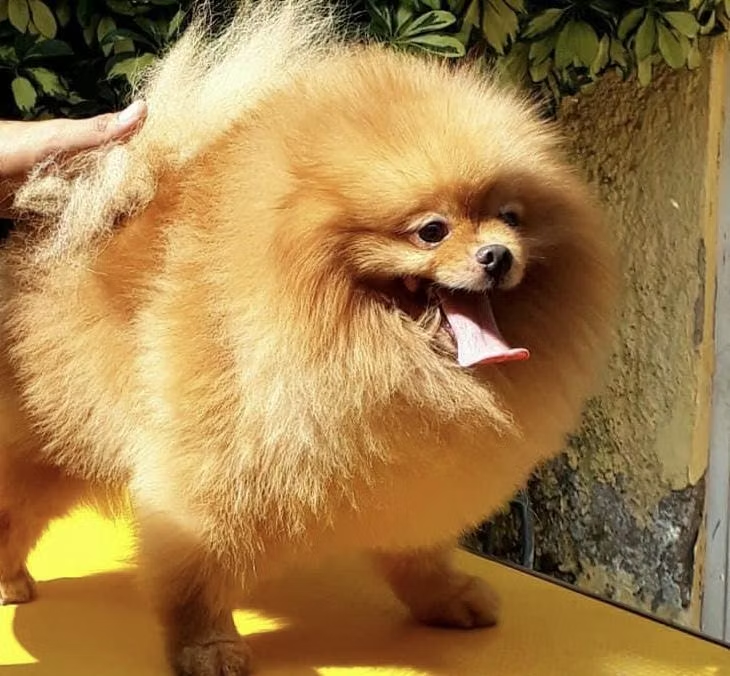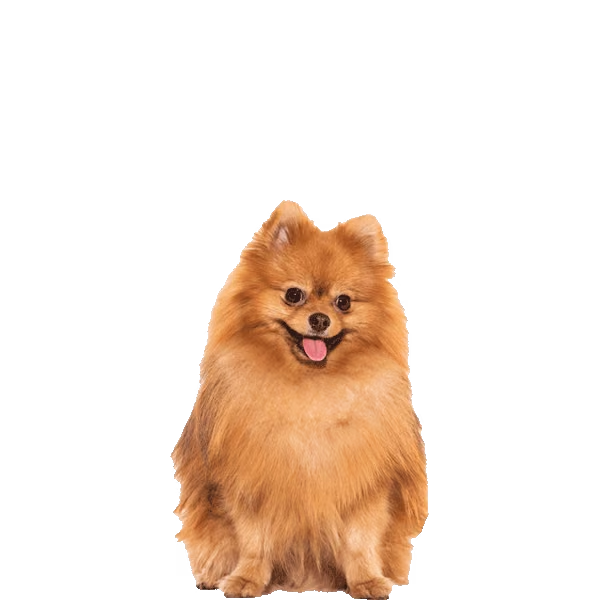
The Pomeranian is a spirited, fluffy companion full of curiosity, confidence, and outsized personality.
How the Pomeranian coat is built, and what that means when you groom it.
Critical: A Pomeranian should not be shaved.
The undercoat keeps heat out as well as in, and the outer coat shields the skin from sun and insect bites. Clipping the whole coat off removes both. It often grows back patchy, soft or a different colour, and in some animals the guard hairs never return properly. Brush the undercoat out instead of cutting it off.
Caution: A Pomeranian coat mats easily.
Fine or long hair tangles at the base of the coat, out of sight, where the mats tighten and pull on the skin. Brushing has to reach right down to the roots in sections, not just skim the surface.
Information: A Pomeranian drops its undercoat in heavy bursts.
The undercoat comes out in heavy bursts over a few weeks. An undercoat rake, or a bath followed by a proper blow-dry, clears it far faster than daily brushing. Clipping the coat down is not a shortcut for this.
A few of the Pomeranian profiles members have added to United Pet Club.
The Pomeranian is a toy-sized companion dog from Germany, known for its thick double coat, fox-like face, and confident, lively personality.
The Pomeranian is one of the smallest members of the spitz family, with most adults weighing between 3 and 7 pounds. Despite the small frame, the breed carries itself with the upright posture and alert expression typical of larger northern dogs. The plush double coat, plumed tail carried over the back, and small wedge-shaped head give the Pomeranian its distinctive look.
This is a curious and outgoing dog that stays interested in its surroundings. Pomeranians tend to bond closely with their owners and often follow household activity from room to room. They are alert and quick to bark at new sounds or visitors, which makes them effective small watchdogs even though their size offers no real protection.
The breed adapts well to apartments and smaller homes because exercise needs are modest. A Pomeranian can meet much of its activity requirement through indoor play and short walks, though it still benefits from daily routine and mental stimulation.
| Attribute | Detail |
|---|---|
| Origin | Germany |
| Size | Toy (3 to 7 lb) |
| Lifespan | 12 to 16 years |
| Group / role | Toy companion dog (spitz type) |
| Good with | Families with older children, singles, seniors, other small pets |
The Pomeranian fits owners who want a small, attentive companion and can commit to regular coat care. It works for apartment living and for people who are home often, since the breed enjoys company and can become noisy when bored. Households with toddlers should take care, because the small bones are easy to injure during rough handling. Owners willing to manage barking through training will get the best results from this alert, vocal breed.
The Pomeranian descends from large spitz sled and herding dogs of the Arctic, taking its name from the Pomerania region and shrinking to toy size over the 18th and 19th centuries.
The Pomeranian belongs to the spitz family, a group of dogs with thick coats, pointed ears, and curled tails that developed in the cold regions of the far north. Its larger ancestors worked as sled pullers and herding dogs and weighed far more than the modern toy version, with some early specimens reaching 20 to 30 pounds.
The breed takes its name from Pomerania, a historical region along the Baltic Sea coast covering parts of present-day Germany and Poland. Selective breeding in that area reduced the size of these spitz dogs and refined the coat, though the early dogs were still much larger than today's standard.
The breed gained wide popularity in Britain during the 19th century. Queen Victoria kept Pomeranians and exhibited them, and her preference for smaller individuals is often credited with driving the trend toward the toy size seen now. Over her lifetime the average show Pomeranian grew noticeably smaller.
Through the late 1800s and into the 1900s, breeders continued to select for the compact frame, dense double coat, and the range of solid colors associated with the breed today. The Pomeranian was recognized by major kennel clubs in this period and has remained a consistently popular toy companion since.
The Pomeranian is a compact toy dog with a dense double coat, a foxy head, small erect ears, and a heavily plumed tail carried flat over the back.
The Pomeranian has a square, compact body that is roughly as long as it is tall. The most prominent feature is the double coat: a soft, dense undercoat beneath a longer, harsher outer coat that stands off from the body and gives the dog its rounded, puffy outline. A ruff of longer hair frames the neck and chest.
The head is wedge-shaped with a short muzzle, small erect ears, and dark, alert eyes that contribute to the fox-like expression. The tail is set high and lies flat over the back, fanning out with long fur.
| Trait | Standard |
|---|---|
| Height | 7 to 12 in (18 to 30 cm) at the shoulder |
| Weight | 3 to 7 lb (1.4 to 3.2 kg) |
| Coat | Double coat: dense undercoat, long harsh outer coat |
| Colors | Orange, red, cream, black, brown, sable, blue, white, parti-color and others |
| Eyes | Dark, almond to round, medium size |
The Pomeranian comes in a wide range of accepted colors. Orange and red are among the most common, but black, cream, white, brown, blue, sable, and parti-color patterns also occur. Puppies often change color and coat texture as they mature, and the full adult coat may take more than a year to develop. The outer coat sheds in seasonal cycles, with heavier shedding typically once or twice a year, and the undercoat requires regular brushing to prevent matting.
Pomeranians are confident, curious, and lively dogs that bond closely with their owners, stay alert to their surroundings, and tend to bark readily.
The Pomeranian has a bold, spirited character that does not match its small size. These dogs are confident and outgoing, often approaching new situations with curiosity rather than caution. They form strong attachments to their owners and enjoy being involved in daily activity.
With family, the Pomeranian is affectionate and playful. With strangers it tends to be alert and watchful, often announcing visitors with barking before settling. Early socialization helps the breed accept new people and avoid excessive wariness. Around other pets, a well-socialized Pomeranian usually coexists with other small dogs and cats, though its confidence can lead it to challenge much larger dogs, which poses a risk given the size difference.
The breed is intelligent and responds to training, but it can be independent and sometimes stubborn. Barking is a notable trait and benefits from consistent management from puppyhood. Pomeranians left alone for long periods can become bored and noisy, so they suit owners who can give regular attention.
| Trait | Rating |
|---|---|
| Affection | 5 |
| Energy | 4 |
| Trainability | 3 |
| Vocalness | 5 |
| Shedding | 3 |
Pomeranians need regular brushing of the double coat, modest daily exercise, and protection from heat and rough handling given their small size.
The Pomeranian adapts well to apartments and small homes. It tolerates indoor living and does not need a large yard. Because of the heavy coat, the breed handles cold better than heat and should have shade and water in warm conditions. Supervise the dog around stairs, furniture, and larger animals, since the small frame is easily injured.
Pomeranians need a measured diet of quality small-breed food split into several small meals, with care taken to avoid obesity and low blood sugar in puppies.
Pomeranians do well on a complete, balanced food formulated for small or toy breeds. Small-breed kibble has smaller pieces suited to their jaws and is usually higher in calories per cup to match a fast metabolism. Because the breed is small, portions are tiny and easy to overfeed, so measuring food is important. Fresh water should always be available.
Toy-breed puppies can be prone to low blood sugar (hypoglycemia), so they are typically fed more frequent meals than adults until they grow. Watch for weakness, trembling, or lethargy in young puppies and consult a veterinarian if these appear.
| Life stage | Amount per day | Meals |
|---|---|---|
| Puppy (under 6 months) | About 1/4 to 1/2 cup, by weight and food | 3 to 4 |
| Adult (3 to 7 lb) | About 1/4 to 1/2 cup | 2 |
| Senior / less active | Adjust down to maintain weight | 2 |
Keep treats to no more than about 10 percent of daily calories to avoid weight gain, which strains the joints and trachea of small dogs. A balanced commercial diet usually supplies all required nutrients, so supplements are generally unnecessary unless a veterinarian recommends them for a specific condition. Dental chews can help manage the tartar buildup common in toy breeds.
Pomeranians are generally long-lived at 12 to 16 years but are prone to dental disease, luxating patella, collapsing trachea, and certain coat and heart conditions.
The Pomeranian is generally a healthy, long-lived breed, with a typical lifespan of 12 to 16 years. As with many toy dogs, its main health concerns relate to small size: dental crowding, fragile joints, and a delicate windpipe. Responsible breeding and regular veterinary care help manage these risks.
| Condition | Signs | Note |
|---|---|---|
| Luxating patella | Skipping, hind-leg lameness, occasional limping | Common in toy breeds; mild cases managed, severe cases may need surgery |
| Collapsing trachea | Honking cough, especially when excited or pulling on a collar | Use a harness instead of a collar to reduce strain |
| Dental disease | Bad breath, tartar, loose teeth, reluctance to eat | Crowded small jaws need regular brushing and cleaning |
| Hypoglycemia (puppies) | Weakness, trembling, lethargy | Frequent small meals reduce risk in young puppies |
| Patent ductus arteriosus / heart issues | Murmur, tiring easily, coughing | Detected on veterinary exam; some require treatment |
Pomeranians are intelligent and trainable but can be independent and prone to barking, so they respond best to short, consistent, reward-based sessions started early.
The Pomeranian is intelligent and learns quickly, but its independent streak means training takes consistency. Short, frequent sessions hold attention better than long ones. The breed responds well to praise and food rewards and poorly to harsh correction. Two training priorities stand out: managing barking and house training, both of which take patience with toy breeds.
Early socialization matters. Exposing a Pomeranian puppy to a range of people, sounds, and other animals helps prevent the wariness and reactivity the breed can otherwise develop.
Pomeranian breeding requires veterinary oversight because the small size brings whelping risks, small litters, and a need for careful screening of breeding stock.
Breeding Pomeranians calls for care because of the breed's small size. Females reach sexual maturity within the first year, but responsible breeders wait until a bitch is physically mature and has passed health screening before breeding. Screening for patellar, cardiac, and eye conditions helps reduce inherited problems.
Gestation lasts about 63 days, similar to other dogs. Litters are small, commonly one to four puppies. The small size of both dam and puppies raises the risk of whelping complications, and some births require veterinary assistance or cesarean section, so a veterinarian should be involved throughout.
Newborn Pomeranian puppies are tiny and vulnerable. They need a warm, draft-free environment, since they cannot regulate body temperature well in the first weeks. Frequent nursing and close monitoring for hypoglycemia are important. Puppies are usually weaned at around six to eight weeks and should stay with the dam and littermates long enough to develop normal social behavior before going to new homes.
| Metric | Value |
|---|---|
| Sexual maturity | Around 6 to 12 months (breed later) |
| Gestation | About 63 days |
| Average litter size | 1 to 4 puppies |
| Weaning age | 6 to 8 weeks |
| Whelping note | Higher complication risk; veterinary support advised |
Register your Pomeranian free for life with United Pet Club, and put its microchip number on a record American shelters can actually find.
A Pomeranian can hold a free lifetime profile in the United Pet Club registry whether or not it carries a chip. The profile pairs your contact details with your dog's photo, birth date, and markings, so whoever finds it knows exactly who to call. Registering your dog takes a few minutes, and nothing about it expires or renews.
The microchip needs its own registration. A vet implants the chip, but the number stays anonymous until you file it, and an anonymous chip cannot point anyone at you. Register the microchip with United Pet Club on the free lifetime plan: every brand a US vet implants qualifies, updates cost nothing after a move, and the record shows up in the AAHA universal lookup American shelters check first. Create your free account and finish both steps in one sitting.
Open a free United Pet Club account, enter your Pomeranian's name, birth date, and a photo, and save. The profile is free for life, works with or without a microchip, and you can attach a chip number later.
Type the 15-digit chip number into your free United Pet Club account together with your current phone number and address. The lifetime plan is free, covers every future update, and accepts any chip brand a US vet implants.
No federal law says a Pomeranian must carry a chip, but plenty of city and county licensing rules do, and shelters routinely chip before adoption. What the law never does is register the chip for you; that part is yours.
Nothing. United Pet Club's lifetime plan covers the dog's profile, the microchip registration, and every update at no charge, with no renewal fees.
Common questions about the Pomeranian cover its size, temperament, grooming demands, lifespan, suitability for families, and availability.
Pomeranians are a toy breed. Most adults weigh between 3 and 7 pounds and stand about 7 to 12 inches at the shoulder.
Pomeranians are curious, spirited, outgoing, and alert. They bond closely with their owners, stay watchful around strangers, and tend to bark readily, which makes them good small watchdogs.
Care is moderate. Exercise needs are modest, but the double coat needs brushing two to three times a week, and the breed needs dental care and protection from heat and rough handling given its small size.
The typical lifespan is 12 to 16 years, which is long compared with many larger breeds.
They suit apartments and many households well. They fit families with older children, singles, and seniors. Homes with toddlers should supervise closely, because the small bones are easily injured.
Yes, the breed is vocal and quick to bark at sounds and visitors. Early training and a quiet cue help keep barking manageable.
The Pomeranian is a popular toy breed and is widely available from breeders and rescues. Choose breeders who screen for patellar, heart, and eye conditions, and consider breed-specific rescue groups.