
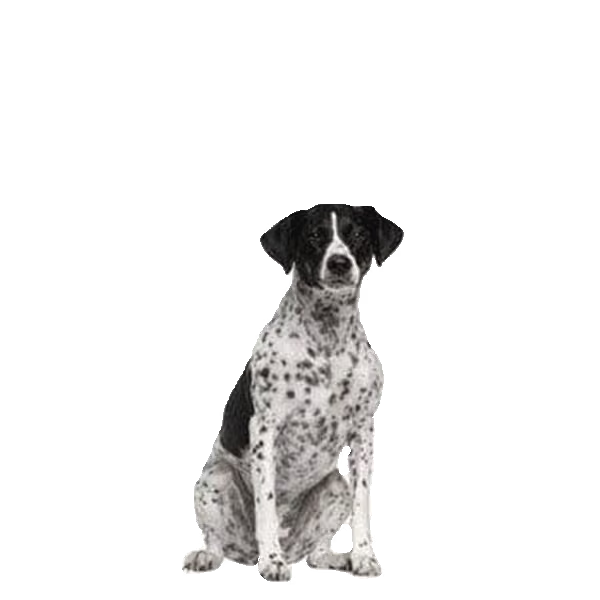
Pointer
The Pointer is an even-tempered, athletic bird dog renowned for its classic pointing stance and graceful endurance afield.
- Size
- Large
- Lifespan
- 12–17 years
- Origin
- England
- Temperament
- Even-tempered
- Standard colors
- Black, White, and Liver and 2 more
Characteristics
Coat and grooming
How the Pointer coat is built, and what that means when you groom it.
- Coat layers
- Single coat
- Coat texture
- Smooth
- Coat length
- Short
- Shedding
- Moderate shedding
Registry Recognition
Fédération Cynologique Internationale
- Pointers and Setters
American Kennel Club
- Sporting Group
Canadian Kennel Club
- Sporting Group
United Pet Club
- Pointers and SettersPrimary
Pointer colors and patterns
What each club's breed standard says about every Pointer color and pattern. Point at a ruling to see the club's own wording.
Breed standards describe the Pointer in Black, White, Liver, Orange, and Lemon. Standard patterns: Solid, Bicolor, Tricolor, and Roan.
| Color or pattern | FCI | AKC | UKC | KC | KUSA |
|---|---|---|---|---|---|
| Black | Standard (“black and white”) | Standard (“Black”) | Standard (“black”) | Standard (“black and white”) | Standard (“black and white”) |
| White | Standard (“Usual colours are lemon and white, orange and white, liver and white, and black and white”) | Standard (“Black & White”) | Standard (“in combination with white”) | Standard (“Lemon and white, orange and white, liver and white, and black and white”) | Standard (“Lemon and white, orange and white, liver and white, and black and white”) |
| Liver | Standard (“liver and white”) | Standard (“Liver”) | Standard (“liver”) | Standard (“liver and white”) | Standard (“liver and white”) |
| Orange | Standard (“orange and white”) | Standard (“Orange”) | Standard (“traditionally referred to as orange colored”) | Standard (“orange and white”) | Standard (“orange and white”) |
| Lemon | Standard (“lemon and white”) | Standard (“Lemon”) | Standard (“Yellow or yellow and white dogs with liver noses and eye rims are referred to as lemon colored”) | Standard (“Lemon and white”) | Standard (“Lemon and white”) |
| Patterns | |||||
| Solid | Standard (“Self colours and tricolours are also correct”) | Standard (“solid-colored”) | Standard (“solid”) | Standard (“Self colours and tricolours also permissible”) | Standard (“Self colours and tricolours are also correct”) |
| Bicolor | Standard (“lemon and white, orange and white, liver and white, and black and white”) | Standard (“either in combination with white”) | Standard (“in combination with white”) | Standard (“Lemon and white, orange and white, liver and white, and black and white”) | Standard (“Lemon and white, orange and white, liver and white, and black and white”) |
| Tricolor | Standard (“Self colours and tricolours are also correct”) | Standard (“A good Pointer cannot be a bad color”) | Fault (“Tri-color is also acceptable but is a hound trait and should be faulted accordingly”) | Standard (“Self colours and tricolours also permissible”) | Standard (“Self colours and tricolours are also correct”) |
| Roan | No ruling | Standard (“Ticked”) | No ruling | Not recognized | No ruling |

%22%3E%3Cpath%20d%3D%22M0%2023L9.5%2020.4L14%2025.4L19%2029.6Q21%2035%2023.5%2035.5Q36%2033%2050%2036L56%2040V64H0Z%22%20fill%3D%22%23F5F5F0%22%2F%3E%3C%2Fg%3E%3Cuse%20href%3D%22%23s%22%20fill%3D%22none%22%20stroke%3D%22%233B2A20%22%20stroke-opacity%3D%220.6%22%20stroke-width%3D%221%22%20stroke-linejoin%3D%22round%22%2F%3E%3Cellipse%20cx%3D%223.2%22%20cy%3D%2221.7%22%20rx%3D%221.3%22%20ry%3D%221.2%22%20fill%3D%22%231C1C1C%22%2F%3E%3Ccircle%20cx%3D%2210.8%22%20cy%3D%2219.3%22%20r%3D%221.1%22%20fill%3D%22%231C1C1C%22%2F%3E%3C%2Fsvg%3E)
%22%3E%3Cellipse%20cx%3D%2212.6%22%20cy%3D%2222.6%22%20rx%3D%223.2%22%20ry%3D%222.8%22%20fill%3D%22%23847865%22%2F%3E%3Ccircle%20cx%3D%2212%22%20cy%3D%2217.2%22%20r%3D%221.25%22%20fill%3D%22%23847865%22%2F%3E%3Crect%20x%3D%220%22%20y%3D%2247%22%20width%3D%2264%22%20height%3D%2217%22%20fill%3D%22%23847865%22%2F%3E%3Cpath%20d%3D%22M8.6%2018L12%2015.8L5.8%2021.8L3.2%2021.4Z%22%20fill%3D%22%23F5F5F0%22%2F%3E%3Cpath%20d%3D%22M1.5%2021.2L9%2018.6L12.6%2021L12.2%2026.2L3.5%2024.4Z%22%20fill%3D%22%23F5F5F0%22%2F%3E%3Cpath%20d%3D%22M14%2024.5L18.5%2026Q19.5%2033%2023%2039L18%2040Q17%2033%2014%2028Z%22%20fill%3D%22%23F5F5F0%22%2F%3E%3Cpath%20d%3D%22M21%2035.5Q35%2033.5%2048%2036.5V42H21Z%22%20fill%3D%22%23F5F5F0%22%2F%3E%3Crect%20x%3D%220%22%20y%3D%2252.5%22%20width%3D%2264%22%20height%3D%2212%22%20fill%3D%22%23F5F5F0%22%2F%3E%3Ccircle%20cx%3D%2258.4%22%20cy%3D%2212.8%22%20r%3D%222.6%22%20fill%3D%22%23F5F5F0%22%2F%3E%3C%2Fg%3E%3Cuse%20href%3D%22%23s%22%20fill%3D%22none%22%20stroke%3D%22%233B2A20%22%20stroke-opacity%3D%220.6%22%20stroke-width%3D%221%22%20stroke-linejoin%3D%22round%22%2F%3E%3Cellipse%20cx%3D%223.2%22%20cy%3D%2221.7%22%20rx%3D%221.3%22%20ry%3D%221.2%22%20fill%3D%22%231C1C1C%22%2F%3E%3Ccircle%20cx%3D%2210.8%22%20cy%3D%2219.3%22%20r%3D%221.1%22%20fill%3D%22%231C1C1C%22%2F%3E%3C%2Fsvg%3E)
%22%3E%3Cg%20fill%3D%22none%22%20stroke%3D%22%23F5F5F0%22%20stroke-width%3D%221.15%22%20stroke-linecap%3D%22round%22%20stroke-linejoin%3D%22round%22%3E%3Cpath%20d%3D%22M28.6%2025h.1M51.3%2028.8h.1M34.7%2024.3h.1M34.2%2041.6h.1M51%2044.2h.1M55.9%2024.7h.1M27.5%2026.3h.1M18.5%2028.6h.1M25.2%2028.9h.1M24.2%2019.3h.1M20.6%2017.6h.1M34.1%2030.6h.1M57.3%2023.3h.1M23.5%2030.7h.1M26.5%2023.1h.1M40%2031.5h.1M51.7%2038.6h.1M20.2%2022.1h.1M40.4%2037.8h.1M35%2043.1h.1M20.6%2031.7h.1M27.8%2031.9h.1M17.2%2021.1h.1M38.1%2037.7h.1M25.3%2040.5h.1M32%2029.3h.1M41.6%2039.5h.1M23.6%2024h.1M26.4%2018.6h.1M30.3%2031.9h.1M31.2%2035.2h.1M36.5%2043.7h.1M35.2%2026.3h.1M55.6%2019.1h.1M22.4%2036.8h.1M39.2%2020h.1M49.5%2039.1h.1M33.6%2033.5h.1M36.4%2032.4h.1M56.3%2042.4h.1M54.8%2031.2h.1M36.9%2023.2h.1M52.7%2019.1h.1M21.5%2033.8h.1M48.6%2028h.1M36.6%2017.5h.1M45.6%2031.3h.1M37.9%2030.5h.1M17%2031.8h.1M21.1%2043.1h.1M55.7%2021.1h.1M30.8%2041.9h.1M57.4%2038.4h.1M54.8%2026.9h.1M29.1%2017.5h.1M24.3%2037.7h.1M26%2032h.1M39.3%2022.8h.1M53.5%2029h.1M53.3%2023.3h.1M20%2038.4h.1M28.3%2044.7h.1M28.6%2039.8h.1M51.9%2041.1h.1M52.3%2033.7h.1M19.6%2042.2h.1M19%2033h.1M47.8%2021.7h.1M45.7%2024.8h.1M24.6%2035.5h.1M29.8%2036.8h.1M50.7%2032h.1M29.5%2043.5h.1M28.2%2041.5h.1M47.4%2034.8h.1M25.4%2033.7h.1M50.2%2041.2h.1M27.7%2029.5h.1M21.5%2024.8h.1M55.5%2017.5h.1M41.2%2044.3h.1M39.2%2018.4h.1M41.1%2042.5h.1M54.7%2035.3h.1M42.8%2034.5h.1M30.1%2023h.1M42.6%2025.1h.1M32.9%2024.4h.1M42.4%2032.4h.1M49.7%2022.2h.1M49.1%2043.1h.1M38%2035.2h.1M47.7%2043.8h.1M43.1%2022.4h.1M22.4%2040.4h.1M44.4%2019.8h.1M53.3%2040.1h.1M20.7%2029.3h.1M55.6%2043.9h.1M17.6%2039.2h.1M41.7%2028.9h.1M44.1%2036.3h.1M24.3%2043.6h.1M26.4%2038.1h.1M30.3%2029.2h.1M31.5%2030.8h.1M32.1%2023h.1M18.3%2040.9h.1M48%2033.4h.1M36.4%2038.7h.1M31.9%2020.8h.1M32.6%2026.2h.1M22%2031.2h.1M53.4%2021.7h.1M41.9%2017.7h.1M53.3%2037.3h.1M47.7%2040.3h.1M54.4%2033.7h.1M33.6%2037.5h.1M25.3%2017.2h.1M37.6%2019.7h.1M31.6%2019h.1M29.2%2019.6h.1M50.7%2027.3h.1M22%2022.1h.1M31%2037.8h.1M56.5%2026.6h.1M34.7%2039.5h.1M56.5%2040.8h.1M47.6%2038h.1M48.6%2026.1h.1M49.7%2034.2h.1M45.4%2027.4h.1M22.6%2038.9h.1M56.5%2035.3h.1M35.1%2021h.1M41.9%2020.1h.1M37.6%2040h.1M32.6%2044.4h.1M37.9%2025.2h.1M26.6%2043h.1M18.9%2036.7h.1M47.2%2028.9h.1M30.5%2026.2h.1M17.4%2027.3h.1M47.1%2017.2h.1M22.3%2044.3h.1M32.5%2042.4h.1M23.6%2025.7h.1M31.4%2024.9h.1%22%2F%3E%3Cpath%20d%3D%22M26%2020.9h.1M41.2%2023.8h.1M39.9%2026.4h.1M28.5%2033.4h.1M42.8%2043.8h.1M17.6%2034.3h.1M34%2017.1h.1M31.2%2017.2h.1M46.5%2036.1h.1M25.1%2022.1h.1M50.3%2023.7h.1M20.2%2026.6h.1M20.8%2020.4h.1M50.9%2017.3h.1M49.5%2020.2h.1M52.9%2044.1h.1M23.9%2017.8h.1M43.2%2028.1h.1M57.6%2030h.1M52%2025.6h.1M19.2%2019.1h.1M19.5%2024.4h.1M32.8%2040.1h.1M36.1%2027.7h.1M39.6%2029.5h.1M38.4%2041.5h.1M47.9%2019.4h.1M49.1%2031.7h.1M55.9%2036.9h.1M29.2%2027.2h.1M46%2043.5h.1M44.6%2028.8h.1M47.5%2031.5h.1M22.8%2020h.1M27.6%2017.1h.1M43.1%2018.6h.1M54.3%2020h.1M57.2%2033.8h.1M44.5%2043.8h.1M27.1%2035.5h.1M45.3%2041.8h.1M56.7%2028.8h.1M36.7%2021.4h.1M43.3%2042.3h.1M17.3%2022.9h.1M32.7%2035.5h.1M30.5%2039.8h.1M29.1%2021.2h.1M34.5%2018.8h.1M25.8%2027h.1%22%2F%3E%3C%2Fg%3E%3Cpath%20d%3D%22M56.3%2038.4l0%201.2M40%2027.2l-0.3%201.3M32.6%2043.6l-0.4%201.5M29%2023.3l0.8%201.5M55.1%2044l0.4%201.1M47.5%2022.5l-0.2%201.6M42.9%2038.6l0.7%201.2M35.2%2041.8l-0.5%201.7M26.9%2040l-0.1%201.2M41%2042.8l-0.1%201.6M18.4%2021.2l0.7%201.3M49.4%2019.3l-0.5%201.4M50.1%2041.7l0%201.8M28.2%2041.8l-0.6%201.2M55.5%2027.1l0.2%201.2M44.7%2019.3l0.5%201.7M48.6%2020.5l-0.8%201.4M43.7%2039.6l0.3%201.1M22.1%2033.8l-0.6%201.6M50.1%2038.1l-0.5%201.3M51.8%2044.1l-0.1%201.8M39%2017.5l0%201.4M30.2%2026.7l0.2%201.4M25.8%2031.2l0.2%201.6M29.6%2043.5l0.1%201M43.7%2018.3l0.1%201.5M29.6%2018.2l0.3%201.6M24.4%2017.6l0.3%201.1M22%2028.2l-0.6%201.6M25.9%2043.3l-0.3%201.4M22.2%2024.3l0.3%201.3M47.3%2029.2l-0.2%201.4M21.8%2033.2l0.5%200.9M32.9%2037l0.4%201M40%2029.9l0.8%201.4M17.4%2038.3l0.2%201.3M31%2039.2l0%201.2M37.3%2033.7l0.3%201.5M48.1%2040.5l0%201.6M33.9%2031.2l0.1%201.2M29.8%2035.2l-0.4%201M25.1%2037.3l-0.2%201.5M30.2%2039.8l0.5%201M44.6%2034.8l0.4%200.9M55.3%2034.2l0%201.7M50.6%2017.9l0.4%201M30.2%2034.9l-0.4%201.4M19.5%2035.7l-0.5%201.7M40.7%2028.7l0.8%201.4M23.3%2029l-0.4%201.4M17%2040.5l-0.2%201M48.4%2023.2l-0.3%201M37.3%2025.1l-0.4%201.3M23%2021.4l-0.4%201.3M20.4%2017.2l-0.1%201.3M42.3%2020.4l0.6%201.4M41%2031.8l0.6%201.2M45.4%2034.3l-0.1%201.2M32.5%2018l0%201.3M46.2%2021.6l0.1%201.4M30.5%2022.3l0.5%201.1M58%2044.6l0.3%201.5M57.1%2033.9l0.8%201.4M18.3%2042.6l0.3%201M40.5%2035.1l-0.6%201.4M38.8%2044.3l-0.3%201.1%22%20fill%3D%22none%22%20stroke%3D%22%23F5F5F0%22%20stroke-width%3D%220.8%22%20stroke-linecap%3D%22round%22%20stroke-linejoin%3D%22round%22%2F%3E%3C%2Fg%3E%3Cuse%20href%3D%22%23s%22%20fill%3D%22none%22%20stroke%3D%22%233B2A20%22%20stroke-opacity%3D%220.6%22%20stroke-width%3D%221%22%20stroke-linejoin%3D%22round%22%2F%3E%3Crect%20x%3D%2220%22%20y%3D%2258%22%20width%3D%223.6%22%20height%3D%222%22%20fill%3D%22%234A4038%22%2F%3E%3Crect%20x%3D%2226%22%20y%3D%2258%22%20width%3D%223.6%22%20height%3D%222%22%20fill%3D%22%234A4038%22%2F%3E%3Crect%20x%3D%2244%22%20y%3D%2258%22%20width%3D%223.6%22%20height%3D%222%22%20fill%3D%22%234A4038%22%2F%3E%3Crect%20x%3D%2250%22%20y%3D%2258%22%20width%3D%223.6%22%20height%3D%222%22%20fill%3D%22%234A4038%22%2F%3E%3Ccircle%20cx%3D%229.5%22%20cy%3D%2211.5%22%20r%3D%221.1%22%20fill%3D%22%231C1C1C%22%2F%3E%3C%2Fsvg%3E)
| Color or pattern | FCI | AKC | UKC | KC | KUSA |
|---|---|---|---|---|---|
| Brown | Standard (“Either hazel or brown according to colour of coat”) | No ruling | No ruling | Standard (“Either hazel or brown according to colour of coat”) | Standard (“Either hazel or brown according to colour of coat”) |
| Dark brown | No ruling | Standard (“the darker the better”) | Standard (“dark eyes, the darker the better”) | No ruling | No ruling |
| Light brown | No ruling | No ruling | Standard (“Lighter-colored eyes are acceptable in dogs with self-colored pigment”) | No ruling | No ruling |
| Hazel | Standard (“Either hazel or brown according to colour of coat”) | No ruling | No ruling | Standard (“Either hazel or brown according to colour of coat”) | Standard (“Either hazel or brown according to colour of coat”) |
| Color or pattern | AKC | UKC |
|---|---|---|
| Black | Standard (“In the darker colors, the nose should be black or brown”) | Standard (“The nose leather may be black or self-colored”) |
| Liver | Standard (“In the darker colors, the nose should be black or brown”) | Standard (“The nose leather may be black or self-colored”) |
| Pink | Standard (“in the lighter shades it may be lighter or flesh-colored”) | No ruling |
What the rulings mean
- Standard
- Described by the club's breed standard.
- Fault
- Named by the club's breed standard as a fault: the animal can be shown but is penalized.
- Not recognized
- The club does not accept this color or pattern for the breed.
Color changes
How a Pointer's colors can change over its life.
Blackchanges toRust
Coat · With body condition · can change back
Blackchanges toGray
Coat · Progressive
Blackchanges toBrown
Coat · In the sun · can change back
Whitechanges toRoan
Coat · With age · from 2 weeks
Blackchanges toSnow nose
Nose · With the season · can change back
Blackchanges toPink
Nose · With the season · can change back
%22%3E%3Crect%20x%3D%2217%22%20y%3D%2210%22%20width%3D%2230%22%20height%3D%2242%22%20fill%3D%22url(%23g)%22%2F%3E%3C%2Fg%3E%3Cuse%20href%3D%22%23s%22%20fill%3D%22none%22%20stroke%3D%22%233B2A20%22%20stroke-opacity%3D%220.6%22%20stroke-width%3D%221%22%20stroke-linejoin%3D%22round%22%2F%3E%3Cpath%20d%3D%22M12.5%2037Q13%2032%2018.5%2032Q23.5%2032.5%2023.5%2036.5Q20.5%2035.5%2018.8%2037Q17.4%2038.6%2018%2041.5Q13.6%2040.4%2012.5%2037Z%22%20fill%3D%22%231C1C1C%22%20fill-opacity%3D%220.8%22%20stroke%3D%22%23F5F5F0%22%20stroke-opacity%3D%220.4%22%20stroke-width%3D%220.9%22%2F%3E%3Cpath%20d%3D%22M51.5%2037Q51%2032%2045.5%2032Q40.5%2032.5%2040.5%2036.5Q43.5%2035.5%2045.2%2037Q46.6%2038.6%2046%2041.5Q50.4%2040.4%2051.5%2037Z%22%20fill%3D%22%231C1C1C%22%20fill-opacity%3D%220.8%22%20stroke%3D%22%23F5F5F0%22%20stroke-opacity%3D%220.4%22%20stroke-width%3D%220.9%22%2F%3E%3Cpath%20d%3D%22M32%2040V50%22%20fill%3D%22none%22%20stroke%3D%22%231C1C1C%22%20stroke-width%3D%221.3%22%20stroke-opacity%3D%220.5%22%20stroke-linecap%3D%22round%22%20stroke-linejoin%3D%22round%22%2F%3E%3Cellipse%20cx%3D%2232%22%20cy%3D%2221%22%20rx%3D%2212%22%20ry%3D%223.5%22%20fill%3D%22%23F5F5F0%22%20fill-opacity%3D%220.18%22%2F%3E%3C%2Fsvg%3E)
Sources
Each ruling comes from the club's published breed standard or color list.
Meet some of our Pointer
A few of the Pointer profiles members have added to United Pet Club.

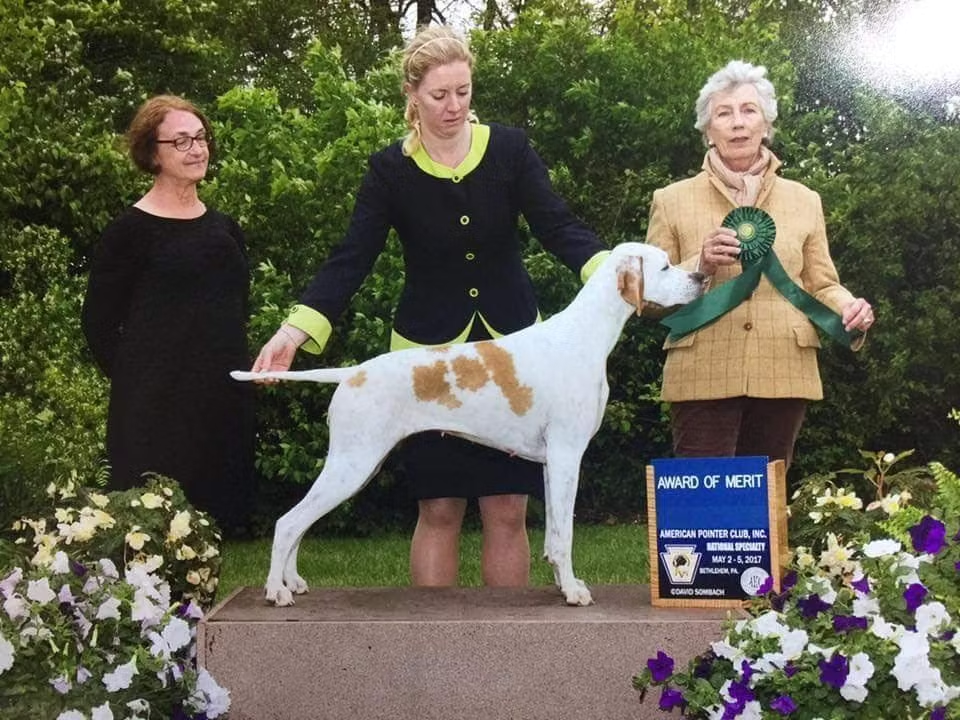
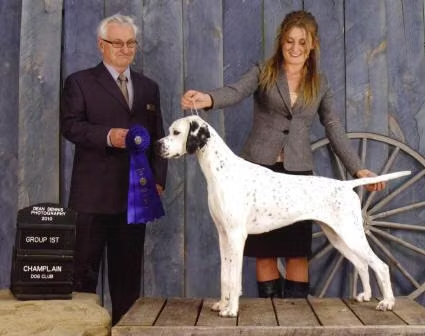
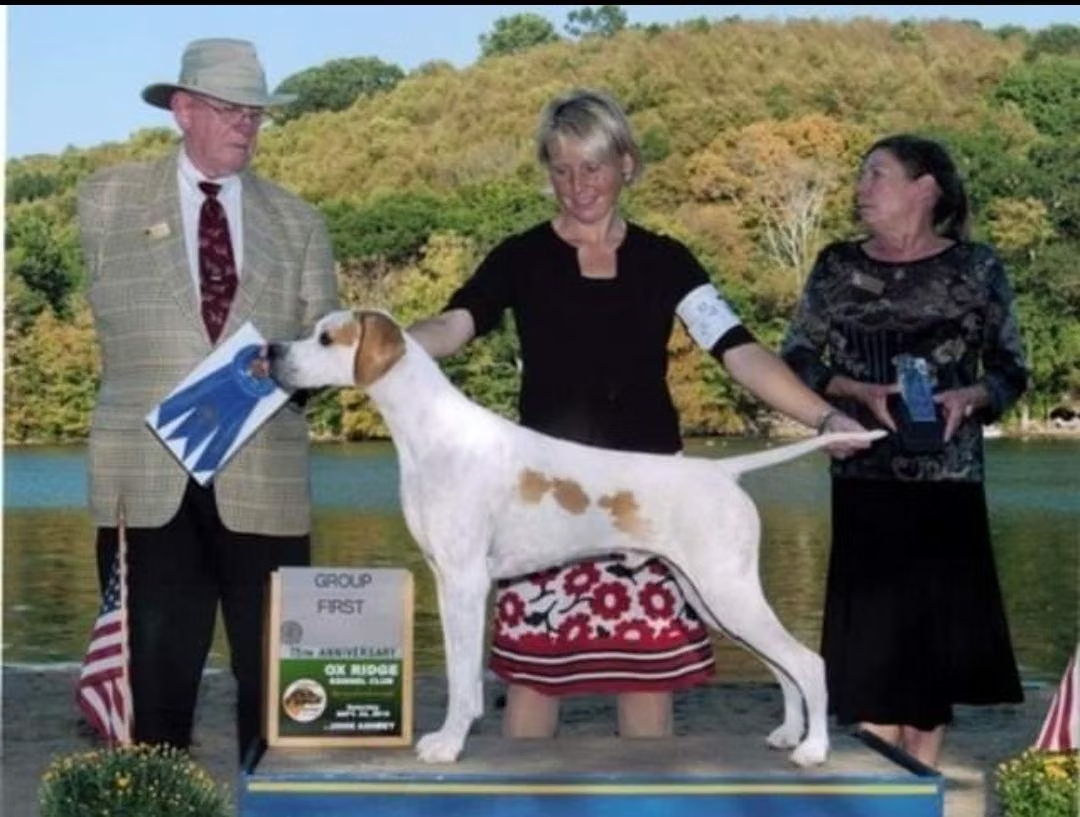

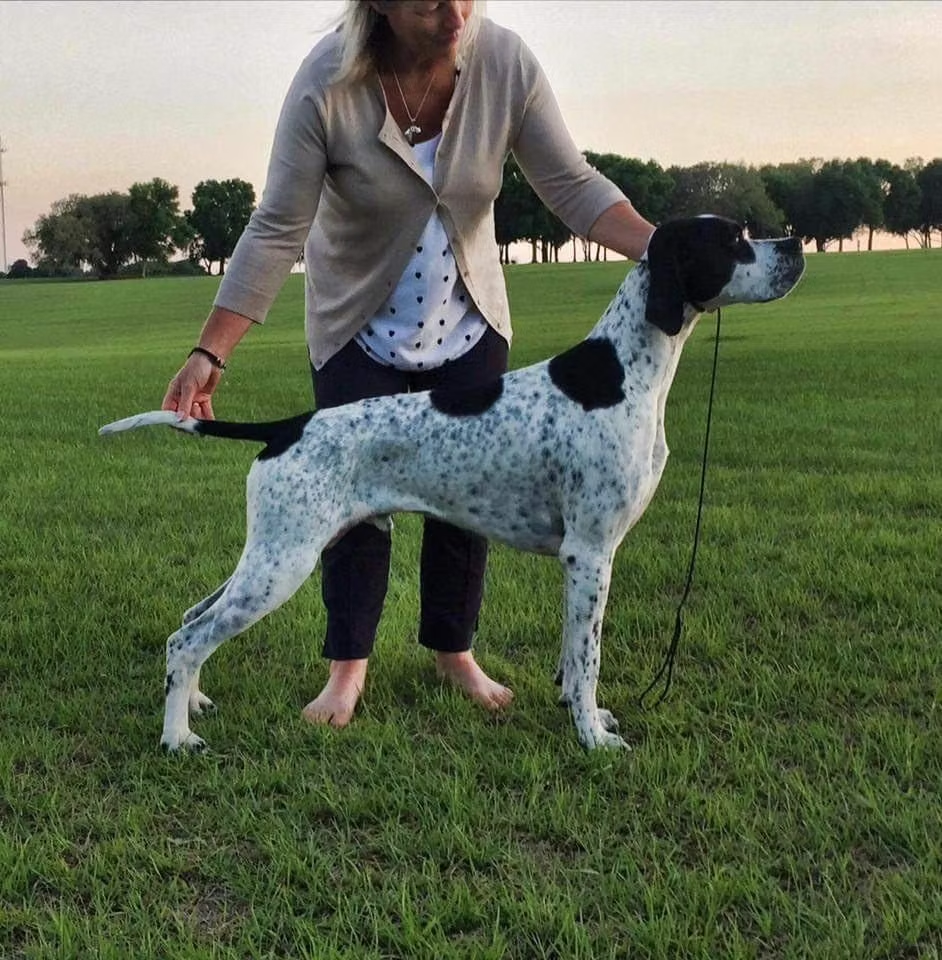
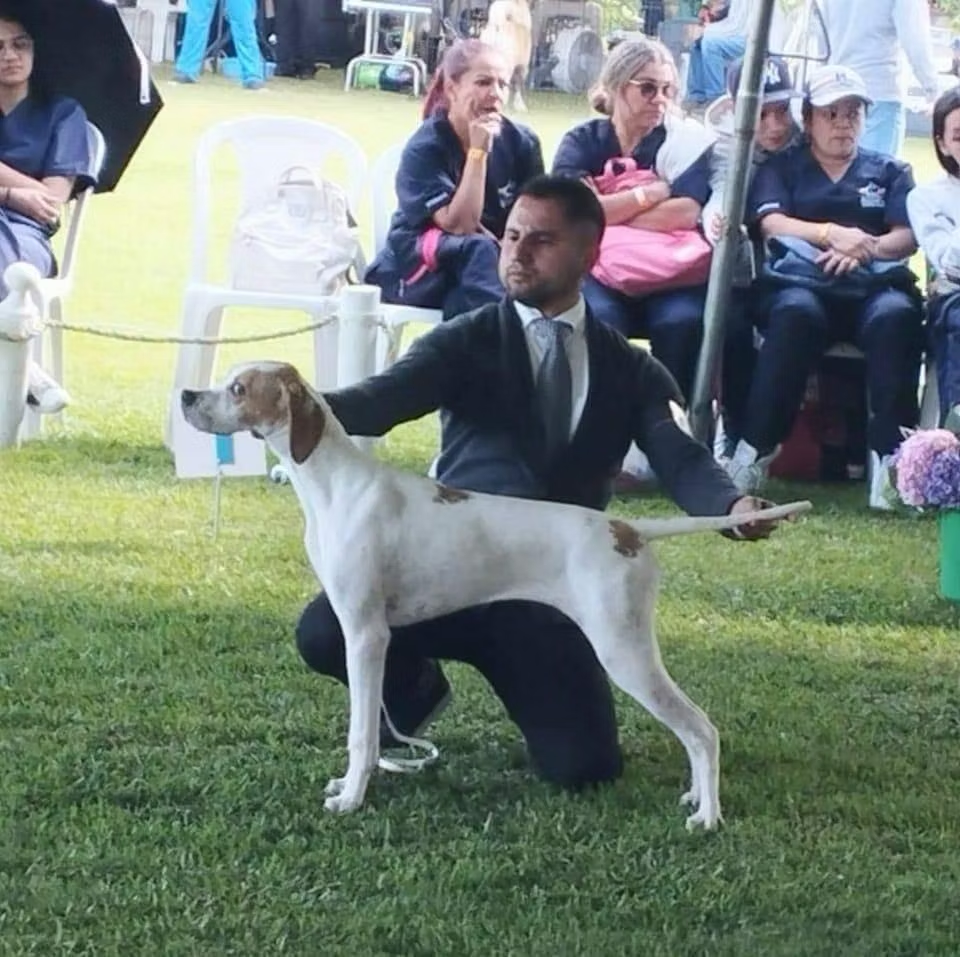
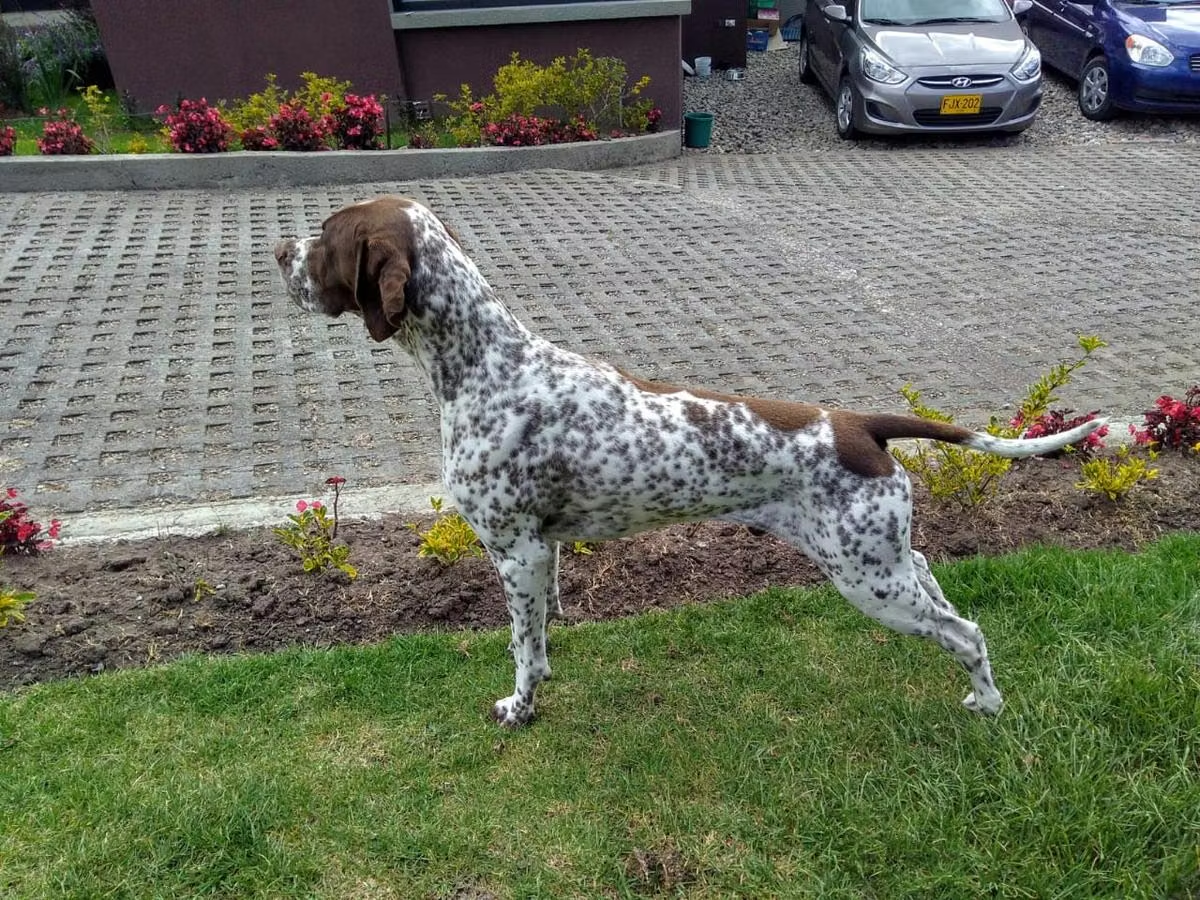
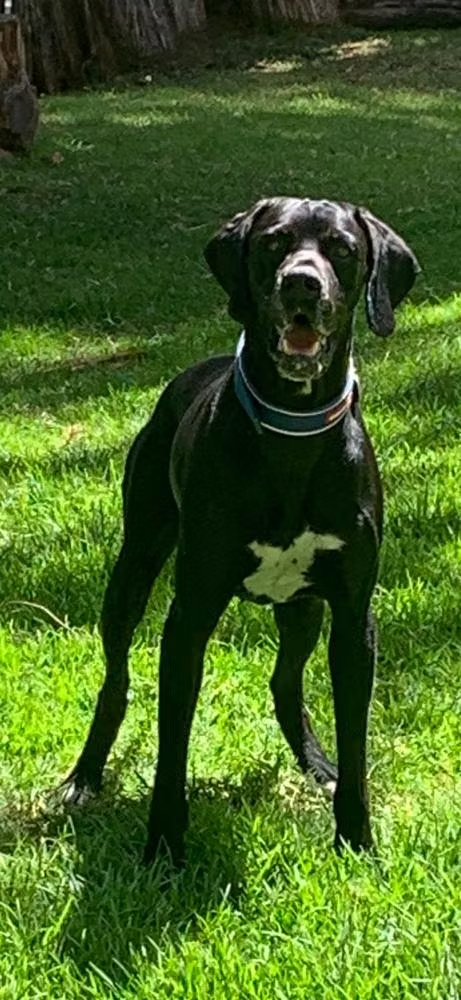
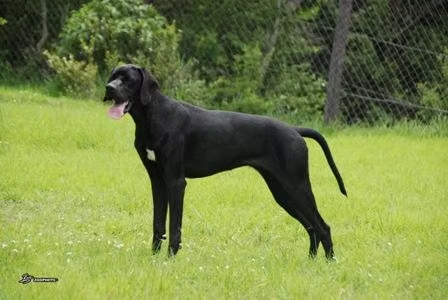
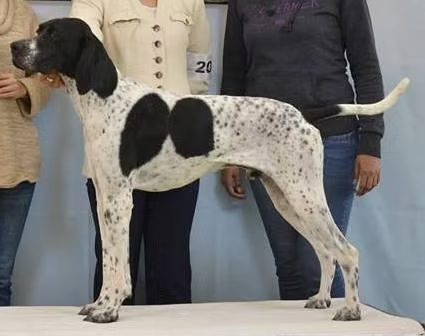
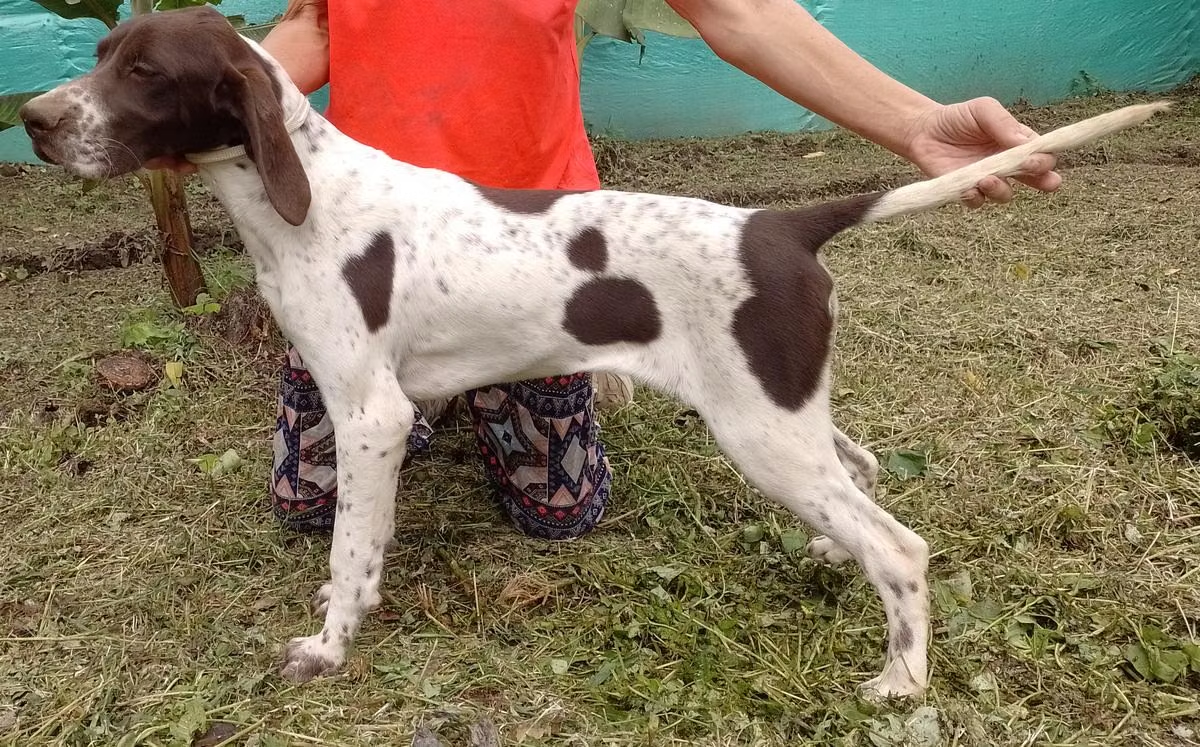
About the Pointer
The Pointer is a large, athletic gun dog from England, even-tempered at home and built for long days of hunting upland birds.
The Pointer is a large sporting dog developed in England to locate game birds and freeze into a steady, leaning stance that signals where the bird is hiding. That stance, with one foreleg raised and the body aimed at the quarry, is the trait the breed is named for. It is one of the older pointing breeds in the British hunting tradition, and the working type still drives how the dog looks and behaves today.
In the field a Pointer covers ground at a fast, easy gallop and can hunt for hours without flagging. The same dog at home is generally calm and even-tempered, friendly with people, and tolerant of children when given enough daily exercise. The breed is people-oriented and forms strong attachments, so it does poorly when left alone for long stretches or confined without an outlet for its energy.
Pointers carry a short, hard coat and a clean, balanced outline. They are athletes first, and most behavior problems trace back to too little physical activity rather than a difficult temperament.
| Attribute | Detail |
|---|---|
| Origin | England |
| Size | Large |
| Lifespan | 12 to 17 years |
| Group / role | Sporting group, pointing gun dog |
| Good with | Active families, older children, other dogs |
Who suits this breed
The Pointer fits an owner who runs, hikes, cycles, or hunts and wants a dog that keeps pace. It suits homes with a yard or regular access to open space and people who are home for much of the day. It is a poor match for apartment living without heavy exercise, for owners who want a low-activity companion, or for anyone away from home for long working hours.
History of the Pointer
The Pointer was developed in England in the 1600s and 1700s to find and point game birds, and was refined into the lean, fast bird dog recognized today.
The Pointer took shape in England, with records of pointing dogs in the country dating to the mid-1600s. Early Pointers were used to locate hares for hunters working with greyhounds, then increasingly to find game birds for hunters carrying nets and, later, guns. The spread of wing shooting in the 1700s made a dog that could find birds and hold steady more valuable, and breeders selected hard for that work.
The foundation stock is generally traced to a mix of pointing breeds brought into England from continental Europe, including Spanish pointing dogs, alongside other hounds used for scenting and speed. Crosses were made to add nose, drive, and the upright pointing posture that hunters wanted.
By the 1800s the breed had settled into a recognizable type and became a fixture of the English shooting field. Field trials in the 1800s rewarded range, pace, and steadiness, which pushed the breed toward the lean, fast dog seen today. The Pointer was among the breeds present at the first organized dog shows in England in the 1800s.
The breed later spread to North America and elsewhere, where it remained primarily a hunting and field-trial dog. The working type and the show type stayed closer together than in many sporting breeds, and the Pointer continues to be valued first for its performance on game birds.
Appearance of the Pointer
The Pointer is a lean, muscular large dog with a short, hard coat, a clean outline, and a head marked by a defined stop and a slightly dished muzzle.
The Pointer is built for speed and endurance. The outline is clean and athletic, with a deep chest, a level topline, and well-angled hindquarters that drive the long, ground-covering stride. The head is carried proudly, with a defined stop, a muzzle that is slightly dished in profile, and a nose that is dark or in keeping with the coat color. The tail tapers and is carried at or near the level of the back, often with a lively side-to-side action when the dog moves.
| Trait | Description |
|---|---|
| Height | Males about 25 to 28 in (63 to 71 cm); females about 23 to 26 in (58 to 66 cm) |
| Weight | Males about 55 to 75 lb (25 to 34 kg); females about 45 to 65 lb (20 to 29 kg) |
| Coat | Short, dense, smooth, and hard with a clean sheen |
| Colors | Liver, lemon, orange, or black, often with white; solid or patched, sometimes ticked |
| Eyes | Round, dark, in proportion to coat color, with an alert expression |
Coat and colors
The coat is short and lies flat against the body, which makes the Pointer easy to keep clean but offers limited protection against cold. Common color patterns pair a base of liver, lemon, orange, or black with white markings, and many dogs carry ticking across the white areas. Solid-colored dogs occur but are less common. The skin should be loose enough for fast movement without hanging in folds.
Temperament of the Pointer
The Pointer is friendly, even-tempered, and people-oriented at home, intensely focused in the field, and needs heavy daily exercise to stay settled.
The Pointer is known for an even, friendly disposition. It bonds closely with its household and is generally affectionate with family members, including children old enough to handle a large, fast dog. With strangers most Pointers are sociable rather than guarded, so the breed is not a natural watchdog. Many get along well with other dogs, and a Pointer raised with them can live alongside cats and other pets, though the strong prey drive bred for bird work means small fleeing animals can trigger a chase.
The defining trait is focus. In the field the dog locks onto scent and game with intense concentration, and that same drive needs an outlet at home. A Pointer that gets enough running is typically calm indoors. A Pointer that does not may become restless, vocal, or destructive. The breed is sensitive and responds poorly to harsh handling, doing best with patient, consistent training and plenty of company.
| Trait | Rating |
|---|---|
| Affection | 4 |
| Energy | 5 |
| Trainability | 4 |
| Vocalness | 2 |
| Shedding | 3 |
Caring for a Pointer
The Pointer needs heavy daily exercise and warmth in cold weather, but its short coat keeps grooming simple.
Care for a Pointer centers on exercise. The short coat is low-maintenance, but the energy level is not, and the breed does best with a job or a sport to channel its drive.
Grooming
- Brush weekly with a rubber curry or grooming mitt to remove loose hair and spread skin oils
- Bathe only when needed, since the coat sheds dirt readily
- Check and clean the ears regularly, as drop ears can trap moisture
- Trim nails every few weeks and brush teeth several times a week
Exercise
- Provide at least one to two hours of vigorous activity each day
- Favor running, hiking, cycling alongside, or field work over slow leash walks
- Use scent games, retrieving, and dog sports such as agility to add mental work
- Keep the dog leashed or in a secured area near roads, because a scent can override recall
Environment
A home with a securely fenced yard suits the breed, paired with regular access to open space for off-leash running where it is safe and legal. The thin coat means a Pointer feels the cold and should wear a coat in winter and have shade and water in heat. The dog wants to be with its people and should live indoors as part of the household, not isolated outside.
Feeding a Pointer
Pointers do well on a complete diet matched to their high activity level, split across two meals, with portions adjusted for work and body condition.
The Pointer is an active large breed, and its diet should reflect the energy it burns. Feed a complete, balanced food suited to its life stage and adjust the amount for how hard the dog is working. A Pointer running in the field through hunting season needs more calories than the same dog resting in the off-season. Watch body condition rather than relying on the bag alone: you should be able to feel the ribs easily under a thin layer of fat and see a waist from above.
| Life stage | Amount per day | Meals |
|---|---|---|
| Puppy (2 to 6 months) | Per food label, divided small | 3 to 4 |
| Junior (6 to 12 months) | About 2.5 to 3.5 cups dry food | 2 to 3 |
| Adult (low to moderate activity) | About 2.5 to 3 cups dry food | 2 |
| Adult (heavy field work) | About 3.5 to 4.5 cups dry food | 2 |
| Senior | About 2 to 3 cups, adjusted for weight | 2 |
Treats and supplements
Keep treats to roughly ten percent of daily calories and reduce meal portions to match, since this breed gains weight quickly if overfed and under-exercised. Most Pointers on a complete diet need no supplements. Discuss joint or omega supplements with your veterinarian, and provide fresh water at all times, especially around hard exercise.
Health of the Pointer
The Pointer is a generally healthy breed with a 12 to 17 year lifespan, though it shares some orthopedic and eye conditions common to large sporting dogs.
The Pointer is generally a hardy, sound breed with a typical lifespan of 12 to 17 years. Its working background has kept the breed athletic and free of many extreme features, but it shares some health concerns with other large, active dogs, mainly affecting the joints, eyes, and skin. Buying from a breeder who health-tests the parents and keeping the dog at a lean weight are the two factors most within an owner's control.
| Condition | Signs | Note |
|---|---|---|
| Hip dysplasia | Stiffness, limping, reluctance to rise or jump | Screen breeding stock; keep the dog lean |
| Elbow dysplasia | Foreleg lameness, especially when young | More common in fast-growing large pups |
| Progressive retinal atrophy | Night blindness progressing to vision loss | Inherited; DNA and eye testing available |
| Entropion | Squinting, tearing, eyelid rolled inward | May need surgical correction |
| Skin allergies | Itching, redness, recurrent ear infections | Manage triggers; vet-guided treatment |
| Bloat (gastric torsion) | Swollen abdomen, retching, distress | Emergency; deep-chested dogs are at risk |
Preventive care
- Keep core vaccinations and parasite prevention current
- Schedule annual checkups, moving to twice yearly for seniors
- Maintain a lean body condition to protect the joints
- Check ears and skin regularly, particularly after field work
- Care for teeth with regular brushing and professional cleaning as advised
Training a Pointer
The Pointer is intelligent and eager to work with its handler, and trains well with patient, reward-based methods that respect its sensitive nature.
The Pointer is intelligent and willing, which makes it trainable, but it is also independent in the field and sensitive to harsh correction. The breed learns fastest with short, upbeat sessions and clear rewards. Start socialization and basic obedience early, while the dog is young and more focused. Recall deserves special attention because a Pointer on a scent can be hard to call off, so build a reliable recall in low-distraction settings before testing it in the open. The strong prey drive that makes the breed good at bird work means small running animals can pull its attention, and training has to account for that rather than fight it.
Basics
- Begin socialization with people, dogs, and new places in the first months
- Teach name response and a marker word or clicker to mark correct behavior
- Build core cues: sit, down, stay, and a release word
- Train a strong recall on a long line before going off leash
- Add steadiness and field manners if the dog will hunt
- Provide a daily mental and physical outlet so training is not the only stimulation
Breeding the Pointer
Pointers reach breeding maturity at one to two years, carry litters of around five to eight puppies, and need health-tested parents and early socialization of the young.
Responsible Pointer breeding starts with health-tested parents of sound temperament and good working ability. Although dogs can reproduce earlier, most breeders wait until physical and mental maturity, generally one to two years of age, and until hip, elbow, and eye screening results are known. Females are usually bred on a later season rather than the first, with rest cycles between litters to protect the dam's health.
Gestation runs about 63 days from conception. Litters commonly number five to eight puppies, though larger litters occur in this big-bodied breed. The dam typically whelps without help, but the breeder should be prepared to assist and to involve a veterinarian if labor stalls or a puppy is in distress.
Raising the young well matters as much as the mating. Puppies should stay with the dam and littermates until at least eight weeks, with gentle handling, novel sounds and surfaces, and early exposure to people during this period. This early socialization shapes the friendly, even temperament the breed is known for and prepares an active puppy for life in a busy home or in the field.
| Metric | Value |
|---|---|
| Breeding maturity | About 1 to 2 years |
| Gestation | About 63 days |
| Average litter size | 5 to 8 puppies |
| Weaning age | About 6 to 8 weeks |
| Recommended go-home age | 8 weeks or later |
| Health screening | Hips, elbows, eyes, and breed DNA tests |
Registering your Pointer and its microchip
Register your Pointer free for life with United Pet Club, and put its microchip number on a record American shelters can actually find.
How to register a Pointer in the United States
Shelters across the US scan every dog that comes through the door, and what happens next depends on paperwork. A scan that ends at a current record gets your Pointer home; a scan that ends nowhere starts a holding period. Register your dog with United Pet Club and that record exists, free, for the rest of your dog's life.
The microchip needs its own registration. A vet implants the chip, but the number stays anonymous until you file it, and an anonymous chip cannot point anyone at you. Register the microchip with United Pet Club on the free lifetime plan: every brand a US vet implants qualifies, updates cost nothing after a move, and the record shows up in the AAHA universal lookup American shelters check first. Create your free account and finish both steps in one sitting.
How do I register my Pointer in the United States?
Open a free United Pet Club account, enter your Pointer's name, birth date, and a photo, and save. The profile is free for life, works with or without a microchip, and you can attach a chip number later.
How do I register my Pointer's microchip?
Type the 15-digit chip number into your free United Pet Club account together with your current phone number and address. The lifetime plan is free, covers every future update, and accepts any chip brand a US vet implants.
Does my Pointer have to be microchipped in the United States?
No federal law says a Pointer must carry a chip, but plenty of city and county licensing rules do, and shelters routinely chip before adoption. What the law never does is register the chip for you; that part is yours.
How much does it cost to register a Pointer?
Nothing. United Pet Club's lifetime plan covers the dog's profile, the microchip registration, and every update at no charge, with no renewal fees.
Pointer frequently asked questions
Common questions about the Pointer's size, temperament, exercise needs, lifespan, suitability, and availability.
How big does a Pointer get?
The Pointer is a large breed. Males stand roughly 25 to 28 inches (63 to 71 cm) at the shoulder and weigh about 55 to 75 pounds (25 to 34 kg), while females are a little smaller at about 23 to 26 inches (58 to 66 cm) and 45 to 65 pounds (20 to 29 kg).
Are Pointers good family dogs?
Yes, for active families. Pointers are friendly and even-tempered, bond closely with their people, and are generally good with older children and other dogs. They are not guard dogs and need plenty of exercise and company to be at their best.
Is a Pointer hard to care for?
Grooming is easy because of the short coat, but the exercise demand is high. A Pointer needs one to two hours of vigorous activity a day. The breed is straightforward for an active owner and difficult for a sedentary one.
How long do Pointers live?
A Pointer typically lives 12 to 17 years. Good nutrition, a lean body weight, regular veterinary care, and buying from health-tested parents all help a dog reach the upper end of that range.
Is a Pointer a good choice for apartment living?
It is not an ideal fit. Pointers can adapt to smaller homes only if given heavy daily exercise and regular access to open space, but a house with a securely fenced yard suits the breed far better.
Do Pointers get along with other pets?
Most Pointers do well with other dogs and can live with cats they are raised alongside. Because the breed has strong prey drive, small running animals may trigger a chase, so introductions and supervision matter.
Are Pointers easy to find?
Pointers are an established sporting breed but are less common than some popular companion breeds. Look for breeders who health-test their stock, and check sporting-dog and breed rescue networks for dogs needing homes.
From the community
Ask about the PointerNo questions about the Pointer yet. Be the first to ask.
Browse Dog breeds