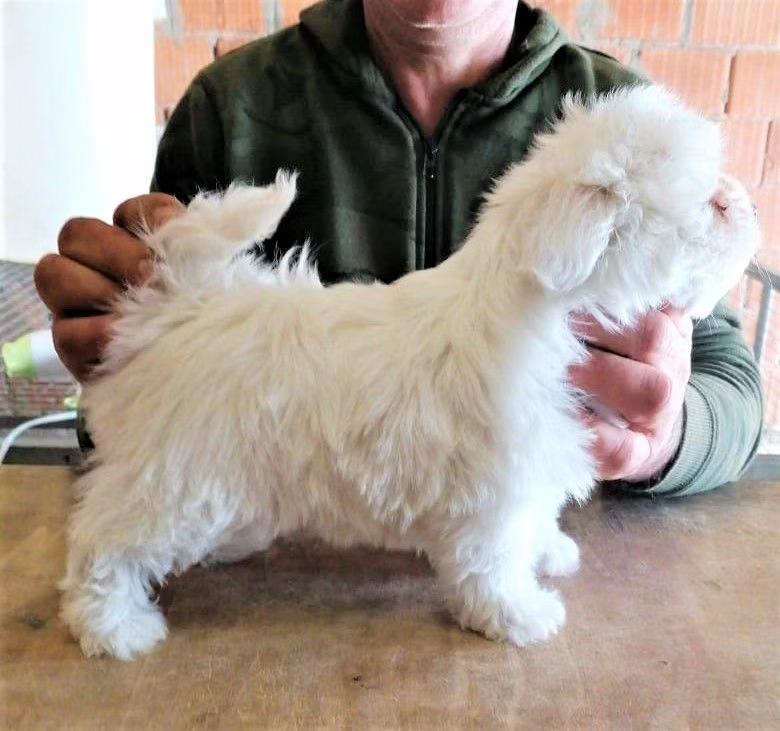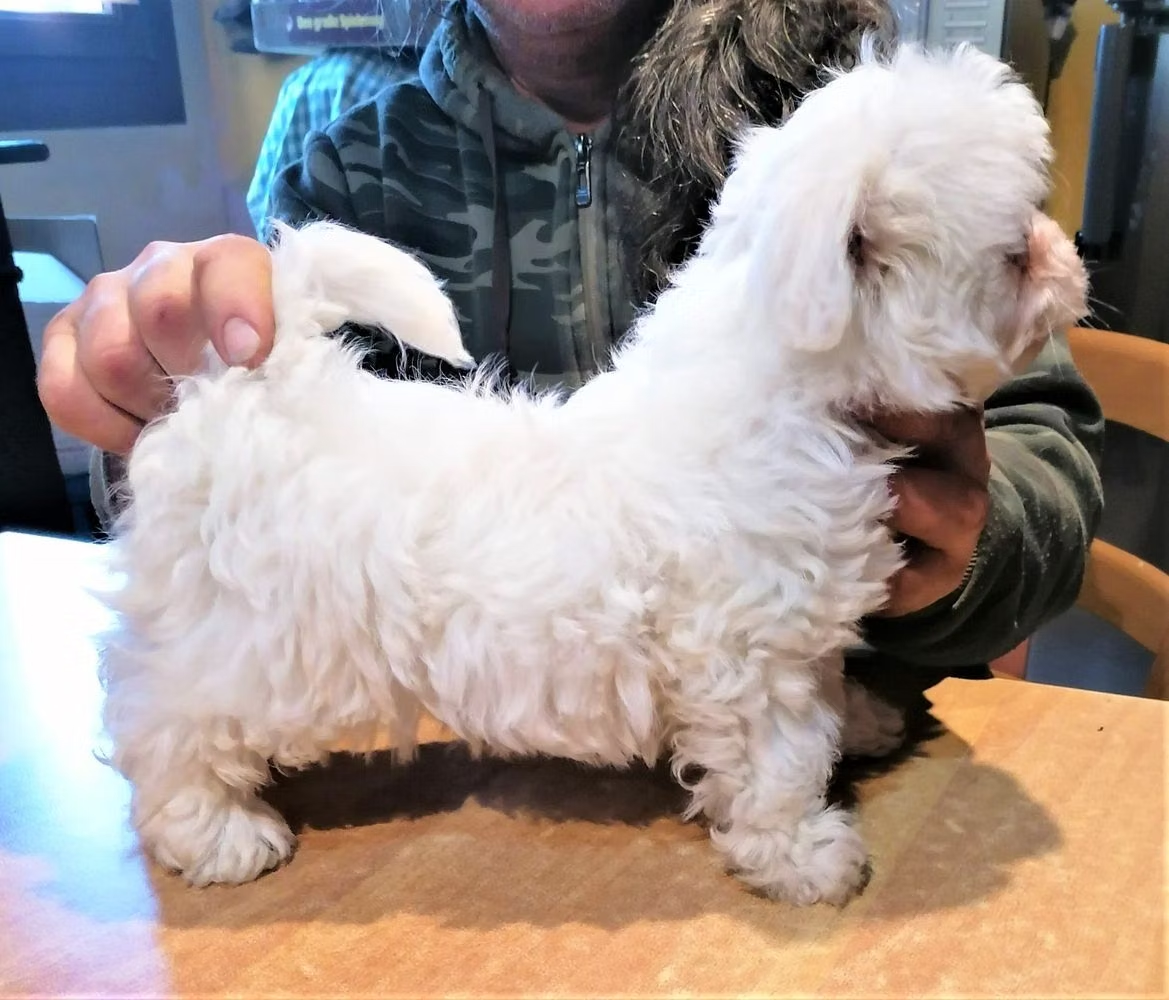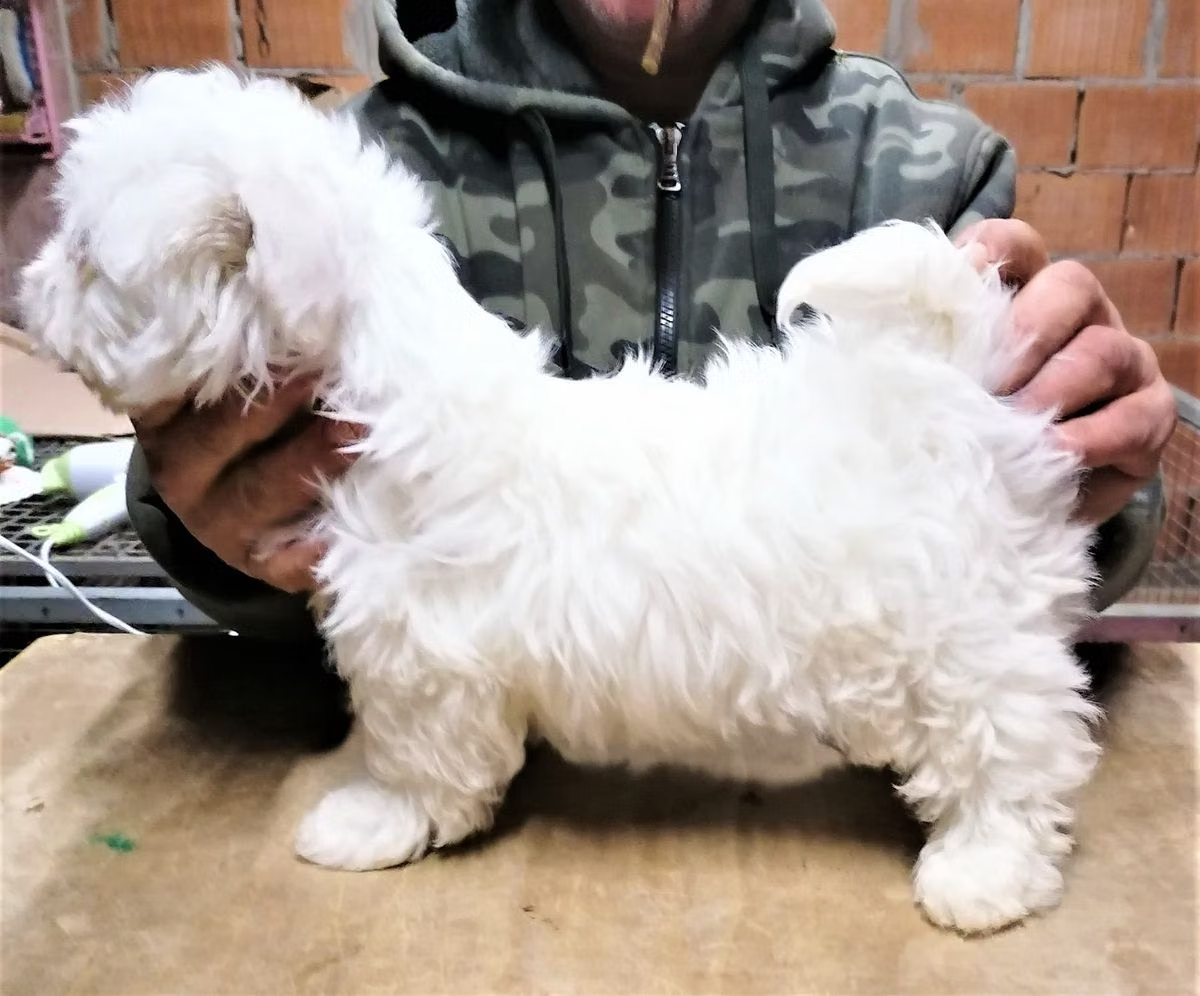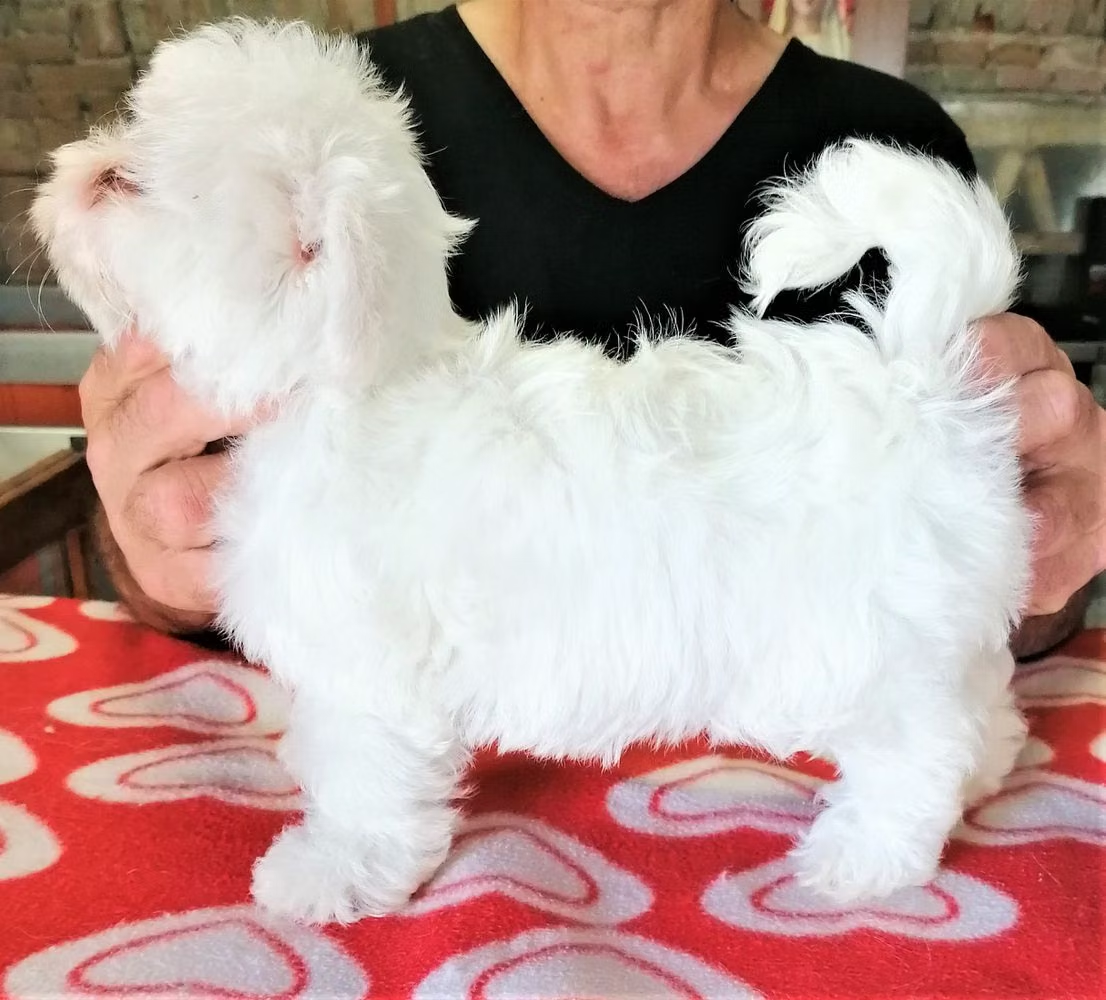
The Maltese is an affectionate, gentle toy breed known for its silky white coat, playful charm, and devoted companionship.
How the Maltese coat is built, and what that means when you groom it.
Caution: A Maltese coat mats easily.
Fine or long hair tangles at the base of the coat, out of sight, where the mats tighten and pull on the skin. Brushing has to reach right down to the roots in sections, not just skim the surface.
Information: A Maltese needs clipping every few weeks.
This coat keeps growing rather than shedding out, so it has to be trimmed every few weeks. Left to grow it mats down against the skin and traps moisture, dirt and heat.
A few of the Maltese profiles members have added to United Pet Club.
The Maltese is an affectionate toy dog from the Mediterranean, weighing under 7 pounds and recognized for its long, silky white coat and devoted companion temperament.
The Maltese is a toy companion dog with a single coat of long, straight white hair that hangs close to the body. Adults weigh under 7 pounds and stand about 8 to 10 inches at the shoulder, which places the breed firmly among the smallest of the toy group. Despite the delicate build, a Maltese is sturdy on its feet and moves with a smooth, light gait.
The breed has lived alongside people as a lap dog for centuries, and the temperament reflects that history. A Maltese is affectionate, gentle, and playful, and it tends to bond closely with the people it lives with. Alertness is part of the package too, so many will bark to announce visitors even though they are not guard dogs.
Because the coat grows continuously and sheds very little, the Maltese is often kept by people who want a small dog that drops little hair around the home. That same coat needs regular grooming, so the breed suits owners who can commit to daily brushing or a routine clip.
| Attribute | Detail |
|---|---|
| Origin | Malta |
| Size | Toy (under 7 lb) |
| Lifespan | 12 to 15 years |
| Group / role | Toy group, companion |
| Good with | Families, seniors, apartment homes, gentle older children |
The Maltese fits owners who want a small, indoor companion and who are home enough to give it regular attention. It does well in apartments and smaller homes because its exercise needs are modest. The breed can be a good match for older adults and first-time dog owners, provided they keep up with coat care and dental hygiene. Households with very young children should supervise closely, since the dog's small frame is easy to injure during rough play.
The Maltese descends from small companion dogs of the central Mediterranean, associated with the island of Malta since antiquity and prized as a lap dog through Greek, Roman, and later European societies.
The Maltese is one of the oldest of the toy breeds, and its roots trace to the central Mediterranean. Small white companion dogs from the region appear in Greek and Roman writing and art, and the island of Malta is the traditional source of the name. Exact origins before the classical period are not documented, so older claims of a fixed founding date should be treated as tradition rather than record.
Through antiquity the dogs were kept as companions rather than working animals. Roman writers referred to a small Melitaean dog, and the type appears on pottery and in references to lap dogs owned by the wealthy. The breed's role as an indoor companion has stayed consistent across its long history.
During the Renaissance the Maltese was a favorite of European nobility and appears in portraits of the period, often shown on the laps of aristocratic owners. This patronage helped preserve the small white type even as fashions in dogs changed.
The breed reached England and later North America in the nineteenth century, where it was shown and bred to a written standard. National kennel clubs recognized the Maltese in the late nineteenth and early twentieth centuries, and the modern dog remains close in size and purpose to its historical ancestors.
The Maltese is a compact toy dog under 7 pounds with a long, straight, single white coat, dark round eyes, and a level topline that gives it a balanced, square outline.
The Maltese has a balanced, slightly square outline with a level topline and a tail carried over the back. The head is in proportion to the body, with a moderate stop, a black nose, and dark, round eyes that give an alert expression. The ears are low set and drop, and they are covered in long hair that blends into the coat. The overall impression is of a small dog that is refined but not fragile in movement.
| Trait | Standard |
|---|---|
| Height | 8 to 10 in (20 to 25 cm) at the shoulder |
| Weight | Under 7 lb (about 3.2 kg) |
| Coat | Single, long, straight, silky; no undercoat |
| Colors | White; light tan or lemon on the ears is permitted but not preferred |
| Eyes | Dark, round, with dark rims |
The defining feature is a single coat of long, straight hair without an undercoat, which falls to either side of a center part and can reach the ground in a show coat. The standard color is pure white. Slight lemon or light tan markings on the ears are tolerated in some standards but are not preferred. Because the coat is hair rather than dense fur, the breed sheds little, but it tangles and mats without regular brushing. Many pet owners keep the coat in a shorter clip to reduce daily maintenance while preserving the soft texture around the face and feet.
The Maltese is affectionate, gentle, and playful, forming strong bonds with its household while staying alert enough to announce visitors.
The Maltese is a people-oriented companion that prefers to be near its owners for much of the day. With family it is affectionate and gentle, and it often follows its people from room to room. Many Maltese keep a playful streak well into adulthood and enjoy short games and toys.
With strangers the breed is usually friendly once introduced, though it tends to bark at new arrivals and unfamiliar sounds. This alertness makes it a capable watchdog by noise, but it has no guarding ability given its size. Early socialization helps reduce nuisance barking and nervousness.
With other pets the Maltese generally gets along when raised together, including with cats and other small dogs. Care is needed around much larger dogs because of the size difference. The breed can be prone to separation-related stress, so it does best in homes where it is not left alone for long stretches.
| Trait | Rating |
|---|---|
| Affection | 5 |
| Energy | 3 |
| Trainability | 3 |
| Vocalness | 4 |
| Shedding | 1 |
The Maltese needs daily coat brushing, modest daily exercise, and an indoor home, with particular attention to dental care and tear staining around the eyes.
The Maltese is an indoor dog and adapts well to apartments and small homes. It is sensitive to temperature extremes and should live inside with its family rather than outdoors. A draft-free resting spot, a few safe toys, and steps or a ramp onto favored furniture help protect the small frame from jumping injuries.
The Maltese needs a complete small-breed diet fed in measured portions across two or three meals, with attention to dental-friendly food and the risk of low blood sugar in puppies.
A Maltese does best on a complete and balanced diet formulated for small or toy breeds. The small kibble size is easier to chew and supports dental health. Because the breed is small and prone to weight gain, portions should be measured rather than free-fed, and treats kept to a small share of daily calories. Fresh water should always be available.
| Life stage | Amount per day | Meals |
|---|---|---|
| Puppy (2 to 6 months) | About 1/4 to 1/2 cup | 3 to 4 |
| Puppy (6 to 12 months) | About 1/4 to 1/2 cup | 2 to 3 |
| Adult | About 1/4 to 1/2 cup | 2 |
| Senior | Adjusted to maintain weight | 2 |
Use small, low-calorie treats for training and account for them in the daily total. Most Maltese on a complete commercial diet do not need supplements, but a vet may suggest dental chews or a joint or coat supplement in specific cases. Toy-breed puppies can develop low blood sugar (hypoglycemia) if meals are missed, so puppies should eat small meals on a regular schedule.
The Maltese is generally long-lived at 12 to 15 years but is prone to dental disease, patellar luxation, and other small-breed conditions that benefit from regular preventive care.
The Maltese is a generally healthy breed with a typical lifespan of 12 to 15 years, and many individuals live longer with good care. As with most toy breeds, the main concerns relate to small size: dental crowding, fragile bones, and joint structures that can slip. Buying from breeders who screen for known conditions and keeping up with routine veterinary care both help reduce risk.
| Condition | Signs | Note |
|---|---|---|
| Dental disease | Bad breath, tartar, loose teeth | Common in toy breeds; manage with brushing and cleanings |
| Patellar luxation | Skipping gait, intermittent hind-leg lameness | Kneecap slips out of groove; severity varies |
| Hypoglycemia (puppies) | Weakness, wobbliness, collapse | Low blood sugar; feed small regular meals |
| Portosystemic (liver) shunt | Poor growth, disorientation after meals | A blood vessel bypasses the liver; some cases need surgery |
| Collapsing trachea | Honking cough, especially when excited | Use a harness rather than a neck collar |
| Tear staining | Reddish-brown marks below the eyes | Cosmetic; daily cleaning helps |
The Maltese is intelligent and eager to please but can be slow to house-train, so it responds best to short, consistent, reward-based sessions.
The Maltese is intelligent and attentive, and it generally enjoys learning when sessions are kept short and positive. The breed responds to praise, food rewards, and play rather than harsh correction, which can make a sensitive dog anxious. House-training often takes patience, since small dogs have small bladders and may be slow to learn, so a consistent schedule and indoor pad options can help. Early socialization to people, sounds, and handling reduces shyness and the tendency to bark at new things.
Maltese bitches typically reach maturity around 12 months, carry small litters of one to four puppies for about 63 days, and may need close monitoring during whelping because of their small size.
Breeding a Maltese calls for care because of the breed's small size. Females are usually bred only after they are physically mature, generally around 18 to 24 months, even though they can come into season earlier. Litters are small, often one to four puppies, and gestation runs about 63 days from conception. Because puppies are tiny at birth, whelping can carry a higher risk of complications, and some small bitches need veterinary support or a cesarean delivery.
Newborn puppies are vulnerable to chilling and to low blood sugar, so the whelping area should be warm and the puppies monitored for steady nursing and weight gain. Weaning usually begins around three to four weeks, and puppies are typically ready for new homes at eight to twelve weeks once they are eating well and have begun early socialization. Responsible breeders screen breeding stock for patellar and liver problems and avoid pairing dogs that carry the same defects.
| Metric | Value |
|---|---|
| Sexual maturity | About 6 to 12 months |
| Recommended breeding age (female) | About 18 to 24 months |
| Gestation | About 63 days |
| Typical litter size | 1 to 4 puppies |
| Weaning | About 3 to 4 weeks |
| Ready for new homes | 8 to 12 weeks |
Register your Maltese free for life with United Pet Club, and put its microchip number on a record American shelters can actually find.
Shelters across the US scan every dog that comes through the door, and what happens next depends on paperwork. A scan that ends at a current record gets your Maltese home; a scan that ends nowhere starts a holding period. Register your dog with United Pet Club and that record exists, free, for the rest of your dog's life.
The microchip needs its own registration. A vet implants the chip, but the number stays anonymous until you file it, and an anonymous chip cannot point anyone at you. Register the microchip with United Pet Club on the free lifetime plan: every brand a US vet implants qualifies, updates cost nothing after a move, and the record shows up in the AAHA universal lookup American shelters check first. Create your free account and finish both steps in one sitting.
Open a free United Pet Club account, enter your Maltese's name, birth date, and a photo, and save. The profile is free for life, works with or without a microchip, and you can attach a chip number later.
Type the 15-digit chip number into your free United Pet Club account together with your current phone number and address. The lifetime plan is free, covers every future update, and accepts any chip brand a US vet implants.
No federal law says a Maltese must carry a chip, but plenty of city and county licensing rules do, and shelters routinely chip before adoption. What the law never does is register the chip for you; that part is yours.
Nothing. United Pet Club's lifetime plan covers the dog's profile, the microchip registration, and every update at no charge, with no renewal fees.
Common questions about Maltese size, temperament, grooming, lifespan, suitability, and how to find one.
The Maltese is a toy breed. Adults weigh under 7 pounds and stand about 8 to 10 inches at the shoulder, which makes it one of the smallest companion dogs.
It is affectionate, gentle, and playful, and it bonds closely with its household. It is also alert and tends to bark at visitors and unfamiliar sounds.
Exercise needs are modest, but the coat is high maintenance. Plan on daily brushing or a shorter clip, regular bathing, daily eye cleaning, and consistent dental care.
The typical lifespan is 12 to 15 years, and many individuals live longer with good veterinary care, dental hygiene, and a healthy weight.
Yes. Its small size and modest exercise needs suit apartments and smaller homes. It does best when it is not left alone for long periods.
No. The single coat is hair rather than dense fur, so it sheds very little. That same coat tangles easily and needs regular brushing to prevent mats.
Maltese are available from breeders who health-screen their stock and through breed-specific rescue groups. Ask about the parents' patella and liver health and meet the puppy before committing.