

Hovawart
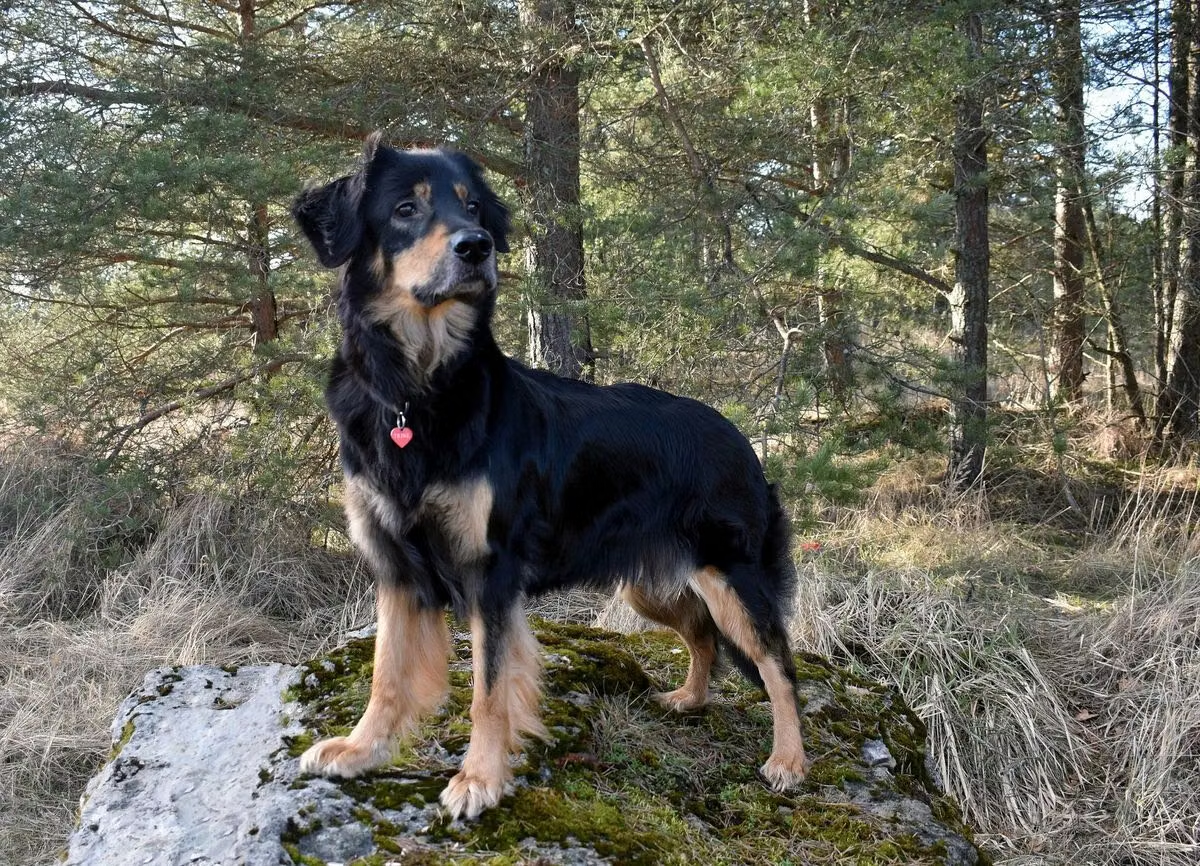
The Hovawart is a devoted, intelligent German working and guarding breed that is deeply loyal and naturally protective of its home.
- Size
- Large
- Lifespan
- 10–14 years
- Origin
- Germany
- Temperament
- Devoted
- Standard colors
- Black and Gold
Characteristics
Coat and grooming
How the Hovawart coat is built, and what that means when you groom it.
- Coat layers
- Double coat
- Coat texture
- Wavy
- Coat length
- Long
- Shedding
- Seasonal shedding
Grooming guidance
Critical: A Hovawart should not be shaved.
The undercoat keeps heat out as well as in, and the outer coat shields the skin from sun and insect bites. Clipping the whole coat off removes both. It often grows back patchy, soft or a different colour, and in some animals the guard hairs never return properly. Brush the undercoat out instead of cutting it off.
Caution: A Hovawart coat mats easily.
Fine or long hair tangles at the base of the coat, out of sight, where the mats tighten and pull on the skin. Brushing has to reach right down to the roots in sections, not just skim the surface.
Information: A Hovawart drops its undercoat in heavy bursts.
The undercoat comes out in heavy bursts over a few weeks. An undercoat rake, or a bath followed by a proper blow-dry, clears it far faster than daily brushing. Clipping the coat down is not a shortcut for this.
Registry Recognition
Fédération Cynologique Internationale
- Pinscher and Schnauzer / Molossoid / Swiss Mountain
American Kennel Club
- Working Group
Canadian Kennel Club
- Working Group
United Pet Club
- Pinscher and Schnauzer / Molossoid / Swiss MountainPrimary
Hovawart colors and patterns
What each club's breed standard says about every Hovawart color and pattern. Point at a ruling to see the club's own wording.
Breed standards describe the Hovawart in Black and Gold. Standard patterns: Solid and Tan point.
| Color or pattern | FCI | AKC | UKC | KC | KUSA |
|---|---|---|---|---|---|
| Black | Standard (“black”) | Standard (“Black”) | Standard (“Black”) | Standard (“Black”) | Standard (“black”) |
| Gold | Standard (“blond”) | Standard (“Blonde”) | Standard (“Blond”) | Standard (“Blonde”) | Standard (“blonde”) |
| White | Disqualifying (“white”) | Disqualifying (“white”) | Disqualifying | Not recognized | Disqualifying (“white”) |
| Blue | Disqualifying (“blue-grey”) | Disqualifying (“blue-grey”) | Disqualifying | Not recognized | Disqualifying (“blue-grey”) |
| Brown | Disqualifying (“brown”) | Disqualifying (“brown”) | Disqualifying | Not recognized | Disqualifying (“brown”) |
| Red | Disqualifying (“deer color”) | Disqualifying (“deer color”) | Disqualifying | Not recognized | Disqualifying (“deer colour”) |
| Cream | Disqualifying (“Whitish-blond color, also on ears”) | Disqualifying (“Whitish-blond color, also on ears”) | Disqualifying | Not recognized | Disqualifying (“Whitish-blonde colour, also on ears”) |
| Patterns | |||||
| Solid | Standard (“Black: The coat is black and shiny”) | Standard (“Black: The coat is black and shiny”) | Standard (“Black The coat is black and shiny”) | Standard (“Black: Deep, shining black”) | Standard (“Black: The coat is black and shiny”) |
| Tan point | Standard (“black & tan”) | Standard (“black & tan”) | Standard (“Black/gold”) | Standard (“Black/gold”) | Standard (“black/gold”) |
| Piebald | Disqualifying (“patched”) | Disqualifying (“patched”) | Disqualifying | Not recognized | Disqualifying (“patched”) |
| Sable | Disqualifying (“blond with smutty touch”) | Disqualifying (“blond with smutty touch”) | Disqualifying | Not recognized | Disqualifying (“blonde with smutty touch”) |
| Agouti | Disqualifying (“predominantly banded hair”) | Disqualifying (“predominantly banded hair”) | Disqualifying | Not recognized | Disqualifying (“predominantly banded hair”) |

%22%3E%3Ccircle%20cx%3D%2212%22%20cy%3D%2217.2%22%20r%3D%221.25%22%20fill%3D%22%23C4996A%22%2F%3E%3Cpath%20d%3D%22M1.5%2021.2L9%2018.6L12.6%2021L12.2%2026.2L3.5%2024.4Z%22%20fill%3D%22%23C4996A%22%2F%3E%3Cpath%20d%3D%22M10%2026L14.5%2026.4L18.2%2029.2L13.5%2029.8Z%22%20fill%3D%22%23C4996A%22%2F%3E%3Cellipse%20cx%3D%2221.2%22%20cy%3D%2230.6%22%20rx%3D%221.6%22%20ry%3D%222.3%22%20fill%3D%22%23C4996A%22%2F%3E%3Crect%20x%3D%220%22%20y%3D%2247%22%20width%3D%2264%22%20height%3D%2217%22%20fill%3D%22%23C4996A%22%2F%3E%3Cpath%20d%3D%22M51.5%2024.5L55%2027L54.2%2032L50.5%2028.5Z%22%20fill%3D%22%23C4996A%22%2F%3E%3Cpath%20d%3D%22M45%2038.5L48%2039L48.5%2047L45.5%2047Z%22%20fill%3D%22%23C4996A%22%2F%3E%3C%2Fg%3E%3Cuse%20href%3D%22%23s%22%20fill%3D%22none%22%20stroke%3D%22%233B2A20%22%20stroke-opacity%3D%220.6%22%20stroke-width%3D%221%22%20stroke-linejoin%3D%22round%22%2F%3E%3Cellipse%20cx%3D%223.2%22%20cy%3D%2221.7%22%20rx%3D%221.3%22%20ry%3D%221.2%22%20fill%3D%22%231C1C1C%22%2F%3E%3Ccircle%20cx%3D%2210.8%22%20cy%3D%2219.3%22%20r%3D%221.1%22%20fill%3D%22%231C1C1C%22%2F%3E%3C%2Fsvg%3E)
%22%3E%3Cpath%20d%3D%22M51.6%2021.2C53.1%2022.4%2056%2023.5%2055.8%2024.5C55.7%2025.6%2052.7%2027.1%2050.9%2027.5C49%2027.9%2047%2026.7%2044.9%2026.8C42.8%2026.9%2039.4%2028.4%2038.3%2028.1C37.2%2027.9%2038.5%2026.5%2038.3%2025.4C38.1%2024.3%2037%2022.9%2037.3%2021.6C37.5%2020.2%2038%2017.9%2039.6%2017.2C41.2%2016.6%2044.7%2016.9%2046.7%2017.6C48.7%2018.3%2050.1%2020.1%2051.6%2021.2ZM29.7%2021.1C30.8%2020.1%2032.3%2019.6%2033.6%2018.4C34.9%2017.2%2036%2014.1%2037.4%2013.7C38.8%2013.4%2040.9%2014.6%2041.9%2016.2C43%2017.9%2044.2%2022.1%2043.8%2023.8C43.5%2025.5%2041.2%2025.7%2039.9%2026.4C38.6%2027.1%2037.6%2027.9%2036.2%2028C34.8%2028.1%2033.1%2027.5%2031.6%2026.9C30.1%2026.2%2027.5%2025.2%2027.2%2024.2C26.9%2023.2%2028.7%2022%2029.7%2021.1ZM3.5%2014.9C5%2013.8%207.8%2012.9%209.1%2013.3C10.4%2013.8%2010.7%2016.2%2011.4%2017.6C12%2019%2012.5%2020.1%2013.1%2021.6C13.8%2023.1%2016.2%2025.1%2015.4%2026.5C14.7%2028%2010.8%2030.3%208.8%2030.5C6.9%2030.6%204.3%2028.5%203.6%2027.3C2.8%2026%204.7%2024.1%204.2%2022.9C3.8%2021.6%200.8%2021%200.6%2019.7C0.5%2018.3%202.1%2015.9%203.5%2014.9ZM53.9%2013.1C53.6%2012.7%2053.8%2012%2054.5%2011.7C55.3%2011.3%2057.2%2011.1%2058.1%2011.2C59.1%2011.3%2059.7%2011.8%2060.2%2012.3C60.6%2012.7%2060.7%2013.3%2060.7%2013.8C60.8%2014.2%2060.9%2014.6%2060.5%2014.9C60.1%2015.1%2059%2015.2%2058.3%2015.2C57.6%2015.3%2056.9%2015.4%2056.5%2015.3C56.1%2015.1%2056.4%2014.7%2055.9%2014.3C55.5%2014%2054.1%2013.6%2053.9%2013.1ZM52.2%2039.6C52.9%2039.5%2053.4%2039.7%2054.2%2040C54.9%2040.3%2056.2%2040.9%2056.5%2041.3C56.8%2041.8%2056.2%2042.3%2055.8%2042.7C55.4%2043.1%2054.8%2043.3%2054.1%2043.6C53.3%2043.8%2052.2%2044.3%2051.5%2044.2C50.8%2044.1%2050.3%2043.5%2049.8%2043.1C49.3%2042.7%2048.5%2042.3%2048.6%2041.9C48.7%2041.4%2049.8%2040.8%2050.4%2040.4C51.1%2040%2051.6%2039.7%2052.2%2039.6ZM21.4%2026C21.1%2025.6%2020.9%2025%2020.9%2024.6C21%2024.1%2021.4%2023.7%2021.7%2023.4C22.1%2023.1%2022.5%2022.7%2023%2022.7C23.5%2022.6%2024.2%2022.8%2024.6%2023C25%2023.2%2025.5%2023.5%2025.6%2024C25.7%2024.4%2025.3%2025.2%2025.1%2025.8C24.9%2026.3%2024.7%2027%2024.3%2027.2C23.9%2027.4%2023.3%2027.2%2022.8%2027C22.3%2026.8%2021.7%2026.4%2021.4%2026Z%22%20fill%3D%22%23D9C3A0%22%2F%3E%3Cpath%20d%3D%22M0%200H15L14%2022L0%2024Z%22%20fill%3D%22%23D9C3A0%22%2F%3E%3C%2Fg%3E%3Cuse%20href%3D%22%23s%22%20fill%3D%22none%22%20stroke%3D%22%233B2A20%22%20stroke-opacity%3D%220.6%22%20stroke-width%3D%221%22%20stroke-linejoin%3D%22round%22%2F%3E%3Cellipse%20cx%3D%223.2%22%20cy%3D%2221.7%22%20rx%3D%221.3%22%20ry%3D%221.2%22%20fill%3D%22%231C1C1C%22%2F%3E%3Ccircle%20cx%3D%2210.8%22%20cy%3D%2219.3%22%20r%3D%221.1%22%20fill%3D%22%231C1C1C%22%2F%3E%3C%2Fsvg%3E)
%22%3E%3Crect%20x%3D%220%22%20y%3D%220%22%20width%3D%2264%22%20height%3D%2264%22%20fill%3D%22url(%23g)%22%2F%3E%3Cg%20fill%3D%22none%22%20stroke%3D%22%231C1C1C%22%20stroke-width%3D%221%22%20stroke-linecap%3D%22round%22%20stroke-linejoin%3D%22round%22%3E%3Cpath%20d%3D%22M15.7%2014.8l1.9%203.6M26.4%2024.1l1.2%204.1M42.7%2029.5l0.1%203.3M35.9%2025l1.6%203.2M31.3%2028.1l0.7%203.7M15.5%2011.1l1.6%203.6M41.1%2023.8l0.6%203.2M12.1%2020.7l1.2%203M15.4%2011.2l0.8%203.8M42.9%2027.3l0.7%202.9M48.2%2033.2l0.5%204.1M23.1%2024.7l1.4%203.4M51.9%2036.1l0.3%204.3M18.7%2023.9l1.2%203.7M50.4%2027.4l0.5%204.1M18.4%2020.4l0.1%203.1M55.6%2021.4l1.1%203.9M18.6%2024.9l1.7%203.8M8.3%2023.2l1.7%202.9M18.7%2024.2l0.2%203.1M46.4%2022.7l0.6%202.6M14.3%207l0.9%203.5M50.5%2024.9l0.5%203.7M23.2%2024.7l1.2%204.3M10.5%2022.3l1.6%203.4M56.9%2018.2l1.1%202.5M20.8%2021.7l1.1%203.5M10.9%2020.2l0.2%203.9M6.6%2023.3l1%202.4M54.5%2021.7l0.9%203.8M13.3%2021l0.4%203M11.7%2019.5l0.3%204M39%2023.2l0.7%202.5M20.8%2016.7l0%202.6M18.4%2016l0.2%202.6M46.4%2038.2l1.4%203.2M12.9%2022.6l0.6%203.3M13%2020.9l0.3%204.3M35.3%2024.9l1.3%202.3M29.5%2022.1l0.5%202.8M36.6%2023.4l0.2%204.3M20.5%2017.6l0.7%204.1M18.3%2020.6l0.6%203M20.5%2025.8l0.5%203.8M23.5%2040.2l1.1%202.9M22.8%2024.9l1.5%203M25.5%2023.1l0.5%203.3M47.7%2024.7l1.5%203.7M12.9%2018.4l1.9%203.8M29.5%2023.7l0.5%204.1M37.7%2026.5l0%202.9M16.8%2016.4l0.1%203.3M49.8%2028l1.7%203.8M29.4%2025.5l0.5%203.6M9.3%2023l1.3%203.1M47.4%2025.6l0.5%203.5M48.1%2023.8l1.6%203.2M9.9%2018.3l1.3%202.5M12.2%2016.6l0.4%203.2M22%2022.1l1.4%202.7M43.9%2024.7l1.4%203.9M14.3%2020l1.8%203.2M46.3%2040.1l0.3%203.6M14.9%207l0.3%204M17.5%2016.7l1.2%202.4M54.6%2040l1%203.5M13.3%2013.9l1.6%204.2M15.3%2016.5l1.2%202.9M23.8%2038.5l0.2%203.8M18.2%2019l0.6%203M11.2%2023.6l0.7%204.1M33.1%2023.2l0.9%204.3M13.6%2019.9l0.4%204.5M19.7%2023.1l1.9%203.7M50.5%2027.1l0.3%204.1M28.2%2028.5l0.2%203.8M29%2028.4l0.1%204M47.7%2024.5l0.6%202.5M10.7%2017.2l1.4%202.7M25.5%2040.3l0.6%204.1M37.6%2022.8l0.7%204.4M57%2018.6l0.2%203.4M16.9%2022.2l1.7%203.8M43.5%2024.7l1.8%203.4M49.2%2026l1.5%203.6M47.7%2032.3l0.4%203.7M35.4%2030.8l0.5%202.7M47%2026.1l1%203.9M24.3%2028.1l1.5%204.2M50.5%2023.8l1.3%203.4M58.1%2014.1l0.3%202.6M13.9%2018.2l0.7%202.5M8.2%2021l0.7%202.9M41.4%2026.4l0.4%202.7M16.3%2020.4l0.5%204.3M43.4%2025.9l1.2%203.2M32.3%2022.4l0.3%203.9M43.6%2025.9l2.1%203.8M33.5%2026.3l1.5%203M48.3%2030.6l1.4%203.4M44.2%2024.7l0.9%203.2M12.3%2017.7l0.9%203.7M46.2%2032l1.9%203.4M51%2028.3l0.1%203.7M30.4%2023.1l1.1%203.2M52.6%2022.6l0.9%204.3M16.6%2015.4l0.9%203.1M58.4%2012.8l0.3%202.8M42.8%2032.5l1.8%203.2%22%2F%3E%3Cpath%20d%3D%22M16.4%2026.1l0.1%204.3M14%2017.1l1.3%202.8M36.9%2027.2l1.3%202.6M38.6%2025.8l0.4%203.6M57.6%2014.3l0.3%203.9M14.7%208.2l1%204.3M53.4%2023l1.9%203.4M51.5%2030.3l0.8%202.7M56.2%2020l1.9%203.5M15.9%2010l0.2%202.8M15.8%2022.6l1.8%203.9%22%2F%3E%3C%2Fg%3E%3C%2Fg%3E%3Cuse%20href%3D%22%23s%22%20fill%3D%22none%22%20stroke%3D%22%233B2A20%22%20stroke-opacity%3D%220.6%22%20stroke-width%3D%221%22%20stroke-linejoin%3D%22round%22%2F%3E%3Cellipse%20cx%3D%223.2%22%20cy%3D%2221.7%22%20rx%3D%221.3%22%20ry%3D%221.2%22%20fill%3D%22%231C1C1C%22%2F%3E%3Ccircle%20cx%3D%2210.8%22%20cy%3D%2219.3%22%20r%3D%221.1%22%20fill%3D%22%231C1C1C%22%2F%3E%3C%2Fsvg%3E)
%22%3E%3Cg%20fill%3D%22none%22%20stroke%3D%22%231C1C1C%22%20stroke-width%3D%221.25%22%20stroke-linecap%3D%22round%22%20stroke-linejoin%3D%22round%22%3E%3Cpath%20d%3D%22M39.9%2035.9l0.9%201.3M51.6%2041l-0.1%202M47%2036.3l-0.6%201.8M11.1%2039.9l-0.4%202M16.4%2033.9l1.1%201.6M28.7%2039.7l0.6%201.1M39.7%2035.8l0.1%201.7M27.3%2023.3l0.7%201.4M30.4%2028.4l-0.5%202.1M21%2031.7l0.7%201.9M22.1%2024.7l0.3%201.7M46.9%2029.7l1.1%201.5M50%2032.3l0.3%201.4M14.5%2049.4l0.6%202.1M48.7%2043.6l0.8%201.3M16.6%2043.5l0.8%201M51.6%2033.2l0.4%201.1M52.6%2028.7l0.5%201.6M18.9%2030.8l0.8%201.1M14.5%2049.3l1.1%201.6M15.2%2031.3l0.2%201.4M52.6%2043.2l0.4%201.3M36.9%2030.3l1%201.6M34.9%2024.1l-0.6%201.9M34%2023.1l-0.1%202.1M14.8%2037l0%201.4M29.2%2040.8l0.5%201.3M57.3%2036.7l-0.2%201.5M41.7%2034.9l0.2%201.4M12.4%2021.6l-0.4%201.4M38.9%2044.8l0.6%201.8M9.9%2029.5l0.1%201.5M21.8%2041.6l1.1%201.8M50.7%2031.8l0.9%201.5M43.3%2046.4l0.4%201.3M50%2029.5l0.6%201.9M29.8%2046.8l-0.1%202.1M30.2%2026.1l0.4%202.1M26.6%2036.1l1%201.9M44.8%2043l-0.7%202M13.5%2043.1l0.3%201.6M50.5%2038.3l-0.3%201.9M18.7%2028.5l-0.4%201.4M44.4%2042.4l0.5%201.8M18.3%2046.2l-0.1%201.8M19.7%2029.2l0.1%201.9M51.5%2040.1l0.8%201.5M27.3%2041.9l-0.5%201.8M52.6%2028.1l0.2%202M24.8%2046.2l-0.3%202.1M26.8%2035.9l1.2%201.6M43%2040.6l0.1%202.1M16%2026.6l-0.5%201.3M56.4%2033.4l0.8%202M44%2037.9l0.2%201.5M27.9%2043.3l0.3%201.5M5.3%2033.9l-0.4%201.3M55.7%2042.1l0.6%201.3M12.5%2044.3l1%201.3M27.2%2033.3l0.4%201.8M19.1%2044l0.4%201.6M36.7%2030l0.3%202M30%2028.4l0.4%201.6M49.3%2043.3l0.8%201.2M28.2%2031.6l0.1%201.2M44.5%2032.1l0.5%202.1M49%2028.6l0.7%202M12.1%2037.8l-0.7%202.1M33%2029.6l0.3%201.5M26.5%2031.6l0.5%201.5M14.5%2028.7l0.1%202M10.2%2026.3l-0.5%201.4M37.8%2025.4l0.6%201.7M44%2026.6l-0.2%202.1M45.2%2047l0.6%201.3M30.1%2024.4l1.3%201.6M16.1%2028.7l-0.1%201.3M44%2027.6l0.3%201.7M47.8%2030.8l0.9%201.5M16.9%2034.5l-0.1%202.1M34.7%2031.2l0.1%201.2M35.3%2037.2l0.5%201.9M52.5%2028.3l-0.3%201.2M17.2%2033.8l0.7%201.9M7.9%2041.5l1.3%201.7M50.7%2037.2l1.2%201.6M56%2038.4l1%201.7M9%2025.7l0.6%201.5M32.2%2040.6l0.2%201.7M6.7%2038.8l0.2%201.9M19.4%2040.4l0.3%201.5M50.1%2026.3l1.1%201.6M29.5%2033.2l0.3%201.6M18.2%2033.8l-0.3%201.7M27.8%2030.6l-0.3%201.6M57.3%2035.9l1.1%201.5M44.2%2042.5l0.1%202M16.9%2037.9l0%201.5M48.3%2025.4l1.3%201.7M39.9%2047.5l-0.4%201.2M17.9%2039l0.4%202.1M12.8%2045.3l0%201.9M20.2%2046.9l-0.4%202M36.1%2038.8l0.5%201.7M36.9%2049.1l0.1%201.6M27.7%2022.3l-0.1%201.3M52.2%2045.7l-0.7%202M39%2041.4l1%201.3M28.2%2031.1l0.5%202%22%2F%3E%3Cpath%20d%3D%22M23%2047.4l-0.3%201.2M12.9%2027.9l-0.2%202M13.6%2035.2l0.5%201.3M22%2043.6l0.7%201.4M8.5%2041.2l0.9%201.7M21.1%2030.4l0.1%201.3M41.5%2042.9l1.1%201.6M5.8%2040.1l0.1%201.4M24.5%2030.9l0.3%201.2M15.8%2048.2l0.2%201.7M32.9%2038l-0.1%201.6M46.4%2035.3l-0.2%201.6M43.7%2026.6l0.4%201.3M39.9%2040.8l0.3%201.9M17%2040.5l-0.5%202.1M26.5%2034.7l0.2%201.4M16.5%2026l-0.6%201.9M18.5%2039.1l0%201.4M27.3%2047.2l-0.4%201.2M14.4%2043.7l0.9%201.2M31.8%2045.8l0.7%201.8M54.8%2035.9l0.9%201.1M9.9%2035.1l0.7%201.2M27.2%2032.8l-0.3%201.3M6.3%2035.3l-0.2%201.3M43.1%2038.9l0.6%201.1M48.7%2035.3l1.1%201.8M54.7%2031.1l0.7%201.2M33.5%2025l0%201.2M39.3%2040.9l1.1%201.7M15%2043.6l0.2%201.3M14.3%2022.9l0.9%201.5M9.3%2036.7l-0.2%202.1M15.6%2041.9l1.1%201.8M52%2032.8l0.2%201.8M21.1%2029.2l0.1%202.1M32.8%2029l0.9%201.8M36.3%2033l0.2%201.7M28.1%2022.4l0%201.9M47.9%2032.4l1.2%201.8M47.2%2034.1l1.1%201.4%22%2F%3E%3C%2Fg%3E%3Crect%20x%3D%220%22%20y%3D%220%22%20width%3D%2264%22%20height%3D%2264%22%20fill%3D%22url(%23g)%22%2F%3E%3C%2Fg%3E%3Cuse%20href%3D%22%23s%22%20fill%3D%22none%22%20stroke%3D%22%233B2A20%22%20stroke-opacity%3D%220.6%22%20stroke-width%3D%221%22%20stroke-linejoin%3D%22round%22%2F%3E%3Ccircle%20cx%3D%224.4%22%20cy%3D%2234.2%22%20r%3D%221%22%20fill%3D%22%23E8A0B4%22%2F%3E%3Ccircle%20cx%3D%2210.5%22%20cy%3D%2230%22%20r%3D%221.2%22%20fill%3D%22%231C1C1C%22%2F%3E%3C%2Fsvg%3E)
| Color or pattern | FCI | AKC | UKC | KC | KUSA |
|---|---|---|---|---|---|
| Brown | Standard (“dark to medium brown”) | Standard (“dark to medium brown”) | Standard (“Varying shades of brown”) | Standard (“Dark to medium brown”) | Standard (“dark to medium brown”) |
| Dark brown | Standard (“dark to medium brown”) | Standard (“dark to medium brown”) | No ruling | Standard (“Dark to medium brown”) | Standard (“dark to medium brown”) |
| Light brown | Fault (“One lightbrown eye or two lightbrown eyes”) | Fault (“One lightbrown eye or two lightbrown eyes”) | No ruling | No ruling | No ruling |
| Blue | Disqualifying (“One blue eye / or two blue eyes”) | Disqualifying (“One blue eye / or two blue eyes”) | Disqualifying (“Wall eyes”) | No ruling | Disqualifying (“Blue eye or wall eye”) |
| Patterns | |||||
| Odd-eyed | Disqualifying (“One blue eye”) | Disqualifying (“One blue eye”) | No ruling | No ruling | Disqualifying (“Blue eye or wall eye”) |
%22%3E%3Ccircle%20cx%3D%2216%22%20cy%3D%2232%22%20r%3D%228%22%20fill%3D%22%23D9C3A0%22%2F%3E%3Ccircle%20cx%3D%2216%22%20cy%3D%2232%22%20r%3D%223.4%22%20fill%3D%22%231C1C1C%22%2F%3E%3Ccircle%20cx%3D%2213.6%22%20cy%3D%2229.6%22%20r%3D%221.3%22%20fill%3D%22%23F5F5F0%22%2F%3E%3C%2Fg%3E%3Cpath%20d%3D%22M3%2032Q16%2017%2029%2032Q16%2047%203%2032Z%22%20fill%3D%22none%22%20stroke%3D%22%233B2A20%22%20stroke-opacity%3D%220.75%22%20stroke-width%3D%221.4%22%20stroke-linejoin%3D%22round%22%2F%3E%3Cpath%20d%3D%22M35%2032Q48%2017%2061%2032Q48%2047%2035%2032Z%22%20fill%3D%22%23F5F5F0%22%2F%3E%3Cg%20clip-path%3D%22url(%23e1)%22%3E%3Ccircle%20cx%3D%2248%22%20cy%3D%2232%22%20r%3D%228%22%20fill%3D%22%23847865%22%2F%3E%3Ccircle%20cx%3D%2248%22%20cy%3D%2232%22%20r%3D%223.4%22%20fill%3D%22%231C1C1C%22%2F%3E%3Ccircle%20cx%3D%2245.6%22%20cy%3D%2229.6%22%20r%3D%221.3%22%20fill%3D%22%23F5F5F0%22%2F%3E%3C%2Fg%3E%3Cpath%20d%3D%22M35%2032Q48%2017%2061%2032Q48%2047%2035%2032Z%22%20fill%3D%22none%22%20stroke%3D%22%233B2A20%22%20stroke-opacity%3D%220.75%22%20stroke-width%3D%221.4%22%20stroke-linejoin%3D%22round%22%2F%3E%3C%2Fsvg%3E)
| Color or pattern | FCI | AKC | UKC | KC | KUSA |
|---|---|---|---|---|---|
| Black | Standard (“In black & tan and black dogs the nose is black”) | Standard (“In black & tan and black dogs the nose is black”) | Standard (“black in color”) | No ruling | Standard (“In black/gold and black dogs pigmentation is black; in blonde dogs it is black”) |
| Patterns | |||||
| Snow nose | Standard (“Snownose is permitted in blond dogs”) | Standard (“Snownose is permitted in blond dogs”) | Standard (“a snow nose is acceptable”) | Standard (“Snow nose acceptable”) | Standard (““snow nose” (temporary loss of pigmentation) accepted”) |
%22%3E%3Crect%20x%3D%2217%22%20y%3D%2210%22%20width%3D%2230%22%20height%3D%2242%22%20fill%3D%22url(%23g)%22%2F%3E%3C%2Fg%3E%3Cuse%20href%3D%22%23s%22%20fill%3D%22none%22%20stroke%3D%22%233B2A20%22%20stroke-opacity%3D%220.6%22%20stroke-width%3D%221%22%20stroke-linejoin%3D%22round%22%2F%3E%3Cpath%20d%3D%22M12.5%2037Q13%2032%2018.5%2032Q23.5%2032.5%2023.5%2036.5Q20.5%2035.5%2018.8%2037Q17.4%2038.6%2018%2041.5Q13.6%2040.4%2012.5%2037Z%22%20fill%3D%22%231C1C1C%22%20fill-opacity%3D%220.8%22%20stroke%3D%22%23F5F5F0%22%20stroke-opacity%3D%220.4%22%20stroke-width%3D%220.9%22%2F%3E%3Cpath%20d%3D%22M51.5%2037Q51%2032%2045.5%2032Q40.5%2032.5%2040.5%2036.5Q43.5%2035.5%2045.2%2037Q46.6%2038.6%2046%2041.5Q50.4%2040.4%2051.5%2037Z%22%20fill%3D%22%231C1C1C%22%20fill-opacity%3D%220.8%22%20stroke%3D%22%23F5F5F0%22%20stroke-opacity%3D%220.4%22%20stroke-width%3D%220.9%22%2F%3E%3Cpath%20d%3D%22M32%2040V50%22%20fill%3D%22none%22%20stroke%3D%22%231C1C1C%22%20stroke-width%3D%221.3%22%20stroke-opacity%3D%220.5%22%20stroke-linecap%3D%22round%22%20stroke-linejoin%3D%22round%22%2F%3E%3Cellipse%20cx%3D%2232%22%20cy%3D%2221%22%20rx%3D%2212%22%20ry%3D%223.5%22%20fill%3D%22%23F5F5F0%22%20fill-opacity%3D%220.18%22%2F%3E%3C%2Fsvg%3E)
What the rulings mean
- Standard
- Described by the club's breed standard.
- Fault
- Named by the club's breed standard as a fault: the animal can be shown but is penalized.
- Disqualifying
- The club's breed standard disqualifies an animal of this color or pattern.
- Not recognized
- The club does not accept this color or pattern for the breed.
Color changes
How a Hovawart's colors can change over its life.
Blackchanges toRust
Coat · With body condition · can change back
Blackchanges toGray
Coat · Progressive
Blackchanges toBrown
Coat · In the sun · can change back
Tan pointchanges toSaddle
Coat · With age · from 6 to 156 weeks
Blackchanges toSnow nose
Nose · With the season · can change back
Blackchanges toPink
Nose · With the season · can change back
%22%3E%3Cpath%20d%3D%22M22.5%2018.5Q24%2021%2025%2021.5L47%2022.5Q50%2022.5%2051.5%2023.5L54%2026Q55%2032%2053%2034Q46%2031.5%2038%2033Q30%2034.5%2025.5%2032Q22.5%2026%2022.5%2018.5Z%22%20fill%3D%22%231C1C1C%22%2F%3E%3Cpath%20d%3D%22M51%2024L56%209L63%209L61%2019L54.5%2028Z%22%20fill%3D%22%231C1C1C%22%2F%3E%3Cpath%20d%3D%22M2%2021.2L7.5%2019.2L8.5%2023.6L3.5%2024.2Z%22%20fill%3D%22%231C1C1C%22%20fill-opacity%3D%220.85%22%2F%3E%3C%2Fg%3E%3Cuse%20href%3D%22%23s%22%20fill%3D%22none%22%20stroke%3D%22%233B2A20%22%20stroke-opacity%3D%220.6%22%20stroke-width%3D%221%22%20stroke-linejoin%3D%22round%22%2F%3E%3Cellipse%20cx%3D%223.2%22%20cy%3D%2221.7%22%20rx%3D%221.3%22%20ry%3D%221.2%22%20fill%3D%22%231C1C1C%22%2F%3E%3Ccircle%20cx%3D%2210.8%22%20cy%3D%2219.3%22%20r%3D%221.1%22%20fill%3D%22%231C1C1C%22%2F%3E%3C%2Fsvg%3E)
Sources
Each ruling comes from the club's published breed standard or color list.
Meet some of our Hovawart
A few of the Hovawart profiles members have added to United Pet Club.




About the Hovawart
The Hovawart is a large German working and guarding breed, devoted and intelligent, with a strong natural instinct to watch over its home and family.
The Hovawart is a large working dog from Germany, bred to guard farms and estates. The name comes from old German words meaning "yard guardian," which describes the breed's original purpose. Adults stand tall and carry a medium-long coat, most often black, black and gold, or blonde. The build is powerful without being heavy, suited to a dog expected to patrol and work for long stretches.
In temperament the Hovawart is confident and steady. It bonds closely with its people and tends to attach to the whole household rather than a single person. The breed is watchful by nature and reserved with strangers, traits that make it an effective guardian but also mean it needs early socialization and consistent handling. A Hovawart that is well raised is calm indoors and alert when something is genuinely out of place.
This is a slow-maturing breed. Many Hovawarts do not reach full mental maturity until around three years of age, so owners should expect an extended adolescence. The dog is intelligent and learns quickly, though it can be independent and will test boundaries without firm, fair leadership.
| Attribute | Detail |
|---|---|
| Origin | Germany |
| Size | Large |
| Lifespan | 10 to 14 years |
| Group / role | Working and guarding breed |
| Good with | Families and committed, experienced owners |
Who it suits
The Hovawart fits an active household that can give it daily exercise, training, and a clear role. It does best with owners who have handled working or guarding breeds before and who can commit time to socialization through its long adolescence. It is less suited to first-time owners, very small homes with no outdoor access, or people who are away for most of the day.
History and origin
The Hovawart is an old German farm guardian whose modern form was rebuilt in the early twentieth century from regional working dogs in the Black Forest and Harz regions.
The Hovawart's roots lie in the working farm dogs of medieval Germany. Records and references to a guarding dog called the "hovawart" appear in German texts from the medieval period, where the name described a dog kept to protect the yard and property. Whether these early dogs were a single distinct type or a working role filled by various farm dogs is not certain, but the name and the guarding function carried forward.
By the nineteenth century the old farm guardian had largely faded as a recognizable type, displaced by other working and herding breeds. The dog that exists today is the result of a deliberate reconstruction effort that began in the early twentieth century.
From around 1915 onward, German breeders led by Kurt Friedrich König set out to rebuild the breed. They gathered farm dogs from the Black Forest and Harz mountain regions that still showed the old guarding type, and crossed them with several established breeds to fix size, coat, and temperament. The breeding program was organized and recorded as it progressed.
The Hovawart was recognized as a breed in Germany in 1937. Like many European breeds, its numbers fell sharply during and after the Second World War, and a renewed breeding effort followed in the mid twentieth century. The breed is now established in Germany and present in other countries, kept both as a family guardian and as a working dog.
Appearance and breed standard
The Hovawart is a large, powerful dog with a medium-long coat, most commonly black, black and gold, or blonde, built for stamina rather than bulk.
The Hovawart is a strongly built dog that is slightly longer than it is tall. The overall impression is one of power and balance without heaviness. The head is broad with a rounded forehead, the ears hang down and are set high and wide, and the tail is bushy and reaches below the hock. Males are noticeably larger and heavier than females, and the difference in build between the sexes is easy to see.
| Trait | Standard |
|---|---|
| Height | Males 63 to 70 cm; females 58 to 65 cm at the withers |
| Weight | Roughly 30 to 50 kg depending on sex and frame |
| Coat | Medium-long, slightly wavy, dense, with light undercoat |
| Colors | Black, black and gold, blonde |
| Eyes | Oval, dark to medium brown |
Coat and colors
The coat is long to medium in length, lies close to the body, and is slightly wavy. It is densest on the chest, belly, back of the legs, and tail, and shorter on the head and the front of the legs. The breed comes in three recognized colors. The black variety is solid black with a metallic sheen. The black and gold variety has a black base with defined tan or gold markings on the chest, legs, muzzle, and over the eyes. The blonde variety ranges from light to medium gold. The coat is weather resistant and suited to outdoor work in varied conditions.
Temperament and personality
The Hovawart is devoted, confident, and naturally protective, bonded to its family and reserved with strangers, making early socialization important.
The Hovawart is even tempered and self-assured. With its own family it is affectionate and loyal, and it tends to form strong attachments to the whole household. The breed has a high protective drive and will watch over its home and people, which makes it a capable guardian but also means it needs to be taught the difference between a real threat and ordinary daily activity.
With strangers the Hovawart is reserved rather than aggressive. A well socialized dog is polite and controlled when introduced to visitors, while remaining alert. Without enough early exposure to people and situations, the protective instinct can become wariness or excessive guarding, so socialization from puppyhood is important.
With children the breed is generally patient and tolerant when raised with them, though its size means interactions with young children should be supervised. With other dogs and pets, results depend on socialization and the individual dog; some Hovawarts are sociable while others are more selective. The breed is intelligent and forms close bonds, and it does not do well left alone for long periods.
| Trait | Rating |
|---|---|
| Affection | 5 |
| Energy | 4 |
| Trainability | 4 |
| Vocalness | 3 |
| Shedding | 3 |
Care and grooming
The Hovawart needs regular brushing, substantial daily exercise, and mental work, along with space and an owner who is present rather than absent for long hours.
Grooming
- Brush the coat once or twice a week to remove loose hair and prevent tangles, especially behind the ears and on the feathering of the legs and tail.
- Expect heavier seasonal shedding in spring and autumn, when more frequent brushing helps.
- Bathe only when the dog is dirty, since the coat is weather resistant and frequent washing is not needed.
- Check and clean the hanging ears regularly, and trim nails every few weeks.
Exercise
- Provide at least one to two hours of activity per day, split across walks, free running, and play.
- Include jobs that use the mind, such as tracking, obedience, or scent work, which suit the breed's working background.
- Vary the routine to keep the dog engaged, as a bored Hovawart can become restless or develop guarding habits.
- Build exercise gradually in young dogs to protect growing joints.
Environment
The Hovawart does best in a home with a securely fenced yard and access to the outdoors, though it should live inside with its family rather than being kennelled apart. It tolerates cold and varied weather well thanks to its coat. It is not suited to being left alone for long hours, and an under-occupied dog with a strong guarding drive can become a problem for neighbors and visitors.
Nutrition and feeding
Feed the Hovawart a balanced large-breed diet portioned to its weight and activity, with controlled growth in puppies to protect joints.
The Hovawart does well on a complete, balanced diet formulated for large active dogs. Match the food and portion to the dog's age, weight, and activity level. Because this is a slow-maturing large breed, puppies benefit from a large-breed puppy formula that supports steady, controlled growth rather than rapid weight gain, which helps protect developing joints. Adults should be kept lean, since extra weight adds strain to the hips and elbows.
| Life stage | Amount per day | Meals |
|---|---|---|
| Puppy (2 to 6 months) | Per large-breed puppy formula by weight | 3 to 4 |
| Junior (6 to 18 months) | Adjust to growth and condition | 2 to 3 |
| Adult | Roughly 350 to 600 g dry food by size and activity | 2 |
| Senior | Slightly reduced, watch weight | 2 |
Treats and supplements
Keep treats to about ten percent of daily calories and account for them in the overall ration to avoid weight gain. Use part of the daily food allowance for training rewards. Most Hovawarts on a complete diet do not need supplements; discuss joint support or any additions with a veterinarian before starting them. Provide fresh water at all times.
Health and lifespan
The Hovawart is generally a robust breed with a lifespan of 10 to 14 years, with hip and elbow dysplasia and hypothyroidism among the conditions to watch.
The Hovawart is considered a fairly healthy large breed, helped by a breeding history that placed emphasis on working ability and sound structure. The typical lifespan is 10 to 14 years. As with most large dogs, joint conditions are the main concern, and responsible breeders screen breeding stock for them. Buying from a breeder who carries out health testing is the most effective way to reduce risk.
| Condition | Signs | Note |
|---|---|---|
| Hip dysplasia | Stiffness, limping, reluctance to rise | Screen breeding dogs; keep weight controlled |
| Elbow dysplasia | Foreleg lameness, especially when young | Detected by screening and imaging |
| Hypothyroidism | Weight gain, lethargy, coat changes | Managed with daily medication |
| Bloat (gastric torsion) | Swollen abdomen, retching, distress | Medical emergency in deep-chested dogs |
Preventive care
- Keep vaccinations and parasite control up to date.
- Maintain a lean body weight to reduce strain on joints.
- Schedule annual veterinary check-ups, with more frequent visits for seniors.
- Keep teeth clean through brushing or dental care.
- Choose puppies from health-screened parents.
Training
The Hovawart is intelligent and trainable but independent and slow to mature, so it needs consistent, fair handling and early socialization.
The Hovawart is quick to learn and enjoys working with its handler, but it is also independent minded and will question commands it sees no reason for. It responds best to consistent, patient training from an owner who sets clear boundaries and follows through. Because the breed matures slowly and stays adolescent for several years, training should be ongoing rather than treated as finished after puppy classes. Harsh methods damage the bond and can make a confident guarding dog defensive, so firm but fair handling works best.
Basics
- Start socialization early, exposing the puppy to a wide range of people, dogs, places, and sounds.
- Teach core obedience cues such as sit, down, recall, and loose-lead walking.
- Establish house rules and apply them consistently across the whole household.
- Introduce controlled greetings so the dog learns to accept visitors calmly.
- Add mental challenges such as tracking or scent games to use the working drive.
- Keep training short, regular, and positive throughout adolescence.
Breeding
The Hovawart matures slowly and produces moderate to large litters, and responsible breeding depends on health screening of the parents.
The Hovawart is a slow-maturing breed, and responsible breeders wait until dogs are physically and mentally mature before breeding, which is later than for many breeds. Females come into season roughly twice a year. Breeding pairs should be screened for hip and elbow dysplasia and assessed for sound temperament, since both structure and stable character are central to the breed.
Gestation in dogs runs about 63 days. Litters are typically moderate to large for a dog of this size. Newborn puppies are fully dependent on the mother for warmth and feeding in the first weeks, and the breeder's role is to keep the litter warm, clean, and well fed while the dam does most of the early care. Early handling and gentle exposure to household life help the puppies develop into well adjusted adults.
Because the Hovawart is a guarding breed with a strong protective drive, temperament selection matters as much as physical soundness. Buyers should look for breeders who health test, raise puppies in a home environment, and place them with appropriate socialization underway.
| Metric | Value |
|---|---|
| Sexual maturity | Around 1 to 2 years; bred later when fully mature |
| Seasons per year | About 2 |
| Gestation | Approximately 63 days |
| Litter size | Typically moderate to large for the breed's size |
| Weaning | Around 6 to 8 weeks |
Registering your Hovawart and its microchip
Register your Hovawart free for life with United Pet Club, and put its microchip number on a record American shelters can actually find.
How to register a Hovawart in the United States
A Hovawart can hold a free lifetime profile in the United Pet Club registry whether or not it carries a chip. The profile pairs your contact details with your dog's photo, birth date, and markings, so whoever finds it knows exactly who to call. Registering your dog takes a few minutes, and nothing about it expires or renews.
The microchip needs its own registration. A vet implants the chip, but the number stays anonymous until you file it, and an anonymous chip cannot point anyone at you. Register the microchip with United Pet Club on the free lifetime plan: every brand a US vet implants qualifies, updates cost nothing after a move, and the record shows up in the AAHA universal lookup American shelters check first. Create your free account and finish both steps in one sitting.
How do I register my Hovawart in the United States?
Open a free United Pet Club account, enter your Hovawart's name, birth date, and a photo, and save. The profile is free for life, works with or without a microchip, and you can attach a chip number later.
How do I register my Hovawart's microchip?
Type the 15-digit chip number into your free United Pet Club account together with your current phone number and address. The lifetime plan is free, covers every future update, and accepts any chip brand a US vet implants.
Does my Hovawart have to be microchipped in the United States?
No federal law says a Hovawart must carry a chip, but plenty of city and county licensing rules do, and shelters routinely chip before adoption. What the law never does is register the chip for you; that part is yours.
How much does it cost to register a Hovawart?
Nothing. United Pet Club's lifetime plan covers the dog's profile, the microchip registration, and every update at no charge, with no renewal fees.
Frequently asked questions
Common questions about the Hovawart's size, temperament, care needs, lifespan, suitability, and availability.
How big does a Hovawart get?
It is a large breed. Males stand about 63 to 70 cm at the withers and females about 58 to 65 cm, with weight ranging roughly from 30 to 50 kg depending on sex and build.
What is the Hovawart's temperament like?
Devoted, confident, intelligent, and protective. It bonds closely with its family, is watchful and reserved with strangers, and needs early socialization to channel its guarding instinct.
Is the Hovawart hard to care for?
It is a high-commitment breed. It needs one to two hours of daily exercise plus mental work, weekly brushing, and consistent training through a long adolescence. It suits experienced, active owners more than beginners.
How long do Hovawarts live?
The typical lifespan is 10 to 14 years. Keeping the dog at a healthy weight and choosing puppies from health-screened parents support a long, healthy life.
Is the Hovawart a good family dog?
Yes, for the right family. It is affectionate and loyal with its household and generally patient with children it is raised with, though supervision is sensible given its size and guarding nature.
Are Hovawarts easy to find?
The breed is well established in Germany and present in other countries, but it is less common than mainstream breeds. Expect to research breeders and possibly join a waiting list to find a health-tested puppy.
Does the Hovawart bark or guard a lot?
It is naturally watchful and will alert to unusual activity, but it is not a constant barker. With socialization and training it learns to distinguish real concerns from everyday events.
From the community
Ask about the HovawartNo questions about the Hovawart yet. Be the first to ask.
Browse Dog breeds