
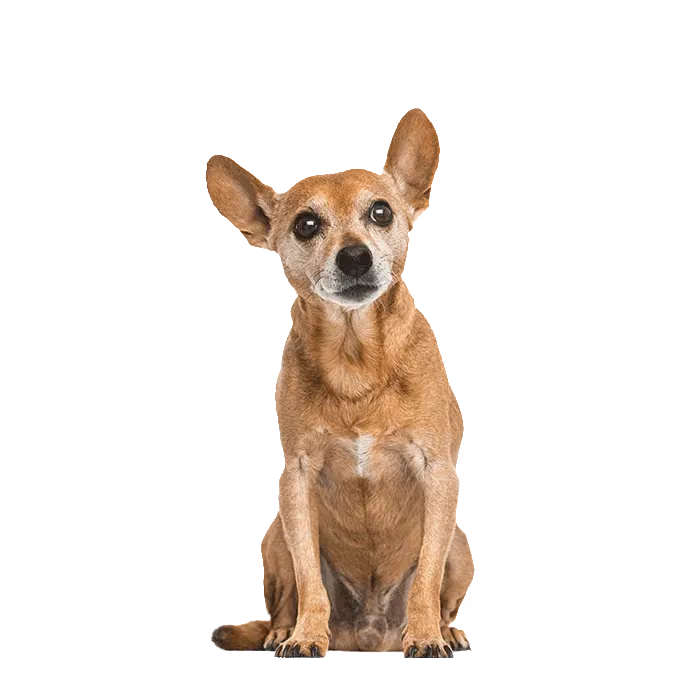
German Pinscher
The German Pinscher is a spirited, confident companion known for its keen intelligence, athleticism, and fearless watchdog instincts.
- Size
- Medium
- Lifespan
- 12–14 years
- Origin
- Germany
- Temperament
- Spirited
- Standard colors
- Black, Blue, and Tan and 2 more
Characteristics
Coat and grooming
How the German Pinscher coat is built, and what that means when you groom it.
- Coat layers
- Single coat
- Coat texture
- Smooth
- Coat length
- Short
- Shedding
- Moderate shedding
Registry Recognition
Fédération Cynologique Internationale
- Pinscher and Schnauzer / Molossoid / Swiss Mountain
American Kennel Club
- Working Group
Canadian Kennel Club
- Working Group
United Pet Club
- Pinscher and Schnauzer / Molossoid / Swiss MountainPrimary
German Pinscher colors and patterns
What each club's breed standard says about every German Pinscher color and pattern. Point at a ruling to see the club's own wording.
Breed standards describe the German Pinscher in Black, Blue, Tan, Red, and Isabella. Standard patterns: Solid, Sable, and Tan point.
| Color or pattern | FCI | AKC | UKC | KC | KUSA |
|---|---|---|---|---|---|
| Black | Standard (“Lacquer black with red or brown markings”) | Standard (“Black”) | Standard (“Black with reddish/tan markings”) | Standard (“Black & Tan”) | Standard (“lacquer black with red or brown markings”) |
| Blue | Not recognized | Standard (“Blue”) | Standard (“Blue with reddish/tan markings”) | Standard (“Blue & Tan”) | Not recognized |
| Tan | Standard (“red or brown markings”) | Standard (“red/tan markings”) | Standard (“reddish/tan markings”) | Standard (“reddish/tan markings”) | Standard (“red or brown markings”) |
| Red | Standard (“Self coloured: Deer red, reddish-brown to dark red brown”) | Standard (“Red”) | Standard (“All solid colors from fawn (Isabella) to stag red”) | Standard (“Red”) | Standard (“Self-coloured: deer red, reddish brown to dark red brown”) |
| Isabella | Not recognized | Standard (“Fawn (Isabella)”) | Standard (“fawn (Isabella)”) | Standard (“fawn (Isabella)”) | Not recognized |
| White | Not recognized | Fault (“Any white markings on the dog are undesirable”) | Fault (“Solid white patches/spots anywhere on body”) | Not recognized | Not recognized |
| Patterns | |||||
| Solid | Standard (“Self coloured”) | Standard (“Isabella (fawn), to red in various shades to stag red”) | Standard (“Solid colors”) | Standard (“All solid colours”) | Standard (“Self-coloured”) |
| Sable | No ruling | Standard (“stag red (red with intermingling of black hairs)”) | Standard (“stag red”) | Standard (“stag red”) | No ruling |
| Tan point | Standard (“Black and Tan”) | Standard (“black and blues with red/tan markings”) | Standard (“Bi-Colors”) | Standard (“Black & Tan”) | Standard (“Black and tan”) |

%22%3E%3Crect%20x%3D%220%22%20y%3D%220%22%20width%3D%2264%22%20height%3D%2264%22%20fill%3D%22url(%23g)%22%2F%3E%3Cg%20fill%3D%22none%22%20stroke%3D%22%231C1C1C%22%20stroke-width%3D%221%22%20stroke-linecap%3D%22round%22%20stroke-linejoin%3D%22round%22%3E%3Cpath%20d%3D%22M15.7%2014.8l1.9%203.6M26.4%2024.1l1.2%204.1M42.7%2029.5l0.1%203.3M35.9%2025l1.6%203.2M31.3%2028.1l0.7%203.7M15.5%2011.1l1.6%203.6M41.1%2023.8l0.6%203.2M12.1%2020.7l1.2%203M15.4%2011.2l0.8%203.8M42.9%2027.3l0.7%202.9M48.2%2033.2l0.5%204.1M23.1%2024.7l1.4%203.4M51.9%2036.1l0.3%204.3M18.7%2023.9l1.2%203.7M50.4%2027.4l0.5%204.1M18.4%2020.4l0.1%203.1M55.6%2021.4l1.1%203.9M18.6%2024.9l1.7%203.8M8.3%2023.2l1.7%202.9M18.7%2024.2l0.2%203.1M46.4%2022.7l0.6%202.6M14.3%207l0.9%203.5M50.5%2024.9l0.5%203.7M23.2%2024.7l1.2%204.3M10.5%2022.3l1.6%203.4M56.9%2018.2l1.1%202.5M20.8%2021.7l1.1%203.5M10.9%2020.2l0.2%203.9M6.6%2023.3l1%202.4M54.5%2021.7l0.9%203.8M13.3%2021l0.4%203M11.7%2019.5l0.3%204M39%2023.2l0.7%202.5M20.8%2016.7l0%202.6M18.4%2016l0.2%202.6M46.4%2038.2l1.4%203.2M12.9%2022.6l0.6%203.3M13%2020.9l0.3%204.3M35.3%2024.9l1.3%202.3M29.5%2022.1l0.5%202.8M36.6%2023.4l0.2%204.3M20.5%2017.6l0.7%204.1M18.3%2020.6l0.6%203M20.5%2025.8l0.5%203.8M23.5%2040.2l1.1%202.9M22.8%2024.9l1.5%203M25.5%2023.1l0.5%203.3M47.7%2024.7l1.5%203.7M12.9%2018.4l1.9%203.8M29.5%2023.7l0.5%204.1M37.7%2026.5l0%202.9M16.8%2016.4l0.1%203.3M49.8%2028l1.7%203.8M29.4%2025.5l0.5%203.6M9.3%2023l1.3%203.1M47.4%2025.6l0.5%203.5M48.1%2023.8l1.6%203.2M9.9%2018.3l1.3%202.5M12.2%2016.6l0.4%203.2M22%2022.1l1.4%202.7M43.9%2024.7l1.4%203.9M14.3%2020l1.8%203.2M46.3%2040.1l0.3%203.6M14.9%207l0.3%204M17.5%2016.7l1.2%202.4M54.6%2040l1%203.5M13.3%2013.9l1.6%204.2M15.3%2016.5l1.2%202.9M23.8%2038.5l0.2%203.8M18.2%2019l0.6%203M11.2%2023.6l0.7%204.1M33.1%2023.2l0.9%204.3M13.6%2019.9l0.4%204.5M19.7%2023.1l1.9%203.7M50.5%2027.1l0.3%204.1M28.2%2028.5l0.2%203.8M29%2028.4l0.1%204M47.7%2024.5l0.6%202.5M10.7%2017.2l1.4%202.7M25.5%2040.3l0.6%204.1M37.6%2022.8l0.7%204.4M57%2018.6l0.2%203.4M16.9%2022.2l1.7%203.8M43.5%2024.7l1.8%203.4M49.2%2026l1.5%203.6M47.7%2032.3l0.4%203.7M35.4%2030.8l0.5%202.7M47%2026.1l1%203.9M24.3%2028.1l1.5%204.2M50.5%2023.8l1.3%203.4M58.1%2014.1l0.3%202.6M13.9%2018.2l0.7%202.5M8.2%2021l0.7%202.9M41.4%2026.4l0.4%202.7M16.3%2020.4l0.5%204.3M43.4%2025.9l1.2%203.2M32.3%2022.4l0.3%203.9M43.6%2025.9l2.1%203.8M33.5%2026.3l1.5%203M48.3%2030.6l1.4%203.4M44.2%2024.7l0.9%203.2M12.3%2017.7l0.9%203.7M46.2%2032l1.9%203.4M51%2028.3l0.1%203.7M30.4%2023.1l1.1%203.2M52.6%2022.6l0.9%204.3M16.6%2015.4l0.9%203.1M58.4%2012.8l0.3%202.8M42.8%2032.5l1.8%203.2%22%2F%3E%3Cpath%20d%3D%22M16.4%2026.1l0.1%204.3M14%2017.1l1.3%202.8M36.9%2027.2l1.3%202.6M38.6%2025.8l0.4%203.6M57.6%2014.3l0.3%203.9M14.7%208.2l1%204.3M53.4%2023l1.9%203.4M51.5%2030.3l0.8%202.7M56.2%2020l1.9%203.5M15.9%2010l0.2%202.8M15.8%2022.6l1.8%203.9%22%2F%3E%3C%2Fg%3E%3C%2Fg%3E%3Cuse%20href%3D%22%23s%22%20fill%3D%22none%22%20stroke%3D%22%233B2A20%22%20stroke-opacity%3D%220.6%22%20stroke-width%3D%221%22%20stroke-linejoin%3D%22round%22%2F%3E%3Cellipse%20cx%3D%223.2%22%20cy%3D%2221.7%22%20rx%3D%221.3%22%20ry%3D%221.2%22%20fill%3D%22%231C1C1C%22%2F%3E%3Ccircle%20cx%3D%2210.8%22%20cy%3D%2219.3%22%20r%3D%221.1%22%20fill%3D%22%231C1C1C%22%2F%3E%3C%2Fsvg%3E)
%22%3E%3Ccircle%20cx%3D%2212%22%20cy%3D%2217.2%22%20r%3D%221.25%22%20fill%3D%22%23C4996A%22%2F%3E%3Cpath%20d%3D%22M1.5%2021.2L9%2018.6L12.6%2021L12.2%2026.2L3.5%2024.4Z%22%20fill%3D%22%23C4996A%22%2F%3E%3Cpath%20d%3D%22M10%2026L14.5%2026.4L18.2%2029.2L13.5%2029.8Z%22%20fill%3D%22%23C4996A%22%2F%3E%3Cellipse%20cx%3D%2221.2%22%20cy%3D%2230.6%22%20rx%3D%221.6%22%20ry%3D%222.3%22%20fill%3D%22%23C4996A%22%2F%3E%3Crect%20x%3D%220%22%20y%3D%2247%22%20width%3D%2264%22%20height%3D%2217%22%20fill%3D%22%23C4996A%22%2F%3E%3Cpath%20d%3D%22M51.5%2024.5L55%2027L54.2%2032L50.5%2028.5Z%22%20fill%3D%22%23C4996A%22%2F%3E%3Cpath%20d%3D%22M45%2038.5L48%2039L48.5%2047L45.5%2047Z%22%20fill%3D%22%23C4996A%22%2F%3E%3C%2Fg%3E%3Cuse%20href%3D%22%23s%22%20fill%3D%22none%22%20stroke%3D%22%233B2A20%22%20stroke-opacity%3D%220.6%22%20stroke-width%3D%221%22%20stroke-linejoin%3D%22round%22%2F%3E%3Cellipse%20cx%3D%223.2%22%20cy%3D%2221.7%22%20rx%3D%221.3%22%20ry%3D%221.2%22%20fill%3D%22%231C1C1C%22%2F%3E%3Ccircle%20cx%3D%2210.8%22%20cy%3D%2219.3%22%20r%3D%221.1%22%20fill%3D%22%231C1C1C%22%2F%3E%3C%2Fsvg%3E)
| Color or pattern | FCI | AKC | UKC | KC | KUSA |
|---|---|---|---|---|---|
| Dark brown | Standard (“Dark”) | Standard (“dark”) | Standard (“The eyes are dark”) | Standard (“Dark”) | Standard (“Dark”) |
| Color or pattern | FCI | AKC | UKC | KC | KUSA |
|---|---|---|---|---|---|
| Black | Standard (“always black”) | Standard (“full, and black”) | Standard (“The nose is full and black”) | Standard (“Nose full and black”) | Standard (“always black”) |
What the rulings mean
- Standard
- Described by the club's breed standard.
- Fault
- Named by the club's breed standard as a fault: the animal can be shown but is penalized.
- Not recognized
- The club does not accept this color or pattern for the breed.
Color changes
How a German Pinscher's colors can change over its life.
Blackchanges toRust
Coat · With body condition · can change back
Blackchanges toGray
Coat · Progressive
Blackchanges toBrown
Coat · In the sun · can change back
Whitechanges toRoan
Coat · With age · from 2 weeks
Tan pointchanges toSaddle
Coat · With age · from 6 to 156 weeks
Blackchanges toSnow nose
Nose · With the season · can change back
Blackchanges toPink
Nose · With the season · can change back
%22%3E%3Cg%20fill%3D%22none%22%20stroke%3D%22%23F5F5F0%22%20stroke-width%3D%221.15%22%20stroke-linecap%3D%22round%22%20stroke-linejoin%3D%22round%22%3E%3Cpath%20d%3D%22M28.6%2025h.1M51.3%2028.8h.1M34.7%2024.3h.1M34.2%2041.6h.1M51%2044.2h.1M55.9%2024.7h.1M27.5%2026.3h.1M18.5%2028.6h.1M25.2%2028.9h.1M24.2%2019.3h.1M20.6%2017.6h.1M34.1%2030.6h.1M57.3%2023.3h.1M23.5%2030.7h.1M26.5%2023.1h.1M40%2031.5h.1M51.7%2038.6h.1M20.2%2022.1h.1M40.4%2037.8h.1M35%2043.1h.1M20.6%2031.7h.1M27.8%2031.9h.1M17.2%2021.1h.1M38.1%2037.7h.1M25.3%2040.5h.1M32%2029.3h.1M41.6%2039.5h.1M23.6%2024h.1M26.4%2018.6h.1M30.3%2031.9h.1M31.2%2035.2h.1M36.5%2043.7h.1M35.2%2026.3h.1M55.6%2019.1h.1M22.4%2036.8h.1M39.2%2020h.1M49.5%2039.1h.1M33.6%2033.5h.1M36.4%2032.4h.1M56.3%2042.4h.1M54.8%2031.2h.1M36.9%2023.2h.1M52.7%2019.1h.1M21.5%2033.8h.1M48.6%2028h.1M36.6%2017.5h.1M45.6%2031.3h.1M37.9%2030.5h.1M17%2031.8h.1M21.1%2043.1h.1M55.7%2021.1h.1M30.8%2041.9h.1M57.4%2038.4h.1M54.8%2026.9h.1M29.1%2017.5h.1M24.3%2037.7h.1M26%2032h.1M39.3%2022.8h.1M53.5%2029h.1M53.3%2023.3h.1M20%2038.4h.1M28.3%2044.7h.1M28.6%2039.8h.1M51.9%2041.1h.1M52.3%2033.7h.1M19.6%2042.2h.1M19%2033h.1M47.8%2021.7h.1M45.7%2024.8h.1M24.6%2035.5h.1M29.8%2036.8h.1M50.7%2032h.1M29.5%2043.5h.1M28.2%2041.5h.1M47.4%2034.8h.1M25.4%2033.7h.1M50.2%2041.2h.1M27.7%2029.5h.1M21.5%2024.8h.1M55.5%2017.5h.1M41.2%2044.3h.1M39.2%2018.4h.1M41.1%2042.5h.1M54.7%2035.3h.1M42.8%2034.5h.1M30.1%2023h.1M42.6%2025.1h.1M32.9%2024.4h.1M42.4%2032.4h.1M49.7%2022.2h.1M49.1%2043.1h.1M38%2035.2h.1M47.7%2043.8h.1M43.1%2022.4h.1M22.4%2040.4h.1M44.4%2019.8h.1M53.3%2040.1h.1M20.7%2029.3h.1M55.6%2043.9h.1M17.6%2039.2h.1M41.7%2028.9h.1M44.1%2036.3h.1M24.3%2043.6h.1M26.4%2038.1h.1M30.3%2029.2h.1M31.5%2030.8h.1M32.1%2023h.1M18.3%2040.9h.1M48%2033.4h.1M36.4%2038.7h.1M31.9%2020.8h.1M32.6%2026.2h.1M22%2031.2h.1M53.4%2021.7h.1M41.9%2017.7h.1M53.3%2037.3h.1M47.7%2040.3h.1M54.4%2033.7h.1M33.6%2037.5h.1M25.3%2017.2h.1M37.6%2019.7h.1M31.6%2019h.1M29.2%2019.6h.1M50.7%2027.3h.1M22%2022.1h.1M31%2037.8h.1M56.5%2026.6h.1M34.7%2039.5h.1M56.5%2040.8h.1M47.6%2038h.1M48.6%2026.1h.1M49.7%2034.2h.1M45.4%2027.4h.1M22.6%2038.9h.1M56.5%2035.3h.1M35.1%2021h.1M41.9%2020.1h.1M37.6%2040h.1M32.6%2044.4h.1M37.9%2025.2h.1M26.6%2043h.1M18.9%2036.7h.1M47.2%2028.9h.1M30.5%2026.2h.1M17.4%2027.3h.1M47.1%2017.2h.1M22.3%2044.3h.1M32.5%2042.4h.1M23.6%2025.7h.1M31.4%2024.9h.1%22%2F%3E%3Cpath%20d%3D%22M26%2020.9h.1M41.2%2023.8h.1M39.9%2026.4h.1M28.5%2033.4h.1M42.8%2043.8h.1M17.6%2034.3h.1M34%2017.1h.1M31.2%2017.2h.1M46.5%2036.1h.1M25.1%2022.1h.1M50.3%2023.7h.1M20.2%2026.6h.1M20.8%2020.4h.1M50.9%2017.3h.1M49.5%2020.2h.1M52.9%2044.1h.1M23.9%2017.8h.1M43.2%2028.1h.1M57.6%2030h.1M52%2025.6h.1M19.2%2019.1h.1M19.5%2024.4h.1M32.8%2040.1h.1M36.1%2027.7h.1M39.6%2029.5h.1M38.4%2041.5h.1M47.9%2019.4h.1M49.1%2031.7h.1M55.9%2036.9h.1M29.2%2027.2h.1M46%2043.5h.1M44.6%2028.8h.1M47.5%2031.5h.1M22.8%2020h.1M27.6%2017.1h.1M43.1%2018.6h.1M54.3%2020h.1M57.2%2033.8h.1M44.5%2043.8h.1M27.1%2035.5h.1M45.3%2041.8h.1M56.7%2028.8h.1M36.7%2021.4h.1M43.3%2042.3h.1M17.3%2022.9h.1M32.7%2035.5h.1M30.5%2039.8h.1M29.1%2021.2h.1M34.5%2018.8h.1M25.8%2027h.1%22%2F%3E%3C%2Fg%3E%3Cpath%20d%3D%22M56.3%2038.4l0%201.2M40%2027.2l-0.3%201.3M32.6%2043.6l-0.4%201.5M29%2023.3l0.8%201.5M55.1%2044l0.4%201.1M47.5%2022.5l-0.2%201.6M42.9%2038.6l0.7%201.2M35.2%2041.8l-0.5%201.7M26.9%2040l-0.1%201.2M41%2042.8l-0.1%201.6M18.4%2021.2l0.7%201.3M49.4%2019.3l-0.5%201.4M50.1%2041.7l0%201.8M28.2%2041.8l-0.6%201.2M55.5%2027.1l0.2%201.2M44.7%2019.3l0.5%201.7M48.6%2020.5l-0.8%201.4M43.7%2039.6l0.3%201.1M22.1%2033.8l-0.6%201.6M50.1%2038.1l-0.5%201.3M51.8%2044.1l-0.1%201.8M39%2017.5l0%201.4M30.2%2026.7l0.2%201.4M25.8%2031.2l0.2%201.6M29.6%2043.5l0.1%201M43.7%2018.3l0.1%201.5M29.6%2018.2l0.3%201.6M24.4%2017.6l0.3%201.1M22%2028.2l-0.6%201.6M25.9%2043.3l-0.3%201.4M22.2%2024.3l0.3%201.3M47.3%2029.2l-0.2%201.4M21.8%2033.2l0.5%200.9M32.9%2037l0.4%201M40%2029.9l0.8%201.4M17.4%2038.3l0.2%201.3M31%2039.2l0%201.2M37.3%2033.7l0.3%201.5M48.1%2040.5l0%201.6M33.9%2031.2l0.1%201.2M29.8%2035.2l-0.4%201M25.1%2037.3l-0.2%201.5M30.2%2039.8l0.5%201M44.6%2034.8l0.4%200.9M55.3%2034.2l0%201.7M50.6%2017.9l0.4%201M30.2%2034.9l-0.4%201.4M19.5%2035.7l-0.5%201.7M40.7%2028.7l0.8%201.4M23.3%2029l-0.4%201.4M17%2040.5l-0.2%201M48.4%2023.2l-0.3%201M37.3%2025.1l-0.4%201.3M23%2021.4l-0.4%201.3M20.4%2017.2l-0.1%201.3M42.3%2020.4l0.6%201.4M41%2031.8l0.6%201.2M45.4%2034.3l-0.1%201.2M32.5%2018l0%201.3M46.2%2021.6l0.1%201.4M30.5%2022.3l0.5%201.1M58%2044.6l0.3%201.5M57.1%2033.9l0.8%201.4M18.3%2042.6l0.3%201M40.5%2035.1l-0.6%201.4M38.8%2044.3l-0.3%201.1%22%20fill%3D%22none%22%20stroke%3D%22%23F5F5F0%22%20stroke-width%3D%220.8%22%20stroke-linecap%3D%22round%22%20stroke-linejoin%3D%22round%22%2F%3E%3C%2Fg%3E%3Cuse%20href%3D%22%23s%22%20fill%3D%22none%22%20stroke%3D%22%233B2A20%22%20stroke-opacity%3D%220.6%22%20stroke-width%3D%221%22%20stroke-linejoin%3D%22round%22%2F%3E%3Crect%20x%3D%2220%22%20y%3D%2258%22%20width%3D%223.6%22%20height%3D%222%22%20fill%3D%22%234A4038%22%2F%3E%3Crect%20x%3D%2226%22%20y%3D%2258%22%20width%3D%223.6%22%20height%3D%222%22%20fill%3D%22%234A4038%22%2F%3E%3Crect%20x%3D%2244%22%20y%3D%2258%22%20width%3D%223.6%22%20height%3D%222%22%20fill%3D%22%234A4038%22%2F%3E%3Crect%20x%3D%2250%22%20y%3D%2258%22%20width%3D%223.6%22%20height%3D%222%22%20fill%3D%22%234A4038%22%2F%3E%3Ccircle%20cx%3D%229.5%22%20cy%3D%2211.5%22%20r%3D%221.1%22%20fill%3D%22%231C1C1C%22%2F%3E%3C%2Fsvg%3E)
%22%3E%3Cpath%20d%3D%22M22.5%2018.5Q24%2021%2025%2021.5L47%2022.5Q50%2022.5%2051.5%2023.5L54%2026Q55%2032%2053%2034Q46%2031.5%2038%2033Q30%2034.5%2025.5%2032Q22.5%2026%2022.5%2018.5Z%22%20fill%3D%22%231C1C1C%22%2F%3E%3Cpath%20d%3D%22M51%2024L56%209L63%209L61%2019L54.5%2028Z%22%20fill%3D%22%231C1C1C%22%2F%3E%3Cpath%20d%3D%22M2%2021.2L7.5%2019.2L8.5%2023.6L3.5%2024.2Z%22%20fill%3D%22%231C1C1C%22%20fill-opacity%3D%220.85%22%2F%3E%3C%2Fg%3E%3Cuse%20href%3D%22%23s%22%20fill%3D%22none%22%20stroke%3D%22%233B2A20%22%20stroke-opacity%3D%220.6%22%20stroke-width%3D%221%22%20stroke-linejoin%3D%22round%22%2F%3E%3Cellipse%20cx%3D%223.2%22%20cy%3D%2221.7%22%20rx%3D%221.3%22%20ry%3D%221.2%22%20fill%3D%22%231C1C1C%22%2F%3E%3Ccircle%20cx%3D%2210.8%22%20cy%3D%2219.3%22%20r%3D%221.1%22%20fill%3D%22%231C1C1C%22%2F%3E%3C%2Fsvg%3E)
%22%3E%3Crect%20x%3D%2217%22%20y%3D%2210%22%20width%3D%2230%22%20height%3D%2242%22%20fill%3D%22url(%23g)%22%2F%3E%3C%2Fg%3E%3Cuse%20href%3D%22%23s%22%20fill%3D%22none%22%20stroke%3D%22%233B2A20%22%20stroke-opacity%3D%220.6%22%20stroke-width%3D%221%22%20stroke-linejoin%3D%22round%22%2F%3E%3Cpath%20d%3D%22M12.5%2037Q13%2032%2018.5%2032Q23.5%2032.5%2023.5%2036.5Q20.5%2035.5%2018.8%2037Q17.4%2038.6%2018%2041.5Q13.6%2040.4%2012.5%2037Z%22%20fill%3D%22%231C1C1C%22%20fill-opacity%3D%220.8%22%20stroke%3D%22%23F5F5F0%22%20stroke-opacity%3D%220.4%22%20stroke-width%3D%220.9%22%2F%3E%3Cpath%20d%3D%22M51.5%2037Q51%2032%2045.5%2032Q40.5%2032.5%2040.5%2036.5Q43.5%2035.5%2045.2%2037Q46.6%2038.6%2046%2041.5Q50.4%2040.4%2051.5%2037Z%22%20fill%3D%22%231C1C1C%22%20fill-opacity%3D%220.8%22%20stroke%3D%22%23F5F5F0%22%20stroke-opacity%3D%220.4%22%20stroke-width%3D%220.9%22%2F%3E%3Cpath%20d%3D%22M32%2040V50%22%20fill%3D%22none%22%20stroke%3D%22%231C1C1C%22%20stroke-width%3D%221.3%22%20stroke-opacity%3D%220.5%22%20stroke-linecap%3D%22round%22%20stroke-linejoin%3D%22round%22%2F%3E%3Cellipse%20cx%3D%2232%22%20cy%3D%2221%22%20rx%3D%2212%22%20ry%3D%223.5%22%20fill%3D%22%23F5F5F0%22%20fill-opacity%3D%220.18%22%2F%3E%3C%2Fsvg%3E)
Sources
Each ruling comes from the club's published breed standard or color list.
Meet some of our German Pinscher
A few of the German Pinscher profiles members have added to United Pet Club.


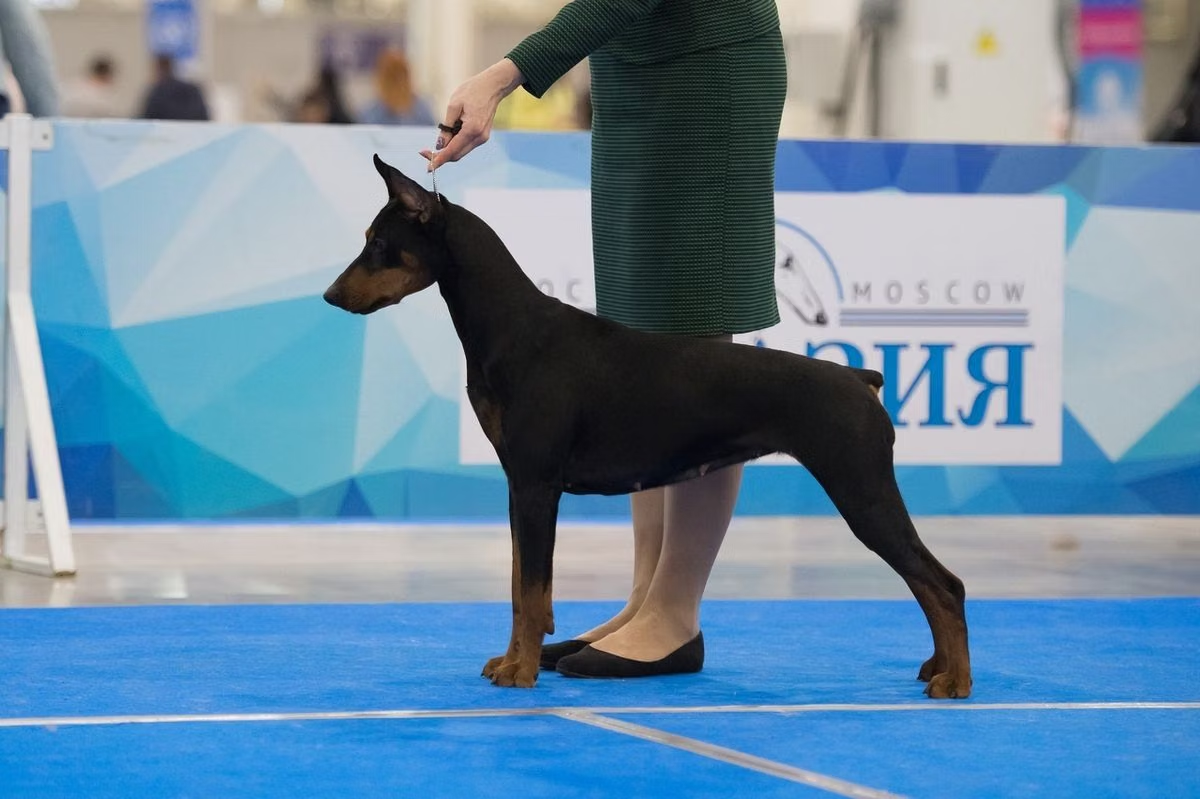

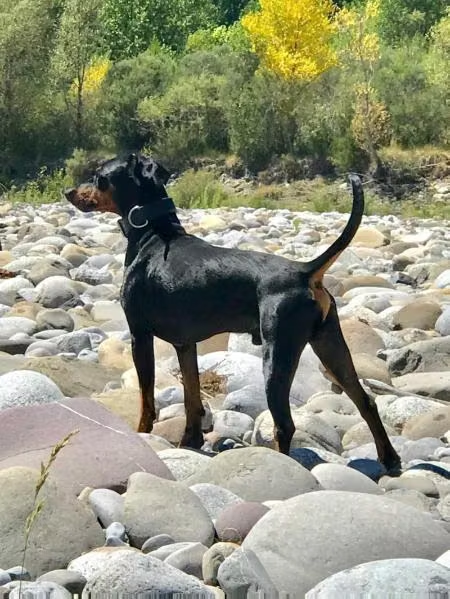

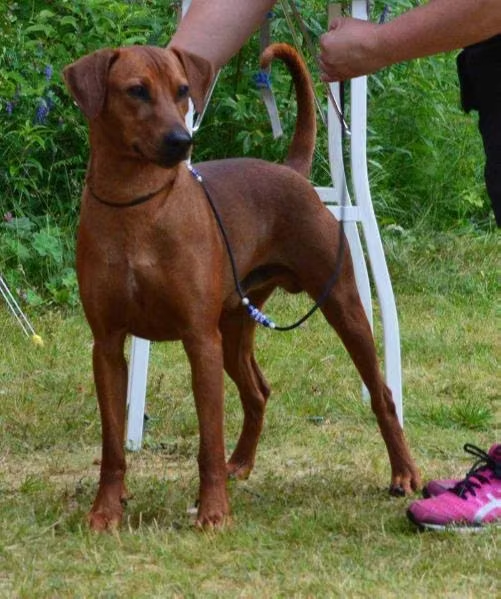


About the German Pinscher
The German Pinscher is a medium-sized German working dog with high intelligence, strong athleticism, and watchdog instincts, suited to active owners who can give it daily exercise and consistent training.
The German Pinscher is a medium-sized dog from Germany, built lean and square with a short, glossy coat. It stands among the older German breeds and sits behind several more familiar dogs in pedigree, including the Doberman and the Miniature Pinscher. The name pinscher refers to a type of working terrier-like dog kept to control vermin on farms and stable yards.
This is a spirited, confident animal with a strong drive to stay busy. It bonds closely with its household and tends to be reserved with strangers, which makes it an effective watchdog. Owners describe it as alert and quick to react, with a high energy level that needs a daily outlet.
The German Pinscher fits an experienced, active owner more than a first-time handler. It responds well to clear structure and regular work, and it can become bored or willful without enough mental and physical activity.
| Attribute | Detail |
|---|---|
| Origin | Germany |
| Size | Medium |
| Lifespan | 12 to 14 years |
| Group / role | Working and companion; historical vermin control and watchdog |
| Good with | Older children and committed, active families; supervise with small pets given prey drive |
Who it suits
This breed works best for people who want an involved, athletic dog and have time for daily exercise and training. It does well in homes with a secure yard, though it can live in an apartment if it gets enough activity. Households wanting a quiet, low-maintenance pet, or owners away for long hours, are usually a poor match.
History and origin
The German Pinscher developed in Germany as a farm and stable dog used for vermin control, and it contributed to the development of the Doberman and Miniature Pinscher before nearly dying out and being revived in the mid-20th century.
The German Pinscher comes from Germany, where smooth-coated pinscher-type dogs were kept on farms and in stable yards to kill rats and other vermin. These working dogs were valued for speed, sharp senses, and a willingness to confront prey rather than for any fixed appearance.
During the 19th century, breeders in Germany began to standardize the type. The German Pinscher and the wire-coated Schnauzer were at one stage regarded as the same breed differing only in coat, and they were bred together before being separated into distinct lines.
The breed had an outsized influence on later German dogs. It is part of the background of the Doberman, developed by Louis Dobermann in the late 1800s, and it is closely tied to the Miniature Pinscher, a smaller relative. Breed clubs in Germany worked to formalize the German Pinscher around the turn of the 20th century.
The two World Wars cut the population sharply, and registrations nearly stopped. The breed was rebuilt in West Germany in the mid-20th century, with work in the 1950s that drew on a small number of surviving dogs to re-establish the line. From that base the German Pinscher spread to other countries in the decades that followed.
Appearance
The German Pinscher is a square, muscular medium dog of about 17 to 20 inches at the shoulder with a short, dense, shining coat in solid red or black-and-tan.
The German Pinscher has a balanced, square outline, with body length roughly equal to height at the shoulder. The build is muscular but elegant, with a deep chest, clean lines, and a smooth, flowing gait. The head is wedge-shaped, the ears set high (cropped in some regions, natural and folded in others), and the eyes dark and oval. The tail is carried high and may be natural or docked depending on local law and custom.
| Trait | Standard |
|---|---|
| Height | About 17 to 20 inches (43 to 51 cm) at the shoulder |
| Weight | About 25 to 45 lb (11 to 20 kg) |
| Coat | Short, dense, smooth, with a glossy sheen |
| Colors | Solid red shades, or black with tan or red markings |
| Eyes | Dark, oval, medium-sized |
Coat and colors
The coat is short and lies close to the body with a hard, shining texture. Two color patterns are standard: solid red ranging from a deep stag red to a lighter shade, and black with sharply defined tan or red markings on the muzzle, chest, legs, and over the eyes. The short coat needs little grooming and sheds at a low to moderate level through the year.
Temperament
The German Pinscher is spirited, intelligent, and confident, devoted to its family and watchful with strangers, with high energy and a strong prey drive that call for firm, consistent handling.
The German Pinscher is lively, intelligent, and self-assured. It forms a strong attachment to its household and likes to be part of daily activity rather than left on its own. With family members it is affectionate and playful, often staying close and tracking what everyone is doing.
With strangers the breed is reserved and watchful, which makes it a reliable alarm dog. It is quick to notice anything out of place and will sound off, though it is not a constant barker when properly settled. Early and ongoing socialization helps it tell a genuine concern from an ordinary visitor.
With other pets the picture is mixed. A German Pinscher raised with another dog can live alongside it, but the breed has a strong prey drive and may chase cats, rodents, or small animals. The same instinct, plus a confident streak, means it can test boundaries. It needs an owner who sets clear, fair rules and keeps to them.
| Trait | Rating |
|---|---|
| Affection | 4 |
| Energy | 5 |
| Trainability | 4 |
| Vocalness | 3 |
| Shedding | 2 |
Care and grooming
The German Pinscher is low-maintenance to groom but needs substantial daily exercise and mental work, plus a secure environment that keeps its prey drive in check.
Grooming
- Brush the short coat weekly with a rubber curry or soft brush to remove loose hair and keep the shine.
- Bathe only as needed, roughly every couple of months or when dirty.
- Trim nails every three to four weeks.
- Brush teeth several times a week and check ears regularly for dirt or odor.
Exercise
- Provide at least one to two hours of activity a day.
- Mix brisk walks or jogs with off-leash running in a secure area.
- Add games such as fetch, tug, and scent work to use the breed's drive.
- Consider dog sports like agility, rally, or lure coursing, which suit its speed and focus.
Environment
The German Pinscher does best in a home with a securely fenced yard, since it can jump and dig and will follow a scent or small animal. It can adapt to apartment living if exercise needs are met, but it should not be left alone for long stretches, which can lead to boredom and unwanted behavior.
Nutrition and feeding
Feed the German Pinscher a complete diet matched to its life stage and activity level, usually around 1 to 2 cups of quality dry food a day split into two meals.
The German Pinscher is an active medium dog and does well on a complete, balanced diet with adequate protein to support muscle and energy. Choose a food formulated for the dog's life stage, and adjust the amount to keep the dog lean, with ribs easy to feel but not see. Active working dogs may need more than the figures below, while less active or older dogs need less.
| Life stage | Amount per day | Meals |
|---|---|---|
| Puppy (2 to 6 months) | About 1 to 1.5 cups, by weight and brand | 3 to 4 |
| Junior (6 to 12 months) | About 1.5 to 2 cups | 2 to 3 |
| Adult | About 1 to 2 cups | 2 |
| Senior | About 1 to 1.5 cups, adjusted for activity | 2 |
Keep treats to no more than about 10 percent of daily calories so they do not unbalance the diet or add weight. Fresh water should be available at all times. Supplements are usually unnecessary on a complete diet; discuss any joint, skin, or other supplement with a veterinarian before adding it.
Health
The German Pinscher is generally a healthy, hardy breed with a typical lifespan of 12 to 14 years, though responsible owners should watch for a few hereditary and eye conditions.
The German Pinscher is a sturdy breed with a typical lifespan of 12 to 14 years. The relatively small gene pool from its mid-century revival makes health screening of breeding stock important. Most dogs stay healthy with good care, but a few conditions appear in the breed more than in the general dog population.
| Condition | Signs | Note |
|---|---|---|
| Hip dysplasia | Stiffness, limping, trouble rising | Screen breeding dogs; keep weight in check |
| Hereditary cataracts | Cloudy eye, vision loss | Detected on eye exams; can be inherited |
| Von Willebrand disease | Excess bleeding from minor cuts or surgery | A blood-clotting disorder; DNA testing exists |
| Heart disease | Coughing, tiring easily, fainting | Detected on veterinary cardiac checks |
Preventive care
- Keep core and recommended vaccinations up to date.
- Use year-round flea, tick, and heartworm prevention.
- Schedule annual veterinary exams, with more frequent visits for seniors.
- Maintain dental care and a lean body weight.
- Choose breeders who screen for hip, eye, and clotting issues.
Training
The German Pinscher is highly trainable and quick to learn, but its intelligence and independent streak call for consistent, reward-based training started early.
The German Pinscher is intelligent and learns quickly, which makes training rewarding for an owner who stays consistent. The same sharp mind comes with an independent, confident streak, so the dog will test rules and lose interest in dull, repetitive drills. Short, varied sessions hold its attention better than long ones. Early socialization with people, places, and other animals is important to channel its watchful nature and prey drive.
Basics
- Start socialization and basic cues in puppyhood, exposing the dog to new people, dogs, and settings.
- Teach a reliable recall and leash manners early, since the breed is fast and prey-driven.
- Use short, upbeat sessions and end on a success.
- Add impulse-control work such as wait, leave it, and settle.
- Build toward a job or sport, such as agility or scent work, to use the dog's energy.
Breeding
The German Pinscher reaches breeding maturity at around 2 years, carries litters of roughly 4 to 8 puppies after a gestation of about 63 days, and benefits from health screening of both parents.
Responsible breeding of the German Pinscher centers on health and temperament. Although dogs can reproduce younger, breeders generally wait until both parents are physically and behaviorally mature, around 2 years of age, so that hip, eye, and clotting screening can be completed. Given the breed's narrow founding population after its revival, careful pedigree and genetic diversity management matters.
Gestation runs about 63 days. Litters are typically medium in size. The dam usually whelps without help, but a calm, clean space and veterinary backup should be arranged. Puppies are weaned at around 6 to 8 weeks, and early handling and socialization in the litter set the foundation for a stable adult temperament. Puppies should not leave the litter before about 8 weeks.
| Metric | Value |
|---|---|
| Breeding maturity | About 2 years |
| Gestation | About 63 days |
| Litter size | About 4 to 8 puppies |
| Weaning age | 6 to 8 weeks |
| Recommended health tests | Hips, eyes, von Willebrand / clotting |
Registering your German Pinscher and its microchip
Register your German Pinscher free for life with United Pet Club, and put its microchip number on a record American shelters can actually find.
How to register a German Pinscher in the United States
A German Pinscher can hold a free lifetime profile in the United Pet Club registry whether or not it carries a chip. The profile pairs your contact details with your dog's photo, birth date, and markings, so whoever finds it knows exactly who to call. Registering your dog takes a few minutes, and nothing about it expires or renews.
Chipped already? The implant is half the job. Until the 15-digit number sits in a registry with your name beside it, a scanner reads digits that lead nowhere. Microchip registration is free for life at United Pet Club, takes any manufacturer's chip, and keeps the record searchable through the AAHA lookup shelters rely on. Sign up free, and both records are done tonight.
How do I register my German Pinscher in the United States?
Open a free United Pet Club account, enter your German Pinscher's name, birth date, and a photo, and save. The profile is free for life, works with or without a microchip, and you can attach a chip number later.
How do I register my German Pinscher's microchip?
Type the 15-digit chip number into your free United Pet Club account together with your current phone number and address. The lifetime plan is free, covers every future update, and accepts any chip brand a US vet implants.
Does my German Pinscher have to be microchipped in the United States?
No federal law says a German Pinscher must carry a chip, but plenty of city and county licensing rules do, and shelters routinely chip before adoption. What the law never does is register the chip for you; that part is yours.
How much does it cost to register a German Pinscher?
Nothing. United Pet Club's lifetime plan covers the dog's profile, the microchip registration, and every update at no charge, with no renewal fees.
Frequently asked questions
Common questions about the German Pinscher's size, temperament, care needs, lifespan, suitability, and availability.
How big does a German Pinscher get?
It is a medium dog standing about 17 to 20 inches (43 to 51 cm) at the shoulder and weighing roughly 25 to 45 lb (11 to 20 kg).
What is the German Pinscher's temperament like?
It is spirited, intelligent, confident, and energetic. The breed is devoted to its family, reserved and watchful with strangers, and has a strong prey drive.
Is the German Pinscher hard to care for?
Grooming is easy thanks to the short coat, but the breed is demanding on exercise and training. It needs one to two hours of activity a day and consistent handling, which makes it better for active, experienced owners.
How long do German Pinschers live?
The typical lifespan is 12 to 14 years with good care, exercise, and routine veterinary attention.
Is the German Pinscher good with children and other pets?
It can do well with older children in an active household. Care is needed with small pets because of its prey drive, and early socialization helps it live with other dogs.
Are German Pinschers easy to find?
The breed is relatively uncommon compared with its better-known relatives such as the Doberman and Miniature Pinscher, so prospective owners may need to wait for a litter from a reputable breeder.
Do German Pinschers shed a lot?
No. The short, smooth coat sheds at a low to moderate level and needs only weekly brushing to stay neat.
From the community
Ask about the German PinscherNo questions about the German Pinscher yet. Be the first to ask.
Browse Dog breeds