

Finnish Spitz
Also known as Finkie
The Finnish Spitz is a spirited, fox-red breed and the national dog of Finland, prized as a vocal 'barking bird-dog' and lively companion.
- Size
- Medium
- Lifespan
- 13–15 years
- Origin
- Finland
- Temperament
- Spirited
- Standard colors
- White, Red, and Gold
Characteristics
Coat and grooming
How the Finnish Spitz coat is built, and what that means when you groom it.
- Coat layers
- Double coat
- Coat texture
- Plush
- Coat length
- Medium
- Shedding
- Seasonal shedding
Grooming guidance
Critical: A Finnish Spitz should not be shaved.
The undercoat keeps heat out as well as in, and the outer coat shields the skin from sun and insect bites. Clipping the whole coat off removes both. It often grows back patchy, soft or a different colour, and in some animals the guard hairs never return properly. Brush the undercoat out instead of cutting it off.
Information: A Finnish Spitz drops its undercoat in heavy bursts.
The undercoat comes out in heavy bursts over a few weeks. An undercoat rake, or a bath followed by a proper blow-dry, clears it far faster than daily brushing. Clipping the coat down is not a shortcut for this.
Registry Recognition
Fédération Cynologique Internationale
- Spitz and Primitive Types
American Kennel Club
- Non-Sporting Group
Canadian Kennel Club
- Non-Sporting Group
United Pet Club
- Spitz and Primitive TypesPrimary
Finnish Spitz colors and patterns
What each club's breed standard says about every Finnish Spitz color and pattern. Point at a ruling to see the club's own wording.
Breed standards describe the Finnish Spitz in White, Red, and Gold. Standard patterns: Sable.
| Color or pattern | FCI | AKC | UKC | KC | KUSA |
|---|---|---|---|---|---|
| White | Standard (“A small white spot on the chest and small white markings on the feet are permitted”) | Standard (“White markings on the tips of the toes and a quarter-sized spot or narrow white strip ... on the forechest are permitted”) | Standard (“The following white markings are permitted”) | Standard (“Narrow white stripe not exceeding one and half centimetres in width on breast permitted”) | Standard (“A small white spot on the chest and small white markings on the feet are permitted”) |
| Red | Standard (“bright red”) | Alternate (“Red”) | No ruling | Standard (“reddish brown”) | Standard (“bright red”) |
| Gold | Standard (“golden red”) | Standard (“Red Gold”) | Standard (“Golden-red, ranging from pale honey to a deep auburn”) | Standard (“red gold”) | Standard (“golden red”) |
| Albino | Disqualifying | No ruling | Disqualifying (“Albinism”) | Not recognized | Disqualifying |
| Patterns | |||||
| Sable | No ruling | Standard (“sparse, separate black hairs on tail and back permitted”) | Standard (“separate black hairs on the tail and back”) | Standard (“sparse separate black pointed hairs on back and tail permitted”) | No ruling |
%22%3E%3Crect%20x%3D%220%22%20y%3D%220%22%20width%3D%2264%22%20height%3D%2264%22%20fill%3D%22url(%23g)%22%2F%3E%3Cg%20fill%3D%22none%22%20stroke%3D%22%231C1C1C%22%20stroke-width%3D%221%22%20stroke-linecap%3D%22round%22%20stroke-linejoin%3D%22round%22%3E%3Cpath%20d%3D%22M15.7%2014.8l1.9%203.6M26.4%2024.1l1.2%204.1M42.7%2029.5l0.1%203.3M35.9%2025l1.6%203.2M31.3%2028.1l0.7%203.7M15.5%2011.1l1.6%203.6M41.1%2023.8l0.6%203.2M12.1%2020.7l1.2%203M15.4%2011.2l0.8%203.8M42.9%2027.3l0.7%202.9M48.2%2033.2l0.5%204.1M23.1%2024.7l1.4%203.4M51.9%2036.1l0.3%204.3M18.7%2023.9l1.2%203.7M50.4%2027.4l0.5%204.1M18.4%2020.4l0.1%203.1M55.6%2021.4l1.1%203.9M18.6%2024.9l1.7%203.8M8.3%2023.2l1.7%202.9M18.7%2024.2l0.2%203.1M46.4%2022.7l0.6%202.6M14.3%207l0.9%203.5M50.5%2024.9l0.5%203.7M23.2%2024.7l1.2%204.3M10.5%2022.3l1.6%203.4M56.9%2018.2l1.1%202.5M20.8%2021.7l1.1%203.5M10.9%2020.2l0.2%203.9M6.6%2023.3l1%202.4M54.5%2021.7l0.9%203.8M13.3%2021l0.4%203M11.7%2019.5l0.3%204M39%2023.2l0.7%202.5M20.8%2016.7l0%202.6M18.4%2016l0.2%202.6M46.4%2038.2l1.4%203.2M12.9%2022.6l0.6%203.3M13%2020.9l0.3%204.3M35.3%2024.9l1.3%202.3M29.5%2022.1l0.5%202.8M36.6%2023.4l0.2%204.3M20.5%2017.6l0.7%204.1M18.3%2020.6l0.6%203M20.5%2025.8l0.5%203.8M23.5%2040.2l1.1%202.9M22.8%2024.9l1.5%203M25.5%2023.1l0.5%203.3M47.7%2024.7l1.5%203.7M12.9%2018.4l1.9%203.8M29.5%2023.7l0.5%204.1M37.7%2026.5l0%202.9M16.8%2016.4l0.1%203.3M49.8%2028l1.7%203.8M29.4%2025.5l0.5%203.6M9.3%2023l1.3%203.1M47.4%2025.6l0.5%203.5M48.1%2023.8l1.6%203.2M9.9%2018.3l1.3%202.5M12.2%2016.6l0.4%203.2M22%2022.1l1.4%202.7M43.9%2024.7l1.4%203.9M14.3%2020l1.8%203.2M46.3%2040.1l0.3%203.6M14.9%207l0.3%204M17.5%2016.7l1.2%202.4M54.6%2040l1%203.5M13.3%2013.9l1.6%204.2M15.3%2016.5l1.2%202.9M23.8%2038.5l0.2%203.8M18.2%2019l0.6%203M11.2%2023.6l0.7%204.1M33.1%2023.2l0.9%204.3M13.6%2019.9l0.4%204.5M19.7%2023.1l1.9%203.7M50.5%2027.1l0.3%204.1M28.2%2028.5l0.2%203.8M29%2028.4l0.1%204M47.7%2024.5l0.6%202.5M10.7%2017.2l1.4%202.7M25.5%2040.3l0.6%204.1M37.6%2022.8l0.7%204.4M57%2018.6l0.2%203.4M16.9%2022.2l1.7%203.8M43.5%2024.7l1.8%203.4M49.2%2026l1.5%203.6M47.7%2032.3l0.4%203.7M35.4%2030.8l0.5%202.7M47%2026.1l1%203.9M24.3%2028.1l1.5%204.2M50.5%2023.8l1.3%203.4M58.1%2014.1l0.3%202.6M13.9%2018.2l0.7%202.5M8.2%2021l0.7%202.9M41.4%2026.4l0.4%202.7M16.3%2020.4l0.5%204.3M43.4%2025.9l1.2%203.2M32.3%2022.4l0.3%203.9M43.6%2025.9l2.1%203.8M33.5%2026.3l1.5%203M48.3%2030.6l1.4%203.4M44.2%2024.7l0.9%203.2M12.3%2017.7l0.9%203.7M46.2%2032l1.9%203.4M51%2028.3l0.1%203.7M30.4%2023.1l1.1%203.2M52.6%2022.6l0.9%204.3M16.6%2015.4l0.9%203.1M58.4%2012.8l0.3%202.8M42.8%2032.5l1.8%203.2%22%2F%3E%3Cpath%20d%3D%22M16.4%2026.1l0.1%204.3M14%2017.1l1.3%202.8M36.9%2027.2l1.3%202.6M38.6%2025.8l0.4%203.6M57.6%2014.3l0.3%203.9M14.7%208.2l1%204.3M53.4%2023l1.9%203.4M51.5%2030.3l0.8%202.7M56.2%2020l1.9%203.5M15.9%2010l0.2%202.8M15.8%2022.6l1.8%203.9%22%2F%3E%3C%2Fg%3E%3C%2Fg%3E%3Cuse%20href%3D%22%23s%22%20fill%3D%22none%22%20stroke%3D%22%233B2A20%22%20stroke-opacity%3D%220.6%22%20stroke-width%3D%221%22%20stroke-linejoin%3D%22round%22%2F%3E%3Cellipse%20cx%3D%223.2%22%20cy%3D%2221.7%22%20rx%3D%221.3%22%20ry%3D%221.2%22%20fill%3D%22%231C1C1C%22%2F%3E%3Ccircle%20cx%3D%2210.8%22%20cy%3D%2219.3%22%20r%3D%221.1%22%20fill%3D%22%231C1C1C%22%2F%3E%3C%2Fsvg%3E)
| Color or pattern | FCI | AKC | UKC | KC | KUSA |
|---|---|---|---|---|---|
| Dark brown | Standard (“preferably dark”) | Standard (“Dark in color”) | Standard (“preferably dark in color”) | Standard (“preferably dark”) | Standard (“preferably dark”) |
| Light brown | No ruling | Fault (“light eyes should be faulted”) | Fault (“Light”) | No ruling | No ruling |
| Blue | Disqualifying (“wall eye”) | No ruling | No ruling | No ruling | Disqualifying (“wall eye”) |
| Yellow | Disqualifying (“Eyes bright yellow”) | No ruling | No ruling | No ruling | Disqualifying (“Eyes bright yellow”) |
| Color or pattern | FCI | AKC | UKC | KC | KUSA |
|---|---|---|---|---|---|
| Black | Standard (“jet-black”) | Standard (“Black”) | Standard (“black”) | Standard (“Nose pitch black”) | Standard (“jet-black”) |
What the rulings mean
- Standard
- Described by the club's breed standard.
- Alternate
- Registrable with the club but not described by its breed standard, such as an AKC alternate color.
- Fault
- Named by the club's breed standard as a fault: the animal can be shown but is penalized.
- Disqualifying
- The club's breed standard disqualifies an animal of this color or pattern.
- Not recognized
- The club does not accept this color or pattern for the breed.
Color changes
How a Finnish Spitz's colors can change over its life.
Whitechanges toRoan
Coat · With age · from 2 weeks
Blackchanges toSnow nose
Nose · With the season · can change back
Blackchanges toPink
Nose · With the season · can change back
%22%3E%3Cg%20fill%3D%22none%22%20stroke%3D%22%23F5F5F0%22%20stroke-width%3D%221.15%22%20stroke-linecap%3D%22round%22%20stroke-linejoin%3D%22round%22%3E%3Cpath%20d%3D%22M28.6%2025h.1M51.3%2028.8h.1M34.7%2024.3h.1M34.2%2041.6h.1M51%2044.2h.1M55.9%2024.7h.1M27.5%2026.3h.1M18.5%2028.6h.1M25.2%2028.9h.1M24.2%2019.3h.1M20.6%2017.6h.1M34.1%2030.6h.1M57.3%2023.3h.1M23.5%2030.7h.1M26.5%2023.1h.1M40%2031.5h.1M51.7%2038.6h.1M20.2%2022.1h.1M40.4%2037.8h.1M35%2043.1h.1M20.6%2031.7h.1M27.8%2031.9h.1M17.2%2021.1h.1M38.1%2037.7h.1M25.3%2040.5h.1M32%2029.3h.1M41.6%2039.5h.1M23.6%2024h.1M26.4%2018.6h.1M30.3%2031.9h.1M31.2%2035.2h.1M36.5%2043.7h.1M35.2%2026.3h.1M55.6%2019.1h.1M22.4%2036.8h.1M39.2%2020h.1M49.5%2039.1h.1M33.6%2033.5h.1M36.4%2032.4h.1M56.3%2042.4h.1M54.8%2031.2h.1M36.9%2023.2h.1M52.7%2019.1h.1M21.5%2033.8h.1M48.6%2028h.1M36.6%2017.5h.1M45.6%2031.3h.1M37.9%2030.5h.1M17%2031.8h.1M21.1%2043.1h.1M55.7%2021.1h.1M30.8%2041.9h.1M57.4%2038.4h.1M54.8%2026.9h.1M29.1%2017.5h.1M24.3%2037.7h.1M26%2032h.1M39.3%2022.8h.1M53.5%2029h.1M53.3%2023.3h.1M20%2038.4h.1M28.3%2044.7h.1M28.6%2039.8h.1M51.9%2041.1h.1M52.3%2033.7h.1M19.6%2042.2h.1M19%2033h.1M47.8%2021.7h.1M45.7%2024.8h.1M24.6%2035.5h.1M29.8%2036.8h.1M50.7%2032h.1M29.5%2043.5h.1M28.2%2041.5h.1M47.4%2034.8h.1M25.4%2033.7h.1M50.2%2041.2h.1M27.7%2029.5h.1M21.5%2024.8h.1M55.5%2017.5h.1M41.2%2044.3h.1M39.2%2018.4h.1M41.1%2042.5h.1M54.7%2035.3h.1M42.8%2034.5h.1M30.1%2023h.1M42.6%2025.1h.1M32.9%2024.4h.1M42.4%2032.4h.1M49.7%2022.2h.1M49.1%2043.1h.1M38%2035.2h.1M47.7%2043.8h.1M43.1%2022.4h.1M22.4%2040.4h.1M44.4%2019.8h.1M53.3%2040.1h.1M20.7%2029.3h.1M55.6%2043.9h.1M17.6%2039.2h.1M41.7%2028.9h.1M44.1%2036.3h.1M24.3%2043.6h.1M26.4%2038.1h.1M30.3%2029.2h.1M31.5%2030.8h.1M32.1%2023h.1M18.3%2040.9h.1M48%2033.4h.1M36.4%2038.7h.1M31.9%2020.8h.1M32.6%2026.2h.1M22%2031.2h.1M53.4%2021.7h.1M41.9%2017.7h.1M53.3%2037.3h.1M47.7%2040.3h.1M54.4%2033.7h.1M33.6%2037.5h.1M25.3%2017.2h.1M37.6%2019.7h.1M31.6%2019h.1M29.2%2019.6h.1M50.7%2027.3h.1M22%2022.1h.1M31%2037.8h.1M56.5%2026.6h.1M34.7%2039.5h.1M56.5%2040.8h.1M47.6%2038h.1M48.6%2026.1h.1M49.7%2034.2h.1M45.4%2027.4h.1M22.6%2038.9h.1M56.5%2035.3h.1M35.1%2021h.1M41.9%2020.1h.1M37.6%2040h.1M32.6%2044.4h.1M37.9%2025.2h.1M26.6%2043h.1M18.9%2036.7h.1M47.2%2028.9h.1M30.5%2026.2h.1M17.4%2027.3h.1M47.1%2017.2h.1M22.3%2044.3h.1M32.5%2042.4h.1M23.6%2025.7h.1M31.4%2024.9h.1%22%2F%3E%3Cpath%20d%3D%22M26%2020.9h.1M41.2%2023.8h.1M39.9%2026.4h.1M28.5%2033.4h.1M42.8%2043.8h.1M17.6%2034.3h.1M34%2017.1h.1M31.2%2017.2h.1M46.5%2036.1h.1M25.1%2022.1h.1M50.3%2023.7h.1M20.2%2026.6h.1M20.8%2020.4h.1M50.9%2017.3h.1M49.5%2020.2h.1M52.9%2044.1h.1M23.9%2017.8h.1M43.2%2028.1h.1M57.6%2030h.1M52%2025.6h.1M19.2%2019.1h.1M19.5%2024.4h.1M32.8%2040.1h.1M36.1%2027.7h.1M39.6%2029.5h.1M38.4%2041.5h.1M47.9%2019.4h.1M49.1%2031.7h.1M55.9%2036.9h.1M29.2%2027.2h.1M46%2043.5h.1M44.6%2028.8h.1M47.5%2031.5h.1M22.8%2020h.1M27.6%2017.1h.1M43.1%2018.6h.1M54.3%2020h.1M57.2%2033.8h.1M44.5%2043.8h.1M27.1%2035.5h.1M45.3%2041.8h.1M56.7%2028.8h.1M36.7%2021.4h.1M43.3%2042.3h.1M17.3%2022.9h.1M32.7%2035.5h.1M30.5%2039.8h.1M29.1%2021.2h.1M34.5%2018.8h.1M25.8%2027h.1%22%2F%3E%3C%2Fg%3E%3Cpath%20d%3D%22M56.3%2038.4l0%201.2M40%2027.2l-0.3%201.3M32.6%2043.6l-0.4%201.5M29%2023.3l0.8%201.5M55.1%2044l0.4%201.1M47.5%2022.5l-0.2%201.6M42.9%2038.6l0.7%201.2M35.2%2041.8l-0.5%201.7M26.9%2040l-0.1%201.2M41%2042.8l-0.1%201.6M18.4%2021.2l0.7%201.3M49.4%2019.3l-0.5%201.4M50.1%2041.7l0%201.8M28.2%2041.8l-0.6%201.2M55.5%2027.1l0.2%201.2M44.7%2019.3l0.5%201.7M48.6%2020.5l-0.8%201.4M43.7%2039.6l0.3%201.1M22.1%2033.8l-0.6%201.6M50.1%2038.1l-0.5%201.3M51.8%2044.1l-0.1%201.8M39%2017.5l0%201.4M30.2%2026.7l0.2%201.4M25.8%2031.2l0.2%201.6M29.6%2043.5l0.1%201M43.7%2018.3l0.1%201.5M29.6%2018.2l0.3%201.6M24.4%2017.6l0.3%201.1M22%2028.2l-0.6%201.6M25.9%2043.3l-0.3%201.4M22.2%2024.3l0.3%201.3M47.3%2029.2l-0.2%201.4M21.8%2033.2l0.5%200.9M32.9%2037l0.4%201M40%2029.9l0.8%201.4M17.4%2038.3l0.2%201.3M31%2039.2l0%201.2M37.3%2033.7l0.3%201.5M48.1%2040.5l0%201.6M33.9%2031.2l0.1%201.2M29.8%2035.2l-0.4%201M25.1%2037.3l-0.2%201.5M30.2%2039.8l0.5%201M44.6%2034.8l0.4%200.9M55.3%2034.2l0%201.7M50.6%2017.9l0.4%201M30.2%2034.9l-0.4%201.4M19.5%2035.7l-0.5%201.7M40.7%2028.7l0.8%201.4M23.3%2029l-0.4%201.4M17%2040.5l-0.2%201M48.4%2023.2l-0.3%201M37.3%2025.1l-0.4%201.3M23%2021.4l-0.4%201.3M20.4%2017.2l-0.1%201.3M42.3%2020.4l0.6%201.4M41%2031.8l0.6%201.2M45.4%2034.3l-0.1%201.2M32.5%2018l0%201.3M46.2%2021.6l0.1%201.4M30.5%2022.3l0.5%201.1M58%2044.6l0.3%201.5M57.1%2033.9l0.8%201.4M18.3%2042.6l0.3%201M40.5%2035.1l-0.6%201.4M38.8%2044.3l-0.3%201.1%22%20fill%3D%22none%22%20stroke%3D%22%23F5F5F0%22%20stroke-width%3D%220.8%22%20stroke-linecap%3D%22round%22%20stroke-linejoin%3D%22round%22%2F%3E%3C%2Fg%3E%3Cuse%20href%3D%22%23s%22%20fill%3D%22none%22%20stroke%3D%22%233B2A20%22%20stroke-opacity%3D%220.6%22%20stroke-width%3D%221%22%20stroke-linejoin%3D%22round%22%2F%3E%3Crect%20x%3D%2220%22%20y%3D%2258%22%20width%3D%223.6%22%20height%3D%222%22%20fill%3D%22%234A4038%22%2F%3E%3Crect%20x%3D%2226%22%20y%3D%2258%22%20width%3D%223.6%22%20height%3D%222%22%20fill%3D%22%234A4038%22%2F%3E%3Crect%20x%3D%2244%22%20y%3D%2258%22%20width%3D%223.6%22%20height%3D%222%22%20fill%3D%22%234A4038%22%2F%3E%3Crect%20x%3D%2250%22%20y%3D%2258%22%20width%3D%223.6%22%20height%3D%222%22%20fill%3D%22%234A4038%22%2F%3E%3Ccircle%20cx%3D%229.5%22%20cy%3D%2211.5%22%20r%3D%221.1%22%20fill%3D%22%231C1C1C%22%2F%3E%3C%2Fsvg%3E)
%22%3E%3Crect%20x%3D%2217%22%20y%3D%2210%22%20width%3D%2230%22%20height%3D%2242%22%20fill%3D%22url(%23g)%22%2F%3E%3C%2Fg%3E%3Cuse%20href%3D%22%23s%22%20fill%3D%22none%22%20stroke%3D%22%233B2A20%22%20stroke-opacity%3D%220.6%22%20stroke-width%3D%221%22%20stroke-linejoin%3D%22round%22%2F%3E%3Cpath%20d%3D%22M12.5%2037Q13%2032%2018.5%2032Q23.5%2032.5%2023.5%2036.5Q20.5%2035.5%2018.8%2037Q17.4%2038.6%2018%2041.5Q13.6%2040.4%2012.5%2037Z%22%20fill%3D%22%231C1C1C%22%20fill-opacity%3D%220.8%22%20stroke%3D%22%23F5F5F0%22%20stroke-opacity%3D%220.4%22%20stroke-width%3D%220.9%22%2F%3E%3Cpath%20d%3D%22M51.5%2037Q51%2032%2045.5%2032Q40.5%2032.5%2040.5%2036.5Q43.5%2035.5%2045.2%2037Q46.6%2038.6%2046%2041.5Q50.4%2040.4%2051.5%2037Z%22%20fill%3D%22%231C1C1C%22%20fill-opacity%3D%220.8%22%20stroke%3D%22%23F5F5F0%22%20stroke-opacity%3D%220.4%22%20stroke-width%3D%220.9%22%2F%3E%3Cpath%20d%3D%22M32%2040V50%22%20fill%3D%22none%22%20stroke%3D%22%231C1C1C%22%20stroke-width%3D%221.3%22%20stroke-opacity%3D%220.5%22%20stroke-linecap%3D%22round%22%20stroke-linejoin%3D%22round%22%2F%3E%3Cellipse%20cx%3D%2232%22%20cy%3D%2221%22%20rx%3D%2212%22%20ry%3D%223.5%22%20fill%3D%22%23F5F5F0%22%20fill-opacity%3D%220.18%22%2F%3E%3C%2Fsvg%3E)
Sources
Each ruling comes from the club's published breed standard or color list.
Meet some of our Finnish Spitz
A few of the Finnish Spitz profiles members have added to United Pet Club.




About the Finnish Spitz
The Finnish Spitz is a medium-sized, fox-red dog from Finland, kept as a vocal hunting companion and a spirited family pet that lives about 13 to 15 years.
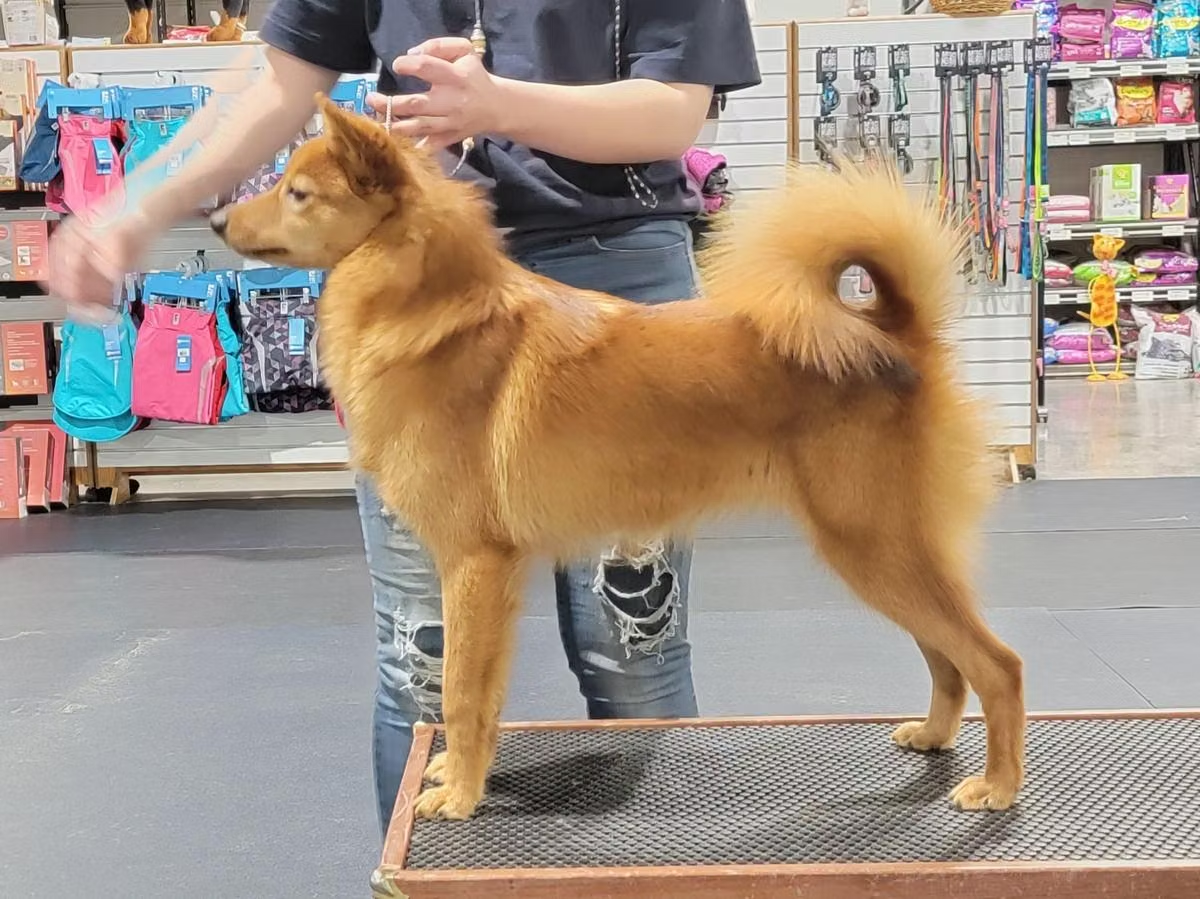
The Finnish Spitz is a medium-sized spitz breed with a square build, pricked ears, and a curled tail carried over the back. Its coat is a warm fox-red, a color that gives the dog its distinctive look. The breed is the national dog of Finland, where it has a long history as a hunting companion in the northern forests.
In its home country the Finnish Spitz works as a bark pointer. It locates game birds, holds them in a tree, and barks steadily to guide the hunter to the spot. This task shaped much of the breed's character: independence in the field, alertness to movement and sound, and a strong, frequent voice. Owners often describe the dog as lively and self-directed rather than eager to please at all costs.
As a companion the Finnish Spitz is active and devoted to its household. It tends to bond closely with family members while staying reserved with strangers. The breed suits people who can provide daily exercise and who do not mind a dog that uses its voice.
| Attribute | Detail |
|---|---|
| Origin | Finland |
| Size | Medium |
| Lifespan | 13 to 15 years |
| Group / role | Spitz type, hunting bark pointer and companion |
| Good with | Families, older children, owners who can meet exercise and grooming needs |
Who it suits
The Finnish Spitz fits an active household that enjoys outdoor time and can handle a vocal, independent dog. It does best with owners who use consistent, reward-based training and who can give it company and exercise each day. People who need a quiet dog or who are away for long hours will find the breed's voice and energy demanding.
History and origin
The Finnish Spitz developed from northern spitz dogs in Finland, where it was bred over centuries as a barking bird-dog and later recognized as the national breed.
The Finnish Spitz descends from spitz-type dogs that lived for centuries with peoples across the northern forests of Finland and the surrounding region. These dogs were valued for their ability to find and indicate game, and they adapted to a harsh climate and long winters.
For generations the breed was kept by hunters in rural Finland to point out birds such as grouse and capercaillie. The dog would track a bird, drive it into a tree, and bark to mark the location while the hunter approached. This working method gave the breed its nickname as a barking bird-dog.
By the nineteenth century the type in isolated areas had begun to mix with other dogs, and breeders worked to gather and preserve the original Finnish hunting spitz. Organized efforts in Finland set down a standard and selected for the fox-red coat and the bark-pointing instinct that defined the working dog.
The Finnish Spitz was later recognized as the national dog of Finland. From its homeland the breed spread to other countries as both a hunting dog and a companion, though it remains less common outside northern Europe than many other spitz breeds.
Appearance and breed standard
The Finnish Spitz is a square, medium-sized dog with a double coat in shades of fox-red, pricked ears, and a tightly curled tail.
The Finnish Spitz has a square, balanced outline with a fox-like head, sharp pricked ears, and dark, almond-shaped eyes. The body is firm and well muscled without heaviness. The tail curls forward over the back and rests against the thigh, a typical spitz feature. Males are generally larger and carry a more pronounced ruff than females.
| Trait | Description |
|---|---|
| Height | Males about 44 to 50 cm (17 to 20 in); females about 39 to 45 cm (15 to 18 in) |
| Weight | Males about 12 to 16 kg (26 to 35 lb); females about 7 to 10 kg (15 to 22 lb) |
| Coat | Double coat: short, dense undercoat with a longer, harsh outer coat |
| Colors | Shades of fox-red, from pale honey to deep auburn; white markings on chest and feet allowed in small amounts |
| Eyes | Medium, almond-shaped, dark in color |
Coat and colors
The coat is the breed's most recognizable feature. Puppies are often born a darker shade and lighten as they mature into the adult fox-red color. The outer coat stands off the body, longest on the shoulders, back of the thighs, and tail. The undercoat is soft and dense, giving insulation against cold. Small white markings on the chest and feet are accepted, but the overall impression should be a clear red.
Temperament and personality
The Finnish Spitz is spirited, alert, and independent, affectionate with its family but reserved with strangers, and notably vocal.
The Finnish Spitz is lively, alert, and confident. It forms close bonds with its family and is usually gentle and playful at home, often patient with children it has grown up alongside. With strangers the breed tends to be reserved and watchful rather than aggressive, which makes it an effective watchdog.
Independence is a defining trait. Bred to work at a distance from the hunter and make its own decisions in the field, the dog thinks for itself and may not follow commands without reason. This is normal for the breed and calls for patience rather than force.
The Finnish Spitz is one of the more vocal dog breeds. Barking was selected as a working asset, and the dog uses its voice readily to alert, to express excitement, and to communicate. With other dogs it can be sociable, though some individuals are assertive with the same sex. Early socialization helps it settle around other pets and people.
| Trait | Rating |
|---|---|
| Affection | 4 |
| Energy | 4 |
| Trainability | 3 |
| Vocalness | 5 |
| Shedding | 4 |
Care and grooming
The Finnish Spitz needs regular brushing, daily exercise, and an environment where its barking and energy can be managed.
The Finnish Spitz is a clean, low-odor breed that keeps its own coat in reasonable order, but it still needs routine care to manage shedding and stay fit. The double coat sheds heavily during seasonal coat changes, when daily attention is needed.
Grooming
- Brush once or twice a week, and daily during the two main shedding periods
- Use a comb or slicker brush to reach the dense undercoat
- Bathe only when needed; the coat tends to repel dirt
- Trim nails every few weeks and check ears for debris
- Brush teeth regularly to support dental health
Exercise
- Provide at least 60 minutes of activity daily, split across walks and play
- Offer off-leash running in a secure area, since the breed has a strong chase instinct
- Include scent games and problem-solving toys to use the dog's mind
- Keep the dog on a leash near roads and wildlife
Environment
The Finnish Spitz adapts to cold weather thanks to its double coat and prefers cooler conditions. It can live in a house with a securely fenced yard. Because the breed barks freely, close neighbors and apartment settings can be a challenge unless the owner trains a reliable quiet cue and provides enough activity.
Nutrition and feeding
Feed the Finnish Spitz a balanced diet matched to its life stage and activity level, with portions controlled to keep it lean.
The Finnish Spitz does well on a complete, balanced diet formulated for its life stage. Active working dogs may need more calories than companions kept at a lighter activity level. Because the breed has a moderate frame, portions should be measured to keep the dog lean and avoid weight gain.
| Life stage | Amount per day | Meals |
|---|---|---|
| Puppy (2 to 6 months) | Per product guide for body weight | 3 to 4 |
| Puppy (6 to 12 months) | Per product guide for body weight | 2 to 3 |
| Adult | About 1 to 1.5 cups of quality dry food, by weight and activity | 2 |
| Senior | Slightly reduced calories to match lower activity | 2 |
Treats and supplements
Keep treats to a small share of daily calories to protect against weight gain. Most Finnish Spitz dogs on a complete diet do not need supplements. Discuss any joint, skin, or coat supplements with a veterinarian before adding them, and provide constant access to fresh water.
Health and lifespan
The Finnish Spitz is generally healthy with a lifespan of about 13 to 15 years, though a few inherited conditions are worth monitoring.
The Finnish Spitz is a hardy breed with a typical lifespan of 13 to 15 years. It has fewer widespread health problems than many breeds, in part because of its working background. Responsible breeders screen for known inherited conditions, and routine veterinary care supports a long life.
| Condition | Signs | Note |
|---|---|---|
| Hip dysplasia | Stiffness, limping, trouble rising | Screening of breeding dogs reduces risk |
| Patellar luxation | Skipping gait, intermittent lameness | Ranges from mild to needing surgery |
| Elbow dysplasia | Front-limb lameness, reluctance to exercise | Inherited joint condition; check breeding lines |
| Epilepsy | Seizures | Manageable with veterinary care in many cases |
Preventive care
- Keep vaccinations and parasite control up to date
- Schedule annual checkups, with more frequent visits for senior dogs
- Maintain a lean body weight to protect the joints
- Brush teeth and arrange dental checks
- Buy from breeders who health-test their dogs
Training
The Finnish Spitz is intelligent but independent, so it responds best to short, varied, reward-based training rather than repetition or force.
The Finnish Spitz is smart and capable, but its independent, working nature means it does not train like a biddable companion breed. It learns quickly when it sees a reason and a reward, and it loses interest with dull repetition. Patience and consistency matter more than pressure. Harsh methods tend to make the breed resistant.
Managing the bark is a common training goal. Because barking is instinctive, the aim is to control it rather than remove it. Teaching a reliable quiet cue and rewarding calm behavior gives the owner a way to settle the dog. Early socialization with people, dogs, and everyday situations builds confidence and reduces wariness.
Basics
- Begin socialization and gentle handling in puppyhood
- Keep sessions short, upbeat, and varied to hold attention
- Reward correct responses promptly with food, play, or praise
- Teach recall early and practice it in a secure area
- Introduce a quiet cue and reward calm, quiet moments
- Build duration and difficulty slowly as the dog succeeds
Breeding
Finnish Spitz breeding follows standard canine reproduction, with health-tested parents and litters of around three to six puppies.
Breeding the Finnish Spitz follows the general pattern for medium-sized dogs. Females typically reach sexual maturity by their first or second season, but responsible breeders wait until a bitch is physically mature and has passed relevant health screening before mating. Pairings should be planned to preserve the breed's structure, fox-red coat, and working temperament while avoiding known inherited conditions.
Gestation lasts roughly nine weeks. Litters are usually small to moderate in size. Newborn puppies depend fully on the mother for warmth and nutrition in the first weeks, and breeders provide a clean, quiet whelping area. Early handling and gentle exposure to household sounds and people help the puppies develop into well-adjusted dogs. Puppies are often born darker and lighten toward the adult red color as they grow.
| Metric | Value |
|---|---|
| Sexual maturity | Around 6 to 18 months (mate only when fully mature) |
| Gestation period | About 63 days (roughly 9 weeks) |
| Average litter size | About 3 to 6 puppies |
| Weaning age | About 6 to 8 weeks |
| Recommended health checks | Hip, elbow, and patella evaluation of parents |
Registering your Finnish Spitz and its microchip
Register your Finnish Spitz free for life with United Pet Club, and put its microchip number on a record American shelters can actually find.
How to register a Finnish Spitz in the United States
Start with the profile. Add your Finnish Spitz's name, birth date, and a clear photo, attach your phone number and email, and save. That is the whole job, and it costs nothing for life. Dog registration works with or without a microchip, so there is no reason to wait for a vet visit.
The microchip needs its own registration. A vet implants the chip, but the number stays anonymous until you file it, and an anonymous chip cannot point anyone at you. Register the microchip with United Pet Club on the free lifetime plan: every brand a US vet implants qualifies, updates cost nothing after a move, and the record shows up in the AAHA universal lookup American shelters check first. Create your free account and finish both steps in one sitting.
How do I register my Finnish Spitz in the United States?
Open a free United Pet Club account, enter your Finnish Spitz's name, birth date, and a photo, and save. The profile is free for life, works with or without a microchip, and you can attach a chip number later.
How do I register my Finnish Spitz's microchip?
Type the 15-digit chip number into your free United Pet Club account together with your current phone number and address. The lifetime plan is free, covers every future update, and accepts any chip brand a US vet implants.
Does my Finnish Spitz have to be microchipped in the United States?
No federal law says a Finnish Spitz must carry a chip, but plenty of city and county licensing rules do, and shelters routinely chip before adoption. What the law never does is register the chip for you; that part is yours.
How much does it cost to register a Finnish Spitz?
Nothing. United Pet Club's lifetime plan covers the dog's profile, the microchip registration, and every update at no charge, with no renewal fees.
Frequently asked questions
Common questions about the Finnish Spitz cover its size, temperament, barking, care needs, lifespan, and suitability as a pet.
How big does a Finnish Spitz get?
It is a medium breed. Males stand about 44 to 50 cm (17 to 20 in) and weigh roughly 12 to 16 kg (26 to 35 lb); females are smaller at about 39 to 45 cm (15 to 18 in) and 7 to 10 kg (15 to 22 lb).
What is the Finnish Spitz temperament like?
It is spirited, alert, and independent. The breed is affectionate with its family, reserved with strangers, and a capable watchdog.
Does the Finnish Spitz bark a lot?
Yes. It was bred as a barking bird-dog and is one of the more vocal breeds. Owners can manage barking with early training and a reliable quiet cue, but the dog will use its voice.
Is the Finnish Spitz easy to care for?
Care is moderate. The coat needs weekly brushing and daily attention during seasonal shedding, and the dog needs at least an hour of exercise a day. Its barking and independence ask for an experienced, active owner.
How long do Finnish Spitz dogs live?
Typically 13 to 15 years. The breed is generally healthy, and good diet, exercise, and veterinary care support a long life.
Is the Finnish Spitz a good family dog?
Yes, for the right home. It bonds closely with its family and is usually good with children it knows. It suits active households that can handle a vocal, energetic dog and can give it daily exercise.
Is the Finnish Spitz a common breed?
It is the national dog of Finland and is well known in northern Europe, but it remains less common than many other spitz breeds elsewhere, so finding a puppy may take time.
From the community
Ask about the Finnish SpitzNo questions about the Finnish Spitz yet. Be the first to ask.
Browse Dog breeds