

Field Spaniel
The Field Spaniel is a calm, dignified English sporting breed, known for its sweet, sensitive nature and devotion to its people.
- Size
- Medium
- Lifespan
- 12–13 years
- Origin
- England
- Temperament
- Calm
- Standard colors
- Black, White, and Blue and 3 more
Characteristics
Coat and grooming
How the Field Spaniel coat is built, and what that means when you groom it.
- Coat layers
- Single coat
- Coat texture
- Silky
- Coat length
- Medium
- Shedding
- Moderate shedding
Grooming guidance
Caution: A Field Spaniel coat mats easily.
Fine or long hair tangles at the base of the coat, out of sight, where the mats tighten and pull on the skin. Brushing has to reach right down to the roots in sections, not just skim the surface.
Registry Recognition
Fédération Cynologique Internationale
- Retrievers, Flushing Dogs, Water Dogs
American Kennel Club
- Sporting Group
Canadian Kennel Club
- Sporting Group
United Pet Club
- Retrievers, Flushing Dogs, Water DogsPrimary
Field Spaniel colors and patterns
What each club's breed standard says about every Field Spaniel color and pattern. Point at a ruling to see the club's own wording.
Breed standards describe the Field Spaniel in Black, White, Blue, Liver, Tan, and Mahogany. Standard patterns: Solid, Bicolor, Roan, and Tan point.
| Color or pattern | FCI | AKC | UKC | KC | KUSA |
|---|---|---|---|---|---|
| Black | Standard (“Black”) | Standard (“Black”) | Standard (“Black”) | Standard (“Black”) | Standard (“Black”) |
| White | Fault (“clear black and white, clear liver and white”) | Standard (“Bi-colored dogs must be roaned and/or ticked in white areas”) | Standard (“Bi-color dogs must have roaning or ticking, not clear white”) | Not recognized (“clear black and white, clear liver and white”) | Fault (“clear black and white, clear liver and white”) |
| Blue | Standard (“Blue roan”) | Standard (“Blue Roan”) | Standard (“roan”) | Standard (“blue roan”) | Standard (“Blue roan”) |
| Liver | Standard (“Liver”) | Standard (“Liver”) | Standard (“liver, golden liver”) | Standard (“liver”) | Standard (“Liver”) |
| Tan | Standard (“Black and tan”) | Standard (“Tan Markings”) | Standard (“tri-color markings (tan over the eyes, on the cheeks, feet and pasterns)”) | Standard (“black and tan”) | Standard (“black and tan”) |
| Mahogany | Fault | Not recognized | Standard (“mahogany”) | Not recognized | Fault |
| Red | Fault (“red”) | Not recognized | Not recognized | Not recognized (“red”) | Fault (“red”) |
| Orange | Fault (“orange”) | Not recognized | Not recognized | Not recognized (“orange”) | Fault (“orange”) |
| Gold | Fault (“golden”) | Not recognized | Not recognized | Not recognized (“golden”) | Fault (“golden”) |
| Patterns | |||||
| Solid | Standard (“In solid-coloured dogs”) | Standard (“self-colored”) | Standard (“Solid color dogs”) | Standard (“In solid coloured dogs”) | Standard (“In solid-coloured dogs”) |
| Bicolor | Fault (“clear black and white, clear liver and white”) | Standard (“either self-colored or bi-colored”) | Standard (“Bi-color dogs must have roaning or ticking, not clear white”) | Not recognized (“clear black and white, clear liver and white”) | Fault (“clear black and white, clear liver and white”) |
| Roan | Standard (“Blue roan”) | Standard (“Blue Roan”) | Standard (“roan”) | Standard (“blue roan”) | Standard (“Blue roan”) |
| Tan point | Standard (“Black and tan”) | Standard (“Tan Markings”) | Standard (“tri-color markings (tan over the eyes, on the cheeks, feet and pasterns)”) | Standard (“black and tan”) | Standard (“black and tan”) |
| Sable | Fault (“sable”) | Disqualifying (“The sable pattern”) | No ruling | Not recognized (“sable”) | Fault (“sable”) |

%22%3E%3Cpath%20d%3D%22M0%2023L9.5%2020.4L14%2025.4L19%2029.6Q21%2035%2023.5%2035.5Q36%2033%2050%2036L56%2040V64H0Z%22%20fill%3D%22%23F5F5F0%22%2F%3E%3C%2Fg%3E%3Cuse%20href%3D%22%23s%22%20fill%3D%22none%22%20stroke%3D%22%233B2A20%22%20stroke-opacity%3D%220.6%22%20stroke-width%3D%221%22%20stroke-linejoin%3D%22round%22%2F%3E%3Cellipse%20cx%3D%223.2%22%20cy%3D%2221.7%22%20rx%3D%221.3%22%20ry%3D%221.2%22%20fill%3D%22%231C1C1C%22%2F%3E%3Ccircle%20cx%3D%2210.8%22%20cy%3D%2219.3%22%20r%3D%221.1%22%20fill%3D%22%231C1C1C%22%2F%3E%3C%2Fsvg%3E)
%22%3E%3Cg%20fill%3D%22none%22%20stroke%3D%22%23F5F5F0%22%20stroke-width%3D%221.15%22%20stroke-linecap%3D%22round%22%20stroke-linejoin%3D%22round%22%3E%3Cpath%20d%3D%22M28.6%2025h.1M51.3%2028.8h.1M34.7%2024.3h.1M34.2%2041.6h.1M51%2044.2h.1M55.9%2024.7h.1M27.5%2026.3h.1M18.5%2028.6h.1M25.2%2028.9h.1M24.2%2019.3h.1M20.6%2017.6h.1M34.1%2030.6h.1M57.3%2023.3h.1M23.5%2030.7h.1M26.5%2023.1h.1M40%2031.5h.1M51.7%2038.6h.1M20.2%2022.1h.1M40.4%2037.8h.1M35%2043.1h.1M20.6%2031.7h.1M27.8%2031.9h.1M17.2%2021.1h.1M38.1%2037.7h.1M25.3%2040.5h.1M32%2029.3h.1M41.6%2039.5h.1M23.6%2024h.1M26.4%2018.6h.1M30.3%2031.9h.1M31.2%2035.2h.1M36.5%2043.7h.1M35.2%2026.3h.1M55.6%2019.1h.1M22.4%2036.8h.1M39.2%2020h.1M49.5%2039.1h.1M33.6%2033.5h.1M36.4%2032.4h.1M56.3%2042.4h.1M54.8%2031.2h.1M36.9%2023.2h.1M52.7%2019.1h.1M21.5%2033.8h.1M48.6%2028h.1M36.6%2017.5h.1M45.6%2031.3h.1M37.9%2030.5h.1M17%2031.8h.1M21.1%2043.1h.1M55.7%2021.1h.1M30.8%2041.9h.1M57.4%2038.4h.1M54.8%2026.9h.1M29.1%2017.5h.1M24.3%2037.7h.1M26%2032h.1M39.3%2022.8h.1M53.5%2029h.1M53.3%2023.3h.1M20%2038.4h.1M28.3%2044.7h.1M28.6%2039.8h.1M51.9%2041.1h.1M52.3%2033.7h.1M19.6%2042.2h.1M19%2033h.1M47.8%2021.7h.1M45.7%2024.8h.1M24.6%2035.5h.1M29.8%2036.8h.1M50.7%2032h.1M29.5%2043.5h.1M28.2%2041.5h.1M47.4%2034.8h.1M25.4%2033.7h.1M50.2%2041.2h.1M27.7%2029.5h.1M21.5%2024.8h.1M55.5%2017.5h.1M41.2%2044.3h.1M39.2%2018.4h.1M41.1%2042.5h.1M54.7%2035.3h.1M42.8%2034.5h.1M30.1%2023h.1M42.6%2025.1h.1M32.9%2024.4h.1M42.4%2032.4h.1M49.7%2022.2h.1M49.1%2043.1h.1M38%2035.2h.1M47.7%2043.8h.1M43.1%2022.4h.1M22.4%2040.4h.1M44.4%2019.8h.1M53.3%2040.1h.1M20.7%2029.3h.1M55.6%2043.9h.1M17.6%2039.2h.1M41.7%2028.9h.1M44.1%2036.3h.1M24.3%2043.6h.1M26.4%2038.1h.1M30.3%2029.2h.1M31.5%2030.8h.1M32.1%2023h.1M18.3%2040.9h.1M48%2033.4h.1M36.4%2038.7h.1M31.9%2020.8h.1M32.6%2026.2h.1M22%2031.2h.1M53.4%2021.7h.1M41.9%2017.7h.1M53.3%2037.3h.1M47.7%2040.3h.1M54.4%2033.7h.1M33.6%2037.5h.1M25.3%2017.2h.1M37.6%2019.7h.1M31.6%2019h.1M29.2%2019.6h.1M50.7%2027.3h.1M22%2022.1h.1M31%2037.8h.1M56.5%2026.6h.1M34.7%2039.5h.1M56.5%2040.8h.1M47.6%2038h.1M48.6%2026.1h.1M49.7%2034.2h.1M45.4%2027.4h.1M22.6%2038.9h.1M56.5%2035.3h.1M35.1%2021h.1M41.9%2020.1h.1M37.6%2040h.1M32.6%2044.4h.1M37.9%2025.2h.1M26.6%2043h.1M18.9%2036.7h.1M47.2%2028.9h.1M30.5%2026.2h.1M17.4%2027.3h.1M47.1%2017.2h.1M22.3%2044.3h.1M32.5%2042.4h.1M23.6%2025.7h.1M31.4%2024.9h.1%22%2F%3E%3Cpath%20d%3D%22M26%2020.9h.1M41.2%2023.8h.1M39.9%2026.4h.1M28.5%2033.4h.1M42.8%2043.8h.1M17.6%2034.3h.1M34%2017.1h.1M31.2%2017.2h.1M46.5%2036.1h.1M25.1%2022.1h.1M50.3%2023.7h.1M20.2%2026.6h.1M20.8%2020.4h.1M50.9%2017.3h.1M49.5%2020.2h.1M52.9%2044.1h.1M23.9%2017.8h.1M43.2%2028.1h.1M57.6%2030h.1M52%2025.6h.1M19.2%2019.1h.1M19.5%2024.4h.1M32.8%2040.1h.1M36.1%2027.7h.1M39.6%2029.5h.1M38.4%2041.5h.1M47.9%2019.4h.1M49.1%2031.7h.1M55.9%2036.9h.1M29.2%2027.2h.1M46%2043.5h.1M44.6%2028.8h.1M47.5%2031.5h.1M22.8%2020h.1M27.6%2017.1h.1M43.1%2018.6h.1M54.3%2020h.1M57.2%2033.8h.1M44.5%2043.8h.1M27.1%2035.5h.1M45.3%2041.8h.1M56.7%2028.8h.1M36.7%2021.4h.1M43.3%2042.3h.1M17.3%2022.9h.1M32.7%2035.5h.1M30.5%2039.8h.1M29.1%2021.2h.1M34.5%2018.8h.1M25.8%2027h.1%22%2F%3E%3C%2Fg%3E%3Cpath%20d%3D%22M56.3%2038.4l0%201.2M40%2027.2l-0.3%201.3M32.6%2043.6l-0.4%201.5M29%2023.3l0.8%201.5M55.1%2044l0.4%201.1M47.5%2022.5l-0.2%201.6M42.9%2038.6l0.7%201.2M35.2%2041.8l-0.5%201.7M26.9%2040l-0.1%201.2M41%2042.8l-0.1%201.6M18.4%2021.2l0.7%201.3M49.4%2019.3l-0.5%201.4M50.1%2041.7l0%201.8M28.2%2041.8l-0.6%201.2M55.5%2027.1l0.2%201.2M44.7%2019.3l0.5%201.7M48.6%2020.5l-0.8%201.4M43.7%2039.6l0.3%201.1M22.1%2033.8l-0.6%201.6M50.1%2038.1l-0.5%201.3M51.8%2044.1l-0.1%201.8M39%2017.5l0%201.4M30.2%2026.7l0.2%201.4M25.8%2031.2l0.2%201.6M29.6%2043.5l0.1%201M43.7%2018.3l0.1%201.5M29.6%2018.2l0.3%201.6M24.4%2017.6l0.3%201.1M22%2028.2l-0.6%201.6M25.9%2043.3l-0.3%201.4M22.2%2024.3l0.3%201.3M47.3%2029.2l-0.2%201.4M21.8%2033.2l0.5%200.9M32.9%2037l0.4%201M40%2029.9l0.8%201.4M17.4%2038.3l0.2%201.3M31%2039.2l0%201.2M37.3%2033.7l0.3%201.5M48.1%2040.5l0%201.6M33.9%2031.2l0.1%201.2M29.8%2035.2l-0.4%201M25.1%2037.3l-0.2%201.5M30.2%2039.8l0.5%201M44.6%2034.8l0.4%200.9M55.3%2034.2l0%201.7M50.6%2017.9l0.4%201M30.2%2034.9l-0.4%201.4M19.5%2035.7l-0.5%201.7M40.7%2028.7l0.8%201.4M23.3%2029l-0.4%201.4M17%2040.5l-0.2%201M48.4%2023.2l-0.3%201M37.3%2025.1l-0.4%201.3M23%2021.4l-0.4%201.3M20.4%2017.2l-0.1%201.3M42.3%2020.4l0.6%201.4M41%2031.8l0.6%201.2M45.4%2034.3l-0.1%201.2M32.5%2018l0%201.3M46.2%2021.6l0.1%201.4M30.5%2022.3l0.5%201.1M58%2044.6l0.3%201.5M57.1%2033.9l0.8%201.4M18.3%2042.6l0.3%201M40.5%2035.1l-0.6%201.4M38.8%2044.3l-0.3%201.1%22%20fill%3D%22none%22%20stroke%3D%22%23F5F5F0%22%20stroke-width%3D%220.8%22%20stroke-linecap%3D%22round%22%20stroke-linejoin%3D%22round%22%2F%3E%3C%2Fg%3E%3Cuse%20href%3D%22%23s%22%20fill%3D%22none%22%20stroke%3D%22%233B2A20%22%20stroke-opacity%3D%220.6%22%20stroke-width%3D%221%22%20stroke-linejoin%3D%22round%22%2F%3E%3Crect%20x%3D%2220%22%20y%3D%2258%22%20width%3D%223.6%22%20height%3D%222%22%20fill%3D%22%234A4038%22%2F%3E%3Crect%20x%3D%2226%22%20y%3D%2258%22%20width%3D%223.6%22%20height%3D%222%22%20fill%3D%22%234A4038%22%2F%3E%3Crect%20x%3D%2244%22%20y%3D%2258%22%20width%3D%223.6%22%20height%3D%222%22%20fill%3D%22%234A4038%22%2F%3E%3Crect%20x%3D%2250%22%20y%3D%2258%22%20width%3D%223.6%22%20height%3D%222%22%20fill%3D%22%234A4038%22%2F%3E%3Ccircle%20cx%3D%229.5%22%20cy%3D%2211.5%22%20r%3D%221.1%22%20fill%3D%22%231C1C1C%22%2F%3E%3C%2Fsvg%3E)
%22%3E%3Ccircle%20cx%3D%2212%22%20cy%3D%2217.2%22%20r%3D%221.25%22%20fill%3D%22%23C4996A%22%2F%3E%3Cpath%20d%3D%22M1.5%2021.2L9%2018.6L12.6%2021L12.2%2026.2L3.5%2024.4Z%22%20fill%3D%22%23C4996A%22%2F%3E%3Cpath%20d%3D%22M10%2026L14.5%2026.4L18.2%2029.2L13.5%2029.8Z%22%20fill%3D%22%23C4996A%22%2F%3E%3Cellipse%20cx%3D%2221.2%22%20cy%3D%2230.6%22%20rx%3D%221.6%22%20ry%3D%222.3%22%20fill%3D%22%23C4996A%22%2F%3E%3Crect%20x%3D%220%22%20y%3D%2247%22%20width%3D%2264%22%20height%3D%2217%22%20fill%3D%22%23C4996A%22%2F%3E%3Cpath%20d%3D%22M51.5%2024.5L55%2027L54.2%2032L50.5%2028.5Z%22%20fill%3D%22%23C4996A%22%2F%3E%3Cpath%20d%3D%22M45%2038.5L48%2039L48.5%2047L45.5%2047Z%22%20fill%3D%22%23C4996A%22%2F%3E%3C%2Fg%3E%3Cuse%20href%3D%22%23s%22%20fill%3D%22none%22%20stroke%3D%22%233B2A20%22%20stroke-opacity%3D%220.6%22%20stroke-width%3D%221%22%20stroke-linejoin%3D%22round%22%2F%3E%3Cellipse%20cx%3D%223.2%22%20cy%3D%2221.7%22%20rx%3D%221.3%22%20ry%3D%221.2%22%20fill%3D%22%231C1C1C%22%2F%3E%3Ccircle%20cx%3D%2210.8%22%20cy%3D%2219.3%22%20r%3D%221.1%22%20fill%3D%22%231C1C1C%22%2F%3E%3C%2Fsvg%3E)
%22%3E%3Crect%20x%3D%220%22%20y%3D%220%22%20width%3D%2264%22%20height%3D%2264%22%20fill%3D%22url(%23g)%22%2F%3E%3Cg%20fill%3D%22none%22%20stroke%3D%22%231C1C1C%22%20stroke-width%3D%221%22%20stroke-linecap%3D%22round%22%20stroke-linejoin%3D%22round%22%3E%3Cpath%20d%3D%22M15.7%2014.8l1.9%203.6M26.4%2024.1l1.2%204.1M42.7%2029.5l0.1%203.3M35.9%2025l1.6%203.2M31.3%2028.1l0.7%203.7M15.5%2011.1l1.6%203.6M41.1%2023.8l0.6%203.2M12.1%2020.7l1.2%203M15.4%2011.2l0.8%203.8M42.9%2027.3l0.7%202.9M48.2%2033.2l0.5%204.1M23.1%2024.7l1.4%203.4M51.9%2036.1l0.3%204.3M18.7%2023.9l1.2%203.7M50.4%2027.4l0.5%204.1M18.4%2020.4l0.1%203.1M55.6%2021.4l1.1%203.9M18.6%2024.9l1.7%203.8M8.3%2023.2l1.7%202.9M18.7%2024.2l0.2%203.1M46.4%2022.7l0.6%202.6M14.3%207l0.9%203.5M50.5%2024.9l0.5%203.7M23.2%2024.7l1.2%204.3M10.5%2022.3l1.6%203.4M56.9%2018.2l1.1%202.5M20.8%2021.7l1.1%203.5M10.9%2020.2l0.2%203.9M6.6%2023.3l1%202.4M54.5%2021.7l0.9%203.8M13.3%2021l0.4%203M11.7%2019.5l0.3%204M39%2023.2l0.7%202.5M20.8%2016.7l0%202.6M18.4%2016l0.2%202.6M46.4%2038.2l1.4%203.2M12.9%2022.6l0.6%203.3M13%2020.9l0.3%204.3M35.3%2024.9l1.3%202.3M29.5%2022.1l0.5%202.8M36.6%2023.4l0.2%204.3M20.5%2017.6l0.7%204.1M18.3%2020.6l0.6%203M20.5%2025.8l0.5%203.8M23.5%2040.2l1.1%202.9M22.8%2024.9l1.5%203M25.5%2023.1l0.5%203.3M47.7%2024.7l1.5%203.7M12.9%2018.4l1.9%203.8M29.5%2023.7l0.5%204.1M37.7%2026.5l0%202.9M16.8%2016.4l0.1%203.3M49.8%2028l1.7%203.8M29.4%2025.5l0.5%203.6M9.3%2023l1.3%203.1M47.4%2025.6l0.5%203.5M48.1%2023.8l1.6%203.2M9.9%2018.3l1.3%202.5M12.2%2016.6l0.4%203.2M22%2022.1l1.4%202.7M43.9%2024.7l1.4%203.9M14.3%2020l1.8%203.2M46.3%2040.1l0.3%203.6M14.9%207l0.3%204M17.5%2016.7l1.2%202.4M54.6%2040l1%203.5M13.3%2013.9l1.6%204.2M15.3%2016.5l1.2%202.9M23.8%2038.5l0.2%203.8M18.2%2019l0.6%203M11.2%2023.6l0.7%204.1M33.1%2023.2l0.9%204.3M13.6%2019.9l0.4%204.5M19.7%2023.1l1.9%203.7M50.5%2027.1l0.3%204.1M28.2%2028.5l0.2%203.8M29%2028.4l0.1%204M47.7%2024.5l0.6%202.5M10.7%2017.2l1.4%202.7M25.5%2040.3l0.6%204.1M37.6%2022.8l0.7%204.4M57%2018.6l0.2%203.4M16.9%2022.2l1.7%203.8M43.5%2024.7l1.8%203.4M49.2%2026l1.5%203.6M47.7%2032.3l0.4%203.7M35.4%2030.8l0.5%202.7M47%2026.1l1%203.9M24.3%2028.1l1.5%204.2M50.5%2023.8l1.3%203.4M58.1%2014.1l0.3%202.6M13.9%2018.2l0.7%202.5M8.2%2021l0.7%202.9M41.4%2026.4l0.4%202.7M16.3%2020.4l0.5%204.3M43.4%2025.9l1.2%203.2M32.3%2022.4l0.3%203.9M43.6%2025.9l2.1%203.8M33.5%2026.3l1.5%203M48.3%2030.6l1.4%203.4M44.2%2024.7l0.9%203.2M12.3%2017.7l0.9%203.7M46.2%2032l1.9%203.4M51%2028.3l0.1%203.7M30.4%2023.1l1.1%203.2M52.6%2022.6l0.9%204.3M16.6%2015.4l0.9%203.1M58.4%2012.8l0.3%202.8M42.8%2032.5l1.8%203.2%22%2F%3E%3Cpath%20d%3D%22M16.4%2026.1l0.1%204.3M14%2017.1l1.3%202.8M36.9%2027.2l1.3%202.6M38.6%2025.8l0.4%203.6M57.6%2014.3l0.3%203.9M14.7%208.2l1%204.3M53.4%2023l1.9%203.4M51.5%2030.3l0.8%202.7M56.2%2020l1.9%203.5M15.9%2010l0.2%202.8M15.8%2022.6l1.8%203.9%22%2F%3E%3C%2Fg%3E%3C%2Fg%3E%3Cuse%20href%3D%22%23s%22%20fill%3D%22none%22%20stroke%3D%22%233B2A20%22%20stroke-opacity%3D%220.6%22%20stroke-width%3D%221%22%20stroke-linejoin%3D%22round%22%2F%3E%3Cellipse%20cx%3D%223.2%22%20cy%3D%2221.7%22%20rx%3D%221.3%22%20ry%3D%221.2%22%20fill%3D%22%231C1C1C%22%2F%3E%3Ccircle%20cx%3D%2210.8%22%20cy%3D%2219.3%22%20r%3D%221.1%22%20fill%3D%22%231C1C1C%22%2F%3E%3C%2Fsvg%3E)
| Color or pattern | FCI | AKC | UKC | KC | KUSA |
|---|---|---|---|---|---|
| Brown | No ruling | No ruling | Standard (“dark hazel, brown or nearly black, depending on the color of the dog”) | No ruling | No ruling |
| Dark brown | No ruling | Standard (“dark hazel to dark brown”) | Standard (“dark hazel, brown or nearly black, depending on the color of the dog”) | No ruling | No ruling |
| Hazel | Standard (“Dark hazel in colour”) | Standard (“dark hazel to dark brown”) | Standard (“dark hazel, brown or nearly black, depending on the color of the dog”) | Standard (“Dark hazel in colour”) | Standard (“Dark hazel in colour”) |
What the rulings mean
- Standard
- Described by the club's breed standard.
- Fault
- Named by the club's breed standard as a fault: the animal can be shown but is penalized.
- Disqualifying
- The club's breed standard disqualifies an animal of this color or pattern.
- Not recognized
- The club does not accept this color or pattern for the breed.
Color changes
How a Field Spaniel's colors can change over its life.
Blackchanges toRust
Coat · With body condition · can change back
Blackchanges toGray
Coat · Progressive
Blackchanges toBrown
Coat · In the sun · can change back
Whitechanges toRoan
Coat · With age · from 2 weeks
Tan pointchanges toSaddle
Coat · With age · from 6 to 156 weeks
Blackchanges toSnow nose
Nose · With the season · can change back
Blackchanges toPink
Nose · With the season · can change back
%22%3E%3Cpath%20d%3D%22M22.5%2018.5Q24%2021%2025%2021.5L47%2022.5Q50%2022.5%2051.5%2023.5L54%2026Q55%2032%2053%2034Q46%2031.5%2038%2033Q30%2034.5%2025.5%2032Q22.5%2026%2022.5%2018.5Z%22%20fill%3D%22%231C1C1C%22%2F%3E%3Cpath%20d%3D%22M51%2024L56%209L63%209L61%2019L54.5%2028Z%22%20fill%3D%22%231C1C1C%22%2F%3E%3Cpath%20d%3D%22M2%2021.2L7.5%2019.2L8.5%2023.6L3.5%2024.2Z%22%20fill%3D%22%231C1C1C%22%20fill-opacity%3D%220.85%22%2F%3E%3C%2Fg%3E%3Cuse%20href%3D%22%23s%22%20fill%3D%22none%22%20stroke%3D%22%233B2A20%22%20stroke-opacity%3D%220.6%22%20stroke-width%3D%221%22%20stroke-linejoin%3D%22round%22%2F%3E%3Cellipse%20cx%3D%223.2%22%20cy%3D%2221.7%22%20rx%3D%221.3%22%20ry%3D%221.2%22%20fill%3D%22%231C1C1C%22%2F%3E%3Ccircle%20cx%3D%2210.8%22%20cy%3D%2219.3%22%20r%3D%221.1%22%20fill%3D%22%231C1C1C%22%2F%3E%3C%2Fsvg%3E)
%22%3E%3Crect%20x%3D%2217%22%20y%3D%2210%22%20width%3D%2230%22%20height%3D%2242%22%20fill%3D%22url(%23g)%22%2F%3E%3C%2Fg%3E%3Cuse%20href%3D%22%23s%22%20fill%3D%22none%22%20stroke%3D%22%233B2A20%22%20stroke-opacity%3D%220.6%22%20stroke-width%3D%221%22%20stroke-linejoin%3D%22round%22%2F%3E%3Cpath%20d%3D%22M12.5%2037Q13%2032%2018.5%2032Q23.5%2032.5%2023.5%2036.5Q20.5%2035.5%2018.8%2037Q17.4%2038.6%2018%2041.5Q13.6%2040.4%2012.5%2037Z%22%20fill%3D%22%231C1C1C%22%20fill-opacity%3D%220.8%22%20stroke%3D%22%23F5F5F0%22%20stroke-opacity%3D%220.4%22%20stroke-width%3D%220.9%22%2F%3E%3Cpath%20d%3D%22M51.5%2037Q51%2032%2045.5%2032Q40.5%2032.5%2040.5%2036.5Q43.5%2035.5%2045.2%2037Q46.6%2038.6%2046%2041.5Q50.4%2040.4%2051.5%2037Z%22%20fill%3D%22%231C1C1C%22%20fill-opacity%3D%220.8%22%20stroke%3D%22%23F5F5F0%22%20stroke-opacity%3D%220.4%22%20stroke-width%3D%220.9%22%2F%3E%3Cpath%20d%3D%22M32%2040V50%22%20fill%3D%22none%22%20stroke%3D%22%231C1C1C%22%20stroke-width%3D%221.3%22%20stroke-opacity%3D%220.5%22%20stroke-linecap%3D%22round%22%20stroke-linejoin%3D%22round%22%2F%3E%3Cellipse%20cx%3D%2232%22%20cy%3D%2221%22%20rx%3D%2212%22%20ry%3D%223.5%22%20fill%3D%22%23F5F5F0%22%20fill-opacity%3D%220.18%22%2F%3E%3C%2Fsvg%3E)
Sources
Each ruling comes from the club's published breed standard or color list.
Meet some of our Field Spaniel
A few of the Field Spaniel profiles members have added to United Pet Club.

![Black Prince [Mr A Clinton Wilmerding], a Male Field Spaniel registered with United Pet Club](https://media.unitedpetclub.com/m/ZISf28fzxz/black-prince-mr-a-clinton-wilmerding-field-spaniel_orig.avif "Black Prince [Mr A Clinton Wilmerding] — Field Spaniel")


About the Field Spaniel
The Field Spaniel is a medium-sized English sporting dog with a calm, gentle, and devoted nature. It lives about 12 to 13 years and suits owners who want a quiet, affectionate companion.
The Field Spaniel is a medium-sized gundog that comes from England. It was developed in the 19th century for retrieving and flushing game in heavy cover. Today it is kept far more often as a family companion than as a working dog, though it keeps the steady working temperament it was bred for.
The breed has a long body set low to the ground, a glossy single-color or roan coat, and a calm, thoughtful expression. It is one of the less common spaniel breeds, with relatively small numbers registered each year compared with the Cocker or Springer Spaniel.
Field Spaniels are gentle and sensitive. They bond closely with their household and prefer to stay near their people rather than work at a distance. They respond poorly to harsh handling and do best with patient, consistent owners.
| Item | Detail |
|---|---|
| Origin | England |
| Size | Medium (around 18 inches at the shoulder) |
| Lifespan | 12 to 13 years |
| Group / role | Sporting / gundog (flushing and retrieving) |
| Good with | Families, older children, other dogs, and pets it is raised with |
Who the breed suits
The Field Spaniel fits homes that can give it daily exercise and steady company. It does well with families, older children, and people who want a dog that stays close. Its sensitivity means it is a poor match for households that are loud, chaotic, or away from home for long stretches. First-time owners can manage the breed if they are willing to be gentle and consistent.
History and origin
The Field Spaniel was developed in 19th-century England from the same spaniel stock that produced the Cocker and Springer. Early breeding for an exaggerated long, low body nearly ruined the breed before reformers restored a more moderate working dog.
The Field Spaniel comes from England. In the early to middle 1800s, land spaniels were often divided by size from a single litter rather than by breed. Smaller pups were called Cockers and larger ones were used for field work. The Field Spaniel grew out of these larger land spaniels and was set apart as a distinct type during the second half of the 19th century.
The breed was recognized in England in the 1890s, and a breed club was formed to promote it. Early Field Spaniels were bred toward a black, single-color coat to separate them from the parti-colored spaniels of the day.
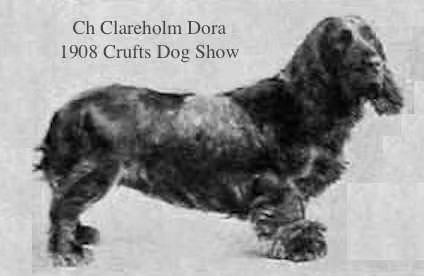
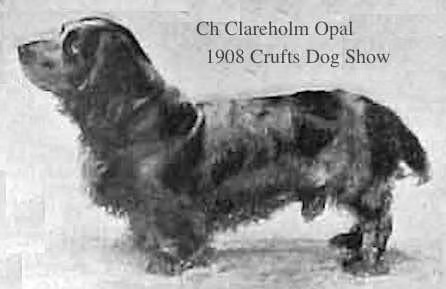
During the late Victorian period, breeders pushed the type toward an extreme. Dogs were bred longer in the body and shorter in the leg, partly through crosses with the Sussex Spaniel and Basset Hound. The result was a heavy, low-slung animal that struggled to do the field work it was named for. Its popularity fell as a result.
In the early and middle 20th century, breeders worked to undo this damage. They reintroduced English Springer Spaniel blood to restore leg length, balance, and working ability. The modern Field Spaniel is a moderate, upstanding dog rather than the exaggerated Victorian type. Numbers remain low, and several kennel clubs list it among their rarer native breeds.
Appearance and breed standard
The Field Spaniel is a medium-sized dog of moderate length, standing about 18 inches at the shoulder, with a glossy single-color or roan coat. It has long, feathered ears, a level back, and a calm, gentle expression.
The Field Spaniel is built for balance rather than extremes. It is slightly longer than it is tall, with a level topline, moderate bone, and well-developed muscle. The head is long and lean with a defined stop and long, low-set ears that hang close to the head. The overall impression is of a dignified, well-balanced sporting dog. Movement is smooth and ground-covering.
| Trait | Detail |
|---|---|
| Height | About 17 to 18 inches at the shoulder |
| Weight | About 35 to 50 pounds |
| Coat | Single, moderately long, glossy and flat or slightly wavy, with feathering on the ears, chest, legs, and underside |
| Colors | Black, liver, or roan, sometimes with tan points; small white marking on the chest is allowed |
| Eyes | Almond-shaped, dark to hazel, with a gentle, serious expression |
Coat and colors
The coat is a single layer, so the breed does not carry the dense undercoat seen in some other gundogs. It lies flat or with a slight wave and grows longer feathering on the ears, chest, backs of the legs, and belly. Accepted colors are black, liver, and roan, and any of these may carry tan points over the eyes, on the cheeks, and on the legs. A small amount of white on the chest is permitted. The coat needs regular brushing to keep the feathering free of mats.
Temperament and personality
The Field Spaniel is calm, gentle, and devoted, with a sensitive nature that makes it attached to its family. It is generally friendly with people and other animals but can be reserved with strangers.
The Field Spaniel is known for a quiet, even temper. At home it is calm and affectionate, and it forms a strong attachment to its household. It tends to follow its people from room to room and is happiest when included in daily life. Left alone for long periods, it can become anxious or restless.
With strangers the breed is often polite but reserved at first, warming up once it is comfortable. It is not a guard dog, though it may bark to announce visitors. Early and ongoing socialization helps a naturally cautious dog stay confident.
With children, the Field Spaniel is patient and gentle, and it usually suits households with older children who handle it calmly. Because the breed is sensitive, rough play and loud, sudden handling can unsettle it. It generally gets along with other dogs and with cats or smaller pets when raised alongside them, though its gundog background means it may take interest in birds and small animals outdoors.
| Trait | Rating |
|---|---|
| Affection | 5 |
| Energy | 3 |
| Trainability | 4 |
| Vocalness | 2 |
| Shedding | 3 |
Care and grooming
The Field Spaniel needs regular brushing of its feathered coat, daily exercise of around an hour, and steady company. It is not suited to being left alone for long stretches.
Grooming
- Brush the coat two or three times a week to prevent mats, paying attention to the feathering on the ears, legs, and chest.
- Trim stray hair around the feet, ears, and underside every few weeks to keep the outline neat.
- Check and clean the long ears weekly, since the drop ears can trap moisture and lead to infection.
- Bathe every few weeks or as needed, and dry the coat and ears thoroughly afterward.
- Trim nails every few weeks and brush teeth several times a week.
Exercise
- Provide about 45 to 60 minutes of activity each day across one or two outings.
- Mix walks with off-lead time in a secure area where the dog can explore and use its nose.
- Include scent games or simple retrieving to give the breed the mental work it enjoys.
- Avoid hard, repetitive exercise in young puppies while joints are still developing.
Environment
The Field Spaniel adapts to most homes, including houses with yards and, with enough exercise, smaller homes. It is an indoor dog that wants to live with its family rather than be kept outside. Because it bonds closely and dislikes isolation, it suits households where someone is home for much of the day or can arrange company when away.
Nutrition and feeding
The Field Spaniel does well on a complete, balanced dog food fed in measured meals appropriate to its age and activity. Adults usually eat about 1.5 to 2 cups of dry food a day, split across two meals.
Feed a complete, balanced food formulated for the dog's life stage. Puppies need a diet made for growth, while adults do well on a standard maintenance food. The amounts below are general starting points; the right portion depends on the food's calorie content, the dog's weight, and how active it is. Adjust based on body condition, keeping the waist visible and the ribs easy to feel. The breed can gain weight if overfed, so measure meals rather than free-feeding.
| Life stage | Amount per day | Meals per day |
|---|---|---|
| Puppy (2 to 6 months) | About 1 to 2 cups, by growth and brand | 3 to 4 |
| Puppy (6 to 12 months) | About 1.5 to 2 cups | 2 to 3 |
| Adult | About 1.5 to 2 cups | 2 |
| Senior / less active | About 1.25 to 1.75 cups | 2 |
Treats and supplements
Keep treats to no more than about 10 percent of daily calories and subtract them from meal portions. Plain options such as small pieces of carrot or commercial training treats work well. Most Field Spaniels on a complete diet need no supplements. Speak to a vet before adding joint, skin, or other supplements, since extras are not needed for a dog already eating a balanced food.
Health and common conditions
The Field Spaniel is generally a sound breed that lives about 12 to 13 years. The main concerns are hip dysplasia, eye disorders, ear infections, and hypothyroidism.
The Field Spaniel is a reasonably healthy breed with a typical lifespan of 12 to 13 years. Like most purebred dogs, it carries a few inherited risks, and responsible breeders screen their stock to reduce them. The long, pendulous ears make ear care a routine part of keeping the dog healthy. Buyers should ask breeders for hip and eye test results on the parents.
| Condition | Signs | Note |
|---|---|---|
| Hip dysplasia | Stiffness, limping, reluctance to jump or climb | Inherited joint problem; parents should be hip-scored |
| Eye disorders (such as PRA and cataract) | Cloudy eyes, bumping into objects, night-vision loss | Breeding dogs should have current eye exams |
| Ear infections | Head shaking, scratching, odor, discharge | Linked to the long drop ears; manage with routine cleaning |
| Hypothyroidism | Weight gain, low energy, coat and skin changes | Diagnosed by blood test and managed with daily medication |
Preventive care
- Keep core vaccinations and parasite control up to date.
- Schedule a yearly vet checkup, moving to twice yearly in senior dogs.
- Clean and check the ears weekly to catch infections early.
- Brush the teeth several times a week and arrange dental checks.
- Keep the dog at a healthy weight to protect the joints.
Training and socialization
The Field Spaniel is intelligent and eager to please, which makes it trainable, but its sensitivity means it needs gentle, reward-based methods. Early socialization builds the confidence the breed sometimes lacks.
The Field Spaniel learns quickly and wants to work with its handler. It responds best to calm, positive training and can shut down or become worried under harsh corrections or shouting. Short, consistent sessions hold its attention better than long drills. The breed's gundog background means it enjoys scent work and retrieving, which can be used as both exercise and reward.
Basics
- Start socialization in puppyhood, exposing the dog gently to new people, places, sounds, and other animals.
- Teach name response and a reliable recall early, using food and praise.
- Build core cues such as sit, down, stay, and walking on a loose lead in short daily sessions.
- Add gradual time alone from a young age to prevent separation anxiety.
- Keep practicing in new settings so skills hold up around distractions.
Breeding and raising young
Field Spaniels reach sexual maturity around 6 to 12 months but should not be bred until physically and mentally mature, usually after two years. Gestation lasts about 63 days, with litters averaging four to six puppies.
Females typically have their first season between 6 and 12 months, but responsible breeders wait until a dog is at least two years old so it can be health-tested and is fully mature. Before mating, both parents should pass hip and eye screening and be confirmed in good health and temperament.
Gestation runs about 63 days from conception. Litters average four to six puppies, though numbers vary. The dam usually whelps without help, but a clean, quiet space and access to veterinary support should be ready in case of trouble.
Puppies are born blind and deaf and depend fully on the dam for their first weeks. Eyes open at around two weeks, and weaning begins near four weeks. The period from about three to twelve weeks is important for socialization, so puppies should meet gentle handling, household sounds, and new experiences before going to new homes, usually at eight weeks or later.
| Metric | Value |
|---|---|
| Sexual maturity | About 6 to 12 months |
| Recommended breeding age | After about 2 years, once health-tested |
| Gestation | About 63 days |
| Average litter size | 4 to 6 puppies |
| Eyes open | About 2 weeks |
| Weaning | Around 4 to 7 weeks |
| Go to new homes | 8 weeks or later |
Registering your Field Spaniel and its microchip
Register your Field Spaniel free for life with United Pet Club, and put its microchip number on a record American shelters can actually find.
How to register a Field Spaniel in the United States
A Field Spaniel can hold a free lifetime profile in the United Pet Club registry whether or not it carries a chip. The profile pairs your contact details with your dog's photo, birth date, and markings, so whoever finds it knows exactly who to call. Registering your dog takes a few minutes, and nothing about it expires or renews.
The microchip needs its own registration. A vet implants the chip, but the number stays anonymous until you file it, and an anonymous chip cannot point anyone at you. Register the microchip with United Pet Club on the free lifetime plan: every brand a US vet implants qualifies, updates cost nothing after a move, and the record shows up in the AAHA universal lookup American shelters check first. Create your free account and finish both steps in one sitting.
How do I register my Field Spaniel in the United States?
Open a free United Pet Club account, enter your Field Spaniel's name, birth date, and a photo, and save. The profile is free for life, works with or without a microchip, and you can attach a chip number later.
How do I register my Field Spaniel's microchip?
Type the 15-digit chip number into your free United Pet Club account together with your current phone number and address. The lifetime plan is free, covers every future update, and accepts any chip brand a US vet implants.
Does my Field Spaniel have to be microchipped in the United States?
No federal law says a Field Spaniel must carry a chip, but plenty of city and county licensing rules do, and shelters routinely chip before adoption. What the law never does is register the chip for you; that part is yours.
How much does it cost to register a Field Spaniel?
Nothing. United Pet Club's lifetime plan covers the dog's profile, the microchip registration, and every update at no charge, with no renewal fees.
Frequently asked questions
Common questions about the Field Spaniel's size, temperament, care needs, lifespan, suitability for families, and how easy the breed is to find.
How big does a Field Spaniel get?
It is a medium-sized dog, standing about 17 to 18 inches at the shoulder and weighing roughly 35 to 50 pounds. The body is slightly longer than the dog is tall.
What is the Field Spaniel's temperament like?
It is calm, gentle, and devoted, with a sensitive nature. It bonds closely with its family, is usually friendly with other animals, and tends to be reserved with strangers at first.
Is the Field Spaniel hard to care for?
Care is moderate. The feathered coat needs brushing two or three times a week, the long ears need weekly cleaning, and the dog needs about an hour of daily exercise and steady company. It does not cope well with being left alone for long.
How long do Field Spaniels live?
Most live about 12 to 13 years. Good nutrition, regular vet care, and keeping the dog at a healthy weight help it stay well into old age.
Are Field Spaniels good with children and other pets?
Yes. They are patient and gentle, and they suit families with older children who handle them calmly. They generally get along with other dogs and with cats or smaller pets they are raised alongside.
Are they easy to find?
No. The Field Spaniel is one of the rarer spaniel breeds, with relatively few puppies registered each year. Buyers often join a waiting list with a health-testing breeder rather than finding a litter quickly.
Do Field Spaniels bark a lot?
Not usually. They are fairly quiet dogs that may bark to announce visitors but are not prone to constant barking. Anxiety from being left alone too long can increase noise.
From the community
Ask about the Field SpanielNo questions about the Field Spaniel yet. Be the first to ask.
Browse Dog breeds