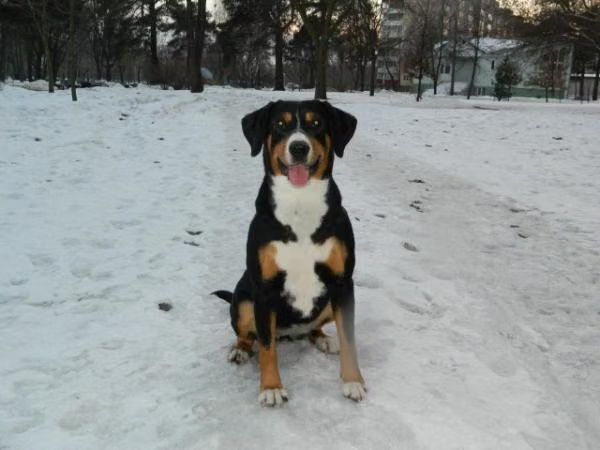
The Entlebucher Mountain Dog is a loyal, agile Swiss herder known for its lively spirit, intelligence, and devotion to family.
How the Entlebucher Mountain Dog coat is built, and what that means when you groom it.
Critical: A Entlebucher Mountain Dog should not be shaved.
The undercoat keeps heat out as well as in, and the outer coat shields the skin from sun and insect bites. Clipping the whole coat off removes both. It often grows back patchy, soft or a different colour, and in some animals the guard hairs never return properly. Brush the undercoat out instead of cutting it off.
Information: A Entlebucher Mountain Dog drops its undercoat in heavy bursts.
The undercoat comes out in heavy bursts over a few weeks. An undercoat rake, or a bath followed by a proper blow-dry, clears it far faster than daily brushing. Clipping the coat down is not a shortcut for this.
A few of the Entlebucher Mountain Dog profiles members have added to United Pet Club.
The Entlebucher Mountain Dog is a medium-sized Swiss herding breed known for loyalty, agility, and a lively, devoted temperament. It suits active homes that can give it work and daily exercise.
The Entlebucher Mountain Dog is the smallest of the four Swiss mountain dog breeds. It comes from Switzerland, where it worked as a drover and farm dog, moving cattle and guarding property. The breed is compact and muscular, built for stamina and quick movement over uneven ground.
This is an energetic, intelligent dog that forms a strong bond with its family. Owners describe it as loyal and confident, alert to its surroundings, and eager to stay close to the people it knows. It tends to be reserved with strangers and watchful rather than aggressive.
The Entlebucher does best with an owner who can give it a job, regular training, and consistent exercise. Without enough activity, its energy can turn into restlessness or unwanted behavior.
The breed fits active individuals and families who spend time outdoors and want a dog that joins them in walks, hikes, and structured activities. It is a good match for people with herding, agility, or obedience interests. It is less suited to households that are away for long hours or want a low-energy companion.
| Attribute | Detail |
|---|---|
| Origin | Switzerland |
| Size | Medium |
| Lifespan | 11 to 13 years |
| Group/role | Herding and farm drover dog |
| Good with | Families and active owners; supervise around small children given its herding drive |
The Entlebucher Mountain Dog developed in the Entlebuch region of Switzerland as a cattle drover and farm dog, and was recognized as a separate breed in the early 20th century.
The breed takes its name from the Entlebuch valley in the Swiss cantons of Lucerne and Bern. Farmers in the alpine foothills kept these dogs to drive and herd cattle, guard the farmstead, and work alongside dairy operations. The dogs needed stamina, agility, and a steady temperament to move livestock across steep terrain.
The Entlebucher is one of four related Swiss mountain dog breeds, a group that also includes the Greater Swiss Mountain Dog, the Bernese Mountain Dog, and the Appenzeller Sennenhund. All four share a similar tricolor pattern and a common working background in the Swiss countryside.
In the late 19th and early 20th centuries, interest in preserving native Swiss breeds grew. Cynologists, including Professor Albert Heim, helped distinguish the Entlebucher from the closely related Appenzeller and document it as a distinct type. The breed was formally separated and recorded in the early 1900s.
Numbers were low for much of the 20th century, and dedicated breeders worked to rebuild the population. The breed later spread beyond Switzerland to other countries, where it is kept as both a working dog and a companion. It remains relatively uncommon compared with the larger Swiss breeds.
The Entlebucher Mountain Dog is a compact, muscular medium dog with a short, glossy tricolor coat in black, tan, and white, and a longer body than it is tall.
The Entlebucher is slightly longer than it is tall, with a sturdy, well-muscled frame built for endurance and agility. The head is balanced and the expression is alert and friendly. The ears are set high and hang close to the head. The tail may be natural and carried in motion. Overall the dog looks athletic and compact rather than heavy.
| Trait | Standard |
|---|---|
| Height | Roughly 42 to 52 cm (16.5 to 20.5 in) at the shoulder |
| Weight | About 20 to 30 kg (45 to 65 lb) |
| Coat | Short, dense, hard, and glossy double coat |
| Colors | Tricolor: black base with tan (rust) and white markings |
| Eyes | Small, dark brown, with an alert expression |
The coat is short and lies close to the body, with a smooth, shiny topcoat over a denser undercoat. The standard color is tricolor. The base is black, with tan or rust markings above the eyes, on the cheeks, chest, and legs, and white markings on the muzzle, blaze, chest, feet, and tail tip. The symmetry and placement of the white and tan markings are part of the breed standard. The short coat is easy to maintain but does shed.
The Entlebucher Mountain Dog is loyal, intelligent, and high-energy, devoted to its family, reserved with strangers, and watchful by nature.
The Entlebucher is a confident, lively dog that bonds closely with its household. It is affectionate with the people it knows and likes to stay near them. With strangers it is usually reserved and observant, which makes it a natural watchdog. It is alert and will often announce visitors.
The breed carries a strong herding instinct, so it may try to control movement by circling or nudging, including with children or other pets. Early socialization helps it settle around new people, animals, and situations. With proper introductions it can live well with other dogs and family members.
This is a working dog at heart. It is intelligent and learns quickly, but it also needs mental and physical outlets. A bored Entlebucher can become noisy or destructive. Given enough activity and clear structure, it is a steady, dependable companion.
| Trait | Rating |
|---|---|
| Affection | 5 |
| Energy | 5 |
| Trainability | 4 |
| Vocalness | 3 |
| Shedding | 3 |
The Entlebucher Mountain Dog needs daily vigorous exercise and mental work, with simple grooming for its short coat and an active home environment.
The Entlebucher does best in a home with space and an owner who is active and present. A house with a secure yard suits it well, though it can adapt to other settings if its exercise needs are met. It is happiest when included in family activities rather than left alone outdoors.
Feed the Entlebucher Mountain Dog a complete, balanced diet matched to its life stage and activity level, divided into measured daily meals to avoid overfeeding.
The Entlebucher is an active, muscular dog and does well on a complete and balanced diet appropriate for its age, size, and activity. Choose food formulated to recognized nutritional standards. Because the breed is energetic, working or highly active dogs may need more calories than less active pets. Measure portions and adjust to keep the dog at a healthy weight, since extra weight strains the joints.
| Life stage | Amount per day | Meals |
|---|---|---|
| Puppy (2 to 6 months) | Per puppy-food label, by weight | 3 to 4 |
| Puppy (6 to 12 months) | Per puppy-food label, by weight | 2 to 3 |
| Adult | About 1.5 to 2.5 cups of quality dry food | 2 |
| Senior | Adjusted lower for activity and metabolism | 2 |
Keep treats to about 10 percent of daily calories and reduce meal portions to account for them. Fresh water should always be available. Most dogs on a complete diet do not need supplements; ask a veterinarian before adding any, especially joint or coat supplements.
The Entlebucher Mountain Dog is generally healthy with a lifespan of 11 to 13 years, though it can be prone to hip dysplasia, eye conditions, and a hereditary kidney disorder.
The Entlebucher is a generally robust breed with a typical lifespan of 11 to 13 years. Like many breeds, it has some inherited health risks. Responsible breeders screen their dogs for known conditions, so ask about health testing of the parents when getting a puppy.
| Condition | Signs | Note |
|---|---|---|
| Hip dysplasia | Stiffness, limping, reluctance to jump or climb | Inherited joint malformation; screening of breeding dogs helps |
| Progressive retinal atrophy | Night vision loss, later broader vision loss | Inherited eye disease; DNA and eye testing available |
| Cataracts | Cloudy eye, reduced vision | May be managed or surgically treated |
| Hemolytic anemia and ectasia syndrome | Pale gums, weakness, fluid buildup | A hereditary disorder noted in the breed; veterinary diagnosis needed |
The Entlebucher Mountain Dog is intelligent and quick to learn, responding best to consistent, reward-based training that channels its energy and herding drive.
The Entlebucher is smart and willing to work, which makes it capable in obedience, agility, and herding activities. It can also be independent and strong-willed, so it needs an owner who is consistent and clear. Training should start early and continue throughout life. Short, varied sessions hold its attention better than long, repetitive ones. Because the breed has a strong herding instinct, teaching control around movement, children, and other animals is useful from the start.
The Entlebucher Mountain Dog reaches breeding maturity in its second year, carries a litter for about nine weeks, and typically produces a moderate litter that needs early socialization.
Responsible breeding of the Entlebucher focuses on health, temperament, and adherence to the breed standard. Dogs should be physically and behaviorally mature before breeding, generally not before about two years of age, and should be screened for inherited conditions such as hip dysplasia and eye disease. Because the breed has a limited population, breeders work to maintain genetic diversity.
Gestation in dogs lasts roughly 63 days. The female should have veterinary care during pregnancy and a quiet, clean place to whelp. Puppies are born blind and deaf and depend fully on the mother in the first weeks.
Early handling and socialization shape a stable adult. From a few weeks of age, puppies benefit from gentle exposure to people, sounds, and gradual new experiences. Puppies should stay with the mother and littermates until they are old enough to go to new homes, commonly around eight weeks.
| Metric | Value |
|---|---|
| Breeding maturity | About 2 years |
| Gestation | Roughly 63 days (about 9 weeks) |
| Typical litter size | About 4 to 8 puppies |
| Weaning age | Around 6 to 8 weeks |
| Recommended health screening | Hips and eyes; breed-specific DNA tests where available |
Register your Entlebucher Mountain Dog free for life with United Pet Club, and put its microchip number on a record American shelters can actually find.
Shelters across the US scan every dog that comes through the door, and what happens next depends on paperwork. A scan that ends at a current record gets your Entlebucher Mountain Dog home; a scan that ends nowhere starts a holding period. Register your dog with United Pet Club and that record exists, free, for the rest of your dog's life.
Chipped already? The implant is half the job. Until the 15-digit number sits in a registry with your name beside it, a scanner reads digits that lead nowhere. Microchip registration is free for life at United Pet Club, takes any manufacturer's chip, and keeps the record searchable through the AAHA lookup shelters rely on. Sign up free, and both records are done tonight.
Open a free United Pet Club account, enter your Entlebucher Mountain Dog's name, birth date, and a photo, and save. The profile is free for life, works with or without a microchip, and you can attach a chip number later.
Type the 15-digit chip number into your free United Pet Club account together with your current phone number and address. The lifetime plan is free, covers every future update, and accepts any chip brand a US vet implants.
No federal law says an Entlebucher Mountain Dog must carry a chip, but plenty of city and county licensing rules do, and shelters routinely chip before adoption. What the law never does is register the chip for you; that part is yours.
Nothing. United Pet Club's lifetime plan covers the dog's profile, the microchip registration, and every update at no charge, with no renewal fees.
Common questions about the Entlebucher Mountain Dog cover its size, temperament, care needs, lifespan, suitability for families, and availability.
It is a medium breed, standing roughly 42 to 52 cm (16.5 to 20.5 in) at the shoulder and weighing about 20 to 30 kg (45 to 65 lb). It is the smallest of the four Swiss mountain dog breeds.
It is loyal, intelligent, energetic, alert, and confident. It bonds closely with its family, is reserved with strangers, and makes a good watchdog. It also has a strong herding instinct.
Grooming is simple because of the short coat, but the breed has high exercise and mental-stimulation needs. It is best for active owners who can give it 60 to 90 minutes of activity a day plus training.
The typical lifespan is 11 to 13 years. Health screening of breeding dogs, a healthy weight, and regular veterinary care support a long, healthy life.
Yes, it is devoted to its family and can do well with children, though its herding drive means it may try to nudge or circle. Supervise interactions with young children and socialize the dog early.
The breed is relatively uncommon outside Switzerland and is less widespread than the larger Swiss mountain breeds. Finding a puppy may require contacting dedicated breeders and joining a waiting list.