

Chinese Crested
Also known as Crested and Powderpuff
The Chinese Crested is an affectionate, playful toy breed known for its elegant looks, devotion, and deep bond with its family.
- Size
- Toy
- Lifespan
- 13–18 years
- Origin
- China
- Temperament
- Affectionate
- Standard colors
- Black, White, and Blue and 10 more
Characteristics
Coat and grooming
How the Chinese Crested coat is built, and what that means when you groom it.
- Coat layers
- Hairless
- Coat length
- Short
- Shedding
- Low shedding
Grooming guidance
Caution: A Chinese Crested needs protection from the sun.
Bare skin burns quickly and offers no insulation against cold either. Time outdoors needs shade, a coat in cool weather, or a sunscreen a vet has approved for animals.
Registry Recognition
Fédération Cynologique Internationale
- Companion and Toy Dogs
American Kennel Club
- Toy Group
Canadian Kennel Club
- Toy Group
United Pet Club
- Companion and Toy DogsPrimary
Chinese Crested colors and patterns
What each club's breed standard says about every Chinese Crested color and pattern. Point at a ruling to see the club's own wording.
Breed standards describe the Chinese Crested in Black, White, Blue, Silver, Chocolate, Tan, Mahogany, Red, Gold, Palomino, Cream, Fawn, and Apricot. Standard patterns: Solid, Bicolor, Tricolor, Sable, Spotted, and Tan point.
| Color or pattern | FCI | AKC | UKC | KC | KUSA |
|---|---|---|---|---|---|
| Black | Standard (“Any colour or combination of colours”) | Standard (“Black”) | Standard (“Any color, or combination of colors, is acceptable”) | Standard (“Black”) | Standard (“Any colour or combination of colours”) |
| White | Standard (“Any colour or combination of colours”) | Standard (“White”) | Standard (“Any color, or combination of colors, is acceptable”) | Standard (“White”) | Standard (“Any colour or combination of colours”) |
| Blue | Standard (“Any colour or combination of colours”) | Standard (“Blue”) | Standard (“Any color, or combination of colors, is acceptable”) | Standard (“Blue”) | Standard (“Any colour or combination of colours”) |
| Silver | Standard (“Any colour or combination of colours”) | Standard (“Silver”) | Standard (“Any color, or combination of colors, is acceptable”) | Standard (“Any colour or combination of colours”) | Standard (“Any colour or combination of colours”) |
| Chocolate | Standard (“Any colour or combination of colours”) | Standard (“Chocolate”) | Standard (“Any color, or combination of colors, is acceptable”) | Standard (“Brown”) | Standard (“Any colour or combination of colours”) |
| Tan | Standard (“Any colour or combination of colours”) | Standard (“Black White & Tan”) | Standard (“Any color, or combination of colors, is acceptable”) | Standard (“Tricolour”) | Standard (“Any colour or combination of colours”) |
| Mahogany | Standard (“Any colour or combination of colours”) | Standard (“Any color or combination of colors”) | Standard (“Any color, or combination of colors, is acceptable”) | Standard (“Mahogany”) | Standard (“Any colour or combination of colours”) |
| Red | Standard (“Any colour or combination of colours”) | Standard (“Red”) | Standard (“Any color, or combination of colors, is acceptable”) | Standard (“Red & White”) | Standard (“Any colour or combination of colours”) |
| Gold | Standard (“Any colour or combination of colours”) | Standard (“Any color or combination of colors”) | Standard (“Any color, or combination of colors, is acceptable”) | Standard (“Gold”) | Standard (“Any colour or combination of colours”) |
| Palomino | Standard (“Any colour or combination of colours”) | Standard (“Palomino”) | Standard (“Any color, or combination of colors, is acceptable”) | Standard (“Any colour or combination of colours”) | Standard (“Any colour or combination of colours”) |
| Cream | Standard (“Any colour or combination of colours”) | Standard (“Cream”) | Standard (“Any color, or combination of colors, is acceptable”) | Standard (“Cream”) | Standard (“Any colour or combination of colours”) |
| Fawn | Standard (“Any colour or combination of colours”) | Standard (“Any color or combination of colors”) | Standard (“Any color, or combination of colors, is acceptable”) | Standard (“Fawn & White”) | Standard (“Any colour or combination of colours”) |
| Apricot | Standard (“Any colour or combination of colours”) | Standard (“Apricot”) | Standard (“Any color, or combination of colors, is acceptable”) | Standard (“Any colour or combination of colours”) | Standard (“Any colour or combination of colours”) |
| Albino | No ruling | No ruling | Disqualifying (“Albinism”) | No ruling | No ruling |
| Patterns | |||||
| Solid | Standard (“Any colour or combination of colours”) | Standard (“Any color or combination of colors”) | Standard (“Any color, or combination of colors, is acceptable”) | Standard (“Any colour or combination of colours”) | Standard (“Any colour or combination of colours”) |
| Bicolor | Standard (“Any colour or combination of colours”) | Standard (“Black & White”) | Standard (“Any color, or combination of colors, is acceptable”) | Standard (“Black & White”) | Standard (“Any colour or combination of colours”) |
| Tricolor | Standard (“Any colour or combination of colours”) | Standard (“Black White & Tan”) | Standard (“Any color, or combination of colors, is acceptable”) | Standard (“Tricolour”) | Standard (“Any colour or combination of colours”) |
| Sable | Standard (“Any colour or combination of colours”) | Standard (“Sable”) | Standard (“Any color, or combination of colors, is acceptable”) | Standard (“Sable”) | Standard (“Any colour or combination of colours”) |
| Spotted | Standard (“Any colour or combination of colours”) | Standard (“Spotted”) | Standard (“Any color, or combination of colors, is acceptable”) | Standard (“Any colour or combination of colours”) | Standard (“Any colour or combination of colours”) |
| Tan point | Standard (“Any colour or combination of colours”) | Standard (“Black & Tan”) | Standard (“Any color, or combination of colors, is acceptable”) | Standard (“Any colour or combination of colours”) | Standard (“Any colour or combination of colours”) |
| Merle | No ruling | No ruling | No ruling | Not recognized (“except merle, which is unacceptable”) | Not recognized (“except merle, which is unacceptable”) |
| Double merle | No ruling | No ruling | No ruling | No ruling | No ruling |


| Color or pattern | FCI | AKC | UKC | KC | KUSA |
|---|---|---|---|---|---|
| Slate | Standard (“Any colour or combination of colours”) | Standard (“Slate”) | Standard (“Any color, or combination of colors, is acceptable”) | Standard (“Pink & Blue”) | Standard (“Any colour or combination of colours”) |
| Chocolate | Standard (“Any colour or combination of colours”) | Standard (“Pink & Chocolate”) | Standard (“Any color, or combination of colors, is acceptable”) | Standard (“Any colour or combination of colours”) | Standard (“Any colour or combination of colours”) |
| Pink | Standard (“Any colour or combination of colours”) | Standard (“Pink & Slate”) | Standard (“Any color, or combination of colors, is acceptable”) | Standard (“Pink & Blue”) | Standard (“Any colour or combination of colours”) |
| Patterns | |||||
| Spotted | Standard (“Any colour or combination of colours”) | Standard (“Spotted”) | Standard (“Any color, or combination of colors, is acceptable”) | Standard (“Any colour or combination of colours”) | Standard (“Any colour or combination of colours”) |
| Color or pattern | FCI | AKC | UKC | KC | KUSA |
|---|---|---|---|---|---|
| Dark brown | Standard (“So dark as to appear black”) | Standard (“Dark-colored dogs have dark-colored eyes”) | Standard (“very dark in dark colored dogs”) | Standard (“So dark as to appear black”) | Standard (“So dark as to appear black”) |
| Light brown | No ruling | Standard (“lighter-colored dogs may have lighter-colored eyes”) | Standard (“may be somewhat lighter in light colored dogs”) | No ruling | No ruling |
| Blue | No ruling | No ruling | Fault (“Blue or very light colored eyes”) | No ruling | No ruling |
| Patterns | |||||
| Odd-eyed | No ruling | No ruling | Fault (“Eyes of two different colors”) | No ruling | No ruling |

| Color or pattern | UKC |
|---|---|
| Butterfly nose | Fault (“Partially pigmented or butterfly nose”) |

Hairless
| Color or pattern | FCI | AKC | UKC | KC | KUSA |
|---|---|---|---|---|---|
| Slate | Standard (“Any colour or combination of colours”) | Standard (“Slate”) | Standard (“Any color, or combination of colors, is acceptable”) | Standard (“Pink & Blue”) | Standard (“Any colour or combination of colours”) |
| Chocolate | Standard (“Any colour or combination of colours”) | Standard (“Pink & Chocolate”) | Standard (“Any color, or combination of colors, is acceptable”) | Standard (“Any colour or combination of colours”) | Standard (“Any colour or combination of colours”) |
| Pink | Standard (“Any colour or combination of colours”) | Standard (“Pink & Slate”) | Standard (“Any color, or combination of colors, is acceptable”) | Standard (“Pink & Blue”) | Standard (“Any colour or combination of colours”) |
| Patterns | |||||
| Spotted | Standard (“Any colour or combination of colours”) | Standard (“Spotted”) | Standard (“Any color, or combination of colors, is acceptable”) | Standard (“Any colour or combination of colours”) | Standard (“Any colour or combination of colours”) |
What the rulings mean
- Standard
- Described by the club's breed standard.
- Fault
- Named by the club's breed standard as a fault: the animal can be shown but is penalized.
- Disqualifying
- The club's breed standard disqualifies an animal of this color or pattern.
- Not recognized
- The club does not accept this color or pattern for the breed.
Color changes
How a Chinese Crested's colors can change over its life.
Blackchanges toRust
Coat · With body condition · can change back
Blackchanges toGray
Coat · Progressive
Blackchanges toBrown
Coat · In the sun · can change back
Whitechanges toRoan
Coat · With age · from 2 weeks
Tan pointchanges toSaddle
Coat · With age · from 6 to 156 weeks
Bluechanges toDark brown
Eyes · With age · from 2 weeks
Bluechanges toBrown
Eyes · With age · from 2 weeks
Bluechanges toLight brown
Eyes · With age · from 2 weeks
Bluechanges toAmber
Eyes · With age · from 2 weeks
Bluechanges toHazel
Eyes · With age · from 2 weeks
Bluechanges toYellow
Eyes · With age · from 2 weeks


Sources
Each ruling comes from the club's published breed standard or color list.
Meet some of our Chinese Crested
A few of the Chinese Crested profiles members have added to United Pet Club.
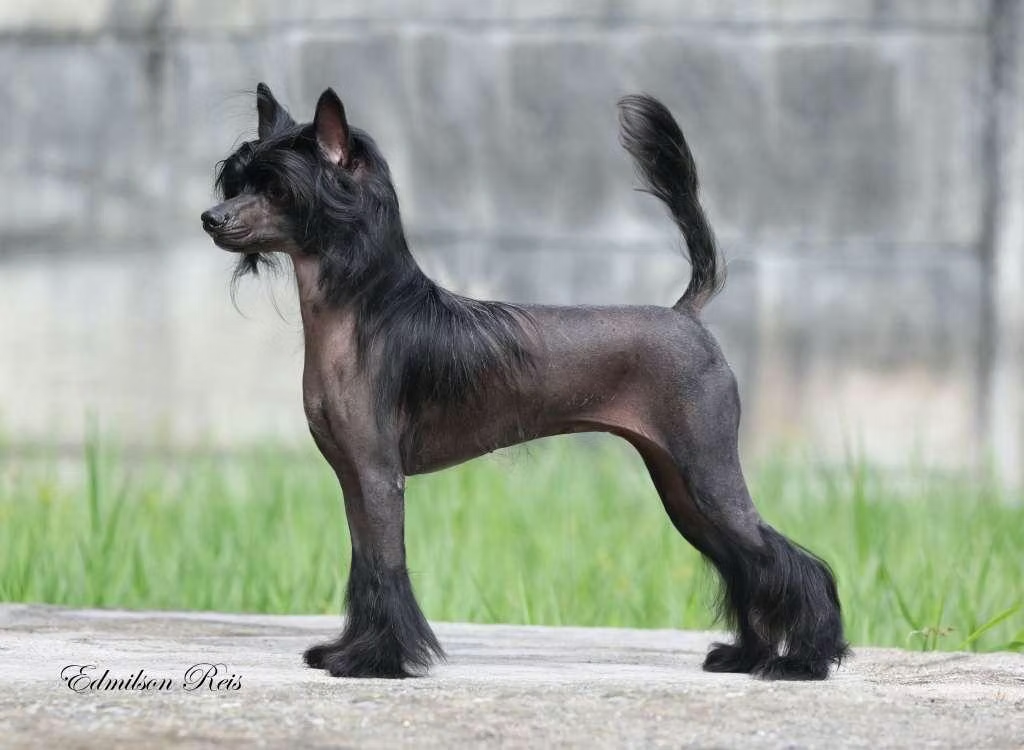
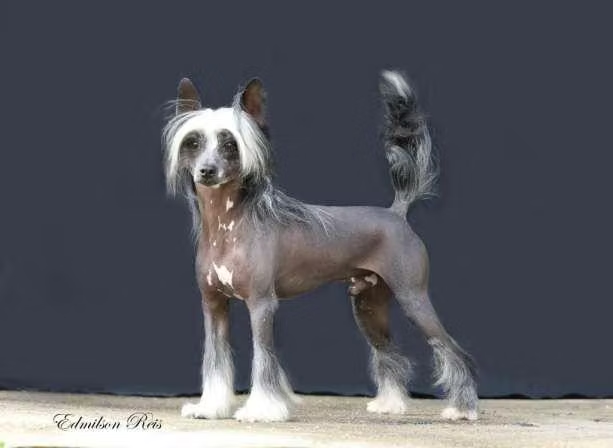
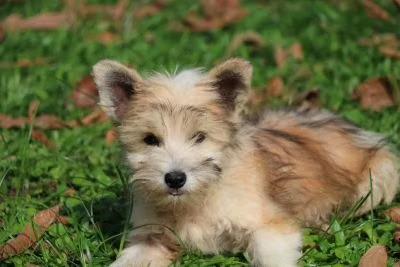
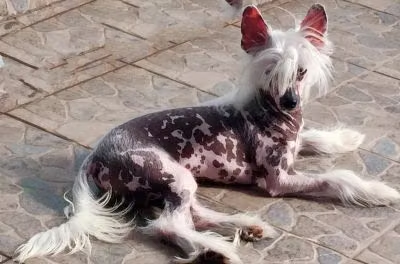

About the Chinese Crested
The Chinese Crested is an affectionate toy dog from China, kept as a companion and known for its devotion and the two coat varieties of the same breed: Hairless and Powderpuff.
The Chinese Crested is a small companion dog in the toy group. It weighs roughly 8 to 12 pounds and stands about 11 to 13 inches at the shoulder. The breed comes in two coat types that appear within the same litters. The Hairless has smooth skin over most of the body with hair on the head (the crest), the feet (socks), and the tail (plume). The Powderpuff has a full double coat of soft hair over the whole body.
Despite the name, the breed's documented development is tied to Chinese trading ports rather than to a single region of origin, and small hairless dogs were carried on ships across long distances. The Chinese Crested today is bred almost entirely as a house companion.
The breed is affectionate, playful, and closely bonded to the people it lives with. It tends to attach strongly to one household and can be reserved with strangers. It is alert and will announce visitors, but it is not built for guarding or hard physical work.
| Attribute | Detail |
|---|---|
| Origin | China |
| Size | Toy (about 8 to 12 lb) |
| Lifespan | 13 to 18 years |
| Group/role | Toy group, companion dog |
| Good with | Families, older children, other pets when socialized |
Who it suits
The Chinese Crested fits a home where someone is present for much of the day, since the breed wants close contact and can struggle with long stretches alone. It adapts well to apartments and small homes because its exercise needs are modest. The Hairless variety needs skin care and protection from sun and cold, so it suits owners willing to manage bathing, sunscreen, and clothing in some climates. Households with very young, rough children are a poorer match, as the breed is light boned and sensitive to handling.
History and origin
Hairless dogs reached China through maritime trade and were associated with Chinese ships and ports by the 1800s, with the modern Chinese Crested shaped by Western breeders in the twentieth century.
Hairlessness in dogs is an old natural trait that appears in several populations around the world. The exact path that produced the Chinese Crested is not fully documented, but small hairless dogs became linked with Chinese trading ships and were recorded in port cities during the nineteenth century. Sailors kept the dogs aboard, which helped spread them along trade routes.
By the late 1800s, hairless dogs were shown at exhibitions in Europe and North America, often under various names that grouped together hairless types from different regions. Records and illustrations of hairless dogs labeled as Chinese appear in this period, though early naming was inconsistent.
Much of the breed's modern form was set in the twentieth century by enthusiasts in the United States and the United Kingdom who standardized the two coat varieties and the breed's proportions. Breeders in this period worked to fix type and to manage the genetics behind the Hairless and Powderpuff coats.
The breed gained formal recognition through national kennel clubs over the second half of the twentieth century. It is now registered widely and kept as a companion rather than for any working purpose.
Appearance and breed standard
The Chinese Crested is a fine-boned toy dog standing about 11 to 13 inches, found in a Hairless variety with crest, socks, and plume, and a fully coated Powderpuff variety.
The Chinese Crested is small, fine boned, and graceful, with a slightly longer than tall outline. The head is wedge shaped, the eyes are dark to medium in tone, and the ears are large and erect in the Hairless variety. The tail is long and carried up or out when the dog moves. Movement is light and free.
The defining feature is the coat. Both varieties occur, and a single litter can contain both. The two types share the same body structure and standard apart from coat.
| Trait | Detail |
|---|---|
| Height | About 11 to 13 inches at the shoulder |
| Weight | About 8 to 12 lb |
| Coat | Hairless (crest, socks, plume) or Powderpuff (full soft double coat) |
| Colors | Any color or combination, including dark, slate, and pink-toned skin in Hairless |
| Eyes | Dark to medium, set wide, almond shaped |
Coat and colors
In the Hairless variety, most of the body is smooth, exposed skin, with soft hair on the head, lower legs, and tail. The skin can be any color and is often spotted or mottled. The Powderpuff has a long, soft double coat that covers the whole body and needs regular brushing. Both varieties come in a wide range of colors and patterns, and no single color is preferred over another in the standard. Hairless dogs may have varying amounts of body hair, which breeders manage as part of grooming.
Temperament and personality
The Chinese Crested is affectionate, playful, and devoted, bonding closely with its household, reserved with strangers, and generally good with other pets when socialized.
The Chinese Crested is a companion at heart. It seeks close contact and often wants to sit on or beside its people. The breed is playful and lively indoors and enjoys gentle games. It forms a strong attachment to its household and can be sensitive to changes in routine or mood.
With family, the breed is warm and demonstrative. With strangers it is usually reserved and may take time to warm up, though it is not aggressive. Early, calm socialization helps prevent excess shyness. It is alert and will bark to announce visitors or unusual sounds, but vocalness varies by individual.
With other pets the breed tends to get along, especially with dogs of similar size and with cats it is raised alongside. Because it is small and light boned, supervision is wise around larger, boisterous dogs. The breed is sensitive to harsh handling and responds poorly to rough correction, so a gentle home environment suits it best.
| Trait | Rating |
|---|---|
| Affection | 5 |
| Energy | 3 |
| Trainability | 3 |
| Vocalness | 3 |
| Shedding | 1 |
Care and grooming
Care centers on skin and coat upkeep, modest daily exercise, and an indoor home; the Hairless variety needs sun protection and warmth, while the Powderpuff needs regular brushing.
Grooming needs differ sharply between the two coat varieties, but both require routine attention. The Hairless variety needs skin care; the Powderpuff needs coat care.
Grooming
- Hairless: bathe regularly and moisturize the skin to prevent dryness; watch for blackheads and minor breakouts and clean the skin gently
- Hairless: apply pet-safe sunscreen before time outdoors and use clothing in cold weather
- Powderpuff: brush several times a week to prevent mats in the soft double coat
- Both: trim nails every few weeks and check the crest, socks, and plume hair
- Both: brush teeth often, as the breed is prone to dental problems
Exercise
- One or two short daily walks of about 15 to 30 minutes total
- Indoor play sessions to use energy and provide mental stimulation
- Avoid overexertion in heat or cold, especially for the Hairless variety
Environment
The Chinese Crested is an indoor dog and is well suited to apartments and small homes. It is sensitive to temperature: the Hairless variety chills easily and sunburns readily, so it needs a warm, draft-free space and protection outdoors. The breed wants company and does best where it is not left alone for long periods.
Nutrition and feeding
The Chinese Crested needs a complete diet for small or toy breeds in measured portions across two or three meals a day, with portions adjusted to age, weight, and activity.
Feed a complete and balanced diet formulated for small or toy breeds. Because the dog is small, portions are modest and small errors in measuring can lead to weight gain. Split the daily amount into two or three meals to keep energy steady, since very small dogs can be prone to low blood sugar if meals are too far apart, especially as puppies.
| Life stage | Amount per day | Meals |
|---|---|---|
| Puppy (2 to 6 months) | About 1/4 to 1/2 cup, by product and weight | 3 to 4 |
| Adult (1 year and up) | About 1/4 to 3/4 cup | 2 |
| Senior / less active | Adjusted down to maintain healthy weight | 2 |
Treats and supplements
Keep treats to a small share of daily calories so the dog stays lean. A diet labeled complete and balanced usually supplies all needed nutrients, so routine supplements are not required for a healthy dog. Provide fresh water at all times. Discuss any supplement, such as a joint or skin product, with a veterinarian before adding it, particularly for the Hairless variety with its specific skin needs.
Health and common conditions
The Chinese Crested is generally healthy with a lifespan of 13 to 18 years, but it is prone to dental disease, eye conditions, patellar luxation, and skin issues in the Hairless variety.
The Chinese Crested is a long-lived toy breed, with a typical lifespan of 13 to 18 years. Most live full lives with routine veterinary care, good dental hygiene, and weight control. A few conditions appear more often in the breed and are worth monitoring.
| Condition | Signs | Note |
|---|---|---|
| Dental disease | Tartar, bad breath, loose or missing teeth | Common in toy breeds; the Hairless often has incomplete dentition |
| Patellar luxation | Skipping or limping on a hind leg | Kneecap slips out of place; ranges from mild to needing surgery |
| Progressive retinal atrophy | Night blindness, declining vision | Inherited; testing of breeding stock helps reduce it |
| Skin problems (Hairless) | Dryness, acne, sunburn, irritation | Managed with bathing, moisturizing, and sun protection |
Preventive care
- Annual veterinary exams, with more frequent visits for seniors
- Daily or near-daily tooth brushing plus professional cleanings as advised
- Keep the dog at a lean weight to protect joints and the heart
- Buy from breeders who test for eye and knee conditions
- For the Hairless variety, a consistent skin and sun-care routine
Training
The Chinese Crested is intelligent and willing but sensitive, so it learns best with short, gentle, reward-based sessions and early socialization.
The Chinese Crested is bright and eager to please its people, which makes it trainable, but it is also sensitive and can shut down under harsh handling. Keep sessions short, calm, and positive. The breed responds well to food rewards, praise, and play. House-training can take patience, as is common with small breeds, so consistency and a steady routine matter. Early socialization with people, places, and other animals helps reduce the natural reserve toward strangers.
Basics
- Start with the dog's name and simple attention cues in a quiet room
- Teach sit, down, and come using small treats and short repetitions
- Build house-training around a fixed schedule and frequent breaks
- Introduce calm handling for grooming, including skin and tooth care
- Add gradual exposure to new people and settings to build confidence
- Keep each session a few minutes long and end on a success
Breeding
The Chinese Crested reaches maturity by one to two years and produces small litters; the Hairless coat gene means careful pairing, since two coat types appear within litters.
Breeding the Chinese Crested is usually left to experienced, responsible breeders because of the breed's small size and the genetics behind the coat. Dogs generally reach physical and behavioral maturity between one and two years of age, and responsible programs wait until a dog is mature and health-tested before breeding. Pre-breeding screening commonly covers eyes and knees.
Gestation in dogs runs about 63 days. Litters are small, often two to four puppies, in keeping with the breed's toy size. Because the Hairless trait is carried as a single dominant gene with effects on the embryo, planned pairings often include Powderpuff dogs, and both coat types appear in the same litter. Newborn puppies are tiny and need a warm, clean whelping area and close monitoring during the first weeks. Hairless puppies need extra attention to skin and warmth as they grow.
| Metric | Value |
|---|---|
| Sexual maturity | About 6 to 12 months (breeding deferred until mature) |
| Full maturity | 1 to 2 years |
| Gestation | About 63 days |
| Litter size | Typically 2 to 4 puppies |
| Weaning | About 6 to 8 weeks |
Registering your Chinese Crested and its microchip
Register your Chinese Crested free for life with United Pet Club, and put its microchip number on a record American shelters can actually find.
How to register a Chinese Crested in the United States
Start with the profile. Add your Chinese Crested's name, birth date, and a clear photo, attach your phone number and email, and save. That is the whole job, and it costs nothing for life. Dog registration works with or without a microchip, so there is no reason to wait for a vet visit.
The microchip needs its own registration. A vet implants the chip, but the number stays anonymous until you file it, and an anonymous chip cannot point anyone at you. Register the microchip with United Pet Club on the free lifetime plan: every brand a US vet implants qualifies, updates cost nothing after a move, and the record shows up in the AAHA universal lookup American shelters check first. Create your free account and finish both steps in one sitting.
How do I register my Chinese Crested in the United States?
Open a free United Pet Club account, enter your Chinese Crested's name, birth date, and a photo, and save. The profile is free for life, works with or without a microchip, and you can attach a chip number later.
How do I register my Chinese Crested's microchip?
Type the 15-digit chip number into your free United Pet Club account together with your current phone number and address. The lifetime plan is free, covers every future update, and accepts any chip brand a US vet implants.
Does my Chinese Crested have to be microchipped in the United States?
No federal law says a Chinese Crested must carry a chip, but plenty of city and county licensing rules do, and shelters routinely chip before adoption. What the law never does is register the chip for you; that part is yours.
How much does it cost to register a Chinese Crested?
Nothing. United Pet Club's lifetime plan covers the dog's profile, the microchip registration, and every update at no charge, with no renewal fees.
Frequently asked questions
Common questions about the Chinese Crested cover its size, temperament, care difficulty, lifespan, suitability, and availability.
How big does a Chinese Crested get?
It is a toy breed, standing about 11 to 13 inches at the shoulder and weighing roughly 8 to 12 pounds.
What is the Chinese Crested's temperament like?
It is affectionate, playful, and devoted to its household. It bonds closely with its people, is reserved with strangers, and is alert without being a guard dog.
Is the Chinese Crested hard to care for?
Care is moderate. The Hairless variety needs regular skin care plus sun and cold protection, and the Powderpuff needs frequent brushing. Both need dental care and modest daily exercise.
How long does a Chinese Crested live?
Typically 13 to 18 years with good care, which is long even for a small dog.
Is the Chinese Crested good for families and apartments?
Yes. It suits apartments and homes where someone is around often. It does well with older, gentle children and with other pets when socialized, but it is light boned and not suited to rough handling.
Does the Chinese Crested shed much?
Shedding is low. The Hairless variety has little hair to shed, and the Powderpuff sheds modestly but needs regular brushing to prevent mats.
Are Chinese Cresteds easy to find?
They are an established, registered breed available through dedicated breeders and breed-specific rescues, though they are less common than mainstream breeds, so finding a puppy may take time.
From the community
Ask about the Chinese CrestedNo questions about the Chinese Crested yet. Be the first to ask.
Browse Dog breeds