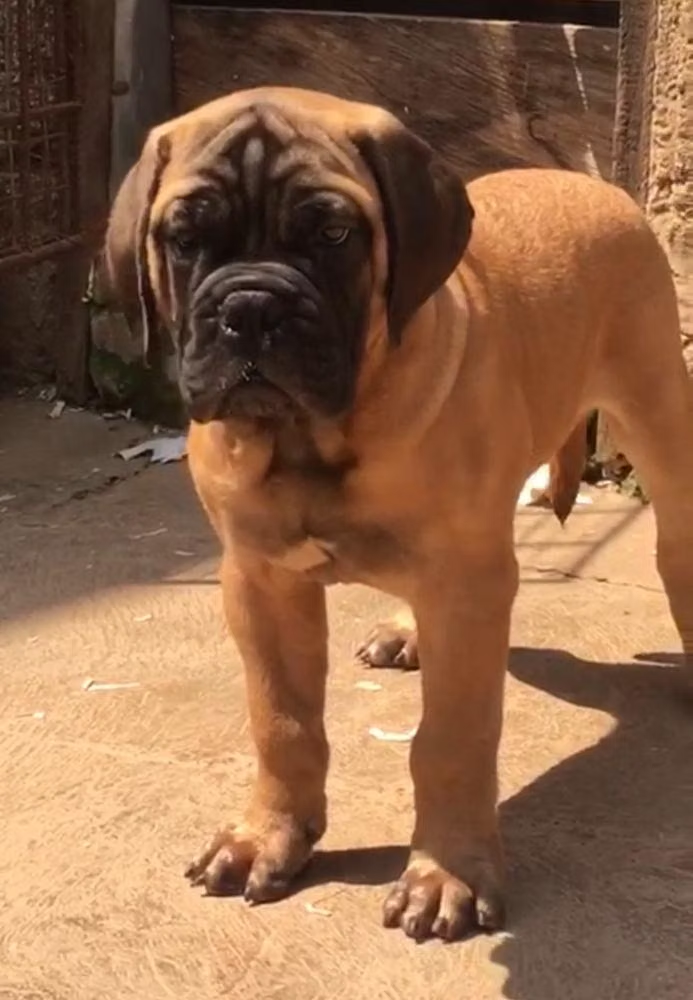
The Bullmastiff is a loyal, calm guardian bred to be a fearless yet gentle protector of home and family.
How the Bullmastiff coat is built, and what that means when you groom it.
A few of the Bullmastiff profiles members have added to United Pet Club.
The Bullmastiff is a large guardian dog from England, calm and devoted at home but a confident, fearless protector when needed.
The Bullmastiff is a large working dog developed in England to guard estates and game preserves. Adults typically stand 24 to 27 inches at the shoulder and weigh between 100 and 130 pounds, with a broad head, a short muzzle, and a heavy, muscular frame. The breed combines size and strength with a steady, even temperament.
Despite its imposing build, the Bullmastiff is known for being calm indoors and affectionate with its own people. It was bred to confront and hold an intruder rather than to bite, which produced a dog that is protective and confident without being needlessly aggressive. Strangers are usually met with reserve rather than open hostility.
This is a dog that bonds closely with its household. It tends to stay near its family, tolerates children well when raised with them, and is generally quiet. The short coat and moderate exercise needs make daily care straightforward, though the breed's size means training and socialization from puppyhood are important.
| Attribute | Detail |
|---|---|
| Origin | England |
| Size | Large (100 to 130 lb) |
| Lifespan | 7 to 9 years |
| Group/role | Working group, guardian |
| Good with | Family and children when socialized; reserved with strangers |
The Bullmastiff fits an owner who wants a devoted family guardian and can provide firm, consistent leadership. It does best in a home with enough space for a large dog and an owner committed to early training and socialization. It is less suited to first-time owners who are unprepared for a powerful, strong-willed breed, or to households that are away for long stretches, since the dog prefers close contact with its people.
The Bullmastiff was developed in 19th-century England by crossing the Mastiff and the Bulldog to create a fast, powerful gamekeeper's guard dog.
The Bullmastiff was created in England during the 1800s. Gamekeepers on large estates needed a dog that could track, confront, and pin poachers without mauling them. Existing breeds fell short: the Mastiff was large but slow, and the Bulldog of the period was fast and tenacious but smaller and more aggressive than the job required.
Keepers crossed the two breeds to combine the Mastiff's size and reach with the Bulldog's speed and grip. The aim was a dog that could move quietly at night, overtake an intruder, and hold the person down until the keeper arrived. The resulting type became known as the gamekeeper's night dog. A working blend of roughly 60 percent Mastiff and 40 percent Bulldog was often cited as the preferred mix.
By the late 19th and early 20th centuries the type had become consistent enough to be regarded as a distinct breed rather than a working cross. The Kennel Club in England recognized the Bullmastiff in 1924, and the American Kennel Club followed in 1933.
As estate poaching declined, the Bullmastiff shifted into roles as a property guardian and family companion. Its reputation for guarding without unnecessary aggression carried over from its original work, and that balance of protectiveness and restraint remains a defining feature of the breed today.
The Bullmastiff is a large, powerfully built dog with a broad head, short muzzle, and a short coat in fawn, red, or brindle.
The Bullmastiff is a symmetrical, heavily muscled dog that conveys power and strength without appearing clumsy. The head is large and square, broad across the skull, with a short, dark muzzle and a black mask. The body is compact and deep through the chest, set on strong, straight legs. Males are noticeably larger and heavier than females.
| Trait | Standard |
|---|---|
| Height | Males 25 to 27 in; females 24 to 26 in at the shoulder |
| Weight | Males 110 to 130 lb; females 100 to 120 lb |
| Coat | Short, dense, and slightly rough |
| Colors | Fawn, red, or brindle, with a black mask |
| Eyes | Dark, medium size, set well apart |
The coat is short and lies close to the body, which makes it easy to maintain and gives the breed good tolerance for warmer conditions than longer-coated dogs. Accepted colors are fawn, red, and brindle. Fawn ranges from light tan to a deeper sandy shade, red runs from light to a darker mahogany, and brindle shows dark striping over a fawn or red base. A black mask on the muzzle is a standard feature across all colors. A small white marking on the chest is permitted, but white elsewhere is considered a fault under most standards.
Bullmastiffs are calm, devoted, and protective: gentle with their family, reserved with strangers, and confident without being needlessly aggressive.
The Bullmastiff is a calm and steady dog that is deeply attached to its family. At home it is affectionate and often quiet, content to stay close to its people. The breed is generally good with children it has grown up with, though its size means interactions with small children should be supervised, since an accidental bump can knock a child over.
With strangers the Bullmastiff is naturally reserved and watchful. It was bred to assess and confront threats, so it tends to be alert to anything out of place without barking constantly. A well-socialized Bullmastiff is discerning rather than indiscriminately aggressive, and it usually warms to guests once it sees that its owner accepts them.
With other animals the breed can be selective. Some Bullmastiffs, particularly intact males, may show dominance toward other dogs of the same sex. Early and ongoing socialization, along with careful introductions, helps the dog live peaceably with other pets. The breed is intelligent but independent and can be stubborn, so it needs an owner who is consistent and firm.
| Trait | Rating |
|---|---|
| Affection | 5 |
| Energy | 2 |
| Trainability | 3 |
| Vocalness | 2 |
| Shedding | 3 |
The Bullmastiff has low grooming needs and moderate exercise requirements, but its size and heat sensitivity call for careful daily management.
The short coat keeps grooming simple, but routine care still matters for a large dog.
The Bullmastiff has moderate energy and does not need intense activity, but regular movement keeps it fit and prevents weight gain.
The Bullmastiff adapts to many living situations, including suburban homes and, with enough walks, larger apartments. It prefers to be indoors with its family rather than left alone outside. The short coat offers little protection against cold, and the short muzzle makes the breed sensitive to heat, so it should be kept in a temperature-controlled space and never left in a hot vehicle or yard.
Bullmastiffs need a balanced large-breed diet fed in measured meals, with careful portion control to avoid the joint strain and bloat risk that come with their size.
The Bullmastiff does well on a complete, balanced diet formulated for large breeds. Because the breed is prone to weight gain and carries a heavy frame, portion control is important to protect the joints and reduce strain on the heart. Puppies should be fed a large-breed puppy food that supports steady, controlled growth rather than rapid weight gain, which can stress developing bones and joints. Feeding amounts depend on age, weight, and activity, so the figures below are general starting points to adjust with your veterinarian.
| Life stage | Amount per day | Meals |
|---|---|---|
| Puppy (2 to 6 months) | 3 to 5 cups | 3 to 4 |
| Puppy (6 to 12 months) | 4 to 6 cups | 2 to 3 |
| Adult | 3 to 5 cups | 2 |
| Senior | 3 to 4 cups | 2 |
Keep treats to no more than about 10 percent of daily calories to prevent weight gain. Many owners and veterinarians use joint supplements such as glucosamine and chondroitin to support the joints of a large, heavy breed, and omega-3 fatty acids may help the coat and skin. Introduce any supplement only after discussing it with your veterinarian. To lower the risk of bloat, feed measured meals rather than one large meal and avoid heavy exercise immediately before and after eating.
The Bullmastiff lives about 7 to 9 years and is prone to hip and elbow problems, bloat, and certain cancers, so preventive veterinary care is important.
The Bullmastiff has an average lifespan of 7 to 9 years, which is typical for a giant guardian breed. It is generally robust, but its size and structure make it prone to several conditions. Buying from a breeder who screens breeding stock for joint and heart problems, along with routine veterinary care and weight management, gives the dog the best chance of a healthy life.
| Condition | Signs | Note |
|---|---|---|
| Hip and elbow dysplasia | Stiffness, limping, trouble rising | Screen breeding stock; manage weight |
| Bloat (gastric torsion) | Swollen belly, retching, restlessness | Life-threatening emergency; act immediately |
| Cancer (including lymphoma) | Lumps, weight loss, lethargy | Breed has elevated cancer rates |
| Heart disease | Coughing, fatigue, fainting | Detected through veterinary screening |
| Hypothyroidism | Weight gain, coat changes, low energy | Managed with daily medication |
The Bullmastiff is intelligent but independent, so it responds best to early, consistent, reward-based training from a confident owner.
The Bullmastiff is intelligent and capable of learning quickly, but it has an independent, sometimes stubborn streak inherited from its guarding background. It learns best when training starts in puppyhood and stays consistent. Harsh methods tend to make the breed resistant, while patient, reward-based work earns its cooperation. Early socialization with people, places, and other animals is essential for a dog of this size and protective instinct, and a Bullmastiff that is well handled becomes a steady, reliable companion. Because the adult dog is so powerful, leash manners and reliable recall should be priorities from the start.
Bullmastiffs reach breeding maturity around two years, carry a gestation of about 63 days, and produce litters that average five to eight puppies.
Bullmastiffs reach physical maturity slowly, and responsible breeders generally wait until a dog is about two years old before breeding, by which point joint and health screening can be completed. Females come into heat roughly twice a year. After a successful mating, gestation lasts about 63 days. Litters average five to eight puppies, though larger litters occur. Because of the breed's large head and heavy build, whelping can be difficult, and some litters require veterinary assistance or a cesarean section, so birth should be planned with a veterinarian.
Newborn puppies depend entirely on the dam for warmth and nutrition in the first weeks. Breeders monitor weight gain closely, since the puppies grow rapidly. Weaning typically begins around three to four weeks, and socialization with people and gentle handling should start early. Puppies are usually ready to go to new homes at eight to ten weeks of age, after a veterinary check and initial vaccinations.
| Metric | Value |
|---|---|
| Breeding maturity | About 2 years |
| Heat cycle | About twice per year |
| Gestation | About 63 days |
| Average litter size | 5 to 8 puppies |
| Weaning age | 3 to 4 weeks |
| Ready for new home | 8 to 10 weeks |
Register your Bullmastiff free for life with United Pet Club, and put its microchip number on a record American shelters can actually find.
Shelters across the US scan every dog that comes through the door, and what happens next depends on paperwork. A scan that ends at a current record gets your Bullmastiff home; a scan that ends nowhere starts a holding period. Register your dog with United Pet Club and that record exists, free, for the rest of your dog's life.
Chipped already? The implant is half the job. Until the 15-digit number sits in a registry with your name beside it, a scanner reads digits that lead nowhere. Microchip registration is free for life at United Pet Club, takes any manufacturer's chip, and keeps the record searchable through the AAHA lookup shelters rely on. Sign up free, and both records are done tonight.
Open a free United Pet Club account, enter your Bullmastiff's name, birth date, and a photo, and save. The profile is free for life, works with or without a microchip, and you can attach a chip number later.
Type the 15-digit chip number into your free United Pet Club account together with your current phone number and address. The lifetime plan is free, covers every future update, and accepts any chip brand a US vet implants.
No federal law says a Bullmastiff must carry a chip, but plenty of city and county licensing rules do, and shelters routinely chip before adoption. What the law never does is register the chip for you; that part is yours.
Nothing. United Pet Club's lifetime plan covers the dog's profile, the microchip registration, and every update at no charge, with no renewal fees.
Common questions about the Bullmastiff's size, temperament, care needs, lifespan, and suitability as a family dog.
Bullmastiffs are a large breed. Males stand about 25 to 27 inches at the shoulder and weigh 110 to 130 pounds, while females stand about 24 to 26 inches and weigh 100 to 120 pounds.
Yes. They are calm and devoted at home and are generally good with children they have grown up with. Their size means interactions with small children should be supervised, and early socialization is important.
They are protective and reserved with strangers but were bred to confront and hold an intruder rather than attack. A well-socialized Bullmastiff is watchful and confident rather than needlessly aggressive.
Grooming is easy thanks to the short coat, and exercise needs are moderate. The main challenges are managing the dog's large size, controlling weight, watching for heat sensitivity, and committing to early training.
The average lifespan is 7 to 9 years, which is typical for a giant guardian breed. Weight management and regular veterinary care support a healthy life.
No. They have moderate energy and are content with two daily walks plus some free play. Avoid hard exercise during growth and in hot weather.
They can be, but the breed's size, strength, and independent streak make them better suited to owners who can provide firm, consistent leadership and early socialization.