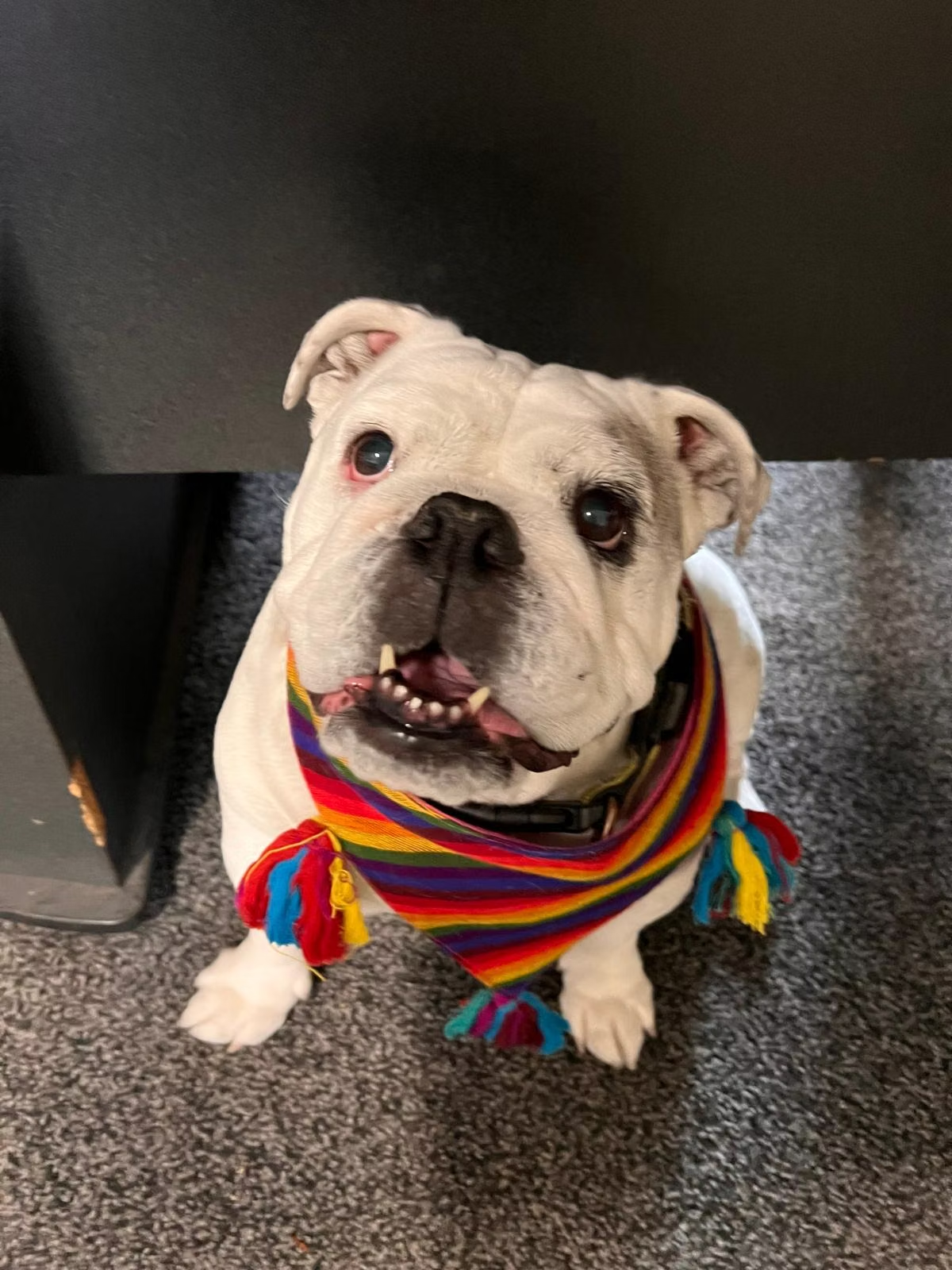
The Bulldog is a calm, courageous English breed with a wrinkled face and gentle, devoted temperament that makes it a steadfast family friend.
How the Bulldog coat is built, and what that means when you groom it.
A few of the Bulldog profiles members have added to United Pet Club.
The Bulldog is a medium-sized English breed known for its wrinkled face, low-slung body, and calm, devoted temperament that suits it to family life.
The Bulldog is a medium-sized companion dog that comes from England. It has a broad head, a short muzzle, loose facial skin that folds into wrinkles, and a wide, muscular body set low to the ground. Its rolling, deliberate gait and undershot jaw are part of the recognized breed type. Adults usually weigh between 18 and 23 kg and stand about 31 to 40 cm at the shoulder.
Despite a stern expression, the Bulldog has a friendly, good-natured personality. It tends to be calm indoors, attaches closely to its household, and is patient with children. The breed is courageous without being aggressive in normal home settings, and most individuals are content with short walks and long rests.
Prospective owners should plan for moderate exercise, routine cleaning of the facial folds, and attention to the breathing and joint issues common in the breed. A Bulldog does best in a temperate, climate-controlled home where it can avoid heat and heavy exertion.
| Attribute | Detail |
|---|---|
| Origin | England |
| Size | Medium (18 to 23 kg) |
| Lifespan | 8 to 10 years |
| Group/role | Companion dog |
| Good with | Children, families, and other household pets |
The Bulldog fits owners who want a low-energy, affectionate companion and can commit to its grooming and health needs. It adapts well to apartments and houses alike, since it needs little space and modest exercise. It is less suited to people seeking a jogging or hiking partner, or to homes in hot climates without reliable cooling.
The Bulldog developed in England, where it was originally bred for bull-baiting before being reshaped into the gentle companion recognized today.
The Bulldog takes its name from its historical use in bull-baiting, a blood sport practiced in England from the medieval period into the early nineteenth century. Dogs were bred for a low center of gravity, a wide jaw, and the tenacity to grip a tethered bull. The short muzzle and pushed-back nose allowed a dog to breathe while keeping hold.
Bull-baiting and similar animal sports were outlawed in England by the Cruelty to Animals Act of 1835. With the sport banned, the working role of the Bulldog disappeared, and the breed declined for a time.
Through the middle and later nineteenth century, breeders in England worked to preserve the dog and redirect its character toward companionship. They selected away from aggression and toward the calm, affectionate temperament associated with the breed today, while keeping the distinctive head and body shape. The first formal breed standard for the Bulldog was drawn up in England in 1865.
The modern Bulldog became a popular family and show dog through the twentieth century and remains a widely kept companion breed. It is also used as a mascot for sports teams, schools, and military units, where its sturdy build and resolute look carry symbolic weight.
The Bulldog has a wide, low body, a large wrinkled head with a short muzzle, and a smooth short coat in a range of solid and patterned colors.
The Bulldog is a thickset, low-slung dog built wider than it is tall. The head is large in proportion to the body, with heavy cheeks, pronounced facial folds, and a short, broad muzzle. The lower jaw projects beyond the upper jaw, giving the undershot bite that defines the breed. The shoulders are broad and the chest is deep, while the hindquarters are lighter, producing the characteristic rolling walk.
The ears are small and set high, usually carried in a folded rose shape. The tail is short, set low, and may be straight or screwed.
| Feature | Standard |
|---|---|
| Height | 31 to 40 cm at the shoulder |
| Weight | 18 to 23 kg |
| Coat | Short, smooth, and close-lying |
| Colors | Brindle, white, red, fawn, fallow, and piebald combinations |
| Eyes | Round, dark, and set wide and low on the skull |
The coat is short, fine, and smooth, lying flat against the skin and needing little trimming. Accepted colors include brindle, solid white, red, fawn, and fallow, along with piebald patterns that combine white with another color. The skin is loose across the head, neck, and shoulders, forming the folds that require regular cleaning to stay healthy.
The Bulldog is calm, friendly, and devoted, generally gentle with children and tolerant of other pets while keeping a steady, courageous nature.
The Bulldog has a calm and good-natured temperament. It bonds closely with its family and often follows household members from room to room while staying relaxed rather than demanding. With children it is usually patient and gentle, which is one reason it is kept as a family dog, though young children should always be supervised around any dog.
Toward strangers the Bulldog is typically friendly or mildly reserved rather than wary. It is not a strong watchdog by temperament, since it tends to greet visitors calmly, but its size and expression can still deter unwanted attention. With other pets it generally coexists well when socialized early, including cats and other dogs in the home.
The breed is courageous and stubborn. A Bulldog will hold its ground and can be slow to change its mind, so consistent handling matters. Most individuals are quiet, with low to moderate barking, and prefer rest over constant activity.
| Trait | Rating |
|---|---|
| Affection | 5 |
| Energy | 2 |
| Trainability | 2 |
| Vocalness | 2 |
| Shedding | 3 |
Bulldog care centers on routine fold cleaning, light exercise, and a cool indoor environment that protects the breed from heat and overexertion.
The Bulldog needs steady, moderate care rather than intensive grooming or training. The most breed-specific task is keeping the facial wrinkles and tail pocket clean and dry to prevent skin infection.
The Bulldog is an indoor dog suited to apartments and houses. Because of its short muzzle, it overheats easily and should stay in air conditioning or shade during hot weather. It is a poor swimmer due to its heavy front and should be kept away from unsupervised water.
A Bulldog needs a measured, balanced diet matched to its life stage, since the breed gains weight easily and excess weight worsens its joint and breathing problems.
The Bulldog does well on a complete, balanced dog food appropriate to its age and activity level. The breed is prone to weight gain, and extra weight adds strain to the joints and the airway, so portions should be measured rather than fed free-choice. Split the daily amount into two meals to support digestion and reduce the risk of bloating.
| Life stage | Amount per day | Meals |
|---|---|---|
| Puppy (2 to 6 months) | Per product label for growth | 3 to 4 |
| Puppy (6 to 12 months) | Per product label for growth | 2 to 3 |
| Adult | About 250 to 400 g of dry food, adjusted to weight | 2 |
| Senior | Reduced calories, vet-guided | 2 |
Keep treats to a small share of daily calories to protect against weight gain. Joint supplements containing glucosamine and chondroitin are sometimes used to support the breed's joints, and omega-3 fatty acids may help skin and coat. Introduce any supplement only after discussing it with a veterinarian.
The Bulldog typically lives 8 to 10 years and is prone to breathing, joint, and skin conditions linked to its build, so preventive veterinary care is important.
The Bulldog has an average lifespan of 8 to 10 years. As a short-muzzled and heavily built breed, it carries a higher risk of several inherited and structural health problems. Many are manageable with attentive care, weight control, and regular veterinary checks, but owners should understand them before choosing the breed.
| Condition | Signs | Note |
|---|---|---|
| Brachycephalic airway syndrome | Noisy breathing, snoring, exercise and heat intolerance | Related to the short muzzle; severe cases may need surgery |
| Hip and elbow dysplasia | Stiffness, limping, reluctance to move | Joint malformation worsened by excess weight |
| Skin fold dermatitis | Redness, odor, irritation in the wrinkles | Prevented by routine fold cleaning and drying |
| Cherry eye | Visible red mass in the corner of the eye | Prolapse of the tear gland; usually corrected surgically |
The Bulldog is intelligent but stubborn, so it learns best with short, consistent, reward-based sessions started early in life.
The Bulldog is capable of learning but has an independent, stubborn streak that can make training slow. It responds poorly to harsh correction and far better to patient repetition and rewards. Keep sessions short, since the breed bores quickly and tires in heat. Early socialization with people, other animals, and everyday situations helps the adult dog stay calm and friendly.
Bulldog breeding often requires veterinary assistance, since the breed commonly needs help with mating and frequently delivers by cesarean section because of the puppies' large heads.
Breeding Bulldogs is demanding and should be undertaken only with veterinary support and careful health screening of the parents. Both sexes reach sexual maturity by around 12 to 18 months, though responsible breeders wait until the dog is fully mature and health-tested before breeding.
Natural mating is often difficult because of the breed's body shape, and many litters are produced with veterinary assistance. Gestation lasts roughly 63 days. Because Bulldog puppies have large heads relative to the mother's pelvis, natural birth is frequently unsafe, and planned cesarean section is common.
Litters are usually small, often around three to four puppies. Newborns are vulnerable and need a warm, clean environment and close monitoring, since the dam may struggle to manage a litter without help. Puppies are typically weaned and ready to leave for new homes at about eight weeks of age, after their first health checks.
| Metric | Value |
|---|---|
| Sexual maturity | About 12 to 18 months |
| Gestation | Around 63 days |
| Average litter size | 3 to 4 puppies |
| Delivery | Often by cesarean section |
| Weaning age | About 8 weeks |
Register your Bulldog free for life with United Pet Club, and put its microchip number on a record American shelters can actually find.
A Bulldog can hold a free lifetime profile in the United Pet Club registry whether or not it carries a chip. The profile pairs your contact details with your dog's photo, birth date, and markings, so whoever finds it knows exactly who to call. Registering your dog takes a few minutes, and nothing about it expires or renews.
Chipped already? The implant is half the job. Until the 15-digit number sits in a registry with your name beside it, a scanner reads digits that lead nowhere. Microchip registration is free for life at United Pet Club, takes any manufacturer's chip, and keeps the record searchable through the AAHA lookup shelters rely on. Sign up free, and both records are done tonight.
Open a free United Pet Club account, enter your Bulldog's name, birth date, and a photo, and save. The profile is free for life, works with or without a microchip, and you can attach a chip number later.
Type the 15-digit chip number into your free United Pet Club account together with your current phone number and address. The lifetime plan is free, covers every future update, and accepts any chip brand a US vet implants.
No federal law says a Bulldog must carry a chip, but plenty of city and county licensing rules do, and shelters routinely chip before adoption. What the law never does is register the chip for you; that part is yours.
Nothing. United Pet Club's lifetime plan covers the dog's profile, the microchip registration, and every update at no charge, with no renewal fees.
Common questions about the Bulldog's size, temperament, care needs, lifespan, suitability, and availability.
The Bulldog is a medium-sized breed. Adults usually weigh 18 to 23 kg and stand about 31 to 40 cm at the shoulder, with a wide, muscular, low-slung build.
Bulldogs are calm, friendly, and devoted. They bond closely with their families, are generally gentle with children, and tend to coexist well with other pets, though they can be stubborn.
They need moderate but specific care. The main tasks are cleaning the facial folds, controlling weight, limiting exercise in heat, and keeping up with veterinary checks for breathing and joint issues.
The average lifespan is 8 to 10 years. Healthy weight, fold hygiene, and protection from heat can support a comfortable life.
Yes. Their low energy and small space needs suit apartments, and their calm nature works for many first-time owners, provided the owner can manage the breed's grooming and health requirements.
No. Because of the short muzzle, Bulldogs overheat easily and should be kept in cool, well-ventilated spaces and exercised only during cooler parts of the day.