

Bichon Frise
Also known as Bichon
The Bichon Frise is a playful, affectionate breed with a fluffy white coat and a cheerful, sociable disposition that charms everyone it meets.
- Size
- Small
- Lifespan
- 14–15 years
- Origin
- France
- Temperament
- Playful
- Standard colors
- White, Buff, and Cream and 2 more
- Popularity
- No. 46 of 201
Characteristics
Coat and grooming
How the Bichon Frise coat is built, and what that means when you groom it.
- Coat layers
- Double coat
- Coat texture
- Curly
- Coat length
- Medium
- Shedding
- Low shedding
Grooming guidance
Caution: A Bichon Frise coat mats easily.
Fine or long hair tangles at the base of the coat, out of sight, where the mats tighten and pull on the skin. Brushing has to reach right down to the roots in sections, not just skim the surface.
Information: A Bichon Frise needs clipping every few weeks.
This coat keeps growing rather than shedding out, so it has to be trimmed every few weeks. Left to grow it mats down against the skin and traps moisture, dirt and heat.
Registry Recognition
Fédération Cynologique Internationale
- Companion and Toy Dogs
American Kennel Club
- Toy Group
Canadian Kennel Club
- Toy Group
United Pet Club
- Companion and Toy DogsPrimary
Bichon Frise colors and patterns
What each club's breed standard says about every Bichon Frise color and pattern. Point at a ruling to see the club's own wording.
Breed standards describe the Bichon Frise in White, Buff, Cream, Apricot, and Champagne. Standard patterns: Solid.
| Color or pattern | FCI | AKC | UKC | KC | KUSA |
|---|---|---|---|---|---|
| White | Standard (“Pure white”) | Standard (“White”) | Standard (“White is the acceptable color”) | Standard (“White”) | Standard (“White”) |
| Buff | Disqualifying | Standard (“White & Buff”) | Standard (“shadings of buff, cream or apricot around the ears or on the body”) | Not recognized | Not recognized |
| Cream | Disqualifying | Standard (“White & Cream”) | Standard (“shadings of buff, cream or apricot around the ears or on the body”) | Standard (“cream or apricot markings acceptable up to 18 months”) | Standard (“cream or apricot markings acceptable up to 18 months”) |
| Apricot | Disqualifying | Standard (“White & Apricot”) | Standard (“shadings of buff, cream or apricot around the ears or on the body”) | Standard (“cream or apricot markings acceptable up to 18 months”) | Standard (“cream or apricot markings acceptable up to 18 months”) |
| Champagne | Standard (“before 12 months of age ... slightly beige (champagne)”) | Fault | Fault | Not recognized | Not recognized |
| Albino | Disqualifying | Fault | Disqualifying (“Albinism”) | Not recognized | Not recognized |
| Patterns | |||||
| Solid | Standard (“Pure white”) | Standard (“Color is white”) | Standard (“White is the acceptable color”) | Standard (“White”) | Standard (“White”) |

| Color or pattern | FCI | AKC | UKC | KC | KUSA |
|---|---|---|---|---|---|
| Black | No ruling | Standard (“black or dark brown”) | Standard (“black or dark brown”) | No ruling | No ruling |
| Dark brown | Standard (“Very dark”) | Standard (“black or dark brown”) | Standard (“black or dark brown”) | Standard (“Dark”) | Standard (“Dark”) |
| Blue | Disqualifying (“wall eye”) | Fault | Fault | No ruling | No ruling |
| Light brown | Fault (“Eyes: Light-coloured”) | Fault | Fault | No ruling | No ruling |
| Color or pattern | FCI | AKC | UKC | KC | KUSA |
|---|---|---|---|---|---|
| Black | Standard (“black”) | Standard (“always black”) | Standard (“always black”) | Standard (“black”) | Standard (“black”) |
| Pink | Disqualifying (“Total depigmentation of the nose”) | No ruling | No ruling | No ruling | No ruling |
| Patterns | |||||
| Butterfly nose | Fault (“Nose: Loss of pigmentation”) | No ruling | No ruling | No ruling | No ruling |
%22%3E%3Cpath%20d%3D%22M28.4%2019.1C29.9%2017.7%2032.2%2016.4%2034%2016C35.8%2015.6%2037.4%2016%2039.2%2016.6C41.1%2017.2%2044.4%2018.5%2045.1%2019.5C45.8%2020.6%2044.3%2021.9%2043.3%2023.1C42.2%2024.3%2040.9%2025.9%2039%2026.6C37.1%2027.2%2034.3%2027.3%2032%2026.9C29.6%2026.4%2025.6%2025.3%2025%2024C24.4%2022.7%2026.9%2020.4%2028.4%2019.1Z%22%20fill%3D%22%23E8A0B4%22%2F%3E%3Cpath%20d%3D%22M23.8%2037.7C24.6%2037.5%2026.2%2037.9%2027.4%2038.1C28.5%2038.2%2030.2%2037.9%2030.8%2038.4C31.4%2039%2031.2%2040.7%2030.9%2041.5C30.7%2042.3%2029.9%2042.9%2029.1%2043.3C28.4%2043.8%2027.4%2044.6%2026.4%2044.4C25.4%2044.2%2023.8%2042.9%2023.1%2042.1C22.4%2041.3%2022.2%2040.2%2022.3%2039.5C22.4%2038.8%2022.9%2038%2023.8%2037.7Z%22%20fill%3D%22%23E8A0B4%22%2F%3E%3Cpath%20d%3D%22M10.5%2027.2C10.4%2026.7%2010.4%2025.4%2011%2025C11.5%2024.6%2013%2024.6%2013.9%2024.6C14.8%2024.6%2015.6%2024.5%2016.1%2024.9C16.6%2025.3%2017%2026.2%2017%2026.9C17.1%2027.7%2016.8%2028.8%2016.4%2029.4C15.9%2029.9%2014.9%2030.4%2014.2%2030.3C13.4%2030.1%2012.3%2028.8%2011.7%2028.3C11.1%2027.8%2010.6%2027.8%2010.5%2027.2Z%22%20fill%3D%22%23E8A0B4%22%2F%3E%3C%2Fg%3E%3Cuse%20href%3D%22%23s%22%20fill%3D%22none%22%20stroke%3D%22%233B2A20%22%20stroke-opacity%3D%220.6%22%20stroke-width%3D%221%22%20stroke-linejoin%3D%22round%22%2F%3E%3Cpath%20d%3D%22M12.5%2037Q13%2032%2018.5%2032Q23.5%2032.5%2023.5%2036.5Q20.5%2035.5%2018.8%2037Q17.4%2038.6%2018%2041.5Q13.6%2040.4%2012.5%2037Z%22%20fill%3D%22%231C1C1C%22%20fill-opacity%3D%220.8%22%20stroke%3D%22%23F5F5F0%22%20stroke-opacity%3D%220.4%22%20stroke-width%3D%220.9%22%2F%3E%3Cpath%20d%3D%22M51.5%2037Q51%2032%2045.5%2032Q40.5%2032.5%2040.5%2036.5Q43.5%2035.5%2045.2%2037Q46.6%2038.6%2046%2041.5Q50.4%2040.4%2051.5%2037Z%22%20fill%3D%22%231C1C1C%22%20fill-opacity%3D%220.8%22%20stroke%3D%22%23F5F5F0%22%20stroke-opacity%3D%220.4%22%20stroke-width%3D%220.9%22%2F%3E%3Cpath%20d%3D%22M32%2040V50%22%20fill%3D%22none%22%20stroke%3D%22%231C1C1C%22%20stroke-width%3D%221.3%22%20stroke-opacity%3D%220.5%22%20stroke-linecap%3D%22round%22%20stroke-linejoin%3D%22round%22%2F%3E%3Cellipse%20cx%3D%2232%22%20cy%3D%2221%22%20rx%3D%2212%22%20ry%3D%223.5%22%20fill%3D%22%23F5F5F0%22%20fill-opacity%3D%220.18%22%2F%3E%3C%2Fsvg%3E)
What the rulings mean
- Standard
- Described by the club's breed standard.
- Fault
- Named by the club's breed standard as a fault: the animal can be shown but is penalized.
- Disqualifying
- The club's breed standard disqualifies an animal of this color or pattern.
- Not recognized
- The club does not accept this color or pattern for the breed.
Color changes
How a Bichon Frise's colors can change over its life.
Whitechanges toRoan
Coat · With age · from 2 weeks
Bluechanges toDark brown
Eyes · With age · from 2 weeks
Bluechanges toBrown
Eyes · With age · from 2 weeks
Bluechanges toLight brown
Eyes · With age · from 2 weeks
Bluechanges toAmber
Eyes · With age · from 2 weeks
Bluechanges toHazel
Eyes · With age · from 2 weeks
Bluechanges toYellow
Eyes · With age · from 2 weeks
Blackchanges toSnow nose
Nose · With the season · can change back
Blackchanges toPink
Nose · With the season · can change back
%22%3E%3Cg%20fill%3D%22none%22%20stroke%3D%22%23F5F5F0%22%20stroke-width%3D%221.15%22%20stroke-linecap%3D%22round%22%20stroke-linejoin%3D%22round%22%3E%3Cpath%20d%3D%22M28.6%2025h.1M51.3%2028.8h.1M34.7%2024.3h.1M34.2%2041.6h.1M51%2044.2h.1M55.9%2024.7h.1M27.5%2026.3h.1M18.5%2028.6h.1M25.2%2028.9h.1M24.2%2019.3h.1M20.6%2017.6h.1M34.1%2030.6h.1M57.3%2023.3h.1M23.5%2030.7h.1M26.5%2023.1h.1M40%2031.5h.1M51.7%2038.6h.1M20.2%2022.1h.1M40.4%2037.8h.1M35%2043.1h.1M20.6%2031.7h.1M27.8%2031.9h.1M17.2%2021.1h.1M38.1%2037.7h.1M25.3%2040.5h.1M32%2029.3h.1M41.6%2039.5h.1M23.6%2024h.1M26.4%2018.6h.1M30.3%2031.9h.1M31.2%2035.2h.1M36.5%2043.7h.1M35.2%2026.3h.1M55.6%2019.1h.1M22.4%2036.8h.1M39.2%2020h.1M49.5%2039.1h.1M33.6%2033.5h.1M36.4%2032.4h.1M56.3%2042.4h.1M54.8%2031.2h.1M36.9%2023.2h.1M52.7%2019.1h.1M21.5%2033.8h.1M48.6%2028h.1M36.6%2017.5h.1M45.6%2031.3h.1M37.9%2030.5h.1M17%2031.8h.1M21.1%2043.1h.1M55.7%2021.1h.1M30.8%2041.9h.1M57.4%2038.4h.1M54.8%2026.9h.1M29.1%2017.5h.1M24.3%2037.7h.1M26%2032h.1M39.3%2022.8h.1M53.5%2029h.1M53.3%2023.3h.1M20%2038.4h.1M28.3%2044.7h.1M28.6%2039.8h.1M51.9%2041.1h.1M52.3%2033.7h.1M19.6%2042.2h.1M19%2033h.1M47.8%2021.7h.1M45.7%2024.8h.1M24.6%2035.5h.1M29.8%2036.8h.1M50.7%2032h.1M29.5%2043.5h.1M28.2%2041.5h.1M47.4%2034.8h.1M25.4%2033.7h.1M50.2%2041.2h.1M27.7%2029.5h.1M21.5%2024.8h.1M55.5%2017.5h.1M41.2%2044.3h.1M39.2%2018.4h.1M41.1%2042.5h.1M54.7%2035.3h.1M42.8%2034.5h.1M30.1%2023h.1M42.6%2025.1h.1M32.9%2024.4h.1M42.4%2032.4h.1M49.7%2022.2h.1M49.1%2043.1h.1M38%2035.2h.1M47.7%2043.8h.1M43.1%2022.4h.1M22.4%2040.4h.1M44.4%2019.8h.1M53.3%2040.1h.1M20.7%2029.3h.1M55.6%2043.9h.1M17.6%2039.2h.1M41.7%2028.9h.1M44.1%2036.3h.1M24.3%2043.6h.1M26.4%2038.1h.1M30.3%2029.2h.1M31.5%2030.8h.1M32.1%2023h.1M18.3%2040.9h.1M48%2033.4h.1M36.4%2038.7h.1M31.9%2020.8h.1M32.6%2026.2h.1M22%2031.2h.1M53.4%2021.7h.1M41.9%2017.7h.1M53.3%2037.3h.1M47.7%2040.3h.1M54.4%2033.7h.1M33.6%2037.5h.1M25.3%2017.2h.1M37.6%2019.7h.1M31.6%2019h.1M29.2%2019.6h.1M50.7%2027.3h.1M22%2022.1h.1M31%2037.8h.1M56.5%2026.6h.1M34.7%2039.5h.1M56.5%2040.8h.1M47.6%2038h.1M48.6%2026.1h.1M49.7%2034.2h.1M45.4%2027.4h.1M22.6%2038.9h.1M56.5%2035.3h.1M35.1%2021h.1M41.9%2020.1h.1M37.6%2040h.1M32.6%2044.4h.1M37.9%2025.2h.1M26.6%2043h.1M18.9%2036.7h.1M47.2%2028.9h.1M30.5%2026.2h.1M17.4%2027.3h.1M47.1%2017.2h.1M22.3%2044.3h.1M32.5%2042.4h.1M23.6%2025.7h.1M31.4%2024.9h.1%22%2F%3E%3Cpath%20d%3D%22M26%2020.9h.1M41.2%2023.8h.1M39.9%2026.4h.1M28.5%2033.4h.1M42.8%2043.8h.1M17.6%2034.3h.1M34%2017.1h.1M31.2%2017.2h.1M46.5%2036.1h.1M25.1%2022.1h.1M50.3%2023.7h.1M20.2%2026.6h.1M20.8%2020.4h.1M50.9%2017.3h.1M49.5%2020.2h.1M52.9%2044.1h.1M23.9%2017.8h.1M43.2%2028.1h.1M57.6%2030h.1M52%2025.6h.1M19.2%2019.1h.1M19.5%2024.4h.1M32.8%2040.1h.1M36.1%2027.7h.1M39.6%2029.5h.1M38.4%2041.5h.1M47.9%2019.4h.1M49.1%2031.7h.1M55.9%2036.9h.1M29.2%2027.2h.1M46%2043.5h.1M44.6%2028.8h.1M47.5%2031.5h.1M22.8%2020h.1M27.6%2017.1h.1M43.1%2018.6h.1M54.3%2020h.1M57.2%2033.8h.1M44.5%2043.8h.1M27.1%2035.5h.1M45.3%2041.8h.1M56.7%2028.8h.1M36.7%2021.4h.1M43.3%2042.3h.1M17.3%2022.9h.1M32.7%2035.5h.1M30.5%2039.8h.1M29.1%2021.2h.1M34.5%2018.8h.1M25.8%2027h.1%22%2F%3E%3C%2Fg%3E%3Cpath%20d%3D%22M56.3%2038.4l0%201.2M40%2027.2l-0.3%201.3M32.6%2043.6l-0.4%201.5M29%2023.3l0.8%201.5M55.1%2044l0.4%201.1M47.5%2022.5l-0.2%201.6M42.9%2038.6l0.7%201.2M35.2%2041.8l-0.5%201.7M26.9%2040l-0.1%201.2M41%2042.8l-0.1%201.6M18.4%2021.2l0.7%201.3M49.4%2019.3l-0.5%201.4M50.1%2041.7l0%201.8M28.2%2041.8l-0.6%201.2M55.5%2027.1l0.2%201.2M44.7%2019.3l0.5%201.7M48.6%2020.5l-0.8%201.4M43.7%2039.6l0.3%201.1M22.1%2033.8l-0.6%201.6M50.1%2038.1l-0.5%201.3M51.8%2044.1l-0.1%201.8M39%2017.5l0%201.4M30.2%2026.7l0.2%201.4M25.8%2031.2l0.2%201.6M29.6%2043.5l0.1%201M43.7%2018.3l0.1%201.5M29.6%2018.2l0.3%201.6M24.4%2017.6l0.3%201.1M22%2028.2l-0.6%201.6M25.9%2043.3l-0.3%201.4M22.2%2024.3l0.3%201.3M47.3%2029.2l-0.2%201.4M21.8%2033.2l0.5%200.9M32.9%2037l0.4%201M40%2029.9l0.8%201.4M17.4%2038.3l0.2%201.3M31%2039.2l0%201.2M37.3%2033.7l0.3%201.5M48.1%2040.5l0%201.6M33.9%2031.2l0.1%201.2M29.8%2035.2l-0.4%201M25.1%2037.3l-0.2%201.5M30.2%2039.8l0.5%201M44.6%2034.8l0.4%200.9M55.3%2034.2l0%201.7M50.6%2017.9l0.4%201M30.2%2034.9l-0.4%201.4M19.5%2035.7l-0.5%201.7M40.7%2028.7l0.8%201.4M23.3%2029l-0.4%201.4M17%2040.5l-0.2%201M48.4%2023.2l-0.3%201M37.3%2025.1l-0.4%201.3M23%2021.4l-0.4%201.3M20.4%2017.2l-0.1%201.3M42.3%2020.4l0.6%201.4M41%2031.8l0.6%201.2M45.4%2034.3l-0.1%201.2M32.5%2018l0%201.3M46.2%2021.6l0.1%201.4M30.5%2022.3l0.5%201.1M58%2044.6l0.3%201.5M57.1%2033.9l0.8%201.4M18.3%2042.6l0.3%201M40.5%2035.1l-0.6%201.4M38.8%2044.3l-0.3%201.1%22%20fill%3D%22none%22%20stroke%3D%22%23F5F5F0%22%20stroke-width%3D%220.8%22%20stroke-linecap%3D%22round%22%20stroke-linejoin%3D%22round%22%2F%3E%3C%2Fg%3E%3Cuse%20href%3D%22%23s%22%20fill%3D%22none%22%20stroke%3D%22%233B2A20%22%20stroke-opacity%3D%220.6%22%20stroke-width%3D%221%22%20stroke-linejoin%3D%22round%22%2F%3E%3Crect%20x%3D%2220%22%20y%3D%2258%22%20width%3D%223.6%22%20height%3D%222%22%20fill%3D%22%234A4038%22%2F%3E%3Crect%20x%3D%2226%22%20y%3D%2258%22%20width%3D%223.6%22%20height%3D%222%22%20fill%3D%22%234A4038%22%2F%3E%3Crect%20x%3D%2244%22%20y%3D%2258%22%20width%3D%223.6%22%20height%3D%222%22%20fill%3D%22%234A4038%22%2F%3E%3Crect%20x%3D%2250%22%20y%3D%2258%22%20width%3D%223.6%22%20height%3D%222%22%20fill%3D%22%234A4038%22%2F%3E%3Ccircle%20cx%3D%229.5%22%20cy%3D%2211.5%22%20r%3D%221.1%22%20fill%3D%22%231C1C1C%22%2F%3E%3C%2Fsvg%3E)
%22%3E%3Crect%20x%3D%2217%22%20y%3D%2210%22%20width%3D%2230%22%20height%3D%2242%22%20fill%3D%22url(%23g)%22%2F%3E%3C%2Fg%3E%3Cuse%20href%3D%22%23s%22%20fill%3D%22none%22%20stroke%3D%22%233B2A20%22%20stroke-opacity%3D%220.6%22%20stroke-width%3D%221%22%20stroke-linejoin%3D%22round%22%2F%3E%3Cpath%20d%3D%22M12.5%2037Q13%2032%2018.5%2032Q23.5%2032.5%2023.5%2036.5Q20.5%2035.5%2018.8%2037Q17.4%2038.6%2018%2041.5Q13.6%2040.4%2012.5%2037Z%22%20fill%3D%22%231C1C1C%22%20fill-opacity%3D%220.8%22%20stroke%3D%22%23F5F5F0%22%20stroke-opacity%3D%220.4%22%20stroke-width%3D%220.9%22%2F%3E%3Cpath%20d%3D%22M51.5%2037Q51%2032%2045.5%2032Q40.5%2032.5%2040.5%2036.5Q43.5%2035.5%2045.2%2037Q46.6%2038.6%2046%2041.5Q50.4%2040.4%2051.5%2037Z%22%20fill%3D%22%231C1C1C%22%20fill-opacity%3D%220.8%22%20stroke%3D%22%23F5F5F0%22%20stroke-opacity%3D%220.4%22%20stroke-width%3D%220.9%22%2F%3E%3Cpath%20d%3D%22M32%2040V50%22%20fill%3D%22none%22%20stroke%3D%22%231C1C1C%22%20stroke-width%3D%221.3%22%20stroke-opacity%3D%220.5%22%20stroke-linecap%3D%22round%22%20stroke-linejoin%3D%22round%22%2F%3E%3Cellipse%20cx%3D%2232%22%20cy%3D%2221%22%20rx%3D%2212%22%20ry%3D%223.5%22%20fill%3D%22%23F5F5F0%22%20fill-opacity%3D%220.18%22%2F%3E%3C%2Fsvg%3E)
Sources
Each ruling comes from the club's published breed standard or color list.
Meet some of our Bichon Frise
A few of the Bichon Frise profiles members have added to United Pet Club.


About the Bichon Frise
The Bichon Frise is a small companion dog from France with a soft white coat and a friendly, playful nature that suits families, apartments, and first-time owners.
The Bichon Frise is a small companion dog known for its powder-puff white coat and outgoing personality. Adults stand roughly 9 to 12 inches at the shoulder and weigh about 12 to 18 pounds, placing the breed firmly in the toy and small-companion category. The name comes from the French for a curly-coated small dog, and the breed has been bred for centuries as a lap dog and human companion rather than for work or hunting.
Temperament is the defining feature. Bichons are friendly, affectionate, and sociable, and they tend to bond closely with the people they live with. They are playful into old age and usually get along well with children, strangers, and other pets. Because they were developed as companions, they do not like being left alone for long stretches and do best in homes where someone is around for much of the day.
The coat needs regular attention. It is low-shedding, which appeals to many households, but it mats easily and requires brushing several times a week plus professional grooming every four to six weeks. With a typical lifespan of 14 to 15 years, the breed is a long-term commitment well suited to owners who want a small, cheerful dog and can keep up with the grooming.
| Attribute | Detail |
|---|---|
| Origin | France |
| Size | Small (about 12 to 18 lb) |
| Lifespan | 14 to 15 years |
| Group / role | Companion dog (Non-Sporting) |
| Good with | Children, strangers, other pets |
Who it suits
The Bichon Frise fits owners who want a small, people-focused dog and can give it daily company. It adapts well to apartments and houses alike, and its modest size and exercise needs make it manageable for older owners and first-time dog owners. The main commitment is grooming: anyone unwilling to brush often and budget for regular trims should consider a lower-maintenance coat. Households that are away for long workdays are not ideal, since the breed is prone to separation-related stress.
History and origin
The Bichon Frise descends from small Mediterranean lap dogs, was favored by French and Spanish nobility from the Renaissance onward, and was formally standardized in France in the twentieth century.
The Bichon Frise belongs to an old family of small white companion dogs from the Mediterranean region. Its ancestors are generally traced to the Barbet and to related small water dogs, from which the broader "bichon" type developed. Traders and sailors are thought to have carried these dogs between ports across the Mediterranean, spreading the type through Spain, Italy, and France over several centuries.
By the Renaissance the small bichon-type dog had become a fixture of European courts. It was a fashionable companion among nobility in France and Spain, and the breed appears in paintings from the period as a pampered lap dog. Royal favor, including interest from French courts, helped fix its role as a companion rather than a working animal.
The breed's fortunes declined after the era of court patronage, and by the nineteenth century many bichons were street dogs, performing animals, and circus dogs valued for their trainability and appeal. This working-entertainer period kept the type alive when aristocratic ownership faded.
After the First World War, French and Belgian breeders worked to preserve and standardize the dog. An official breed standard was adopted in France in 1933, and the name Bichon a poil frise, meaning bichon with the curly coat, was established at that time. The breed was later recognized by major international and national kennel organizations and is now kept as a companion worldwide.
Appearance and breed standard
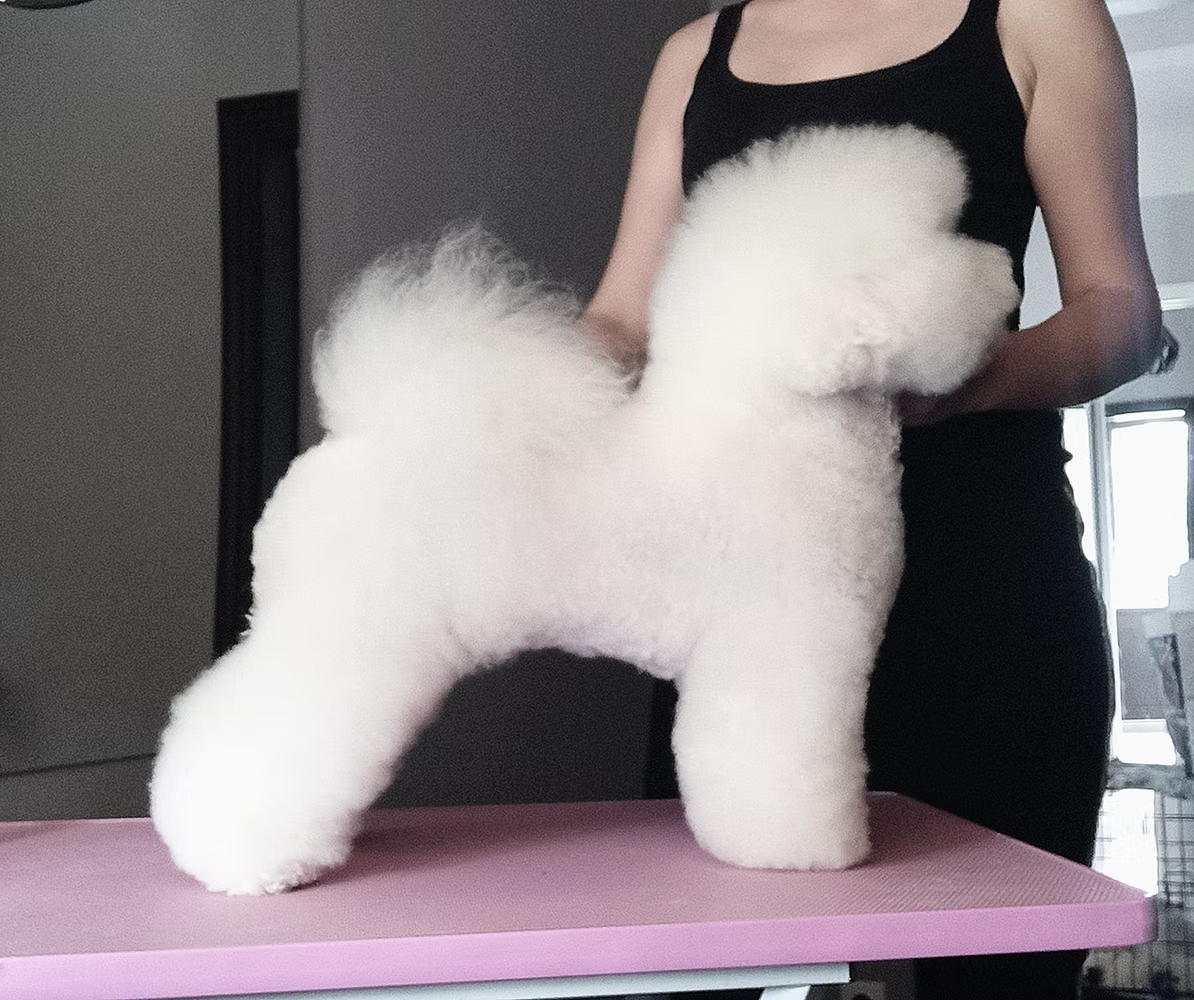
The Bichon Frise is a small white dog with a rounded, plush double coat, a black nose and dark round eyes, and a tail carried over the back.
The Bichon Frise has a compact, sturdy build under a soft, profuse coat. When groomed in the traditional rounded style, the head and body take on a powder-puff outline. The expression is set by dark, round eyes and a black nose against a white coat, with the dark eye rims and lips framing the face. The tail is plumed and carried curved over the back. Despite the dainty look, the body underneath is well balanced and the dog moves freely.
| Trait | Standard |
|---|---|
| Height | About 9 to 12 in (23 to 30 cm) at the shoulder |
| Weight | About 12 to 18 lb (5 to 8 kg) |
| Coat | Double coat: soft dense undercoat with a coarser, curly outer coat |
| Colors | White; cream, apricot, or buff shading permitted, usually around the ears |
| Eyes | Dark, round, with black or dark brown rims |
Coat and colors
The coat is the breed's signature feature. The soft undercoat and the springier outer coat together give the springy, pluck-back texture described in the standard, where the coat yields under the hand and springs back. The accepted color is white, though young dogs and some adults show cream, apricot, or buff tints, often on the ears or body. These shadings are generally permitted in limited amounts, while the overall impression should remain white. The coat grows continuously and does not shed in the usual way, so it must be clipped and shaped to keep the rounded outline.
Temperament and personality
The Bichon Frise is friendly, affectionate, and playful, gets along with people and other animals, and stays cheerful and sociable throughout its life.
The Bichon Frise is bred for companionship, and its personality reflects that. The breed is friendly, affectionate, good-natured, and sociable, and it generally wants to be near its people. Bichons stay playful well into adulthood and often keep a puppyish, clownish streak that owners enjoy.
With family, the breed is gentle and attentive, and it usually does well with children who handle it with care. Bichons tend to greet strangers warmly rather than warily, so they make poor guard dogs but pleasant social companions. They also get along with other dogs and with cats in most cases, particularly when introduced young.
The trade-off for this closeness is sensitivity to being alone. Bichons can develop separation-related behaviors, including barking and house-soiling, when left for long periods. Early socialization and gradual practice with short absences help. The breed can also be alert and will bark at activity, so consistent training keeps vocalness in check.
| Trait | Rating |
|---|---|
| Affection | 5 |
| Energy | 3 |
| Trainability | 4 |
| Vocalness | 3 |
| Shedding | 1 |
Care and grooming
The Bichon Frise needs frequent brushing and regular professional trims, moderate daily exercise, and an indoor home with company, since its non-shedding coat mats easily and the breed dislikes being alone.
The Bichon Frise is a moderate-effort dog overall, with grooming as the main demand. The coat grows continuously and mats close to the skin if neglected, so a steady routine matters more than for most small breeds.
Grooming
- Brush and comb thoroughly several times a week, working down to the skin to prevent mats.
- Book professional grooming every four to six weeks for bathing, clipping, and shaping the rounded outline.
- Clean around the eyes regularly to manage tear staining, which shows on the white coat.
- Check and clean the ears, and pluck or trim hair as advised to reduce moisture and infection risk.
- Trim nails every few weeks and brush teeth several times a week, since small breeds are prone to dental disease.
Exercise
- Provide about 30 minutes of activity a day, split into a couple of walks plus play.
- Use indoor games and short training sessions to keep the mind busy.
- Avoid overexertion in young puppies and in heat; the dense coat traps warmth.
Environment
The Bichon Frise suits apartments and houses equally and is an indoor dog. It is not built for living outdoors and is sensitive to extreme heat and cold. Because the breed bonds closely and dislikes isolation, it does best where someone is home for much of the day or where absences are kept short.
Nutrition and feeding
Feed the Bichon Frise a complete small-breed diet in measured meals, watch portions to prevent weight gain, and avoid foods toxic to dogs.
The Bichon Frise does well on a complete, balanced dog food appropriate to its life stage. Small-breed formulas use a kibble size suited to small mouths and an energy density matched to a small, moderately active dog. Because the breed is small, portions are modest, and small errors in measuring add up quickly to weight gain. Use a measuring cup or scale rather than estimating, and adjust to keep the dog at a lean weight with a visible waist.
| Life stage | Amount per day | Meals |
|---|---|---|
| Puppy (2 to 6 months) | About 0.5 to 1 cup, per label | 3 to 4 |
| Puppy (6 to 12 months) | About 0.5 to 1 cup | 2 to 3 |
| Adult | About 0.5 to 1 cup | 2 |
| Senior | Adjust down for lower activity | 2 |
Treats and supplements
Keep treats to about 10 percent of daily calories so the main diet stays balanced, and subtract treats from meal portions. A complete food usually needs no added supplements; introduce vitamins, joint products, or other additives only on a vet's advice. Provide fresh water at all times.
Health and common conditions
The Bichon Frise is generally healthy with a 14 to 15 year lifespan, but is prone to allergies, dental disease, bladder stones, luxating patella, and some eye conditions.
The Bichon Frise is generally a healthy, long-lived breed, with a typical lifespan of 14 to 15 years. As with many small breeds, a few conditions show up often enough that owners should know the signs. Responsible breeding, routine veterinary care, dental hygiene, and weight control reduce the risk and severity of most of them.
| Condition | Signs | Note |
|---|---|---|
| Allergies / skin issues | Itching, ear infections, paw licking | Common; often food or environmental triggers |
| Dental disease | Bad breath, tartar, loose teeth | Small jaw crowds teeth; brush regularly |
| Bladder stones | Straining, frequent or bloody urine | Diet and prompt vet care help manage |
| Luxating patella | Skipping gait, intermittent hind-leg lameness | Kneecap slips; mild to surgical cases |
| Cataracts / eye problems | Cloudy eyes, reduced vision | Screened by eye exams in breeding stock |
Preventive care
- Annual veterinary checkups, with twice-yearly visits for senior dogs.
- Routine dental care: home brushing plus professional cleaning as advised.
- Keep vaccinations and parasite prevention current.
- Maintain a lean weight to protect joints and reduce disease risk.
- Buy from breeders who screen for eye and knee conditions.
Training
The Bichon Frise is intelligent and eager to please, responds well to short reward-based sessions, and needs early focus on house-training and being left alone.
The Bichon Frise is intelligent and people-oriented, which makes it a willing learner. The breed's history as a performing and circus dog reflects a real aptitude for tricks and routines. It responds best to short, upbeat sessions and to rewards rather than corrections, since the breed can shut down under harsh handling. Two areas deserve early attention: house-training, which some small breeds find harder to master, and gradual practice with being alone to head off separation-related behavior.
Basics
- Start socialization early, exposing the puppy to people, dogs, sounds, and handling.
- Set a consistent house-training routine with frequent outings and reward success immediately.
- Teach core cues: name, sit, come, and settle.
- Build up time alone in small steps so the dog learns absences are normal.
- Add leash manners and basic grooming-table handling so trims go smoothly.
- Keep sessions short, a few minutes at a time, and end on a win.
Breeding
Bichon Frise females typically have small litters of around four to six puppies after a roughly nine-week pregnancy, and responsible breeding includes health screening of the parents.
Breeding a Bichon Frise is a serious undertaking that should rest on health and temperament rather than appearance alone. Dogs reach sexual maturity within the first year, but responsible breeders wait until a bitch is physically mature, usually around two years, before a first litter and breed only screened, healthy adults. Recommended pre-breeding checks include eye examinations and patella (knee) evaluation, given the conditions seen in the breed.
The female's reproductive cycle brings a heat roughly twice a year. Pregnancy (gestation) lasts about 63 days from conception. Litters are small, commonly four to six puppies, in line with the breed's size. Small-breed whelping can carry added risk, so veterinary support before and during birth is important.
Puppies are weaned over several weeks and stay with the dam and littermates until at least eight weeks of age, which supports healthy social development. Early gentle handling and exposure during this period set the foundation for the friendly, sociable adult the breed is known for.
| Metric | Value |
|---|---|
| Sexual maturity | Within first year; breed later when mature |
| Recommended first litter | Around 2 years for the bitch |
| Heat cycle | About twice a year |
| Gestation | About 63 days |
| Litter size | About 4 to 6 puppies |
| Weaning / homing age | Weaned by ~6 to 8 weeks; home from 8 weeks |
Registering your Bichon Frise and its microchip
Register your Bichon Frise free for life with United Pet Club, and put its microchip number on a record American shelters can actually find.
How to register a Bichon Frise in the United States
Shelters across the US scan every dog that comes through the door, and what happens next depends on paperwork. A scan that ends at a current record gets your Bichon Frise home; a scan that ends nowhere starts a holding period. Register your dog with United Pet Club and that record exists, free, for the rest of your dog's life.
The microchip needs its own registration. A vet implants the chip, but the number stays anonymous until you file it, and an anonymous chip cannot point anyone at you. Register the microchip with United Pet Club on the free lifetime plan: every brand a US vet implants qualifies, updates cost nothing after a move, and the record shows up in the AAHA universal lookup American shelters check first. Create your free account and finish both steps in one sitting.
How do I register my Bichon Frise in the United States?
Open a free United Pet Club account, enter your Bichon Frise's name, birth date, and a photo, and save. The profile is free for life, works with or without a microchip, and you can attach a chip number later.
How do I register my Bichon Frise's microchip?
Type the 15-digit chip number into your free United Pet Club account together with your current phone number and address. The lifetime plan is free, covers every future update, and accepts any chip brand a US vet implants.
Does my Bichon Frise have to be microchipped in the United States?
No federal law says a Bichon Frise must carry a chip, but plenty of city and county licensing rules do, and shelters routinely chip before adoption. What the law never does is register the chip for you; that part is yours.
How much does it cost to register a Bichon Frise?
Nothing. United Pet Club's lifetime plan covers the dog's profile, the microchip registration, and every update at no charge, with no renewal fees.
Frequently asked questions
Common questions about the Bichon Frise cover its size, temperament, grooming demands, lifespan, suitability for families and apartments, and availability.
How big does a Bichon Frise get?
It is a small breed, standing about 9 to 12 inches at the shoulder and weighing roughly 12 to 18 pounds when fully grown.
What is the Bichon Frise's temperament like?
Friendly, affectionate, playful, good-natured, and sociable. It bonds closely with its people and usually gets on well with children, strangers, and other pets.
Are Bichons hard to care for?
Their needs are moderate apart from grooming. The non-shedding coat mats easily and requires brushing several times a week plus a professional trim every four to six weeks, which is the main commitment.
How long do Bichon Frises live?
Typically 14 to 15 years with good care, routine veterinary checkups, dental hygiene, and a healthy weight.
Are they good for apartments and first-time owners?
Yes. Their small size and moderate exercise needs suit apartments, and their trainable, easygoing nature makes them a reasonable choice for first-time owners willing to handle the grooming.
Can a Bichon Frise be left alone all day?
It is not ideal. The breed is companion-bred and can develop separation-related stress and barking when alone for long periods, so it does best with company for much of the day.
Are Bichon Frises easy to find?
The breed is well established and widely kept, so puppies are available from reputable breeders and adults sometimes through breed rescues. Choose breeders who screen the parents for eye and knee conditions.
From the community
Ask about the Bichon FriseNo questions about the Bichon Frise yet. Be the first to ask.
Browse Dog breeds