
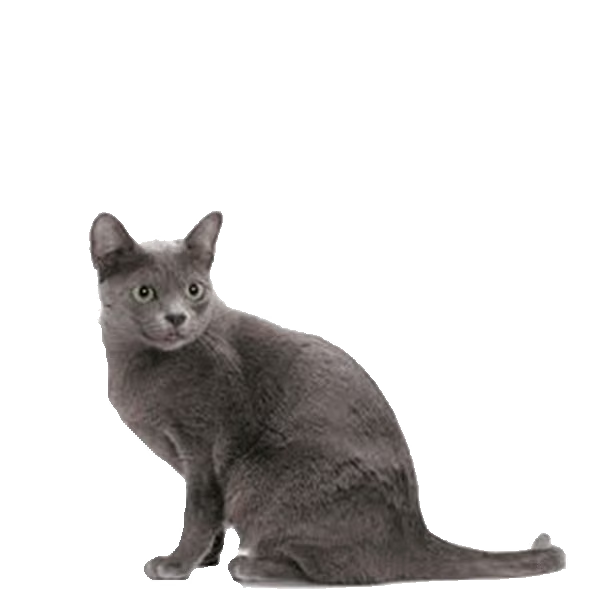
Sam Sawet
The Sam Sawet is a friendly Thai natural breed, valued for its affectionate, intelligent, and sociable nature.
- Size
- Medium
- Lifespan
- 12–16 years
- Origin
- Thailand
- Temperament
- Affectionate
Characteristics
Coat and grooming
How the Sam Sawet coat is built, and what that means when you groom it.
- Coat layers
- Single coat
- Coat texture
- Smooth
- Coat length
- Short
- Shedding
- Moderate shedding
Registry Recognition
The International Cat Association
- Shorthair Cats
Cat Fanciers’ Association
- Shorthair Cats
United Pet Club
- Shorthair CatsPrimary
About the Sam Sawet cat
The Sam Sawet is a medium-sized natural cat breed from Thailand known for an affectionate, intelligent, and sociable temperament.
Thailand is the home of the Sam Sawet, a domestic cat that took shape among the country's native felines. In Thai the name translates roughly as "good color" or "beautiful coat," and the breed sits alongside better-known Thai cats such as the Korat and the Siamese. Where those relatives spread worldwide, the Sam Sawet has stayed a regional cat with only a small presence beyond its homeland.
At heart this is a people's cat. It attaches itself to the household, trails family members from room to room, and keeps a close eye on whatever is going on nearby. Owners tend to call it chatty rather than pushy, and it is more likely to walk up to greet a guest than to slip away and hide.
Build-wise, the Sam Sawet is medium in size and moderately muscled, with a short coat that asks for little maintenance. Homes that can offer attention and steady company through the day suit it well, and it usually lives 12 to 16 years.
| Attribute | Detail |
|---|---|
| Origin | Thailand |
| Size | Medium |
| Lifespan | 12 to 16 years |
| Role | Companion cat |
| Good with | Families, children, other cats, and people who want an interactive pet |
Who the Sam Sawet suits
Active households that want a cat woven into daily life are the best match for the Sam Sawet. It gets along with children who handle it gently and with other pets when introductions move slowly. Anyone who is away from home for long stretches should arrange company or a second pet, since this breed does not care to be left on its own for hours at a time.
Sam Sawet history and origin
The Sam Sawet is a natural Thai breed that emerged from the country's free-breeding domestic cats and remains closely tied to its homeland.
Thailand, where domestic cats have shared people's lives for centuries, is the source of the Sam Sawet. It comes from the same broad population of Thai cats that gave rise to the Siamese, the Korat, and the Khao Manee, all of which turn up in Thai cultural and artistic records.
Rather than starting with a planned breeding program, the breed came together naturally in its early years. Cats of its general type appeared among Thailand's village and household populations, and the name Sam Sawet grew up to describe animals of pleasing color and coat. Since the type arose from a working domestic population, no exact founding date exists.
Mostly a Thai breed to this day, the Sam Sawet is far less common internationally than the Siamese or Korat. Fancier interest has picked up as Thailand's other native cats have drawn attention, yet breeding numbers outside the region stay small.
Records for the breed are thin next to those of internationally established cats, so anyone looking for a Sam Sawet should expect a limited pool of breeders and should verify a cat's background with care.
Sam Sawet appearance
The Sam Sawet is a medium-sized, moderately muscular cat with a short, close-lying coat and an alert, balanced head.
Moderate and balanced in its proportions, the Sam Sawet is a medium-sized cat. It is neither as slender as the modern Siamese nor as heavy and cobby as some Western breeds. The body is muscular without turning bulky, set on legs of medium length, and the tail stays in proportion to the frame. Its head is rounded to slightly wedge-shaped, with alert, expressive eyes.
| Feature | Description |
|---|---|
| Height | Roughly 23 to 28 cm at the shoulder |
| Weight | About 3.5 to 5.5 kg |
| Coat | Short, fine, close-lying, low maintenance |
| Colors | Solid and mixed shades; the name refers to attractive coat color |
| Eyes | Medium to large, alert, color varies with coat |
Coat and colors
Lying flat against the body, the short coat sheds modestly and takes little grooming. Color is central to the breed's identity, since the name itself points to the coat, and the cats appear in a range of solid and combined shades. Eye color shifts with the coat and is usually clear and bright. Published height and weight figures are approximate, because the breed has no single, widely recognized international standard.
Sam Sawet temperament
The Sam Sawet is affectionate, playful, curious, and sociable, bonding closely with its family and staying engaged with people and other pets.
Sociable and affectionate, the Sam Sawet wants a place in whatever the household is doing. It forms a strong bond with its people, often trailing them through the home and settling in wherever they land. Curiosity and a love of play stay with it, and the kitten-like interest in games and exploration carries well into adulthood.
Around the family it is warm and interactive, and it usually does fine with gentle children. Meeting strangers, it leans confident and curious rather than skittish and tends to come over to investigate. With other animals it is generally tolerant and can share a home with another cat or an easygoing dog, provided introductions move at a slow pace.
On the vocal scale it lands in the middle. The breed talks to its people but never reaches the volume or persistence of the Siamese. Being so focused on its humans, it is at its happiest with company and can grow bored or lonely when left alone for long stretches.
| Trait | Rating |
|---|---|
| Affection | 5 |
| Energy | 4 |
| Trainability | 4 |
| Vocalness | 3 |
| Shedding | 2 |
Sam Sawet care
The Sam Sawet needs only light grooming for its short coat, daily play and interaction, and an indoor home with company and enrichment.
Grooming
- Brush once a week to lift loose hair and keep the short coat smooth
- Look over the ears weekly and clean gently when needed
- Trim the claws every two to three weeks
- Get the cat used to tooth brushing for dental health
Exercise
- Set aside daily interactive play with wand toys or chase toys
- Provide climbing space such as a cat tree or wall shelves
- Rotate puzzle feeders and toys to keep the curious mind busy
- Plan on two or more short, active play sessions each day
Environment
An indoor life suits the Sam Sawet best, with plenty of vertical space, hiding spots, and window perches for watching the outdoors. Because it is so attached to its people, it fits a home where someone is around for much of the day, or where a second compatible pet can supply company. A steady routine helps it feel settled.
Sam Sawet nutrition
The Sam Sawet needs a complete, protein-rich cat diet portioned to its weight and activity, with fresh water and careful avoidance of toxic foods.
Like every cat, the Sam Sawet is an obligate carnivore and needs a complete, balanced diet built around animal protein. A good commercial food matched to the cat's life stage covers the core requirements. Wet food adds hydration, while dry food supports dental wear and easy measuring. Fresh water belongs within reach at all times.
| Life stage | Amount per day | Meals |
|---|---|---|
| Kitten (2 to 12 months) | Per package guidance, fed to appetite | 3 to 4 |
| Adult (1 to 7 years) | About 50 to 70 g dry or equivalent wet | 2 |
| Senior (7+ years) | Adjusted to weight and activity | 2 |
Treats and supplements
Hold treats to no more than about ten percent of daily calories so the cat does not gain weight. A balanced commercial diet normally supplies every needed nutrient, so give supplements only on a veterinarian's advice. Keep an eye on body condition and adjust portions if the cat puts on or drops weight.
Sam Sawet health
The Sam Sawet is generally a hardy natural breed with a 12 to 16 year lifespan, benefiting from routine veterinary care and weight management.
A natural breed with a wide genetic base, the Sam Sawet is generally healthy and hardy and tends to live 12 to 16 years. It does not trace back to a single narrow gene pool, which usually cuts down on the inherited problems seen in some heavily refined breeds. That said, it still faces the everyday health issues of domestic cats, and regular veterinary care goes a long way toward a full life.
| Condition | Signs | Note |
|---|---|---|
| Dental disease | Bad breath, drooling, reduced eating | Common in cats; prevent with dental care |
| Obesity | Weight gain, low activity | Manage with portion control and play |
| Upper respiratory infection | Sneezing, nasal discharge, watery eyes | Vaccination lowers risk |
| Kidney disease (older cats) | Increased thirst, weight loss | Screen in senior cats |
Preventive care
- Annual veterinary check-ups, and more often for senior cats
- Keep core vaccinations and parasite control up to date
- Maintain dental hygiene through brushing and check-ups
- Track weight and body condition
- Supply fresh water and watch litter box habits
Sam Sawet training
The intelligent, food-motivated Sam Sawet learns commands, tricks, and household routines quickly through reward-based training.
Intelligence and curiosity make the Sam Sawet more trainable than a lot of cats. It can learn to come when called, use a scratching post, walk in a harness, and pull off simple tricks. Its close bond with people leaves it keen to join a training session, all the more so when food and play are part of the payoff.
Basics
- Begin with litter training, which most kittens pick up fast given a clean, accessible box
- Reward use of the scratching post to keep furniture safe
- Teach the cat to come to a sound cue, such as a clicker or a spoken word, paired with a treat
- Work up to simple tricks like sit or high-five in short sessions
- Keep each session to a few minutes and finish on a win
Sam Sawet breeding
The Sam Sawet reaches sexual maturity by around six to ten months, carries litters for roughly 63 to 67 days, and typically produces three to five kittens.
Sexual maturity arrives in Sam Sawet cats at roughly six to ten months, though responsible breeders hold off until a cat is physically mature. A queen carries her litter for about 63 to 67 days, and litters usually hold three to five kittens.
Born blind and deaf, newborn kittens rely completely on the mother for warmth and feeding through the first weeks. Their eyes open around one to two weeks, and by three to four weeks they start to explore and play. Weaning generally wraps up by about eight weeks, and kittens should stay with the mother and littermates until at least twelve weeks for sound social development.
Since the Sam Sawet is uncommon outside Thailand, breeding stock is scarce. Anyone breeding the cat should put health screening, temperament, and the welfare of queen and kittens ahead of any push to grow numbers quickly.
| Metric | Value |
|---|---|
| Sexual maturity | 6 to 10 months |
| Gestation | 63 to 67 days |
| Litter size | 3 to 5 kittens |
| Eyes open | 1 to 2 weeks |
| Weaning | About 8 weeks |
| Rehoming age | 12 weeks or older |
Registering your Sam Sawet and its microchip
A free lifetime United Pet Club record for your Sam Sawet, plus microchip registration that stays current through every move.
Registering a Sam Sawet in the United States
An indoor Sam Sawet is one propped door away from being a stray, and shelters meet those cats every day. A free United Pet Club profile stands between the two: your contact details, your cat's photo, and its chip number if it has one, all on one record a clinic can find. Registering your cat takes minutes and never costs anything.
A scanner can read your Sam Sawet's chip in two seconds; the question is whether the number leads anywhere. Registration is what makes it lead to you. It is free for life at United Pet Club, accepts chips from every manufacturer, and stays searchable through the AAHA lookup after every address change. Register the chip, then create your account if you have not yet.
How do I register my Sam Sawet in the United States?
Sign up free with United Pet Club, add your Sam Sawet's name, coloring, and a photo, and save. The profile lasts the cat's lifetime at no charge, indoor or outdoor, chip or no chip.
How do I register my Sam Sawet's microchip?
Add the 15-digit number from the implant paperwork to your free United Pet Club account and check that your phone number is current. The lifetime plan is free, accepts every chip brand, and never charges for updates.
Does an indoor Sam Sawet really need to be registered?
Yes. Escapes are exactly how indoor cats end up in shelters, and a shelter can only call the number a registry hands it. A free profile, with or without a chip, is what makes that call possible.
How much does it cost to register a Sam Sawet?
Zero. Profile, microchip registration, and unlimited updates are all covered by United Pet Club's free lifetime plan.
Sam Sawet frequently asked questions
Common questions about the Sam Sawet cover its size, temperament, care needs, lifespan, suitability, and availability.
How big does a Sam Sawet cat get?
It is a medium-sized cat, usually weighing about 3.5 to 5.5 kg, with a moderately muscular, balanced build.
What is the Sam Sawet's temperament like?
It is affectionate, playful, curious, intelligent, and sociable. It bonds closely with its family and stays interested in the people and activity around the home.
Is the Sam Sawet easy to care for?
Yes. Its short coat needs only weekly brushing, and routine care is simple. Its main need is company and daily interaction, since it does not like being left alone for long.
How long do Sam Sawet cats live?
They generally live 12 to 16 years with good nutrition, routine veterinary care, and an indoor home.
Is the Sam Sawet good with children and other pets?
Generally yes. It does well with gentle children and can live alongside other cats or a calm dog when introductions are made gradually.
Are Sam Sawet cats easy to find?
No. The breed is uncommon outside Thailand and has a small breeding population, so prospective owners may need to search and confirm a cat's background carefully.