
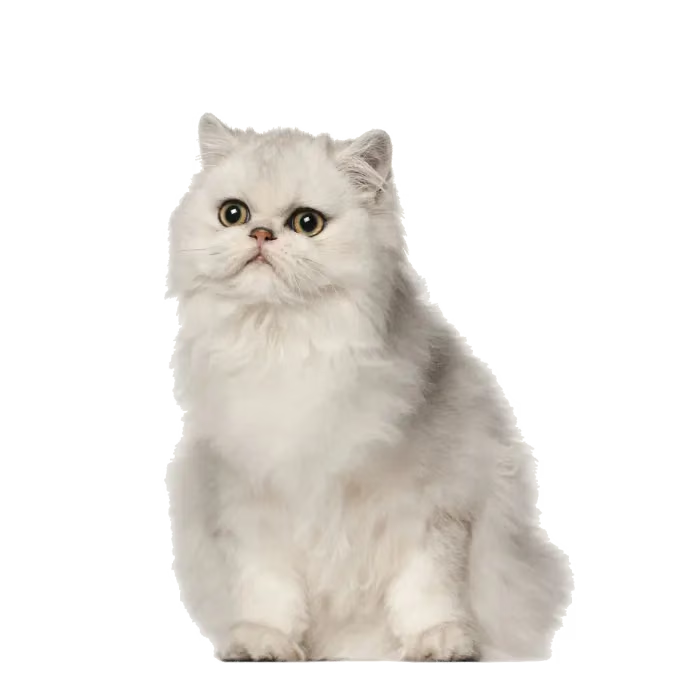
Persian (traditional)
Also known as Doll Face Persian and Traditional Persian
The traditional (doll-face) Persian is a calm, sweet-natured longhaired cat prized for its gentle, even temperament and devoted companionship.
- Size
- Medium
- Lifespan
- 12–17 years
- Origin
- Iran
- Temperament
- Calm
- Standard colors
- Black, White, and Blue and 8 more
Characteristics
Coat and grooming
How the Persian (traditional) coat is built, and what that means when you groom it.
- Coat layers
- Double coat
- Coat texture
- Silky
- Coat length
- Long
- Shedding
- Heavy shedding
Grooming guidance
Critical: A Persian (traditional) should not be shaved.
The undercoat keeps heat out as well as in, and the outer coat shields the skin from sun and insect bites. Clipping the whole coat off removes both. It often grows back patchy, soft or a different colour, and in some animals the guard hairs never return properly. Brush the undercoat out instead of cutting it off.
Caution: A Persian (traditional) coat mats easily.
Fine or long hair tangles at the base of the coat, out of sight, where the mats tighten and pull on the skin. Brushing has to reach right down to the roots in sections, not just skim the surface.
Registry Recognition
The International Cat Association
- Longhair Cats
Cat Fanciers’ Association
- Longhair Cats
United Pet Club
- Longhair CatsPrimary
Persian (traditional) colors and patterns
What each club's breed standard says about every Persian (traditional) color and pattern. Point at a ruling to see the club's own wording.
Breed standards describe the Persian (traditional) in Black, White, Blue, Lilac, Silver, Chocolate, Cinnamon, Red, Gold, Cream, and Fawn. Standard patterns: Shaded and Chinchilla.
| Color or pattern | WCF |
|---|---|
| Black | Standard |
| White | Standard |
| Blue | Standard |
| Lilac | Standard |
| Silver | Standard (“Silver”) |
| Chocolate | Standard |
| Cinnamon | Standard |
| Red | Standard |
| Gold | Standard (“Golden”) |
| Cream | Standard |
| Fawn | Standard |
| Patterns | |
| Shaded | Standard (“Shaded”) |
| Chinchilla | Standard (“Shell”) |
%22%3E%3Crect%20x%3D%220%22%20y%3D%220%22%20width%3D%2264%22%20height%3D%2264%22%20fill%3D%22url(%23g)%22%2F%3E%3Cg%20fill%3D%22none%22%20stroke%3D%22%231C1C1C%22%20stroke-width%3D%221%22%20stroke-opacity%3D%220.85%22%20stroke-linecap%3D%22round%22%20stroke-linejoin%3D%22round%22%3E%3Cpath%20d%3D%22M18.9%2025.7l0.2%202.1M42.7%2033.1l1%202.1M12.6%2020.7l0.9%201.7M17.3%2012.7l1%201.7M25.9%2022.4l0.4%201.6M50.2%2029l0.1%201.6M29.2%2028l0.5%202.1M43.2%2022.9l1%202.2M42.4%2029.9l0.2%202.2M8.4%2023.4l1%202.1M7.8%2018.4l0.4%202M35%2027.9l0.5%202.2M35.9%2038.5l0.6%201.6M29.3%2032.6l0.5%201.4M34.8%2022l0.7%202.2M37.6%2020.6l0.7%202.2M18.2%2037.7l0.4%202.1M9.9%2029l0%201.5M9.9%2014l0.1%202M37%2030.4l0.5%202.3M13%2028.5l0.6%202M38.3%2049.6l0.6%201.9M18.4%2047.4l0.7%201.4M40%2026.9l0.2%201.6M57.5%2010.7l0.4%201.4M39.6%2030.3l0.3%202.1M54.9%2018.7l0.7%201.5M48%2028.3l0.4%202M23%2050.3l0.1%202.3M28.2%2036.1l0.5%202.1M57.9%2014.4l0.6%201.4M10.6%2023.3l1%202.1M17.5%2042.7l0.8%201.4M52.1%2026l0.1%201.6M38.6%2032.2l0.1%202.2M30.9%2037.8l0.7%201.7M56.6%2017l0.9%201.9M42.5%2028.7l1%201.8M24.4%2048.9l0%201.7M8.7%2022.3l0.4%201.4M16.6%2039.9l0.5%201.4M7.1%2021.8l0.8%202.2M34.1%2034.2l0.3%201.7M9.9%2025.5l0%201.6M43.1%2035.1l0%202M37.7%2051.3l0.3%201.7M31.7%2031.3l0.3%202.3M23.8%2036.6l0.9%201.8M16.6%2053.5l0.4%202.3M24.4%2041.2l0.6%201.8M39.9%2046.6l0.4%201.8M10.4%2021.8l0.1%202.1M47.2%2051l0.7%202.3M42.9%2027.4l0.1%202M20.5%2022.8l0.4%202.1M49.2%2032.2l0.6%201.3M15.8%2030.1l0.4%202.1M46.2%2053.6l0.6%201.4M15.1%2020.1l0.7%202M23.4%2043.9l0.4%201.6M38.8%2029.4l0.4%202.1M36.8%2034.7l0.4%201.9M48.3%2028.4l0.6%202M26.9%2029.6l0.4%201.6M28.4%2036.5l0.4%201.4M19.2%2034.3l0.5%202.1M7.2%2028.1l0.1%201.6M15.9%2019.7l0.6%201.3M23.4%2022.8l0.9%201.8M16.3%2019.8l0.2%202.1M21.9%2053l0.4%202M48.5%2028.5l0.7%201.8M16.9%2012.9l0.6%202.3M26.8%2033.1l0%201.7M46.2%2044.1l0.2%202.1M30.5%2025.1l0.1%201.7M42.1%2032.2l0.1%201.6M8.7%2021.9l0.6%202.2M29.2%2024.5l0.6%202M22.1%2040.7l1.1%201.9M24.3%2033.3l0.7%201.8M53.9%2026.4l0.1%202.4M21.4%2026.6l0.9%202M39.2%2025.3l0.1%201.9M32.4%2035.3l1%202M48.9%2031.4l0%201.6M24.8%2022.1l0.4%202.2M46.4%2054.6l0.7%201.8M25.1%2031.7l0.5%202.1M24.7%2043.5l0%201.4M23.1%2033.3l0.9%201.6M37.9%2039.5l0.5%201.3M45.7%2041.2l0.9%201.8M50.1%2029.5l0.4%201.8M46.6%2049.6l0.5%202.2M54%2024.3l0.5%202.3M5.9%2025.6l0.1%201.5M15.5%2022.8l0.9%202M26.3%2027.8l0%202.1M30.1%2020.3l0.1%202.3M18.1%2016.7l0.5%201.8M19.1%2024.1l0.9%201.8M12.7%2018.8l0.7%201.4M20.8%2031.1l0.6%201.5M16.9%2025.9l0.1%201.5M11.6%2014.8l0.1%202.3M10.8%2018.5l0.8%201.8M33.5%2038l0.6%201.4M30.6%2028.8l0.3%202.1M39.1%2031.7l0.9%201.9M34.6%2021.3l0.3%202%22%2F%3E%3Cpath%20d%3D%22M17.6%2040.5l0.7%202.1M46.2%2038.1l0.4%201.7M5.1%2020.5l0.2%201.6M21.8%2022.3l0.3%201.4M26.3%2021l0.9%201.6M32.6%2037.5l0.5%201.4M33.5%2031.6l0.6%201.6M39.2%2039l0.9%201.6M11.4%2022.8l0.7%201.8%22%2F%3E%3C%2Fg%3E%3C%2Fg%3E%3Cuse%20href%3D%22%23s%22%20fill%3D%22none%22%20stroke%3D%22%233B2A20%22%20stroke-opacity%3D%220.6%22%20stroke-width%3D%221%22%20stroke-linejoin%3D%22round%22%2F%3E%3Cpath%20d%3D%22M3.4%2022.3L5.4%2022.5L4.3%2024Z%22%20fill%3D%22%23E8A0B4%22%2F%3E%3Ccircle%20cx%3D%229.6%22%20cy%3D%2221.2%22%20r%3D%221.1%22%20fill%3D%22%231C1C1C%22%2F%3E%3C%2Fsvg%3E)
%22%3E%3Cg%20fill%3D%22none%22%20stroke%3D%22%231C1C1C%22%20stroke-width%3D%221.1%22%20stroke-opacity%3D%220.9%22%20stroke-linecap%3D%22round%22%20stroke-linejoin%3D%22round%22%3E%3Cpath%20d%3D%22M37.4%2030.7l0.7%201.3M18.9%2028.6l0.1%201.1M46.5%2033.6l0.3%201.3M35.8%2023.2l0.1%201.4M19.6%2045.1l0%201.2M34.4%2037.4l0%200.9M48.4%2037.9l0.2%201.2M29.8%2023.5l0.4%201.4M9.3%2013.8l0.2%201.1M45.6%2044.2l0.3%200.8M24.4%2028.2l0.1%200.8M41.2%2035l0.1%200.9M41%2030.9l0.1%201.2M40.9%2025.1l0.3%201.4M28.4%2034.5l0.6%201.1M26.7%2024.1l0.1%200.8M47.3%2050.1l0.3%201.4M17.7%2049.5l0.5%201.3M29%2024.1l0.4%201.1M38.6%2038.1l0%201M33.4%2026.9l0.6%201M25.7%2028.1l0.1%200.9M18.3%2038.1l0.6%201.2M47.5%2028.1l0.4%201.1M25.6%2022l0.1%200.9M29.5%2027l0.5%201.1M39.5%2021.4l0.1%201.2M40.9%2048.2l0.2%201.1M17.8%2013.2l0.5%201.2M27.3%2031.6l0%201M21.3%2023.5l0.2%200.9M40.9%2054.1l0.3%200.9M20.9%2028.2l0.7%201.2M26.2%2022.2l0.1%200.8M40.9%2050.9l0.3%201.4M35.2%2030.2l0.2%200.8M50.4%2031.3l0.1%201.3M43.6%2036l0.3%200.9M33.7%2039.1l0.3%200.9M48.6%2049.9l0.3%201.1M44.4%2021.9l0.2%200.9M40.3%2040.9l0.4%201M51.8%2031.5l0.1%201.4M42%2038l0.3%201M41.3%2027.1l0.6%201.1M27.2%2032.2l0.3%201.3M28%2024.6l0%201.2M29%2038.5l0.1%201.1M56%2014.4l0.6%201.3M51%2031.2l0.3%200.8M49%2024.2l0.6%201.1M39.1%2029l0.5%201.2M38.7%2037.6l0.2%201.4M24.3%2046.6l0.4%200.8M23.1%2037.4l0.2%200.8M43%2035.9l0%201M35.4%2027l0.5%201M29.7%2039.1l0.2%201.4M32.8%2037.2l0%201M7.4%2022.7l0.1%201.1M31.3%2020.3l0.6%201.1M21.7%2033.3l0.5%201.1M16.5%2043.9l0.2%201.1M22.7%2024l0%201.4M41.6%2034.2l0.7%201.3M27.1%2036.9l0.2%201.1M49.4%2029.1l0.4%200.9M34.4%2020.6l0.3%201.1M21.6%2037.3l0%201.4M47.1%2029.2l0.7%201.3M50.6%2024.8l0.3%201M49.7%2029.2l0.7%201.2M19.4%2045.4l0.2%201.5M48.6%2026.5l0.6%201.2M23%2022.5l0.4%201M39.9%2051.5l0.2%201.1M6.7%2020.5l0.2%200.9M44.8%2033l0.2%201.4M37.7%2045.6l0.4%201.2M29.9%2037.9l0.2%200.9M24%2020.8l0.4%201M42.7%2021l0.4%201M42%2030.3l0.4%201.1M21.6%2045l0.4%201.1M18.5%2017l0.1%201M9.6%2016.4l0.1%201.3M19.5%2045.9l0.1%201M46.9%2049.9l0.4%201.3M18.6%2020.1l0.1%200.9M38.5%2038.8l0.1%201.4M46.9%2032.3l0.5%201.1M49.4%2031.7l0.3%200.9M48.5%2040.7l0.2%201.4M30.5%2033.5l0.4%201.3M46.3%2041.6l0.3%200.9M23.1%2044.7l0.2%201.1M16.7%2027.5l0%201M37.8%2029.3l0.1%201.2M42.9%2036.9l0.2%201.1M31%2025.3l0.2%201.1M17.5%2052.8l0.6%201.1M11%2021.5l0.4%201M22.5%2029.1l0.5%201.1M27.5%2032.1l0.4%200.9M39.6%2023.3l0.1%201.2M52.1%2027l0.6%201.3M28.8%2029.6l0%201.5M37.9%2025.5l0.5%200.8M33.2%2022.6l0.1%201.2M15.7%2015.4l0.3%200.8M47.7%2053.4l0.1%200.9%22%2F%3E%3Cpath%20d%3D%22M20.7%2023.3l0.6%201.1M6.7%2027.8l0.5%201.3M17%2012.8l0.2%201.2M21.7%2036.2l0%201.3M12.3%2019.9l0.2%200.8M17.2%2025.6l0.4%201.2M42.3%2022.6l0%201.2M24.7%2028.4l0.3%201.4M44.5%2038.7l0%201.4%22%2F%3E%3C%2Fg%3E%3Cpath%20d%3D%22M3.5%2022.6L5.4%2022.6%22%20fill%3D%22none%22%20stroke%3D%22%231C1C1C%22%20stroke-width%3D%221%22%20stroke-linecap%3D%22round%22%20stroke-linejoin%3D%22round%22%2F%3E%3C%2Fg%3E%3Cuse%20href%3D%22%23s%22%20fill%3D%22none%22%20stroke%3D%22%233B2A20%22%20stroke-opacity%3D%220.6%22%20stroke-width%3D%221%22%20stroke-linejoin%3D%22round%22%2F%3E%3Cpath%20d%3D%22M3.4%2022.3L5.4%2022.5L4.3%2024Z%22%20fill%3D%22%23E8A0B4%22%2F%3E%3Ccircle%20cx%3D%229.6%22%20cy%3D%2221.2%22%20r%3D%221.1%22%20fill%3D%22%231C1C1C%22%2F%3E%3C%2Fsvg%3E)
| Color or pattern | WCF |
|---|---|
| Brick red | Standard (“Brick red”) |
What the rulings mean
- Standard
- Described by the club's breed standard.
- Fault
- Named by the club's breed standard as a fault: the animal can be shown but is penalized.
Color changes
How a Persian (traditional)'s colors can change over its life.
Blackchanges toRusset
Coat · Progressive
Whitechanges toShaded
Coat · With age
Whitechanges toChinchilla
Coat · With age
Bluechanges toTortoiseshell
Coat · With age
Blackchanges toBrown
Coat · With body condition · can change back
Blackchanges toBrown
Coat · In the sun · can change back
Blackchanges toBrown
Coat · Progressive
Whitechanges toPointed
Coat · With age · from 1 to 52 weeks
Pinkchanges toSeal
Paw pads · With age · from 1 to 52 weeks
Pinkchanges toBlue
Paw pads · With age · from 1 to 52 weeks
Pinkchanges toChocolate
Paw pads · With age · from 1 to 52 weeks
Pinkchanges toLilac
Paw pads · With age · from 1 to 52 weeks
%22%3E%3Cg%20fill%3D%22%23A6402A%22%3E%3Cpath%20d%3D%22M33.4%2041.5C32.7%2042.3%2029.1%2042.6%2027.6%2042.6C26.1%2042.6%2024.8%2042.1%2024.2%2041.4C23.7%2040.8%2024.1%2039.5%2024.4%2038.7C24.7%2037.9%2025.4%2037.1%2026.1%2036.6C26.7%2036.2%2027.1%2036.1%2028.2%2036C29.4%2035.8%2032.3%2035.3%2032.9%2035.7C33.5%2036.1%2031.8%2037.2%2031.9%2038.2C32%2039.1%2034.1%2040.8%2033.4%2041.5ZM43.8%2021C44.8%2021.8%2044.6%2022.4%2045.1%2023.5C45.7%2024.7%2047.5%2026.8%2047.1%2027.9C46.8%2029.1%2044.4%2030.1%2042.9%2030.2C41.5%2030.3%2039.7%2029.4%2038.4%2028.8C37.2%2028.1%2035.9%2027.2%2035.5%2026.3C35%2025.3%2035.4%2024.2%2036%2023C36.5%2021.8%2037.3%2019.3%2038.6%2019C39.9%2018.6%2042.7%2020.3%2043.8%2021ZM32.1%2031.7C30.8%2031.1%2027.1%2030.8%2026.3%2030.2C25.5%2029.5%2026%2028.5%2027.2%2027.9C28.4%2027.2%2031.6%2026.4%2033.4%2026.5C35.1%2026.5%2036.4%2027.9%2037.7%2028.4C38.9%2028.9%2040.6%2029.1%2040.9%2029.6C41.2%2030.2%2040.6%2031.1%2039.5%2031.7C38.5%2032.4%2035.8%2033.6%2034.5%2033.6C33.3%2033.6%2033.5%2032.3%2032.1%2031.7ZM14.2%2025.9C14.7%2025.4%2017.6%2025%2018.9%2025C20.2%2024.9%2021.2%2025.1%2022.2%2025.4C23.2%2025.6%2024.4%2025.9%2024.9%2026.4C25.5%2026.8%2025.8%2027.3%2025.7%2027.8C25.7%2028.3%2025.4%2029.2%2024.5%2029.4C23.6%2029.6%2021.8%2029.2%2020.3%2029C18.8%2028.8%2016.5%2028.7%2015.5%2028.2C14.5%2027.7%2013.6%2026.5%2014.2%2025.9ZM12.7%2024.9C11.2%2024.1%208.1%2024.5%207.7%2023.6C7.4%2022.8%209.8%2020.5%2010.7%2019.8C11.7%2019.1%2012.2%2019.6%2013.3%2019.5C14.3%2019.4%2015.7%2018.9%2017.1%2019.1C18.5%2019.3%2021.2%2019.9%2021.7%2020.8C22.3%2021.6%2021.1%2023%2020.3%2024.3C19.5%2025.6%2018.3%2028.2%2017%2028.3C15.7%2028.4%2014.2%2025.7%2012.7%2024.9ZM4.1%2022.6C5%2021.8%209.9%2021.6%2011.1%2022.2C12.2%2022.8%2010.7%2025.1%2011%2026.1C11.2%2027.2%2012.6%2027.6%2012.8%2028.5C12.9%2029.3%2012.9%2030.8%2011.9%2031.2C10.9%2031.6%208.2%2031.1%206.8%2030.9C5.4%2030.7%203.9%2030.6%203.6%2029.9C3.3%2029.2%205.2%2027.9%205.2%2026.7C5.3%2025.5%203.1%2023.3%204.1%2022.6ZM44.6%2058.9C43.2%2058.4%2041.4%2057.6%2040.5%2056.7C39.7%2055.9%2038.9%2054.4%2039.5%2053.7C40.1%2053%2042.8%2053.2%2043.9%2052.4C45.1%2051.5%2045.7%2048.8%2046.6%2048.6C47.5%2048.4%2048.7%2050.2%2049.1%2051.3C49.6%2052.3%2049.3%2053.4%2049.2%2054.9C49.2%2056.4%2049.8%2059.5%2049%2060.1C48.3%2060.8%2046%2059.5%2044.6%2058.9Z%22%2F%3E%3Cpath%20d%3D%22M13.4%2021.1C13.1%2021.7%2011.8%2022%2010.3%2022.4C8.8%2022.9%205.2%2023.9%204.3%2023.6C3.4%2023.3%205.5%2021.4%204.8%2020.6C4.1%2019.8%200.1%2019.3%200.2%2018.9C0.3%2018.4%203.6%2018.1%205.3%2017.8C7%2017.6%209.3%2017.2%2010.4%2017.3C11.5%2017.4%2011.7%2018%2012.2%2018.6C12.7%2019.2%2013.8%2020.4%2013.4%2021.1ZM19.7%2020.4C18.8%2020.9%2017.5%2019.9%2016.2%2019.7C14.9%2019.4%2012.5%2019.9%2011.8%2019C11.2%2018%2011.6%2015.2%2012.4%2014.3C13.3%2013.3%2015.6%2013.6%2016.8%2013.4C18.1%2013.3%2019.1%2013.2%2019.9%2013.3C20.8%2013.4%2021.5%2013.5%2021.7%2014C22%2014.5%2021.8%2015.4%2021.5%2016.5C21.1%2017.5%2020.6%2019.8%2019.7%2020.4ZM34.3%2048.7C33.9%2048%2035%2046.2%2035%2044.7C35.1%2043.2%2034.2%2040.4%2034.6%2039.4C35.1%2038.5%2036.2%2038.8%2037.5%2038.9C38.9%2039.1%2042.1%2039.5%2042.7%2040.3C43.2%2041.2%2040.9%2042.8%2040.7%2044.1C40.6%2045.4%2042.3%2047.5%2041.8%2048.3C41.3%2049.1%2038.8%2048.7%2037.5%2048.7C36.3%2048.8%2034.8%2049.3%2034.3%2048.7ZM40.6%2033.5C40.2%2032.1%2038.2%2031.9%2038.5%2030.8C38.7%2029.8%2041.1%2027.9%2042.2%2027.2C43.3%2026.6%2044.6%2026.3%2045.3%2027.1C45.9%2027.8%2046%2030.2%2046.4%2031.6C46.7%2032.9%2047.4%2034.1%2047.2%2035.2C47%2036.4%2046.4%2037.8%2045.2%2038.5C44.1%2039.2%2041.1%2040.3%2040.3%2039.4C39.5%2038.6%2040.9%2035%2040.6%2033.5ZM27.8%2024.7C27%2023.4%2027.6%2020.6%2028%2019.3C28.3%2018%2028.9%2017.8%2030%2017C31%2016.1%2033.4%2014%2034.2%2014.1C35%2014.3%2034.3%2016.9%2034.9%2018.1C35.5%2019.3%2037.9%2020.5%2037.8%2021.2C37.7%2022%2035.1%2021.9%2034.2%2022.8C33.3%2023.8%2033.7%2026.8%2032.7%2027.1C31.6%2027.4%2028.5%2026%2027.8%2024.7ZM24.5%2050.5C23.4%2050.6%2022.7%2048.1%2022.1%2047.5C21.6%2046.9%2021.5%2047.5%2020.9%2046.8C20.3%2046%2018.2%2043.9%2018.4%2043.2C18.6%2042.6%2020.6%2043.2%2022.1%2042.9C23.6%2042.6%2026.4%2041.1%2027.3%2041.4C28.2%2041.7%2027.3%2043.8%2027.5%2044.7C27.7%2045.6%2029%2045.8%2028.5%2046.8C28%2047.7%2025.5%2050.4%2024.5%2050.5ZM49.9%2046.9C48.9%2047.3%2046.2%2047%2045.3%2046.6C44.3%2046.3%2044.2%2045.5%2044%2044.6C43.8%2043.7%2043.8%2041.9%2044.2%2041.2C44.6%2040.6%2045.6%2040.7%2046.2%2040.5C46.9%2040.3%2047.4%2039.8%2048.2%2040.1C49%2040.3%2050.4%2041.2%2050.8%2041.9C51.3%2042.6%2051.2%2043.3%2051.1%2044.1C50.9%2045%2050.8%2046.5%2049.9%2046.9Z%22%2F%3E%3Cpath%20d%3D%22M23.4%2058.2C22.3%2058.9%2020.7%2061.5%2020.2%2061.2C19.7%2060.9%2020.6%2058%2020.2%2056.3C19.8%2054.6%2017.8%2052.5%2017.9%2051.1C17.9%2049.6%2019.7%2047.9%2020.7%2047.7C21.6%2047.5%2022.8%2049%2023.6%2049.8C24.3%2050.6%2024.6%2051.1%2025.1%2052.3C25.6%2053.6%2027%2056.2%2026.7%2057.2C26.4%2058.2%2024.4%2057.6%2023.4%2058.2ZM50.2%2017.9C51%2018.5%2052.1%2021.9%2052.1%2023.2C52%2024.5%2050.5%2025.2%2050%2025.8C49.5%2026.4%2049.7%2026.4%2049%2026.8C48.4%2027.1%2046.8%2028.5%2046.3%2028.1C45.8%2027.7%2046.3%2025.6%2046.2%2024.5C46%2023.5%2045.4%2022.5%2045.5%2021.7C45.7%2020.9%2046.3%2020.3%2047%2019.7C47.8%2019.1%2049.4%2017.3%2050.2%2017.9Z%22%2F%3E%3C%2Fg%3E%3Cpath%20d%3D%22M18.9%2037.1h.1M44.8%2032.6h.1M39.4%2020.9h.1M26.4%2038.1h.1M31.6%2025.6h.1M32.5%2038.6h.1M48.1%2025h.1M56.5%2014.7h.1M16.4%2022.9h.1M45.4%2042.6h.1M12.2%2025.5h.1M15.6%2014.7h.1M44.2%2026.5h.1M47.1%2050.9h.1M7.7%2021.4h.1M25.8%2025.2h.1M38%2041.5h.1M21.9%2028.5h.1M17%2043.1h.1M26.4%2033.5h.1M7.6%2012h.1M56.3%2022.8h.1%22%20fill%3D%22none%22%20stroke%3D%22%231C1C1C%22%20stroke-width%3D%222%22%20stroke-linecap%3D%22round%22%20stroke-linejoin%3D%22round%22%2F%3E%3Cpath%20d%3D%22M48.6%2029.8h.1M8.5%2028.3h.1M21.9%2030h.1M48.5%2042.7h.1M18.7%2047.5h.1M45.4%2052.3h.1M27.7%2036h.1M34%2029.5h.1M44.5%2039.6h.1M57.5%2017.2h.1M31.4%2026.1h.1M17.5%2025.8h.1M22.4%2051.3h.1M14.5%2019h.1M55.2%2012.8h.1M22.2%2039.1h.1M18.9%2021h.1M36.4%2037.7h.1M58.8%208.8h.1M7.2%2016.6h.1M26.4%2030h.1M38.5%2047.6h.1%22%20fill%3D%22none%22%20stroke%3D%22%23A6402A%22%20stroke-width%3D%222%22%20stroke-linecap%3D%22round%22%20stroke-linejoin%3D%22round%22%2F%3E%3C%2Fg%3E%3Cuse%20href%3D%22%23s%22%20fill%3D%22none%22%20stroke%3D%22%233B2A20%22%20stroke-opacity%3D%220.6%22%20stroke-width%3D%221%22%20stroke-linejoin%3D%22round%22%2F%3E%3Cpath%20d%3D%22M3.4%2022.3L5.4%2022.5L4.3%2024Z%22%20fill%3D%22%23E8A0B4%22%2F%3E%3Ccircle%20cx%3D%229.6%22%20cy%3D%2221.2%22%20r%3D%221.1%22%20fill%3D%22%231C1C1C%22%2F%3E%3C%2Fsvg%3E)
%22%3E%3Cpath%20d%3D%22M5.5%2017L7.5%207L12%2015ZM14%2015L17.5%207L20%2018.5Z%22%20fill%3D%22%23847865%22%2F%3E%3Cellipse%20cx%3D%227.6%22%20cy%3D%2223.6%22%20rx%3D%225%22%20ry%3D%225.2%22%20fill%3D%22%23847865%22%2F%3E%3Crect%20x%3D%220%22%20y%3D%2244%22%20width%3D%2264%22%20height%3D%2220%22%20fill%3D%22%23847865%22%2F%3E%3Cpath%20d%3D%22M50%2027L53.5%205L64%203L64%2013L59%2024L53%2033Z%22%20fill%3D%22%23847865%22%2F%3E%3C%2Fg%3E%3Cuse%20href%3D%22%23s%22%20fill%3D%22none%22%20stroke%3D%22%233B2A20%22%20stroke-opacity%3D%220.6%22%20stroke-width%3D%221%22%20stroke-linejoin%3D%22round%22%2F%3E%3Cpath%20d%3D%22M3.4%2022.3L5.4%2022.5L4.3%2024Z%22%20fill%3D%22%23E8A0B4%22%2F%3E%3Ccircle%20cx%3D%229.6%22%20cy%3D%2221.2%22%20r%3D%221.1%22%20fill%3D%22%231C1C1C%22%2F%3E%3C%2Fsvg%3E)
Sources
Each ruling comes from the club's published breed standard or color list.
About the traditional Persian cat
The traditional or doll-face Persian is a medium longhaired cat from Iran, prized for a mellow, affectionate nature and a flowing coat that needs daily grooming.
Known widely as the doll-face Persian, the traditional Persian is a longhaired cat with a gentle disposition and a thick, heavy coat. It differs from the modern show Persian, whose face is bred extremely flat, by keeping a moderate muzzle and a nose bridge you can actually see. That older head shape is the form the breed wore for most of its long history.
These are quiet, unhurried cats. A busy room holds little appeal for them, and most of the day goes to napping in a chosen spot. Their energy stays low, and they are seldom destructive or pushy. A Persian attaches firmly to its household and shows love through nearness rather than nonstop motion.
Coat care is the one requirement that cannot be skipped. The traditional Persian wears a long, dense double coat that mats within a day if it is left alone. Owners who stay on top of grooming are rewarded with a calm, devoted companion well suited to indoor living.
| Attribute | Detail |
|---|---|
| Origin | Iran |
| Size | Medium |
| Lifespan | 12 to 17 years |
| Group / role | Longhaired companion cat |
| Good with | Calm households, older kids, quiet adults |
Who it suits
The traditional Persian belongs in a settled indoor home where someone is around for company and ready to groom every day. Quiet families, older children who handle pets gently, and people who want an affectionate cat without a big play drive all make good matches. It is a poor fit for anyone who cannot commit to coat care or for loud, high-traffic households.
History and origin of the Persian cat
The Persian descends from longhaired cats of Iran (once called Persia), arrived in Europe in the 1600s, and was refined into a recognized breed in Britain in the late 1800s.
The name points to Persia, the historical name for Iran, where longhaired cats had lived for centuries. That heavy coat is often tied to the colder, mountainous stretches of the region, although the earliest records are thin and leave much unexplained.
During the 1600s, longhaired cats from the Near East made their way to Europe. Travelers from Italy and France usually get the credit for carrying early examples westward, where the striking coats found favor among people wealthy enough to keep them.
Organized breeding came together in Britain toward the end of the 1800s. Persians appeared at the first cat shows, among them the 1871 exhibition at London's Crystal Palace, and breeders started to fix a consistent type. From Britain the cats spread far and wide, becoming one of the most popular pedigreed breeds across North America and Europe through the 1900s.
Across the twentieth century, show breeders kept pushing the face flatter, which produced the modern peke-face Persian. The traditional or doll-face Persian holds onto the earlier, more moderate head, and it stays a favorite among owners who prefer the original look along with the easier breathing a longer muzzle allows.
Persian cat appearance and breed standard
A medium, cobby cat with a long flowing double coat, a broad round head, large round eyes, and the moderate doll-face muzzle that sets the traditional type apart.
A traditional Persian is built stocky and rounded, set low on short, sturdy legs. The head is broad and round, finished with full cheeks, small rounded ears, and large expressive eyes. The muzzle is where it parts ways with the modern show Persian: the traditional type carries a longer nose with a clear bridge instead of a flat, pushed-in face. Wrapped in a long, full coat, the whole cat reads as soft and well padded.
| Trait | Detail |
|---|---|
| Height | About 10 to 15 in (25 to 38 cm) at the shoulder |
| Weight | 8 to 12 lb (3.5 to 5.5 kg) |
| Coat | Long, dense double coat with a full ruff and plumed tail |
| Colors | Wide range, including white, black, blue, cream, red, bicolor, tabby, and colorpoint (Himalayan) |
| Eyes | Large and round; color varies with coat, from copper and gold to green, blue, or odd-eyed |
Coat and colors
Everything demanding about the breed comes back to the coat. It runs long over the entire body, layered over a thick undercoat, with a heavy frill around the neck and a full, brush-like tail. Persians appear in many recognized colors and patterns. Solids include white, black, blue, cream, and red. Patterned coats cover tabby, tortoiseshell, bicolor, smoke, and shaded. The colorpoint pattern, a paler body with a darker face, ears, legs, and tail, is registered as the Himalayan by CFA. Eye color usually tracks coat color, so deep copper eyes are common on solid cats while colorpoints carry blue eyes.
Persian cat temperament and behavior
Persians are gentle, calm, and affectionate, with low energy and a soft voice; they bond closely with their people and thrive in steady, peaceful homes.
Placid and even-tempered describes the traditional Persian well. It warms to the people it knows and likes to stay close by, usually curling up on a lap or beside someone rather than hunting for a game. This is not attention-seeking of the noisy kind; the cat asks for company simply by being present.
Around the family, Persians are loving and forgiving. They take gentle handling in stride and get along nicely with considerate older children. New faces bring out their reserved side, and a Persian may slip away until a stranger has settled in. The breed lives peaceably with other calm cats and with easygoing dogs, though rough or chaotic company wears on it.
Energy stays low, and play runs in short bursts. A feather toy or a slow chase will hold a Persian for a while before it loses interest and heads back to rest. Its voice is soft and it rarely speaks up, which makes it a fine choice for apartments and quiet homes.
| Trait | Rating |
|---|---|
| Affection | 5 |
| Energy | 2 |
| Trainability | 3 |
| Vocalness | 2 |
| Shedding | 5 |
Persian cat care and grooming
Daily coat grooming is a must, exercise needs stay modest, and the breed does best kept indoors in a calm, climate-controlled home.
Grooming
That long double coat mats fast and asks for attention every single day.
- Run a wide-tooth comb through the full coat daily, follow with a finer comb, and work down to the skin so mats get caught early.
- Give extra care to the ruff, the armpits, the belly, and behind the ears, where tangles start first.
- Bathe about once a month to keep the coat clean and cut down on grease, then dry the cat all the way through.
- Wipe the eyes daily, since the breed is prone to tear staining around the face.
- Trim the nails every couple of weeks and check the ears for wax.
Exercise
Activity needs for a Persian are light.
- Set up two or three short play sessions a day with a wand toy or a rolling ball.
- Keep a low cat tree or perch handy, since Persians are not strong jumpers.
- Add a food puzzle for a little mental work that does not call for much exertion.
Environment
This breed is meant for indoor life. Outdoors the long coat collects dirt and tangles, and the dense fur leaves the cat poorly equipped for heat. Keep the home calm and at a comfortable temperature, offer quiet resting spots, and place a litter box that is easy to step into, because Persians would rather not climb.
Persian cat nutrition and feeding
Feed a complete cat food matched to life stage, watch portions to head off weight gain in this low-energy breed, and keep fresh water out at all times.
A Persian needs a complete and balanced cat food built around animal protein. With low energy and a habit of gaining weight, portion control really counts, and measured meals beat leaving food out all day. Many owners find that flat-faced and doll-face cats eat more comfortably from shallow, wide bowls. Pairing wet and dry food supports hydration, and dry kibble lends a little help with dental wear.
| Life stage | Amount per day | Meals |
|---|---|---|
| Kitten (2 to 12 months) | Follow the product label; feed to appetite while growing | 3 to 4 |
| Adult (1 to 7 years) | About 50 to 70 g dry food, or the wet equivalent, by body weight | 2 |
| Senior (7+ years) | Adjust to activity and weight; often slightly less | 2 |
Treats and supplements
Hold treats to a small slice of daily calories so they do not throw off the diet or pack on pounds. A healthy cat eating a complete food generally needs no supplements. Some owners add a vet-approved hairball or omega-3 product to support the coat and cut down on the hairballs that come with all that grooming, but run it past a veterinarian before you start anything.
Persian cat health and common conditions
Persians live roughly 12 to 17 years but face inherited kidney disease, breathing trouble in flatter-faced lines, and eye and coat issues that call for monitoring.
Most traditional Persians live 12 to 17 years. Because the doll-face type breathes more easily than the extreme flat-faced Persian, a few risks ease off, but the breed still carries several inherited and structural concerns. Choosing breeders who screen their cats and staying current with veterinary care both make a difference. Keep a close eye on weight, since obesity makes nearly every one of these conditions worse.
| Condition | Signs | Note |
|---|---|---|
| Polycystic kidney disease (PKD) | Increased thirst, weight loss, poor appetite | Inherited; a DNA test exists and responsible breeders screen for it |
| Brachycephalic airway issues | Noisy or labored breathing, snoring | Less common in doll-face lines than in flat-faced Persians |
| Excess tearing and eye problems | Tear staining, runny eyes, eye irritation | Daily eye cleaning helps; some cases need veterinary care |
| Hypertrophic cardiomyopathy (HCM) | Lethargy, rapid breathing, sudden weakness | Heart muscle disease; vet screening can detect it |
| Skin and coat problems | Matting, dandruff, fungal infection | Tied to coat density and gaps in grooming |
Preventive care
- Schedule annual veterinary checkups, moving to twice a year for senior cats.
- Keep vaccinations and parasite control current.
- Ask the breeder for PKD test results and consider screening.
- Hold a healthy weight with measured meals.
- Clean the eyes daily and groom to head off skin trouble.
Persian cat training
Persians are calm and moderately trainable; they respond to short, gentle reward-based sessions for litter habits, handling, and simple cues rather than high-energy tricks.
A Persian is a quiet, easygoing cat that learns at its own steady pace. It has none of the drive to perform that some active breeds show, but it takes to routine and answers well to calm, consistent handling. The training that pays off most centers on litter use, accepting grooming, and putting up with nail trims and carriers, all of which smooth out daily care. Most Persians take to a litter box without fuss, especially a low-sided one that is easy to step into.
Basics
- Keep sessions short, only a few minutes, and stop while the cat is still relaxed.
- Reward the behavior you want with a small treat or quiet praise right away.
- Bring in grooming a little at a time, pairing the comb with treats so the cat links it to good things.
- Get the cat comfortable with the carrier by leaving it open with bedding inside.
- Practice gentle paw handling so nail trims turn into routine.
- Hold to a predictable daily rhythm, which this breed prefers.
Persian cat breeding
Persian queens mature within months, carry kittens for about 63 to 67 days, and bear small litters of long-coated kittens that need careful grooming and screening for inherited disease.
Breeding Persians is specialist work, best left to people who can health-test their cats and manage a demanding coat from kittenhood on. Females reach sexual maturity somewhere between five and nine months, yet responsible breeders wait until a queen is physically mature and fully grown before a first litter. Males usually mature by around ten months.
Gestation lasts about 63 to 67 days. Litters tend to be small, often two to four kittens. Newborn Persians are fragile and need a warm, quiet nest along with close watching through the first weeks. Since the breed carries inherited conditions like PKD and HCM, breeding cats should be screened before mating, and kittens are best placed only after vaccinations and early socialization.
Kittens arrive covered in short fluff that fills out into the full coat over several months. Gentle grooming started early gets them used to the daily combing they will depend on for life.
| Metric | Value |
|---|---|
| Female sexual maturity | About 5 to 9 months (breed later) |
| Male sexual maturity | About 10 months |
| Gestation | About 63 to 67 days |
| Typical litter size | 2 to 4 kittens |
| Weaning age | About 7 to 9 weeks |
| Recommended health tests | PKD DNA test, HCM screening |
Registering your Persian (traditional) and its microchip
A free lifetime United Pet Club record for your Persian (traditional), plus microchip registration that stays current through every move.
Registering a Persian (traditional) in the United States
An indoor Persian (traditional) is one propped door away from being a stray, and shelters meet those cats every day. A free United Pet Club profile stands between the two: your contact details, your cat's photo, and its chip number if it has one, all on one record a clinic can find. Registering your cat takes minutes and never costs anything.
If a chip is already under your Persian (traditional)'s skin, the number still has to be filed. Implanting and registering are separate steps, and the clinic only does the first. Register the microchip free on the United Pet Club lifetime plan: any brand a US vet uses qualifies, and the record answers the AAHA universal lookup that American shelters run on every scan. Create your free account and close the loop today.
How do I register my Persian (traditional) in the United States?
Sign up free with United Pet Club, add your Persian (traditional)'s name, coloring, and a photo, and save. The profile lasts the cat's lifetime at no charge, indoor or outdoor, chip or no chip.
How do I register my Persian (traditional)'s microchip?
Add the 15-digit number from the implant paperwork to your free United Pet Club account and check that your phone number is current. The lifetime plan is free, accepts every chip brand, and never charges for updates.
Does an indoor Persian (traditional) really need to be registered?
Yes. Escapes are exactly how indoor cats end up in shelters, and a shelter can only call the number a registry hands it. A free profile, with or without a chip, is what makes that call possible.
How much does it cost to register a Persian (traditional)?
Zero. Profile, microchip registration, and unlimited updates are all covered by United Pet Club's free lifetime plan.
Frequently asked questions
Common questions about the traditional Persian cat, covering size, temperament, grooming difficulty, lifespan, suitability, and how to find one.
How big does a traditional Persian cat get?
It is a medium cat, usually 8 to 12 lb (3.5 to 5.5 kg), with a stocky, well-padded build that the long coat makes look even bigger.
What is the temperament of a Persian cat?
Persians are calm, gentle, and affectionate with low energy. They bond closely with their people, keep a soft voice, and favor peaceful homes over busy, noisy ones.
Are Persian cats hard to take care of?
The coat is the hard part, since it needs daily combing to prevent mats, plus regular baths and daily eye cleaning. Their other needs are modest, so the breed fits owners who can commit to grooming.
How long do Persian cats live?
A traditional Persian typically lives 12 to 17 years with good care, a healthy weight, and regular veterinary checkups.
Is a Persian a good family cat?
Yes, in a calm household. Persians do well with quiet adults and gentle older children, and they get along with other settled pets. They are less suited to loud, high-traffic homes.
What is the difference between a doll-face and a show Persian?
The doll-face or traditional Persian keeps a longer muzzle with a visible nose, closer to the breed's original look. The modern show Persian has an extremely flat face, which can bring breathing and tearing problems.
Where can I find a traditional Persian cat?
Look for breeders who specialize in the doll-face type and who health-test for PKD and HCM. Breed-specific rescues sometimes have Persians in need of homes too.