
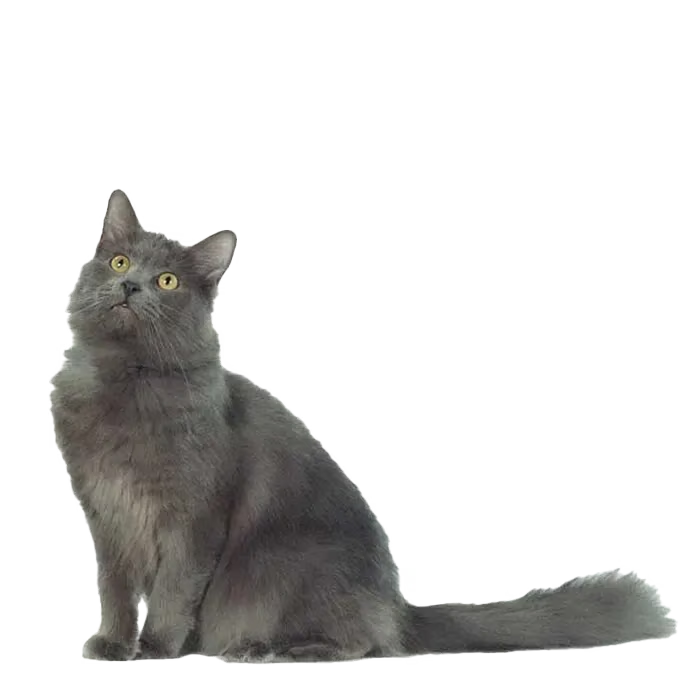
Nebelung
The Nebelung is a gentle, reserved blue longhaired cat that forms deeply devoted bonds while remaining shy around strangers.
- Size
- Medium
- Lifespan
- 13–16 years
- Origin
- United States
- Temperament
- Gentle
- Standard colors
- Blue
Characteristics
Coat and grooming
How the Nebelung coat is built, and what that means when you groom it.
- Coat layers
- Double coat
- Coat texture
- Silky
- Coat length
- Long
- Shedding
- Seasonal shedding
Grooming guidance
Critical: A Nebelung should not be shaved.
The undercoat keeps heat out as well as in, and the outer coat shields the skin from sun and insect bites. Clipping the whole coat off removes both. It often grows back patchy, soft or a different colour, and in some animals the guard hairs never return properly. Brush the undercoat out instead of cutting it off.
Caution: A Nebelung coat mats easily.
Fine or long hair tangles at the base of the coat, out of sight, where the mats tighten and pull on the skin. Brushing has to reach right down to the roots in sections, not just skim the surface.
Information: A Nebelung drops its undercoat in heavy bursts.
The undercoat comes out in heavy bursts over a few weeks. An undercoat rake, or a bath followed by a proper blow-dry, clears it far faster than daily brushing. Clipping the coat down is not a shortcut for this.
Registry Recognition
The International Cat Association
- Longhair Cats
Cat Fanciers’ Association
- Longhair Cats
United Pet Club
- Longhair CatsPrimary
Nebelung colors and patterns
What each club's breed standard says about every Nebelung color and pattern. Point at a ruling to see the club's own wording.
Breed standards describe the Nebelung in Blue. Standard patterns: Solid.
| Color or pattern | TICA | GCCF | WCF |
|---|---|---|---|
| Blue | Standard (“Blue”) | Standard (“medium blue”) | Standard (“blue”) |
| Patterns | |||
| Solid | Standard (“Solid”) | No ruling | No ruling |

| Color or pattern | TICA | GCCF | WCF |
|---|---|---|---|
| Yellow | Standard (“yellow/green mixture”) | No ruling | No ruling |
| Green | Standard (“Green”) | Standard (“green”) | Standard (“intense green”) |
| Color or pattern | GCCF | WCF |
|---|---|---|
| Blue | Standard (“blue”) | Standard (“blue-grey”) |
What the rulings mean
- Standard
- Described by the club's breed standard.
Color changes
How a Nebelung's colors can change over its life.
Bluechanges toTortoiseshell
Coat · With age
Solidchanges toSmoke
Coat · With age · from 3 to 104 weeks
%22%3E%3Cg%20fill%3D%22%23A6402A%22%3E%3Cpath%20d%3D%22M33.4%2041.5C32.7%2042.3%2029.1%2042.6%2027.6%2042.6C26.1%2042.6%2024.8%2042.1%2024.2%2041.4C23.7%2040.8%2024.1%2039.5%2024.4%2038.7C24.7%2037.9%2025.4%2037.1%2026.1%2036.6C26.7%2036.2%2027.1%2036.1%2028.2%2036C29.4%2035.8%2032.3%2035.3%2032.9%2035.7C33.5%2036.1%2031.8%2037.2%2031.9%2038.2C32%2039.1%2034.1%2040.8%2033.4%2041.5ZM43.8%2021C44.8%2021.8%2044.6%2022.4%2045.1%2023.5C45.7%2024.7%2047.5%2026.8%2047.1%2027.9C46.8%2029.1%2044.4%2030.1%2042.9%2030.2C41.5%2030.3%2039.7%2029.4%2038.4%2028.8C37.2%2028.1%2035.9%2027.2%2035.5%2026.3C35%2025.3%2035.4%2024.2%2036%2023C36.5%2021.8%2037.3%2019.3%2038.6%2019C39.9%2018.6%2042.7%2020.3%2043.8%2021ZM32.1%2031.7C30.8%2031.1%2027.1%2030.8%2026.3%2030.2C25.5%2029.5%2026%2028.5%2027.2%2027.9C28.4%2027.2%2031.6%2026.4%2033.4%2026.5C35.1%2026.5%2036.4%2027.9%2037.7%2028.4C38.9%2028.9%2040.6%2029.1%2040.9%2029.6C41.2%2030.2%2040.6%2031.1%2039.5%2031.7C38.5%2032.4%2035.8%2033.6%2034.5%2033.6C33.3%2033.6%2033.5%2032.3%2032.1%2031.7ZM14.2%2025.9C14.7%2025.4%2017.6%2025%2018.9%2025C20.2%2024.9%2021.2%2025.1%2022.2%2025.4C23.2%2025.6%2024.4%2025.9%2024.9%2026.4C25.5%2026.8%2025.8%2027.3%2025.7%2027.8C25.7%2028.3%2025.4%2029.2%2024.5%2029.4C23.6%2029.6%2021.8%2029.2%2020.3%2029C18.8%2028.8%2016.5%2028.7%2015.5%2028.2C14.5%2027.7%2013.6%2026.5%2014.2%2025.9ZM12.7%2024.9C11.2%2024.1%208.1%2024.5%207.7%2023.6C7.4%2022.8%209.8%2020.5%2010.7%2019.8C11.7%2019.1%2012.2%2019.6%2013.3%2019.5C14.3%2019.4%2015.7%2018.9%2017.1%2019.1C18.5%2019.3%2021.2%2019.9%2021.7%2020.8C22.3%2021.6%2021.1%2023%2020.3%2024.3C19.5%2025.6%2018.3%2028.2%2017%2028.3C15.7%2028.4%2014.2%2025.7%2012.7%2024.9ZM4.1%2022.6C5%2021.8%209.9%2021.6%2011.1%2022.2C12.2%2022.8%2010.7%2025.1%2011%2026.1C11.2%2027.2%2012.6%2027.6%2012.8%2028.5C12.9%2029.3%2012.9%2030.8%2011.9%2031.2C10.9%2031.6%208.2%2031.1%206.8%2030.9C5.4%2030.7%203.9%2030.6%203.6%2029.9C3.3%2029.2%205.2%2027.9%205.2%2026.7C5.3%2025.5%203.1%2023.3%204.1%2022.6ZM44.6%2058.9C43.2%2058.4%2041.4%2057.6%2040.5%2056.7C39.7%2055.9%2038.9%2054.4%2039.5%2053.7C40.1%2053%2042.8%2053.2%2043.9%2052.4C45.1%2051.5%2045.7%2048.8%2046.6%2048.6C47.5%2048.4%2048.7%2050.2%2049.1%2051.3C49.6%2052.3%2049.3%2053.4%2049.2%2054.9C49.2%2056.4%2049.8%2059.5%2049%2060.1C48.3%2060.8%2046%2059.5%2044.6%2058.9Z%22%2F%3E%3Cpath%20d%3D%22M13.4%2021.1C13.1%2021.7%2011.8%2022%2010.3%2022.4C8.8%2022.9%205.2%2023.9%204.3%2023.6C3.4%2023.3%205.5%2021.4%204.8%2020.6C4.1%2019.8%200.1%2019.3%200.2%2018.9C0.3%2018.4%203.6%2018.1%205.3%2017.8C7%2017.6%209.3%2017.2%2010.4%2017.3C11.5%2017.4%2011.7%2018%2012.2%2018.6C12.7%2019.2%2013.8%2020.4%2013.4%2021.1ZM19.7%2020.4C18.8%2020.9%2017.5%2019.9%2016.2%2019.7C14.9%2019.4%2012.5%2019.9%2011.8%2019C11.2%2018%2011.6%2015.2%2012.4%2014.3C13.3%2013.3%2015.6%2013.6%2016.8%2013.4C18.1%2013.3%2019.1%2013.2%2019.9%2013.3C20.8%2013.4%2021.5%2013.5%2021.7%2014C22%2014.5%2021.8%2015.4%2021.5%2016.5C21.1%2017.5%2020.6%2019.8%2019.7%2020.4ZM34.3%2048.7C33.9%2048%2035%2046.2%2035%2044.7C35.1%2043.2%2034.2%2040.4%2034.6%2039.4C35.1%2038.5%2036.2%2038.8%2037.5%2038.9C38.9%2039.1%2042.1%2039.5%2042.7%2040.3C43.2%2041.2%2040.9%2042.8%2040.7%2044.1C40.6%2045.4%2042.3%2047.5%2041.8%2048.3C41.3%2049.1%2038.8%2048.7%2037.5%2048.7C36.3%2048.8%2034.8%2049.3%2034.3%2048.7ZM40.6%2033.5C40.2%2032.1%2038.2%2031.9%2038.5%2030.8C38.7%2029.8%2041.1%2027.9%2042.2%2027.2C43.3%2026.6%2044.6%2026.3%2045.3%2027.1C45.9%2027.8%2046%2030.2%2046.4%2031.6C46.7%2032.9%2047.4%2034.1%2047.2%2035.2C47%2036.4%2046.4%2037.8%2045.2%2038.5C44.1%2039.2%2041.1%2040.3%2040.3%2039.4C39.5%2038.6%2040.9%2035%2040.6%2033.5ZM27.8%2024.7C27%2023.4%2027.6%2020.6%2028%2019.3C28.3%2018%2028.9%2017.8%2030%2017C31%2016.1%2033.4%2014%2034.2%2014.1C35%2014.3%2034.3%2016.9%2034.9%2018.1C35.5%2019.3%2037.9%2020.5%2037.8%2021.2C37.7%2022%2035.1%2021.9%2034.2%2022.8C33.3%2023.8%2033.7%2026.8%2032.7%2027.1C31.6%2027.4%2028.5%2026%2027.8%2024.7ZM24.5%2050.5C23.4%2050.6%2022.7%2048.1%2022.1%2047.5C21.6%2046.9%2021.5%2047.5%2020.9%2046.8C20.3%2046%2018.2%2043.9%2018.4%2043.2C18.6%2042.6%2020.6%2043.2%2022.1%2042.9C23.6%2042.6%2026.4%2041.1%2027.3%2041.4C28.2%2041.7%2027.3%2043.8%2027.5%2044.7C27.7%2045.6%2029%2045.8%2028.5%2046.8C28%2047.7%2025.5%2050.4%2024.5%2050.5ZM49.9%2046.9C48.9%2047.3%2046.2%2047%2045.3%2046.6C44.3%2046.3%2044.2%2045.5%2044%2044.6C43.8%2043.7%2043.8%2041.9%2044.2%2041.2C44.6%2040.6%2045.6%2040.7%2046.2%2040.5C46.9%2040.3%2047.4%2039.8%2048.2%2040.1C49%2040.3%2050.4%2041.2%2050.8%2041.9C51.3%2042.6%2051.2%2043.3%2051.1%2044.1C50.9%2045%2050.8%2046.5%2049.9%2046.9Z%22%2F%3E%3Cpath%20d%3D%22M23.4%2058.2C22.3%2058.9%2020.7%2061.5%2020.2%2061.2C19.7%2060.9%2020.6%2058%2020.2%2056.3C19.8%2054.6%2017.8%2052.5%2017.9%2051.1C17.9%2049.6%2019.7%2047.9%2020.7%2047.7C21.6%2047.5%2022.8%2049%2023.6%2049.8C24.3%2050.6%2024.6%2051.1%2025.1%2052.3C25.6%2053.6%2027%2056.2%2026.7%2057.2C26.4%2058.2%2024.4%2057.6%2023.4%2058.2ZM50.2%2017.9C51%2018.5%2052.1%2021.9%2052.1%2023.2C52%2024.5%2050.5%2025.2%2050%2025.8C49.5%2026.4%2049.7%2026.4%2049%2026.8C48.4%2027.1%2046.8%2028.5%2046.3%2028.1C45.8%2027.7%2046.3%2025.6%2046.2%2024.5C46%2023.5%2045.4%2022.5%2045.5%2021.7C45.7%2020.9%2046.3%2020.3%2047%2019.7C47.8%2019.1%2049.4%2017.3%2050.2%2017.9Z%22%2F%3E%3C%2Fg%3E%3Cpath%20d%3D%22M18.9%2037.1h.1M44.8%2032.6h.1M39.4%2020.9h.1M26.4%2038.1h.1M31.6%2025.6h.1M32.5%2038.6h.1M48.1%2025h.1M56.5%2014.7h.1M16.4%2022.9h.1M45.4%2042.6h.1M12.2%2025.5h.1M15.6%2014.7h.1M44.2%2026.5h.1M47.1%2050.9h.1M7.7%2021.4h.1M25.8%2025.2h.1M38%2041.5h.1M21.9%2028.5h.1M17%2043.1h.1M26.4%2033.5h.1M7.6%2012h.1M56.3%2022.8h.1%22%20fill%3D%22none%22%20stroke%3D%22%231C1C1C%22%20stroke-width%3D%222%22%20stroke-linecap%3D%22round%22%20stroke-linejoin%3D%22round%22%2F%3E%3Cpath%20d%3D%22M48.6%2029.8h.1M8.5%2028.3h.1M21.9%2030h.1M48.5%2042.7h.1M18.7%2047.5h.1M45.4%2052.3h.1M27.7%2036h.1M34%2029.5h.1M44.5%2039.6h.1M57.5%2017.2h.1M31.4%2026.1h.1M17.5%2025.8h.1M22.4%2051.3h.1M14.5%2019h.1M55.2%2012.8h.1M22.2%2039.1h.1M18.9%2021h.1M36.4%2037.7h.1M58.8%208.8h.1M7.2%2016.6h.1M26.4%2030h.1M38.5%2047.6h.1%22%20fill%3D%22none%22%20stroke%3D%22%23A6402A%22%20stroke-width%3D%222%22%20stroke-linecap%3D%22round%22%20stroke-linejoin%3D%22round%22%2F%3E%3C%2Fg%3E%3Cuse%20href%3D%22%23s%22%20fill%3D%22none%22%20stroke%3D%22%233B2A20%22%20stroke-opacity%3D%220.6%22%20stroke-width%3D%221%22%20stroke-linejoin%3D%22round%22%2F%3E%3Cpath%20d%3D%22M3.4%2022.3L5.4%2022.5L4.3%2024Z%22%20fill%3D%22%23E8A0B4%22%2F%3E%3Ccircle%20cx%3D%229.6%22%20cy%3D%2221.2%22%20r%3D%221.1%22%20fill%3D%22%231C1C1C%22%2F%3E%3C%2Fsvg%3E)
%22%3E%3Crect%20x%3D%220%22%20y%3D%220%22%20width%3D%2264%22%20height%3D%2264%22%20fill%3D%22%231C1C1C%22%2F%3E%3Crect%20x%3D%220%22%20y%3D%220%22%20width%3D%2264%22%20height%3D%2264%22%20fill%3D%22url(%23g)%22%2F%3E%3Cpath%20d%3D%22M17.5%2030.4l0.2%203.7M48.5%2036.2l-0.3%203.1M40.1%2038.4l0.7%202.8M21.3%2029.4l0.3%202.9M38.5%2024l-0.7%202.7M19.4%2041l0.9%203.8M47.2%2026.3l0.3%203M28.1%2031.1l-0.4%202.6M21%2027l-0.7%203.4M20.1%2035l0.7%202.8M27.4%2035.9l1.2%203.6M31.5%2032.2l0.5%202.5M43.7%2038.4l0.2%202.9M15.5%2027.6l0.2%203M33.5%2029.7l0%203.8M50%2028l0.5%203.8M50.1%2029.5l-0.2%203.3M39.4%2037.1l0.8%203M31.1%2025l1%203.1M19.5%2028.3l0.3%203.1M29.5%2034.2l-0.3%203.8M50.4%2033.8l-0.5%202.6M39.3%2028.8l1.2%203.8M36.6%2037.2l-0.3%202.8M41.6%2026.3l-0.7%202.7M24.2%2038.3l-0.2%203.3M20.5%2033.1l0.7%203M24%2032.2l-0.7%203.3M42.7%2038.5l-0.6%203.8M20.4%2038.2l0.2%203.3M37.5%2036.9l-0.8%202.4M36%2035.3l-0.7%202.9M46.2%2033.2l-0.8%203.8M38.1%2030.5l-0.6%203.6M29%2038.9l-0.7%203.7M42.8%2031.3l0.1%203.1M22.5%2025.1l0.4%202.9M47.4%2025l0.2%203M24.7%2032l-0.8%203.2M14.8%2024.5l1.1%203.3%22%20fill%3D%22none%22%20stroke%3D%22%23F5F5F0%22%20stroke-width%3D%221%22%20stroke-opacity%3D%220.85%22%20stroke-linecap%3D%22round%22%20stroke-linejoin%3D%22round%22%2F%3E%3C%2Fg%3E%3Cuse%20href%3D%22%23s%22%20fill%3D%22none%22%20stroke%3D%22%233B2A20%22%20stroke-opacity%3D%220.6%22%20stroke-width%3D%221%22%20stroke-linejoin%3D%22round%22%2F%3E%3Cpath%20d%3D%22M3.4%2022.3L5.4%2022.5L4.3%2024Z%22%20fill%3D%22%23E8A0B4%22%2F%3E%3Ccircle%20cx%3D%229.6%22%20cy%3D%2221.2%22%20r%3D%221.1%22%20fill%3D%22%231C1C1C%22%2F%3E%3C%2Fsvg%3E)
Sources
Each ruling comes from the club's published breed standard or color list.
About the Nebelung
The Nebelung is a medium longhaired blue cat from the United States, tender and loyal to its own household yet cautious and reserved with people it does not know.
A medium longhaired cat in solid blue-gray with green eyes, the Nebelung wears a coat that seems to catch the light. Its name comes from the German word for fog, a nod to the silver-tipped guard hairs that lend the fur a hazy, misty cast. Body type and personality run close to the Russian Blue, and the clearest difference a person notices is the longer coat.
Quiet and observant sums up the breed well. A Nebelung usually picks one or two people, trails them around the house, and prefers to keep watch from a few feet away rather than insist on lap time every moment. At home with its people it turns affectionate and playful. When company arrives it tends to slip off and size things up before showing itself.
Disruption unsettles this cat, so a calm and predictable household suits it best. Abrupt changes to the daily rhythm, a noisy home, or a steady stream of strangers can leave a Nebelung tense and shut down.
| Attribute | Detail |
|---|---|
| Origin | United States |
| Size | Medium |
| Lifespan | 13 to 16 years |
| Group / role | Longhaired companion cat |
| Good with | Calm adults, gentle older children, quiet single-pet homes |
Who it suits
People who want a loyal companion and can provide a steady, low-traffic home are the right match for a Nebelung. It rewards owners who let it come to them on its own schedule and who hold daily routines steady. The breed is a poor fit for busy households with a constant flow of guests, homes with very young children, or situations where the cat would be alone for long hours, because it forms deep attachments and does not cope well with isolation.
History and origin of the Nebelung
The Nebelung took shape in the United States during the 1980s from two blue longhaired kittens, bred to recreate the Russian Blue in a longhaired form.
The Nebelung is a young breed whose story starts in the United States in the 1980s. It traces back to two blue longhaired kittens born to short-haired parents. Credit for the program goes to a breeder named Cora Cobb, who took in these two kittens, a male and a female, and set out to establish a longhaired blue cat as a breed in its own right.
The Russian Blue standard shaped the breeding plan from the start. Since the longhaired kittens matched Russian Blues in body type and color, that breed's written standard served as the template, adjusted for a longer coat. That choice kept the Nebelung close to its short-haired cousin in conformation while setting it apart in look.
The International Cat Association granted the Nebelung championship status, and other registries have recognized the breed since. With such a small gene pool, many programs allow outcrossing to Russian Blues to keep the line healthy.
Rarity still defines the breed. Numbers stay low, breeders are scarce, and the cat is hard to find across most of the country, which keeps it an uncommon pick next to longer-established longhaired breeds.
Nebelung appearance and breed standard
The Nebelung is a medium, long-bodied cat with a semi-long blue coat tipped in silver, a neck ruff and plumed tail, and wide-set green eyes.
Built long and elegant on fine to medium bone, the Nebelung carries itself lighter than its coat would suggest. The head is a modified wedge with large, wide-set ears and a soft expression. Its signature is the semi-long double coat in solid blue, every hair capped with lighter silver so the cat seems to shimmer as it moves. A ruff at the neck and a full, plumed tail round out the silhouette.
| Trait | Standard |
|---|---|
| Height | About 9 to 11 inches at the shoulder |
| Weight | Roughly 7 to 11 lb |
| Coat | Semi-long, fine, dense double coat with silver-tipped guard hairs |
| Colors | Solid blue (blue-gray) only |
| Eyes | Green, oval to slightly rounded, wide-set |
Coat and colors
Solid blue is the only accepted color, a clear blue-gray across the whole body with no tabby striping, white spotting, or other shades. That silver tipping on the guard hairs is what gives the breed its trademark misty sheen. Some kittens arrive with faint ghost tabby markings that fade as the coat matures, and the adult coat comes in fully over roughly two years. The fur is fine and lifts slightly away from the body instead of lying flat, and males tend to grow a heavier neck ruff than females.
Nebelung temperament and personality
The Nebelung is tender and loyal with its own people, playful behind closed doors, and markedly shy and standoffish around strangers.
Gentle and even-keeled, the Nebelung ties itself to a small circle of people. Around family it is affectionate, quietly playful, and happy to stay close, usually claiming a spot where it can keep an eye on the room. Its voice is soft, and it rarely pushes for attention, though it does look for time with the person it has chosen.
Strangers get a different cat. Reserved by nature, a Nebelung often tucks itself away until guests leave or until it has had a chance to relax. Warming up to new faces can take time. It generally gets along with other pets when introductions move slowly, but it favors calm housemates over rowdy ones. Rough handling sends it into retreat, so it does better with gentle, older children than with toddlers.
Routine matters a great deal to this sensitive cat. Change, noise, and commotion tend to bother it, and a stable setting keeps it confident and sociable within its own four walls.
| Trait | Rating |
|---|---|
| Affection (with family) | 4 |
| Energy | 3 |
| Trainability | 4 |
| Vocalness | 2 |
| Shedding | 3 |
Nebelung care and grooming
The Nebelung needs brushing a couple of times a week for its double coat, moderate daily play, and a calm, steady home to stay settled.
Grooming
- Brush the semi-long double coat two to three times a week to head off mats and cut down on loose hair
- Step up to near-daily brushing during the spring and fall shedding seasons
- Look behind the ears, through the ruff, and at the back of the legs, where tangles start
- Trim nails every two to three weeks and check the ears for wax or debris
- Brush the teeth regularly to hold back dental disease
Exercise
- Set aside 15 to 20 minutes of interactive play once or twice a day
- Reach for wand toys and puzzle feeders that tap the breed's intelligence
- Add vertical space such as cat trees and shelves for climbing and watching
- Rotate toys to hold a curious cat's interest
Environment
An indoor life in a quiet, predictable home suits the Nebelung best. It thrives on set feeding and play times and can turn withdrawn or anxious when routines shift or the house gets loud. A window perch and a few safe hiding places help it feel secure, above all when guests come by.
Nebelung nutrition and feeding
The Nebelung needs a complete, protein-rich cat food portioned to its body weight, with measured feeding to keep this fine-boned breed from packing on hidden pounds.
A complete and balanced food built for cats, led by animal protein, keeps the Nebelung in good shape. As an obligate carnivore it needs enough protein and fat to hold muscle and a healthy coat. Working some wet food into the diet aids hydration, which helps urinary health. Portion to the individual cat's weight and activity rather than leaving food out all day, since the breed's fine bone can bury weight gain under all that fur.
| Life stage | Amount per day | Meals |
|---|---|---|
| Kitten (up to 12 months) | Per label, fed to appetite while growing | 3 to 4 |
| Adult (1 to 7 years) | About 1/2 to 3/4 cup dry, or equivalent wet | 2 |
| Senior (7 years and older) | Slightly reduced, watch the weight | 2 |
Treats and supplements
Hold treats to no more than about 10 percent of daily calories. Fresh water should always be within reach, and many cats drink more from a wide bowl or a pet fountain. Food that is already complete and balanced calls for no extra supplements unless a veterinarian suggests them, such as joint or coat support for an older cat.
Nebelung health and lifespan
The Nebelung is generally sound with a typical 13 to 16 year lifespan, though dental disease, weight, and inherited conditions shared with the Russian Blue deserve attention.
Regarded as a generally healthy breed, the Nebelung often reaches 13 to 16 years with good care. It carries no long roster of breed-specific defects, thanks in part to the narrow gene pool and the outcrossing to Russian Blues. The everyday concerns match those of most cats: dental disease, weight control, and the inherited problems that can surface in any pedigree line. Careful breeders screen their breeding cats to lower the odds of passing heritable issues along.
| Condition | Signs | Note |
|---|---|---|
| Dental disease | Bad breath, drooling, eating less | Common in cats; routine dental care helps |
| Obesity | Weight gain, less activity | Easy to miss under the long coat; portion control matters |
| Urinary tract issues | Straining, frequent or bloody urination | Encourage water intake and watch litter box habits |
| Inherited heart or kidney conditions | Lethargy, breathing changes, weight loss | Screened for by careful breeders; vet checks aid early detection |
Preventive care
- Yearly veterinary exams, shifting to twice a year for senior cats
- Keep vaccinations and parasite prevention up to date
- Steady dental care, including brushing and professional cleanings when advised
- Track weight and body condition at home
- Keep the cat indoors to cut the risk of injury and disease
Nebelung training and enrichment
The Nebelung is bright and trainable, taking well to gentle, reward-based methods and games that put its problem-solving to work.
Sharp and quick to learn, the Nebelung picks up training fast when it stays calm and consistent. You can teach it to use scratching posts, come when called, walk in a harness, and run through simple tricks. Because the breed is sensitive and reserved, patience and rewards get far more out of it than pressure. Harsh corrections only push it to withdraw. Short, regular sessions in a quiet spot work best, and its natural curiosity makes puzzle feeders and interactive toys a fine way to keep its mind busy.
Basics
- Begin in a quiet room free of distractions and keep sessions to a few minutes
- Reward the behavior you want the instant it happens with a small treat or praise
- Use the same words and cues every time so the cat can learn the pattern
- Steer unwanted scratching toward an approved post instead of punishing it
- Close each session on a win and let the cat rest
Nebelung breeding and kittens
Nebelung females usually mature around 10 to 12 months, carry litters for about 63 to 67 days, and raise small litters that grow slowly into their full coat.
Nebelungs reach sexual maturity at roughly 10 to 12 months, though careful breeders normally hold off until a cat is mature in body and behavior before breeding. Gestation lasts about 63 to 67 days, and litters tend to be small. With the gene pool so limited, many programs outcross to Russian Blues to protect genetic health, and queens and toms alike are screened before breeding.
Some kittens are born with faint ghost tabby markings that clear as they grow, and the full silver-tipped adult coat can take up to two years to come in. Newborns rely entirely on the queen for the first weeks. Early, gentle handling and exposure to ordinary household sounds count for a lot with this breed, since sound socialization helps counter its natural shyness with strangers down the road. Kittens should stay with the mother and littermates until about 12 to 14 weeks, so they are fully weaned and well socialized before heading to new homes.
| Metric | Value |
|---|---|
| Sexual maturity | About 10 to 12 months |
| Gestation | Approximately 63 to 67 days |
| Litter size | Typically small (around 2 to 4 kittens) |
| Coat maturity | Up to 2 years for the full adult coat |
| Recommended rehoming age | 12 to 14 weeks |
Registering your Nebelung and its microchip
A free lifetime United Pet Club record for your Nebelung, plus microchip registration that stays current through every move.
Registering a Nebelung in the United States
An indoor Nebelung is one propped door away from being a stray, and shelters meet those cats every day. A free United Pet Club profile stands between the two: your contact details, your cat's photo, and its chip number if it has one, all on one record a clinic can find. Registering your cat takes minutes and never costs anything.
A scanner can read your Nebelung's chip in two seconds; the question is whether the number leads anywhere. Registration is what makes it lead to you. It is free for life at United Pet Club, accepts chips from every manufacturer, and stays searchable through the AAHA lookup after every address change. Register the chip, then create your account if you have not yet.
How do I register my Nebelung in the United States?
Sign up free with United Pet Club, add your Nebelung's name, coloring, and a photo, and save. The profile lasts the cat's lifetime at no charge, indoor or outdoor, chip or no chip.
How do I register my Nebelung's microchip?
Add the 15-digit number from the implant paperwork to your free United Pet Club account and check that your phone number is current. The lifetime plan is free, accepts every chip brand, and never charges for updates.
Does an indoor Nebelung really need to be registered?
Yes. Escapes are exactly how indoor cats end up in shelters, and a shelter can only call the number a registry hands it. A free profile, with or without a chip, is what makes that call possible.
How much does it cost to register a Nebelung?
Zero. Profile, microchip registration, and unlimited updates are all covered by United Pet Club's free lifetime plan.
Nebelung frequently asked questions
Common questions about the Nebelung's size, temperament, grooming needs, lifespan, family fit, and availability.
How big does a Nebelung get?
The Nebelung is a medium cat, generally weighing about 7 to 11 lb. Its long body and full coat can make it look bigger than it is, but the breed is fine to medium boned and lighter than it appears.
What is the Nebelung's temperament like?
It is gentle, loyal, and intelligent, forming close bonds with one or two people. It stays reserved and often standoffish with strangers, tending to hide from visitors until it feels at ease.
Is the Nebelung hard to care for?
Care runs moderate. The semi-long double coat needs brushing two to three times a week to prevent mats, and the cat needs daily play and a calm, steady home. Beyond that it is a fairly low-maintenance companion.
How long does a Nebelung live?
With good care a Nebelung usually lives 13 to 16 years. Regular veterinary checkups, dental care, and weight management all support a long, healthy life.
Is the Nebelung a good family pet?
It fits calm households and does well with gentle older children and quiet companion pets. It is less comfortable in noisy, busy homes or around very young children, since it is sensitive to disruption and rough handling.
Are Nebelungs rare and hard to find?
Yes. The breed is uncommon, with relatively few breeders and small litters, so availability is limited in most areas and waiting lists are common.
What is the difference between a Nebelung and a Russian Blue?
The two breeds share body type, blue coat color, and green eyes and are closely related. The main difference is coat length: the Nebelung has a semi-long coat, while the Russian Blue is short-haired.