
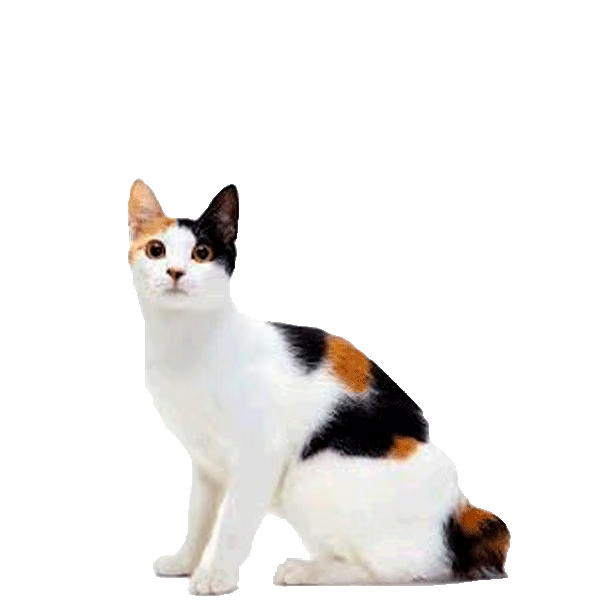
Korean Bobtail
The Korean Bobtail is a friendly, playful breed known for its short pom tail and intelligent, sociable companionship.
- Size
- Medium
- Lifespan
- 12–16 years
- Origin
- South Korea
- Temperament
- Friendly
Characteristics
Coat and grooming
How the Korean Bobtail coat is built, and what that means when you groom it.
- Coat layers
- Double coat
- Coat texture
- Silky
- Coat length
- Medium
- Shedding
- Moderate shedding
Grooming guidance
Critical: A Korean Bobtail should not be shaved.
The undercoat keeps heat out as well as in, and the outer coat shields the skin from sun and insect bites. Clipping the whole coat off removes both. It often grows back patchy, soft or a different colour, and in some animals the guard hairs never return properly. Brush the undercoat out instead of cutting it off.
Caution: A Korean Bobtail coat mats easily.
Fine or long hair tangles at the base of the coat, out of sight, where the mats tighten and pull on the skin. Brushing has to reach right down to the roots in sections, not just skim the surface.
Registry Recognition
The International Cat Association
- Bobtail & Tailless Cats
Cat Fanciers’ Association
- Bobtail & Tailless Cats
United Pet Club
- Bobtail & Tailless CatsPrimary
About the Korean Bobtail
The Korean Bobtail is a medium-sized cat from South Korea, recognized for its short pom-style tail and a friendly, playful, sociable temperament.
The Korean Bobtail is a medium-sized domestic cat associated with South Korea. Its most distinctive feature is a naturally short tail, often carried as a small pom or kink rather than a full-length tail. Adults usually fall in the range of about 7 to 12 pounds, with a balanced, moderately muscular body.
People describe the breed as friendly, playful, and intelligent. These cats tend to stay active well into adulthood and often seek out company rather than retreating to a quiet corner. They form attachments to the people they live with and frequently follow household members from room to room.
As a companion, the Korean Bobtail fits households that can offer interaction and play. It is sociable enough to do well in homes with more than one pet, and its curiosity means it benefits from toys, climbing space, and regular engagement.
| Attribute | Detail |
|---|---|
| Origin | South Korea |
| Size | Medium (about 7 to 12 lb) |
| Lifespan | 12 to 16 years |
| Group/role | Companion cat |
| Good with | Families, other cats, and cat-friendly dogs |
Who it suits
The breed suits owners who want an interactive, people-oriented cat and can provide daily play. It is a reasonable choice for multi-pet homes and for households where someone is around for part of the day. People seeking a quiet, low-interaction cat may find this breed more demanding of attention than expected.
History and origin
The Korean Bobtail traces to South Korea, where short-tailed cats have long been part of the regional cat population in East Asia.
Short-tailed cats have a long presence across East Asia, and the Korean Bobtail is identified with the cat population of South Korea. Naturally bobbed tails appear in several East Asian cat types, the result of genetic variation that has persisted in the region's free-living and household cats over many generations.
The trait is hereditary. The short tail arises from a mutation affecting tail length, which can produce a pom, a curve, or a kink rather than a straight full tail. Because the feature occurs naturally, cats carrying it were part of ordinary domestic populations long before any organized breeding effort.
Compared with some long-established pedigree breeds, formal documentation of the Korean Bobtail is more limited, and it is far less widely registered than well-known short-tailed cats from elsewhere in the region. Much of what is recorded centers on the breed's geographic association with Korea and the shared East Asian heritage of bobtailed cats.
Today the Korean Bobtail is kept primarily as a household companion. Interest in it reflects broader attention to regional cat types and to the natural short-tail trait that defines the breed.
Appearance
The Korean Bobtail is a medium, balanced cat whose defining feature is a naturally short tail carried as a pom or kink.
The Korean Bobtail has a medium, moderately muscular build that reads as neither stocky nor slender. The head is rounded, the ears are set to give an alert expression, and the legs are in proportion to the body. The signature feature is the short tail, which can take the form of a small pom, a curve, or a kink and varies from cat to cat.
Movement is agile, and the breed keeps an athletic outline through adulthood. Overall the look is that of a well-balanced working-size cat rather than an extreme or exaggerated type.
| Feature | Description |
|---|---|
| Height | About 8 to 10 in at the shoulder |
| Weight | About 7 to 12 lb |
| Coat | Short to medium length |
| Colors | A wide range of solid, tabby, and patterned coats |
| Eyes | Rounded, in colors that complement the coat |
Coat and colors
The coat is short to medium in length and lies fairly close to the body. Color and pattern vary widely, including solid coats, tabby markings, and bicolor combinations. No single color defines the breed, so individuals differ considerably in appearance. The tail itself often carries the same coat texture as the body, and its short form is consistent regardless of color.
Temperament
The Korean Bobtail is friendly, playful, and sociable, forming close bonds with its household and generally getting along with other pets.
The Korean Bobtail is an active, people-focused cat. It tends to stay engaged with household activity and often seeks out company instead of withdrawing. Owners describe it as affectionate with the people it knows and quick to involve itself in daily routines.
With family members the breed is warm and interactive. Around strangers it is usually curious rather than fearful, though, like most cats, individuals vary and some take time to warm to new people. With other pets it is generally sociable and can coexist with other cats and with dogs that are comfortable around cats.
Intelligence shows in its play. These cats respond well to puzzle toys, interactive games, and anything that gives them a task. Without enough stimulation, a bored Korean Bobtail may invent its own entertainment, so consistent play matters.
| Trait | Rating |
|---|---|
| Affection | 4 |
| Energy | 4 |
| Trainability | 4 |
| Vocalness | 3 |
| Shedding | 3 |
Care and grooming
The Korean Bobtail needs routine coat brushing, daily play to use its energy, and an environment with climbing and resting space.
Grooming
- Brush the coat about once or twice a week to remove loose hair and limit mats.
- Check ears periodically and clean them only when needed.
- Trim nails every few weeks.
- Introduce regular tooth brushing to support dental health.
Exercise
- Schedule daily interactive play with wand toys or chase toys.
- Provide puzzle feeders or toys that reward problem-solving.
- Offer a cat tree or shelves for climbing and jumping.
- Rotate toys to keep the cat interested.
Environment
This breed does well in a home that offers vertical space, hiding spots, and clean litter facilities. Because it is sociable, it tends to be happiest where it gets regular interaction. In multi-pet households, give each animal its own resources such as separate feeding areas and litter boxes.
Nutrition and feeding
The Korean Bobtail needs a complete, balanced cat diet suited to its life stage, fed in measured daily portions to maintain a healthy weight.
As an obligate carnivore, the Korean Bobtail needs a diet built around animal protein. Choose a complete and balanced cat food appropriate to the cat's age and activity. Portion size depends on weight, life stage, and whether the cat is spayed or neutered, so adjust amounts to keep the body in good condition rather than feeding by appetite alone. Fresh water should always be available.
| Life stage | Amount per day | Meals |
|---|---|---|
| Kitten | Per product guidance, fed to demand | 3 to 4 |
| Adult | About 1/2 to 3/4 cup dry, or equivalent wet | 2 |
| Senior | Adjusted for lower activity | 2 |
Treats and supplements
Keep treats to a small share of daily calories, generally no more than about 10 percent. A complete commercial diet usually supplies the nutrients a healthy cat needs, so add supplements only on the advice of a veterinarian. Introduce any diet change gradually over several days to reduce digestive upset.
Health and lifespan
The Korean Bobtail typically lives 12 to 16 years and benefits from routine veterinary care and weight management to stay healthy.
The Korean Bobtail is generally a hardy cat with a typical lifespan of 12 to 16 years. As with any cat, individual health depends on genetics, diet, weight, and access to regular veterinary care. There is no large body of breed-specific disease data, so owners should follow the same preventive measures recommended for cats in general and watch for the common feline health concerns listed below.
| Condition | Signs | Note |
|---|---|---|
| Dental disease | Bad breath, drooling, reduced eating | Regular dental care and checkups help |
| Obesity | Weight gain, low activity | Manage portions and encourage play |
| Urinary tract issues | Straining, frequent or bloody urination | Seek prompt veterinary care |
| Parasites | Itching, digestive upset, weight loss | Keep parasite prevention current |
Preventive care
- Schedule annual veterinary exams, and twice-yearly visits for senior cats.
- Keep vaccinations and parasite control up to date.
- Maintain a healthy weight through diet and exercise.
- Provide regular dental care.
- Monitor litter box habits, appetite, and activity for changes.
Training
The Korean Bobtail is intelligent and responsive, learning litter habits, basic cues, and games readily with positive, reward-based methods.
The Korean Bobtail's intelligence makes it more trainable than many cats. It can learn to use a scratching post, respond to its name, and pick up simple cues and tricks. Because the breed enjoys interaction, training sessions double as the mental stimulation it needs. Keep sessions short and end them while the cat is still interested.
Basics
- Establish litter box use early by keeping boxes clean and easy to reach.
- Redirect scratching to a post or pad and reward the cat for using it.
- Pair a clear cue or clicker with a reward to teach simple behaviors.
- Build up gradually, one behavior at a time.
Breeding
The Korean Bobtail's short tail is an inherited trait, and responsible breeding pairs healthy adults with attention to the genetics of the bobtail gene.
Cats reach sexual maturity at a young age, often around five to nine months, though responsible breeders wait until adults are fully grown and health-checked before mating. The short tail is inherited, so breeders pay attention to how the bobtail trait is passed on and aim to pair healthy adults with sound temperament and good overall condition.
Gestation in cats lasts roughly nine weeks. Litters commonly contain a few kittens, and queens generally raise their young with little intervention in a quiet, warm space. Kittens nurse for several weeks before weaning onto solid food and should stay with the mother and littermates through the early socialization period. Early, gentle handling supports the friendly, sociable nature the breed is known for.
| Metric | Value |
|---|---|
| Sexual maturity | About 5 to 9 months |
| Gestation | About 63 to 65 days |
| Average litter | 3 to 5 kittens |
| Weaning age | About 6 to 8 weeks |
| Recommended rehoming age | 12 weeks or older |
Registering your Korean Bobtail and its microchip
A free lifetime United Pet Club record for your Korean Bobtail, plus microchip registration that stays current through every move.
Registering a Korean Bobtail in the United States
An indoor Korean Bobtail is one propped door away from being a stray, and shelters meet those cats every day. A free United Pet Club profile stands between the two: your contact details, your cat's photo, and its chip number if it has one, all on one record a clinic can find. Registering your cat takes minutes and never costs anything.
A scanner can read your Korean Bobtail's chip in two seconds; the question is whether the number leads anywhere. Registration is what makes it lead to you. It is free for life at United Pet Club, accepts chips from every manufacturer, and stays searchable through the AAHA lookup after every address change. Register the chip, then create your account if you have not yet.
How do I register my Korean Bobtail in the United States?
Sign up free with United Pet Club, add your Korean Bobtail's name, coloring, and a photo, and save. The profile lasts the cat's lifetime at no charge, indoor or outdoor, chip or no chip.
How do I register my Korean Bobtail's microchip?
Add the 15-digit number from the implant paperwork to your free United Pet Club account and check that your phone number is current. The lifetime plan is free, accepts every chip brand, and never charges for updates.
Does an indoor Korean Bobtail really need to be registered?
Yes. Escapes are exactly how indoor cats end up in shelters, and a shelter can only call the number a registry hands it. A free profile, with or without a chip, is what makes that call possible.
How much does it cost to register a Korean Bobtail?
Zero. Profile, microchip registration, and unlimited updates are all covered by United Pet Club's free lifetime plan.
Frequently asked questions
Common questions about the Korean Bobtail's size, temperament, care needs, lifespan, suitability, and availability.
How big does a Korean Bobtail get?
It is a medium cat, generally about 7 to 12 pounds and roughly 8 to 10 inches at the shoulder.
What is the Korean Bobtail's temperament like?
Friendly, playful, intelligent, and sociable. It bonds closely with its household and stays active into adulthood.
Is the Korean Bobtail hard to care for?
Care is moderate. It needs brushing once or twice a week, daily interactive play, and routine veterinary care, but it does not have unusual grooming demands.
How long do Korean Bobtails live?
Typically 12 to 16 years with good diet, weight management, and regular veterinary care.
Is the Korean Bobtail good with children and other pets?
Yes. Its sociable nature suits families and multi-pet homes, including other cats and cat-friendly dogs, when introductions are gradual.
Why does it have a short tail?
The short pom or kinked tail is a natural inherited trait, the same kind of short-tail variation seen in several East Asian cats.
Are Korean Bobtails easy to find?
They are uncommon and far less widely registered than better-known breeds, so availability is limited compared with mainstream cats.
From the community
Ask about the Korean BobtailNo questions about the Korean Bobtail yet. Be the first to ask.
Browse Cat breeds