

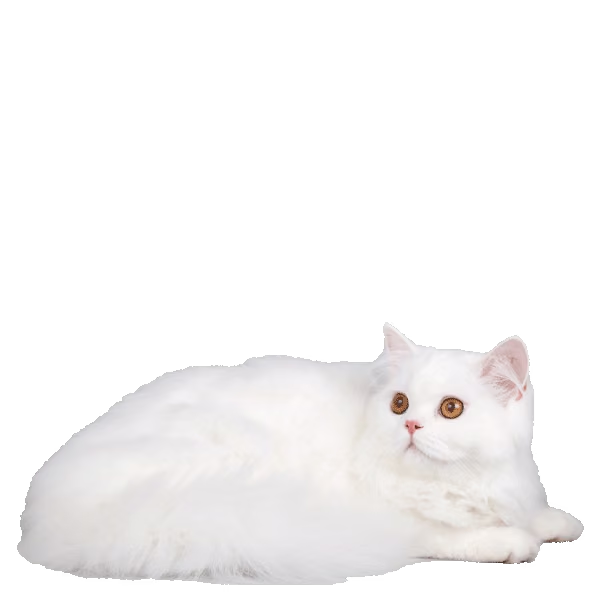
Khao Manee
The Khao Manee is an affectionate, sociable breed revered in Thailand for its pure white coat and jewel-like eyes.
- Size
- Medium
- Lifespan
- 10–14 years
- Origin
- Thailand
- Temperament
- Affectionate
- Standard colors
- White
Characteristics
Coat and grooming
How the Khao Manee coat is built, and what that means when you groom it.
- Coat layers
- Single coat
- Coat texture
- Smooth
- Coat length
- Short
- Shedding
- Low shedding
Registry Recognition
The International Cat Association
- Shorthair Cats
Cat Fanciers’ Association
- Shorthair Cats
United Pet Club
- Shorthair CatsPrimary
Khao Manee colors and patterns
What each club's breed standard says about every Khao Manee color and pattern. Point at a ruling to see the club's own wording.
Breed standards describe the Khao Manee in White. Standard patterns: Solid.
| Color or pattern | TICA | CFA | GCCF | WCF | ACFA | CCA |
|---|---|---|---|---|---|---|
| White | Standard (“White”) | Standard (“White”) | Standard (“solid white”) | Standard (“white”) | Standard (“snowy white”) | Standard (“snowy white”) |
| Patterns | ||||||
| Solid | Standard (“Solid”) | No ruling | Standard (“solid white”) | No ruling | Standard (“completely white”) | Standard (“snowy white”) |

| Color or pattern | TICA | CFA | GCCF | WCF | ACFA | CCA |
|---|---|---|---|---|---|---|
| Blue | Standard (“blue”) | Standard (“blue”) | Standard (“Blue”) | Standard (“blue”) | Standard (“blue”) | Standard (“Blue”) |
| Brown | No ruling | Standard (“shades of brown”) | No ruling | Standard (“shades of brown”) | No ruling | No ruling |
| Hazel | No ruling | Standard (“hazel”) | No ruling | Standard (“hazel”) | No ruling | No ruling |
| Copper | No ruling | Standard (“copper”) | No ruling | Standard (“copper”) | No ruling | No ruling |
| Amber | No ruling | Standard (“amber”) | Standard (“Amber”) | Standard (“amber”) | No ruling | No ruling |
| Yellow | Standard (“yellow”) | Standard (“yellow”) | Standard (“Yellow”) | Standard (“yellow”) | Standard (“yellow”) | No ruling |
| Gold | No ruling | No ruling | No ruling | Standard (“golden”) | No ruling | Standard (“gold”) |
| Green | Standard (“green”) | Standard (“green”) | Standard (“Green”) | Standard (“green”) | Standard (“green”) | Standard (“green”) |
| Aqua | No ruling | Standard (“aqua”) | No ruling | Standard (“aqua”) | No ruling | No ruling |
| Patterns | ||||||
| Odd-eyed | Standard (“odd”) | Standard (“multiple colors between”) | Standard (“Odd-eyed”) | Standard (“odd-eye”) | Standard (“odd-colored”) | Standard (“odd”) |
| Sectoral | Standard (“pigmented with both blue and another color”) | Standard (“multiple colors within an eye”) | Standard (“Bicoloured”) | Standard (“multiple colors or shades ... within an eye”) | Standard (“pigmented with both blue and another color”) | No ruling |


| Color or pattern | TICA | CFA | GCCF | WCF | ACFA | CCA |
|---|---|---|---|---|---|---|
| Pink | Standard (“pink”) | Standard (“pink”) | Standard (“pink”) | Standard (“pink”) | Standard (“pink”) | Standard (“pink”) |
| Color or pattern | TICA | CFA | GCCF | WCF | ACFA | CCA |
|---|---|---|---|---|---|---|
| Pink | Standard (“pink”) | Standard (“pink”) | Standard (“pink”) | Standard (“pink”) | Standard (“pink”) | Standard (“pink”) |
What the rulings mean
- Standard
- Described by the club's breed standard.
Color changes
How a Khao Manee's colors can change over its life.
Whitechanges toShaded
Coat · With age
Whitechanges toChinchilla
Coat · With age
Whitechanges toPointed
Coat · With age · from 1 to 52 weeks
Solidchanges toSmoke
Coat · With age · from 3 to 104 weeks
Bluechanges toGreen
Eyes · With age · from 4 to 17 weeks
Bluechanges toYellow
Eyes · With age · from 4 to 17 weeks
Bluechanges toGold
Eyes · With age · from 4 to 17 weeks
Bluechanges toCopper
Eyes · With age · from 4 to 17 weeks
Bluechanges toOrange
Eyes · With age · from 4 to 17 weeks
Bluechanges toHazel
Eyes · With age · from 4 to 17 weeks
Bluechanges toAmber
Eyes · With age · from 4 to 17 weeks
Pinkchanges toSeal
Nose · With age · from 1 to 52 weeks
Pinkchanges toBlue
Nose · With age · from 1 to 52 weeks
Pinkchanges toChocolate
Nose · With age · from 1 to 52 weeks
Pinkchanges toLilac
Nose · With age · from 1 to 52 weeks
Pinkchanges toSeal
Paw pads · With age · from 1 to 52 weeks
Pinkchanges toBlue
Paw pads · With age · from 1 to 52 weeks
Pinkchanges toChocolate
Paw pads · With age · from 1 to 52 weeks
Pinkchanges toLilac
Paw pads · With age · from 1 to 52 weeks


Sources
Each ruling comes from the club's published breed standard or color list.
Khao Manee breed standard
What each club's standard asks of the Khao Manee: size, build and forms. A club speaks only for itself, and a figure no club published is left out.
Measurements


Conformation
Head shape
Modified wedge
“Modified wedge, medium width, moderate length”
Head shape
NarrowFault
“Narrow upper head”
Facial profile
StraightFault
“Very straight profile”
Facial profile
Roman (convex)Disqualifying
“Roman profile”
Stop
PronouncedDisqualifying
“pronounced stop”
Muzzle length
Medium
“Medium in length and width”
Muzzle length
ShortFault
“Short or blunt muzzle”
Muzzle length
LongFault
“very long or pointy muzzle”
Muzzle shape
BluntFault
“Short or blunt muzzle”
Eye shape
Oval
“Plump oval shape”
Eye shape
RoundFault
“Round eyes”
Eye size
Large
“Slightly to moderately large”
Ear set
LowFault
“ears set low or high”
Ear set
HighFault
“ears set low or high”
Ear size
Large
“Slightly large, wide at the base”
Ear size
SmallFault
“small ears”
Neck length
Medium
“Medium in length and width”
Leg length
Medium
“Medium to slightly long”
Body type
CobbyDisqualifying
“Cobby body”
Feet
Oval
“Oval in shape, medium in size”
Tail length
Medium
“Medium. Proportionl to the body”
Tail shape
Tapering
“tapering gradually to the tip”
Tail shape
KinkedAlternate
“Tail tip kinks accepted”


Markings
- SpotsAlternate“Colored spots limited to the head in kittens and young adults.”


Parts of the body


About the Khao Manee
The Khao Manee is a medium-sized, short-haired cat from Thailand, known for its pure white coat and bright jewel-like eyes. It is affectionate, playful, and strongly people-oriented.
The Khao Manee is a short-haired cat that originated in Thailand. The name translates roughly to "white gem," a reference to the breed's solid white coat and clear, luminous eyes. It is a medium-sized cat with a muscular but elegant build and a smooth, close-lying coat.
The breed is best known for its eye color. Many Khao Manee have two eyes of the same shade, but the cat most prized in its homeland is odd-eyed, with one blue eye and one of gold, green, or amber. The contrast against the white coat is the breed's defining feature.
In personality, the Khao Manee is sociable and closely bonded to its people. It tends to follow household members from room to room, enjoys interactive play well into adulthood, and is generally vocal and curious. It suits owners who want an involved, active companion rather than an independent or aloof cat.
| Attribute | Detail |
|---|---|
| Origin | Thailand |
| Size | Medium |
| Lifespan | 10 to 14 years |
| Group / role | Companion / domestic short-hair |
| Good with | Families, children, other cats, and dogs when socialized |
Who it suits
The Khao Manee fits an active household where someone is home often. It does well with families, including children who handle cats gently, and it usually accepts other pets. Because it seeks attention and dislikes long stretches alone, it is less suited to homes where it would be left by itself for most of the day. A second pet can help keep it company.
History and origin
The Khao Manee is an ancient white cat of Thailand, recorded in Thai cat literature for centuries and developed as a recognized breed in the West from the late twentieth century onward.
The Khao Manee is a natural breed from Thailand, where solid white cats have been kept and admired for a long time. White cats appear in old Thai cat manuscripts, the painted and written records that catalogued the cats of the region, placing the type in Thai history well before modern breeding programs existed.
For much of its history the white cat of Thailand was a local treasure rather than an internationally traded breed. Accounts associate prized white cats with Thai households of high standing, and the cats were not widely exported, which kept the population concentrated in their country of origin.
Organized breeding outside Thailand is recent. Khao Manee were brought to the United States and Europe from the late 1990s and into the 2000s, and breeders worked to establish the type abroad while keeping ties to Thai foundation cats. Cat registries later recognized the breed for showing and pedigree registration.
Because the founding population was small and geographically limited, breeders have placed weight on maintaining genetic diversity and on the breed's signature traits: an all-white coat and clear, well-pigmented eyes, including the odd-eyed pattern.
What does a Khao Manee look like?
The Khao Manee is a medium, muscular cat with a short pure white coat, a modified wedge head and striking eyes. ACFA and TICA both give 6 to 8 lb for females and 8 to 11 lb for males.
The Khao Manee is a medium-sized, muscular, athletic cat with a short, smooth, pure white coat. The head is a modified wedge with a medium muzzle, and the ears are large and set fairly upright. The eyes are large and may be blue, green, yellow or odd-colored. Most adults weigh about 3.5 to 5 kg.
Six clubs rule on the breed. They are the American Cat Fanciers Association (ACFA), The International Cat Association (TICA) and the Cat Fanciers’ Association (CFA). The others are the Canadian Cat Association (CCA), the Governing Council of the Cat Fancy (GCCF) and the World Cat Federation (WCF). Only ACFA and TICA give weights. Compare the clubs side by side.
Size and weight by club
| Club | Males | Females |
|---|---|---|
| ACFA | Typically 8 to 11 lb | Typically 6 to 8 lb |
| TICA | Typically 8 to 11 lb | Typically 6 to 8 lb |
| CFA, CCA, GCCF, WCF | No weight given | No weight given |
ACFA and TICA agree exactly, so females are lighter than males by about two to three pounds in both. The other four clubs give no weight, and none of the six gives a height. As a general description, a Khao Manee stands about 23 to 25 cm at the shoulder.
Head, body and tail
The clubs agree on the broad shape: a modified wedge head (ACFA, CCA, CFA, TICA and WCF), a medium muzzle, large eyes, large ears, medium legs, oval feet, a medium neck and a medium, tapering tail. ACFA and CCA call the body semi-foreign. GCCF describes a wedge head that is broad, with a slight stop, a square, blunt muzzle and a level bite.
Coat, colors and markings
The coat is short, smooth and single, with low shedding. All six clubs accept white, and ACFA, CCA, GCCF and TICA list it as a solid color. TICA lists spots as an alternate marking, meaning accepted but not preferred. The pink nose and pink paw pads are standard in all six.
Eye color is a hallmark. All six clubs accept blue, green, yellow-toned and odd-colored eyes. CFA and WCF also list brown, hazel, copper, amber and aqua, and sectoral eyes are standard in five clubs. See the colors for cats for more.
What the show standards penalize
The clubs are strict about the head and body. ACFA, CCA, TICA and WCF disqualify a convex (Roman) profile, a pronounced stop and a cobby body. CFA faults a cobby body and a foreign one, and disqualifies extra toes. Most clubs fault a narrow head, a straight profile, round eyes, small ears and a short or blunt muzzle. Faults and disqualifications are show-ring judgements, not health verdicts.
What the Khao Manee standard says, club by club
Weight for the Khao Manee: ACFA 3.6-5 kg; TICA 3.6-5 kg.
Clubs set their own figures for the Khao Manee. These come from each club's published standard: ACFA, CCA, CFA, GCCF, TICA, WCF.
Size
- Weight, male: ACFA 3.6-5 kg; TICA 3.6-5 kg
- Weight, female: ACFA 2.7-3.6 kg; TICA 2.7-3.6 kg
Build and forms
At least one club accepts each of these:
- Head shape: Modified wedge, Wedge, Broad
- Stop: Slight
- Muzzle length: Medium, Long
- Muzzle shape: Blunt, Square
- Bite: Level bite
- Eye shape: Almond, Oval, Oblique
- Eye size: Large
- Ear set: High
- Ear size: Large, Medium
- Ear tip: Rounded
Forms the clubs penalize
A fault or a disqualification is a judgment under a show standard. It can affect placings and, at some clubs, registration.
- Disqualifying: Facial profile: Roman (convex) (ACFA, CCA, TICA, WCF); Stop: Pronounced (ACFA, CCA, TICA, WCF); Body type: Cobby (ACFA, CCA, TICA, WCF); Toes: Polydactyl (extra toes) (CFA)
- Fault: Head shape: Narrow (ACFA, CFA, TICA, WCF); Facial profile: Straight (ACFA, CCA, CFA, TICA, WCF); Muzzle length: Short (ACFA, CCA, CFA, TICA, WCF); Muzzle length: Long (ACFA, CCA, CFA, TICA); Muzzle shape: Blunt (ACFA, CCA, CFA, TICA, WCF); Eye shape: Round (ACFA, CCA, CFA, TICA, WCF); Eye size: Small (CFA, GCCF, WCF); Ear set: Low (ACFA, CCA, CFA, TICA, WCF); Ear set: High (ACFA, CCA, CFA, TICA, WCF); Ear size: Small (ACFA, CCA, CFA, GCCF, TICA, WCF)
Markings
Each club's ruling on the breed's named marks:
- Spots: Alternate (TICA)
See every point side by side: compare the clubs.
Rulings come from each club's published breed standard, and clubs revise their standards. Before a show or a registration, check the current text with the club.
What does each club give for Weight in the Khao Manee?
Weight, male: ACFA 3.6-5 kg; TICA 3.6-5 kg; Weight, female: ACFA 2.7-3.6 kg; TICA 2.7-3.6 kg.
Which forms do clubs penalize in the Khao Manee?
Disqualifying: Facial profile: Roman (convex) (ACFA, CCA, TICA, WCF); Stop: Pronounced (ACFA, CCA, TICA, WCF); Body type: Cobby (ACFA, CCA, TICA, WCF); Toes: Polydactyl (extra toes) (CFA). Fault: Head shape: Narrow (ACFA, CFA, TICA, WCF); Facial profile: Straight (ACFA, CCA, CFA, TICA, WCF); Muzzle length: Short (ACFA, CCA, CFA, TICA, WCF); Muzzle length: Long (ACFA, CCA, CFA, TICA); Muzzle shape: Blunt (ACFA, CCA, CFA, TICA, WCF); Eye shape: Round (ACFA, CCA, CFA, TICA, WCF); Eye size: Small (CFA, GCCF, WCF); Ear set: Low (ACFA, CCA, CFA, TICA, WCF); Ear set: High (ACFA, CCA, CFA, TICA, WCF); Ear size: Small (ACFA, CCA, CFA, GCCF, TICA, WCF).
Which Khao Manee colors the clubs accept
Every club we track accepts White for the Khao Manee.
On the Khao Manee, every club we track agrees on White. Clubs compared: ACFA, CCA, CFA, GCCF, TICA, WCF.
Patterns listed as standard for the Khao Manee: Solid.
Beyond the main color
Standards rule on more than the main color. These are listed as standard:
- Eyes: Blue, Brown, Hazel, Copper, Amber, Yellow
- Nose: Pink
- Paw pads: Pink
Rulings come from each club's published breed standard, and clubs revise their standards. Before a show or a registration, check the current text with the club.
Which Khao Manee colors do all the clubs accept?
All of these clubs accept White: ACFA, CCA, CFA, GCCF, TICA, WCF.
Temperament and personality
The Khao Manee is affectionate, sociable, and intelligent, bonding closely with its household and staying playful and interactive throughout its life.
The Khao Manee is an outgoing, people-oriented cat. It forms strong attachments to its family and likes to be where the activity is, often following household members from room to room and settling near them. It tends to greet visitors rather than hide from them.
With children it is generally patient and playful, provided handling is gentle. It usually gets along with other cats and with dogs that are used to cats, and a companion animal can help when the household is away during the day. The breed is intelligent and curious, so it investigates new objects, opens cupboards, and learns household routines quickly.
This is a fairly vocal breed. The Khao Manee uses a range of sounds to communicate and will let its owners know when it wants attention, food, or play. Owners who prefer a quiet, hands-off cat may find it demanding, while those who want an interactive companion tend to value the constant engagement.
| Trait | Rating |
|---|---|
| Affection | 5 |
| Energy | 4 |
| Trainability | 4 |
| Vocalness | 4 |
| Shedding | 2 |
Care and grooming
The Khao Manee is low-maintenance to groom thanks to its short single coat, but it needs daily interaction and play to stay content.
Grooming
The short, single coat needs little upkeep. A weekly routine keeps the cat clean and the coat in good condition.
- Brush once a week with a soft brush or grooming glove to remove loose hair
- Wipe the white coat with a damp cloth if it picks up dirt or stains
- Check ears weekly and clean only the outer area if needed
- Trim nails every two to three weeks
- Brush teeth regularly to support dental health
Exercise
This is an active cat that needs daily play to burn energy and stay mentally occupied.
- Provide two or more interactive play sessions each day
- Offer wand toys, balls, and puzzle feeders
- Add a cat tree or shelves for climbing and high perches
- Rotate toys to keep the cat interested
Environment
The Khao Manee is an indoor-suited cat that wants company and stimulation. Its white coat offers little protection from strong sun, so an indoor or supervised outdoor setup is sensible. Provide window perches, scratching posts, and quiet resting spots. Because the breed dislikes long isolation, a companion pet or a household where someone is often home works best.
Grooming a Khao Manee
The Khao Manee coat: Single coat, Smooth, Short, Low shedding.
Most of what a Khao Manee needs from grooming follows from its coat.
- Coat layers: Single coat
- Coat texture: Smooth
- Coat length: Short
- Shedding: Low shedding
What this coat asks of you
- A single coat has no dense undercoat, so there is less to brush out and less insulation against the cold.
- A smooth coat lies flat and is the easiest kind to keep. A soft brush or a grooming mitt lifts dust and loose hair.
- Short hair rarely tangles but it still sheds, so regular brushing keeps the loose hair down.
- Low shedding does not mean low upkeep. Hair that stays in the coat can still tangle unless it is brushed out.
A groomer who knows the breed can adapt all of this to the individual animal. Sore skin, mats pressed against the skin or a sudden change in the coat are worth showing to a vet.
What kind of coat does a Khao Manee have?
On our records: Coat layers: Single coat; Coat texture: Smooth; Coat length: Short; Shedding: Low shedding.
How much does a Khao Manee shed?
Low shedding does not mean low upkeep. Hair that stays in the coat can still tangle unless it is brushed out.
Nutrition and feeding
The Khao Manee does well on a complete, meat-based cat food matched to its life stage, fed in measured portions across one or two meals a day.
As an obligate carnivore, the Khao Manee needs a diet built around animal protein. Choose a complete and balanced commercial cat food appropriate to the cat's age and activity level, with named meat as the main ingredient. Both wet and dry foods can work, and many owners combine the two to support hydration while keeping dry food available. Fresh water should always be on hand.
| Life stage | Amount per day | Meals |
|---|---|---|
| Kitten (2 to 12 months) | Per package guidance, fed to appetite | 3 to 4 |
| Adult (1 to 7 years) | Around 200 to 300 kcal | 2 |
| Senior (7+ years) | Adjusted to weight and activity | 2 |
Treats and supplements
Keep treats to no more than about ten percent of daily calories to prevent weight gain. A cat on a complete commercial diet usually needs no extra supplements. Discuss any supplement, such as joint support for older cats, with a veterinarian before adding it, and weigh the cat regularly so portions can be adjusted as needed.
Health and lifespan
The Khao Manee is generally healthy with a lifespan of 10 to 14 years, though its white coat and possible blue eyes call for attention to sun exposure and to deafness linked to the white-coat gene.
The Khao Manee is considered a generally healthy, hardy breed with a typical lifespan of 10 to 14 years. As a natural breed with a relatively small founding population, responsible breeding for genetic diversity helps keep the population sound. The main breed-specific concerns relate to its white coat and eye pigmentation.
| Condition | Signs | Note |
|---|---|---|
| Congenital deafness | No response to sound, in one or both ears | Linked to the dominant white gene, more often in blue-eyed cats; can be screened by a hearing test |
| Sunburn and skin damage | Reddened or sore skin on ears and nose | White coat offers little UV protection; limit strong sun exposure |
| Dental disease | Bad breath, drooling, reluctance to eat | Common across domestic cats; prevented with dental care |
| Obesity | Weight gain, reduced activity | Manage with measured portions and daily play |
Preventive care
- Keep core vaccinations and parasite control up to date
- Schedule annual veterinary checkups, more often for senior cats
- Have kittens hearing-tested where deafness is a concern
- Brush teeth and schedule dental checks
- Monitor weight and adjust food accordingly
- Limit exposure to strong midday sun
Training and enrichment
The Khao Manee is intelligent and people-focused, which makes it quick to learn cues, tricks, and household routines through reward-based training.
The Khao Manee learns readily. Its intelligence and desire to interact with people make it one of the more trainable cats, and it can pick up its name, simple commands, and even tricks such as fetch. Clicker training works well because the breed responds to clear feedback paired with a reward. Short, regular sessions hold its attention better than long ones, and training also gives the cat the mental exercise it needs.
Basics
- Start with litter training, which most kittens learn quickly with a clean, accessible box
- Introduce a scratching post early and reward its use to protect furniture
- Teach the cat to come to its name using treats and a consistent cue
- Add simple tricks such as sit or high-five once the basics are reliable
- Use a carrier with the door open and treats inside to make vet visits easier
Breeding
The Khao Manee reaches breeding maturity in its first year, with pregnancies of around 63 to 67 days and small to average litters, and breeders manage the white-coat gene carefully.
Female Khao Manee usually reach sexual maturity between five and ten months, though responsible breeders wait until a cat is physically mature, generally past its first year, before breeding. Pregnancy lasts about 63 to 67 days. Litters are typically small to average for a cat, and queens are generally attentive mothers. Kittens are weaned at around eight weeks but are usually kept with the mother and littermates until twelve to fourteen weeks for proper socialization before going to new homes.
Because the all-white coat is tied to a dominant white gene that is associated with congenital deafness, breeding programs pay close attention to pairings and to hearing screening. Maintaining genetic diversity is also a priority given the breed's small foundation, so outcrossing to approved Thai foundation cats is part of some programs. Breeding should be left to experienced, registered breeders working under registry guidelines and veterinary oversight.
| Metric | Value |
|---|---|
| Sexual maturity | 5 to 10 months |
| Recommended first breeding | After 12 months |
| Gestation | About 63 to 67 days |
| Typical litter size | 3 to 5 kittens |
| Weaning age | Around 8 weeks |
| Ready for new home | 12 to 14 weeks |
Registering your Khao Manee and its microchip
A free lifetime United Pet Club record for your Khao Manee, plus microchip registration that stays current through every move.
Registering a Khao Manee in the United States
An indoor Khao Manee is one propped door away from being a stray, and shelters meet those cats every day. A free United Pet Club profile stands between the two: your contact details, your cat's photo, and its chip number if it has one, all on one record a clinic can find. Registering your cat takes minutes and never costs anything.
If a chip is already under your Khao Manee's skin, the number still has to be filed. Implanting and registering are separate steps, and the clinic only does the first. Register the microchip free on the United Pet Club lifetime plan: any brand a US vet uses qualifies, and the record answers the AAHA universal lookup that American shelters run on every scan. Create your free account and close the loop today.
How do I register my Khao Manee in the United States?
Sign up free with United Pet Club, add your Khao Manee's name, coloring, and a photo, and save. The profile lasts the cat's lifetime at no charge, indoor or outdoor, chip or no chip.
How do I register my Khao Manee's microchip?
Add the 15-digit number from the implant paperwork to your free United Pet Club account and check that your phone number is current. The lifetime plan is free, accepts every chip brand, and never charges for updates.
Does an indoor Khao Manee really need to be registered?
Yes. Escapes are exactly how indoor cats end up in shelters, and a shelter can only call the number a registry hands it. A free profile, with or without a chip, is what makes that call possible.
How much does it cost to register a Khao Manee?
Zero. Profile, microchip registration, and unlimited updates are all covered by United Pet Club's free lifetime plan.
Khao Manee questions: size, color, eyes and care
Answers on how big a Khao Manee gets, what ACFA and TICA say about weight, which eye colors are accepted, what disqualifies one in the show ring and how to care for the breed.
How big does a Khao Manee get?
ACFA and TICA both say females typically weigh 6 to 8 lb and males 8 to 11 lb. The other clubs give no weight. As a general description, adults weigh around 3.5 to 5 kg and stand about 23 to 25 cm at the shoulder.
Do the clubs agree on the Khao Manee's size?
Only ACFA and TICA give a weight, and they agree: 6 to 8 lb for females and 8 to 11 lb for males. CFA, CCA, GCCF and WCF give no weight.
What colors does a Khao Manee come in?
White only. All six clubs accept a white coat, and ACFA, CCA, GCCF and TICA list it as solid. The eyes may be blue, green, yellow or odd-colored, and CFA and WCF list more eye colors.
What markings are allowed on a Khao Manee?
The breed is white, so markings are not part of the standard. TICA lists spots as an alternate, meaning accepted but not preferred. Kittens may show a small spot of color on the head that usually fades.
What disqualifies a Khao Manee in the show ring?
ACFA, CCA, TICA and WCF disqualify a convex (Roman) profile, a pronounced stop and a cobby body. CFA disqualifies extra toes. These are show-ring judgements, not health verdicts.
What is the Khao Manee's temperament like?
It is affectionate, sociable and intelligent. The breed bonds closely with its people, stays playful into adulthood, and tends to be vocal and attention-seeking.
Is the Khao Manee easy to care for?
Grooming is easy because of the short single coat, which needs only weekly brushing. The greater commitment is time and attention, since the breed wants daily play and dislikes being left alone for long.
How long does a Khao Manee live?
A typical lifespan is 10 to 14 years. Routine veterinary care, dental hygiene and a healthy weight help the cat reach the upper end of that range.
Is the Khao Manee good for families?
Yes. It generally does well with children who handle it gently and gets along with other cats and cat-friendly dogs, which makes it a good fit for active, sociable households.
Are Khao Manee cats prone to deafness?
The all-white coat is linked to a gene associated with congenital deafness, which is more common in blue-eyed cats. Reputable breeders hearing-test kittens, and an affected cat can still live a full life indoors.
Where can I find a Khao Manee?
The breed is uncommon outside Thailand, so availability is limited. Look for a registered breeder who tests for hearing and health and follows recognized registry guidelines, and expect a waiting list.
From the community
Ask about the Khao ManeeNo questions about the Khao Manee yet. Be the first to ask.
Browse Cat breeds