

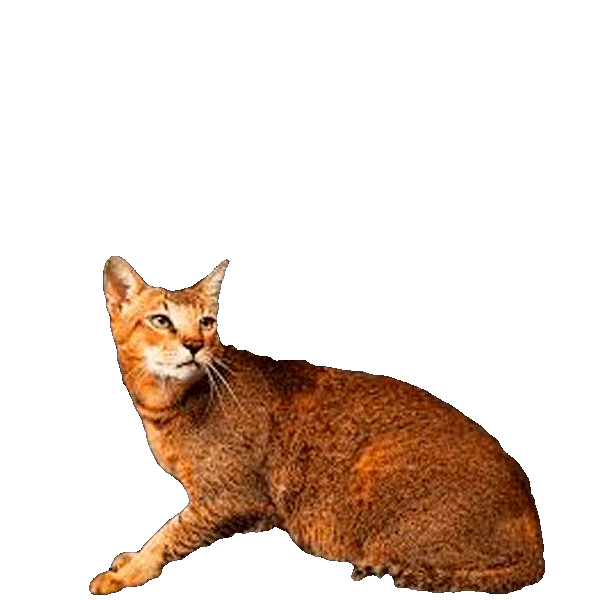
Chausie
The Chausie is an energetic, athletic breed prized for its wild jungle-cat looks and curious, highly active personality.
- Size
- Large
- Lifespan
- 12–15 years
- Origin
- United States
- Temperament
- Energetic
- Standard colors
- Black and Brown
Characteristics
Coat and grooming
How the Chausie coat is built, and what that means when you groom it.
- Coat layers
- Double coat
- Coat texture
- Smooth
- Coat length
- Short
- Shedding
- Moderate shedding
Grooming guidance
Critical: A Chausie should not be shaved.
The undercoat keeps heat out as well as in, and the outer coat shields the skin from sun and insect bites. Clipping the whole coat off removes both. It often grows back patchy, soft or a different colour, and in some animals the guard hairs never return properly. Brush the undercoat out instead of cutting it off.
Registry Recognition
The International Cat Association
- Hybrid Cats
Cat Fanciers’ Association
- Hybrid Cats
United Pet Club
- Hybrid CatsPrimary
Chausie colors and patterns
What each club's breed standard says about every Chausie color and pattern. Point at a ruling to see the club's own wording.
Breed standards describe the Chausie in Black and Brown. Standard patterns: Solid, Ticked tabby, and Grizzle.
| Color or pattern | TICA | LOOF |
|---|---|---|
| Black | Standard (“Black”) | Standard (“Noir”) |
| Brown | Standard (“Brown Ticked Tabby”) | Standard (“Brown ticked tabby”) |
| Patterns | ||
| Solid | Standard (“Solid”) | Standard (“solide”) |
| Ticked tabby | Standard (“Ticked Tabby”) | Standard (“ticked tabby”) |
| Grizzle | Standard (“Grizzled”) | No ruling |
| Mackerel tabby | No ruling | Disqualifying (“mackerel”) |
| Classic tabby | No ruling | Disqualifying (“classic tabby”) |


What the rulings mean
- Standard
- Described by the club's breed standard.
- Disqualifying
- The club's breed standard disqualifies an animal of this color or pattern.
Color changes
How a Chausie's colors can change over its life.
Brownchanges toCopal
Coat · With age · from 0 to 52 weeks
Blackchanges toRusset
Coat · Progressive
Blackchanges toBrown
Coat · With body condition · can change back
Blackchanges toBrown
Coat · In the sun · can change back
Blackchanges toBrown
Coat · Progressive
Solidchanges toSmoke
Coat · With age · from 3 to 104 weeks
Pinkchanges toSeal
Paw pads · With age · from 1 to 52 weeks
Pinkchanges toBlue
Paw pads · With age · from 1 to 52 weeks
Pinkchanges toChocolate
Paw pads · With age · from 1 to 52 weeks
Pinkchanges toLilac
Paw pads · With age · from 1 to 52 weeks

Sources
Each ruling comes from the club's published breed standard or color list.
Chausie breed standard
What each club's standard asks of the Chausie: size, build and forms. A club speaks only for itself, and a figure no club published is left out.
Conformation
Head shape
Modified wedge
“Modified wedge, medium in width from frontal view”
Muzzle length
Long
“The long muzzle balances the cheekbones”
Eye shape
Oblique
“half oval that slants toward the outer base of the ear”
Ear carriage
Erect (prick)
“large, upright, preferably tufted ears”
Ear set
High
“set at a slight outward angle on top of head”
Ear size
Large
“Tall, large ears”
Ear tip
Rounded
“with rounded ear tips”
Ear tip
Tufted (lynx tips)
“Ear tufts preferred; lack of tufts not a penalty”
Neck length
Medium
“The neck is of medium length and thickness”
Leg length
Long
“Long, with medium boning”
Body type
Rectangular
“The large rectangular body is firm, but not broad or bulky.”
Bone and substance
Moderate
“Long legs with medium boning”
Chest
Deep
“Long, lean, flat-sided and deep chested”
Feet
Oval
“medium in size and oval in shape”
Tail length
Short
“Slightly short, medium width”
Tail shape
Tapering
“with slight taper and fully articulated”
Tail shape
KinkedDisqualifying
“Tail kinked or lacking flexibility”


Markings


Parts of the body


About the Chausie
The Chausie is a large, athletic domestic cat with a wild jungle-cat appearance and a curious, high-energy personality. It originates in the United States and typically lives 12 to 15 years.
The Chausie is a large domestic cat developed in the United States to keep the long-legged, lean look of a wild jungle cat while having the temperament of a house pet. The name comes from the scientific name of the jungle cat, Felis chaus, which was crossed with domestic cats during the breed's early development. The result is a tall, muscular cat that moves with the loose, springy gait of a much wilder animal.
Owners describe the Chausie as curious, intelligent, and almost always in motion. These cats investigate cupboards, follow people from room to room, and learn household routines quickly. They form strong attachments to the people they live with and tend to dislike being left alone for long stretches.
This is not a low-effort lap cat. A Chausie needs space to run and climb, plenty of interaction, and a household that is comfortable with a busy, athletic animal. In the right home it is affectionate, playful, and engaging well into adulthood.
| Attribute | Detail |
|---|---|
| Origin | United States |
| Size | Large |
| Lifespan | 12 to 15 years |
| Group / role | Domestic companion cat (hybrid lineage) |
| Good with | Active families, older children, cat-savvy owners; best with another playful pet |
Who it suits
The Chausie suits people who want an interactive, athletic cat and can give it daily attention and room to move. It does well with experienced owners, active households, and homes where someone is around for much of the day. It is a poor match for anyone wanting a calm, sedentary cat or a pet that copes well with long hours alone.
History and origins
The Chausie is a modern American breed created by crossing the wild jungle cat (Felis chaus) with domestic cats, then breeding the offspring toward a stable, tame type.
The Chausie is a recent breed by feline standards, developed in the United States in the late twentieth century. Its foundation comes from pairings between the jungle cat, Felis chaus, a medium-sized wild cat native to parts of Asia and the Middle East, and domestic cats. Reports of jungle cat and domestic cat hybrids existed long before any organized breeding program, which gave breeders a starting point.
Breeders worked to keep the tall, athletic body and wild appearance of the jungle cat while producing a reliable, even-tempered companion. Because early hybrids can be unpredictable, the program focused on later generations that were several steps removed from the wild ancestor. Cats further from the wild foundation are generally calmer and better suited to home life.
The breed gained formal recognition for development and showing within The International Cat Association, which records generation labels (such as F1, F2, and F3) that show how many generations separate a cat from its wild ancestor. These labels matter for both temperament and, in some regions, legal ownership.
Today the Chausie remains uncommon. Litters are small, the gene pool is limited, and responsible breeders screen carefully, so demand often outpaces availability.
What does a Chausie look like?
The Chausie is a large, tall, lean cat with long legs, big tufted ears and a short coat in black, brown ticked tabby or grizzle. Its three listed clubs agree on type but not on colors or the locket marking.
The Chausie is a large, tall cat with a long, lean, deep-chested body, long legs and powerful hindquarters. The head is a modified wedge with a long muzzle and large, high-set ears, often with lynx tips. The coat is short and dense, in black, brown ticked tabby or grizzle. The overall impression is of a small wild cat rather than a typical house cat.
The frame looks long rather than heavy. Males commonly weigh about 7 to 11 kg and females somewhat less, and the cat stands roughly 35 to 45 cm at the shoulder.
Size and weight
Those figures are general descriptions. None of the three clubs we cover (LOOF, The International Cat Association (TICA) and the World Cat Federation (WCF)) gives a weight or height for the Chausie, so there are no club figures to compare.
Head, body and tail
The clubs largely agree on type. All three accept a rectangular body, moderate bone, a deep chest, long legs, large ears with rounded tips and oblique eyes, a neck of medium length and a short tail. Tufted lynx tips are standard for all three. TICA and the WCF describe a modified wedge head with a long muzzle, high-set ears, and oval feet, while LOOF describes a triangular head, oval eyes and cat-shaped feet. TICA also lists erect ears and a tapering tail, as does the WCF for the tail.
The WCF disqualifies a straight facial profile. LOOF faults both fine and heavy bone.
Coat, colors and markings
The coat is a short, smooth double coat with moderate shedding. Do not shave it. TICA accepts solid, ticked tabby and grizzle patterns in black and brown. LOOF accepts solid, black, brown and ticked tabby, but disqualifies mackerel and classic tabby. Eyes are hazel, yellow, gold or green under both TICA and LOOF. TICA also lists black or brick red nose leather and black or pink paw pads. See the species color guide.
A locket is the one marking the clubs split on: a fault for LOOF and TICA, and a disqualification for the WCF.
What the show standards penalize
Faults and disqualifications are show-ring judgements, not health verdicts.
- Disqualifying: a kinked tail (LOOF, TICA, WCF), a locket (WCF), a straight profile (WCF), and mackerel or classic tabby (LOOF).
- Faults: a locket (LOOF, TICA), and fine or heavy bone (LOOF).
To see every feature, compare the clubs side by side.
What the Chausie standard says, club by club
What the breed standards say about the build of the Chausie. Clubs compared: LOOF, TICA, WCF.
Clubs set their own figures for the Chausie. These come from each club's published standard: LOOF, TICA, WCF.
Build and forms
At least one club accepts each of these:
- Head shape: Modified wedge, Triangular
- Muzzle length: Long
- Eye shape: Oval, Oblique
- Ear carriage: Erect (prick)
- Ear set: High
- Ear size: Large
- Ear tip: Rounded, Tufted (lynx tips)
- Neck length: Medium
- Leg length: Long
- Body type: Rectangular
Forms the clubs penalize
A fault or a disqualification is a judgment under a show standard. It can affect placings and, at some clubs, registration.
- Disqualifying: Facial profile: Straight (WCF); Tail shape: Kinked (LOOF, TICA, WCF)
- Fault: Bone and substance: Fine (light) (LOOF); Bone and substance: Heavy (LOOF)
Markings
Each club's ruling on the breed's named marks:
- Locket: Fault (LOOF, TICA); Disqualifying (WCF)
See every point side by side: compare the clubs.
Rulings come from each club's published breed standard, and clubs revise their standards. Before a show or a registration, check the current text with the club.
Which forms do clubs penalize in the Chausie?
Disqualifying: Facial profile: Straight (WCF); Tail shape: Kinked (LOOF, TICA, WCF). Fault: Bone and substance: Fine (light) (LOOF); Bone and substance: Heavy (LOOF).
Which Chausie colors the clubs accept
Every club we track accepts Black, Brown for the Chausie.
On the Chausie, every club we track agrees on Black, Brown. Clubs compared: LOOF, TICA.
Patterns listed as standard for the Chausie: Solid, Ticked tabby, Grizzle.
Colors penalized in the show ring
A fault or a disqualification is a judgment under a show standard. It can affect placings and, at some clubs, registration.
- Disqualifying: Mackerel tabby (LOOF), Classic tabby (LOOF)
Beyond the main color
Standards rule on more than the main color. These are listed as standard:
- Eyes: Hazel, Yellow, Gold, Green
- Nose: Black, Brick red
- Paw pads: Black, Pink
Rulings come from each club's published breed standard, and clubs revise their standards. Before a show or a registration, check the current text with the club.
Which Chausie colors do all the clubs accept?
All of these clubs accept Black, Brown: LOOF, TICA.
Which Chausie colors are faults or disqualifications?
Disqualifying: Mackerel tabby (LOOF), Classic tabby (LOOF).
Temperament and personality
The Chausie is curious, intelligent, and very active, with strong bonds to its people and a need for constant stimulation. It is affectionate but rarely calm.
The Chausie is a busy, inquisitive cat that wants to be part of whatever is happening. It bonds closely with its household and tends to follow favorite people around, supervise daily tasks, and seek out interaction. Many Chausies stay playful and kitten-like for years, well past the age when other cats settle down.
With family the breed is affectionate and loyal. With strangers it is often cautious at first and may take time to warm up, though a well-socialized Chausie usually relaxes once it judges a visitor safe. With other pets it generally does best alongside another energetic cat or a confident dog that can match its pace; a single Chausie left alone in a quiet home is prone to boredom and the trouble that follows.
This breed is intelligent and easily bored. Without enough activity it may open cupboards, climb to high places, or invent its own entertainment. Owners often note that a Chausie needs a job to do as much as it needs food and water.
| Trait | Rating |
|---|---|
| Affection | 4 |
| Energy | 5 |
| Trainability | 4 |
| Vocalness | 3 |
| Shedding | 2 |
Care and grooming
The Chausie needs little grooming but heavy daily exercise, vertical space, and steady company. Its main care demand is mental and physical stimulation, not coat upkeep.
Day-to-day care for a Chausie is light on grooming and heavy on activity. The short coat is easy to maintain, but the breed's energy and intelligence mean the real work is keeping it engaged.
Grooming
- Brush once a week to remove loose hair and spread skin oils.
- Check ears weekly and clean gently if needed.
- Trim claws every few weeks and provide sturdy scratching posts.
- Brush teeth regularly or use a dental care routine advised by a vet.
Exercise
- Schedule one to two active play sessions a day with wand toys or chase games.
- Provide tall cat trees, shelves, and perches so the cat can climb and survey.
- Offer puzzle feeders and rotate toys to keep the mind busy.
- Consider leash training or a secure outdoor enclosure for safe outdoor time.
Environment
The Chausie does best in a roomy home with vertical space and room to run. It is not well suited to a small, quiet apartment unless the owner commits to heavy daily play. Because it bonds strongly and dislikes isolation, a second active pet or a household with people around for much of the day helps prevent boredom and stress.
Grooming a Chausie
The Chausie coat: Double coat, Smooth, Short, Moderate shedding. Main grooming rule: Do not shave.
Most of what a Chausie needs from grooming follows from its coat.
- Coat layers: Double coat
- Coat texture: Smooth
- Coat length: Short
- Shedding: Moderate shedding
What this coat asks of you
- A double coat has a soft undercoat beneath longer guard hairs. Brush right down to the undercoat, because that is the layer that packs down and traps loose hair.
- A smooth coat lies flat and is the easiest kind to keep. A soft brush or a grooming mitt lifts dust and loose hair.
- Short hair rarely tangles but it still sheds, so regular brushing keeps the loose hair down.
- Moderate shedding goes on through the year, and regular brushing catches most of it before it lands on the furniture.
What to tell a groomer
Mention these when you book. The coat notes on this page explain each one.
- Do not shave
A groomer who knows the breed can adapt all of this to the individual animal. Sore skin, mats pressed against the skin or a sudden change in the coat are worth showing to a vet.
What kind of coat does a Chausie have?
On our records: Coat layers: Double coat; Coat texture: Smooth; Coat length: Short; Shedding: Moderate shedding.
How much does a Chausie shed?
Moderate shedding goes on through the year, and regular brushing catches most of it before it lands on the furniture.
What should a groomer know about a Chausie?
These grooming rules apply: Do not shave.
Nutrition and feeding
The Chausie is a large, active cat that needs a high-protein, meat-based diet and steady feeding portions matched to its size and energy. Some lines digest plant-heavy foods poorly.
The Chausie is a large, high-energy cat, and its diet should reflect that. A meat-based food high in animal protein suits the breed well. Some Chausies, particularly those closer to the wild foundation, tolerate grain and plant-heavy diets poorly and may do better on foods with limited fillers; watch for loose stools or poor coat condition and adjust with a vet's guidance. Fresh water should always be available.
| Life stage | Amount per day | Meals |
|---|---|---|
| Kitten (to 12 months) | Free-fed or per-pack growth amount | 3 to 4 |
| Adult (1 to 7 years) | Portion matched to weight and activity | 2 |
| Senior (7+ years) | Slightly reduced; monitor weight | 2 |
Treats and supplements
Keep treats to a small share of daily calories so the cat keeps its lean build. Plain cooked meat makes a good reward. A healthy Chausie on a complete, balanced diet usually needs no supplements; add them only on a vet's advice, for example to support joints in an older cat.
Health and common conditions
The Chausie is generally healthy and lives 12 to 15 years, though some lines have digestive sensitivities and the breed is prone to a few inherited conditions seen across many cats.
The Chausie is generally a sturdy, healthy breed with a typical lifespan of 12 to 15 years. Its limited gene pool and hybrid background mean responsible breeding and screening matter. The condition most associated with the breed is digestive sensitivity in some lines, where cats struggle to digest plant-based ingredients and need a meat-forward diet to stay well.
| Condition | Signs | Note |
|---|---|---|
| Digestive sensitivity | Loose stools, weight loss, poor coat | More common in lines closer to the wild foundation; manage with diet |
| Hypertrophic cardiomyopathy (HCM) | Lethargy, breathing difficulty, sudden collapse | Heart disease seen in many cat breeds; ask about screening |
| Dental disease | Bad breath, drooling, reluctance to eat | Common in cats generally; prevent with dental care |
| Obesity (if under-exercised) | Weight gain, reduced activity | Avoid with portion control and daily exercise |
Preventive care
- Keep up annual veterinary check-ups and core vaccinations.
- Maintain regular parasite control for fleas and worms.
- Follow a dental care routine and have teeth checked yearly.
- Feed a suitable diet and monitor weight to keep the cat lean.
- Ask the breeder about health testing of the parent cats.
Training and enrichment
The Chausie is intelligent and trainable, and responds well to reward-based methods. It can learn tricks, leash walking, and games, which also helps burn its high energy.
The Chausie is one of the more trainable cat breeds. Its intelligence and drive to interact make it receptive to teaching, and training doubles as enrichment for a cat that needs mental work. Many Chausies learn to fetch, walk on a harness, and respond to a name or cue. Short, frequent sessions work better than long ones, and the cat's curiosity usually does much of the work once it understands a reward is on offer.
Basics
- Start young and keep sessions short, a few minutes at a time.
- Use a clear marker, such as a clicker or a consistent word, paired with a treat.
- Teach one simple behavior at a time, such as coming when called.
- Build up to fetch, harness walking, or puzzle games as the cat gains confidence.
- End each session on a success and before the cat loses interest.
Breeding and raising kittens
The Chausie is bred carefully from a small gene pool, often using later-generation cats. Litters are typically small, and early generations can present fertility and temperament challenges.
Breeding the Chausie is specialized work. The breed descends from crosses between the wild jungle cat and domestic cats, and males in the first few hybrid generations are often infertile, which is a known hurdle in hybrid breeding. For this reason breeders rely heavily on later-generation cats and a limited pool of proven lines.
Females reach sexual maturity at roughly the same age as other domestic cats, and gestation runs close to the feline norm of about 63 to 67 days. Litters tend to be small. Kittens benefit from early, consistent handling so they grow into the confident, sociable adults the breed is known for; socialization in the first weeks has a lasting effect on temperament.
Responsible breeders screen breeding cats for health, register generations accurately, and place kittens in homes prepared for an active, demanding cat. Anyone considering breeding should also check local laws, since some regions restrict ownership of early-generation hybrids.
| Metric | Value |
|---|---|
| Gestation | Approx. 63 to 67 days |
| Typical litter size | Small (often 2 to 4 kittens) |
| Early-generation males | Often infertile (F1 to F3) |
| Weaning age | Around 8 to 12 weeks |
| Generation labels | F1, F2, F3 onward (steps from wild ancestor) |
Registering your Chausie and its microchip
A free lifetime United Pet Club record for your Chausie, plus microchip registration that stays current through every move.
Registering a Chausie in the United States
Give your Chausie a record before it needs one. The profile is free for the cat's whole life, lists your current contact details next to its photo and description, and attaches a microchip number the day you have it. Cat registration is a few form fields, not a project.
If a chip is already under your Chausie's skin, the number still has to be filed. Implanting and registering are separate steps, and the clinic only does the first. Register the microchip free on the United Pet Club lifetime plan: any brand a US vet uses qualifies, and the record answers the AAHA universal lookup that American shelters run on every scan. Create your free account and close the loop today.
How do I register my Chausie in the United States?
Sign up free with United Pet Club, add your Chausie's name, coloring, and a photo, and save. The profile lasts the cat's lifetime at no charge, indoor or outdoor, chip or no chip.
How do I register my Chausie's microchip?
Add the 15-digit number from the implant paperwork to your free United Pet Club account and check that your phone number is current. The lifetime plan is free, accepts every chip brand, and never charges for updates.
Does an indoor Chausie really need to be registered?
Yes. Escapes are exactly how indoor cats end up in shelters, and a shelter can only call the number a registry hands it. A free profile, with or without a chip, is what makes that call possible.
How much does it cost to register a Chausie?
Zero. Profile, microchip registration, and unlimited updates are all covered by United Pet Club's free lifetime plan.
Chausie questions answered
Answers on the Chausie's size, colors, show-ring rules, temperament, care, lifespan and availability, with each ruling tied to the cat association that makes it.
How big does a Chausie get?
The Chausie is a large cat. It is tall and long-legged, with males commonly weighing about 7 to 11 kg and females somewhat less. LOOF, TICA and the WCF do not give a weight, so this is a general description, not a club standard.
What colors does a Chausie come in?
A narrow range of natural colors: black and brown, in solid, ticked tabby and (for TICA) grizzle patterns. LOOF disqualifies mackerel and classic tabby. Eyes are hazel, yellow, gold or green under TICA and LOOF.
What markings are allowed on a Chausie?
A locket is not welcome: it is a fault for LOOF and TICA and a disqualification for the WCF. No club we cover accepts it as standard.
What disqualifies a Chausie in the show ring?
A kinked tail disqualifies under LOOF, TICA and the WCF. The WCF also disqualifies a locket and a straight profile, and LOOF disqualifies mackerel and classic tabby. These are show-ring rulings, not health findings.
What is the Chausie's temperament like?
Curious, intelligent and very active, with strong bonds to its people. It stays playful for years, is affectionate with family, and can be cautious with strangers at first.
Is the Chausie hard to care for?
Grooming is easy thanks to the short coat. The breed needs heavy daily exercise, mental stimulation and company, so it is best for committed, active owners rather than people wanting a calm cat.
Is the Chausie a good family pet?
Yes, in an active household. It suits families with older children and other energetic pets, and does best where someone is home much of the day. It dislikes being left alone for long periods.
Can a Chausie be trained?
Yes. It is among the more trainable cat breeds and responds well to reward-based methods. Many learn fetch, harness walking and simple cues.
How long does a Chausie live?
A Chausie typically lives 12 to 15 years with good care, suitable diet and regular veterinary check-ups.
Are Chausies easy to find?
No. The breed is uncommon, litters are small and the gene pool is limited, so kittens from responsible breeders can involve waiting lists. Some regions also restrict early-generation hybrids.
From the community
Ask about the ChausieNo questions about the Chausie yet. Be the first to ask.
Browse Cat breeds