The Welsh Terrier is a spirited, friendly Welsh breed with a wiry black-and-tan coat, known for its cheerful energy and intelligence.
How the Welsh Terrier coat is built, and what that means when you groom it.
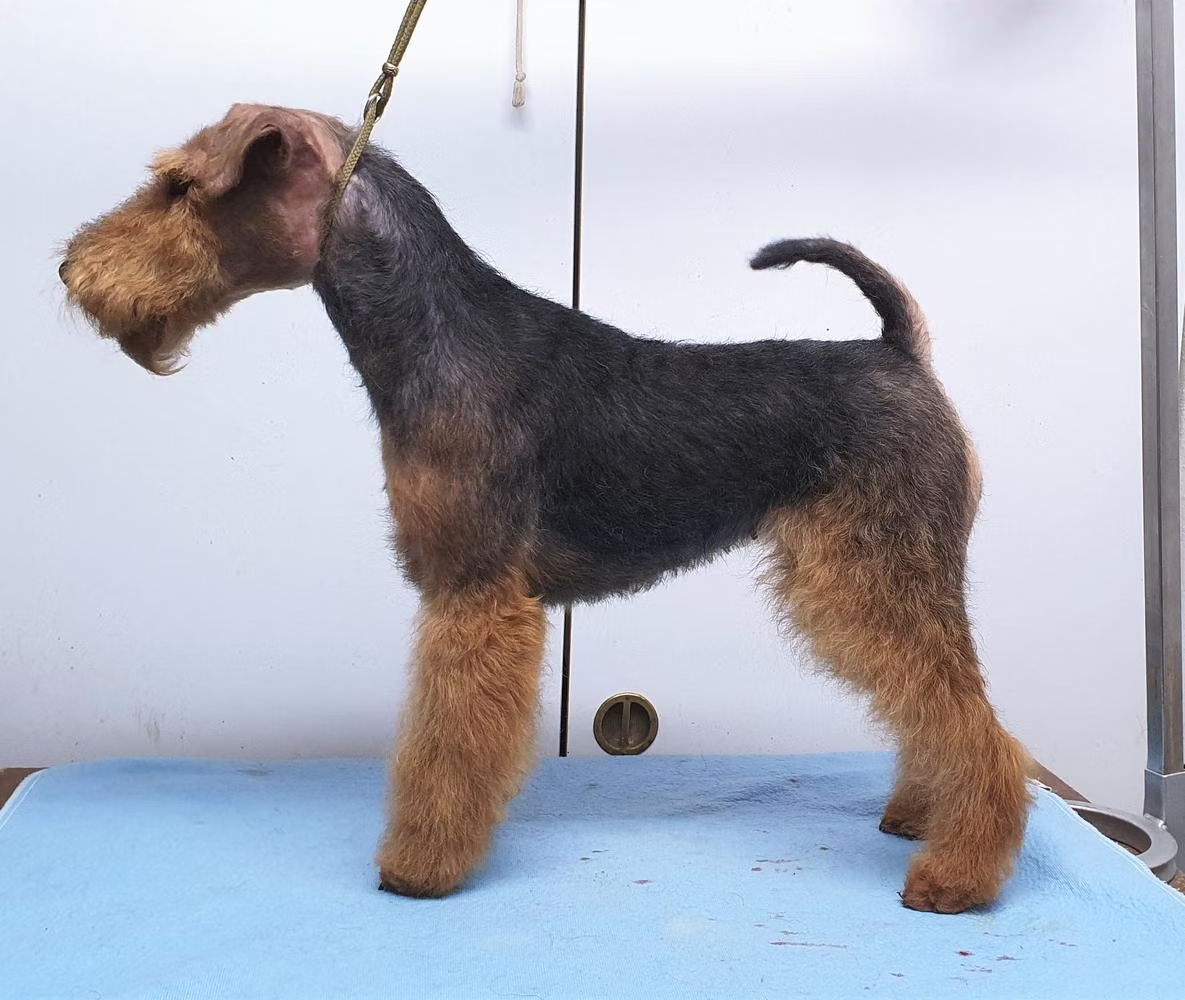
Caution: A Welsh Terrier coat should be hand-stripped rather than clipped.
A wire coat is meant to be pulled out at the root once the hair is ready to release. Clippers cut it off part way instead, leaving the soft undercoat behind. The result is a coat that grows back limp and faded, and the weatherproof texture only returns after the hair is stripped out again.
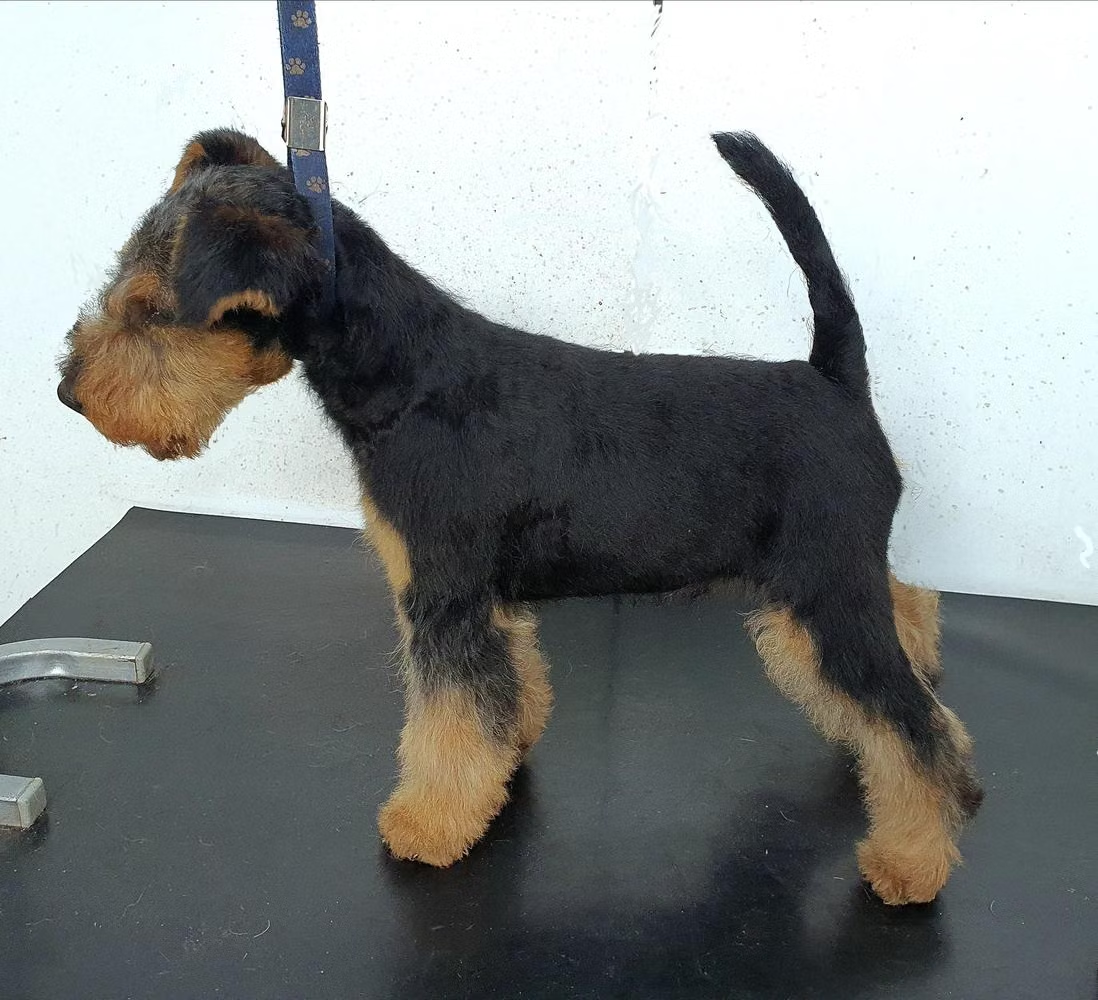
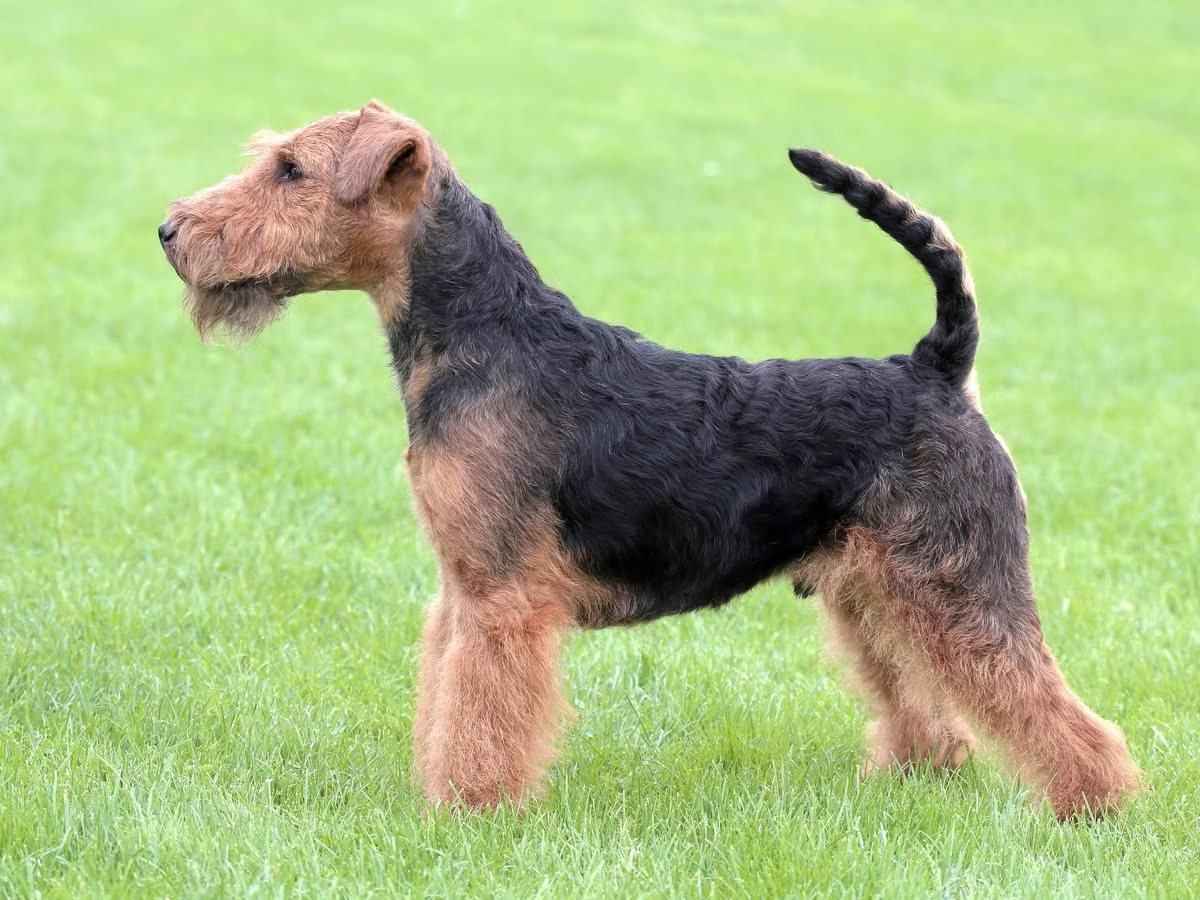
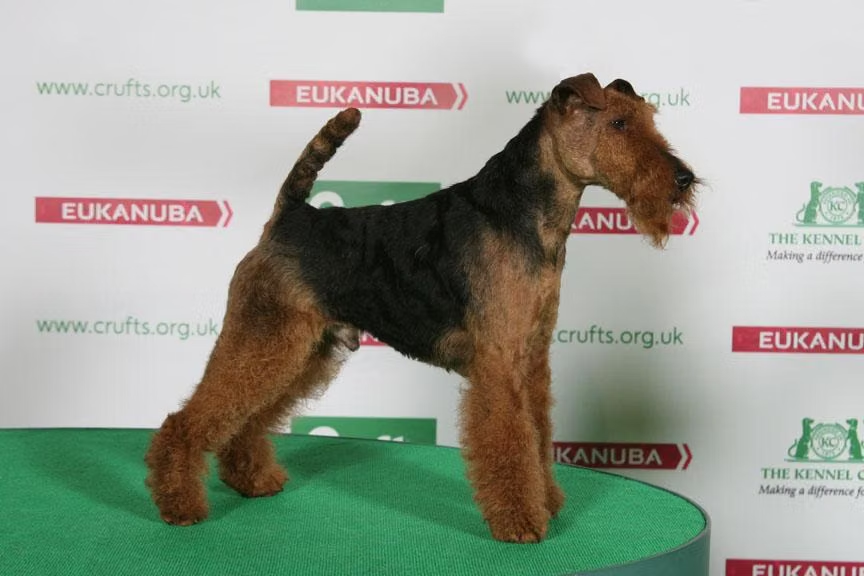
A few of the Welsh Terrier profiles members have added to United Pet Club.
The Welsh Terrier is a small, spirited dog from Wales with a wiry black-and-tan coat, well suited to Singapore homes that can give it daily exercise and grooming.
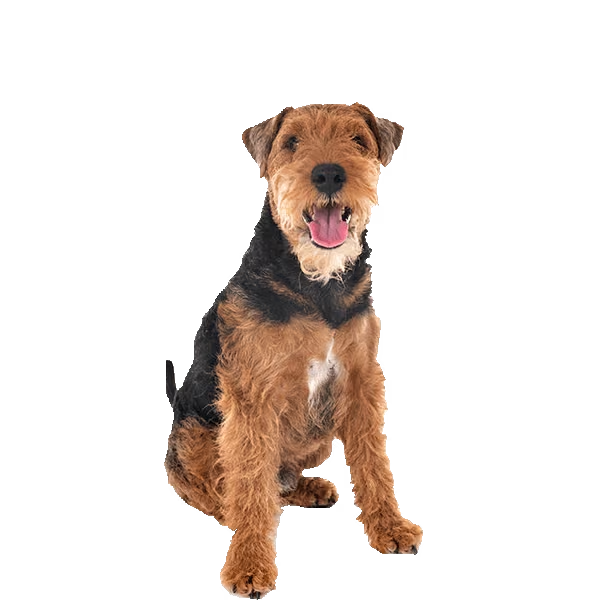
The Welsh Terrier is a small working terrier that originated in Wales. It stands roughly knee-high, with a square, sturdy build and the black-and-tan jacket typical of the rugged terrier group. Breeders developed the dog to hunt foxes, badgers, and rodents, so the body is compact and athletic rather than delicate.
In temperament the Welsh Terrier is friendly and outgoing, without the jumpy edge some terriers carry. It stays alert, curious, and confident, and keeps a playful streak well into adulthood. Owners in Singapore often find the breed cheerful and game for an early-morning walk before the heat sets in, with enough independence to keep a household on its toes.
The coat is one of the breed's most recognisable features. The wiry outer layer sheds very little, which suits Singapore's indoor-heavy lifestyle and smaller living spaces, though the coat still needs regular upkeep to hold its texture in the year-round humidity.
| Attribute | Detail |
|---|---|
| Origin | Wales |
| Size | Small (about 9 to 9.5 kg) |
| Lifespan | 12 to 15 years |
| Group / role | Terrier; originally a hunting and vermin dog |
| Good with | Families and active owners; keep a close eye around smaller pets |
The Welsh Terrier suits active individuals and families who can commit to daily exercise and steady, patient training, ideally scheduled before the late-morning heat builds. It does well with older children who know how to handle a lively dog. Households keeping small animals such as rabbits or hamsters should be careful, as the breed keeps a strong prey drive. Prospective owners in HDB flats should check the current approved dog list and register the dog with NParks' Animal & Veterinary Service (AVS), since only one dog is allowed per flat and not every breed qualifies automatically. Anyone wanting a quiet, low-energy lap dog will likely find this terrier too busy.
The Welsh Terrier developed in Wales as a working terrier bred to hunt foxes, badgers, and rodents, and it is now also registered and shown under the Singapore Kennel Club.
The Welsh Terrier comes from Wales, where local working terriers were kept to hunt fox, badger, and otter, and to keep rodents off the farm. These dogs had to be small enough to follow quarry into a den yet bold and tough enough to face it once there. The black-and-tan, wire-coated terriers of Wales formed the foundation of the modern breed.
Through the nineteenth century, breeders refined and standardised the type, working towards a consistent look and working ability. The Welsh Terrier shares ancestry and appearance with the old black-and-tan terrier types of Britain, and looks like a smaller version of the Airedale Terrier in coat colour and pattern.
As dog showing grew in popularity in Britain, the Welsh Terrier moved from a purely working dog towards the show ring and the family home. It was among the terrier breeds recognised in the late nineteenth century and built a steady following among people who valued its size and even temperament.
The breed later spread beyond Wales to the rest of Britain and overseas, including Singapore, where it can be registered and shown through the Singapore Kennel Club (SKC). Today it is kept mainly as a companion and show dog here, though it keeps the build and instincts of its working past.
The Welsh Terrier is a small, square dog with a wiry black-and-tan coat, a rectangular head, and a compact, well-balanced body, judged to FCI-aligned standards here.
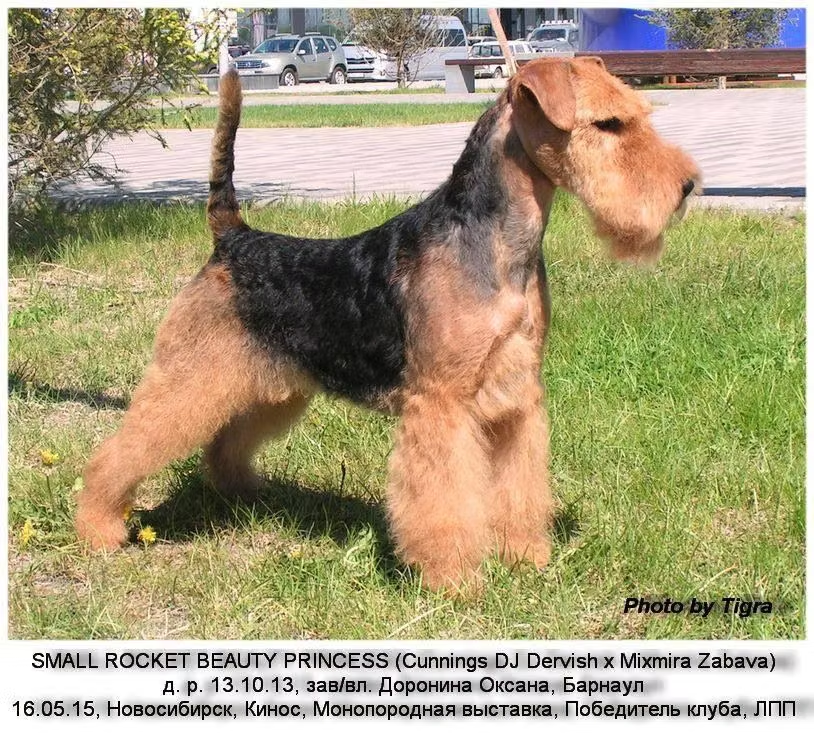
The Welsh Terrier is a small dog with a square, balanced outline, meaning its height at the shoulder is roughly equal to the length of its body. The head is long and rectangular with a flat skull, small folded ears that drop forward, and dark eyes that give an alert expression. The build is sturdy and workmanlike, with straight legs and a level back.
| Trait | Standard |
|---|---|
| Height | Up to about 39 cm at the shoulder |
| Weight | About 9 to 9.5 kg |
| Coat | Wiry, dense double coat with a hard outer layer |
| Colours | Black and tan, or grizzle and tan |
| Eyes | Small, dark, set well into the head |
The defining feature is the harsh, wiry double coat. The undercoat is soft while the outer coat is dense and hard to the touch, which protected the dog from weather and rough terrain back in Wales. The standard colour is black and tan, with a black or dark grizzle saddle over the back and tan on the head, legs, and underside. Puppies are often born mostly black and develop the adult tan markings as they mature. To keep the coat's proper texture and colour, groomers traditionally hand strip it rather than clip it, a service worth booking with someone experienced in wire coats, since Singapore's climate keeps the coat growing year-round.
The Welsh Terrier is friendly, spirited, and intelligent, generally good with families while keeping a strong terrier prey drive towards small animals such as hamsters.
The Welsh Terrier is known for a friendly, cheerful disposition paired with classic terrier spirit. It is confident and energetic, often staying playful and puppyish for years. The breed is intelligent and curious, which makes it engaging company but also means it needs mental stimulation to stay content, particularly during long stretches indoors on rainy or especially hot days.
With family members the Welsh Terrier is affectionate and people-oriented. It usually gets along with children, especially older ones who can match its activity level and handle it gently. Towards strangers it tends to be alert and will announce visitors, though it is not typically nervous or aggressive, which makes it a reasonable watchdog for a flat or landed home.
With other dogs the breed can be sociable but may be assertive, and some individuals do not back down from a challenge. Its hunting heritage gives it a high prey drive, so small pets such as hamsters, rabbits, and sometimes cats can trigger chasing. Early socialisation, including outings to a dog run or pet-friendly park, helps it learn appropriate behaviour around other animals.
| Trait | Rating |
|---|---|
| Affection | 4 |
| Energy | 4 |
| Trainability | 4 |
| Vocalness | 3 |
| Shedding | 1 |
The Welsh Terrier needs regular coat upkeep, daily exercise timed around Singapore's heat, and a home that can handle a busy, intelligent dog.
The Welsh Terrier adapts to a landed house, an HDB flat, or a condo as long as it gets enough daily activity. A securely fenced garden is a plus, as the breed likes to explore and dig. Air-conditioning during the hottest part of the day helps a wire-coated dog stay comfortable, and the terrier prefers to be around its people, so it can become bored or noisy if left alone for long stretches.
The Welsh Terrier does well on a complete diet portioned to its small, active build, with treats kept in check to prevent weight gain in Singapore's warm climate.
The Welsh Terrier needs a complete and balanced diet suited to a small, active dog. A quality food with adequate protein supports its muscle and energy needs. Because the breed is energetic but compact, portions should match its size and activity level so it stays lean. Measure meals rather than free-feeding, and adjust amounts based on body condition; food left out in Singapore's heat and humidity spoils faster, so remove uneaten wet food promptly.
| Life stage | Amount per day | Meals |
|---|---|---|
| Puppy (2 to 6 months) | Per product guide for growth | 3 to 4 |
| Adult | About 3/4 to 1 cup of dry food | 2 |
| Senior / less active | Slightly reduced to maintain weight | 2 |
Keep treats to roughly ten percent of daily calories, since this breed puts on weight easily when overfed. Small, low-calorie treats work well as training rewards. Most Welsh Terriers on a complete diet do not need supplements; check with a vet before adding anything, including joint or skin supplements.
The Welsh Terrier is generally a hardy breed with a lifespan of 12 to 15 years, with a few inherited and skin-related conditions worth watching in Singapore's humidity.
The Welsh Terrier is a generally healthy and hardy breed with a typical lifespan of 12 to 15 years. Like all breeds it has some conditions that turn up more often than in the general dog population, including eye problems, skin allergies, and a few inherited issues. Skin allergies in particular can flare up more readily in Singapore's heat and humidity. Buying from a breeder who screens their stock and keeping up with routine visits to a local vet reduce the risk of problems.
| Condition | Signs | Note |
|---|---|---|
| Skin allergies | Itching, redness, recurrent ear or skin infections | Common in the breed; managed with diet, grooming, and veterinary care |
| Glaucoma / lens luxation | Cloudy or painful eye, redness, vision changes | Eye screening helps with early detection |
| Hypothyroidism | Weight gain, low energy, coat changes | Diagnosed by blood test, treated with medication |
| Patellar luxation | Skipping or intermittent hind-leg lameness | Severity varies; some cases need surgery |
The intelligent, eager Welsh Terrier learns quickly but has an independent streak, so it responds best to consistent, reward-based training started early.
The Welsh Terrier is intelligent and willing to work, which makes it capable of learning a wide range of commands and tricks. At the same time it has the independent, sometimes stubborn streak typical of terriers, so training takes consistency and patience. Short, varied sessions hold its attention better than long, repetitive drills. Early socialisation with people, other dogs, and everyday situations, including the sights and sounds of a busy estate or void deck, helps it grow into a steady adult, and managing its prey drive around small animals should be part of training from the start.
Welsh Terrier breeding follows standard small-dog practice, with health screening of both parents and litters of around three to six puppies.
Welsh Terriers reach sexual maturity within their first year, but responsible breeders wait until a dog is physically and mentally mature, usually around two years old, before breeding. Before any mating, both parents should be screened for known breed concerns such as eye conditions and have a sound temperament, since both health and disposition are inherited.
Gestation in dogs lasts about 63 days. The Welsh Terrier typically produces a litter of roughly three to six puppies. Puppies are usually born mostly black and develop their tan markings as they grow.
Raising the litter involves keeping the dam well nourished, providing a warm, clean whelping area, and starting gentle socialisation once the puppies are a few weeks old. Puppies are normally weaned by around seven to eight weeks and should stay with the litter long enough to learn social skills before going to new homes. Breeders here should also register litters with the Singapore Kennel Club and follow AVS licensing requirements for breeding dogs.
| Metric | Value |
|---|---|
| Sexual maturity | Around 6 to 12 months |
| Recommended breeding age | About 2 years |
| Gestation | About 63 days |
| Average litter size | 3 to 6 puppies |
| Weaning age | 7 to 8 weeks |
AVS handles the licence; United Pet Club keeps a free, searchable record behind your Welsh Terrier's microchip for life.
The Animal & Veterinary Service requires every dog here to be licensed and microchipped by three months of age, so for a Welsh Terrier the chip is settled law. What stays on you is the record behind it. A free United Pet Club profile holds your contact details against the dog for as long as he is yours, and it keeps working even outside Singapore. Registering your dog takes minutes and never costs a cent.
Your Welsh Terrier's chip went in before his third month, as the rules require; whether the number leads anywhere is a separate question. Give it a live answer with United Pet Club: registration free for life, every brand accepted, every update free. Microchip registration plus a free account, and the whole thing is squared away.
Set up a free United Pet Club account, key in your Welsh Terrier's details and a photo, and save. The lifetime plan keeps the profile live at no cost for as long as he is with you, alongside whatever AVS requires.
Key the 15-digit chip number into your free account together with your address, mobile, and email. The lifetime plan covers the registration and every update free, whichever brand the clinic used.
Yes. AVS requires dogs to be licensed and microchipped by three months of age. The licence is the legal part; a registered, searchable record with your current mobile is the part that gets a lost Welsh Terrier home, and that part is free.
Nothing. United Pet Club's lifetime plan covers the profile, the chip record, and unlimited updates, with no renewal, ever.
Common questions about the Welsh Terrier's size, temperament, care needs, lifespan, and suitability as a pet in Singapore.
The Welsh Terrier is a small dog standing up to about 39 cm at the shoulder and weighing roughly 9 to 9.5 kg.
It is friendly, spirited, intelligent, and energetic. The breed is affectionate with its family and alert towards strangers, while keeping a strong terrier prey drive towards small animals.
Care is moderate. The dog needs daily exercise, mental stimulation, and regular coat upkeep, including hand stripping a few times a year to keep the wiry coat in proper condition.
The typical lifespan is 12 to 15 years, and the breed is generally hardy when given routine veterinary care and a healthy weight.
They usually do well with older children who can handle an active dog. They can live with other dogs but may be assertive, and their prey drive means small pets such as hamsters and rabbits need supervision.
No. The wiry coat sheds very little, which suits people who prefer a low-shedding dog, but it still needs regular brushing and hand stripping to keep its texture.
They are intelligent and learn fast but have an independent streak. Consistent, reward-based training started early gives the best results.