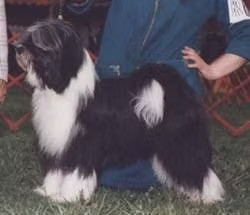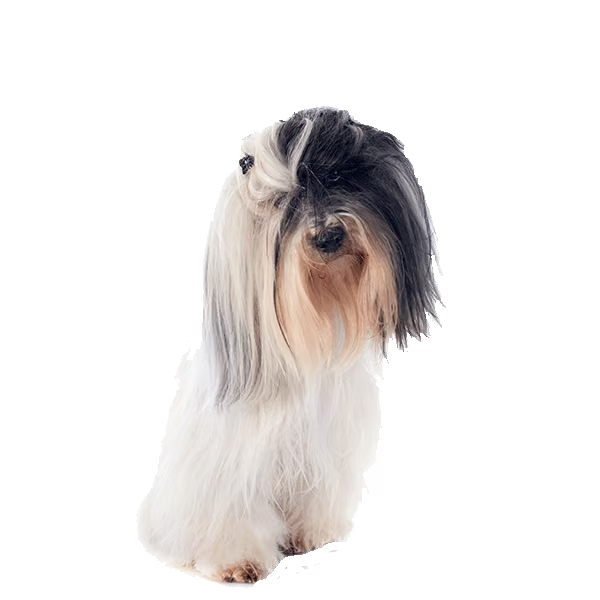
The Tibetan Terrier is an affectionate, even-tempered companion with a shaggy double coat, devoted to family and gentle with all it knows.
How the Tibetan Terrier coat is built, and what that means when you groom it.
Caution: A Tibetan Terrier coat mats easily.
Fine or long hair tangles at the base of the coat, out of sight, where the mats tighten and pull on the skin. Brushing has to reach right down to the roots in sections, not just skim the surface.
Information: A Tibetan Terrier needs clipping every few weeks.
This coat keeps growing rather than shedding out, so it has to be trimmed every few weeks. Left to grow it mats down against the skin and traps moisture, dirt and heat.
A few of the Tibetan Terrier profiles members have added to United Pet Club.
The Tibetan Terrier is a medium-sized companion dog from Tibet with a shaggy double coat, an even temper, and strong devotion to its family.
The Tibetan Terrier is a medium-sized dog despite the name, and it is not a true terrier. The breed developed in Tibet as a companion and watchdog rather than a hunter that goes to ground. It stands roughly knee-high, carries a profuse double coat, and moves with a light, agile gait that suited the rough country it came from.
The temperament is affectionate, gentle, and loyal. A Tibetan Terrier bonds closely with the people it lives with and tends to be reserved with strangers until it knows them. It is intelligent and good-natured, which makes it adaptable to apartments or houses as long as it gets daily company and exercise.
The coat is the most demanding part of ownership. It grows long and needs regular brushing to stay free of mats. In return the dog is hardy, long-lived, and quiet enough for most home settings.
| Attribute | Detail |
|---|---|
| Origin | Tibet |
| Size | Medium |
| Lifespan | 15 to 16 years |
| Group / role | Companion and watchdog |
| Good with | Family, children, and other pets it is raised with |
The breed fits owners who want a devoted, even-tempered companion and who can commit to coat care. It does well with families, older couples, and people who keep the dog close rather than leaving it alone for long stretches. Anyone unwilling to brush several times a week, or to pay for professional grooming, should weigh that cost before choosing this breed.
The Tibetan Terrier comes from the high plateaus of Tibet, where it was kept by monasteries and nomadic families as a companion and watchdog for centuries before reaching the West in the 1920s.
The Tibetan Terrier originates on the high plateaus of Tibet, where conditions are cold and the terrain is steep. The breed was kept by monks in monasteries and by nomadic herders, who valued it as a companion, a watchdog, and a good-luck presence in the household. It was rarely sold and was more often given as a gift, which kept the type fairly isolated for a long period.
The dog was not bred to hunt. The name terrier was applied by Westerners because of its size, not because of any earthing or vermin work. Its build, with broad flat feet and a heavy coat, suited travel across snow and rocky ground beside people and pack animals.
The breed reached the West in the 1920s. Dr. Agnes Greig, a physician working in India, received a Tibetan Terrier from a patient and began breeding the dogs, which established the line that spread to Britain and later elsewhere. Kennel club recognition followed over the following decades as the breed became established outside Tibet.
Today the Tibetan Terrier is kept mainly as a family companion. Its working past as a hardy mountain dog still shows in its sturdy frame, weatherproof coat, and alert watchfulness.
The Tibetan Terrier is a square, medium-sized dog with a long shaggy double coat, dark expressive eyes, and large flat feet that act like natural snowshoes.
The Tibetan Terrier is roughly square in outline, with the height at the shoulder about equal to the body length. It is compact and powerful for its size without looking heavy. The head carries a profuse fall of hair over the eyes and a beard on the lower jaw. The tail is set high and carried in a curl over the back.
The most distinctive structural feature is the foot. Tibetan Terriers have large, round, flat feet that spread the dog's weight on snow and soft ground, similar to snowshoes. This trait reflects the breed's mountain origin.
| Trait | Standard |
|---|---|
| Height | 36 to 41 cm (14 to 16 in) at the shoulder |
| Weight | 8 to 14 kg (18 to 30 lb) |
| Coat | Double coat: fine wool undercoat with a long, profuse outer coat, straight or wavy |
| Colors | Many, including white, gold, cream, grey, black, and combinations such as black and white |
| Eyes | Large, dark, and set fairly wide apart |
The coat is long and abundant but should not reach the ground or hide the dog's shape. The outer coat can be straight or wavy and is never curly or silky. Almost any color or mix of colors is acceptable under most standards, including white, gold, cream, grey, smoke, and black, often in pied or piebald patterns. Liver and chocolate are accepted by some registries and not others. The coat parts naturally down the back as it grows.
The Tibetan Terrier is affectionate and loyal with its family, gentle and good-natured at home, and naturally reserved with strangers, which makes it an alert but not aggressive watchdog.
The Tibetan Terrier is devoted to its own people and forms strong attachments to the household. Inside the family it is gentle, even-tempered, and playful, and it tends to do well with children who treat it kindly. It generally gets along with other dogs and with pets it has grown up alongside.
With strangers the breed is cautious rather than fearful or hostile. This reserve, combined with a sharp sense of hearing, makes it an effective watchdog that will announce visitors. It is alert but not a constant barker once it understands the household routine.
The breed is intelligent and sensitive. It reads its owner's mood and responds poorly to harsh handling, which can make it withdrawn. It also dislikes being left alone for long periods and is happiest when it is part of daily activity. A bored or isolated Tibetan Terrier may become anxious or noisy.
| Trait | Rating |
|---|---|
| Affection | 5 |
| Energy | 3 |
| Trainability | 3 |
| Vocalness | 3 |
| Shedding | 2 |
The Tibetan Terrier needs frequent coat care to prevent matting plus moderate daily exercise, and it adapts to apartments or houses as long as it has regular company.
The long double coat is the main care task and needs steady attention.
The breed has moderate energy and is satisfied with daily activity rather than hard work.
The Tibetan Terrier adapts well to apartments and houses alike. The dense coat handles cold weather well but the dog can overheat in hot climates, so exercise should shift to cooler parts of the day in summer. It should live indoors as a family member and not be kennelled away from people.
The Tibetan Terrier does well on a complete diet sized to its medium frame and activity level, fed in two meals a day, with care to avoid the weight gain its coat can hide.
Feed a complete, balanced dog food suited to the dog's life stage and size. The breed is medium and moderately active, so portions should match weight and condition rather than a fixed number. Because the long coat hides the body, owners should check condition by feeling the ribs and waist rather than relying on appearance. Fresh water should always be available.
| Life stage | Amount per day | Meals |
|---|---|---|
| Puppy (2 to 6 months) | Per puppy food label, divided | 3 to 4 |
| Junior (6 to 12 months) | Per label, adjusted to growth | 2 to 3 |
| Adult | About 120 to 200 g of dry food | 2 |
| Senior | Reduced to match lower activity | 2 |
Keep treats to about 10 percent of daily calories and reduce meal portions to match. Most Tibetan Terriers on a complete diet need no supplements. If the coat is dull, a vet may suggest an omega-3 fatty acid supplement, but check before adding anything, since extra calcium or vitamins can do harm.
The Tibetan Terrier is a hardy, long-lived breed with a typical lifespan of 15 to 16 years, though it can carry inherited eye and hip conditions that screening helps manage.
The Tibetan Terrier is generally a healthy and durable breed, and a lifespan of 15 to 16 years is common. Like many pedigree dogs it carries a few inherited conditions, and responsible breeders screen their stock to reduce them. Buyers should ask for evidence of eye testing and hip scoring on both parents.
| Condition | Signs | Note |
|---|---|---|
| Progressive retinal atrophy | Night blindness, bumping into objects, gradual vision loss | Inherited; DNA and eye testing of breeding stock helps |
| Primary lens luxation | Red, painful, or cloudy eye; sudden vision change | Inherited; a DNA test exists |
| Hip dysplasia | Stiffness, limping, reluctance to jump | Hip scoring of parents lowers risk |
| Neuronal ceroid lipofuscinosis | Behavior change, coordination loss, vision problems | Rare inherited disorder; DNA test available |
The Tibetan Terrier is intelligent and learns well with patient, reward-based training, but its sensitivity and independent streak mean harsh methods backfire.
The Tibetan Terrier is intelligent and capable, but it is also sensitive and can be independent. It learns quickly when training is fair and rewarding, and it shuts down or becomes evasive under harsh correction. Short, varied sessions hold its attention better than long drills. Early socialization matters because of the breed's natural reserve with strangers: a puppy exposed to many people, places, and other animals grows into a confident adult.
Tibetan Terriers reach breeding maturity at around two years, carry an average litter of five to six puppies after a roughly nine-week pregnancy, and benefit from health screening of both parents.
Responsible breeding of Tibetan Terriers waits until both dogs are physically and mentally mature, usually around two years of age, even though females come into season earlier. Both parents should pass the breed's recommended health screens, including eye testing and hip scoring, and ideally DNA tests for the inherited conditions known in the breed, before any mating.
Pregnancy lasts about 63 days from conception. Litters average five to six puppies, though smaller and larger litters occur. The dam raises the puppies with normal nursing and weaning over the first weeks. Breeders begin gentle handling and socialization early, since the breed's reserve with strangers means good early exposure shapes adult confidence. Puppies usually leave for new homes at around eight to twelve weeks, once weaned and given their first vaccinations.
| Metric | Value |
|---|---|
| Breeding maturity | About 2 years |
| Gestation | About 63 days (roughly 9 weeks) |
| Average litter size | 5 to 6 puppies |
| Weaning age | About 6 to 8 weeks |
| Recommended screening | Eye testing, hip scoring, breed DNA tests |
AVS handles the licence; United Pet Club keeps a free, searchable record behind your Tibetan Terrier's microchip for life.
An AVS licence satisfies the rules; it does not tell a finder in another country how to reach you. Your Tibetan Terrier's free United Pet Club profile does exactly that, pairing your mobile with his photo and chip number for life. Register your dog once and the record follows him anywhere.
The AVS listing and a searchable contact record are two different things, and the second one is yours to set up. Register the microchip on the free lifetime plan: any chip brand a local vet implants qualifies, updates after a move between flats stay free, and the record can be pulled up 24 hours a day from anywhere. Create your free account and settle it tonight.
Set up a free United Pet Club account, key in your Tibetan Terrier's details and a photo, and save. The lifetime plan keeps the profile live at no cost for as long as he is with you, alongside whatever AVS requires.
Key the 15-digit chip number into your free account together with your address, mobile, and email. The lifetime plan covers the registration and every update free, whichever brand the clinic used.
Yes. AVS requires dogs to be licensed and microchipped by three months of age. The licence is the legal part; a registered, searchable record with your current mobile is the part that gets a lost Tibetan Terrier home, and that part is free.
Nothing. United Pet Club's lifetime plan covers the profile, the chip record, and unlimited updates, with no renewal, ever.
Common questions about the Tibetan Terrier cover its size, temperament, grooming demands, lifespan, and suitability for families and apartments.
It is a medium-sized dog. Most stand 36 to 41 cm (14 to 16 in) at the shoulder and weigh 8 to 14 kg (18 to 30 lb). Despite the name it is not a small terrier.
It is affectionate, gentle, and loyal with its family, good-natured at home, and reserved with strangers. That reserve makes it an alert watchdog without being aggressive.
The coat is the main work. Plan on brushing two to three times a week, daily once the coat is long, plus regular bathing and often professional grooming. Exercise needs are moderate, so the grooming is the demanding part.
They are a long-lived breed, typically reaching 15 to 16 years with good care and a healthy weight.
Yes. They are gentle with children they are raised with and usually get on with other dogs and pets. They bond closely and prefer not to be left alone for long stretches.
Yes, the breed adapts well to apartment life as long as it gets daily walks and company. It can overheat in hot weather, so exercise in the cooler parts of the day in summer.
They shed less than many breeds because loose hair tends to stay in the coat, which is why regular brushing is essential to prevent mats rather than to control shedding around the home.