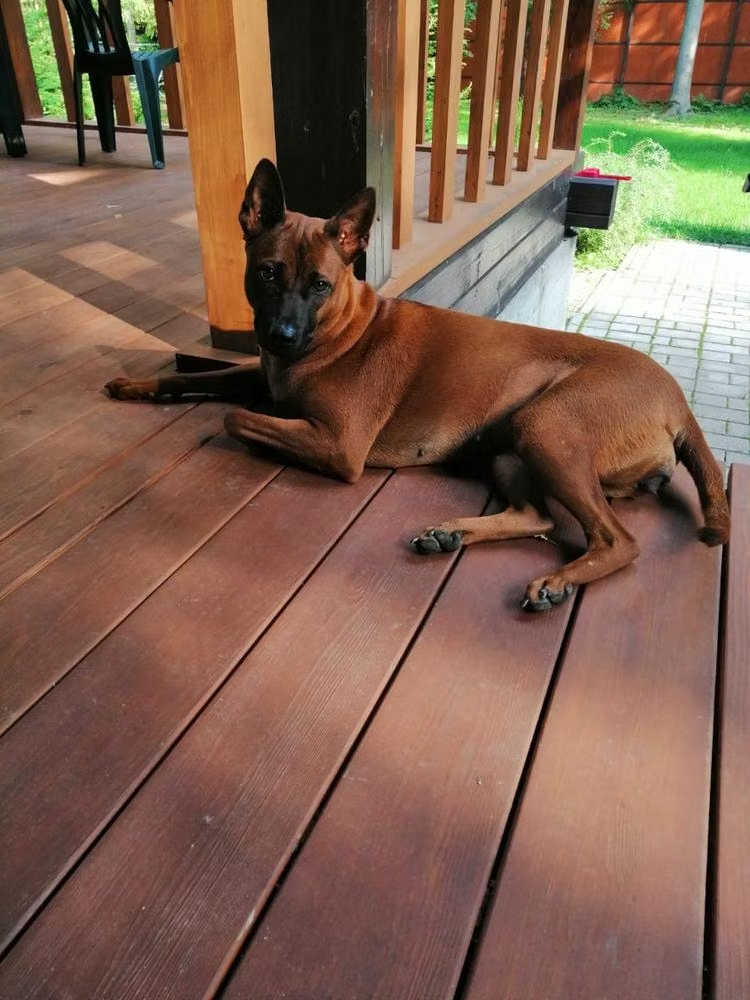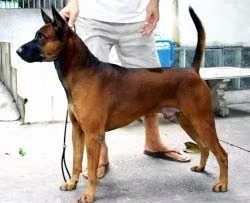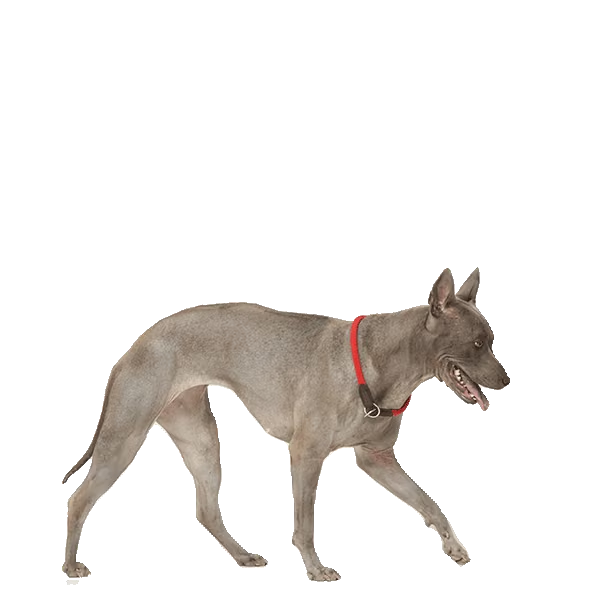
The Thai Ridgeback is a loyal, athletic breed distinguished by the ridge of hair along its back and its protective devotion.
How the Thai Ridgeback coat is built, and what that means when you groom it.
A few of the Thai Ridgeback profiles members have added to United Pet Club.
The Thai Ridgeback is a medium-sized dog from Thailand with a distinctive reverse-growing ridge along its back, valued for its loyalty and natural alertness.
The Thai Ridgeback is a medium-sized dog native to Thailand, best known for the ridge of hair running along its spine that grows in the opposite direction to the rest of the coat. The breed is muscular and athletic, with a short coat, a wedge-shaped head, and a sturdy, well-balanced frame built for an active outdoor life.
The breed stays loyal and devoted to its own family while keeping an independent streak. Thai Ridgebacks are alert and naturally protective, qualities that made them useful as guard and hunting dogs in rural Thailand for generations. They tend to attach closely to people they know well and stay watchful around strangers.
An adult Thai Ridgeback usually weighs between 16 and 34 kilograms and stands about 51 to 61 centimetres at the shoulder, with males generally bigger than females. The short, dense coat needs little upkeep, but the dog's strong will and high energy mean it suits an experienced owner better than a first-timer.
| Attribute | Detail |
|---|---|
| Origin | Thailand |
| Size | Medium |
| Lifespan | 12 to 13 years |
| Group/role | Guard and hunting dog |
| Good with | Families with older children and experienced owners |
The Thai Ridgeback suits an active owner who can commit to consistent training, daily exercise, and early socialisation. Do note that under HDB rules this breed does not fall within the approved list for flats, so it is better suited to landed property or a larger condominium unit with secure outdoor space. It is not the right fit for first-time owners or households that are out at work long hours with no one around to manage an independent, energetic dog.
The Thai Ridgeback developed over centuries in eastern Thailand as a hunting and guard dog, staying largely isolated from other breeds until recent decades.
The Thai Ridgeback comes from Thailand, where it has existed for several centuries. It developed mainly in the eastern part of the country, in areas around the island of Phu Quoc and the provinces bordering present-day Cambodia. The breed's long isolation in these rural areas is believed to have kept its bloodlines fairly pure, unlike breeds that spread along major trade routes.
For most of its history the Thai Ridgeback worked as an all-purpose rural dog. It guarded homes and carts, hunted small game, and kept vermin down. Its athleticism, alertness, and independence suited an environment where dogs were expected to work and make their own decisions with little direct guidance from their owners.
The breed is one of only a handful that carry a distinctive dorsal ridge, a trait it shares with the Rhodesian Ridgeback and the Phu Quoc dog. Thai breeders maintained this defining feature over many generations.
The Thai Ridgeback stayed largely unknown outside Thailand until the late twentieth century, when interest from overseas breeders introduced it to a wider audience. It remains a fairly rare breed in Singapore and the wider region, and most owners here source dogs through specialist breeders or overseas imports rather than finding them locally.
The Thai Ridgeback is a muscular, medium-sized dog with a short coat and a ridge of reverse-growing hair running along its back.
The Thai Ridgeback is a well-muscled, athletic dog of moderate size. The body is slightly longer than it is tall, with a deep chest, a level topline, and clean, powerful legs. The head is wedge-shaped, the ears stand upright and triangular, and the tail tapers to a point and is carried up in a slight curve. Overall it gives the impression of a fit, agile dog built for speed and stamina.
| Feature | Standard |
|---|---|
| Height | 51 to 61 cm at the shoulder |
| Weight | 16 to 34 kg |
| Coat | Short, smooth, close-lying |
| Colours | Black, blue, red, fawn (isabella) |
| Eyes | Dark, almond-shaped |
The coat is short and smooth, lying close to the body, which makes the breed easy to groom, a real plus in Singapore's hot, humid weather. Four solid colours are recognised: black, blue, red, and fawn. The defining feature remains the ridge of hair along the back, growing opposite to the rest of the coat. The ridge varies in width and shape from dog to dog, and several distinct ridge patterns show up within the breed.
The Thai Ridgeback stays loyal and devoted to its family, keeps an independent streak, and is naturally protective and reserved around strangers.
The Thai Ridgeback forms strong bonds with its family and stays loyal throughout its life. At home with people it trusts, it is calm and affectionate, but it also thinks for itself, a trait carried over from its history as a self-directed working dog. This independence means it will not always defer to its owner without clear, consistent leadership.
Around strangers the breed tends to be reserved and watchful. Its natural protectiveness makes it a capable alert dog, though it does not usually bark without good reason. Early and ongoing socialisation matters, so the dog stays confident and well-mannered around unfamiliar people and situations, including the mix of neighbours, delivery riders, and lift visitors typical of Singapore living.
Thai Ridgebacks can get along with other pets when raised alongside them, but their prey drive and territorial instincts mean introductions need to be careful and supervised. They generally do best with older children who know how to interact respectfully with a strong-willed dog.
| Trait | Rating |
|---|---|
| Affection | 4 |
| Energy | 4 |
| Trainability | 3 |
| Vocalness | 2 |
| Shedding | 2 |
The Thai Ridgeback needs daily exercise, consistent handling, and minimal grooming, though Singapore's heat calls for exercise timed around the cooler hours.
The Thai Ridgeback copes well with Singapore's hot, humid climate year-round and tolerates heat far better than cold. It does best with access to a securely fenced garden or yard rather than confined flat living, though it can manage in a smaller unit if its exercise needs are properly met. Walk it during the cooler early morning or evening hours to avoid the worst of the midday heat and humidity. The coat gives little protection against cold, so a light coat or limited time in strongly air-conditioned rooms is worth considering.
A Thai Ridgeback does well on a balanced diet portioned to its weight and activity level, split into two meals a day once it reaches adulthood.
The Thai Ridgeback needs a complete, balanced diet suited to its age, weight, and activity level. As an athletic breed, it benefits from good-quality protein to support lean muscle. Portion sizes should match the individual dog and get adjusted to keep it at a healthy weight, since the breed should stay fit and well-defined rather than heavy.
| Life stage | Amount per day | Meals |
|---|---|---|
| Puppy (2 to 6 months) | Per product guide for weight | 3 to 4 |
| Junior (6 to 12 months) | Per product guide for weight | 2 to 3 |
| Adult | Approx. 200 to 350 g dry food | 2 |
| Senior | Adjusted lower for activity | 2 |
Treats should make up no more than around ten percent of daily calories. Most healthy Thai Ridgebacks on a complete diet do not need supplements, though joint support may help older or very active dogs. Check with a vet before adding any supplement. Keep fresh water available at all times, especially given the breed's high activity level in Singapore's warm, humid conditions.
The Thai Ridgeback is generally a healthy breed with a lifespan of 12 to 13 years, though it can develop a skin condition linked to its ridge and a few other concerns.
The Thai Ridgeback is generally a hardy, healthy breed with a typical lifespan of 12 to 13 years. Limited crossing with other breeds over its history has helped keep the gene pool relatively sound. Even so, a handful of conditions do occur, and responsible breeding together with routine veterinary care helps limit their impact.
| Condition | Signs | Note |
|---|---|---|
| Dermoid sinus | Tube-like skin opening along the spine, discharge | Linked to the ridge; treated surgically |
| Hip dysplasia | Stiffness, reduced activity, lameness | Screening of breeding stock helps |
| Skin allergies | Itching, redness, hair loss | Manage triggers with veterinary advice |
The Thai Ridgeback is intelligent but independent, so training relies on consistency, early socialisation, and reward-based methods.
The Thai Ridgeback is intelligent and capable, but its independent streak can make training more demanding than with eager-to-please breeds. It picks things up quickly when motivated, yet may still choose to act on its own judgement rather than follow a command. Consistency, patience, and clear boundaries matter, and training works best when it starts early. Harsh methods tend to backfire and can break down trust with this sensitive, strong-willed dog.
The Thai Ridgeback reaches breeding maturity at around 18 months to 2 years and produces litters of roughly five to seven puppies after a typical canine gestation.
Thai Ridgebacks reach physical and behavioural maturity later than many breeds, and responsible breeders generally wait until a dog is at least 18 months to 2 years old before breeding it. Health screening of both parents, including assessment for hip dysplasia and inspection for dermoid sinus, helps lower the risk of passing on inherited problems.
Gestation runs about 63 days, the standard length for dogs. Litters typically hold around five to seven puppies, though sizes vary. Since the ridge and certain skin conditions are inherited, knowledgeable breeders pay close attention to ridge formation and skin health when planning a pairing.
Puppies should stay with the mother until at least eight weeks old. Early handling and exposure to people, sounds, and other animals during this period matter for raising confident, well-adjusted adults, given the breed's naturally reserved temperament. Anyone bringing a puppy into Singapore from overseas should also check AVS import and licensing requirements before committing.
| Metric | Value |
|---|---|
| Breeding maturity | 18 months to 2 years |
| Gestation | Approx. 63 days |
| Average litter size | 5 to 7 puppies |
| Weaning age | About 7 to 8 weeks |
| Recommended rehoming age | From 8 weeks |
AVS handles the licence; United Pet Club keeps a free, searchable record behind your Thai Ridgeback's microchip for life.
Key in your Thai Ridgeback's name, his date of birth, and a clear photo, attach your mobile, and save: a lifetime record, no charge now or later. Dog registration sits happily alongside the AVS paperwork and takes the chip number whenever you have it.
The AVS listing and a searchable contact record are two different things, and the second one is yours to set up. Register the microchip on the free lifetime plan: any chip brand a local vet implants qualifies, updates after a move between flats stay free, and the record can be pulled up 24 hours a day from anywhere. Create your free account and settle it tonight.
Set up a free United Pet Club account, key in your Thai Ridgeback's details and a photo, and save. The lifetime plan keeps the profile live at no cost for as long as he is with you, alongside whatever AVS requires.
Key the 15-digit chip number into your free account together with your address, mobile, and email. The lifetime plan covers the registration and every update free, whichever brand the clinic used.
Yes. AVS requires dogs to be licensed and microchipped by three months of age. The licence is the legal part; a registered, searchable record with your current mobile is the part that gets a lost Thai Ridgeback home, and that part is free.
Nothing. United Pet Club's lifetime plan covers the profile, the chip record, and unlimited updates, with no renewal, ever.
Common questions about the Thai Ridgeback cover its size, temperament, care needs, lifespan, suitability, and availability.
It is a medium-sized breed, standing roughly 51 to 61 centimetres at the shoulder and weighing between 16 and 34 kilograms, with males usually bigger than females.
It can be a loyal and devoted family companion, particularly in homes with older children. Its independent, protective nature means it does better with experienced handling and early socialisation.
Grooming is easy thanks to the short coat, but the breed needs plenty of exercise, training, and socialisation. It is also not on HDB's approved list for flats, so an owner needs suitable housing as well as some dog experience.
They typically live 12 to 13 years. Good nutrition, regular exercise, and routine veterinary care support a long, healthy life.
They are generally not recommended for first-time owners. Their strong will, prey drive, and protective instincts call for confident, consistent leadership.
Yes. The breed stayed isolated in Thailand for much of its history and remains uncommon in Singapore, so finding a puppy locally may take time and research through specialist breeders.
No. The short, close coat sheds lightly and needs only weekly brushing to stay in good condition, which suits Singapore's warm climate well.