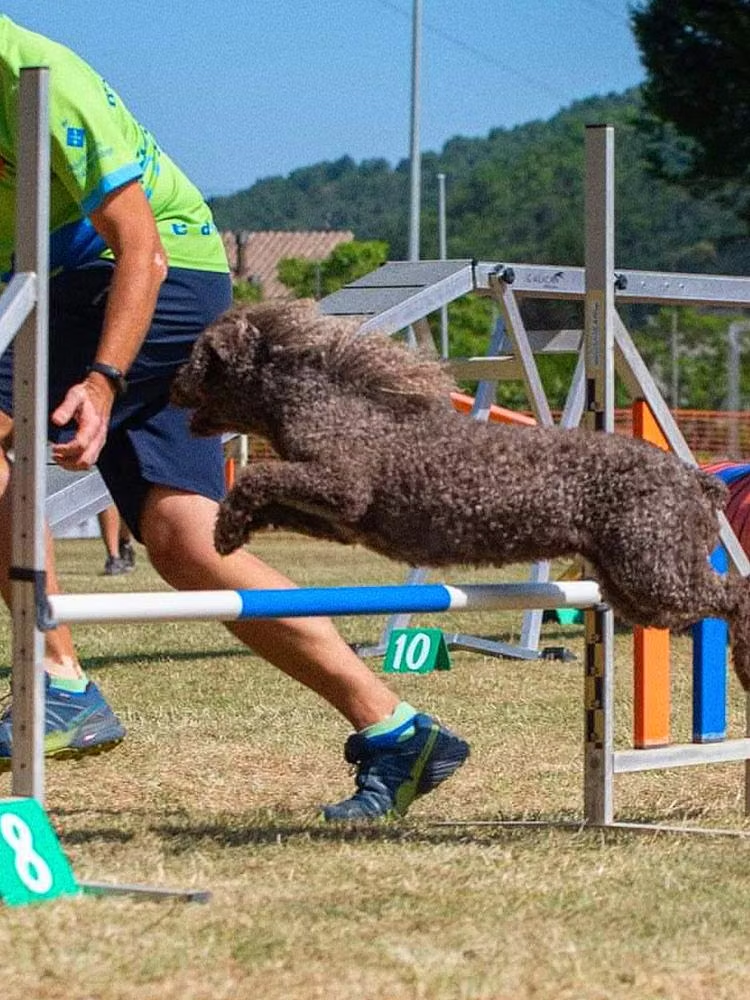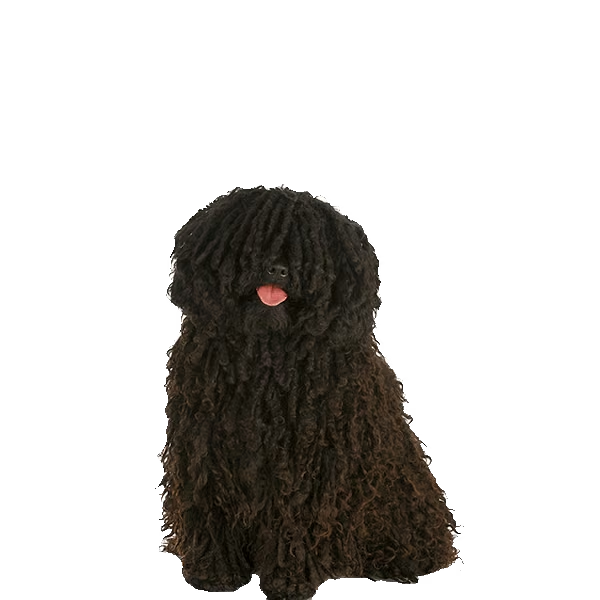
The Spanish Water Dog is a versatile, curly-coated worker known for its loyalty, athleticism, and willingness to please.
How the Spanish Water Dog coat is built, and what that means when you groom it.
Caution: A Spanish Water Dog coat mats easily.
Fine or long hair tangles at the base of the coat, out of sight, where the mats tighten and pull on the skin. Brushing has to reach right down to the roots in sections, not just skim the surface.
Information: A Spanish Water Dog needs clipping every few weeks.
This coat keeps growing rather than shedding out, so it has to be trimmed every few weeks. Left to grow it mats down against the skin and traps moisture, dirt and heat.
A few of the Spanish Water Dog profiles members have added to United Pet Club.
A medium, curly-coated working breed from Spain, the Spanish water dog is loyal and quick to learn, and needs daily exercise to suit Singapore's warm climate and smaller homes.
The Spanish water dog is a medium-sized working breed that originated in Spain. Its coat is a single layer of tight, woolly curls that mat into natural cords if left unclipped, a trait that once kept the dog protected during long days working outdoors and in water. In its home country the breed herded sheep and goats on inland farms and retrieved nets and catch for fishermen along the coast.
It is an alert, people-oriented dog that forms a close bond with its owner. Owners who keep the breed describe it as loyal, clever, versatile, energetic and always watching what is going on around it. It picks up new tasks quickly and prefers to have a job to do, whether that is retrieving, agility training, or simply a structured daily routine. Left without enough exercise or mental work, a Spanish water dog tends to grow restless and get into its own mischief.
The breed is naturally wary of strangers and keeps a close eye on its surroundings, so early socialisation is essential. Around its own family it is warm and playful, and it prefers to stay in the middle of the action rather than nap on the sidelines.
| Attribute | Detail |
|---|---|
| Origin | Spain |
| Size | Medium |
| Lifespan | 12 to 14 years |
| Group/role | Herding and water retrieving |
| Good with | Active families, sporting owners, and first-time owners prepared to train and socialise the dog |
This breed suits an owner who can commit to daily exercise and regular training, not a household that is out at work from morning until night. It fits active families, handlers who take part in agility or obedience, and anyone looking for a hands-on working companion rather than a quiet lap dog.
Space is a real consideration here. The Spanish water dog does not appear on the Housing & Development Board's list of breeds approved for HDB flats, so most owners keep it in a landed home or a condominium with some outdoor space rather than a public housing unit. Its coat also demands regular grooming attention, and that commitment should be part of the decision before bringing a puppy home.
Bred on Spanish farms and coastlines to herd and retrieve, the Spanish water dog gained formal recognition last century and now reaches Singapore mostly through registered breeders.
The Spanish water dog traces back to the Iberian Peninsula, where curly-coated working dogs have herded and fished alongside farmers for centuries. Exact dates are hard to pin down because the early records are sparse, but the type is clearly related to other curly water dogs found around the Mediterranean and along Europe's Atlantic coast.
On Spanish farms the dog was expected to turn its paw to more than one job. In the south, including Andalusia, it moved flocks of sheep and goats across open country. Closer to rivers and the coast, it pulled in nets and lines and retrieved waterfowl for hunters, and its dense single coat held up well to constant wet work. Doing several jobs on the same farm shaped a dog that is hardy and adaptable rather than built for one narrow task.
Formal interest in the breed took shape through the twentieth century, as breeders in Spain worked to settle on one consistent type and keep proper breeding records. Spanish kennel authorities recognised the breed, and international bodies such as the Fédération Cynologique Internationale followed with a written standard covering size, coat and structure.
The breed has since travelled well beyond Spain and turns up as a companion, sport dog and working dog in many countries, Singapore included, where it is registered and shown through the Singapore Kennel Club. Its herding and retrieving past still comes through in how driven, trainable and attached to its handler the dog remains today.
A balanced, athletic build and a corded single coat define the Spanish water dog, judged here against the FCI standard the Singapore Kennel Club follows.
In build, the Spanish water dog is medium-sized, balanced, and a touch longer in body than it stands tall at the shoulder. Everything about the frame favours stamina and agility over sheer bulk: a level topline, well-developed muscle, and a steady gait that covers ground without wasted effort. The expression is alert and watchful, and the ears sit close and hang flat against the head.
| Trait | Standard |
|---|---|
| Height | About 40 to 50 cm at the shoulder, with males standing taller than females |
| Weight | About 14 to 22 kg, depending on sex and build |
| Coat | Single, woolly and curly; cords naturally if left unclipped |
| Colours | Solid white, black, brown or beige; also white with black or brown markings |
| Eyes | Oval, ranging from hazel to dark brown, with an expressive look |
The coat is the breed's most distinctive feature. It grows as a single layer of curly, wool-textured hair, with no soft undercoat beneath it. Left unbrushed, the curls lock together into cords over time. Breed convention keeps the coat one length over the whole body and takes it down with clippers rather than scissoring it into a shape, which is what preserves the curl. Singapore's humidity means the coat takes longer to dry through than it would in a drier climate, so owners here need to plan grooming and bath days around that. Recognised solid colours are white, black, brown and beige, and parti-colour dogs carry white with either black or brown. Tricolour and black-and-tan patterns are not accepted in the breed.
Loyal, energetic and watchful, the Spanish water dog needs early socialisation to relax around strangers and usually gets along with other pets raised alongside it.
This is a devoted breed that wants a place in whatever the family is doing, not a dog that is content on its own in another room. At home it is affectionate and playful, and it reads its owner's mood well. It is sharp and keen to please, so training tends to go smoothly, though that same sharp mind needs regular work or the dog will find its own way to stay busy.
Strangers get a more guarded welcome. A Spanish water dog usually hangs back to size up a new person before warming up, and that watchfulness makes it a reliable dog to have around when the doorbell rings, whether at a landed house or the gate of a condo unit. This wariness is normal for the breed rather than a sign of aggression, but it is exactly why early, positive exposure to different people, places and situations matters so much.
With other dogs and household pets, most Spanish water dogs settle in well when they are raised together and meet other animals young. The old herding instinct can surface as a habit of circling or chasing anything that moves, including children, so supervision and training help keep that in check. The breed attaches closely to its people and tends to struggle with being left alone for long stretches.
| Trait | Rating |
|---|---|
| Affection | 5 |
| Energy | 5 |
| Trainability | 5 |
| Vocalness | 3 |
| Shedding | 1 |
Daily exercise, hands-on coat care, and Singapore's year-round heat and humidity all shape how much upkeep this breed genuinely needs at home.
Housing type matters here as much as floor area, provided the exercise needs are met. A landed home with a securely fenced garden suits the breed best, and a condominium with regular access to a park or dog run also works, given enough daily activity. HDB flats are a different matter: the Spanish water dog does not appear on HDB's list of approved breeds for public housing, so it is not the right choice for most flat dwellers, and anyone renting or buying an HDB unit should check the current rules before committing to the breed. Wherever it lives, the dog wants to stay close to its family and does poorly when left alone for long stretches. Given how driven and athletic the breed is, secure fencing is worth the effort rather than an afterthought.
This working breed needs measured portions matched to its real activity level rather than a bowl left out all day, especially given Singapore's warmer climate.
A Spanish water dog needs a complete, balanced diet suited to its life stage and how active it actually is. Being a working breed at heart, it does well on good-quality protein to support muscle, with moderate fat for energy. How much to feed depends on the individual dog's real workload: a dog that swims, herds toys and trains most days needs noticeably more than one that mostly potters around the flat. Measure out meals rather than leaving a bowl out all day, and let the dog's body condition guide portion size rather than following the feeding chart on the bag alone.
| Life stage | Amount per day | Meals |
|---|---|---|
| Puppy (2 to 6 months) | Follow the product's growth guidance, split into small portions | 3 to 4 |
| Young dog (6 to 12 months) | Growth-formula amount, tapering towards adult portions | 2 to 3 |
| Adult | Roughly 200 to 350 g of dry food, adjusted to activity level | 2 |
| Senior | Adult amount reduced to match lower activity | 2 |
Keep treats to a small slice of the day's calories so the overall diet stays balanced and the dog does not creep up in weight. Small pieces of the dog's usual food, or low-fat treats a vet has approved, work well and double as training rewards. Most dogs on a complete commercial diet manage fine without extra supplements. Check with a vet before adding anything for joints, skin or coat, particularly for a growing puppy or an older dog. Keep fresh water available at all times, and top it up more often after exercise or a swim, since the heat here means dogs lose fluid faster than they would in a cooler climate.
Generally hardy and living 12 to 14 years, the Spanish water dog benefits from health-tested parents and extra ear care suited to Singapore's humid air.
On the whole, the Spanish water dog is a hardy breed, with a typical lifespan of 12 to 14 years. As with any breed, certain inherited and age-related conditions can turn up, and responsible breeders test their stock to cut the risk of passing these on. Anyone buying a puppy should ask to see the parents' health testing results before putting down a deposit. Given good care, regular exercise and routine visits to the vet, most dogs stay active well into their senior years.
| Condition | Signs | Note |
|---|---|---|
| Hip dysplasia | Stiffness, limping, reluctance to jump or climb | Screened by hip scoring in breeding dogs |
| Progressive retinal atrophy | Night blindness that can progress to fuller vision loss | DNA testing is available for the breed |
| Hypothyroidism | Weight gain, low energy, changes in coat and skin | Diagnosed by blood test; managed with daily medication |
| Allergies and ear issues | Itching, ear infections, skin irritation | Singapore's humidity adds to the risk, so the dense coat and hairy ears need regular checks |
Sharp and eager to please, the Spanish water dog trains well with reward-based methods and needs early socialisation to settle its natural wariness of strangers.
Among working breeds, the Spanish water dog trains up easily. It pays attention, thinks fast and genuinely wants to work alongside its handler, so new commands stick quickly and the dog seems to enjoy the process rather than merely tolerate it. That same sharp mind cuts both ways: a dog left bored or under-stimulated will find its own, usually unwelcome, activities. Early socialisation matters a great deal given the breed's natural reserve around strangers, so a puppy should meet plenty of people, dogs and everyday environments, including the lifts, corridors and crowds of a typical Singapore estate, from a young age. Consistency beats force every time. Clear, calm cues repeated often work far better than any correction.
Spanish water dogs mature for breeding in their second year, carry litters for about nine weeks, and do best with hip and eye testing done through a vet beforehand.
Breeding a Spanish water dog is not something to take lightly. Both parents should be health-tested, and temperament and structure need just as much thought as pedigree. The dog reaches sexual maturity before it is fully grown, but most responsible breeders hold off until it is physically and mentally mature, generally well into its second year, and until hip and eye screening is done and cleared. Mating is timed against the female's heat cycle, not the calendar.
Pregnancy runs about 63 days, roughly nine weeks. Over that time the expectant mother needs good nutrition, gentle exercise, and a quiet, clean whelping area set up well before the due date. Litter size varies, though a medium breed of this build usually produces several puppies at a time.
The first weeks after whelping call for close attention. Newborn puppies rely entirely on the mother for warmth and feeding, so they need a warm space free of draughts. From a few weeks old, weaning, handling and early socialisation begin gradually, and this early shaping goes a long way towards a confident adult dog. Puppies should stay with their mother and littermates until they are old enough to go to new homes, in keeping with responsible breeding practice and the Singapore Kennel Club's guidance for registered litters.
| Metric | Value |
|---|---|
| Breeding maturity | Usually in the second year, once health testing is complete |
| Gestation | About 63 days (roughly 9 weeks) |
| Average litter | Several puppies, varying with the individual dog |
| Weaning | Begins at around 3 to 4 weeks old |
| Recommended screening | Hip scoring and eye testing for both parents |
AVS handles the licence; United Pet Club keeps a free, searchable record behind your Spanish Water Dog's microchip for life.
Key in your Spanish Water Dog's name, his date of birth, and a clear photo, attach your mobile, and save: a lifetime record, no charge now or later. Dog registration sits happily alongside the AVS paperwork and takes the chip number whenever you have it.
Your Spanish Water Dog's chip went in before his third month, as the rules require; whether the number leads anywhere is a separate question. Give it a live answer with United Pet Club: registration free for life, every brand accepted, every update free. Microchip registration plus a free account, and the whole thing is squared away.
Set up a free United Pet Club account, key in your Spanish Water Dog's details and a photo, and save. The lifetime plan keeps the profile live at no cost for as long as he is with you, alongside whatever AVS requires.
Key the 15-digit chip number into your free account together with your address, mobile, and email. The lifetime plan covers the registration and every update free, whichever brand the clinic used.
Yes. AVS requires dogs to be licensed and microchipped by three months of age. The licence is the legal part; a registered, searchable record with your current mobile is the part that gets a lost Spanish Water Dog home, and that part is free.
Nothing. United Pet Club's lifetime plan covers the profile, the chip record, and unlimited updates, with no renewal, ever.
Local questions about the Spanish water dog cover its size, temperament, grooming needs, lifespan, family suitability, and where to find one in Singapore.
It is a medium breed, standing about 40 to 50 cm at the shoulder and weighing around 14 to 22 kg, with males larger than females.
It is loyal, clever, energetic and alert. The breed is affectionate with its own family and naturally reserved with strangers, so early socialisation helps it grow up confident and balanced.
It takes a moderate amount of work. The dog needs daily exercise and mental stimulation, and its curly coat has specific demands: hand-separate the cords instead of brushing, and clip the whole coat down once or twice a year. Singapore's humidity also means extra attention to drying the coat properly.
The typical lifespan is 12 to 14 years. Good nutrition, regular exercise, preventive veterinary care and health-tested parents all support a long, active life.
Yes, for active families who can meet its exercise and training needs and who have the space for it, since the breed suits a landed home or condo better than a small HDB flat. It bonds closely with its people and usually gets on well with children and other pets when they are raised and socialised together, though the herding instinct can show up as gathering or chasing.
No. The single curly coat sheds very little, since loose hair tends to stay caught within the curls and cords rather than falling out. It still needs regular hands-on care, and shed hair has to be removed during grooming rather than left to drop around the house.
The breed is still more common in Spain, though it is kept in many countries, Singapore included. Look for a responsible breeder registered with the Singapore Kennel Club who health-tests for hips and eyes, or check breed-specific rescue groups. Locally the breed remains uncommon, so many puppies are imported from Europe. That route means meeting import requirements from NParks' Animal & Veterinary Service (AVS), and buyers should expect a possible wait for the right litter.