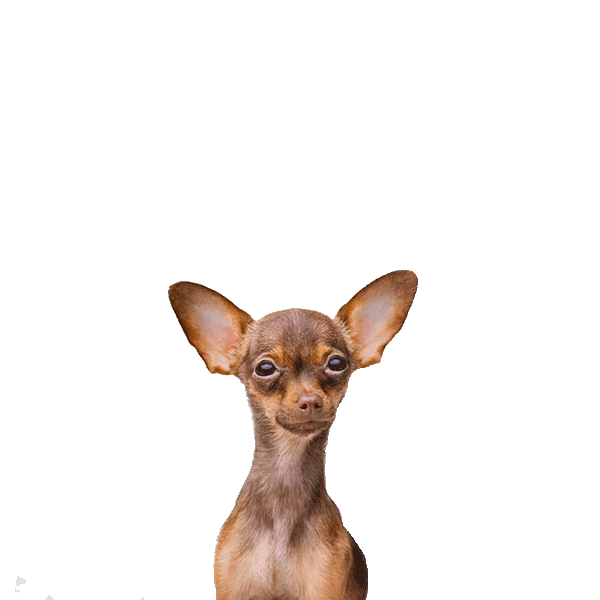
The Russian Toy is a tiny, elegant lapdog devoted to its owner, lively and affectionate yet alert and reserved with strangers.
How the Russian Toy coat is built, and what that means when you groom it.
The Russian Toy is a tiny elegant lapdog from Russia, devoted to its owner, lively and affectionate yet alert and reserved with strangers.
The Russian Toy is one of the smallest breeds in the world, a fine-boned companion dog developed in Russia. Adults usually weigh under 3 kilograms and stand about 20 to 28 centimeters at the shoulder. Despite the small frame, the breed is active and quick on its feet, with long legs in proportion to its slim body.
Two coat types exist within the same breed: a smooth, short coat and a long coat with fringing on the ears and legs. Both share the same compact, square outline and large, set-apart eyes that give the breed an alert expression. The breed bonds closely with one or two people and tends to follow them from room to room.
The Russian Toy suits apartment living and households where it will not be left alone for long stretches. It is affectionate with family and playful, but naturally aloof with strangers and quick to sound off at unfamiliar noises.
| Attribute | Detail |
|---|---|
| Origin | Russia |
| Size | Toy (under 3 kg) |
| Lifespan | 12 to 14 years |
| Group/role | Toy companion dog |
| Good with | Adults, older children, and other small dogs in calm homes |
This breed fits people who want a small, devoted companion and can give it steady attention. It does well with quiet adults and seniors. Homes with very young children are less suitable, because the breed's light bones break easily if it is dropped or stepped on.
The Russian Toy descends from English Toy Terriers brought to Russia, where it was bred down to a small companion dog and later recognized as a distinct breed with smooth and long coat varieties.
The Russian Toy traces back to small terrier-type lapdogs kept by the Russian aristocracy. English Toy Terriers and similar small dogs were imported to Russia in the 1800s and kept as fashionable companions in city households.
After the early 20th century, imports of foreign dogs into Russia largely stopped, and the existing population was bred among itself. Russian breeders worked from the local stock to fix a consistent small companion type, which set the breed on a separate path from its English ancestors.
A long-coated variety appeared in the mid 20th century alongside the original smooth coat. Both types were developed and shown within the same breed program rather than as separate breeds.
The Russian Toy was later recognized internationally and is registered today by major kennel organizations under one breed standard covering both the smooth and long coat varieties.
The Russian Toy is a tiny, fine-boned, square-built dog with long legs, large upright ears, and large round eyes, available in smooth and long coat varieties.
The Russian Toy is small and elegant with light, dry bone and lean muscle. The body is square, meaning the height at the shoulder is close to the length of the body. The legs are long for the size of the dog, giving a high-stepping, agile movement. The head is small with a short muzzle, and the large pointed ears are set high and carried upright.
| Trait | Standard |
|---|---|
| Height | 20 to 28 cm at the shoulder |
| Weight | Up to 3 kg |
| Coat | Two types: smooth (short, close) or long (with ear and leg fringing) |
| Colors | Black and tan, brown and tan, blue and tan, and shades of red |
| Eyes | Large, round, dark, set well apart |
The smooth variety has a short, shiny coat that lies close to the body with no bald patches. The long variety has a coat of moderate length over the body with longer feathering on the ears, backs of the legs, and tail. Common colors include black and tan, brown and tan, blue and tan, and various reds. Long-coated dogs are often noted for heavily fringed ears once the coat reaches maturity.
The Russian Toy is affectionate and loyal with its own people, playful and alert, but naturally reserved or wary toward strangers.
The Russian Toy is devoted to its family and forms a strong bond with one or two people in the home. Inside that circle it is affectionate, playful, and eager to stay close. The breed is lively and curious, and it enjoys games and short bursts of activity.
With strangers the breed is aloof and watchful. It tends to hang back from unfamiliar people until it decides they are safe, and it is quick to bark at new sounds or visitors, which makes it an attentive small watchdog. Early, gentle exposure to a range of people and situations helps prevent the wariness from tipping into anxiety.
With other pets the Russian Toy is usually fine alongside other small, calm dogs and can share a home with cats it grows up with. It is small enough to be at risk around large, boisterous dogs, so introductions and supervision matter.
| Trait | Rating |
|---|---|
| Affection | 5 |
| Energy | 3 |
| Trainability | 3 |
| Vocalness | 4 |
| Shedding | 2 |
The Russian Toy needs light grooming, modest daily exercise, and a warm, secure indoor home where it is protected from cold and from injury due to its small size.
The Russian Toy is an indoor companion suited to apartments and houses alike. It has little tolerance for cold and benefits from a coat or sweater in winter weather. Keep stairs, balconies, and high furniture managed, since falls can injure such a small dog.
The Russian Toy needs a small amount of high-quality food split across two or three meals a day, with care taken to avoid low blood sugar in puppies and weight gain in adults.
The Russian Toy needs a complete, balanced diet formulated for small or toy breeds. Because the stomach is tiny, food should be calorie-dense enough to meet needs in small portions. Fresh water should always be available. Portions depend on the individual dog's weight, age, and activity, so the amounts below are general starting points to adjust under veterinary guidance.
| Life stage | Amount per day | Meals |
|---|---|---|
| Puppy (2 to 6 months) | Per product guide for weight, free of long gaps | 3 to 4 |
| Adult | About 30 to 60 g of dry food, by weight | 2 |
| Senior | Slightly reduced, adjusted for activity | 2 |
Keep treats to a small share of daily calories to prevent weight gain. Toy-breed puppies can develop low blood sugar if they go too long without eating, so frequent small meals matter in the first months. A healthy dog on a complete diet rarely needs supplements; ask a veterinarian before adding any.
The Russian Toy is generally long-lived at 12 to 14 years but is prone to dental disease, patellar luxation, and the fragile-bone injuries common to very small dogs.
The Russian Toy is a generally healthy breed with a typical lifespan of 12 to 14 years. Most health concerns relate to its very small size: dental crowding, slipping kneecaps, and the risk of fractures from falls or rough handling. Responsible breeders screen breeding dogs for known issues.
| Condition | Signs | Note |
|---|---|---|
| Dental disease | Bad breath, tartar, loose teeth | Crowded toy jaws need regular brushing and cleaning |
| Patellar luxation | Skipping gait, hind-leg hop | Common in toy breeds; ranges from mild to surgical |
| Fractures | Sudden lameness, pain after a fall | Light bones break easily; prevent jumps and falls |
| Retained baby teeth | Double row of teeth in young dogs | May need removal to prevent crowding and decay |
The Russian Toy is intelligent and willing to please but sensitive, so it responds best to short, gentle, reward-based sessions with early socialization to curb wariness and barking.
The Russian Toy is smart and bonded to its people, which makes it responsive to training when sessions are short and positive. The breed is sensitive and does not handle harsh corrections well; firmness without warmth tends to make it shut down. Consistency and patience produce better results than pressure. Early socialization is important to soften the natural reserve with strangers and to keep barking in check.
The Russian Toy reaches breeding maturity slowly and produces small litters that need careful, attentive raising because newborns are tiny and fragile.
Breeding the Russian Toy calls for care because of its small size. Bitches should be physically mature before mating, generally not in their first season, and breeding stock should be health-checked for patellar and dental problems among other concerns. Mating is straightforward in most cases, but whelping can carry higher risk in very small dogs, so veterinary support should be planned in advance.
Litters are small, often only one to three puppies. Newborns are extremely tiny and vulnerable to chilling and low blood sugar, so the whelping area must be kept warm and the puppies watched closely for steady nursing and weight gain. Puppies should stay with the dam and litter through the early weeks to develop normally, with gentle handling and early socialization once they are strong enough.
| Metric | Value |
|---|---|
| Gestation | About 58 to 68 days |
| Average litter size | 1 to 3 puppies |
| Weaning age | About 4 to 7 weeks |
| Recommended first breeding | After full maturity, not the first season |
AVS handles the licence; United Pet Club keeps a free, searchable record behind your Russian Toy's microchip for life.
Key in your Russian Toy's name, his date of birth, and a clear photo, attach your mobile, and save: a lifetime record, no charge now or later. Dog registration sits happily alongside the AVS paperwork and takes the chip number whenever you have it.
Your Russian Toy's chip went in before his third month, as the rules require; whether the number leads anywhere is a separate question. Give it a live answer with United Pet Club: registration free for life, every brand accepted, every update free. Microchip registration plus a free account, and the whole thing is squared away.
Set up a free United Pet Club account, key in your Russian Toy's details and a photo, and save. The lifetime plan keeps the profile live at no cost for as long as he is with you, alongside whatever AVS requires.
Key the 15-digit chip number into your free account together with your address, mobile, and email. The lifetime plan covers the registration and every update free, whichever brand the clinic used.
Yes. AVS requires dogs to be licensed and microchipped by three months of age. The licence is the legal part; a registered, searchable record with your current mobile is the part that gets a lost Russian Toy home, and that part is free.
Nothing. United Pet Club's lifetime plan covers the profile, the chip record, and unlimited updates, with no renewal, ever.
Common questions about the Russian Toy's size, temperament, care needs, lifespan, suitability, and availability.
It is one of the smallest dog breeds. Adults stand about 20 to 28 cm at the shoulder and weigh up to about 3 kg.
It is affectionate, loyal, and playful with its own family, but alert and reserved with strangers. It bonds closely with one or two people and tends to bark at new sounds.
Day-to-day care is light: weekly to several-times-weekly brushing, short daily walks, and regular dental care. The main challenge is protecting such a small, fine-boned dog from falls and injury.
The typical lifespan is 12 to 14 years, and many live to the upper end of that range with good care.
It suits adults, seniors, and households with older, gentle children. Very young children are a poor match because the breed's light bones are easily injured by rough handling.
Yes. Both the smooth and long coat varieties belong to the same breed and are covered by one standard.
It can be vocal and is quick to alert to noises and visitors. Early socialization and rewarding quiet behavior help keep barking manageable.
