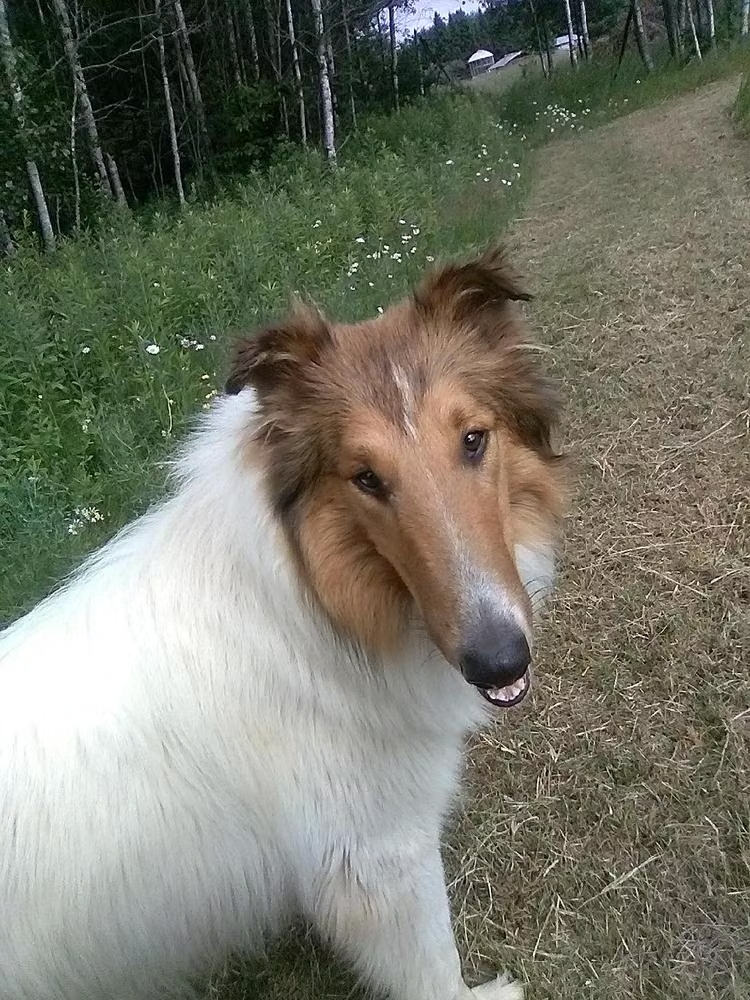
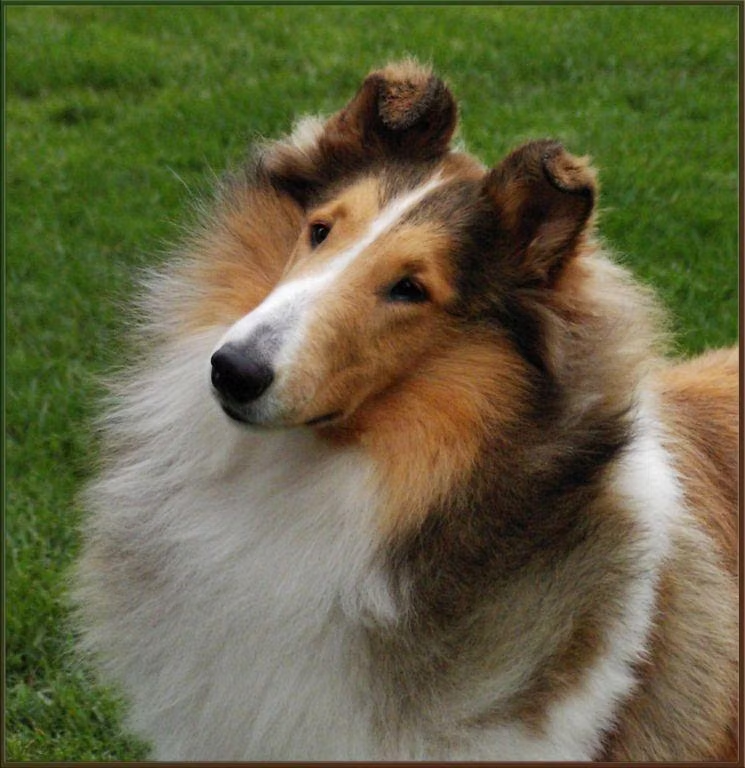
The Rough Collie is a graceful, gentle family dog known for its intelligence, loyalty, and flowing coat made famous by Lassie.
How the Rough Collie coat is built, and what that means when you groom it.
Critical: A Rough Collie should not be shaved.
The undercoat keeps heat out as well as in, and the outer coat shields the skin from sun and insect bites. Clipping the whole coat off removes both. It often grows back patchy, soft or a different colour, and in some animals the guard hairs never return properly. Brush the undercoat out instead of cutting it off.
Caution: A Rough Collie coat mats easily.
Fine or long hair tangles at the base of the coat, out of sight, where the mats tighten and pull on the skin. Brushing has to reach right down to the roots in sections, not just skim the surface.
Information: A Rough Collie drops its undercoat in heavy bursts.
The undercoat comes out in heavy bursts over a few weeks. An undercoat rake, or a bath followed by a proper blow-dry, clears it far faster than daily brushing. Clipping the coat down is not a shortcut for this.
A few of the Rough Collie profiles members have added to United Pet Club.
The Rough Collie is a large, gentle herding breed from Scotland with a long flowing coat, best suited to a landed home with steady company rather than a small HDB flat.
The Rough Collie is a large herding dog from Scotland, easily recognised by its long double coat, narrow wedge-shaped head and soft almond eyes. Many people first meet the breed through Lassie, the film and television dog whose loyal, rescue-minded character shaped how the world sees this breed.
Adults typically stand about 56 to 66 cm at the shoulder and weigh roughly 23 to 34 kg, so this is a genuinely large dog, not a breed to underestimate when sizing up living space. Despite its size, the temperament is soft. Rough Collies tend to settle indoors, stay attentive to their family, and pick up on tone of voice and household mood quickly.
The breed keeps the working intelligence of its herding background. Collies learn fast, watch their people closely, and often respond to the smallest cues. That same sensitivity means a raised voice or heavy hand tends to set training back rather than move it forward.
| Attribute | Detail |
|---|---|
| Origin | Scotland |
| Size | Large (23 to 34 kg) |
| Lifespan | 12 to 14 years |
| Group / role | Herding |
| Good with | Children and families |
The Rough Collie suits a household that can offer daily company, moderate exercise and regular grooming. It does well with children and tends to stay close to its people, which can make long hours alone hard on the dog. Given its size, this breed sits well above what Housing and Development Board (HDB) rules typically approve for flats, so check the current HDB and Animal & Veterinary Service (AVS) list before committing, and note that a landed home with some outdoor space is a better match than a high-rise flat. The heavy coat also needs real management against Singapore's year-round heat and humidity.
The Rough Collie developed as a herding dog in the Scottish Highlands and gained worldwide fame after Queen Victoria took an interest in the breed in the 1860s.
The Rough Collie traces back to herding dogs worked in the Scottish Highlands and northern England. These farm dogs moved sheep across rough, open country, and breeders valued stamina, a willingness to take direction, and a coat that shrugged off wet, cold weather, conditions a world away from Singapore's climate.
The breed's profile rose sharply in the 1860s, when Queen Victoria saw Collies during a visit to Balmoral in Scotland and went on to keep several at Windsor. Royal interest pulled the breed away from farm work and towards the show ring and companion homes.
The dog shows of the late 19th century shaped the modern type. Breeders refined the long, narrow head and the heavy double coat, and the Collie was among the breeds recorded in some of the earliest kennel club registers in Britain and the United States.
Through the 20th century, the Lassie books, films and television series carried the breed to a global audience, Singapore included. The fictional dog built the Rough Collie's reputation as a loyal, intelligent rescuer and drove decades of strong demand. The breed remains uncommon in Singapore today, and most puppies here trace back to breeders in the United Kingdom, Australia or New Zealand.
The Rough Collie is a large, elegant dog with a long double coat, a refined wedge-shaped head, and almond eyes that give it a soft, watchful expression.
The Rough Collie has a lean, balanced frame built for movement rather than bulk. The head is long and refined, narrowing smoothly to the nose in a wedge shape, and the ears are semi-erect with tips that fold forward. The almond eyes give the breed its gentle, watchful expression. The Singapore Kennel Club (SKC) refers to the FCI-aligned standard when assessing type at local shows.
| Trait | Standard |
|---|---|
| Height | About 56 to 66 cm at the shoulder |
| Weight | About 23 to 34 kg |
| Coat | Long, straight outer coat over a dense undercoat |
| Colours | Sable and white, tricolour, blue merle, white |
| Eyes | Almond-shaped, dark (merles may have blue or flecked eyes) |
The double coat is the breed's most recognisable feature, a coarse, straight outer coat over a soft, dense undercoat, with a heavy mane and frill around the neck and chest. Recognised colours are sable and white, tricolour (black, white and tan), blue merle, and predominantly white with colour markings. The coat sheds year round and blows heavily during seasonal changes, and Singapore's constant humidity means the undercoat rarely gets a proper chance to dry out between brushings, so mats build up faster here than in a temperate climate.
Rough Collies are gentle, loyal and sensitive dogs that bond closely with their families, do well with children, and tend to be reserved rather than aggressive with strangers.
The Rough Collie is gentle and devoted. It forms strong attachments to its household and prefers to stay near its people rather than wander off on its own agenda. With children, the temperament is patient and tolerant, part of the reason the breed has such a long-standing reputation as a family dog.
With strangers, Collies are usually reserved rather than hostile. Many bark to announce visitors, then settle once the household accepts the newcomer, though frequent barking is worth managing early if neighbours are within earshot along a corridor or across a fence. The breed generally gets along with other dogs and household pets, helped by a herding background that favours managing over confronting.
The breed reads people closely. Rough Collies pick up on tone and mood fast, and they respond poorly to shouting or rough handling. Some lines are talkative, and the herding instinct can show up as gentle following or rounding up of children and other animals.
| Trait | Rating |
|---|---|
| Affection | 5 |
| Energy | 3 |
| Trainability | 5 |
| Vocalness | 4 |
| Shedding | 5 |
The Rough Collie needs frequent brushing for its heavy double coat, daily moderate exercise, and real management of Singapore's heat and humidity, plus steady company to avoid loneliness.
The Rough Collie can adapt to flat or landed living when it gets daily exercise and steady company, though its size suits a home with more room to move. The double coat handles cold well but was never built for tropical heat, so provide shade, fresh water and a cool spot indoors, ideally with a fan or air conditioning, during the hottest part of the day. The breed does best with regular human contact and can struggle badly with long hours alone at home.
Rough Collies do well on a balanced diet sized for a large breed, fed in two daily meals as adults, with portions adjusted to keep the dog lean.
The Rough Collie needs a complete, balanced diet formulated for large breeds. Choose a food with a named protein source and feed according to the dog's weight, age and activity level. Because the heavy coat can hide weight gain, check body condition by feel rather than by eye, and top up the water bowl often, since dogs typically drink more in Singapore's heat.
| Life stage | Amount per day | Meals |
|---|---|---|
| Puppy (2 to 6 months) | Follow the growth-formula guidance on the product, split into portions | 3 to 4 |
| Adult | Roughly 320 to 450 g of dry food, adjusted to activity level | 2 |
| Senior | Adult amount reduced to match lower activity | 2 |
Keep treats to about ten percent of daily calories. Many owners support coat and joint health with omega-3 fatty acids, though supplements should only go in on a vet's advice. Provide fresh water at all times, and check the bowl more often after exercise or time outdoors in the heat.
The Rough Collie typically lives 12 to 14 years and is generally healthy, though the breed is prone to inherited eye disorders and a drug sensitivity linked to the MDR1 gene.
The Rough Collie is generally a sound breed with a typical lifespan of 12 to 14 years. Responsible breeding and screening cut down the most common inherited problems. The breed carries a well-documented drug sensitivity linked to the MDR1 gene, which changes how some dogs process certain medications, so it is worth testing for and flagging to your vet ahead of any procedure.
| Condition | Signs | Note |
|---|---|---|
| Collie eye anomaly | Often none; caught on an eye exam | Inherited; screen breeding dogs |
| Progressive retinal atrophy | Night blindness, vision loss | Inherited; DNA testing available |
| MDR1 drug sensitivity | Severe reaction to some drugs | DNA test; inform your vet |
| Hip dysplasia | Stiffness, reduced activity | Screen breeding stock |
Rough Collies are highly trainable and quick to learn, responding best to patient, reward-based methods that suit the breed's sensitive nature.
The Rough Collie is intelligent and keen to cooperate, which makes training straightforward for most owners. The breed picks up commands fast and enjoys having a job to do. Because Collies are sensitive, harsh corrections tend to make the dog shut down rather than improve, so calm, consistent handling gets better results.
Rough Collies reach breeding maturity at one to two years, carry litters for about 63 days, and typically produce six to eight puppies that need careful early socialisation.
Rough Collies reach physical maturity between one and two years of age, and responsible breeders wait until a dog is fully grown and health-screened before breeding. Gestation lasts about 63 days, and litters commonly run six to eight puppies.
Before breeding, dams and sires should be tested for inherited conditions, including MDR1 status and eye disorders, so affected genes are not passed on. Litters bred here are usually registered with the Singapore Kennel Club (SKC). Early handling and socialisation of the puppies lay the groundwork for the breed's gentle adult temperament. Puppies usually go to new homes at around eight weeks, once weaned, started on vaccinations and microchipped.
| Metric | Value |
|---|---|
| Breeding maturity | 12 to 24 months |
| Gestation | About 63 days |
| Average litter size | 6 to 8 puppies |
| Weaning age | Around 6 to 8 weeks |
| Recommended health tests | MDR1, eye exam, hip screening |
AVS handles the licence; United Pet Club keeps a free, searchable record behind your Rough Collie's microchip for life.
An AVS licence satisfies the rules; it does not tell a finder in another country how to reach you. Your Rough Collie's free United Pet Club profile does exactly that, pairing your mobile with his photo and chip number for life. Register your dog once and the record follows him anywhere.
Your Rough Collie's chip went in before his third month, as the rules require; whether the number leads anywhere is a separate question. Give it a live answer with United Pet Club: registration free for life, every brand accepted, every update free. Microchip registration plus a free account, and the whole thing is squared away.
Set up a free United Pet Club account, key in your Rough Collie's details and a photo, and save. The lifetime plan keeps the profile live at no cost for as long as he is with you, alongside whatever AVS requires.
Key the 15-digit chip number into your free account together with your address, mobile, and email. The lifetime plan covers the registration and every update free, whichever brand the clinic used.
Yes. AVS requires dogs to be licensed and microchipped by three months of age. The licence is the legal part; a registered, searchable record with your current mobile is the part that gets a lost Rough Collie home, and that part is free.
Nothing. United Pet Club's lifetime plan covers the profile, the chip record, and unlimited updates, with no renewal, ever.
Common questions about the Rough Collie cover its size, temperament, grooming needs, lifespan, suitability for families, and keeping one in a Singapore flat.
Rough Collies are a large breed. Adults stand about 56 to 66 cm at the shoulder and weigh roughly 23 to 34 kg, with males generally larger than females.
Yes. The breed is gentle, loyal and patient with children, and it tends to bond closely with the whole household, which is a big part of why it has such a long reputation as a family companion.
Care sits in the moderate to high range. The main demands are frequent brushing of the heavy double coat, daily exercise, and steady company, since the breed does not cope well with being left alone for long stretches, and Singapore's heat and humidity add extra grooming and cooling needs on top of that.
The typical lifespan is 12 to 14 years. Regular vet care, a lean weight and health screening of breeding dogs all support a long, healthy life.
Yes. The double coat sheds year round and blows heavily during seasonal changes. Brushing two to three times a week, more during heavy shedding, helps keep loose hair under control.
Very. The breed is intelligent and keen to cooperate, learning fast with patient, reward-based methods. Its sensitivity means gentle handling gets the best results.
It is possible but takes real planning. This is a large breed that sits above what HDB and AVS rules typically approve for flats, so check the current approved list before committing, and be ready to manage a heavy coat, real exercise needs and Singapore's heat in a smaller space. A landed home with some outdoor room is a more natural fit.