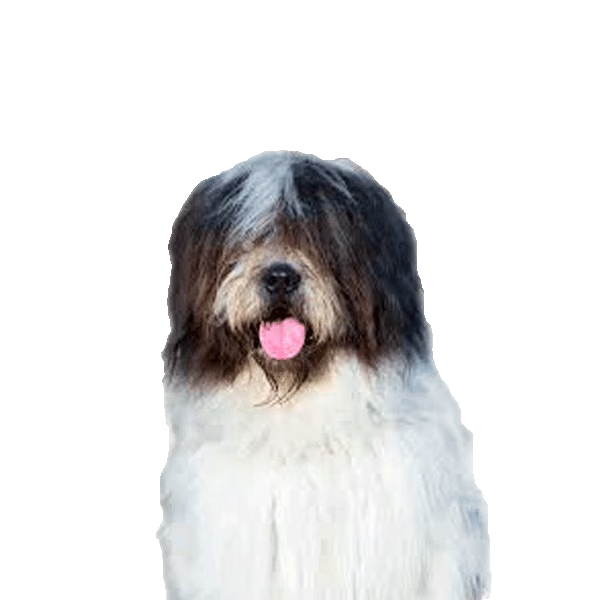
The Romanian Mioritic Shepherd Dog is a protective, devoted livestock guardian, courageous in defense yet affectionate with its family.
How the Romanian Mioritic Shepherd Dog coat is built, and what that means when you groom it.
Critical: A Romanian Mioritic Shepherd Dog should not be shaved.
The undercoat keeps heat out as well as in, and the outer coat shields the skin from sun and insect bites. Clipping the whole coat off removes both. It often grows back patchy, soft or a different colour, and in some animals the guard hairs never return properly. Brush the undercoat out instead of cutting it off.
Caution: A Romanian Mioritic Shepherd Dog coat mats easily.
Fine or long hair tangles at the base of the coat, out of sight, where the mats tighten and pull on the skin. Brushing has to reach right down to the roots in sections, not just skim the surface.
Information: A Romanian Mioritic Shepherd Dog drops its undercoat in heavy bursts.
The undercoat comes out in heavy bursts over a few weeks. An undercoat rake, or a bath followed by a proper blow-dry, clears it far faster than daily brushing. Clipping the coat down is not a shortcut for this.
A large livestock guardian from Romania's Carpathian mountains, the Mioritic is fiercely protective yet devoted to family, and best suited to landed homes here with real space to roam.
The Romanian Mioritic Shepherd Dog is a large guardian breed that developed in the Carpathian Mountains of Romania. For generations it worked alongside shepherds, watching over flocks against wolves, bears, and other predators. That job shaped the dog. It can make decisions on its own on open pasture, and it is strong enough to stand up to a threat many times its size.
With its own family, the Mioritic is calm and devoted. It forms close bonds and is usually gentle with children and people it knows well. Around strangers it stays reserved and watchful, and toward intruders it can turn firmly territorial. This mix of softness at home and seriousness on duty defines the breed.
The coat is long, thick, and usually white or pale in shade, a trait that once helped the dog blend in with the flock it guarded. Adults are heavy boned and powerful, built for endurance in cold mountain weather rather than for Singapore's constant heat and humidity, which is worth keeping in mind before bringing one home here.
| Attribute | Detail |
|---|---|
| Origin | Romania (Carpathian Mountains) |
| Size | Large |
| Lifespan | 12 to 14 years |
| Group / role | Livestock guardian / flock protection |
| Good with | Family and children it knows; reserved with strangers |
This breed suits an experienced owner with space, a securely fenced compound, and time for early socialisation. It fits a household after a steady guardian dog rather than a high energy sport companion. It is a poor match for HDB flat living, where the approved breed list already rules out most livestock guardian dogs of this size, and it is not for first time owners after a low maintenance pet or anyone unable to manage a large, independent animal with strong protective instincts. A landed property with a proper garden, or at minimum a spacious condo unit with direct outdoor access, works far better.
Romania's Carpathian shepherds bred the Mioritic over centuries as a flock guardian, and the breed only gained formal recognition in the twentieth century.
The breed hails from the Carpathian Mountains, the range that curves through Romania. Shepherds there practised transhumance, moving large flocks of sheep between high summer pastures and lower ground in winter. Wolves and brown bears posed a constant danger, so the shepherds needed dogs able to live with the flock and defend it without close supervision.
The name comes from Mioriţa, an old Romanian pastoral ballad, and from the shepherding culture the poem describes. Breeders selected for work rather than looks: size, a heavy weatherproof coat, a steady temperament around the flock, and the courage to face down large predators mattered far more than appearance.
For most of its history the Mioritic stayed a regional working dog, well known across the Romanian highlands but barely recorded elsewhere. A written breed standard appeared in the twentieth century, and the Fédération Cynologique Internationale later recognised the type within its sheepdog and cattle dog grouping.
The breed remains uncommon outside Romania and its neighbours, and it is rarer still in Singapore, where the Singapore Kennel Club register shows far more of the familiar companion breeds than working guardian dogs of this size. Anyone bringing one in from overseas should expect the usual AVS import and quarantine process that applies to any dog entering Singapore. Many Mioritic still do their original guardian work back home, while a growing number live as family companions and property guardians.
The Mioritic is a large, heavy-boned guardian with a long, thick, mostly white coat built for cold climates, quite unlike the coats seen on most dogs kept in Singapore.
The Mioritic is a large, robust dog with substantial bone and a broad frame. The body runs slightly longer than tall, and the overall impression is one of power and stamina rather than refinement. The head is large with a broad skull, and the long coat often gives the face and body a shaggy outline. The tail carries plenty of fur and hangs low at rest.
| Trait | Standard |
|---|---|
| Height | Males about 70 to 75 cm; females about 65 to 70 cm at the withers |
| Weight | Roughly 50 to 65 kg, varying with sex and build |
| Coat | Long, thick, slightly wavy double coat with a dense undercoat |
| Colours | Usually white or off white; may show grey or light patches |
| Eyes | Dark, medium sized, with an alert and steady expression |
The double coat is the breed's most practical feature back in Romania. A coarse outer layer sheds rain and snow, and a dense undercoat holds in warmth through Carpathian winters. The most common colour is white or a pale off white, which once helped the working dog stand out clearly among the sheep and made it harder for a predator to single out a target. Some dogs carry grey or light shaded markings.
In Singapore's year round heat, that same undercoat becomes a liability rather than an asset. It needs regular grooming to stay free of mats, and owners should keep the dog in a shaded, well ventilated spot, or an air conditioned room during the hottest part of the day, rather than expecting it to cope outdoors the way it would in the mountains.
The Mioritic is devoted to family, calm and confident at home, but stays watchful and territorial around strangers and unfamiliar situations.
The Mioritic is loyal, courageous, and protective by nature. At home it tends to be calm, affectionate, and patient, and it bonds tightly with the people it lives with. Many are gentle with children they have grown up around, though given its size, young children should always be watched when playing with the dog.
Around strangers the breed stays reserved and sizes people up before warming to them. It will not fuss over a new visitor the way a friendlier breed might, and it may stay aloof until it decides someone is no threat. That wariness is part of the guardian temperament, not aggression by itself. Faced with a genuine threat, the dog can turn firm and territorial and will act to protect its family and property.
How it gets along with other animals depends largely on upbringing. Raised alongside livestock or household pets, the Mioritic often ends up guarding and accepting them. Without early exposure, it can be wary of dogs it does not know, which matters here since daily walks mean regular encounters with other dogs at the park or around the void deck. The breed's independent streak served it well alone on the mountain, but it calls for consistent leadership and thorough socialisation from puppyhood.
| Trait | Rating |
|---|---|
| Affection (with family) | 4 |
| Energy | 3 |
| Trainability | 3 |
| Vocalness | 4 |
| Shedding | 4 |
The Mioritic needs regular coat care, daily moderate exercise, and a home with secure outdoor space, since it is a poor fit for most Singapore flats.
The long double coat is the main grooming task, and the breed's size and guardian drive shape the rest of its care. This is an outdoor working dog at heart, happiest with room to patrol and something to watch over, which is worth weighing carefully against what most homes here can offer.
The Mioritic suits a house with a securely fenced compound and copes well with cold, which is rarely a concern here. Singapore's constant heat and humidity are the bigger challenge: the dog needs shade, fresh water, and ideally access to a cool, ventilated or air conditioned space during the hottest hours. It is not suited to HDB flats or small condo units, and a bored or under exercised dog of this size can turn restless, so daily activity and a clear role matter.
The Mioritic needs a balanced large breed diet with controlled growth as a puppy, and portions matched to its size, activity, and Singapore's climate.
As a large breed, the Mioritic does best on a complete, balanced diet formulated for big dogs. Puppies need controlled growth to protect developing joints, so a large breed puppy food and steady portions matter more than rapid weight gain. Adults need enough food to stay lean and muscular without turning overweight, which places extra strain on the joints, especially with less outdoor activity than the breed would get on its home turf.
| Life stage | Amount per day | Meals |
|---|---|---|
| Puppy (2 to 6 months) | Per large-breed puppy food label, by weight | 3 to 4 |
| Junior (6 to 12 months) | Per label, adjusted to growth | 2 to 3 |
| Adult | About 4 to 6 cups of large-breed food, by weight and activity | 2 |
| Senior | Reduced calories to match lower activity | 2 |
Keep treats to a small share of daily calories so they do not throw off the diet or pack on weight. Since this is a large, deep chested breed, splitting food into two meals and skipping hard exercise right after eating can lower the risk of bloat. Joint supplements are sometimes used with large breeds, but check with a vet before adding one. Fresh water should always be available, and more of it than usual given how much a dog can lose to Singapore's heat.
The Mioritic is generally hardy with a lifespan of 12 to 14 years, though as a large breed it can face joint problems and a real risk of bloat.
The Mioritic is a generally hardy working breed with a typical lifespan of 12 to 14 years, long for a dog of its size. Good breeding, sensible feeding, and routine veterinary care all support that health. As with most large breeds, the main concerns involve the joints, the risk of bloat, and the demands of the dense coat in a hot climate.
| Condition | Signs | Note |
|---|---|---|
| Hip and elbow dysplasia | Stiffness, limping, trouble rising | Screen breeding dogs; control puppy growth and weight |
| Gastric dilatation-volvulus (bloat) | Swollen belly, retching, restlessness | An emergency; large deep-chested breeds are at higher risk |
| Obesity | Weight gain, low stamina | Adds load to joints; manage portions and exercise |
| Ear infections | Head shaking, odour, scratching | The coat and ear folds trap moisture; check regularly |
The Mioritic is intelligent but independent, so it does best with early, consistent, reward-based training and thorough socialisation.
The Mioritic is intelligent and capable, but it is also independent, a trait bred into a dog that once made its own calls on the mountain. It will not train just to please its owner, so results depend on consistency, fairness, and a handler the dog actually respects. Harsh methods tend to backfire with a sensitive guardian breed and can wreck the trust it takes years to build.
Early socialisation is the single most important task. Exposing the puppy to many people, places, animals, and situations, from a crowded void deck to a busy vet clinic, helps it tell a normal visitor from a genuine threat, which keeps the protective instinct measured rather than reactive once the dog is grown.
As a large breed, the Mioritic matures slowly; litters follow a roughly two-month pregnancy and need health-screened parents.
Like most large breeds, the Mioritic matures slowly. Bones, joints, and temperament take time to settle, and responsible breeders wait until a dog is physically and behaviourally mature before breeding it. Screening the parents for health, especially hip and elbow dysplasia, cuts down on inherited problems in the puppies.
Pregnancy in dogs runs around 63 days. The dam needs a quiet, warm whelping area, good nutrition through pregnancy and nursing, and close watching during and after birth. Large breeds can have difficult labours, so a vet should be on call.
The early weeks shape the adult dog. Puppies do best with gentle handling, exposure to everyday household sounds, and the start of socialisation before they go to new homes. Given the breed's size and guardian drive, matching each puppy to a suitable, well prepared owner, ideally one with a landed property rather than a flat, is part of breeding responsibly.
| Metric | Value |
|---|---|
| Sexual maturity | Reached in the first year, but breeding is best delayed to full maturity |
| Gestation | About 63 days |
| Typical litter size | Several puppies, varying by dam and line |
| Weaning | Around 6 to 8 weeks |
| Recommended pre-breeding checks | Hip and elbow screening, general health |
AVS handles the licence; United Pet Club keeps a free, searchable record behind your Romanian Mioritic Shepherd Dog's microchip for life.
An AVS licence satisfies the rules; it does not tell a finder in another country how to reach you. Your Romanian Mioritic Shepherd Dog's free United Pet Club profile does exactly that, pairing your mobile with his photo and chip number for life. Register your dog once and the record follows him anywhere.
The AVS listing and a searchable contact record are two different things, and the second one is yours to set up. Register the microchip on the free lifetime plan: any chip brand a local vet implants qualifies, updates after a move between flats stay free, and the record can be pulled up 24 hours a day from anywhere. Create your free account and settle it tonight.
Set up a free United Pet Club account, key in your Romanian Mioritic Shepherd Dog's details and a photo, and save. The lifetime plan keeps the profile live at no cost for as long as he is with you, alongside whatever AVS requires.
Key the 15-digit chip number into your free account together with your address, mobile, and email. The lifetime plan covers the registration and every update free, whichever brand the clinic used.
Yes. AVS requires dogs to be licensed and microchipped by three months of age. The licence is the legal part; a registered, searchable record with your current mobile is the part that gets a lost Romanian Mioritic Shepherd Dog home, and that part is free.
Nothing. United Pet Club's lifetime plan covers the profile, the chip record, and unlimited updates, with no renewal, ever.
Common questions about the Mioritic's size, temperament, care needs, lifespan, suitability, and availability in Singapore.
It is a large breed. Males usually stand about 70 to 75 cm at the withers and females about 65 to 70 cm, with weights roughly between 50 and 65 kg depending on sex and build.
With its own family it is devoted and affectionate, and it is often gentle with children it has grown up alongside. It stays reserved with strangers and is protective by nature, so it suits a family after a real guardian dog and able to provide supervision and socialisation.
Not really. It is a large, high commitment breed that needs space, a secure outdoor area, and daily exercise, none of which an HDB flat can offer. A landed property or a spacious condo with direct outdoor access suits it far better, and the long double coat also needs brushing two to three times a week.
The typical lifespan runs 12 to 14 years, quite long for a dog this size, especially with good nutrition, weight control, and routine veterinary care.
Generally not. It does best with an experienced handler who has a house and a securely fenced property with room for the dog to patrol, rather than someone getting their first dog or living in a flat.
The breed is uncommon even in Romania's neighbouring countries, and it is rarer still here. Finding a puppy from a responsible, health-screening breeder usually means importing one, which involves AVS import permits and quarantine, and often a wait.
Its thick double coat is built for cold Carpathian winters, not tropical heat, so owners need to manage this carefully. Give the dog shade, plenty of water, and a cool space during the hottest part of the day, and keep on top of grooming since the coat sheds heavily in the heat.
