

Rastreador Brasileiro
The Rastreador Brasileiro is a determined Brazilian scenthound known for its tireless tracking ability and athletic stamina.
- Size
- Large
- Lifespan
- 11–13 years
- Origin
- Brazil
- Temperament
- Hardworking
- Standard colors
- Black, White, Blue and Fawn
Characteristics
Coat and grooming
How the Rastreador Brasileiro coat is built, and what that means when you groom it.
- Coat layers
- Single coat
- Coat texture
- Smooth
- Coat length
- Short
- Shedding
- Moderate shedding
Rastreador Brasileiro colors and patterns
What each club's breed standard says about every Rastreador Brasileiro color and pattern. Point at a ruling to see the club's own wording.
Breed standards describe the Rastreador Brasileiro in Black, White, Blue and Fawn. Standard patterns: Bicolour, Tricolour, Roan and Tan point.
| Color or pattern | FCI |
|---|---|
| Black | Standard (“Fully mottled black and white”) |
| White | Standard (“Fully mottled black and white”) |
| Blue | Standard (“giving a slate blue colouring effect”) |
| Fawn | Standard (“with or without fawn and/or black markings”) |
| Patterns | |
| Bicolour | Standard (“bicolor (white with fawn or black markings”) |
| Tricolour | Standard (“tricolor (white and black with fawn markings)”) |
| Roan | Standard (“Fully mottled black and white”) |
| Tan point | Standard (“totally black with fawn markings”) |


| Color or pattern | FCI |
|---|---|
| Dark brown | Standard (“dark”) |
| Color or pattern | FCI |
|---|---|
| Black | Standard (“completely black in colour”) |
What the rulings mean
- Standard
- Described by the club's breed standard.
Color changes
How a Rastreador Brasileiro's colors can change over its life.
Blackchanges toRust
Coat · With body condition · can change back
Blackchanges toGrey
Coat · Progressive
Blackchanges toBrown
Coat · In the sun · can change back
Whitechanges toRoan
Coat · With age · from 2 weeks
Tan pointchanges toSaddle
Coat · With age · from 6 to 156 weeks
Blackchanges toSnow nose
Nose · With the season · can change back
Blackchanges toPink
Nose · With the season · can change back


Sources
Each ruling comes from the club's published breed standard or color list.
Meet some of our Rastreador Brasileiro
A few of the Rastreador Brasileiro profiles members have added to United Pet Club.


About the Rastreador Brasileiro in Singapore
The Rastreador Brasileiro is a large Brazilian scenthound bred to track game for hours on end, valued for its stamina, focus and steady working temperament.
The Rastreador Brasileiro is a large scenthound from Brazil, developed to trail game across rough, humid country for hours at a stretch. The name is Portuguese for 'Brazilian Tracker', and the whole breed was built around one job: holding a scent trail without losing concentration. These are athletic, alert dogs built for distance work rather than short bursts of speed.
Temperament-wise, the breed is hardworking and single-minded once it is on task. It tends to be even-tempered with its own family and handler while staying alert to anything unfamiliar around it. The strong nose and high activity level mean this is a dog that needs a real job and the space to do it. Owners who work with the breed describe it as determined the moment it picks up a trail, and slow to let go of one.
This is a working hound first and a companion second, so it needs a household that can commit to genuine daily exercise rather than a stroll around the block. Given proper physical and mental work, though, it settles into a steady, cooperative partner at home.
| Attribute | Detail |
|---|---|
| Origin | Brazil |
| Size | Large |
| Lifespan | 11 to 13 years |
| Group / role | Scenthound, tracking and trailing |
| Good with | Owners who can give it exercise every day; keep an eye on it around small pets and other animals because of the hunting drive |
Who it suits in Singapore
The Rastreador Brasileiro suits owners with a landed property and a proper fenced garden, not a family in an HDB flat or a condo bound by strata rules on approved breeds. As a large working hound, it sits well outside HDB's approved list for public housing, so keeping one usually means a terrace or bungalow, not a unit off a common corridor. Someone who runs the park connectors, hikes Bukit Timah or MacRitchie, or heads to Pulau Ubin on weekends will get far more out of the dog than someone stuck indoors under the air conditioning all day. The short coat handles the year-round heat and humidity without much trouble, as long as there is shade and water on hand. Long days alone in a flat while the household is out at work or school do not suit a hound with this much drive and stamina.
Rastreador Brasileiro history and origin
The Rastreador Brasileiro took shape in Brazil during the twentieth century, bred from imported hounds for local hunting conditions, and it stays unrecognised by the Singapore Kennel Club.
The Rastreador Brasileiro comes from Brazil, bred to hunt and track game across the country's varied terrain. Much of the breeding work is credited to Oswaldo Aranha Filho, who set out to create a hound with the nose, voice and stamina to trail animals such as jaguar and peccary over difficult ground.
The programme drew on several imported scenthound lines, including American foxhound stock and other trailing hounds, crossed with local dogs. The goal was a tracker that handled heat, distance and rough cover better than any of the parent breeds on their own. Selection favoured scenting ability and working stamina over looks.
The breed earned recognition within Brazil through the Confederação Brasileira de Cinofilia and, for a period, held some standing abroad as well. A severe setback followed when disease and a tick-borne outbreak, worsened by pesticide exposure, wiped out a large share of the breeding population. Numbers dropped so low that the breed was treated as good as lost for years.
Later efforts tracked down surviving dogs and others of the original type, and breeders used them to rebuild the population from there. The Rastreador Brasileiro is still uncommon today and rarely turns up outside Brazil. It has no official standing with the Singapore Kennel Club, so anyone here keeping the breed is almost certainly working with imported paperwork and a small, dedicated network of enthusiasts rather than a local show line.
Rastreador Brasileiro appearance and breed standard
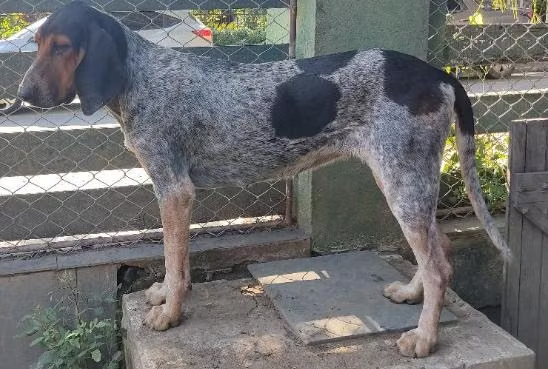
The Rastreador Brasileiro is a large, athletic scenthound with a short coat, a lean muscular build and a tricolour or patched coat typical of trailing hounds.
The Rastreador Brasileiro has the lean, athletic frame you would expect of a working scenthound. The body runs longer than it is tall, with a deep chest for lung capacity and strong, straight legs built to cover ground for hours. The head carries long, drop ears typical of trailing hounds, and the expression stays alert and attentive throughout. On the whole the dog reads as functional and balanced rather than bulky.
| Trait | Description |
|---|---|
| Height | Roughly 62 to 72 cm (24 to 28 in) at the shoulder, males larger than females |
| Weight | About 25 to 35 kg (55 to 77 lb) |
| Coat | Short, smooth and close-lying |
| Colours | White base with black and tan markings; ticked, patched or tricolour patterns |
| Eyes | Medium-sized, dark, with an alert expression |
Coat and colours
The coat is short and low-maintenance, which suits a dog working in Singapore-style heat and dense cover alike. The usual pattern is a white ground broken up by black and tan patches, often ticked across the body. The close coat gives almost no protection against cold, so the breed is far better suited to warm, humid climates than to any real winter, which is one reason it settles into tropical conditions here without much fuss.
Rastreador Brasileiro temperament and personality
The Rastreador Brasileiro is a focused, hardworking hound that stays steady with its family but is driven hard by a strong nose and high energy.
The Rastreador Brasileiro is even-tempered and cooperative with people it knows well. It bonds closely with its handler and is generally settled at home once its exercise needs are met for the day. Around strangers it tends to be alert and watchful rather than aggressive, and plenty of dogs will give voice the moment something unfamiliar turns up.
The defining trait is drive. This is a hound bred to lock onto a scent and follow it for hours, so it can turn single-minded the second it picks up a trail. That focus makes recall much harder mid-track, which is the main reason secure fencing matters more with this breed than with most. With other dogs it is usually sociable, having been bred to work in packs.
The hunting instinct shapes life with small pets. Cats, rabbits and similar animals can trigger a chase response, so introductions need to be slow and supervised. Around children the breed is typically patient, though its size and energy still call for sensible supervision with younger kids, corridor or garden play included.
| Trait | Rating |
|---|---|
| Affection | 4 |
| Energy | 5 |
| Trainability | 3 |
| Vocalness | 4 |
| Shedding | 2 |
Rastreador Brasileiro care and grooming
The Rastreador Brasileiro is easy to groom but needs serious daily exercise and space, which suits an active household with a landed home rather than a flat.
Grooming
- Brush the short coat once a week to clear loose hair and spread natural skin oils.
- Bathe only when needed; frequent washing strips the coat of its natural oils.
- Clean the long drop ears regularly and check for moisture, debris and any sign of infection, since Singapore's humidity gives ear trouble plenty of room to start.
- Trim nails every few weeks and check the feet after any outing over rough ground.
- Brush the teeth several times a week to keep on top of dental health.
Exercise
- Plan on at least 1 to 2 hours of vigorous activity a day.
- Use long walks, runs, hikes or structured tracking sessions along the park connector network.
- Add scent games and trailing tasks that work the nose, not just the legs.
- Keep the dog leashed or inside secure fencing in open ground, since a fresh scent trail can override recall in seconds.
- Time outdoor sessions for early morning or evening where possible, and carry water, since the midday heat and humidity add up fast for a hound this active.
Environment
This breed does best with room to move and a securely fenced garden, which points to a landed home rather than an HDB flat or most condo units. It handles Singapore's heat and humidity well thanks to the short coat, but still needs shade and water on hand whenever the sun is strong. Singapore has no real cold season, so the coat's poor insulation rarely matters outdoors; the one exception is a room kept very cold by air conditioning overnight, where a blanket or a warmer corner helps. The breed is not suited to apartment living or to being left alone for long stretches during the working day.
Rastreador Brasileiro nutrition and feeding
As a large, high-energy working hound, the Rastreador Brasileiro needs quality food with enough protein and calories to match how much it actually moves.
The Rastreador Brasileiro needs a complete, balanced diet built for a large, active dog. Working or hard-exercising dogs burn through real energy, so calorie intake should track actual activity rather than a fixed amount. Choose a food with quality animal protein to support muscle, and adjust portions to keep the dog lean rather than heavy, since extra weight puts strain on the joints. Keep fresh water on hand at all times, especially after exercise in Singapore's heat.
| Life stage | Amount per day | Meals |
|---|---|---|
| Puppy (2 to 6 months) | Following a growth formula, split across the day | 3 to 4 |
| Adolescent (6 to 12 months) | Adjusted down as growth slows | 2 to 3 |
| Adult | About 3 to 4.5 cups of quality dry food, by weight and activity | 2 |
| Active or working adult | Increased to match energy use | 2 |
| Senior | Reduced calories, protein maintained | 2 |
Treats and supplements
Keep treats to around ten percent of daily calories so the overall diet stays balanced. A food formulated for large breeds usually covers what the dog needs, so add supplements only on veterinary advice, not on a whim from the pet shop shelf. Deep-chested dogs carry a real bloat risk, so avoid a heavy meal right before or after intense exercise.
Rastreador Brasileiro health and common conditions
The Rastreador Brasileiro is a generally hardy working hound with a lifespan of 11 to 13 years, though it can face issues typical of large, active breeds.
The Rastreador Brasileiro is a robust, athletic breed with a typical lifespan of 11 to 13 years. Because the population is small and was rebuilt from limited stock, responsible breeding and health screening matter a great deal for keeping the line sound. As with most large, deep-chested working dogs, the main concerns sit around the joints, the digestive system and the ears, and Singapore's climate adds tick and parasite pressure on top of that.
| Condition | Signs | Note |
|---|---|---|
| Hip dysplasia | Stiffness, limping, trouble getting up | Common in large breeds; screen breeding stock before pairing |
| Bloat (gastric torsion) | Swollen abdomen, retching, obvious distress | An emergency; avoid heavy meals close to hard exercise |
| Ear infections | Head shaking, odour, discharge | Drop ears trap moisture readily in humid weather; clean and dry regularly |
| Tick-borne disease | Fever, lethargy, joint pain | A historic threat to the breed and a live risk year-round here; keep parasite control current |
Preventive care
- Keep vaccinations and parasite prevention current, with strict tick control given the year-round warmth.
- Book annual veterinary check-ups, moving to twice a year once the dog is a senior.
- Screen breeding dogs for hip and joint health before any pairing.
- Keep up dental care and a lean body weight.
- Check and clean the ears on a routine basis, not just when something looks off.
Training a Rastreador Brasileiro
The Rastreador Brasileiro is intelligent and willing but independent once on a scent, so it responds best to consistent, reward-based training started young.
The Rastreador Brasileiro is a capable learner with a strong work ethic, which helps enormously in training. The catch is its independence: once the nose switches on, the dog can tune out commands and simply follow the trail. Training works best when it starts in puppyhood, stays consistent and gives the dog a clear job to do. Recall especially needs steady, repeated reinforcement, since a fresh scent competes hard with anything the handler is offering. Early socialisation with people, dogs and other animals helps keep the strong hunting drive in balance.
Basics
- Start socialisation and gentle handling from early puppyhood.
- Teach name response and attention before adding any distractions.
- Build a reliable recall, rewarding it generously and practising on a long line in an open area.
- Add leash manners early, before the dog grows into its full size and strength.
- Channel the nose into scent and tracking games to satisfy the instinct properly.
- Keep sessions short, varied and frequent to hold the dog's focus.
Breeding the Rastreador Brasileiro
The Rastreador Brasileiro is rare and was rebuilt from limited stock, so breeding centres on careful selection, health screening and preserving the working line.
Breeding the Rastreador Brasileiro carries extra responsibility because the population is small and was reconstructed after a near collapse. Breeders work to hold on to genetic diversity while keeping the breed's scenting ability and working soundness intact. Females reach physical maturity at around 18 to 24 months, and responsible programmes wait for full maturity before breeding rather than mating on the first season.
Gestation in dogs runs roughly 63 days. Litter sizes in large breeds vary widely, and the dam needs increased nutrition through late pregnancy and nursing. Whelping should be planned with veterinary support well ahead of time, especially given how scarce the breed is and how much each litter matters to the wider gene pool.
Raising the litter centres on early socialisation and gentle exposure to handling, sound and other animals. Puppies from a working line carry strong instincts from day one, so early scent enrichment and steady human contact help shape balanced adult dogs. Health screening of both parents supports the longer-term goal of a sound, sustainable population, and anyone bringing a litter into Singapore should also budget time for AVS import and licensing paperwork rather than treat it as an afterthought.
| Metric | Value |
|---|---|
| Sexual maturity | About 6 to 12 months |
| Recommended breeding age | From around 18 to 24 months |
| Gestation | Roughly 63 days |
| Typical litter size | Around 5 to 8 puppies (varies) |
| Weaning | About 7 to 8 weeks |
Licensing done? Now register your Rastreador Brasileiro and its chip
AVS handles the licence; United Pet Club keeps a free, searchable record behind your Rastreador Brasileiro's microchip for life.
Registering a Rastreador Brasileiro in Singapore
Key in your Rastreador Brasileiro's name, his date of birth, and a clear photo, attach your mobile, and save: a lifetime record, no charge now or later. Dog registration sits happily alongside the AVS paperwork and takes the chip number whenever you have it.
Your Rastreador Brasileiro's chip went in before his third month, as the rules require; whether the number leads anywhere is a separate question. Give it a live answer with United Pet Club: registration free for life, every brand accepted, every update free. Microchip registration plus a free account, and the whole thing is squared away.
How do I register my Rastreador Brasileiro in Singapore?
Set up a free United Pet Club account, key in your Rastreador Brasileiro's details and a photo, and save. The lifetime plan keeps the profile live at no cost for as long as he is with you, alongside whatever AVS requires.
How do I register my Rastreador Brasileiro's microchip?
Key the 15-digit chip number into your free account together with your address, mobile, and email. The lifetime plan covers the registration and every update free, whichever brand the clinic used.
Is a microchip compulsory for a Rastreador Brasileiro in Singapore?
Yes. AVS requires dogs to be licensed and microchipped by three months of age. The licence is the legal part; a registered, searchable record with your current mobile is the part that gets a lost Rastreador Brasileiro home, and that part is free.
How much does it cost to register a Rastreador Brasileiro?
Nothing. United Pet Club's lifetime plan covers the profile, the chip record, and unlimited updates, with no renewal, ever.
Rastreador Brasileiro frequently asked questions
Common questions about the Rastreador Brasileiro cover its size, temperament, care needs, lifespan, fit with Singapore homes, and how rare it is.
How big does a Rastreador Brasileiro get?
It is a large breed, standing roughly 62 to 72 cm (24 to 28 in) at the shoulder and weighing about 25 to 35 kg (55 to 77 lb), with males generally bigger than females.
What is the Rastreador Brasileiro's temperament like?
It is hardworking, focused and athletic. The breed stays steady and cooperative with its own family, alert around strangers, and strongly driven by scent the moment it picks up a trail.
Is the Rastreador Brasileiro hard to look after in Singapore?
Grooming is easy thanks to the short coat, but the exercise needs are high. The breed needs 1 to 2 hours of vigorous activity daily and secure fencing, which makes it a poor fit for an inactive household or an HDB flat.
How long does a Rastreador Brasileiro live?
The typical lifespan is 11 to 13 years, supported by good nutrition, exercise, tick control and regular veterinary care.
Is the Rastreador Brasileiro a good family dog for Singapore homes?
It can be, in an active household that can meet its exercise needs, ideally one with a garden rather than a flat. It is usually patient with children and sociable with other dogs, though the hunting drive means care is needed around small pets.
Is the Rastreador Brasileiro rare in Singapore?
Yes, and doubly so here. The breed nearly disappeared worldwide after disease and pesticide losses wiped out much of its population decades ago, and even after being rebuilt it remains uncommon, with essentially no established line in Singapore outside imported dogs.
Does the Rastreador Brasileiro bark a lot?
As a scenthound it is fairly vocal and will give voice when alert or tracking a scent, so it is not the quietest breed for anyone with neighbours close by, whether that is an HDB corridor or a landed terrace.
From the community
Ask about the Rastreador BrasileiroNo questions about the Rastreador Brasileiro yet. Be the first to ask.
Browse Dog breeds