
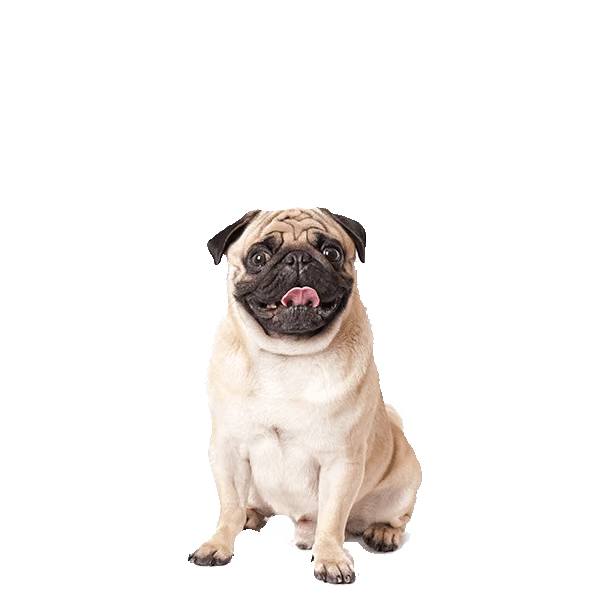
Pug
The Pug is a good-natured, charming companion famous for its comical personality and loving devotion to family.
- Size
- Small
- Lifespan
- 13–15 years
- Origin
- China
- Temperament
- Good-natured
- Standard colors
- Black, Silver, Fawn and Apricot
Characteristics
Coat and grooming
How the Pug coat is built, and what that means when you groom it.
- Coat layers
- Double coat
- Coat texture
- Smooth
- Coat length
- Short
- Shedding
- Heavy shedding
Grooming guidance
Critical: A Pug should not be shaved.
The undercoat keeps heat out as well as in, and the outer coat shields the skin from sun and insect bites. Clipping the whole coat off removes both. It often grows back patchy, soft or a different colour, and in some animals the guard hairs never return properly. Brush the undercoat out instead of cutting it off.
Pug colors and patterns
What each club's breed standard says about every Pug color and pattern. Point at a ruling to see the club's own wording.
Breed standards describe the Pug in Black, Silver, Fawn and Apricot. Standard patterns: Solid.
| Color or pattern | FCI | AKC | UKC | KC | KUSA |
|---|---|---|---|---|---|
| Black | Standard (“Silver, apricot, fawn or black”) | Standard (“Black”) | Standard (“silver or apricot, fawn and black”) | Standard (“Silver, apricot, fawn or black”) | Standard (“Silver, apricot, fawn, or black”) |
| Silver | Standard (“Silver, apricot, fawn or black”) | Disqualifying | Standard (“silver or apricot, fawn and black”) | Standard (“Silver, apricot, fawn or black”) | Standard (“Silver, apricot, fawn, or black”) |
| Fawn | Standard (“Silver, apricot, fawn or black”) | Standard (“Fawn”) | Standard (“silver or apricot, fawn and black”) | Standard (“Silver, apricot, fawn or black”) | Standard (“Silver, apricot, fawn, or black”) |
| Apricot | Standard (“Silver, apricot, fawn or black”) | Disqualifying | Standard (“silver or apricot, fawn and black”) | Standard (“Silver, apricot, fawn or black”) | Standard (“Silver, apricot, fawn, or black”) |
| White | Not recognised | Disqualifying | Not recognised | Not recognised (“White”) | Not recognised |
| Albino | Not recognised | Disqualifying | Disqualifying (“Albinism”) | Not recognised | Not recognised |
| Blue | Not recognised | Disqualifying | Not recognised | Not recognised (“Blue”) | Not recognised |
| Brown | Not recognised | Disqualifying | Not recognised | Not recognised (“Brown”) | Not recognised |
| Chocolate | Not recognised | Disqualifying | Not recognised | Not recognised | Not recognised |
| Tan | Not recognised | Disqualifying | Not recognised | Not recognised (“Black & Tan”) | Not recognised |
| Cream | Not recognised | Disqualifying | Not recognised | Not recognised (“Cream - no Black Mask”) | Not recognised |
| Patterns | |||||
| Solid | Standard (“Silver, apricot, fawn or black”) | Standard (“The colors are fawn or black”) | Standard (“silver or apricot, fawn and black”) | Standard (“Silver, apricot, fawn or black”) | Standard (“Silver, apricot, fawn, or black”) |
| Brindle | No ruling | No ruling | No ruling | No ruling | Not recognised |
| Sable | No ruling | No ruling | No ruling | Not recognised (“Sable”) | Not recognised |
| Tan point | No ruling | No ruling | No ruling | Not recognised (“Black & Tan”) | Not recognised |
| Reverse brindle | No ruling | No ruling | No ruling | No ruling | Not recognised |

%22%3E%3Cg%20fill%3D%22%231C1C1C%22%3E%3Cpath%20d%3D%22M-3.7%20-4L-4.5%200.5L-5.6%205L-5.7%209.5L-6.7%2014L-8.2%2018.5L-8.6%2023L-9.1%2027.5L-10.7%2032L-10.5%2036.5L-10.7%2041L-11%2045.5L-11%2050L-11.4%2054.5L-11.4%2059L-12.6%2063.5L-13.3%2068L-11.5%2068L-10.1%2063.5L-9.9%2059L-9.2%2054.5L-9%2050L-9.6%2045.5L-9%2041L-8.8%2036.5L-9.1%2032L-6.9%2027.5L-7%2023L-6.2%2018.5L-4.6%2014L-3.1%209.5L-3%205L-3.3%200.5L-1.3%20-4ZM1.6%20-4L0.1%200.5L0.6%205L-1.5%209.5L-2.6%2014L-4%2018.5L-4.3%2023L-5.6%2027.5L-4.7%2032L-4.2%2036.5L-4.7%2041L-4.9%2045.5L-5%2050L-6.1%2054.5L-6.5%2059L-7.8%2063.5L-8.5%2068L-6.9%2068L-5.7%2063.5L-4.8%2059L-3.3%2054.5L-2.1%2050L-2.9%2045.5L-3.1%2041L-3.1%2036.5L-2.3%2032L-2.5%2027.5L-1.6%2023L-1.9%2018.5L-0.6%2014L1%209.5L1.7%205L2.6%200.5L3%20-4ZM7.6%20-4L6.6%200.5L5.6%205L5.2%209.5L3.7%2014L3.4%2018.5L3.5%2023L2.5%2027.5L3%2032L3%2036.5L1.9%2041L2.7%2045.5L1.8%2050L0.3%2054.5L-1.7%2059L-1%2063.5L-3.7%2068L-1.6%2068L0.3%2063.5L0.8%2059L2.7%2054.5L3.2%2050L4.2%2045.5L4.2%2041L4.4%2036.5L4.7%2032L3.8%2027.5L4.8%2023L5.3%2018.5L4.9%2014L6.6%209.5L7.9%205L7.6%200.5L9.7%20-4ZM11.3%20-4L10.8%200.5L11.7%205L11.3%209.5L11.2%2014L10.3%2018.5L10%2023L10.6%2027.5L9.2%2032L8.2%2036.5L7.6%2041L6%2045.5L4.7%2050L5.1%2054.5L3.6%2059L3.8%2063.5L3.7%2068L6.2%2068L5.8%2063.5L5.6%2059L7.4%2054.5L7.3%2050L8.3%2045.5L10%2041L11.1%2036.5L10.8%2032L12.8%2027.5L12.6%2023L13.1%2018.5L12.7%2014L13%209.5L13.6%205L13%200.5L12.9%20-4ZM19.6%20-4L19.4%200.5L18.1%205L18.4%209.5L17.8%2014L16.7%2018.5L15%2023L13.8%2027.5L13.2%2032L13.3%2036.5L11.7%2041L10.9%2045.5L11.9%2050L12.2%2054.5L12.5%2059L11.6%2063.5L11%2068L12.8%2068L13.4%2063.5L14.2%2059L14.8%2054.5L13.3%2050L13.7%2045.5L14.5%2041L14.8%2036.5L14.8%2032L16%2027.5L16.6%2023L18.5%2018.5L19.2%2014L19.3%209.5L20.7%205L21.3%200.5L22.1%20-4ZM23.6%20-4L24.4%200.5L23.9%205L22.2%209.5L21.1%2014L20.3%2018.5L19.2%2023L17.6%2027.5L17.9%2032L18.3%2036.5L17.7%2041L18.3%2045.5L17.9%2050L17.9%2054.5L16.4%2059L15.3%2063.5L14.5%2068L16.5%2068L18.3%2063.5L19.5%2059L19.5%2054.5L20%2050L19.9%2045.5L19.8%2041L19.6%2036.5L21.1%2032L19.9%2027.5L20.6%2023L21.8%2018.5L22.9%2014L24.2%209.5L25.5%205L26.4%200.5L26.7%20-4Z%22%2F%3E%3Cpath%20d%3D%22M28%20-4L27.5%200.5L26.9%205L28.2%209.5L27.2%2014L26.3%2018.5L26.3%2023L25.6%2027.5L25.5%2032L23.2%2036.5L22.1%2041L22.2%2045.5L20.1%2050L20.8%2054.5L19.2%2059L20.6%2063.5L20.3%2068L21.2%2068L22.7%2063.5L22%2059L22.4%2054.5L22.7%2050L23.4%2045.5L25.1%2041L25.7%2036.5L26.9%2032L27.8%2027.5L28.9%2023L29.1%2018.5L28.5%2014L29.9%209.5L29.8%205L29.3%200.5L30.5%20-4ZM36.6%20-4L35.8%20-1.1L35.9%201.7L35.2%204.6L34.6%207.5L33.8%2010.3L32.3%2013.2L33%2016.1L31.7%2018.9L32.1%2018.9L33.8%2016.1L35.3%2013.2L35%2010.3L36.6%207.5L36.6%204.6L37%201.7L37.9%20-1.1L36.8%20-4ZM32.2%2025.4L30.7%2030.7L29.8%2036.1L29.6%2041.4L28.4%2046.7L28.6%2052L28.3%2057.4L29.5%2062.7L28.3%2068L29.2%2068L30.3%2062.7L30.8%2057.4L29.9%2052L30.1%2046.7L30.7%2041.4L31.5%2036.1L32.3%2030.7L32.8%2025.4ZM39%20-4L39.4%200.5L39.3%205L39.2%209.5L40.1%2014L38.4%2018.5L38.6%2023L37.8%2027.5L35.7%2032L35.6%2036.5L34.1%2041L33.6%2045.5L32.8%2050L31.9%2054.5L32.5%2059L32.7%2063.5L32.1%2068L34.9%2068L34.1%2063.5L34.7%2059L35%2054.5L34.9%2050L35%2045.5L37%2041L38.1%2036.5L38.7%2032L39.8%2027.5L39.6%2023L40.8%2018.5L41.2%2014L41.7%209.5L42.1%205L40.6%200.5L42.3%20-4ZM45.7%20-4L43.6%200.1L42.2%204.1L42.7%208.2L40.7%2012.3L41%2016.4L39.5%2020.4L39.9%2024.5L41.2%2028.6L42.1%2028.6L42.7%2024.5L42.5%2020.4L42.8%2016.4L42.6%2012.3L43.4%208.2L45.5%204.1L45.2%200.1L45.8%20-4ZM41.4%2033.9L39%2038.1L39.6%2042.4L37.5%2046.7L37.2%2050.9L36.1%2055.2L35.8%2059.5L35.7%2063.7L36.6%2068L37.1%2068L37.8%2063.7L38.1%2059.5L38.4%2055.2L39%2050.9L39.2%2046.7L40.8%2042.4L41.7%2038.1L42.1%2033.9ZM48.6%20-4L48.4%200.5L48.1%205L47.5%209.5L48%2014L47.5%2018.5L47%2023L47.1%2027.5L47%2032L46.1%2036.5L44.4%2041L43.8%2045.5L42.8%2050L41.1%2054.5L41.2%2059L41.1%2063.5L40.5%2068L41.5%2068L42.4%2063.5L42.8%2059L42.7%2054.5L45%2050L46.3%2045.5L46.2%2041L47.4%2036.5L49%2032L49.8%2027.5L48.9%2023L48.7%2018.5L49.6%2014L49.6%209.5L50%205L49.9%200.5L49.8%20-4ZM57.8%20-4L56.6%200.5L56.8%205.1L55%209.6L53.2%2014.1L52.3%2018.6L51.2%2023.2L51.5%2027.7L52.6%2032.2L53%2032.2L53.7%2027.7L54.3%2023.2L54.7%2018.6L55.7%2014.1L56.4%209.6L58.1%205.1L58.9%200.5L58.7%20-4ZM53.1%2035.2L52.1%2039.3L51.5%2043.4L52%2047.5L51.3%2051.6L50.8%2055.7L50%2059.8L48.8%2063.9L49.2%2068L49.6%2068L50.6%2063.9L51.8%2059.8L52.8%2055.7L53.4%2051.6L53.2%2047.5L53.7%2043.4L54.3%2039.3L53.1%2035.2Z%22%2F%3E%3Cpath%20d%3D%22M61.6%20-4L61.1%200.5L60.4%205L59.9%209.5L58.6%2014L58.3%2018.5L56.8%2023L55.6%2027.5L55.6%2032L54%2036.5L54.7%2041L54.9%2045.5L54.2%2050L54.7%2054.5L54%2059L52.9%2063.5L52.2%2068L55.2%2068L54.9%2063.5L56.9%2059L56.8%2054.5L56.5%2050L56.9%2045.5L57.6%2041L56.9%2036.5L57.3%2032L57.3%2027.5L58.9%2023L59.8%2018.5L60.3%2014L62.3%209.5L62.7%205L63.8%200.5L63.9%20-4ZM67.3%20-4L66.1%201.5L66.8%207L66.3%2012.5L64.8%2018L64%2023.5L62.7%2029L62.2%2034.4L61.4%2039.9L61.8%2039.9L63.8%2034.4L64.9%2029L66.7%2023.5L67.2%2018L67.6%2012.5L68.6%207L68%201.5L67.4%20-4ZM60.6%2044.4L59%2047.3L57.4%2050.3L57.4%2053.2L58%2056.2L57.2%2059.1L57.5%2062.1L57.8%2065L58.1%2068L58.3%2068L59.6%2065L58.8%2062.1L59.5%2059.1L59.8%2056.2L60.2%2053.2L60.3%2050.3L61.6%2047.3L61.2%2044.4Z%22%2F%3E%3C%2Fg%3E%3C%2Fg%3E%3Cuse%20href%3D%22%23s%22%20fill%3D%22none%22%20stroke%3D%22%233B2A20%22%20stroke-opacity%3D%220.6%22%20stroke-width%3D%221%22%20stroke-linejoin%3D%22round%22%2F%3E%3Cellipse%20cx%3D%223.2%22%20cy%3D%2221.7%22%20rx%3D%221.3%22%20ry%3D%221.2%22%20fill%3D%22%231C1C1C%22%2F%3E%3Ccircle%20cx%3D%2210.8%22%20cy%3D%2219.3%22%20r%3D%221.1%22%20fill%3D%22%231C1C1C%22%2F%3E%3C%2Fsvg%3E)
%22%3E%3Crect%20x%3D%220%22%20y%3D%220%22%20width%3D%2264%22%20height%3D%2264%22%20fill%3D%22url(%23g)%22%2F%3E%3Cg%20fill%3D%22none%22%20stroke%3D%22%231C1C1C%22%20stroke-width%3D%221%22%20stroke-linecap%3D%22round%22%20stroke-linejoin%3D%22round%22%3E%3Cpath%20d%3D%22M15.7%2014.8l1.9%203.6M26.4%2024.1l1.2%204.1M42.7%2029.5l0.1%203.3M35.9%2025l1.6%203.2M31.3%2028.1l0.7%203.7M15.5%2011.1l1.6%203.6M41.1%2023.8l0.6%203.2M12.1%2020.7l1.2%203M15.4%2011.2l0.8%203.8M42.9%2027.3l0.7%202.9M48.2%2033.2l0.5%204.1M23.1%2024.7l1.4%203.4M51.9%2036.1l0.3%204.3M18.7%2023.9l1.2%203.7M50.4%2027.4l0.5%204.1M18.4%2020.4l0.1%203.1M55.6%2021.4l1.1%203.9M18.6%2024.9l1.7%203.8M8.3%2023.2l1.7%202.9M18.7%2024.2l0.2%203.1M46.4%2022.7l0.6%202.6M14.3%207l0.9%203.5M50.5%2024.9l0.5%203.7M23.2%2024.7l1.2%204.3M10.5%2022.3l1.6%203.4M56.9%2018.2l1.1%202.5M20.8%2021.7l1.1%203.5M10.9%2020.2l0.2%203.9M6.6%2023.3l1%202.4M54.5%2021.7l0.9%203.8M13.3%2021l0.4%203M11.7%2019.5l0.3%204M39%2023.2l0.7%202.5M20.8%2016.7l0%202.6M18.4%2016l0.2%202.6M46.4%2038.2l1.4%203.2M12.9%2022.6l0.6%203.3M13%2020.9l0.3%204.3M35.3%2024.9l1.3%202.3M29.5%2022.1l0.5%202.8M36.6%2023.4l0.2%204.3M20.5%2017.6l0.7%204.1M18.3%2020.6l0.6%203M20.5%2025.8l0.5%203.8M23.5%2040.2l1.1%202.9M22.8%2024.9l1.5%203M25.5%2023.1l0.5%203.3M47.7%2024.7l1.5%203.7M12.9%2018.4l1.9%203.8M29.5%2023.7l0.5%204.1M37.7%2026.5l0%202.9M16.8%2016.4l0.1%203.3M49.8%2028l1.7%203.8M29.4%2025.5l0.5%203.6M9.3%2023l1.3%203.1M47.4%2025.6l0.5%203.5M48.1%2023.8l1.6%203.2M9.9%2018.3l1.3%202.5M12.2%2016.6l0.4%203.2M22%2022.1l1.4%202.7M43.9%2024.7l1.4%203.9M14.3%2020l1.8%203.2M46.3%2040.1l0.3%203.6M14.9%207l0.3%204M17.5%2016.7l1.2%202.4M54.6%2040l1%203.5M13.3%2013.9l1.6%204.2M15.3%2016.5l1.2%202.9M23.8%2038.5l0.2%203.8M18.2%2019l0.6%203M11.2%2023.6l0.7%204.1M33.1%2023.2l0.9%204.3M13.6%2019.9l0.4%204.5M19.7%2023.1l1.9%203.7M50.5%2027.1l0.3%204.1M28.2%2028.5l0.2%203.8M29%2028.4l0.1%204M47.7%2024.5l0.6%202.5M10.7%2017.2l1.4%202.7M25.5%2040.3l0.6%204.1M37.6%2022.8l0.7%204.4M57%2018.6l0.2%203.4M16.9%2022.2l1.7%203.8M43.5%2024.7l1.8%203.4M49.2%2026l1.5%203.6M47.7%2032.3l0.4%203.7M35.4%2030.8l0.5%202.7M47%2026.1l1%203.9M24.3%2028.1l1.5%204.2M50.5%2023.8l1.3%203.4M58.1%2014.1l0.3%202.6M13.9%2018.2l0.7%202.5M8.2%2021l0.7%202.9M41.4%2026.4l0.4%202.7M16.3%2020.4l0.5%204.3M43.4%2025.9l1.2%203.2M32.3%2022.4l0.3%203.9M43.6%2025.9l2.1%203.8M33.5%2026.3l1.5%203M48.3%2030.6l1.4%203.4M44.2%2024.7l0.9%203.2M12.3%2017.7l0.9%203.7M46.2%2032l1.9%203.4M51%2028.3l0.1%203.7M30.4%2023.1l1.1%203.2M52.6%2022.6l0.9%204.3M16.6%2015.4l0.9%203.1M58.4%2012.8l0.3%202.8M42.8%2032.5l1.8%203.2%22%2F%3E%3Cpath%20d%3D%22M16.4%2026.1l0.1%204.3M14%2017.1l1.3%202.8M36.9%2027.2l1.3%202.6M38.6%2025.8l0.4%203.6M57.6%2014.3l0.3%203.9M14.7%208.2l1%204.3M53.4%2023l1.9%203.4M51.5%2030.3l0.8%202.7M56.2%2020l1.9%203.5M15.9%2010l0.2%202.8M15.8%2022.6l1.8%203.9%22%2F%3E%3C%2Fg%3E%3C%2Fg%3E%3Cuse%20href%3D%22%23s%22%20fill%3D%22none%22%20stroke%3D%22%233B2A20%22%20stroke-opacity%3D%220.6%22%20stroke-width%3D%221%22%20stroke-linejoin%3D%22round%22%2F%3E%3Cellipse%20cx%3D%223.2%22%20cy%3D%2221.7%22%20rx%3D%221.3%22%20ry%3D%221.2%22%20fill%3D%22%231C1C1C%22%2F%3E%3Ccircle%20cx%3D%2210.8%22%20cy%3D%2219.3%22%20r%3D%221.1%22%20fill%3D%22%231C1C1C%22%2F%3E%3C%2Fsvg%3E)
%22%3E%3Ccircle%20cx%3D%2212%22%20cy%3D%2217.2%22%20r%3D%221.25%22%20fill%3D%22%23C4996A%22%2F%3E%3Cpath%20d%3D%22M1.5%2021.2L9%2018.6L12.6%2021L12.2%2026.2L3.5%2024.4Z%22%20fill%3D%22%23C4996A%22%2F%3E%3Cpath%20d%3D%22M10%2026L14.5%2026.4L18.2%2029.2L13.5%2029.8Z%22%20fill%3D%22%23C4996A%22%2F%3E%3Cellipse%20cx%3D%2221.2%22%20cy%3D%2230.6%22%20rx%3D%221.6%22%20ry%3D%222.3%22%20fill%3D%22%23C4996A%22%2F%3E%3Crect%20x%3D%220%22%20y%3D%2247%22%20width%3D%2264%22%20height%3D%2217%22%20fill%3D%22%23C4996A%22%2F%3E%3Cpath%20d%3D%22M51.5%2024.5L55%2027L54.2%2032L50.5%2028.5Z%22%20fill%3D%22%23C4996A%22%2F%3E%3Cpath%20d%3D%22M45%2038.5L48%2039L48.5%2047L45.5%2047Z%22%20fill%3D%22%23C4996A%22%2F%3E%3C%2Fg%3E%3Cuse%20href%3D%22%23s%22%20fill%3D%22none%22%20stroke%3D%22%233B2A20%22%20stroke-opacity%3D%220.6%22%20stroke-width%3D%221%22%20stroke-linejoin%3D%22round%22%2F%3E%3Cellipse%20cx%3D%223.2%22%20cy%3D%2221.7%22%20rx%3D%221.3%22%20ry%3D%221.2%22%20fill%3D%22%231C1C1C%22%2F%3E%3Ccircle%20cx%3D%2210.8%22%20cy%3D%2219.3%22%20r%3D%221.1%22%20fill%3D%22%231C1C1C%22%2F%3E%3C%2Fsvg%3E)
%22%3E%3Crect%20x%3D%220%22%20y%3D%220%22%20width%3D%2264%22%20height%3D%2264%22%20fill%3D%22%231C1C1C%22%2F%3E%3Cg%20fill%3D%22%23D9C3A0%22%3E%3Cpath%20d%3D%22M-3.5%20-4L-5.3%200.5L-5.4%205L-7.4%209.5L-8.2%2014L-8.2%2018.5L-8.6%2023L-9.2%2027.5L-8.4%2032L-8.7%2036.5L-8.3%2041L-9.6%2045.5L-10.2%2050L-10.4%2054.5L-12.6%2059L-13.2%2063.5L-14.8%2068L-13.3%2068L-12.2%2063.5L-11.7%2059L-9.2%2054.5L-9%2050L-8.1%2045.5L-7.6%2041L-8%2036.5L-7.4%2032L-8.6%2027.5L-7.3%2023L-6.9%2018.5L-6.8%2014L-6.1%209.5L-3.9%205L-3.8%200.5L-1.9%20-4ZM2.9%20-4L1.1%20-0.7L0.7%202.5L0%205.8L-0.3%209.1L-0.8%2012.4L-1.6%2015.6L-1.6%2018.9L-0.9%2022.2L-0.7%2022.2L-0.6%2018.9L-0.4%2015.6L0.2%2012.4L0.3%209.1L0.8%205.8L1.6%202.5L2.1%20-0.7L3.2%20-4ZM-2%2025.6L-3.4%2030.9L-3%2036.2L-2.9%2041.5L-3.8%2046.8L-5.3%2052.1L-5.8%2057.4L-7.5%2062.7L-8.1%2068L-8%2068L-6.4%2062.7L-4.8%2057.4L-4.4%2052.1L-2.4%2046.8L-1.3%2041.5L-1.3%2036.2L-2%2030.9L-2.2%2025.6ZM5.6%20-4L4.9%201.6L4.1%207.2L5%2012.8L3.9%2018.4L2.6%2024L1.2%2029.6L-0.9%2035.1L-0.8%2040.7L-0.1%2040.7L0.5%2035.1L2.3%2029.6L3.9%2024L5.1%2018.4L6.2%2012.8L6%207.2L5.6%201.6L6.2%20-4ZM1.8%2045.7L0.8%2048.5L0.6%2051.3L0.9%2054.1L0.1%2056.9L-1.2%2059.7L-1.5%2062.4L-1.7%2065.2L-2.9%2068L-2.5%2068L-0.9%2065.2L0%2062.4L0.2%2059.7L0.6%2056.9L1.6%2054.1L1.3%2051.3L1.8%2048.5L1.8%2045.7ZM9%20-4L7.6%201L7.1%206L6.9%2011L7.7%2016L6.7%2021L6.9%2026L6.3%2031L5.2%2036L5.4%2036L8.7%2031L8.5%2026L8.9%2021L9%2016L8.1%2011L8%206L9.2%201L9.5%20-4ZM2.8%2039.3L2%2042.9L1.7%2046.5L1%2050L2.2%2053.6L1.7%2057.2L2.3%2060.8L0.5%2064.4L1.9%2068L2.3%2068L2.5%2064.4L3%2060.8L2.8%2057.2L3.3%2053.6L2.8%2050L3.7%2046.5L3.2%2042.9L2.7%2039.3ZM17.8%20-4L16%20-1.4L16.1%201.2L16.3%203.8L15.7%206.4L16.3%209L14.8%2011.6L14.2%2014.2L14.4%2016.7L14.8%2016.7L15.5%2014.2L16.4%2011.6L16.7%209L16.4%206.4L16.9%203.8L17.4%201.2L17.2%20-1.4L18%20-4ZM12%2021.8L11.4%2027.6L10.7%2033.4L11%2039.1L10.9%2044.9L10.8%2050.7L10.4%2056.5L8.2%2062.2L7.1%2068L7.3%2068L9.1%2062.2L11.3%2056.5L12.7%2050.7L12.3%2044.9L12.5%2039.1L12.3%2033.4L12.5%2027.6L12%2021.8ZM19.6%20-4L18.6%200.1L18.3%204.3L18.5%208.4L18%2012.6L18.9%2016.7L17.8%2020.8L18%2025L17.9%2029.1L17.9%2029.1L19%2025L19%2020.8L20.2%2016.7L20%2012.6L19.5%208.4L20.2%204.3L19.5%200.1L19.9%20-4ZM14.1%2035.3L13.3%2039.4L13.2%2043.5L12.2%2047.5L11.6%2051.6L12.4%2055.7L12.2%2059.8L11.4%2063.9L11.9%2068L12.1%2068L13.3%2063.9L14.5%2059.8L13.4%2055.7L13.3%2051.6L13%2047.5L13.8%2043.5L14.6%2039.4L14.1%2035.3Z%22%2F%3E%3Cpath%20d%3D%22M23%20-4L24.5%200.5L23.9%205L23.2%209.5L23.4%2014L23.2%2018.5L23.8%2023L22.4%2027.5L21.3%2032L19.2%2036.5L19.5%2041L17.4%2045.5L17.9%2050L17.6%2054.5L17.3%2059L17.2%2063.5L16.7%2068L17.8%2068L18%2063.5L18.6%2059L18.8%2054.5L18.5%2050L19.1%2045.5L20.6%2041L21%2036.5L22.8%2032L23.1%2027.5L24.7%2023L24.4%2018.5L24.3%2014L24.6%209.5L24.5%205L25.5%200.5L24.9%20-4ZM29.3%20-4L29.2%200.5L28.4%205L28%209.5L26.6%2014L25%2018.5L25.1%2023L23.9%2027.5L23.4%2032L22.7%2036.5L22.4%2041L23.8%2045.5L23.4%2050L22.3%2054.5L22.2%2059L21.7%2063.5L20.1%2068L21.3%2068L23%2063.5L23.6%2059L23.9%2054.5L24.8%2050L24.3%2045.5L24.1%2041L24.5%2036.5L24.3%2032L25%2027.5L25.7%2023L26.6%2018.5L28.2%2014L30%209.5L29.6%205L30.8%200.5L30.8%20-4ZM35%20-4L34.2%200.5L32.7%205L32.6%209.5L31.8%2014L31.8%2018.5L31.3%2023L29.9%2027.5L31%2032L30.1%2036.5L30.7%2041L29.2%2045.5L29.4%2050L27.7%2054.5L26.9%2059L24.7%2063.5L24.5%2068L25.2%2068L26.6%2063.5L28%2059L28.9%2054.5L30.1%2050L30.8%2045.5L31.9%2041L31.5%2036.5L32.5%2032L31.6%2027.5L32.7%2023L32.4%2018.5L32.4%2014L33.9%209.5L33.8%205L35.8%200.5L36%20-4ZM40%20-4L39.1%200.5L38.4%205L36.2%209.5L35.7%2014L34.7%2018.5L34.1%2023L33.8%2027.5L33.6%2032L34%2036.5L34.4%2041L33.8%2045.5L32.9%2050L31.9%2054.5L31.9%2059L30.8%2063.5L29.2%2068L30.5%2068L32.2%2063.5L33.2%2059L33.7%2054.5L34.5%2050L35%2045.5L35.3%2041L35.6%2036.5L35.6%2032L35%2027.5L35.2%2023L36.2%2018.5L36.6%2014L38.2%209.5L39.3%205L40.7%200.5L41.8%20-4ZM44.8%20-4L44.7%200.5L44.1%205L43.7%209.5L41.6%2014L41.4%2018.5L39.1%2023L39.8%2027.5L38.4%2032L37.8%2036.5L37.7%2041L38.1%2045.5L37.3%2050L37.7%2054.5L37.2%2059L37.2%2063.5L36.5%2068L37.1%2068L38.4%2063.5L39%2059L38.2%2054.5L39%2050L38.5%2045.5L39.1%2041L39.4%2036.5L40.6%2032L40.6%2027.5L41.3%2023L43%2018.5L43.3%2014L44.9%209.5L44.8%205L46.4%200.5L46.6%20-4ZM48.8%20-4L48.9%200.5L48.5%205L48%209.5L47.9%2014L47.3%2018.5L46.7%2023L45.8%2027.5L43.6%2032L43.1%2036.5L41.7%2041L41.4%2045.5L40.8%2050L41.1%2054.5L40.6%2059L40.7%2063.5L41.1%2068L43%2068L42.1%2063.5L42.2%2059L42.8%2054.5L42.3%2050L42.5%2045.5L43.3%2041L44.4%2036.5L45.4%2032L47.1%2027.5L47.6%2023L48.7%2018.5L49.3%2014L49%209.5L49.9%205L50%200.5L49.5%20-4Z%22%2F%3E%3Cpath%20d%3D%22M51%20-4L51.2%200.5L50.7%205L50.6%209.5L51.6%2014L50.7%2018.5L49.9%2023L49.3%2027.5L47.4%2032L46.8%2036.5L46.1%2041L45.3%2045.5L44.8%2050L44.6%2054.5L44%2059L44.8%2063.5L44.4%2068L45.6%2068L46.5%2063.5L45.3%2059L45.4%2054.5L45.8%2050L46.6%2045.5L46.9%2041L48%2036.5L48.9%2032L50.5%2027.5L50.8%2023L51.4%2018.5L52.9%2014L52.4%209.5L52.8%205L51.9%200.5L52.4%20-4ZM60.5%20-4L58.8%20-0.6L58.7%202.8L57.3%206.3L56.5%209.7L55%2013.1L55.4%2016.5L53.9%2019.9L54.6%2023.3L54.9%2023.3L55.5%2019.9L56.3%2016.5L56.5%2013.1L57.3%209.7L57.5%206.3L59.1%202.8L60.3%20-0.6L60.9%20-4ZM54.6%2028.7L54.1%2033.6L54%2038.5L53.9%2043.4L52.3%2048.3L52.3%2053.3L50.9%2058.2L49.6%2063.1L49.3%2068L49.8%2068L50.6%2063.1L51.9%2058.2L53.4%2053.3L53.9%2048.3L55.7%2043.4L55.2%2038.5L56.2%2033.6L54.7%2028.7ZM64.2%20-4L63.8%200.5L62.1%205L60.6%209.5L60.1%2014L59.6%2018.5L58.6%2023L57.7%2027.5L57.2%2032L56.8%2036.5L57.4%2041L57.3%2045.5L57.8%2050L56.6%2054.5L55.7%2059L54.9%2063.5L53.3%2068L54.3%2068L56.7%2063.5L57.3%2059L58.2%2054.5L59.2%2050L58.4%2045.5L58%2041L58.4%2036.5L59.3%2032L59.4%2027.5L59.9%2023L60.5%2018.5L60.4%2014L62.3%209.5L63.5%205L65.4%200.5L65.6%20-4ZM65.5%20-4L65.6%200.5L65.1%205L65.1%209.5L65%2014L65.4%2018.5L64.5%2023L64.2%2027.5L63.2%2032L62.1%2036.5L60.8%2041L60%2045.5L58.2%2050L58%2054.5L58%2059L57.9%2063.5L58.5%2068L59.8%2068L58.6%2063.5L58.8%2059L59.4%2054.5L59.8%2050L61.1%2045.5L62.6%2041L63.5%2036.5L63.9%2032L65.6%2027.5L65.2%2023L66.5%2018.5L66.2%2014L66.6%209.5L66%205L66.3%200.5L66.1%20-4Z%22%2F%3E%3C%2Fg%3E%3C%2Fg%3E%3Cuse%20href%3D%22%23s%22%20fill%3D%22none%22%20stroke%3D%22%233B2A20%22%20stroke-opacity%3D%220.6%22%20stroke-width%3D%221%22%20stroke-linejoin%3D%22round%22%2F%3E%3Cellipse%20cx%3D%223.2%22%20cy%3D%2221.7%22%20rx%3D%221.3%22%20ry%3D%221.2%22%20fill%3D%22%231C1C1C%22%2F%3E%3Ccircle%20cx%3D%2210.8%22%20cy%3D%2219.3%22%20r%3D%221.1%22%20fill%3D%22%231C1C1C%22%2F%3E%3C%2Fsvg%3E)
| Color or pattern | FCI | AKC | UKC | KC | KUSA |
|---|---|---|---|---|---|
| Dark brown | Standard (“Dark, relatively large”) | Standard (“dark in color”) | Standard (“dark in color”) | Standard (“Dark, relatively large”) | Standard (“Dark, relatively large”) |
| Color or pattern | FCI | KC | KUSA |
|---|---|---|---|
| Black | Standard (“Nose: Black”) | Standard (“Nose black”) | Standard (“Nose black”) |
What the rulings mean
- Standard
- Described by the club's breed standard.
- Disqualifying
- The club's breed standard disqualifies an animal of this colour or pattern.
- Not recognised
- The club does not accept this colour or pattern for the breed.
Color changes
How a Pug's colors can change over its life.
Blackchanges toRust
Coat · With body condition · can change back
Blackchanges toGrey
Coat · Progressive
Blackchanges toBrown
Coat · In the sun · can change back
Blackchanges toSnow nose
Nose · With the season · can change back
Blackchanges toPink
Nose · With the season · can change back
%22%3E%3Crect%20x%3D%2217%22%20y%3D%2210%22%20width%3D%2230%22%20height%3D%2242%22%20fill%3D%22url(%23g)%22%2F%3E%3C%2Fg%3E%3Cuse%20href%3D%22%23s%22%20fill%3D%22none%22%20stroke%3D%22%233B2A20%22%20stroke-opacity%3D%220.6%22%20stroke-width%3D%221%22%20stroke-linejoin%3D%22round%22%2F%3E%3Cpath%20d%3D%22M12.5%2037Q13%2032%2018.5%2032Q23.5%2032.5%2023.5%2036.5Q20.5%2035.5%2018.8%2037Q17.4%2038.6%2018%2041.5Q13.6%2040.4%2012.5%2037Z%22%20fill%3D%22%231C1C1C%22%20fill-opacity%3D%220.8%22%20stroke%3D%22%23F5F5F0%22%20stroke-opacity%3D%220.4%22%20stroke-width%3D%220.9%22%2F%3E%3Cpath%20d%3D%22M51.5%2037Q51%2032%2045.5%2032Q40.5%2032.5%2040.5%2036.5Q43.5%2035.5%2045.2%2037Q46.6%2038.6%2046%2041.5Q50.4%2040.4%2051.5%2037Z%22%20fill%3D%22%231C1C1C%22%20fill-opacity%3D%220.8%22%20stroke%3D%22%23F5F5F0%22%20stroke-opacity%3D%220.4%22%20stroke-width%3D%220.9%22%2F%3E%3Cpath%20d%3D%22M32%2040V50%22%20fill%3D%22none%22%20stroke%3D%22%231C1C1C%22%20stroke-width%3D%221.3%22%20stroke-opacity%3D%220.5%22%20stroke-linecap%3D%22round%22%20stroke-linejoin%3D%22round%22%2F%3E%3Cellipse%20cx%3D%2232%22%20cy%3D%2221%22%20rx%3D%2212%22%20ry%3D%223.5%22%20fill%3D%22%23F5F5F0%22%20fill-opacity%3D%220.18%22%2F%3E%3C%2Fsvg%3E)
Sources
Each ruling comes from the club's published breed standard or color list.
Health
Conditions recorded as more common in the Pug than in its species as a whole. A higher risk is not a diagnosis: many never develop any of them, and your vet can say which screening tests are worth doing.
High risk
- Respiratory system
Brachycephalic obstructive airway syndrome
Strong evidenceHereditaryInheritance: Polygenic
This content is for educational purposes and is not a substitute for professional veterinary advice. If you are worried about your pet, contact your veterinarian.
All health conditionsMeet some of our Pug
A few of the Pug profiles members have added to United Pet Club.
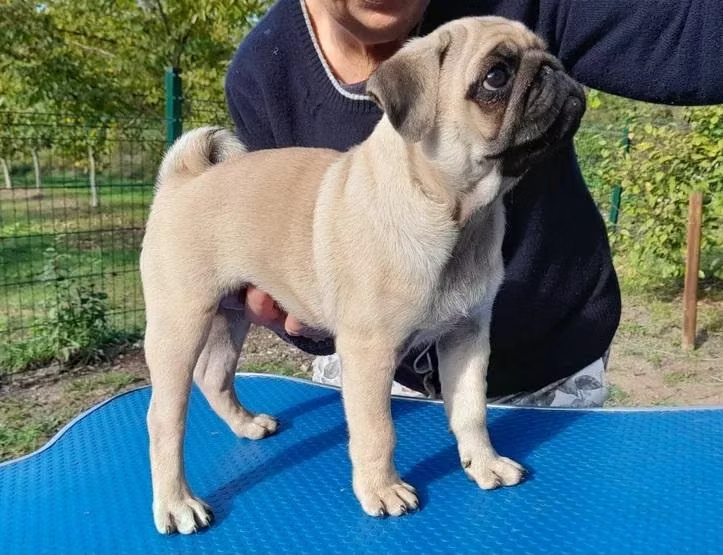


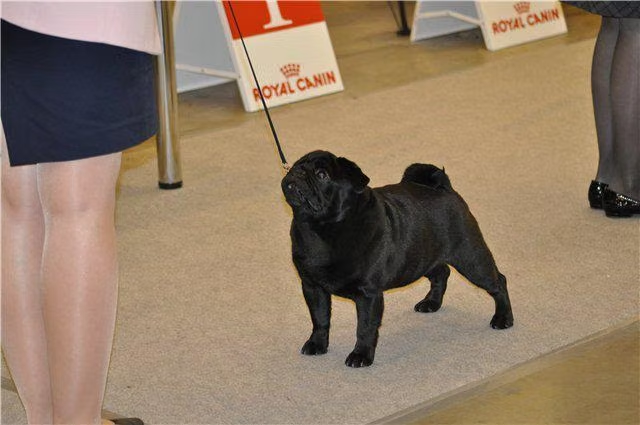


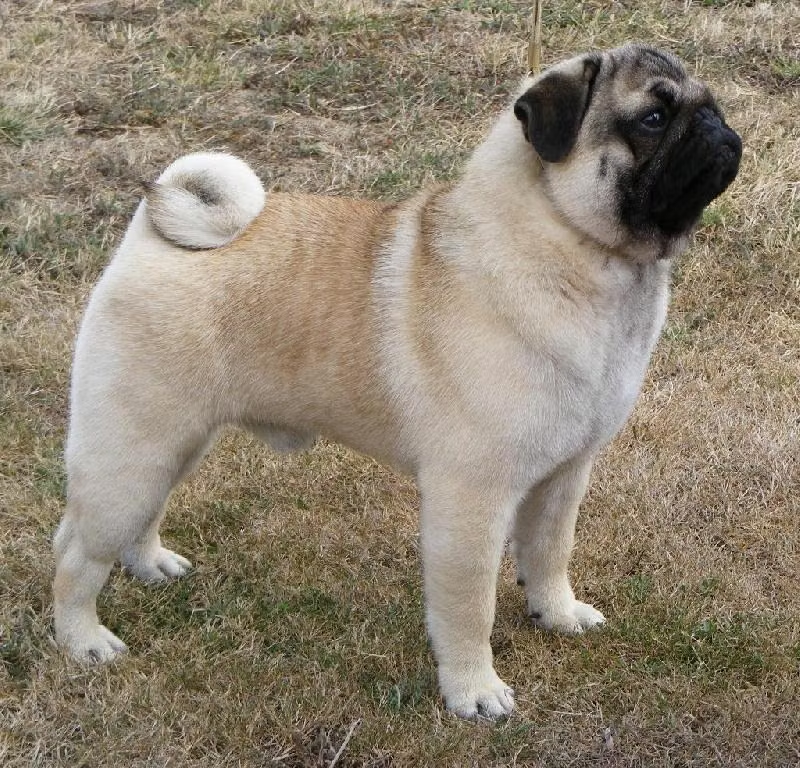


About the Pug breed
The Pug is a small, affectionate companion breed from China, popular in Singapore homes for its easygoing nature and low exercise needs.
The Pug is a small companion breed native to China, built on a compact, square frame with a heavily wrinkled face, a short muzzle and a tightly curled tail. A grown Pug typically weighs 6 to 8 kg and stands about 25 to 33 cm at the shoulder, a size that suits most Singapore homes, from HDB flats to landed houses.
Pugs were bred purely for company, and that shows in how closely they stick to their owners, trailing from room to room rather than settling off on their own. The temperament is even, sociable and often comical, a combination that has made the breed a long-time favourite with families and older owners. Enthusiasts still quote the old breed motto, "multum in parvo" (a lot in a little), to sum up the outsized personality packed into such a small dog.
Grooming and exercise needs are modest, but the flat face does bring its own responsibilities, particularly around heat and breathing. A Pug suits someone who wants an indoor companion close by, rather than a dog built for work or sport.
| Attribute | Detail |
|---|---|
| Origin | China |
| Size | Small (6 to 8 kg) |
| Lifespan | 13 to 15 years |
| Group/role | Toy / companion |
| Good with | Families, children, seniors, other pets |
Who does the Pug suit best
The Pug suits owners who spend most of their time at home and would rather have a dog nearby than one that's content on its own for hours. It settles well into smaller homes, needs only light to moderate exercise, and is generally patient with children. Anyone weighing up a Pug should also think about Singapore's heat and humidity and how they'll manage a flat-faced dog's breathing and cooling needs before committing to the breed.
History and origin of the Pug
The Pug's history runs from the imperial courts of ancient China to Dutch trading ships and European nobility; it is now recognised in Singapore by the SKC.
The Pug's origins trace back roughly two thousand years to ancient China, where flat-faced lapdogs of this type were kept by emperors and the ruling class. Paintings and written accounts from the period describe these short-muzzled companions living inside palaces, cared for as prized possessions rather than working animals.
Dutch traders are generally credited with bringing the breed out of China and into Europe during the 16th and 17th centuries. In the Netherlands, the Pug became closely tied to the House of Orange, helped along by a well-known story in which a Pug is said to have alerted William, Prince of Orange, to an approaching threat. That association kept the breed close to the Dutch court for generations afterward.
From the Netherlands, the Pug's popularity spread across the rest of Europe, taking hold among the nobility as a fashionable lapdog. Pugs turn up regularly in 18th and 19th century portraiture, and the breed was a fixture of royal and upper-class households in several countries, Britain included, where it grew steadily more popular through the Victorian period.
Major kennel clubs recognised the Pug in the late 19th century, and it has stayed a popular household companion since. In Singapore, the breed is recognised and registered by the Singapore Kennel Club (SKC), which oversees purebred registration, shows and events locally. Modern breeding has focused squarely on the Pug as a pet, and that court history still shows in the breed's close, people-oriented temperament today.
Appearance and breed standard
The Pug is a small, square dog with a heavily wrinkled flat face, large dark eyes and a tight double-curled tail.
The Pug carries a compact, square, thickset body that looks sturdy for its size. Its head is large and round, with deep facial wrinkles, a short blunt muzzle and large, dark, expressive eyes. The ears are small and soft, sitting in either a "rose" or a "button" shape, and the tail curls tightly over the hip, with a double curl considered especially desirable in the show ring. Altogether, the look is one of solid weight carried in a small frame.
| Feature | Standard |
|---|---|
| Height | 25 to 33 cm (10 to 13 in) |
| Weight | 6 to 8 kg (14 to 18 lb) |
| Coat | Short, smooth, fine, glossy |
| Colours | Fawn, apricot, silver fawn, black |
| Eyes | Large, round, dark, set wide apart |
Coat and colours
The coat lies close to the body: short, smooth and fine, with a natural gloss. It sheds all year round regardless of length, and fawn Pugs, which carry a double coat, shed noticeably more than the single-coated blacks. Recognised colours are fawn, apricot, silver fawn and black. Fawn Pugs typically show a dark mask on the face, darker ears and a trace line running down the back; these markings, together with a small thumb-shaped mark on the forehead, are considered part of the classic Pug look.
Temperament and personality
The Pug is affectionate, playful and even-tempered, friendly with strangers and other pets, and closely bonded to its family.
The Pug is an affectionate, sociable dog that wants to be included in whatever its family is doing. It's even-tempered and good-natured, rarely shows aggression, and has a comical, attention-seeking streak that most owners end up finding endearing rather than annoying. A Pug is just as happy tearing around in play as it is curling up on a lap, which makes it easy to live with in a calm household.
Around children, the Pug tends to be patient and gentle, though its small size means play with very young children should still be supervised. With strangers, it's typically friendly and welcoming rather than wary, so it won't make much of a watchdog beyond the odd bark at the door. Pugs generally get on well with other dogs and with cats, particularly when they're raised together from an early age.
The trade-off for all that devotion is a low tolerance for being left alone. A Pug left by itself for long stretches can grow unhappy and start barking or acting out, so the breed does best when someone is around for most of the day. Pugs are also strongly food-motivated and a touch stubborn, both of which shape how they train and how easily they pile on weight.
| Trait | Rating |
|---|---|
| Affection | 5 |
| Energy | 2 |
| Trainability | 3 |
| Vocalness | 2 |
| Shedding | 4 |
Care and grooming
Caring for a Pug means routine wrinkle cleaning, regular brushing, light exercise and careful protection from Singapore's heat and humidity.
Grooming
- Brush the coat once or twice a week to keep on top of steady shedding; fawn Pugs need brushing more often during heavier sheds.
- Wipe the facial wrinkles several times a week with a soft, damp cloth, then dry them thoroughly to prevent skin infection.
- Check and clean the ears regularly, and trim nails every few weeks.
- Bathe occasionally, anywhere from every few weeks to every couple of months, and dry the folds carefully afterward.
Exercise
- Aim for 20 to 40 minutes of light to moderate activity a day, split into short sessions rather than one long outing.
- Walk during the cooler parts of the day, in the early morning or evening, and keep the pace unhurried.
- Mix in indoor play and short outings so the dog stays active without overheating.
- Skip strenuous exercise, long runs and any exertion during the hottest part of the day.
Environment
The Pug is an indoor dog through and through and isn't suited to living outside. It settles well into HDB flats and condominiums, which is where most pet dogs in Singapore live, though owners should check their estate's or management corporation's pet policy before bringing one home. Keep the living space cool with shade and water always available; Singapore's year-round heat and humidity sit especially hard on a flat-faced breed, so air conditioning or at least a good fan is often necessary rather than optional.
Nutrition and feeding
Pugs need measured portions of a complete dog food, since the breed gains weight easily; feeding should be controlled at every life stage.
A Pug should eat a complete, balanced dog food suited to its life stage and small size. Weight control matters more here than in most breeds: Pugs love their food and put on weight quickly, and any excess weight makes the breed's breathing and joint problems worse. Measure out each meal instead of leaving food down all day, and adjust the amount to keep the dog lean enough that its ribs can still be felt under a light layer of fat. Fresh water should always be available, especially given Singapore's warm climate.
| Life stage | Amount per day | Meals |
|---|---|---|
| Puppy (2 to 6 months) | Per product guide for weight | 3 to 4 |
| Puppy (6 to 12 months) | Per product guide for weight | 2 to 3 |
| Adult | About 1/2 to 1 cup | 2 |
| Senior | Adjusted lower for activity | 2 |
Treats and supplements
Keep treats to around 10 percent or less of daily calories, and count them as part of the day's total rather than extra. Low-calorie options, such as small pieces of plain vegetable, work well for a food-driven Pug. Most Pugs on a complete diet don't need supplements; talk to a vet about joint or skin supplements before adding anything rather than deciding on your own.
Health and lifespan
Pugs typically live 13 to 15 years but are prone to breathing problems, eye injuries and obesity linked to the flat face and stocky build.
A Pug typically lives 13 to 15 years. Most of the breed's health concerns trace back to its flat face and stocky build. The short muzzle leaves many Pugs prone to brachycephalic obstructive airway syndrome, which shows up as noisy breathing, snoring and poor heat tolerance. The prominent eyes are easily injured and prone to corneal problems. Careful weight management and avoiding heat go a long way toward keeping several of these issues in check.
| Condition | Signs | Note |
|---|---|---|
| Brachycephalic airway syndrome | Noisy breathing, snoring, low heat tolerance | Linked to the short muzzle; surgery helps some cases |
| Eye injuries and corneal ulcers | Squinting, redness, discharge | Prominent eyes are easily scratched |
| Obesity | Weight gain, low stamina | Worsens breathing and joints; control portions |
| Skin fold dermatitis | Redness or odour in wrinkles | Prevent by keeping folds clean and dry |
| Hip dysplasia | Stiffness, reluctance to move | Screening of breeding stock helps |
Preventive care
- Keep the dog lean through measured feeding and regular weigh-ins.
- Book annual vet checks, more often once the dog is a senior.
- Stay on top of vaccinations and parasite prevention.
- Clean wrinkles and ears and brush teeth on a regular schedule.
- Avoid heat and exertion, and never leave a Pug in a parked car.
Training and socialisation
Pugs are intelligent and eager to please but a little stubborn, so short, reward-based sessions with food work best.
The Pug is intelligent and keen to please, but it also has a stubborn side that can slow training down. Short, upbeat sessions with clear rewards work best. Pugs are strongly food-motivated, which makes treats an effective training tool, though the portions need to be counted so they don't add up to extra weight. Harsh methods don't sit well with this sensitive, people-focused temperament and tend to backfire. House-training calls for patience and a consistent routine. Early socialisation with people, other animals and everyday situations helps a Pug grow into a confident, easygoing adult.
Basics
- Start with name recognition, rewarding attention with a small treat.
- Teach sit, then down and come, in short sessions of just a few minutes.
- Practise loose-lead walking in cool conditions to protect the dog's breathing.
- Set a firm house-training routine, with frequent trips outside and praise for success.
- Socialise early, introducing new people, dogs and places at a calm, unhurried pace.
Breeding and raising puppies
Pug litters average four to six puppies, and the breed's large heads often mean a caesarean birth under veterinary guidance.
Pugs reach sexual maturity at roughly 6 to 12 months, though responsible breeders wait until a dog is physically mature and health-tested before breeding, usually around two years of age. Gestation runs about 63 days, in line with most other breeds. The Pug's large, round head can make natural birth difficult, and many litters are delivered by caesarean section, so a planned breeding should involve a vet from the outset.
Litters average four to six puppies. Newborn Pugs are small and need warmth and close monitoring in the first weeks. The dam usually raises the litter attentively, and puppies should stay with their mother and littermates until around eight weeks old for proper weaning and early socialisation. Given the breed's known health issues, responsible breeding includes screening parents for breathing, eye and joint problems, and selecting for clearer airways and sounder structure over time.
| Metric | Value |
|---|---|
| Sexual maturity | 6 to 12 months |
| Recommended breeding age | About 2 years |
| Gestation | About 63 days |
| Average litter size | 4 to 6 puppies |
| Weaning age | About 6 to 8 weeks |
| Delivery | Often by caesarean section |
Licensing done? Now register your Pug and its chip
AVS handles the licence; United Pet Club keeps a free, searchable record behind your Pug's microchip for life.
Registering a Pug in Singapore
Key in your Pug's name, his date of birth, and a clear photo, attach your mobile, and save: a lifetime record, no charge now or later. Dog registration sits happily alongside the AVS paperwork and takes the chip number whenever you have it.
The AVS listing and a searchable contact record are two different things, and the second one is yours to set up. Register the microchip on the free lifetime plan: any chip brand a local vet implants qualifies, updates after a move between flats stay free, and the record can be pulled up 24 hours a day from anywhere. Create your free account and settle it tonight.
How do I register my Pug in Singapore?
Set up a free United Pet Club account, key in your Pug's details and a photo, and save. The lifetime plan keeps the profile live at no cost for as long as he is with you, alongside whatever AVS requires.
How do I register my Pug's microchip?
Key the 15-digit chip number into your free account together with your address, mobile, and email. The lifetime plan covers the registration and every update free, whichever brand the clinic used.
Is a microchip compulsory for a Pug in Singapore?
Yes. AVS requires dogs to be licensed and microchipped by three months of age. The licence is the legal part; a registered, searchable record with your current mobile is the part that gets a lost Pug home, and that part is free.
How much does it cost to register a Pug?
Nothing. United Pet Club's lifetime plan covers the profile, the chip record, and unlimited updates, with no renewal, ever.
Frequently asked questions about the Pug
Common questions about the Pug cover its size, temperament, care needs, lifespan, suitability for HDB living and availability in Singapore.
How big does a Pug get?
A Pug is a small dog. Adults stand about 25 to 33 cm tall and weigh roughly 6 to 8 kg.
What is a Pug's temperament like?
Pugs are affectionate, playful and even-tempered. They're sociable with people and other pets and bond closely with their families, though they don't cope well with being left alone for long.
Are Pugs hard to take care of?
Daily grooming and exercise are simple enough, but the flat face brings extra responsibilities. Owners need to keep the wrinkles clean, watch the dog's weight, and protect it from heat and heavy exertion.
How long do Pugs live?
Pugs typically live 13 to 15 years with good care, a healthy weight and regular vet check-ups.
Are Pugs suitable for first-time owners and HDB flats?
Yes. The Pug suits HDB flats, condominiums, families and seniors, and its modest exercise needs make it manageable for new owners who are home often and can keep up with the breed's health care.
Do Pugs shed a lot?
Yes. Despite the short coat, Pugs shed steadily all year round, and fawn Pugs with a double coat shed more than black Pugs. Weekly brushing helps keep it under control.
Where can I get a Pug in Singapore?
Pugs are available from responsible breeders who health-test their dogs and are registered with bodies such as the Singapore Kennel Club, and Pugs and Pug mixes also turn up from time to time in breed-specific rescues and shelters.
From the community
Ask about the PugNo questions about the Pug yet. Be the first to ask.
Browse Dog breeds