
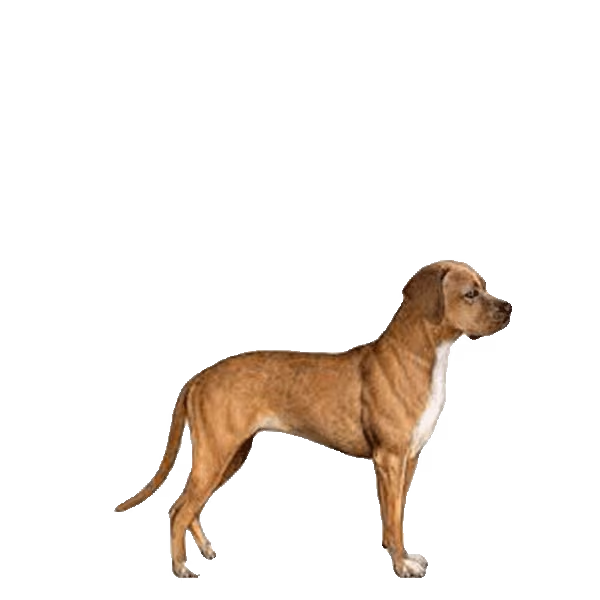
Portuguese Pointer
The Portuguese Pointer is a friendly, affectionate gundog whose loving nature and keen birding instincts make it a treasured companion.
- Size
- Medium
- Lifespan
- 12–14 years
- Origin
- Portugal
- Temperament
- Friendly
- Standard colors
- White, Brown and Yellow
Characteristics
Coat and grooming
How the Portuguese Pointer coat is built, and what that means when you groom it.
- Coat layers
- Single coat
- Coat texture
- Smooth
- Coat length
- Short
- Shedding
- Moderate shedding
Portuguese Pointer colors and patterns
What each club's breed standard says about every Portuguese Pointer color and pattern. Point at a ruling to see the club's own wording.
Breed standards describe the Portuguese Pointer in White, Brown and Yellow. Standard patterns: Solid and Bicolour.
| Color or pattern | FCI | AKC | UKC | KC |
|---|---|---|---|---|
| White | Standard (“with white patches on the head, neck, chest”) | Standard (“White Markings”) | Standard (“with white markings”) | Standard (“with white patches on the head, neck, chest”) |
| Brown | Disqualifying | Disqualifying | Standard (“any shade of yellow or brown”) | Not recognised |
| Yellow | Standard (“Yellow of light, medium and dark shades”) | Standard (“Yellow”) | Standard (“any shade of yellow”) | Standard (“Yellow of light, medium and dark shades”) |
| Albino | Disqualifying (“Albinism”) | Disqualifying (“Albinism”) | Disqualifying (“Albinism”) | Not recognised |
| Patterns | ||||
| Solid | Standard (“solid”) | Standard (“solid”) | Standard (“either solid or with white markings”) | Standard (“Solid”) |
| Bicolour | Standard (“or with white patches”) | Standard (“White Markings”) | Standard (“with white markings”) | Standard (“Yellow & White”) |


| Color or pattern | FCI | AKC | UKC | KC |
|---|---|---|---|---|
| Brown | Standard (“brown, of a darker colour than the coat”) | Standard (“brown, of a darker colour than the coat”) | Standard (“brown in color”) | Standard (“Eyes brown, of a darker colour than the coat”) |
| Dark brown | No ruling | No ruling | Standard (“Darker shades are preferred”) | No ruling |
| Light brown | Fault (“Eyes: Small, light, inexpressive”) | Fault (“Eyes: Small, light, inexpressive”) | No ruling | No ruling |
| Blue | Disqualifying (“Wall eye”) | Disqualifying (“Wall eye”) | Disqualifying (“Wall eyes”) | No ruling |
| Patterns | ||||
| Odd-eyed | Disqualifying (“of different colours”) | Disqualifying (“of different colours”) | No ruling | No ruling |

| Color or pattern | FCI | AKC | UKC | KC |
|---|---|---|---|---|
| Black | Standard (“Black”) | Standard (“Black”) | Standard (“black on dogs with chamois or similar color coats”) | Standard (“Nose black”) |
| Liver | Fault | Fault | Standard (“brown on dogs with brown coats”) | No ruling |
| Pink | Disqualifying (“Nose: Total lack of pigmentation”) | Disqualifying (“Nose: Total lack of pigmentation”) | Disqualifying (“Unpigmented or irregularly pigmented nose”) | No ruling |
| Patterns | ||||
| Butterfly nose | No ruling | No ruling | Disqualifying (“Unpigmented or irregularly pigmented nose”) | No ruling |

What the rulings mean
- Standard
- Described by the club's breed standard.
- Fault
- Named by the club's breed standard as a fault: the animal can be shown but is penalised.
- Disqualifying
- The club's breed standard disqualifies an animal of this colour or pattern.
- Not recognised
- The club does not accept this colour or pattern for the breed.
Color changes
How a Portuguese Pointer's colors can change over its life.
Whitechanges toRoan
Coat · With age · from 2 weeks
Blackchanges toSnow nose
Nose · With the season · can change back
Blackchanges toPink
Nose · With the season · can change back


Sources
Each ruling comes from the club's published breed standard or color list.
Meet some of our Portuguese Pointer
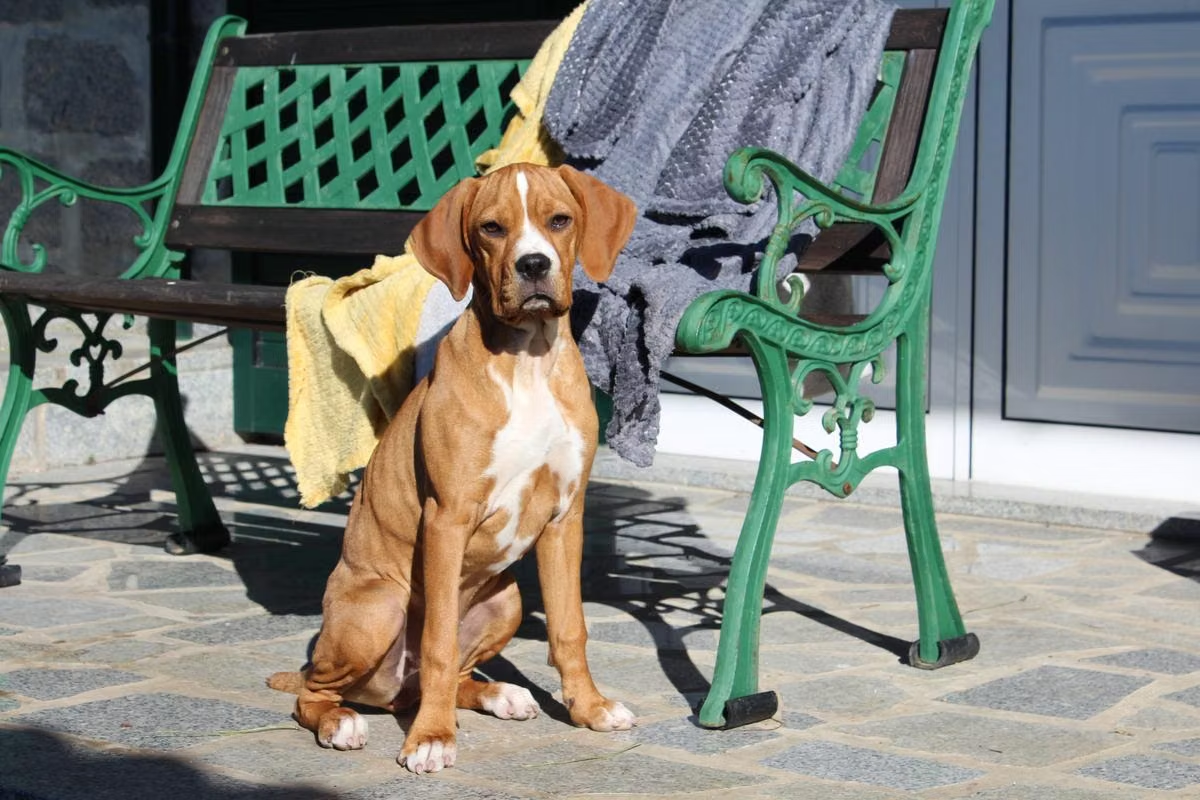
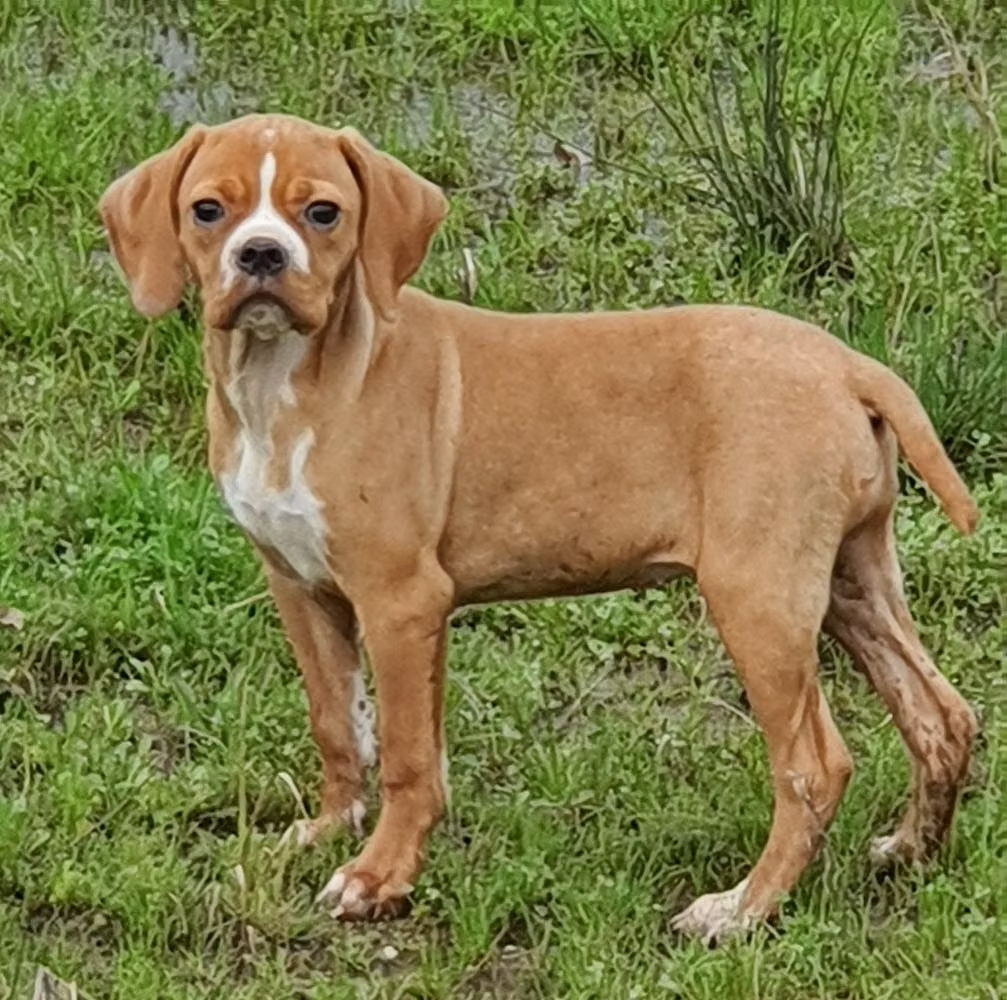
A few of the Portuguese Pointer profiles members have added to United Pet Club.
About the Portuguese Pointer
The Portuguese Pointer is a medium-built gundog from Portugal, warm and clingy at home yet a calm, instinctive bird dog out in the field.
The Portuguese Pointer, called the Perdigueiro Português back home, is a medium-sized hunting dog bred to point and retrieve game birds. It has a square, athletic build, stands a moderate height, and carries a short coat that copes reasonably well with Singapore's heat and humidity, though it still needs a properly shaded spot to rest. Owners often describe it as one of the more affectionate gundog breeds around, leaning in for contact rather than staying aloof the way some pointing breeds do.
In the field it works at a measured pace, holds a firm point, and stays in contact with its handler instead of running off into the distance. That easy-to-handle, eager-to-please nature defines the breed. The same dog that quarters open ground for partridge back in Portugal will settle at your feet once the work is done. Few owners here hunt with their dogs, but the same instinct shows up as enthusiasm for retrieve games and long runs instead.
This is an active breed that needs a proper outlet for its energy, not just a short stroll round the block. Given daily exercise and company, it adapts well to family life in Singapore, though it struggles in a household that is out at work all day or unable to give it enough space to move.
| Attribute | Detail |
|---|---|
| Origin | Portugal |
| Size | Medium |
| Lifespan | 12 to 14 years |
| Group / role | Gundog (pointing and retrieving) |
| Gets on well with | Families, children, active households |
Who it suits
The Portuguese Pointer suits active owners who can commit to an hour or more of exercise a day and want a dog that stays glued to them rather than one that keeps its distance. It fits landed property or a larger condominium unit with a garden better than a small HDB flat, and households already active outdoors, whether at the park connector or the beach, will get the most out of it. It is a poor match for anyone away from home for long hours, living in a compact flat with no real outdoor access, or wanting a low-key, independent dog.
History and origin
The Portuguese Pointer ranks among the oldest pointing breeds, shaped in Portugal from medieval bird dogs and refined over centuries for hunting partridge.
The Portuguese Pointer goes back to bird dogs kept on the Iberian Peninsula in medieval times. Dogs of this general type turn up in Portuguese hunting records and artwork from several centuries ago, first used to locate and hold game for falconers, later for hunters working with nets and firearms. The breed shares its roots with the broader family of Iberian pointing dogs that gave rise to several pointer breeds still around today.
Hunters and noble households kept and bred these dogs for generations, selecting for a strong nose, a reliable point, and a close working style that kept the dog near its handler rather than ranging wide. Many trace the breed's affectionate temperament to this history of dogs living in the household rather than being kept at a distance in outdoor kennels.
Numbers dropped during periods of social and economic upheaval, and the breed nearly disappeared in the early twentieth century as interest in native hunting dogs waned. Portuguese enthusiasts later tracked down the remaining stock in rural and northern parts of the country and worked to rebuild a stable population.
The Portuguese Pointer is recognised internationally as a pointing breed and is still worked in the field in Portugal, while a growing number of households elsewhere, including in Singapore, keep it purely as an active companion. It remains a rare sight outside its home country, and the Singapore Kennel Club registers very few, so most local owners end up importing from established European lines.
Appearance
The Portuguese Pointer is a medium, square-built gundog with a short coat, usually yellow or brown, and an unmistakable broad, slightly concave head.
The Portuguese Pointer is a well-proportioned, medium-sized dog with a square outline, meaning its body length roughly matches its height at the shoulder. It is muscular without any bulk, built for sustained work over rough or uneven ground. The head stands out: broad with a somewhat square outline, a clear stop, and a muzzle that tapers gently toward the nose. The ears are triangular, set high, and hang close against the cheeks. The overall expression is soft and alert.
| Trait | Detail |
|---|---|
| Height | Males about 56 cm; females about 52 cm at the shoulder |
| Weight | Roughly 16 to 27 kg depending on sex and build |
| Coat | Short, dense, and close-lying |
| Colours | Yellow (fawn) in light to dark shades, and brown; white markings may occur |
| Eyes | Large, oval, brown, with an attentive expression |
Coat and colours
The coat lies short and flat against the body, with slightly finer hair on the head and ears. Being a single coat with no dense undercoat, it offers little protection against a cold snap overseas, but it also means the dog does not overheat as quickly as a heavily coated breed does under Singapore's year-round humidity. Even so, direct midday sun should be avoided, and shade and water need to be on hand at all times. The most common colours are yellow, from a pale fawn to a deeper tan, and brown, with white markings on the chest or feet seen in some dogs. The look is clean and purposeful rather than showy.
Temperament
The Portuguese Pointer is friendly, affectionate, and eager to please, forming a tight bond with its family while staying lively and people-focused.
The standout trait of the Portuguese Pointer is its warmth toward people. It attaches strongly to its household and often wants to be physically close, trailing family members from room to room and settling near them rather than off on its own. It is usually gentle and patient with children, though its energy means play with toddlers should be supervised.
With strangers it tends to be sociable rather than guarded, so it makes a friendly greeter at the door but a poor watchdog. Regular exposure to visitors from puppyhood keeps that friendliness confident rather than overexcited. It generally gets on well with other dogs, and many live happily with other household pets when raised together, though its strong instinct for birds means a hamster, rabbit, or bird in the home could easily trigger a chase.
This is an active, alert dog that needs to be involved in daily life. Left alone for long stretches with nothing to do, it grows restless and may pick up nuisance habits out of boredom, worth thinking through carefully before taking on the breed in a household where everyone is out at work or school all day. Its eager-to-please streak makes it quick to read its owner's mood and pick up on daily routines.
| Trait | Rating |
|---|---|
| Affection | 5 |
| Energy | 4 |
| Trainability | 4 |
| Vocalness | 2 |
| Shedding | 2 |
Care and grooming
The Portuguese Pointer is low-maintenance to groom but has high exercise needs, requiring daily activity and close company to stay settled.
Grooming
- Brush the short coat once a week with a rubber curry or bristle brush to lift out loose hair and spread natural oils through the coat.
- Bathe only when the dog is visibly dirty; washing too often strips the coat.
- Check the hanging ears weekly and clean them to lower the risk of infection, which comes on faster in Singapore's humidity, especially after time out in wet grass or after a swim.
- Trim nails every few weeks and brush teeth several times a week.
Exercise
- Give at least 60 to 90 minutes of activity a day, split between walks and free running.
- Let it run off-lead in a safe, enclosed area, since this is a working dog bred to cover ground rather than potter about.
- Schedule the more strenuous sessions for early morning or evening, when the heat and humidity are lower, and avoid the midday sun altogether.
- Add scent games, retrieve work, or basic training drills to occupy its nose and mind, not just its legs.
- Work on recall from puppyhood, because its instinct for birds can pull it off after anything that flies up from the grass.
Environment
The Portuguese Pointer does best with secure outdoor space and people around for most of the day, which points toward landed property or a condominium with generous common grounds rather than a small HDB flat. Its short coat gives almost no insulation, so overseas owners need to guard against cold, while local owners need to make sure there is always a shaded, well-ventilated spot for it to retreat to. It can manage in a smaller home if its exercise needs are fully met, but it is not a breed to leave alone for long hours.
Nutrition and feeding
The Portuguese Pointer needs a complete, balanced diet suited to an active medium dog, with the amount adjusted for age, workload, and body condition.
Feed a complete dog food formulated for the breed's life stage and activity level. Being an active medium dog, the Portuguese Pointer needs enough protein and fat to support working muscle and stamina, with the total amount scaled to how much exercise it actually gets. A dog doing long daily runs needs more than the same dog on a quieter week. Split the daily ration into two meals to keep energy steady and lower the risk of bloat, and hold off on hard exercise right before or after a meal, particularly in the heat.
| Life stage | Amount per day | Meals |
|---|---|---|
| Puppy (2 to 6 months) | Per food label, divided | 3 to 4 |
| Junior (6 to 12 months) | Per food label for growth | 2 to 3 |
| Adult (active) | Around 250 to 350 g of quality dry food | 2 |
| Senior | Slightly reduced; watch weight | 2 |
Treats and supplements
Keep treats to around ten percent of daily calories and trim the main meal to match, since this breed puts on weight quickly if it is overfed and under-exercised, easily done if daily walks get cut short during a stretch of bad weather. A balanced complete diet usually needs no extra supplements. Check with a vet before adding anything for joints, skin, or working performance, and make sure fresh water is always within reach, especially after exercise in the heat.
Health
The Portuguese Pointer is generally healthy with a typical lifespan of 12 to 14 years; hip dysplasia and ear problems are among the main things to watch.
The Portuguese Pointer is a sturdy working breed, and most individuals stay sound throughout a usual lifespan of 12 to 14 years. As with most medium and larger dogs, joint health is the main thing to keep an eye on, and its hanging ears combined with an active, outdoor lifestyle bring a few predictable issues, more so in Singapore's humid climate. Buying from breeders who health-test their stock lowers the odds of inherited problems, though prospective owners should be prepared to look overseas given how few breeders operate locally.
| Condition | Signs | Note |
|---|---|---|
| Hip dysplasia | Stiffness, limping, reluctance to jump | Ask breeders for hip scores of parents |
| Ear infections | Head shaking, odour, scratching at ears | More likely in humid weather or after time in wet grass; clean regularly |
| Eye conditions | Cloudiness, redness, reduced vision | Routine eye checks help catch issues early |
| Exercise-related injury | Sudden lameness, cuts, foot soreness | Check feet and legs after field work |
| Bloat (gastric torsion) | Swollen belly, retching, distress | Emergency; feed in two meals and avoid hard exercise around feeding |
Preventive care
- Keep vaccinations and parasite control (fleas, ticks, worms) up to date, since Singapore's climate suits parasites year-round.
- Book an annual vet check, moving to twice a year once the dog is a senior.
- Keep it at a lean body weight to protect the joints.
- Clean and dry the ears after wet outings or a swim, and check them more often in humid weather.
- Brush teeth regularly to keep dental disease at bay.
Training
The Portuguese Pointer is intelligent and eager to please, which makes it highly trainable with consistent, reward-based methods.
The Portuguese Pointer's eagerness to please and close bond with its handler make it one of the more trainable gundogs around. It picks things up quickly and works well for praise and food, but it is sensitive and does not respond well to harsh corrections, which can leave it anxious or withdrawn. Short, upbeat sessions hold its attention better than long, repetitive drills. Because it forms close attachments, early socialisation with people, other dogs, and everyday situations such as lift rides and crowded void decks matters a great deal, so its friendliness stays confident rather than tipping into over-excitement or, in an under-socialised dog, real distress when left alone.
Basics
- Start with name recognition and gentle handling in the first weeks at home.
- Teach a solid recall early and reward it generously, since its instinct for birds will compete with it.
- Introduce sit, down, and stay in short daily sessions.
- Socialise widely: calm dogs, different people, and everyday spaces such as lifts and void decks that it will encounter living here.
- Get lead manners sorted before its strength and energy peak in adolescence.
- Add gundog-style or scent work once the basics are solid, to keep its mind occupied.
Breeding
The Portuguese Pointer reaches breeding maturity at around two years, with a roughly nine-week pregnancy and litters that typically run to a handful of puppies.
Responsible breeding of the Portuguese Pointer starts with health-tested parents of sound temperament and solid working ability. Dogs reach physical maturity earlier, but breeders generally hold off until around two years of age so health screening, hip evaluation especially, can be completed and the dog is fully grown. Females are usually mated during a suitable heat cycle once mature.
Pregnancy runs about 63 days. The expectant mother needs a quiet whelping area, a gradual increase in food through the later weeks, and veterinary monitoring throughout. Litters commonly run from four to eight puppies, though this varies from dog to dog.
Newborn puppies rely fully on the mother for the first few weeks. From around three weeks they start weaning and benefit from early, gentle handling and exposure to household sights and sounds, which suits a breed this socially minded. Puppies usually move to new homes from about eight weeks old. Given how uncommon the breed is here, prospective owners should expect to do their homework on breeders, likely overseas, and budget time for import arrangements, quarantine, and a possible wait for a litter.
| Metric | Value |
|---|---|
| Breeding maturity | Around 2 years |
| Gestation | About 63 days |
| Average litter size | 4 to 8 puppies |
| Weaning | From about 3 to 8 weeks |
| Homing age | From about 8 weeks |
Licensing done? Now register your Portuguese Pointer and its chip
AVS handles the licence; United Pet Club keeps a free, searchable record behind your Portuguese Pointer's microchip for life.
Registering a Portuguese Pointer in Singapore
An AVS licence satisfies the rules; it does not tell a finder in another country how to reach you. Your Portuguese Pointer's free United Pet Club profile does exactly that, pairing your mobile with his photo and chip number for life. Register your dog once and the record follows him anywhere.
The AVS listing and a searchable contact record are two different things, and the second one is yours to set up. Register the microchip on the free lifetime plan: any chip brand a local vet implants qualifies, updates after a move between flats stay free, and the record can be pulled up 24 hours a day from anywhere. Create your free account and settle it tonight.
How do I register my Portuguese Pointer in Singapore?
Set up a free United Pet Club account, key in your Portuguese Pointer's details and a photo, and save. The lifetime plan keeps the profile live at no cost for as long as he is with you, alongside whatever AVS requires.
How do I register my Portuguese Pointer's microchip?
Key the 15-digit chip number into your free account together with your address, mobile, and email. The lifetime plan covers the registration and every update free, whichever brand the clinic used.
Is a microchip compulsory for a Portuguese Pointer in Singapore?
Yes. AVS requires dogs to be licensed and microchipped by three months of age. The licence is the legal part; a registered, searchable record with your current mobile is the part that gets a lost Portuguese Pointer home, and that part is free.
How much does it cost to register a Portuguese Pointer?
Nothing. United Pet Club's lifetime plan covers the profile, the chip record, and unlimited updates, with no renewal, ever.
Frequently asked questions
Common questions about the Portuguese Pointer cover its size, temperament, care needs in Singapore, lifespan, family suitability, and availability.
How big is a Portuguese Pointer?
It is a medium-sized dog. Males stand around 56 cm at the shoulder and females around 52 cm, with weight roughly between 16 and 27 kg depending on sex and build.
Is the Portuguese Pointer good for a family with kids?
Yes. It is friendly and affectionate, bonds closely with its household, and is usually gentle with children. Its energy level suits active families who can exercise it daily, and playtime with young children should be supervised.
Is the Portuguese Pointer hard to take care of in Singapore?
Grooming is easy thanks to the short coat, which also copes reasonably well with the humidity, but exercise needs are high. The main demand is 60 to 90 minutes of activity a day plus company, and its size and energy suit landed property or a condominium with outdoor space better than a small HDB flat.
How long do Portuguese Pointers live?
The typical lifespan is 12 to 14 years. Good nutrition, a lean weight, regular exercise, and routine vet visits help a dog reach the upper end of that range.
Are Portuguese Pointers easy to train?
Yes. They are intelligent and eager to please, which makes them very responsive to reward-based training. They are sensitive, so consistent, gentle methods work far better than harsh corrections.
Do Portuguese Pointers get along with other pets?
They are generally friendly with other dogs and can live with other pets when raised together. Because of a strong instinct for birds and small prey, a hamster, rabbit, or bird at home may trigger a chase, so introductions should be done carefully.
Are Portuguese Pointers easy to find in Singapore?
No. The breed is uncommon outside Portugal and rarely registered with the Singapore Kennel Club, so most owners here end up importing from an established overseas breeder. Prospective owners should research reputable, health-testing breeders and expect a wait, plus import and quarantine arrangements, before bringing a puppy home.
From the community
Ask about the Portuguese PointerNo questions about the Portuguese Pointer yet. Be the first to ask.
Browse Dog breeds