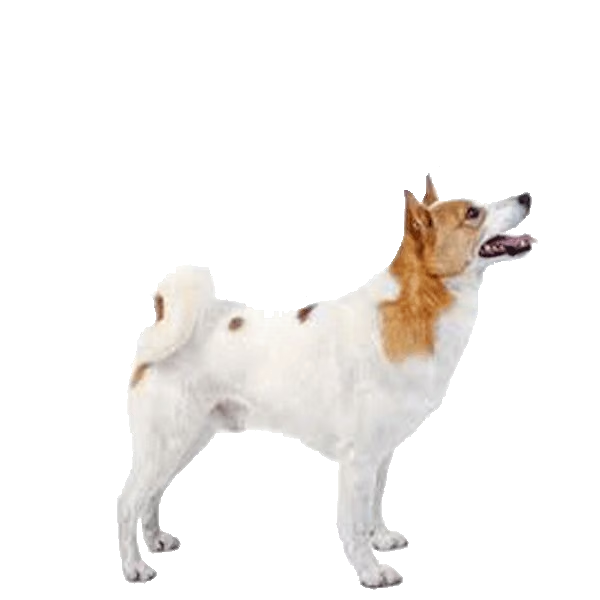
The Norrbottenspets is an alert, energetic Swedish hunting spitz known for its keen nose, friendly nature, and lively bark.
How the Norrbottenspets coat is built, and what that means when you groom it.
Critical: A Norrbottenspets should not be shaved.
The undercoat keeps heat out as well as in, and the outer coat shields the skin from sun and insect bites. Clipping the whole coat off removes both. It often grows back patchy, soft or a different colour, and in some animals the guard hairs never return properly. Brush the undercoat out instead of cutting it off.
Information: A Norrbottenspets drops its undercoat in heavy bursts.
The undercoat comes out in heavy bursts over a few weeks. An undercoat rake, or a bath followed by a proper blow-dry, clears it far faster than daily brushing. Clipping the coat down is not a shortcut for this.
The Norrbottenspets is a medium sized Swedish hunting spitz with a sharp nose, a friendly nature and a loud bark, and it lives about 12 to 15 years.
The Norrbottenspets is a medium sized spitz that comes from the Norrbotten region of northern Sweden. Bred as a hunting dog, it is still used today to locate game birds such as capercaillie and black grouse, then bark to mark the spot for the hunter. The breed pairs a compact, athletic frame with a sharp nose and a strong drive to work in cold forest terrain, which is about as far from Singapore's climate as a dog can get.
It is an alert, curious dog that reads people well. Owners find it energetic and switched on, quick to notice any change around it and just as quick to say something about it. The same traits that make it useful in the field make it an engaging companion for households that keep active.
The Norrbottenspets stays uncommon outside the Nordic countries, and Singapore is no exception. Most local owners come to the breed through dog sport circles or by importing from a Nordic kennel. Once it settles into a family, it bonds closely while staying easygoing with strangers it has been properly introduced to.
| Attribute | Detail |
|---|---|
| Origin | Sweden |
| Size | Medium |
| Lifespan | 12 to 15 years |
| Group / role | Spitz, hunting and bark pointing |
| Good with | Active households, experienced owners, other dogs once properly introduced |
This breed suits owners who can commit to daily exercise and mental work, rain or shine. It fits people involved in dog sports or tracking, and those who don't mind a dog that speaks its mind. Space matters too: the Norrbottenspets exceeds the size most HDB flats are set up for, so landed property or a condominium with proper outdoor access works better. Households after a quiet pet, or unable to meet its exercise needs, will likely find this breed a poor fit.
The Norrbottenspets traces back to northern Sweden and Finland, where small spitz breeds hunted forest game for centuries. The Swedish line nearly died out in the mid 20th century before breeders rebuilt it.
Small spitz type hunting dogs have worked the forests of northern Scandinavia for hundreds of years. The Norrbottenspets takes its name from Norrbotten, Sweden's northernmost county, and shares close roots with related spitz populations across the border in Finland. Farmers and hunters kept these dogs for their nose and their stamina, using them to find game and bark to signal where it was.
Through the early 1900s, the type was judged on working ability rather than a fixed look. As firearms and hunting methods changed, demand for the small barking spitz dropped off, and numbers in Sweden fell sharply.
By the mid 1900s, the Swedish Kennel Club considered the breed all but lost, and for a time treated it as extinct. Interest picked up again once surviving dogs of the old type turned up in rural areas and were used to rebuild the population. The breed standard was reinstated, and careful breeding brought back a recognisable Norrbottenspets.
The breed is now recognised by Nordic kennel clubs and still bred mainly as a working hunting dog. Numbers stay modest, and most dogs remain in Sweden and Finland; it turns up only occasionally further afield, Singapore included.
The Norrbottenspets is a small to medium spitz with a square outline, pricked ears, a curled tail, and a short double coat usually white with clear markings.
The Norrbottenspets has the classic spitz outline: a compact, almost square body, a wedge shaped head, ears that stand fully erect, and a tail that curls over the back. It reads as light and agile rather than heavy, built for quick work over rough ground. The expression is alert and bright, matching a dog that misses very little.
| Trait | Standard |
|---|---|
| Height | Around 42 to 45 cm at the withers |
| Weight | About 11 to 15 kg |
| Coat | Short to medium double coat, dense undercoat, harder outer coat |
| Colours | Mainly white with yellow, red or tan markings; other clear markings occur |
| Eyes | Dark, medium sized, alert expression |
The double coat runs short to medium in length, with a soft undercoat for insulation and a firmer outer coat that sheds dirt and damp. The most common pattern is a white base with defined patches of yellow, red or tan, often around the head and body. This coat was built for cold Nordic winters, so in Singapore's climate it needs a bit more looking after to keep the dog comfortable, on top of the routine care needed to keep it in condition.
The Norrbottenspets is friendly, curious and energetic, with a strong alert instinct and a habit of barking. It bonds closely with its family and usually gets along with people and other dogs.
The Norrbottenspets is an outgoing, lively dog that stays tuned in to what's happening around it. With family it is affectionate and people focused, and it tends to greet visitors with curiosity rather than suspicion. Early socialisation helps it settle into new company quickly.
The breed is alert and quick to bark. Vocalising is part of its working heritage: it was bred to find game and bark to mark the spot, so a Norrbottenspets will often announce arrivals, sounds and movement outside. That makes it a useful watchdog, but it also means noise is a real consideration for anyone living close to neighbours, as most Singapore households do.
Around other dogs it is generally sociable, especially when raised together from young. Its hunting background gives it a strong prey drive, so small pets and cats that roam free may set off a chase. Secure fencing and a solid recall matter, because this breed will follow its nose before it thinks twice.
| Trait | Rating |
|---|---|
| Affection | 4 |
| Energy | 5 |
| Trainability | 3 |
| Vocalness | 5 |
| Shedding | 3 |
Grooming needs are modest, but the Norrbottenspets needs a lot of exercise. It suits active homes with secure outdoor space and does well with regular mental work.
Bred for cold Nordic forests, this breed copes with heat far less easily than it copes with cold, and the year round warmth and humidity here mean owners need to actively manage the risk of heat stress, especially during outdoor work. It suits landed property or a condominium with a garden more than a typical HDB flat, given both its size and its bark. It can get by in a smaller unit if its exercise and mental needs are met in full, but barking is worth thinking through carefully given close neighbours and thin party walls. Secure fencing matters given the strong prey drive and its tendency to wander off after a scent.
The Norrbottenspets does well on a complete, balanced diet matched to its activity level. Working or highly active dogs need more energy than pets kept at light exercise.
Feed a complete and balanced diet formulated for the dog's life stage. Because the Norrbottenspets runs on the energetic side, working or highly active dogs may need more calories than the standard guidance on the packet suggests, while a less active pet needs less to avoid piling on weight. Adjust portions to body condition, keeping the waist visible and the ribs easy to feel under light pressure.
Split the daily ration across a few meals rather than one large feed, and keep fresh water available at all times, which matters even more in the heat here. Make any diet change gradually, over about a week, rather than switching foods overnight.
| Life stage | Amount per day | Meals |
|---|---|---|
| Puppy (2 to 6 months) | Per product guidance for growth | 3 to 4 |
| Junior (6 to 12 months) | Per product guidance, adjust to growth | 2 to 3 |
| Adult | About 150 to 250 g dry food, adjust to activity | 2 |
| Senior | Adult amount reduced if less active | 2 |
Keep treats to about 10 percent of daily calories and factor them into the total ration. Most healthy dogs on a complete diet need no extra supplements. Check with a vet before adding joint, skin or other supplements, particularly for a working dog under heavy load.
The Norrbottenspets is a generally hardy breed with a lifespan of 12 to 15 years. Routine vet care and attention to weight and joints support a long, healthy life.
The Norrbottenspets is considered a robust, healthy breed, helped along by its working background and modest size. Typical lifespan runs 12 to 15 years. As with any dog, individuals can be affected by inherited or age related conditions, so regular checkups and a sensible weight matter throughout its life. Owners here should also watch for heat stress, since this coat was built for Nordic winters, not tropical humidity, and the breed can overheat faster than its Scandinavian numbers suggest.
| Condition | Signs | Note |
|---|---|---|
| Patellar luxation | Skipping gait, intermittent lameness | More common in smaller breeds; assess if seen |
| Hip or joint issues | Stiffness, reluctance to jump or run | Keep lean weight to reduce joint stress |
| Ear infections | Head shaking, odour, scratching at ears | Check ears after work in wet or wooded areas |
| Dental disease | Bad breath, tartar, sore gums | Regular brushing and checks help prevent |
The Norrbottenspets is smart and willing but independent, so it responds best to consistent, reward based training and early socialisation.
The Norrbottenspets is a sharp, capable learner with the independent streak common to hunting spitz breeds. It can work at a distance and make its own calls in the field, which is useful for hunting but means it won't always wait around for instruction. Training goes best when it is consistent, motivating and started early. Keep sessions short and varied to hold its attention, and lock in a reliable recall before any off lead freedom, since this breed will follow a scent over a command.
Norrbottenspets dogs reach maturity around one to two years, carry litters for about 63 days, and typically have small to moderate litters. Health screening of both parents supports sound puppies.
Responsible breeding of the Norrbottenspets centres on health, temperament and working ability, in line with the breed standard. Dogs reach physical and behavioural maturity around one to two years old, and breeders generally hold off mating until this point. Both parents should be checked for temperament and known health concerns before a planned litter, and reputable Nordic breeders are usually the starting point given how rare the breed remains locally.
Gestation runs roughly 63 days from conception. Litters tend to run small to moderate. The dam usually whelps without major trouble given the breed's natural build, though a quiet, prepared whelping area and a vet on standby are still worth arranging.
Newborn puppies rely fully on the dam for warmth and milk in the first weeks. Early handling, gentle exposure to household sounds, and structured socialisation help shape confident adults. Puppies are typically weaned and ready to leave for new homes at about eight weeks or later, depending on the breeder's practice. Anyone bringing a puppy in from overseas should also budget time for import and quarantine requirements before the dog settles in at home.
| Metric | Value |
|---|---|
| Breeding maturity | About 1 to 2 years |
| Gestation | Approximately 63 days |
| Litter size | Small to moderate |
| Weaning age | Around 6 to 8 weeks |
| Leave for new home | About 8 weeks or later |
AVS handles the licence; United Pet Club keeps a free, searchable record behind your Norrbottenspets's microchip for life.
An AVS licence satisfies the rules; it does not tell a finder in another country how to reach you. Your Norrbottenspets's free United Pet Club profile does exactly that, pairing your mobile with his photo and chip number for life. Register your dog once and the record follows him anywhere.
The AVS listing and a searchable contact record are two different things, and the second one is yours to set up. Register the microchip on the free lifetime plan: any chip brand a local vet implants qualifies, updates after a move between flats stay free, and the record can be pulled up 24 hours a day from anywhere. Create your free account and settle it tonight.
Set up a free United Pet Club account, key in your Norrbottenspets's details and a photo, and save. The lifetime plan keeps the profile live at no cost for as long as he is with you, alongside whatever AVS requires.
Key the 15-digit chip number into your free account together with your address, mobile, and email. The lifetime plan covers the registration and every update free, whichever brand the clinic used.
Yes. AVS requires dogs to be licensed and microchipped by three months of age. The licence is the legal part; a registered, searchable record with your current mobile is the part that gets a lost Norrbottenspets home, and that part is free.
Nothing. United Pet Club's lifetime plan covers the profile, the chip record, and unlimited updates, with no renewal, ever.
Common questions about the Norrbottenspets cover its size, temperament, care needs, lifespan, suitability, and availability.
It's a small to medium spitz, standing roughly 42 to 45 cm at the withers and weighing about 11 to 15 kg. The build is light and agile rather than heavy.
It's friendly, curious and energetic, with a strong alert instinct. It bonds closely with its family and is usually sociable, but it barks readily and has a high prey drive.
Grooming is straightforward, but the breed needs a lot of daily exercise and mental work, ideally scheduled around the cooler parts of the day. It suits active owners far more than anyone wanting a low energy or quiet pet.
Typical lifespan is 12 to 15 years. It's generally a hardy breed when kept at a healthy weight with routine veterinary care.
It can suit an active family that can meet its exercise needs and live with a vocal dog. Space matters too: it fits landed property or a condo far more comfortably than an HDB flat. Early socialisation and secure fencing are important wherever you keep it.
Not really. The breed stays uncommon outside the Nordic countries, and most dogs are still in Sweden and Finland. Anyone keen on one locally should expect a wait, a very short list of breeders, and likely an import process.
Yes. Barking is part of its hunting heritage, so it tends to sound off at noises, movement and visitors. That makes it alert, but it's not a quiet breed, and it's worth thinking about before keeping one in close housing.
