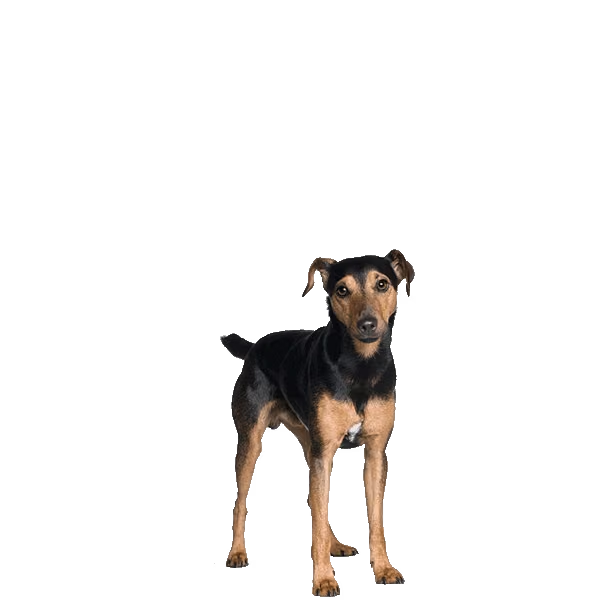
The Toy Manchester Terrier is a spirited, keen-eyed toy breed known for its alertness, devotion, and lively terrier energy.
How the Manchester Terrier (Toy) coat is built, and what that means when you groom it.
The Toy Manchester Terrier is a small, smooth-coated companion from England, known for its sharp alertness, close devotion to its owner, and lively terrier character.
The Toy Manchester Terrier is a compact, smooth-coated toy breed that weighs no more than about 5.4 kg. It shares its ancestry and black-and-tan colouring with the Standard Manchester Terrier and looks like a miniature version of that dog. Both varieties trace back to the same English working stock. The Toy was developed by breeding down for a smaller size while keeping the original build and markings.
Despite the small frame, this is a true terrier in attitude: quick, curious, and tightly bonded to its people. It tends to attach to one or two members of the household and follows them from room to room. Owners often describe it as a watchful companion that clocks every sound at the door.
The coat is short, dense, and glossy, which keeps grooming simple, a real plus in a humid climate. The breed is generally healthy and long-lived, with a typical span of 15 to 17 years. It suits people who want a small, low-maintenance dog with an active mind rather than a placid lap dog.
| Attribute | Detail |
|---|---|
| Origin | England |
| Size | Toy (under 5.4 kg) |
| Lifespan | 15 to 17 years |
| Group/role | Toy companion (terrier ancestry) |
| Good with | Attentive adults, older children, single-pet or experienced multi-pet homes |
This breed fits people who want a small, devoted dog that stays mentally engaged. Its small size sits well within HDB approved dog guidelines, and it does fine in a flat or a landed home, provided it gets daily activity and company. Its strong attachment means it dislikes being left alone for long stretches, so it is a poor match for a household that is out all day. Homes with very small children should supervise contact, since the dog is small and the temperament is spirited. People who enjoy a responsive, trainable companion and can give steady attention tend to do well with one.
The Toy Manchester Terrier descends from English black-and-tan ratting terriers, later refined into a smaller companion version of the Standard Manchester Terrier.
The breed traces to the black-and-tan terriers kept across England to control rats and other vermin. These working dogs were common in towns and cities, where rat problems never let up. Around Manchester, breeders refined the black-and-tan terrier into a more consistent type, and that district gave the breed its name.
The larger Manchester Terrier was used for rat killing and, at times, in the rat-baiting contests popular in the nineteenth century. Some owners wanted a smaller version of the same dog for the home. Breeding down for size produced very small specimens, and these little black-and-tan terriers became fashionable pets.
For a time the smallest examples were promoted under names such as the English Toy Terrier (Black and Tan). Reducing size too far brought health and structural problems, and breeders later worked to settle a sound toy type that kept correct proportions and markings.
Kennel clubs came to treat the Toy and Standard Manchester Terriers as two varieties of one breed, split by size. In Singapore the breed is registered through the Singapore Kennel Club (SKC). The two share a standard except for the size limit and the requirement that the Toy carry naturally erect ears. It remains uncommon locally compared with many other toy dogs.
The Toy Manchester Terrier is a small, sleek dog with a smooth black-and-tan coat, a long wedge-shaped head, and naturally erect ears.
The Toy Manchester Terrier has a clean, athletic outline that reads as a smaller copy of the Standard variety. The body is slightly longer than tall, with a gentle arch over the loin. The head is long and narrow, tapering to a wedge, with small dark eyes and a keen expression. The Toy variety must carry naturally erect ears, which give the breed its alert look. Cropped ears are not permitted in the Toy.
| Trait | Standard |
|---|---|
| Height | About 25 to 30 cm at the shoulder |
| Weight | Not exceeding about 5.4 kg |
| Coat | Short, smooth, dense, and glossy |
| Colours | Black and tan (mahogany tan markings in a defined pattern) |
| Eyes | Small, dark, almond-shaped |
The coat sits short and tight against the body, with a hard, smooth texture and a clear shine. Colour is jet black with rich mahogany tan markings in a fixed pattern: a spot above each eye, tan on the muzzle and cheeks, tan on the lower legs and feet, and a small black mark, often called a thumbprint, on the front of each foreleg. The line between black and tan should be sharp rather than blended. The short coat shows the dog's outline plainly, so structure and condition are easy to assess.
The Toy Manchester Terrier is devoted, alert, and spirited, with strong attachment to its owner and a watchful response to strangers and other animals.
This breed combines toy-dog devotion with terrier drive. It bonds closely to its household and often picks one favourite person. It is responsive and observant, quick to notice a change in the room, and it tends to announce visitors. In a flat, that alert streak can mean barking at neighbours in the corridor, so early management pays off. With family it is affectionate and playful, and it likes to stay near its people through the day.
With strangers the breed is usually reserved at first and warms up once it decides the person is safe. Early and ongoing socialisation prevents shyness or excess wariness. It is alert enough to serve as a small watchdog, though far too small to act as a guard.
Results with other pets depend on the individual and on early exposure. The terrier background means a prey drive toward small animals such as rodents, so homes with hamsters or similar pets should manage contact carefully. Many get along with other dogs and with cats they are raised alongside. The breed is bright and learns quickly, but it can be independent and will test the rules if they keep shifting.
| Trait | Rating |
|---|---|
| Affection | 5 |
| Energy | 4 |
| Trainability | 4 |
| Vocalness | 3 |
| Shedding | 2 |
The Toy Manchester Terrier needs little grooming thanks to its short coat, but it does need daily activity, mental work, and company to stay content.
The breed adapts well to HDB flats or landed homes because of its small size. Its thin coat gives little insulation, so in the tropical heat and humidity it needs shade, water, and rest during the hottest hours; in a strongly air-conditioned room it may want a warm bed away from the direct vent. It prefers to be near its people and does not cope with long hours alone. A home where someone is around much of the day suits it best.
The Toy Manchester Terrier needs a measured diet of quality small-breed food, split into small meals, with portions kept in check to prevent weight gain.
Feed a complete, balanced diet formulated for small or toy breeds and matched to the dog's life stage. Small dogs have fast metabolisms for their size, and small-breed kibble is sized for their mouths. Measure portions rather than free-feeding, since extra weight strains the joints and heart of a little dog. Fresh water should be available at all times, and topped up often in the heat.
| Life stage | Amount per day | Meals |
|---|---|---|
| Puppy (2 to 6 months) | About 25 to 55 g | 3 to 4 |
| Adult (1 yr and up) | About 25 to 55 g | 2 |
| Senior | About 25 to 55 g (often reduced) | 2 |
Keep treats to about 10 percent of daily calories and subtract them from the meal portion to avoid overfeeding. Small, low-calorie treats work well for training a dog this size. Most dogs on a complete diet need no supplements; ask a veterinarian before adding any. Watch the body condition closely, since a small overfeed shows up quickly on a toy breed.
The Toy Manchester Terrier is generally healthy and long-lived at 15 to 17 years, with a few inherited conditions to watch for, including kneecap and eye problems.
The Toy Manchester Terrier is a hardy, long-lived breed, with a typical span of 15 to 17 years. Responsible breeders screen for the inherited conditions known in the breed, and routine veterinary care catches problems early. As with many toys, dental health and kneecap stability deserve particular attention across the dog's life. In the local climate, keep tick and heartworm prevention going year round.
| Condition | Signs | Note |
|---|---|---|
| Patellar luxation | Skipping gait, intermittent hind-leg lameness | Common in toy breeds; ranges from mild to surgical |
| Von Willebrand disease | Excess bleeding after injury or surgery | Inherited clotting disorder; DNA testing available |
| Progressive retinal atrophy | Night blindness progressing to vision loss | Inherited eye disease; screening available |
| Dental disease | Tartar, bad breath, loose teeth | Crowded small jaws need regular dental care |
| Legg-Calve-Perthes disease | Limping, hip pain in young dogs | Hip joint degeneration seen in small breeds |
The Toy Manchester Terrier is intelligent and quick to learn, and it responds best to consistent, reward-based training started early.
This is a smart, willing breed that picks up cues quickly. Its terrier independence means it works best when training is consistent and motivating rather than repetitive or harsh. Short, varied sessions hold its attention better than long drills. Early socialisation with people, places, and other animals prevents the shyness that can appear in sensitive toy breeds, and it tempers the prey drive toward small animals. In a flat, teaching a reliable quiet cue early keeps the peace with neighbours.
Housetraining can take patience, as it does with many small dogs, so a steady schedule and crate routine help. The breed enjoys having a job and can do well in obedience, agility, and rally, where its speed and quick mind are assets.
Breeding the Toy Manchester Terrier calls for health screening of the parents and care during whelping, with litters that are typically small.
Responsible breeding of the Toy Manchester Terrier starts with health screening of both parents for the inherited conditions known in the breed, including von Willebrand disease, patellar luxation, and eye disease. Breeders generally wait until a dog is physically and mentally mature before a first mating. Because the breed is small, litters tend to be modest, and whelping should be watched, with veterinary support on hand in case of complications.
Newborn puppies are tiny and need a warm, draft-free whelping area, since they lose body heat quickly, which matters even in an air-conditioned room. The dam usually raises the litter with close supervision. Early gentle handling and socialisation from the breeder set up the breed's confident, devoted adult temperament. Puppies should stay with the dam and littermates until weaned and ready for new homes, generally around eight weeks or later.
| Metric | Value |
|---|---|
| Sexual maturity | Around 6 to 12 months (breed later, once mature) |
| Gestation | About 63 days |
| Typical litter size | About 2 to 4 puppies |
| Weaning age | About 6 to 8 weeks |
| Recommended health tests | vWD, patella, eye screening |
AVS handles the licence; United Pet Club keeps a free, searchable record behind your Manchester Terrier (Toy)'s microchip for life.
Key in your Manchester Terrier (Toy)'s name, his date of birth, and a clear photo, attach your mobile, and save: a lifetime record, no charge now or later. Dog registration sits happily alongside the AVS paperwork and takes the chip number whenever you have it.
The AVS listing and a searchable contact record are two different things, and the second one is yours to set up. Register the microchip on the free lifetime plan: any chip brand a local vet implants qualifies, updates after a move between flats stay free, and the record can be pulled up 24 hours a day from anywhere. Create your free account and settle it tonight.
Set up a free United Pet Club account, key in your Manchester Terrier (Toy)'s details and a photo, and save. The lifetime plan keeps the profile live at no cost for as long as he is with you, alongside whatever AVS requires.
Key the 15-digit chip number into your free account together with your address, mobile, and email. The lifetime plan covers the registration and every update free, whichever brand the clinic used.
Yes. AVS requires dogs to be licensed and microchipped by three months of age. The licence is the legal part; a registered, searchable record with your current mobile is the part that gets a lost Manchester Terrier (Toy) home, and that part is free.
Nothing. United Pet Club's lifetime plan covers the profile, the chip record, and unlimited updates, with no renewal, ever.
Common questions about the Toy Manchester Terrier cover its size, temperament, care needs, lifespan, suitability, and availability.
It is a toy breed weighing no more than about 5.4 kg and standing roughly 25 to 30 cm at the shoulder. It looks like a smaller version of the Standard Manchester Terrier.
It is devoted, alert, and spirited. It bonds closely to its owner, often favouring one person, and stays watchful and curious. It carries true terrier energy in a small body.
Grooming is easy thanks to the short coat, which needs only a weekly brush. The bigger commitments are daily exercise, mental work, company, and sensible timing of walks around the midday heat.
The breed is long-lived, with a typical span of 15 to 17 years when kept at a healthy weight and given routine veterinary care.
Yes. Its small size fits within HDB approved dog guidelines, and it adapts well to flat living. Teach a quiet cue early so barking does not disturb neighbours, and do not leave it alone for long stretches.
It can live with other dogs and with cats it is raised alongside, but its terrier prey drive means caution around small animals such as rodents. Early socialisation improves results.
It is a relatively uncommon breed here, so finding a puppy may take patience and a wait list. Look for SKC-registered breeders who screen the parents for the breed's inherited conditions.
