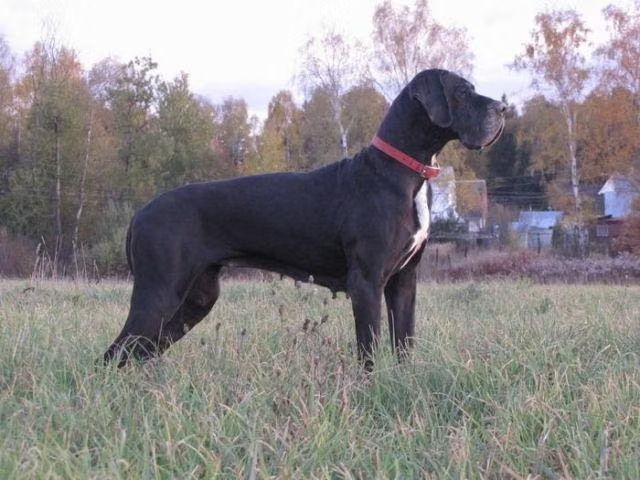
The Great Dane is a friendly giant known as a gentle, devoted companion that combines towering size with a sweet, patient temperament.
How the Great Dane coat is built, and what that means when you groom it.
A few of the Great Dane profiles members have added to United Pet Club.
A giant German breed prized as a calm, devoted companion, the Great Dane combines an imposing size with a famously gentle, patient temperament.
The Great Dane ranks among the tallest dog breeds in the world, with many dogs standing over 30 inches at the shoulder. Despite this imposing height, owners and breed clubs describe the temperament as even tempered and affectionate rather than intimidating. The nickname "gentle giant" reflects a dog that is typically calm indoors and patient with people, children included.
Physically, the breed blends the solid build of a working mastiff type dog with the lighter, more athletic lines of a sighthound. Males typically weigh between 140 and 175 pounds, and females between 110 and 140 pounds. Anyone considering a Great Dane needs a home with enough room for a dog tall enough to rest its head on a kitchen counter while standing on all fours.
Great Danes are companion dogs at heart. They attach strongly to their families and prefer to stay close to their people, so long hours alone do not suit the breed well. Given early socialisation and consistent handling, a Great Dane is usually friendly with strangers and gets along with other household pets.
| Attribute | Detail |
|---|---|
| Origin | Germany |
| Size | Giant |
| Lifespan | 7 to 10 years |
| Group/role | Working group, companion dog and former boar-hunting dog |
| Good with | Children, families, other pets when properly socialised |
The Great Dane suits owners with space, a steady budget for food and veterinary bills, and time to spend at home each day. Because the temperament is patient, the breed can work well in families with older children, or younger children under supervision, since a dog this size can knock a small child over without meaning to. First-time owners who commit to early training often manage well with a Great Dane, as the breed is not difficult to handle once it has learned basic manners. It does not suit anyone wanting a dog bred for sustained guarding aggression, nor owners who travel often and cannot bring the dog along.
Bred in Germany from mastiff and sighthound stock to hunt wild boar, the Great Dane later became a household companion and family dog.
Large mastiff type dogs have existed in Europe for centuries, and animals resembling today's Great Dane turn up in German records tied to boar hunting. German nobility kept powerful hunting dogs that combined mastiff strength with sighthound speed, since running down and holding a wild boar, a genuinely dangerous quarry, required a dog able to pin it in place until the hunters arrived.
By the 1600s, German estates were keeping refined versions of these dogs indoors as chamber dogs and guardians rather than purely as hunters. Breeders began selecting for size alongside a steadier temperament suited to life around the household rather than only the chase.
German breeders standardised the dog in the late 1800s and put forward the name Deutsche Dogge, meaning German mastiff. The breed took its formal shape in Germany during this period, and English speakers kept calling it the Great Dane even though the dog has no documented connection to Denmark.
As wild boar hunting declined, the Great Dane's role shifted toward companionship and family life, and breeders continued to favour the calm, devoted disposition the breed is known for today, while its giant frame remained a defining trait. In Singapore, the breed is recognised by the Singapore Kennel Club, the national body for pedigree dog registration, and it remains one of a small number of giant breeds kept by local owners despite the amount of space such a dog needs.
A giant, square-built dog with a long head, deep chest and short, smooth coat, the Great Dane comes in several recognised colours.
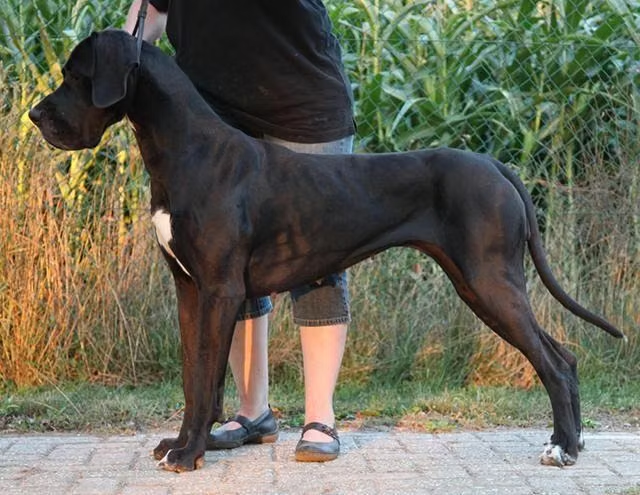
A Great Dane in proper proportion looks powerful and elegant in the same glance, built on a square outline where height at the shoulder roughly matches body length. The head is long and rectangular, the chest deep, and the legs straight with good bone. Every part of the dog points toward strength combined with free movement rather than sheer bulk. The neck is long and carried high, and the muscling beneath the coat stays clean and defined rather than heavy.
| Trait | Standard |
|---|---|
| Height | Males 30 to 32 in, females 28 to 30 in at the shoulder |
| Weight | Males 140 to 175 lb, females 110 to 140 lb |
| Coat | Short, smooth, close lying |
| Colours | Fawn, brindle, blue, black, harlequin, mantle |
| Eyes | Medium, dark and deep set in most colours |
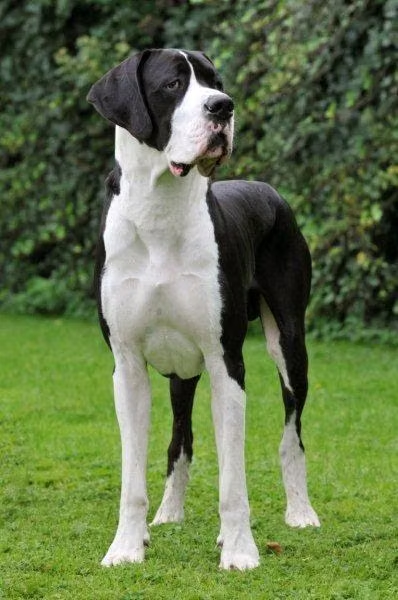
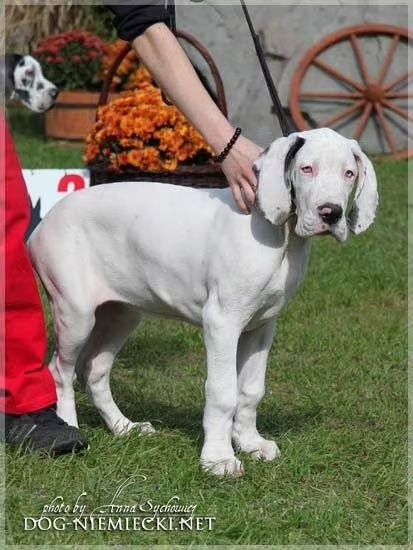
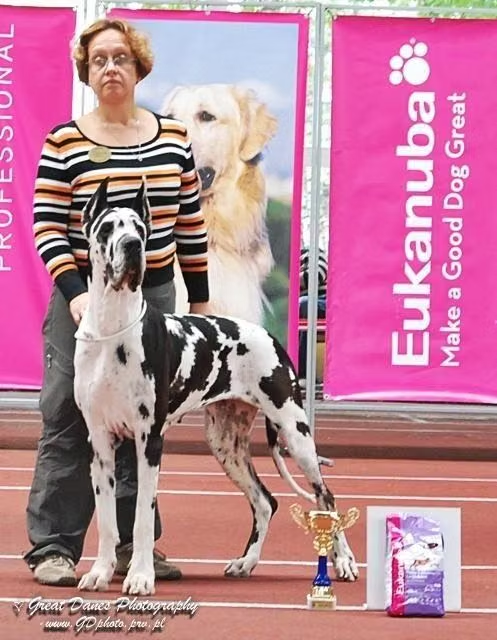
The coat is short, smooth and simple to maintain, lying close against the body. Recognised colours include fawn with a black mask, brindle, solid blue, solid black, harlequin (white with irregular black patches) and mantle (black and white in a defined pattern). Merle also occurs in the breed, though registries treat it differently. Ear shape varies: many Great Danes carry natural drop ears, while cropped ears were once common and remain subject to local law and owner preference. Natural ears are increasingly the norm in places where cropping is restricted or banned by law.
Friendly, gentle and devoted, the Great Dane is typically calm indoors and patient with family members, children included.
Breed standards describe the Great Dane as friendly and dependable, and most individuals live up to the gentle giant reputation at home. A typical Great Dane is quiet and settled indoors, content to lie near its people for much of the day, and many dogs grow anxious if left alone for long stretches.
Within the family, the breed is openly affectionate and will often lean its full weight against a person for contact, its size notwithstanding. Great Danes are generally patient with children, though supervision around small kids is sensible, since a dog this tall can bowl a toddler over by accident rather than intent. With strangers, a well-socialised Great Dane tends to be reserved and polite rather than aggressive, and its sheer size alone does much of the work of deterring anyone with bad intentions.
The breed usually gets on well with other pets when raised alongside them from an early age, and ongoing socialisation helps keep a Great Dane relaxed around unfamiliar dogs. This is not a high-drive working breed, so pushiness and hyperactivity are uncommon, but a Great Dane still needs company and calm, consistent leadership to stay settled, particularly in a household with limited space.
| Trait | Rating |
|---|---|
| Affection | 5 |
| Energy | 3 |
| Trainability | 4 |
| Vocalness | 2 |
| Shedding | 3 |
The Great Dane needs light grooming, daily moderate exercise, and a home with enough space and soft surfaces to protect its joints.
A Great Dane needs more indoor space than most breeds simply to turn around and stretch out in comfort. This makes the breed a poor match for a small flat, though a calm adult can adapt to compact living given enough exercise outside. In Singapore, where most households live in HDB flats, prospective owners should check HDB and town council rules before bringing a Great Dane home, since a dog of this size and weight typically needs approval under the space restrictions that apply to dog ownership in public housing. A large, well-padded bed matters too: hard flooring is uncomfortable for a heavy dog over time and can contribute to pressure sores. Singapore's climate is hot and humid all year round, and the Great Dane's short coat offers little protection from either heat or cold, so the breed is best kept indoors with air conditioning or good airflow rather than left outside for long periods.
The Great Dane needs a balanced large or giant breed diet fed in measured meals, with careful attention to puppy growth and bloat risk.
A Great Dane needs a complete and balanced diet formulated for large or giant breeds. Puppy nutrition matters more for this breed than for most, because growing too fast or too big can damage developing joints and bones. Vets generally recommend a giant breed puppy food with controlled calcium and energy levels, and many owners deliberately keep puppies lean rather than letting them pack on weight as quickly as possible. Adult dogs do well on a quality adult formula matched to how active they are.
| Life stage | Amount per day | Meals |
|---|---|---|
| Puppy (2 to 6 months) | 6 to 10 cups, growth formula | 3 to 4 |
| Adolescent (6 to 18 months) | 8 to 12 cups | 2 to 3 |
| Adult | 6 to 10 cups | 2 |
| Senior | 5 to 8 cups, adjusted for activity | 2 |
Keep treats to around 10 percent of daily calories, so the overall diet stays balanced and the dog stays lean enough to protect its joints. Many owners ask their vet about joint support such as glucosamine or omega-3 fatty acids, since a Great Dane carries a great deal of weight through large joints. Fresh water should always be available, and any supplement is worth discussing with a vet first rather than guessing at a dose for a dog this size.
With a lifespan of about 7 to 10 years, the Great Dane is prone to bloat, heart disease and joint conditions common to giant breeds.
For its size, the Great Dane is a reasonably healthy breed, though giant dogs carry health risks tied to their size and tend to have shorter lifespans than smaller breeds. A Great Dane typically lives about 7 to 10 years. Most of the serious conditions seen in the breed relate to size in some way, affecting the heart, the digestive system or the joints. Responsible breeders screen dogs for heart and orthopaedic conditions before breeding, and routine veterinary check-ups help catch problems while they are still manageable.
| Condition | Signs | Note |
|---|---|---|
| Gastric dilatation volvulus (bloat) | Swollen abdomen, retching, restlessness, collapse | A medical emergency, and deep-chested breeds are at high risk |
| Dilated cardiomyopathy | Weakness, cough, exercise intolerance, fainting | Heart muscle disease seen in the breed, so breeding dogs should be screened for it |
| Hip and elbow dysplasia | Limping, stiffness, reluctance to get up | Joint malformation made worse by fast growth or excess weight |
| Wobbler syndrome | Unsteady gait, neck pain, weakness | Cervical spine condition more common in giant breeds |
| Bone cancer (osteosarcoma) | Lameness, swelling on a limb, pain | Occurs more often in large and giant breeds |
Intelligent and eager to please, the Great Dane needs early training so a giant breed learns manners while still small enough to manage.
The Great Dane is intelligent and usually keen to cooperate, which makes it a responsive breed to train. Because it grows so large so quickly, training and socialisation need to start in puppyhood, while the dog is still small enough to handle without a struggle. A Great Dane taught lead manners and basic control as a puppy is far easier to live with than an adult that was never trained and may end up outweighing its owner. The breed responds best to calm, consistent guidance rather than harsh correction, which tends to make a sensitive dog anxious rather than obedient.
Great Danes mature slowly, tend to have large litters, and need health-screened parents plus careful puppy nutrition to grow safely.
Great Danes mature slowly and are not fully grown until somewhere around 18 to 24 months old, later than smaller breeds. Responsible breeding waits until a dog is mature and has been screened for the heart and orthopaedic conditions common in the breed. Females are usually not bred until their bodies have finished developing, since carrying and raising a giant breed litter puts real strain on the mother.
Gestation runs about 63 days, much the same as in other dogs. Litters tend to be large, which is demanding on the mother, so attentive care through pregnancy and whelping matters a great deal. Puppies grow fast in their first months, and that rapid growth is exactly why controlled giant breed nutrition is so important for avoiding joint problems later on.
Raising a litter well means early socialisation, gradual weaning and keeping puppies lean as they grow. Puppies should stay with their mother and littermates long enough to learn normal dog behaviour, usually until around eight weeks old, before moving to new homes.
| Metric | Value |
|---|---|
| Sexual maturity | About 18 to 24 months for breeding |
| Gestation | Approximately 63 days |
| Average litter size | 8 to 10 puppies |
| Weaning age | About 6 to 8 weeks |
| Recommended placement age | Around 8 weeks or later |
AVS handles the licence; United Pet Club keeps a free, searchable record behind your Great Dane's microchip for life.
The Animal & Veterinary Service requires every dog here to be licensed and microchipped by three months of age, so for a Great Dane the chip is settled law. What stays on you is the record behind it. A free United Pet Club profile holds your contact details against the dog for as long as he is yours, and it keeps working even outside Singapore. Registering your dog takes minutes and never costs a cent.
The AVS listing and a searchable contact record are two different things, and the second one is yours to set up. Register the microchip on the free lifetime plan: any chip brand a local vet implants qualifies, updates after a move between flats stay free, and the record can be pulled up 24 hours a day from anywhere. Create your free account and settle it tonight.
Set up a free United Pet Club account, key in your Great Dane's details and a photo, and save. The lifetime plan keeps the profile live at no cost for as long as he is with you, alongside whatever AVS requires.
Key the 15-digit chip number into your free account together with your address, mobile, and email. The lifetime plan covers the registration and every update free, whichever brand the clinic used.
Yes. AVS requires dogs to be licensed and microchipped by three months of age. The licence is the legal part; a registered, searchable record with your current mobile is the part that gets a lost Great Dane home, and that part is free.
Nothing. United Pet Club's lifetime plan covers the profile, the chip record, and unlimited updates, with no renewal, ever.
Answers to common questions about Great Dane size, temperament, care needs, lifespan and suitability for families.
Great Danes are a giant breed. Males stand about 30 to 32 inches at the shoulder and weigh 140 to 175 pounds, while females stand about 28 to 30 inches and weigh 110 to 140 pounds.
Yes. The breed has a friendly, gentle and patient temperament and is generally good with children. Because of its size, supervise time with small children so the dog does not knock them over by accident.
Grooming and exercise needs are moderate, but the breed needs space, a soft place to rest, a large food budget and careful feeding to lower bloat risk. Most of the challenge comes from the dog's size rather than its temperament.
The typical lifespan is about 7 to 10 years, shorter than most smaller breeds. Good nutrition, a lean body condition and routine veterinary care all support a healthy life.
No. Adults need moderate daily exercise, roughly 30 to 60 minutes of walking plus some free movement. Avoid heavy exercise in puppies and young dogs to protect their growing joints.
They can be, for owners who commit to early training and socialisation. The breed is calm and eager to please, but its size means manners have to be taught while it is still a puppy.
Generally not. The breed tends to be quiet and is not especially vocal, though its size and presence alone are often enough to deter intruders.