
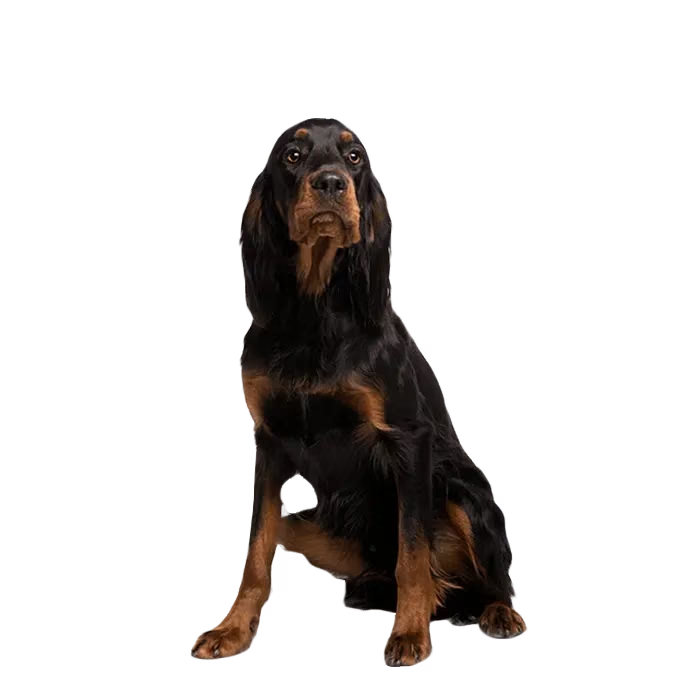
Gordon Setter
The Gordon Setter is a confident, loyal bird dog distinguished by its striking black-and-tan coat and steadfast devotion.
- Size
- Large
- Lifespan
- 10–12 years
- Origin
- Scotland
- Temperament
- Confident
- Standard colors
- Black and Tan
Characteristics
Coat and grooming
How the Gordon Setter coat is built, and what that means when you groom it.
- Coat layers
- Single coat
- Coat texture
- Silky
- Coat length
- Medium
- Shedding
- Moderate shedding
Grooming guidance
Caution: A Gordon Setter coat mats easily.
Fine or long hair tangles at the base of the coat, out of sight, where the mats tighten and pull on the skin. Brushing has to reach right down to the roots in sections, not just skim the surface.
Gordon Setter colors and patterns
What each club's breed standard says about every Gordon Setter color and pattern. Point at a ruling to see the club's own wording.
Breed standards describe the Gordon Setter in Black and Tan. Standard patterns: Tan point.
| Color or pattern | FCI | AKC | UKC | KC | KUSA |
|---|---|---|---|---|---|
| Black | Standard (“Deep, shining coal black, without rustiness”) | Standard (“Black & Tan”) | Standard (“Deep, shining coal black”) | Standard (“Deep, shining coal black, without rustiness”) | Standard (“Deep, shining coal black, without rustiness”) |
| Tan | Standard (“markings of chestnut red, i.e. lustrous tan”) | Standard (“Black & Tan”) | Standard (“tan markings of rich chestnut red”) | Standard (“tan markings of rich chestnut red”) | Standard (“markings of chestnut red, i.e. lustrous tan”) |
| Red | Not recognised | Disqualifying (“Red”) | Disqualifying (“Predominantly tan, red or buff dogs”) | Not recognised | Not recognised |
| Buff | Not recognised | Disqualifying (“Predominantly tan, red or buff dogs”) | Disqualifying (“Predominantly tan, red or buff dogs”) | Not recognised | Not recognised |
| Patterns | |||||
| Tan point | Standard (“Tan markings”) | Standard (“Black & Tan”) | Standard (“Tan markings should be located as follows”) | Standard (“‘Tan markings’”) | Standard (“Tan markings”) |
| Solid | No ruling | Disqualifying (“Predominantly tan, red or buff dogs”) | Disqualifying (“Predominantly tan, red or buff dogs which do not have the typical pattern of markings”) | Not recognised | No ruling |


| Color or pattern | FCI | AKC | UKC | KC | KUSA |
|---|---|---|---|---|---|
| Dark brown | Standard (“Dark brown”) | Standard (“dark brown”) | Standard (“Dark brown in color”) | Standard (“Dark brown”) | Standard (“Dark brown”) |
| Color or pattern | FCI | AKC | UKC | KC | KUSA |
|---|---|---|---|---|---|
| Black | Standard (“black”) | Standard (“black in color”) | Standard (“black in color”) | Standard (“black”) | Standard (“black”) |
What the rulings mean
- Standard
- Described by the club's breed standard.
- Disqualifying
- The club's breed standard disqualifies an animal of this colour or pattern.
- Not recognised
- The club does not accept this colour or pattern for the breed.
Color changes
How a Gordon Setter's colors can change over its life.
Blackchanges toRust
Coat · With body condition · can change back
Blackchanges toGrey
Coat · Progressive
Blackchanges toBrown
Coat · In the sun · can change back
Tan pointchanges toSaddle
Coat · With age · from 6 to 156 weeks
Blackchanges toSnow nose
Nose · With the season · can change back
Blackchanges toPink
Nose · With the season · can change back


Sources
Each ruling comes from the club's published breed standard or color list.
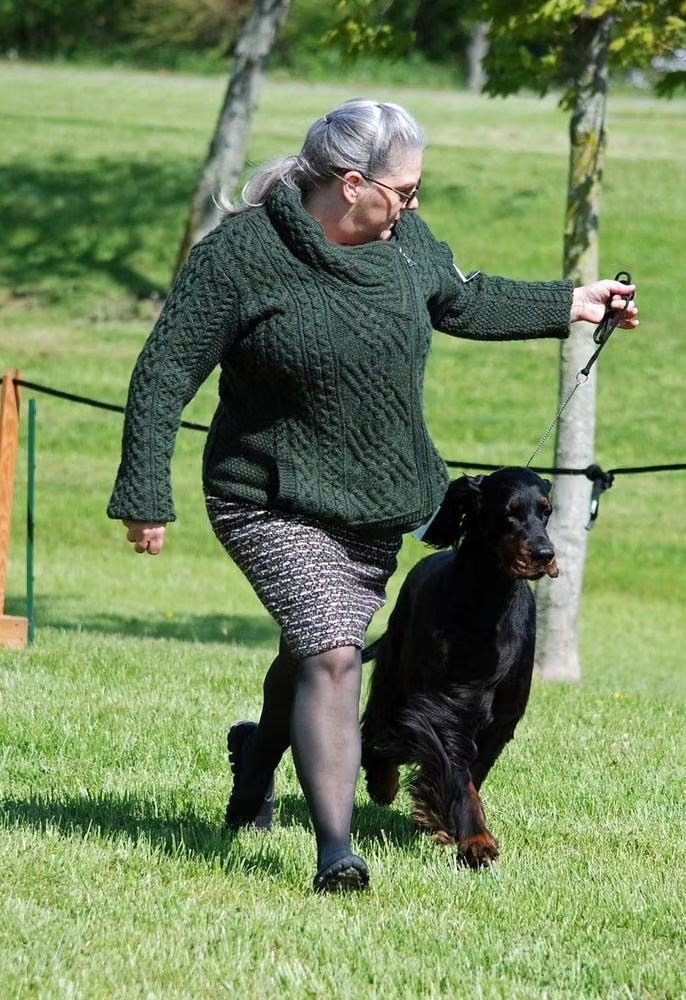
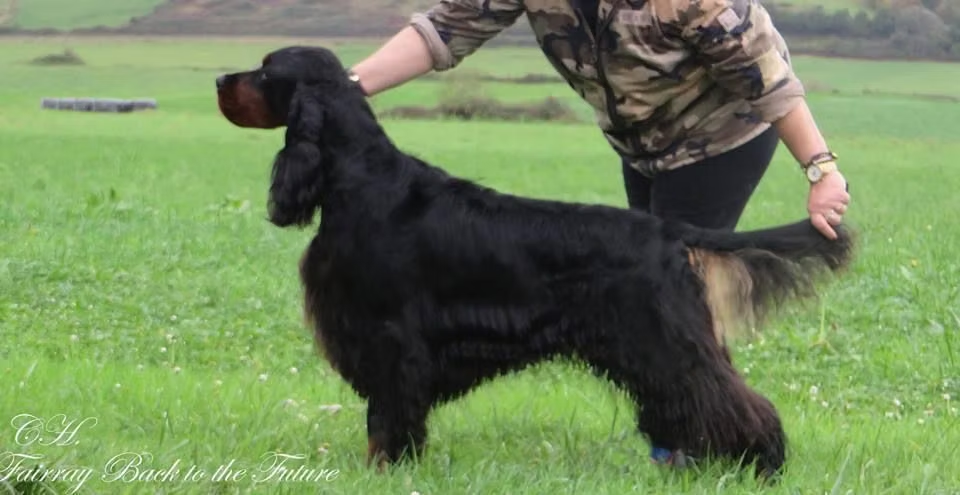
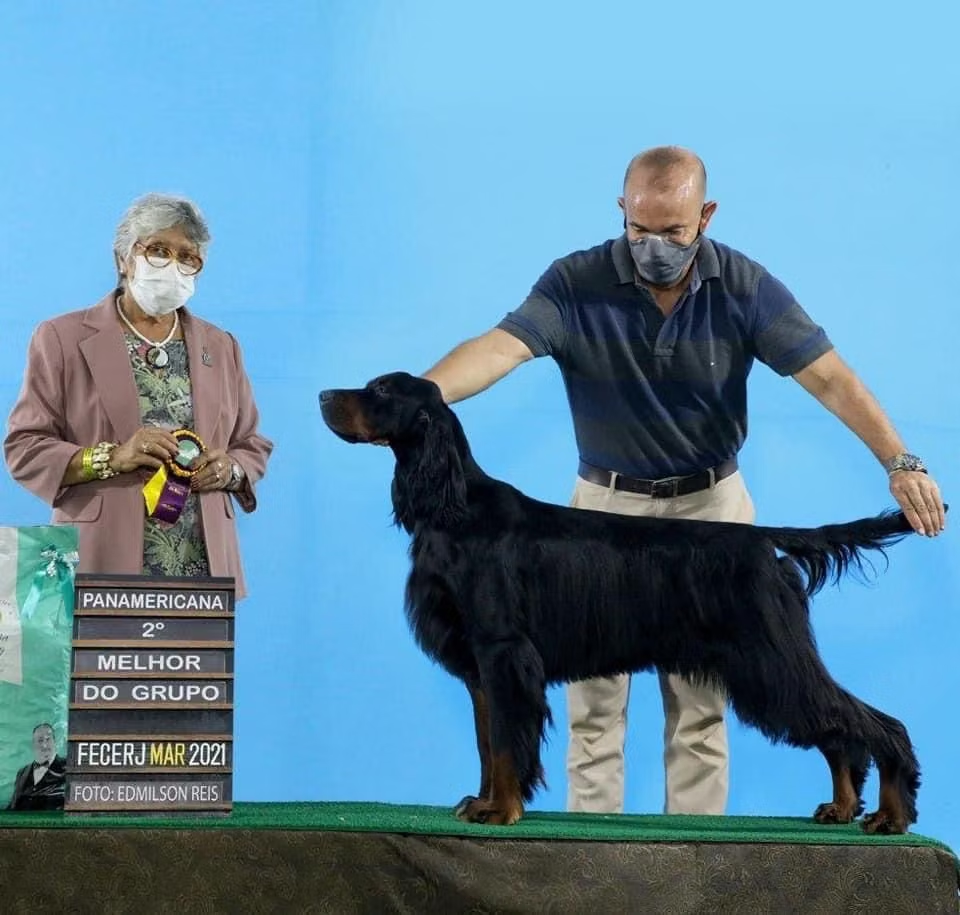
Meet some of our Gordon Setter
A few of the Gordon Setter profiles members have added to United Pet Club.








About the Gordon Setter
A large bird dog from Scotland, known for its black-and-tan coat, loyalty, and high energy. It typically lives 10 to 12 years and is a demanding choice in Singapore given the heat and housing limits.
The Gordon Setter is a large gundog developed in Scotland to point and retrieve game birds. It is the heaviest and most substantial of the setter breeds, built for stamina over rough terrain rather than speed alone.
The breed is recognised by its glossy black coat with clear tan or chestnut markings on the muzzle, legs, chest, and over the eyes. It carries itself with an alert, confident bearing and stays closely attached to its people.
Gordon Setters are loyal and intelligent. They tend to bond strongly with one household and can be reserved with strangers until they take their measure. Without enough physical and mental work, they become restless and may develop nuisance habits. In Singapore the breed is very rare, and its dark, long coat combined with the tropical heat make it a considered choice.
| Attribute | Detail |
|---|---|
| Origin | Scotland |
| Size | Large |
| Lifespan | 10 to 12 years |
| Group / role | Sporting (gundog), bird dog used for pointing and retrieving |
| Good with | Families and older children; can live with other dogs and pets when raised together |
Who the breed suits
The Gordon Setter fits owners who are active and can commit to daily exercise. Because of its size it is not a realistic flat dog, and HDB rules do not permit this breed in flats, so a landed home or approved condominium is needed. It dislikes being left alone for long hours and needs an owner committed to keeping it cool. It is a poor fit for households away most of the day.
History and origin
The Gordon Setter takes its name from the kennels of the Dukes of Gordon at Gordon Castle in Scotland, where the black-and-tan type was established by the early 19th century. It was bred as a working bird dog and later recognised by major kennel clubs.
Setters as a working type existed in Britain for centuries before the Gordon emerged as a distinct breed. These dogs were used to locate game birds and then crouch, or set, so hunters could net or shoot them.
The black-and-tan setter became associated with the kennels of the Dukes of Gordon at Gordon Castle in Banffshire, Scotland. The fourth Duke of Gordon kept and promoted these dogs around the late 1700s and early 1800s, and the breed came to carry the family name.
Early Gordon Setters were valued for steady, methodical work and good scenting ability rather than flashy speed. The breed was sometimes called the Gordon Castle Setter before the name was shortened. Coat colour varied in the early stock, but the black-and-tan pattern was fixed as the standard over time.
The breed reached North America in the 19th century and spread more widely thereafter. It remains in use both as a working gundog and as a companion, but it is seldom seen in Singapore, kept only by a small number of enthusiasts.
Appearance and breed standard
A sturdy, large dog with a black coat marked by tan points. Males stand around 61 to 69 cm at the shoulder, and the breed has a long, feathered coat that is straight or slightly wavy.
The Gordon Setter is the most substantial of the setters, with heavier bone and a deeper body than the English or Irish Setter. The outline is balanced, with a level back, a deep chest, and a head carried proudly. The tail is fairly short and carried roughly level with the back, often described as flag-like.
| Trait | Detail |
|---|---|
| Height | Males about 61 to 69 cm; females about 58 to 66 cm at the shoulder |
| Weight | Males about 25 to 36 kg; females about 20 to 32 kg |
| Coat | Soft and shining, straight or slightly wavy, with longer feathering on the ears, chest, legs, underside, and tail |
| Colours | Black with tan or chestnut markings (black-and-tan) |
| Eyes | Dark brown, oval, set fairly wide apart, giving an alert and intelligent expression |
Coat and colours
The defining mark of the breed is a deep black coat with well-defined tan points. The tan appears over the eyes, on the sides of the muzzle, on the throat and chest, on the lower legs and feet, and under the tail. A small white spot on the chest is permitted in the standard, though large areas of white are not typical. The dark coat absorbs heat, which is worth remembering in Singapore's climate. The feathering on the ears, legs, and tail gives the breed its elegant outline and needs regular attention to stay free of tangles.
Temperament and personality
Loyal, intelligent, and energetic, with a strong attachment to its family. Alert and can be reserved or protective with strangers, and does best with consistent training and plenty of activity.
Gordon Setters form close bonds with their households and like to stay near their people. They are affectionate at home and often follow family members from room to room. The breed is generally good with children when raised with them, though its size and energy mean play with very young children should be supervised.
With strangers, the Gordon tends to be alert and watchful. Many are reserved at first and will bark to announce visitors, which makes them effective watchdogs but can be an issue in close-set housing. Early and ongoing socialisation helps them stay confident rather than suspicious.
The breed can live with other dogs and with pets it has grown up alongside. As a bird dog, it may chase smaller animals outdoors, so introductions to cats or small pets should be careful. Gordons are intelligent and learn quickly, but they can be independent and need a handler who is consistent. Boredom and too little exercise often lead to chewing, digging, or barking.
| Trait | Rating |
|---|---|
| Affection | 5 |
| Energy | 5 |
| Trainability | 4 |
| Vocalness | 3 |
| Shedding | 3 |
Care and grooming
Needs regular brushing of its long coat, substantial daily exercise timed for the cooler hours, air-conditioned relief, and space to move.
Grooming
- Brush the coat two or three times a week to prevent mats, paying close attention to the feathering on the ears, legs, and tail.
- Check and clean the ears regularly, since the long, hanging ears can trap moisture and debris and are prone to infection in the humidity.
- Trim hair around the feet and pads to keep them tidy and reduce dirt buildup.
- Bathe as needed when the dog is dirty, and trim nails every few weeks.
- Brush teeth several times a week to support dental health.
Exercise
- Provide at least 60 to 90 minutes of vigorous exercise daily, such as running, long walks, or off-lead time in a safe area.
- Schedule the hard exercise for early morning or after dark to avoid the heat.
- Add mental work through scent games, retrieving, or training sessions, since this breed needs to use its mind.
- Consider activities that match the breed's history, including fieldwork, agility, or tracking.
- Use a securely fenced area for off-lead time, because the hunting instinct can pull a Gordon after birds or small animals.
Environment
The Gordon Setter is only realistic in a landed home or approved private property, since HDB flats do not permit it. Its dark, heavy coat makes it a cool-weather dog, so Singapore's heat and humidity are its biggest challenge: it needs air-conditioned relief, constant fresh water, and exercise timed for the cooler hours. It should not be left outdoors alone for long periods, and it tolerates isolation poorly.
Nutrition and feeding
Needs a balanced diet formulated for a large, active dog, divided into two meals a day to lower the risk of bloat. Portions depend on age, weight, and activity level.
Feed a complete and balanced food suitable for the dog's life stage and size. Active and working Gordon Setters burn more calories than companion dogs, so portions should match the individual dog's workload and body condition. Keep the dog at a lean, healthy weight, since excess weight strains joints and worsens hip problems. Keep fresh, clean water available at all times, which is critical in the heat. As a deep-chested breed, the Gordon is at risk of bloat (gastric dilatation-volvulus), so meals are usually split across the day and heavy exercise is avoided right before and after eating.
| Life stage | Amount per day | Meals per day |
|---|---|---|
| Puppy (2 to 6 months) | Per puppy food label, divided into smaller portions | 3 to 4 |
| Puppy (6 to 12 months) | Per large-breed puppy food label | 2 to 3 |
| Adult | About 2 to 3 cups of dry food, by weight and activity | 2 |
| Senior or less active | Reduced portion to maintain healthy weight | 2 |
Treats and supplements
Keep treats to no more than about 10 per cent of daily calories to avoid weight gain. A complete commercial diet usually supplies the nutrients a healthy Gordon needs, so supplements are generally unnecessary. Some owners use joint supplements for older or working dogs on a veterinarian's advice. Always provide fresh water, especially around exercise.
Health and common conditions
Generally healthy with a typical lifespan of 10 to 12 years. Known concerns include hip dysplasia, bloat, eye disease, hypothyroidism, and, locally, tick-borne disease and heat stress.
Most Gordon Setters live 10 to 12 years. The breed is reasonably hardy, but like many large dogs it has a few inherited and structural health risks. Buying from breeders who screen their stock and keeping the dog at a healthy weight reduce the chance of several problems. In Singapore, tick-borne disease and heat stress are added concerns for this cool-weather breed.
| Condition | Signs | Note |
|---|---|---|
| Hip dysplasia | Limping, stiffness, trouble rising or climbing | Inherited joint malformation; breeding dogs should be hip-screened |
| Bloat (gastric dilatation-volvulus) | Swollen abdomen, retching without vomiting, restlessness, distress | A medical emergency; deep-chested breeds are at higher risk |
| Progressive retinal atrophy | Night blindness, declining vision over time | Inherited eye disease; DNA and eye testing available |
| Hypothyroidism | Weight gain, low energy, coat and skin changes | Manageable with daily medication once diagnosed |
| Ear and tick-borne infections | Head shaking, odour, fever, weakness, loss of appetite | Long ears trap moisture; ticks spread ehrlichiosis and babesiosis |
Preventive care
- Keep vaccinations and year-round tick, flea, and heartworm prevention up to date, all pressing concerns locally.
- Schedule annual veterinary exams, with more frequent checks for senior dogs.
- Maintain a lean body condition to protect the hips and joints.
- Clean and check the ears regularly to catch infections early, and watch closely for heat stress.
- Ask breeders for hip, eye, and thyroid screening results before buying a puppy.
Training and socialisation
Intelligent and capable but can be independent, so it responds best to consistent, reward-based training started early. Socialisation helps temper its natural reserve toward strangers.
Gordon Setters learn quickly and enjoy having a job. They are sensitive dogs that respond well to praise, food, and play, and they do not take well to harsh handling. The breed can be stubborn or distracted by scents, so training works best in short, varied sessions that keep the dog engaged, and short sessions also help in the heat. Early socialisation with people, places, and other animals is important to build a confident adult, given the breed's tendency to be reserved with strangers.
Basics
- Begin socialisation in puppyhood, exposing the dog to new people, dogs, sounds, and settings in a calm, positive way.
- Teach core cues such as sit, stay, come, and leash manners using rewards.
- Train a reliable recall, since the hunting drive can pull the dog after birds and small animals.
- Keep sessions short, around 5 to 15 minutes, and end on a success.
- Add mental challenges such as scent work or retrieving to channel the breed's energy.
- Be consistent across everyone in the household so the rules stay clear.
Breeding and raising young
Reach sexual maturity around 1 to 2 years, carry a litter for about 63 days, and usually have litters of roughly 6 to 10 puppies. Health screening of the parents is important before breeding.
Female Gordon Setters generally reach sexual maturity between about 6 and 12 months, but responsible breeders wait until the dog is physically and mentally mature, usually around 2 years, and has passed health screening before breeding. Gestation lasts roughly 63 days from conception. Litters typically range from about 6 to 10 puppies, though numbers vary.
Newborn puppies depend fully on the mother for warmth and milk in the first weeks. Weaning usually begins around 3 to 4 weeks and is complete by about 7 to 8 weeks. Early handling and gentle exposure to household sights and sounds during this period help shape a stable temperament. Puppies should stay with the mother and littermates until at least 8 weeks of age. Breeding dogs should be screened for hip, eye, and thyroid conditions, and in the tropical climate the whelping area should be kept cool and well ventilated. Many Singapore buyers import puppies, so check the health testing and paperwork carefully.
| Metric | Value |
|---|---|
| Sexual maturity | About 6 to 12 months (breeding usually delayed to around 2 years) |
| Gestation | About 63 days |
| Average litter size | About 6 to 10 puppies |
| Weaning age | About 7 to 8 weeks |
| Recommended age to leave mother | 8 weeks or older |
Licensing done? Now register your Gordon Setter and its chip
AVS handles the licence; United Pet Club keeps a free, searchable record behind your Gordon Setter's microchip for life.
Registering a Gordon Setter in Singapore
Key in your Gordon Setter's name, his date of birth, and a clear photo, attach your mobile, and save: a lifetime record, no charge now or later. Dog registration sits happily alongside the AVS paperwork and takes the chip number whenever you have it.
Your Gordon Setter's chip went in before his third month, as the rules require; whether the number leads anywhere is a separate question. Give it a live answer with United Pet Club: registration free for life, every brand accepted, every update free. Microchip registration plus a free account, and the whole thing is squared away.
How do I register my Gordon Setter in Singapore?
Set up a free United Pet Club account, key in your Gordon Setter's details and a photo, and save. The lifetime plan keeps the profile live at no cost for as long as he is with you, alongside whatever AVS requires.
How do I register my Gordon Setter's microchip?
Key the 15-digit chip number into your free account together with your address, mobile, and email. The lifetime plan covers the registration and every update free, whichever brand the clinic used.
Is a microchip compulsory for a Gordon Setter in Singapore?
Yes. AVS requires dogs to be licensed and microchipped by three months of age. The licence is the legal part; a registered, searchable record with your current mobile is the part that gets a lost Gordon Setter home, and that part is free.
How much does it cost to register a Gordon Setter?
Nothing. United Pet Club's lifetime plan covers the profile, the chip record, and unlimited updates, with no renewal, ever.
Frequently asked questions
Common questions about the Gordon Setter cover its size, housing rules, temperament, care needs, the climate, and how easy the breed is to find.
Can I keep a Gordon Setter in an HDB flat?
No. This breed is not on the HDB approved list for flats, and its size and exercise needs make flat life unsuitable in any case. It is realistic only in a landed home or an approved private property.
Can a Gordon Setter cope with Singapore's climate?
It is a cool-weather breed with a dark, heavy coat, so it feels the heat. It can live here only with committed cooling: air-conditioned relief, constant water, and exercise kept to the early morning and evening.
Are Gordon Setters hard to care for?
They are moderately demanding. The long coat needs brushing two or three times a week, the ears need regular cleaning, and the dog needs a good deal of daily exercise. Owners who cannot meet the exercise needs often see boredom-related behaviour problems.
How long do Gordon Setters live?
Most live about 10 to 12 years. Good nutrition, regular veterinary care, and keeping the dog at a healthy weight support a full lifespan.
Do Gordon Setters get along with other pets?
They can live with other dogs and with pets raised alongside them. Because they are bird dogs with a chase instinct, introductions to cats or small animals should be careful, and a reliable recall is important outdoors.
Are Gordon Setters easy to find in Singapore?
No. They are very rare here. Expect a long search, careful checks on any breeder's health testing, and likely import.
Do Gordon Setters bark a lot?
They are alert and will bark to announce strangers or unusual activity. In close-set housing this is worth managing early. Excessive barking is usually a sign of boredom or too little exercise rather than a fixed trait.
From the community
Ask about the Gordon SetterNo questions about the Gordon Setter yet. Be the first to ask.
Browse Dog breeds