
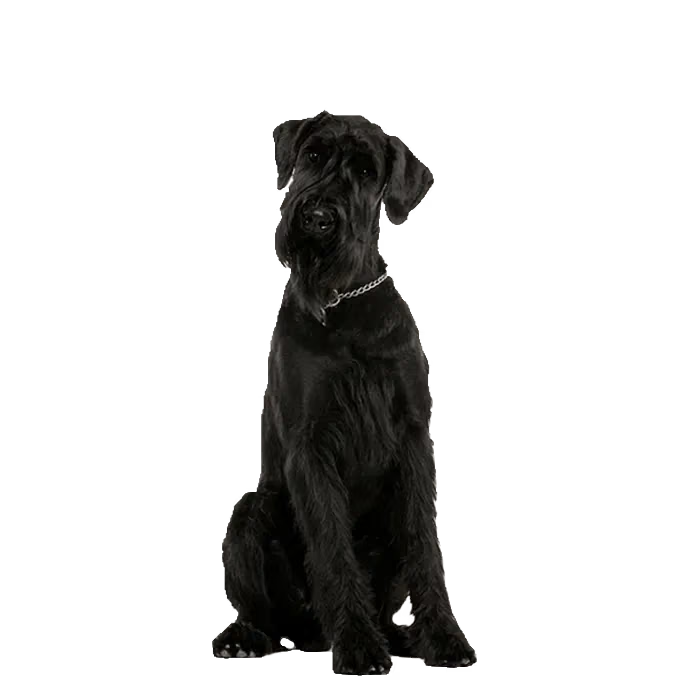
German Wirehaired Pointer
The German Wirehaired Pointer is a devoted, all-purpose hunting companion known for its rugged coat and tireless work ethic.
- Size
- Large
- Lifespan
- 12–14 years
- Origin
- Germany
- Temperament
- Devoted
- Standard colors
- Black, White and Liver
Characteristics
Coat and grooming
How the German Wirehaired Pointer coat is built, and what that means when you groom it.
- Coat layers
- Double coat
- Coat texture
- Wire
- Coat length
- Medium
- Shedding
- Moderate shedding
Grooming guidance
Critical: A German Wirehaired Pointer should not be shaved.
The undercoat keeps heat out as well as in, and the outer coat shields the skin from sun and insect bites. Clipping the whole coat off removes both. It often grows back patchy, soft or a different colour, and in some animals the guard hairs never return properly. Brush the undercoat out instead of cutting it off.
Caution: A German Wirehaired Pointer coat should be hand-stripped rather than clipped.
A wire coat is meant to be pulled out at the root once the hair is ready to release. Clippers cut it off part way instead, leaving the soft undercoat behind. The result is a coat that grows back limp and faded, and the weatherproof texture only returns after the hair is stripped out again.
German Wirehaired Pointer colors and patterns
What each club's breed standard says about every German Wirehaired Pointer color and pattern. Point at a ruling to see the club's own wording.
Breed standards describe the German Wirehaired Pointer in Black, White and Liver. Standard patterns: Solid, Bicolour, Roan and Spotted.
| Color or pattern | FCI | AKC | UKC | KC | KUSA |
|---|---|---|---|---|---|
| Black | Standard (“Black roan, with or without patches”) | Fault (“Black & White”) | Standard (“Solid black”) | Standard (“black and white”) | Standard (“Black roan, with or without patches”) |
| White | Standard (“Light roan”) | Standard (“Liver & White”) | Standard (“liver and white ticked”) | Standard (“Liver and white”) | Standard (“Light roan”) |
| Liver | Standard (“Brown with or without white chest patch”) | Standard (“Liver”) | Standard (“Solid liver”) | Standard (“solid liver”) | Standard (“Brown with or without white chest patch”) |
| Albino | Not recognised | No ruling | Disqualifying (“Albinism”) | Not recognised | Not recognised |
| Patterns | |||||
| Solid | Standard (“Brown with or without white chest patch”) | Standard (“solid liver”) | Standard (“Solid liver”) | Standard (“solid liver”) | Standard (“Brown with or without white chest patch”) |
| Bicolour | No ruling | Standard (“The coat is liver and white”) | Standard (“liver and white”) | Standard (“Liver and white”) | No ruling |
| Roan | Standard (“Brown roan with or without patches”) | Standard (“Roan”) | Standard (“liver and white ticked”) | Standard (“Liver & White Ticked”) | Standard (“Brown roan with or without patches”) |
| Spotted | Standard (“Brown roan with or without patches”) | Standard (“Spotted”) | Standard (“liver and white spotted”) | Not recognised | Standard (“Brown roan with or without patches”) |
| Tricolour | No ruling | No ruling | No ruling | Fault (“Solid black and tricoloured highly undesirable”) | No ruling |

%22%3E%3Cpath%20d%3D%22M0%2023L9.5%2020.4L14%2025.4L19%2029.6Q21%2035%2023.5%2035.5Q36%2033%2050%2036L56%2040V64H0Z%22%20fill%3D%22%23F5F5F0%22%2F%3E%3C%2Fg%3E%3Cuse%20href%3D%22%23s%22%20fill%3D%22none%22%20stroke%3D%22%233B2A20%22%20stroke-opacity%3D%220.6%22%20stroke-width%3D%221%22%20stroke-linejoin%3D%22round%22%2F%3E%3Cellipse%20cx%3D%223.2%22%20cy%3D%2221.7%22%20rx%3D%221.3%22%20ry%3D%221.2%22%20fill%3D%22%231C1C1C%22%2F%3E%3Ccircle%20cx%3D%2210.8%22%20cy%3D%2219.3%22%20r%3D%221.1%22%20fill%3D%22%231C1C1C%22%2F%3E%3C%2Fsvg%3E)
%22%3E%3Cg%20fill%3D%22none%22%20stroke%3D%22%23F5F5F0%22%20stroke-width%3D%221.15%22%20stroke-linecap%3D%22round%22%20stroke-linejoin%3D%22round%22%3E%3Cpath%20d%3D%22M28.6%2025h.1M51.3%2028.8h.1M34.7%2024.3h.1M34.2%2041.6h.1M51%2044.2h.1M55.9%2024.7h.1M27.5%2026.3h.1M18.5%2028.6h.1M25.2%2028.9h.1M24.2%2019.3h.1M20.6%2017.6h.1M34.1%2030.6h.1M57.3%2023.3h.1M23.5%2030.7h.1M26.5%2023.1h.1M40%2031.5h.1M51.7%2038.6h.1M20.2%2022.1h.1M40.4%2037.8h.1M35%2043.1h.1M20.6%2031.7h.1M27.8%2031.9h.1M17.2%2021.1h.1M38.1%2037.7h.1M25.3%2040.5h.1M32%2029.3h.1M41.6%2039.5h.1M23.6%2024h.1M26.4%2018.6h.1M30.3%2031.9h.1M31.2%2035.2h.1M36.5%2043.7h.1M35.2%2026.3h.1M55.6%2019.1h.1M22.4%2036.8h.1M39.2%2020h.1M49.5%2039.1h.1M33.6%2033.5h.1M36.4%2032.4h.1M56.3%2042.4h.1M54.8%2031.2h.1M36.9%2023.2h.1M52.7%2019.1h.1M21.5%2033.8h.1M48.6%2028h.1M36.6%2017.5h.1M45.6%2031.3h.1M37.9%2030.5h.1M17%2031.8h.1M21.1%2043.1h.1M55.7%2021.1h.1M30.8%2041.9h.1M57.4%2038.4h.1M54.8%2026.9h.1M29.1%2017.5h.1M24.3%2037.7h.1M26%2032h.1M39.3%2022.8h.1M53.5%2029h.1M53.3%2023.3h.1M20%2038.4h.1M28.3%2044.7h.1M28.6%2039.8h.1M51.9%2041.1h.1M52.3%2033.7h.1M19.6%2042.2h.1M19%2033h.1M47.8%2021.7h.1M45.7%2024.8h.1M24.6%2035.5h.1M29.8%2036.8h.1M50.7%2032h.1M29.5%2043.5h.1M28.2%2041.5h.1M47.4%2034.8h.1M25.4%2033.7h.1M50.2%2041.2h.1M27.7%2029.5h.1M21.5%2024.8h.1M55.5%2017.5h.1M41.2%2044.3h.1M39.2%2018.4h.1M41.1%2042.5h.1M54.7%2035.3h.1M42.8%2034.5h.1M30.1%2023h.1M42.6%2025.1h.1M32.9%2024.4h.1M42.4%2032.4h.1M49.7%2022.2h.1M49.1%2043.1h.1M38%2035.2h.1M47.7%2043.8h.1M43.1%2022.4h.1M22.4%2040.4h.1M44.4%2019.8h.1M53.3%2040.1h.1M20.7%2029.3h.1M55.6%2043.9h.1M17.6%2039.2h.1M41.7%2028.9h.1M44.1%2036.3h.1M24.3%2043.6h.1M26.4%2038.1h.1M30.3%2029.2h.1M31.5%2030.8h.1M32.1%2023h.1M18.3%2040.9h.1M48%2033.4h.1M36.4%2038.7h.1M31.9%2020.8h.1M32.6%2026.2h.1M22%2031.2h.1M53.4%2021.7h.1M41.9%2017.7h.1M53.3%2037.3h.1M47.7%2040.3h.1M54.4%2033.7h.1M33.6%2037.5h.1M25.3%2017.2h.1M37.6%2019.7h.1M31.6%2019h.1M29.2%2019.6h.1M50.7%2027.3h.1M22%2022.1h.1M31%2037.8h.1M56.5%2026.6h.1M34.7%2039.5h.1M56.5%2040.8h.1M47.6%2038h.1M48.6%2026.1h.1M49.7%2034.2h.1M45.4%2027.4h.1M22.6%2038.9h.1M56.5%2035.3h.1M35.1%2021h.1M41.9%2020.1h.1M37.6%2040h.1M32.6%2044.4h.1M37.9%2025.2h.1M26.6%2043h.1M18.9%2036.7h.1M47.2%2028.9h.1M30.5%2026.2h.1M17.4%2027.3h.1M47.1%2017.2h.1M22.3%2044.3h.1M32.5%2042.4h.1M23.6%2025.7h.1M31.4%2024.9h.1%22%2F%3E%3Cpath%20d%3D%22M26%2020.9h.1M41.2%2023.8h.1M39.9%2026.4h.1M28.5%2033.4h.1M42.8%2043.8h.1M17.6%2034.3h.1M34%2017.1h.1M31.2%2017.2h.1M46.5%2036.1h.1M25.1%2022.1h.1M50.3%2023.7h.1M20.2%2026.6h.1M20.8%2020.4h.1M50.9%2017.3h.1M49.5%2020.2h.1M52.9%2044.1h.1M23.9%2017.8h.1M43.2%2028.1h.1M57.6%2030h.1M52%2025.6h.1M19.2%2019.1h.1M19.5%2024.4h.1M32.8%2040.1h.1M36.1%2027.7h.1M39.6%2029.5h.1M38.4%2041.5h.1M47.9%2019.4h.1M49.1%2031.7h.1M55.9%2036.9h.1M29.2%2027.2h.1M46%2043.5h.1M44.6%2028.8h.1M47.5%2031.5h.1M22.8%2020h.1M27.6%2017.1h.1M43.1%2018.6h.1M54.3%2020h.1M57.2%2033.8h.1M44.5%2043.8h.1M27.1%2035.5h.1M45.3%2041.8h.1M56.7%2028.8h.1M36.7%2021.4h.1M43.3%2042.3h.1M17.3%2022.9h.1M32.7%2035.5h.1M30.5%2039.8h.1M29.1%2021.2h.1M34.5%2018.8h.1M25.8%2027h.1%22%2F%3E%3C%2Fg%3E%3Cpath%20d%3D%22M56.3%2038.4l0%201.2M40%2027.2l-0.3%201.3M32.6%2043.6l-0.4%201.5M29%2023.3l0.8%201.5M55.1%2044l0.4%201.1M47.5%2022.5l-0.2%201.6M42.9%2038.6l0.7%201.2M35.2%2041.8l-0.5%201.7M26.9%2040l-0.1%201.2M41%2042.8l-0.1%201.6M18.4%2021.2l0.7%201.3M49.4%2019.3l-0.5%201.4M50.1%2041.7l0%201.8M28.2%2041.8l-0.6%201.2M55.5%2027.1l0.2%201.2M44.7%2019.3l0.5%201.7M48.6%2020.5l-0.8%201.4M43.7%2039.6l0.3%201.1M22.1%2033.8l-0.6%201.6M50.1%2038.1l-0.5%201.3M51.8%2044.1l-0.1%201.8M39%2017.5l0%201.4M30.2%2026.7l0.2%201.4M25.8%2031.2l0.2%201.6M29.6%2043.5l0.1%201M43.7%2018.3l0.1%201.5M29.6%2018.2l0.3%201.6M24.4%2017.6l0.3%201.1M22%2028.2l-0.6%201.6M25.9%2043.3l-0.3%201.4M22.2%2024.3l0.3%201.3M47.3%2029.2l-0.2%201.4M21.8%2033.2l0.5%200.9M32.9%2037l0.4%201M40%2029.9l0.8%201.4M17.4%2038.3l0.2%201.3M31%2039.2l0%201.2M37.3%2033.7l0.3%201.5M48.1%2040.5l0%201.6M33.9%2031.2l0.1%201.2M29.8%2035.2l-0.4%201M25.1%2037.3l-0.2%201.5M30.2%2039.8l0.5%201M44.6%2034.8l0.4%200.9M55.3%2034.2l0%201.7M50.6%2017.9l0.4%201M30.2%2034.9l-0.4%201.4M19.5%2035.7l-0.5%201.7M40.7%2028.7l0.8%201.4M23.3%2029l-0.4%201.4M17%2040.5l-0.2%201M48.4%2023.2l-0.3%201M37.3%2025.1l-0.4%201.3M23%2021.4l-0.4%201.3M20.4%2017.2l-0.1%201.3M42.3%2020.4l0.6%201.4M41%2031.8l0.6%201.2M45.4%2034.3l-0.1%201.2M32.5%2018l0%201.3M46.2%2021.6l0.1%201.4M30.5%2022.3l0.5%201.1M58%2044.6l0.3%201.5M57.1%2033.9l0.8%201.4M18.3%2042.6l0.3%201M40.5%2035.1l-0.6%201.4M38.8%2044.3l-0.3%201.1%22%20fill%3D%22none%22%20stroke%3D%22%23F5F5F0%22%20stroke-width%3D%220.8%22%20stroke-linecap%3D%22round%22%20stroke-linejoin%3D%22round%22%2F%3E%3C%2Fg%3E%3Cuse%20href%3D%22%23s%22%20fill%3D%22none%22%20stroke%3D%22%233B2A20%22%20stroke-opacity%3D%220.6%22%20stroke-width%3D%221%22%20stroke-linejoin%3D%22round%22%2F%3E%3Crect%20x%3D%2220%22%20y%3D%2258%22%20width%3D%223.6%22%20height%3D%222%22%20fill%3D%22%234A4038%22%2F%3E%3Crect%20x%3D%2226%22%20y%3D%2258%22%20width%3D%223.6%22%20height%3D%222%22%20fill%3D%22%234A4038%22%2F%3E%3Crect%20x%3D%2244%22%20y%3D%2258%22%20width%3D%223.6%22%20height%3D%222%22%20fill%3D%22%234A4038%22%2F%3E%3Crect%20x%3D%2250%22%20y%3D%2258%22%20width%3D%223.6%22%20height%3D%222%22%20fill%3D%22%234A4038%22%2F%3E%3Ccircle%20cx%3D%229.5%22%20cy%3D%2211.5%22%20r%3D%221.1%22%20fill%3D%22%231C1C1C%22%2F%3E%3C%2Fsvg%3E)
%22%3E%3Cpath%20d%3D%22M51.6%2041h.1M30.7%2035.3h.1M34.9%2031.1h.1M20.4%2027h.1M24.3%2023.8h.1M13.7%2024.5h.1M48.1%2027.8h.1M22.6%2055.1h.1M26.3%2044.6h.1M46.2%2044.7h.1M32.1%2051.9h.1M40.9%2027.7h.1M52.9%2034.5h.1M57.9%2012.4h.1M49.9%2048.7h.1M44.5%2024.7h.1M45.7%2033.8h.1M31.4%2025h.1M15.2%2015.8h.1M52.2%2055.6h.1M37%2023.9h.1M54.6%2045.7h.1M22.9%2041.7h.1M25.2%2028.6h.1%22%20fill%3D%22none%22%20stroke%3D%22%231C1C1C%22%20stroke-width%3D%223.6%22%20stroke-linecap%3D%22round%22%20stroke-linejoin%3D%22round%22%2F%3E%3Cpath%20d%3D%22M20.5%2032.5h.1M17.8%2021.7h.1M39.4%2032.8h.1M50.4%2023h.1M5.4%2023.9h.1M24.5%2034.2h.1M55.2%2023.5h.1M47.5%2039.1h.1M41.7%2037.8h.1M27.2%2038.4h.1M31.9%2040.9h.1M14.6%207.5h.1M20.7%2018.3h.1M29.1%2055.7h.1M45.2%2051.3h.1M57.6%2017.4h.1M24%2048.9h.1M31.5%2047.4h.1M30.3%2030.9h.1M54%2050.8h.1M11.2%2017.8h.1M52.6%2028.7h.1M36.7%2036.9h.1%22%20fill%3D%22none%22%20stroke%3D%22%231C1C1C%22%20stroke-width%3D%222.4%22%20stroke-linecap%3D%22round%22%20stroke-linejoin%3D%22round%22%2F%3E%3C%2Fg%3E%3Cuse%20href%3D%22%23s%22%20fill%3D%22none%22%20stroke%3D%22%233B2A20%22%20stroke-opacity%3D%220.6%22%20stroke-width%3D%221%22%20stroke-linejoin%3D%22round%22%2F%3E%3Cellipse%20cx%3D%223.2%22%20cy%3D%2221.7%22%20rx%3D%221.3%22%20ry%3D%221.2%22%20fill%3D%22%231C1C1C%22%2F%3E%3Ccircle%20cx%3D%2210.8%22%20cy%3D%2219.3%22%20r%3D%221.1%22%20fill%3D%22%231C1C1C%22%2F%3E%3C%2Fsvg%3E)
%22%3E%3Cellipse%20cx%3D%2212.6%22%20cy%3D%2222.6%22%20rx%3D%223.2%22%20ry%3D%222.8%22%20fill%3D%22%23847865%22%2F%3E%3Ccircle%20cx%3D%2212%22%20cy%3D%2217.2%22%20r%3D%221.25%22%20fill%3D%22%23847865%22%2F%3E%3Crect%20x%3D%220%22%20y%3D%2247%22%20width%3D%2264%22%20height%3D%2217%22%20fill%3D%22%23847865%22%2F%3E%3Cpath%20d%3D%22M8.6%2018L12%2015.8L5.8%2021.8L3.2%2021.4Z%22%20fill%3D%22%23F5F5F0%22%2F%3E%3Cpath%20d%3D%22M1.5%2021.2L9%2018.6L12.6%2021L12.2%2026.2L3.5%2024.4Z%22%20fill%3D%22%23F5F5F0%22%2F%3E%3Cpath%20d%3D%22M14%2024.5L18.5%2026Q19.5%2033%2023%2039L18%2040Q17%2033%2014%2028Z%22%20fill%3D%22%23F5F5F0%22%2F%3E%3Cpath%20d%3D%22M21%2035.5Q35%2033.5%2048%2036.5V42H21Z%22%20fill%3D%22%23F5F5F0%22%2F%3E%3Crect%20x%3D%220%22%20y%3D%2252.5%22%20width%3D%2264%22%20height%3D%2212%22%20fill%3D%22%23F5F5F0%22%2F%3E%3Ccircle%20cx%3D%2258.4%22%20cy%3D%2212.8%22%20r%3D%222.6%22%20fill%3D%22%23F5F5F0%22%2F%3E%3C%2Fg%3E%3Cuse%20href%3D%22%23s%22%20fill%3D%22none%22%20stroke%3D%22%233B2A20%22%20stroke-opacity%3D%220.6%22%20stroke-width%3D%221%22%20stroke-linejoin%3D%22round%22%2F%3E%3Cellipse%20cx%3D%223.2%22%20cy%3D%2221.7%22%20rx%3D%221.3%22%20ry%3D%221.2%22%20fill%3D%22%231C1C1C%22%2F%3E%3Ccircle%20cx%3D%2210.8%22%20cy%3D%2219.3%22%20r%3D%221.1%22%20fill%3D%22%231C1C1C%22%2F%3E%3C%2Fsvg%3E)
| Color or pattern | FCI | AKC | UKC | KC | KUSA |
|---|---|---|---|---|---|
| Brown | No ruling | Standard (“Eyes are brown”) | No ruling | Standard (“hazel or darker”) | No ruling |
| Dark brown | Standard (“As dark as possible”) | No ruling | Standard (“as dark as possible”) | Standard (“hazel or darker”) | Standard (“As dark as possible”) |
| Hazel | No ruling | No ruling | No ruling | Standard (“hazel or darker”) | No ruling |
| Yellow | No ruling | Fault (“Yellow eyes are not desirable”) | No ruling | No ruling | No ruling |
| Patterns | |||||
| Odd-eyed | Disqualifying (“differently coloured eyes”) | No ruling | No ruling | No ruling | Disqualifying (“differently coloured eyes”) |
%22%3E%3Ccircle%20cx%3D%2216%22%20cy%3D%2232%22%20r%3D%228%22%20fill%3D%22%23D9C3A0%22%2F%3E%3Ccircle%20cx%3D%2216%22%20cy%3D%2232%22%20r%3D%223.4%22%20fill%3D%22%231C1C1C%22%2F%3E%3Ccircle%20cx%3D%2213.6%22%20cy%3D%2229.6%22%20r%3D%221.3%22%20fill%3D%22%23F5F5F0%22%2F%3E%3C%2Fg%3E%3Cpath%20d%3D%22M3%2032Q16%2017%2029%2032Q16%2047%203%2032Z%22%20fill%3D%22none%22%20stroke%3D%22%233B2A20%22%20stroke-opacity%3D%220.75%22%20stroke-width%3D%221.4%22%20stroke-linejoin%3D%22round%22%2F%3E%3Cpath%20d%3D%22M35%2032Q48%2017%2061%2032Q48%2047%2035%2032Z%22%20fill%3D%22%23F5F5F0%22%2F%3E%3Cg%20clip-path%3D%22url(%23e1)%22%3E%3Ccircle%20cx%3D%2248%22%20cy%3D%2232%22%20r%3D%228%22%20fill%3D%22%23847865%22%2F%3E%3Ccircle%20cx%3D%2248%22%20cy%3D%2232%22%20r%3D%223.4%22%20fill%3D%22%231C1C1C%22%2F%3E%3Ccircle%20cx%3D%2245.6%22%20cy%3D%2229.6%22%20r%3D%221.3%22%20fill%3D%22%23F5F5F0%22%2F%3E%3C%2Fg%3E%3Cpath%20d%3D%22M35%2032Q48%2017%2061%2032Q48%2047%2035%2032Z%22%20fill%3D%22none%22%20stroke%3D%22%233B2A20%22%20stroke-opacity%3D%220.75%22%20stroke-width%3D%221.4%22%20stroke-linejoin%3D%22round%22%2F%3E%3C%2Fsvg%3E)
| Color or pattern | FCI | AKC | UKC | KC | KUSA |
|---|---|---|---|---|---|
| Black | Standard (“Strongly pigmented corresponding to the colour of the coat”) | No ruling | Standard (“black in black dogs”) | Standard (“Nose liver or black”) | Standard (“Strongly pigmented corresponding to the colour of the coat”) |
| Liver | Standard (“Strongly pigmented corresponding to the colour of the coat”) | Standard (“The nose is dark brown”) | Standard (“Dark brown in liver dogs”) | Standard (“Nose liver or black”) | Standard (“Strongly pigmented corresponding to the colour of the coat”) |
| Pink | No ruling | Fault (“A spotted or flesh colored nose is to be penalized”) | No ruling | No ruling | No ruling |
| Patterns | |||||
| Butterfly nose | No ruling | Fault (“A spotted or flesh colored nose is to be penalized”) | No ruling | No ruling | No ruling |
%22%3E%3Cpath%20d%3D%22M28.4%2019.1C29.9%2017.7%2032.2%2016.4%2034%2016C35.8%2015.6%2037.4%2016%2039.2%2016.6C41.1%2017.2%2044.4%2018.5%2045.1%2019.5C45.8%2020.6%2044.3%2021.9%2043.3%2023.1C42.2%2024.3%2040.9%2025.9%2039%2026.6C37.1%2027.2%2034.3%2027.3%2032%2026.9C29.6%2026.4%2025.6%2025.3%2025%2024C24.4%2022.7%2026.9%2020.4%2028.4%2019.1Z%22%20fill%3D%22%23E8A0B4%22%2F%3E%3Cpath%20d%3D%22M23.8%2037.7C24.6%2037.5%2026.2%2037.9%2027.4%2038.1C28.5%2038.2%2030.2%2037.9%2030.8%2038.4C31.4%2039%2031.2%2040.7%2030.9%2041.5C30.7%2042.3%2029.9%2042.9%2029.1%2043.3C28.4%2043.8%2027.4%2044.6%2026.4%2044.4C25.4%2044.2%2023.8%2042.9%2023.1%2042.1C22.4%2041.3%2022.2%2040.2%2022.3%2039.5C22.4%2038.8%2022.9%2038%2023.8%2037.7Z%22%20fill%3D%22%23E8A0B4%22%2F%3E%3Cpath%20d%3D%22M10.5%2027.2C10.4%2026.7%2010.4%2025.4%2011%2025C11.5%2024.6%2013%2024.6%2013.9%2024.6C14.8%2024.6%2015.6%2024.5%2016.1%2024.9C16.6%2025.3%2017%2026.2%2017%2026.9C17.1%2027.7%2016.8%2028.8%2016.4%2029.4C15.9%2029.9%2014.9%2030.4%2014.2%2030.3C13.4%2030.1%2012.3%2028.8%2011.7%2028.3C11.1%2027.8%2010.6%2027.8%2010.5%2027.2Z%22%20fill%3D%22%23E8A0B4%22%2F%3E%3C%2Fg%3E%3Cuse%20href%3D%22%23s%22%20fill%3D%22none%22%20stroke%3D%22%233B2A20%22%20stroke-opacity%3D%220.6%22%20stroke-width%3D%221%22%20stroke-linejoin%3D%22round%22%2F%3E%3Cpath%20d%3D%22M12.5%2037Q13%2032%2018.5%2032Q23.5%2032.5%2023.5%2036.5Q20.5%2035.5%2018.8%2037Q17.4%2038.6%2018%2041.5Q13.6%2040.4%2012.5%2037Z%22%20fill%3D%22%231C1C1C%22%20fill-opacity%3D%220.8%22%20stroke%3D%22%23F5F5F0%22%20stroke-opacity%3D%220.4%22%20stroke-width%3D%220.9%22%2F%3E%3Cpath%20d%3D%22M51.5%2037Q51%2032%2045.5%2032Q40.5%2032.5%2040.5%2036.5Q43.5%2035.5%2045.2%2037Q46.6%2038.6%2046%2041.5Q50.4%2040.4%2051.5%2037Z%22%20fill%3D%22%231C1C1C%22%20fill-opacity%3D%220.8%22%20stroke%3D%22%23F5F5F0%22%20stroke-opacity%3D%220.4%22%20stroke-width%3D%220.9%22%2F%3E%3Cpath%20d%3D%22M32%2040V50%22%20fill%3D%22none%22%20stroke%3D%22%231C1C1C%22%20stroke-width%3D%221.3%22%20stroke-opacity%3D%220.5%22%20stroke-linecap%3D%22round%22%20stroke-linejoin%3D%22round%22%2F%3E%3Cellipse%20cx%3D%2232%22%20cy%3D%2221%22%20rx%3D%2212%22%20ry%3D%223.5%22%20fill%3D%22%23F5F5F0%22%20fill-opacity%3D%220.18%22%2F%3E%3C%2Fsvg%3E)
What the rulings mean
- Standard
- Described by the club's breed standard.
- Fault
- Named by the club's breed standard as a fault: the animal can be shown but is penalised.
- Disqualifying
- The club's breed standard disqualifies an animal of this colour or pattern.
- Not recognised
- The club does not accept this colour or pattern for the breed.
Color changes
How a German Wirehaired Pointer's colors can change over its life.
Blackchanges toRust
Coat · With body condition · can change back
Blackchanges toGrey
Coat · Progressive
Blackchanges toBrown
Coat · In the sun · can change back
Whitechanges toRoan
Coat · With age · from 2 weeks
Blackchanges toSnow nose
Nose · With the season · can change back
Blackchanges toPink
Nose · With the season · can change back
%22%3E%3Crect%20x%3D%2217%22%20y%3D%2210%22%20width%3D%2230%22%20height%3D%2242%22%20fill%3D%22url(%23g)%22%2F%3E%3C%2Fg%3E%3Cuse%20href%3D%22%23s%22%20fill%3D%22none%22%20stroke%3D%22%233B2A20%22%20stroke-opacity%3D%220.6%22%20stroke-width%3D%221%22%20stroke-linejoin%3D%22round%22%2F%3E%3Cpath%20d%3D%22M12.5%2037Q13%2032%2018.5%2032Q23.5%2032.5%2023.5%2036.5Q20.5%2035.5%2018.8%2037Q17.4%2038.6%2018%2041.5Q13.6%2040.4%2012.5%2037Z%22%20fill%3D%22%231C1C1C%22%20fill-opacity%3D%220.8%22%20stroke%3D%22%23F5F5F0%22%20stroke-opacity%3D%220.4%22%20stroke-width%3D%220.9%22%2F%3E%3Cpath%20d%3D%22M51.5%2037Q51%2032%2045.5%2032Q40.5%2032.5%2040.5%2036.5Q43.5%2035.5%2045.2%2037Q46.6%2038.6%2046%2041.5Q50.4%2040.4%2051.5%2037Z%22%20fill%3D%22%231C1C1C%22%20fill-opacity%3D%220.8%22%20stroke%3D%22%23F5F5F0%22%20stroke-opacity%3D%220.4%22%20stroke-width%3D%220.9%22%2F%3E%3Cpath%20d%3D%22M32%2040V50%22%20fill%3D%22none%22%20stroke%3D%22%231C1C1C%22%20stroke-width%3D%221.3%22%20stroke-opacity%3D%220.5%22%20stroke-linecap%3D%22round%22%20stroke-linejoin%3D%22round%22%2F%3E%3Cellipse%20cx%3D%2232%22%20cy%3D%2221%22%20rx%3D%2212%22%20ry%3D%223.5%22%20fill%3D%22%23F5F5F0%22%20fill-opacity%3D%220.18%22%2F%3E%3C%2Fsvg%3E)
Sources
Each ruling comes from the club's published breed standard or color list.
Meet some of our German Wirehaired Pointer
A few of the German Wirehaired Pointer profiles members have added to United Pet Club.
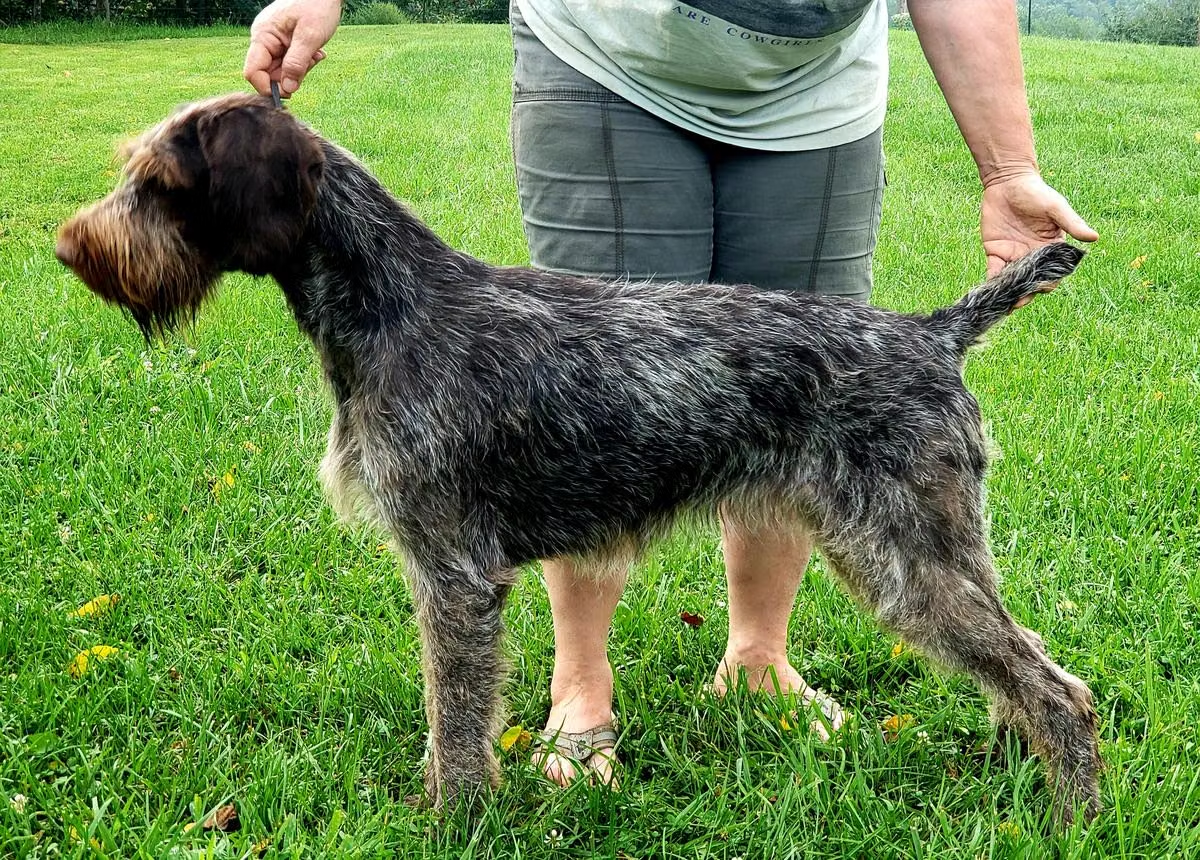
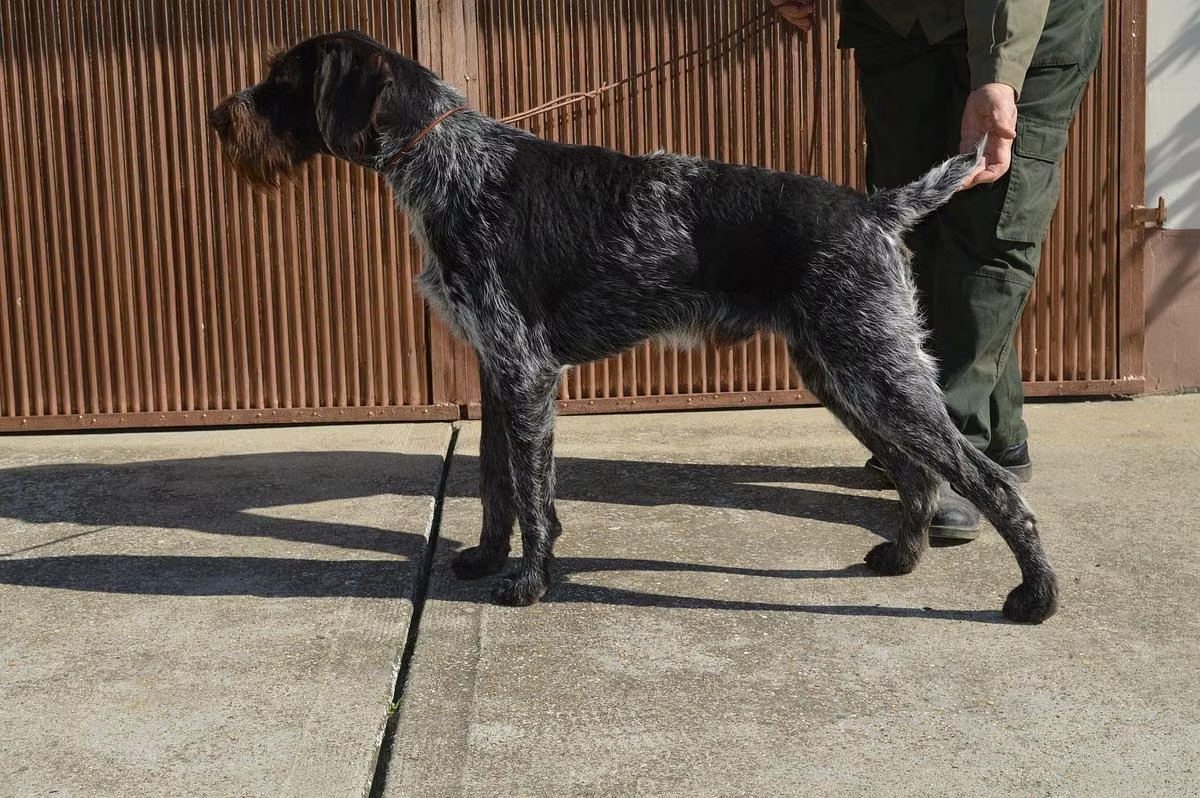

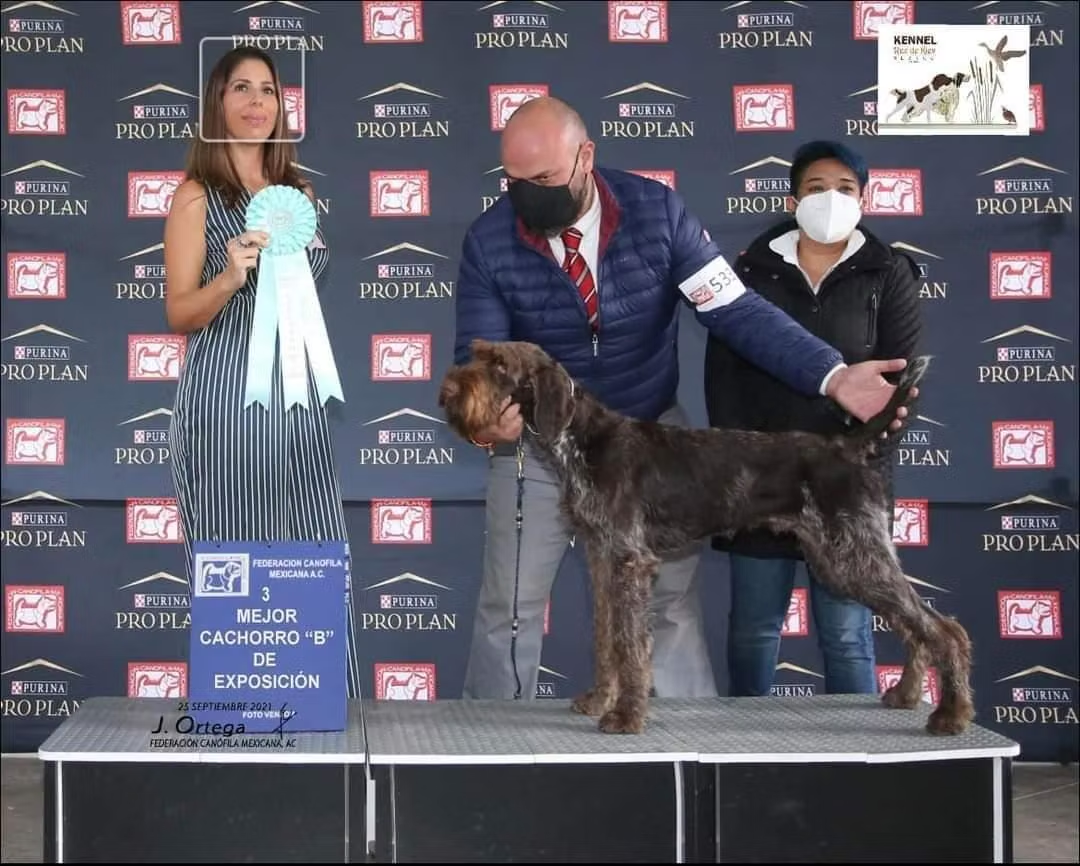
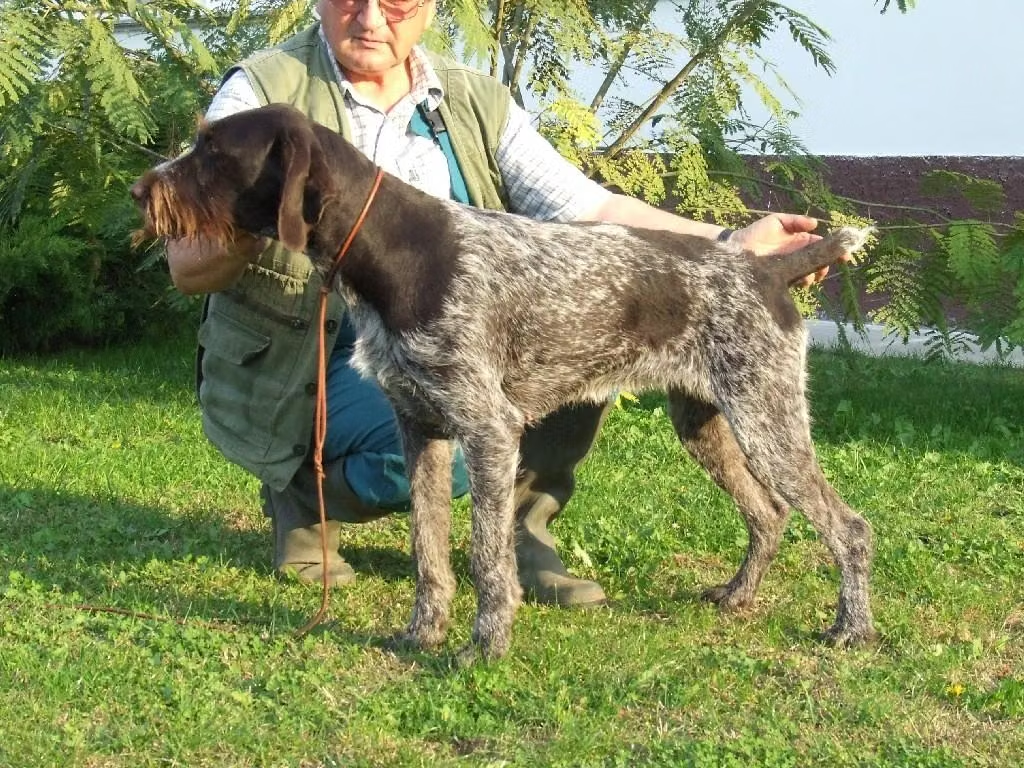
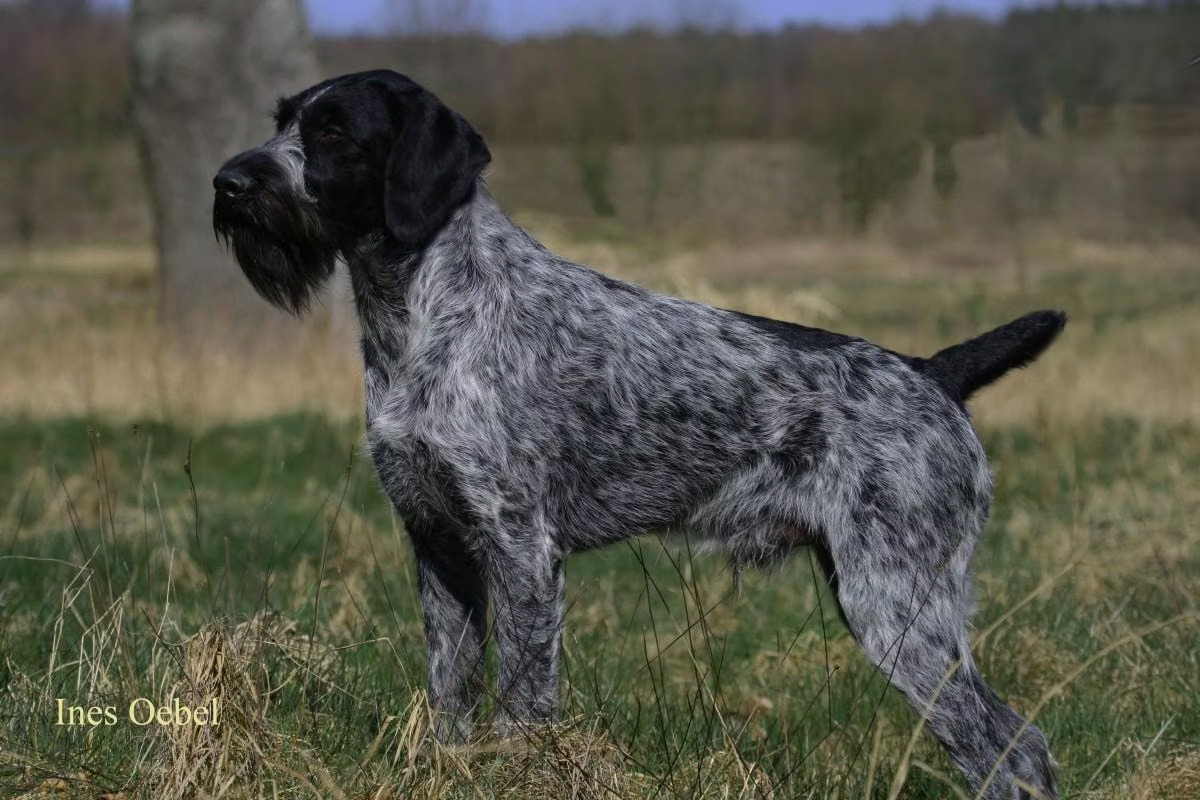
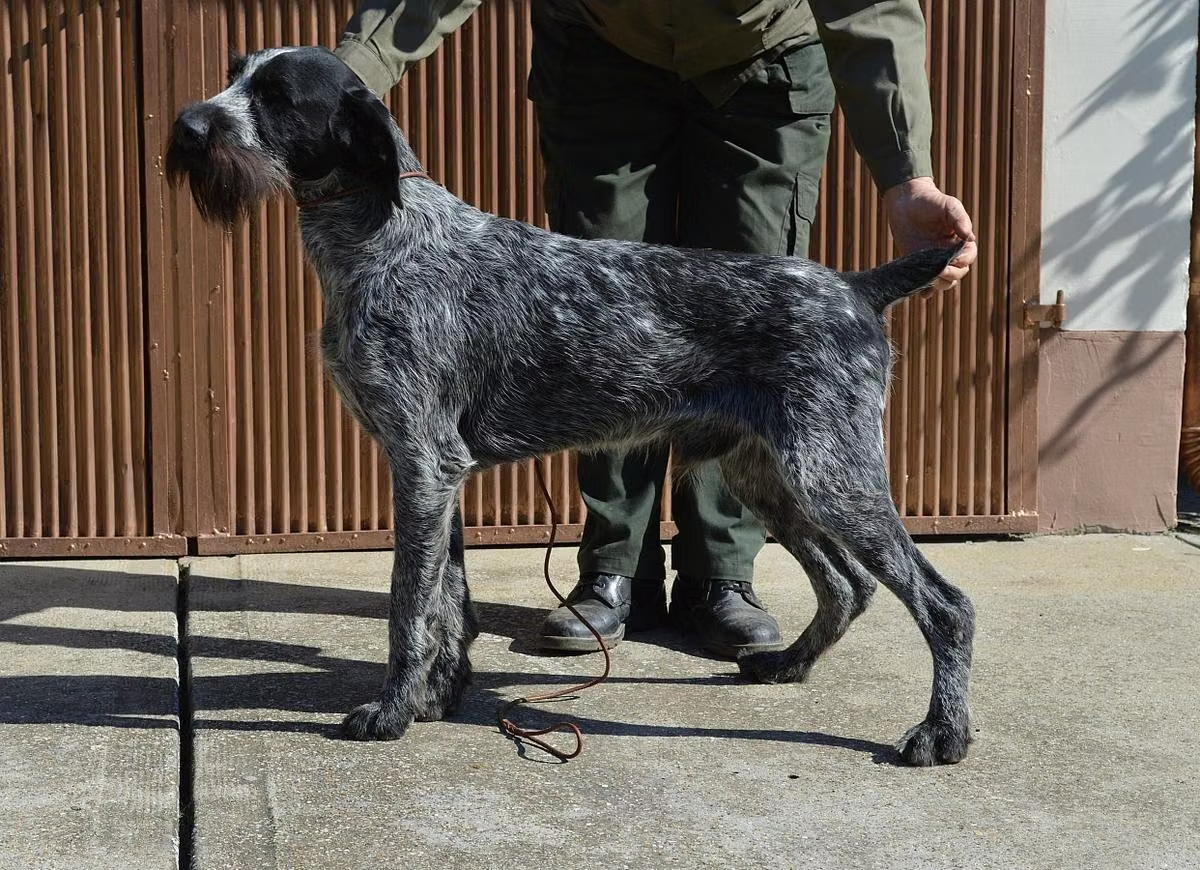
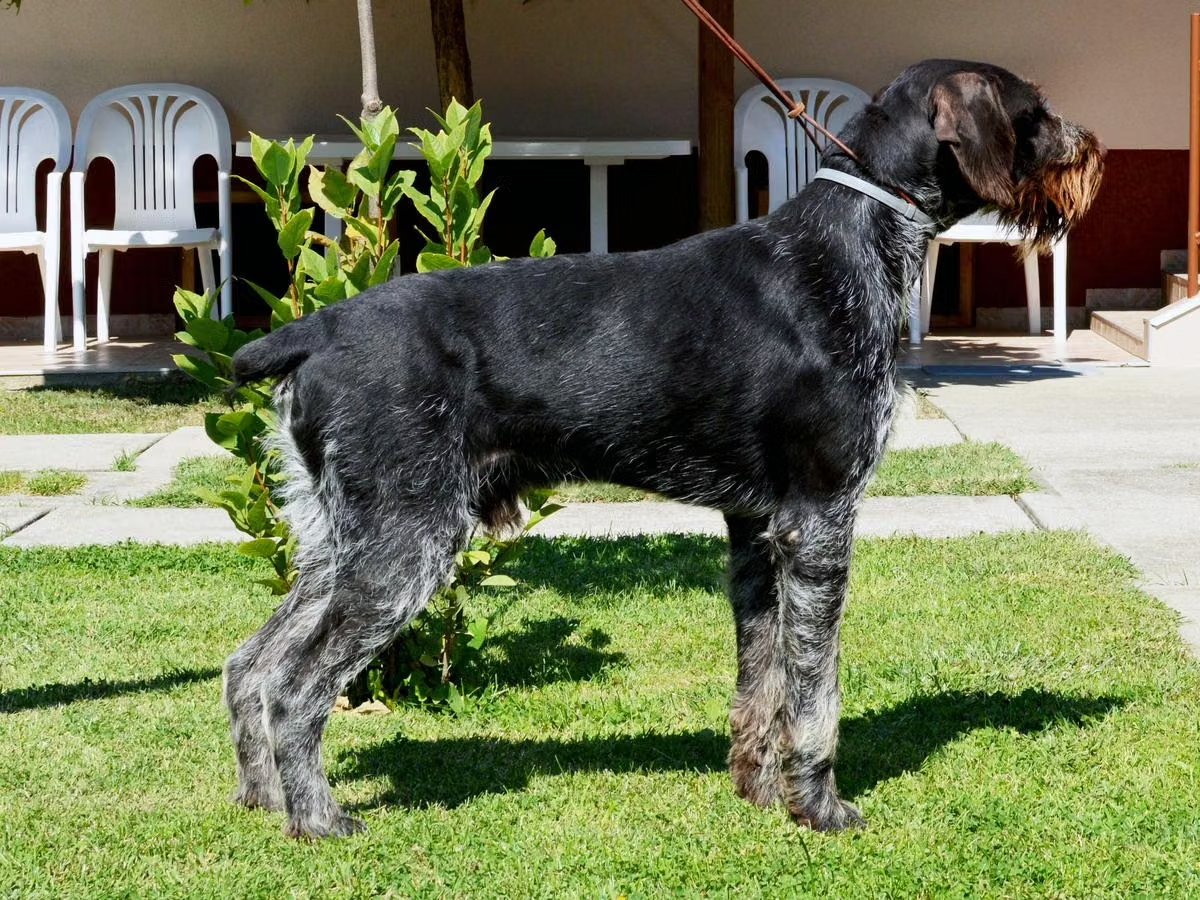
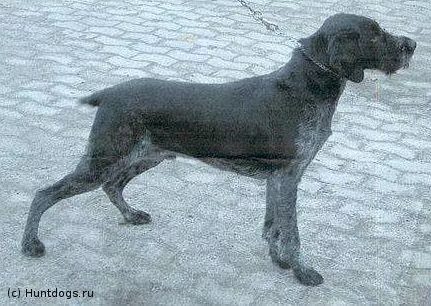
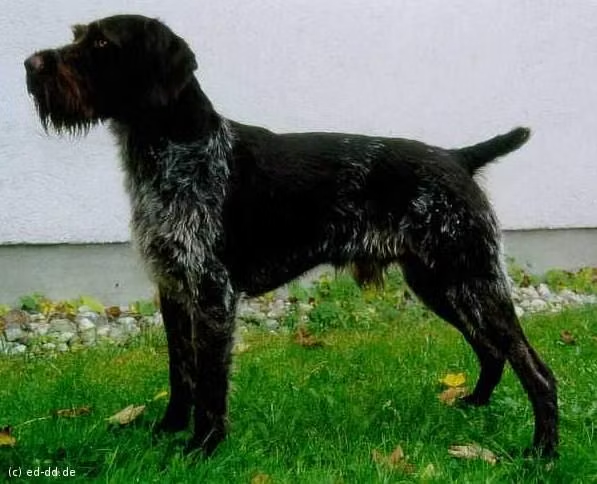
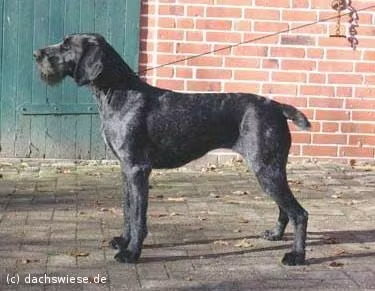
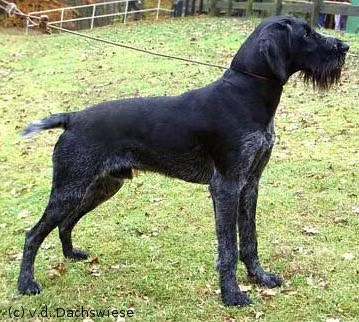
German Wirehaired Pointer overview
The German Wirehaired Pointer, known in Germany as the Deutsch Drahthaar, is a large versatile hunting breed with a harsh weatherproof coat and a lifespan of 12 to 14 years, devoted to its household and demanding in its exercise needs.
The German Wirehaired Pointer, known in Germany as the Deutsch Drahthaar, is a large gun dog developed to point, track, and retrieve game on land and in water. Its defining feature is a coarse, water-repellent outer coat that protects it in dense brush and cold conditions. Adults typically live 12 to 14 years.
The breed attaches strongly to its own household and tends toward reserve with strangers. It is not aggressive by nature, but it is watchful and will alert to unfamiliar visitors. Its energy level is high: the dog was bred to work full days in the field and will look for a comparable outlet at home.
In Singapore, this is a large breed that requires substantial daily exercise and thrives with outdoor access. It is not suitable for HDB flats. Owners in condominiums should confirm management approval before bringing one home. A landed property or a private residence with a securely fenced garden is the most practical setting.
| Item | Detail |
|---|---|
| Origin | Germany |
| Size | Large |
| Lifespan | 12 to 14 years |
| Group/role | Sporting and pointing gun dog (versatile hunting breed) |
| Good with | Family members it knows well; older, calm children; can live with other dogs when socialised early |
Who the breed suits
This dog matches owners who are physically active and present enough to provide daily structured activity. Hunting, hiking, running, and dog sports give it the outlet it needs. It is not suited to apartment living, to households where the dog spends long hours alone, or to owners who prefer a low-energy pet. First-time owners can manage one successfully if they are prepared for consistent training and genuine daily exercise.
Origins and development
Developed in Germany during the late nineteenth century from crosses of several pointing and rough-coated breeds, the German Wirehaired Pointer was established as a distinct breed by the early twentieth century, with registration tied from the start to working performance.
Towards the end of the nineteenth century, German hunters began crossing several established breeds to produce a single dog capable of replacing the various specialists they had previously kept. They needed an animal that would find and point upland birds, trail wounded game, push through dense cover, and swim cold water to retrieve. The German Wirehaired Pointer was the result of that programme.
Breeders drew on several existing types to reach the goal. The Pudelpointer, the German Shorthaired Pointer, and rough-coated breeds such as the Griffon and the Stichelhaar were all part of the mix. Selection favoured the harsh, wiry coat that resists brush and cold water, alongside the practical abilities of nose, drive, and responsiveness to direction.
A dedicated club, the Verein Deutsch Drahthaar, was established in 1902 to govern the breed and define its type. From the outset, registration required the dog to pass working performance tests rather than simply meet a physical standard. That emphasis on practical ability has remained a feature of the breed ever since.
The German Wirehaired Pointer spread beyond Germany in the early twentieth century and reached North America in the 1920s. Today the breed is recognised internationally, including by the Singapore Kennel Club (SKC).
Size and physical appearance
The German Wirehaired Pointer is a large, well-balanced dog standing 56 to 66 cm at the shoulder, with a hard wire coat, dense undercoat, bushy eyebrows, and a distinctive beard on the muzzle.
The build is intended for sustained work over distance: slightly longer than tall, deep-chested, with strong legs and a level topline. The tail is traditionally docked in regions where that practice is permitted, and it is held level or slightly upward when the dog is alert. The coat and the face are the most immediately recognisable features. A flat, harsh outer coat sits over a dense undercoat, and bushy eyebrows with a full beard give the dog a serious, weathered expression.
| Trait | Detail |
|---|---|
| Height | Males 61 to 66 cm at the shoulder; females generally 56 cm and above |
| Weight | Approximately 23 to 32 kg, with males heavier than females |
| Coat | Harsh, wiry outer coat approximately 2.5 to 5 cm long over a dense undercoat; bushy eyebrows and beard on the face |
| Colours | Liver and white in spotted, ticked, or roan patterns; solid liver also occurs; the head is usually solid liver, sometimes with a white blaze |
| Eyes | Oval, brown, set beneath pronounced eyebrows, with an alert expression |
Coat and colours
The coat is the breed's defining practical feature. The outer layer is straight and harsh, lying close to the body and shielding the dog in thick brush and cold water. The undercoat thickens in cooler months and thins in warmer ones, though in Singapore's year-round heat this seasonal cycle is far less pronounced. The standard colour combines liver and white in varying proportions: ticking, roan, and a solid liver head are all typical. Solid liver coats occur but are less common. Black coats fall outside the accepted breed standard.
Temperament and behaviour
A strongly bonded, high-energy breed, the German Wirehaired Pointer is loyal within its household, reserved with strangers, and carries a working drive that requires daily outlets and early, thorough socialisation.
Strong attachment to the family unit defines this breed's character. The dog often gravitates most closely to one particular person in the household. With family it is affectionate and steady. Outside its household it holds back, watching strangers without engaging, and this watchfulness makes it a capable guard dog when properly socialised. Good breeding and consistent exposure to people prevent that natural reserve from becoming fearfulness or aggression.
Energy is high throughout the day. Without a real outlet the dog turns to unwanted behaviour: persistent barking, chewing, or digging. Mental stimulation matters as much as physical work. The breed is intelligent and picks up training readily, though it can also be headstrong when understimulated or when rules are inconsistently applied.
With children it has grown up alongside, the breed is generally patient, though its size and bounce make it a better match for older children than for toddlers. It can share a home with other dogs when introduced and socialised early. The prey drive is strong, and cats, rabbits, and birds are at risk, so any introduction to small animals should be done gradually and with supervision.
| Trait | Rating |
|---|---|
| Affection | 5 |
| Energy | 5 |
| Trainability | 4 |
| Vocalness | 3 |
| Shedding | 3 |
Grooming, exercise, and living needs
The German Wirehaired Pointer needs moderate coat maintenance and substantial daily exercise, with careful heat management in Singapore's climate. Walks must be scheduled for early morning or after dark.
Exercise
Singapore's year-round heat and humidity are the most important factor to plan around with this breed. Walks and activity sessions should be scheduled for early morning or after nightfall, when temperatures drop to a more manageable level. Midday and afternoon exercise should be avoided entirely when the ground is hot and humidity is high, as heat stroke is a genuine risk for a dog bred for temperate European conditions.
- Aim for at least 1 to 2 hours of vigorous exercise daily, split across morning and evening slots.
- Running, swimming, retrieving, and scent work all suit the breed's drive and physique.
- Swimming is especially useful in Singapore as it provides a demanding workout while helping the dog cool down.
- On days when outdoor conditions are not suitable, training games and problem-solving activities address mental energy indoors.
- Keep the dog on a leash or within a securely fenced area at all times outdoors, as the prey drive can override recall even in well-trained dogs.
Grooming
The wire coat needs moderate but specific care.
- Brush once or twice a week to clear loose hair and debris.
- Hand-strip the coat twice a year to preserve its harsh texture and protective quality. Clipping is easier but gradually softens the coat.
- Wipe and dry the beard after meals and after water play to prevent matting and odour.
- Bathe only when necessary. Frequent washing strips the natural oils that give the coat its water resistance.
- Trim nails monthly, clean teeth several times a week, and check ears thoroughly after any water exposure.
Living environment
This is a large, active breed that needs space. HDB flats are not an option. A condominium is workable if management rules permit large dogs and the owner is committed to daily off-site exercise. A private property with a securely enclosed outdoor area gives the dog the most suitable environment in Singapore.
The breed handles sustained heat and humidity poorly compared with dogs developed in tropical or subtropical climates. Access to an air-conditioned space during the hottest parts of the day keeps the dog comfortable and reduces the risk of heat-related problems. Long hours alone without company or stimulation will lead to behaviour problems regardless of the living space.
Feeding and nutrition
Feed the German Wirehaired Pointer a complete diet formulated for large, active dogs, split into two daily meals, and adjust quantities to the individual dog's workload and body condition.
A large, active dog with a working build, the German Wirehaired Pointer does well on a complete, balanced food formulated for large or sporting breeds. Protein and fat support its muscle mass and energy requirements. Dogs engaged in more demanding outdoor activity will need greater calorie intake than those with moderate daily exercise. Keep fresh water available at all times, particularly after exercise in Singapore's heat. Because the breed has a deep chest, splitting the daily ration into two meals and avoiding strenuous exercise for at least an hour before and after feeding are sensible precautions against bloat.
| Life stage | Amount per day | Meals per day |
|---|---|---|
| Puppy (2 to 6 months) | Follow product label for projected adult weight, divided across meals | 3 to 4 |
| Young dog (6 to 12 months) | Per label, tapering toward adult amount | 2 to 3 |
| Adult (1 to 7 years) | Approximately 250 to 350 g of dry food; more for very active dogs | 2 |
| Senior (7+ years) | Slightly reduced if activity drops; monitor body condition regularly | 2 |
Treats and supplements
Limit treats to roughly 10 per cent of daily calorie intake to avoid disrupting the diet or contributing to weight gain. Small, low-calorie rewards work well during training sessions. Most dogs eating a complete commercial food need no additional supplements. Before adding joint, skin, or fish-oil products, consult a veterinarian, as individual needs vary and over-supplementation can cause harm.
Health and common conditions
Most German Wirehaired Pointers live 12 to 14 years. The breed is generally robust, but owners should watch for hip and elbow dysplasia, eye conditions, ear infections, and bloat.
Most German Wirehaired Pointers live 12 to 14 years with attentive care. The breed is considered hardy, and responsible breeders health-screen their dogs to reduce the likelihood of inherited conditions being passed on. The conditions listed below are those recorded in the breed. They are not certainties for every individual dog.
| Condition | Signs | Note |
|---|---|---|
| Hip dysplasia | Stiffness, limping, difficulty rising, reluctance to jump | Inherited joint malformation; breeders should screen hips before mating |
| Elbow dysplasia | Front-leg lameness, particularly after exercise | Also screened in responsible breeding programmes |
| Eye conditions (such as cataracts and retinal disease) | Cloudiness, walking into objects, noticeable changes in vision | Regular eye examinations help detect issues early |
| Ear infections | Head shaking, scratching at ears, discharge or odour | Drop ears and frequent water exposure raise the risk; dry ears thoroughly after swimming |
| Bloat (gastric dilatation-volvulus) | Swollen abdomen, repeated attempts to vomit without result, restlessness, distress | Deep-chested breeds are at higher risk; this is a medical emergency requiring immediate care |
Preventive care
- Keep vaccinations current according to the schedule recommended by your veterinarian.
- Use year-round heartworm, tick, and flea prevention. Singapore's warm, humid climate supports year-round tick and mosquito activity, making this particularly important for dogs that spend time outdoors.
- Schedule annual health checks, increasing to twice yearly for dogs over seven years old.
- Maintain a lean body weight to reduce joint stress, particularly for a dog that exercises heavily.
- Attend to dental hygiene with regular brushing or dental chews.
- Clean and dry ears after swimming or any prolonged water exposure.
- Ensure your dog is licensed with NParks/AVS and microchipped as required under Singapore law.
Trainability and training basics
The German Wirehaired Pointer learns readily and wants to work alongside its handler, but its independent streak and high energy mean that early, consistent training with reward-based methods is essential.
Early and consistent training is the most important investment an owner of this breed can make. The dog is intelligent and responds well to clear, reward-based guidance, but it also has an independent side and will fill any gap in structure with its own ideas. Short, varied sessions hold its attention better than long, repetitive drills. Harsh corrections tend to backfire with a sensitive, intelligent dog; clear expectations and timely rewards are more effective. Socialisation from puppyhood is essential given the breed's natural wariness with strangers and its strong prey drive.
Training steps
- Begin socialisation and basic handling from the earliest weeks, introducing the puppy to a range of people, sounds, and environments.
- Establish the foundation cues first: name recognition, sit, down, stay, and recall.
- Build a reliable recall and practise it consistently. The prey drive is strong enough to override a poorly conditioned recall even in dogs that otherwise behave well.
- Keep sessions short (5 to 15 minutes) and end on a success to maintain the dog's drive and confidence.
- Introduce impulse-control exercises such as leave it and wait, which help particularly when the dog encounters small animals or other distractions.
- As the dog matures, channel its working drive into retrieving, scent work, or structured dog sports.
- Proof each skill across different locations and with varying distractions before relying on it in demanding situations.
Breeding and raising young
German Wirehaired Pointers carry litters for about 63 days and typically produce 7 to 9 puppies, though responsible breeders wait until the dog is mature and health-screened before mating.
Gestation in this breed lasts about 63 days from conception. Litters typically contain 7 to 9 puppies, though smaller and larger litters both occur. Female German Wirehaired Pointers reach sexual maturity between 6 and 12 months, but responsible breeders wait until the dog is physically mature and has passed health screening, usually around the age of two years, before mating.
Newborn puppies are born blind and deaf and depend entirely on the mother for warmth and nutrition. The eyes open at around 10 to 14 days. Weaning onto solid food begins at 3 to 4 weeks and is generally complete by 7 to 8 weeks. Gentle handling and varied exposure to everyday sounds and situations during the first weeks of life helps puppies grow into settled adults. Puppies are ready to leave for new homes at 8 weeks or later. Responsible breeders screen both parents for sound hips, eyes, and temperament before mating, given the breed's working background.
| Metric | Value |
|---|---|
| Sexual maturity | 6 to 12 months (breeding recommended after 2 years) |
| Gestation | About 63 days |
| Average litter size | 7 to 9 puppies |
| Eyes open | About 10 to 14 days |
| Weaning | About 7 to 8 weeks |
| Go-home age | 8 weeks or later |
Licensing done? Now register your German Wirehaired Pointer and its chip
AVS handles the licence; United Pet Club keeps a free, searchable record behind your German Wirehaired Pointer's microchip for life.
Registering a German Wirehaired Pointer in Singapore
The Animal & Veterinary Service requires every dog here to be licensed and microchipped by three months of age, so for a German Wirehaired Pointer the chip is settled law. What stays on you is the record behind it. A free United Pet Club profile holds your contact details against the dog for as long as he is yours, and it keeps working even outside Singapore. Registering your dog takes minutes and never costs a cent.
Your German Wirehaired Pointer's chip went in before his third month, as the rules require; whether the number leads anywhere is a separate question. Give it a live answer with United Pet Club: registration free for life, every brand accepted, every update free. Microchip registration plus a free account, and the whole thing is squared away.
How do I register my German Wirehaired Pointer in Singapore?
Set up a free United Pet Club account, key in your German Wirehaired Pointer's details and a photo, and save. The lifetime plan keeps the profile live at no cost for as long as he is with you, alongside whatever AVS requires.
How do I register my German Wirehaired Pointer's microchip?
Key the 15-digit chip number into your free account together with your address, mobile, and email. The lifetime plan covers the registration and every update free, whichever brand the clinic used.
Is a microchip compulsory for a German Wirehaired Pointer in Singapore?
Yes. AVS requires dogs to be licensed and microchipped by three months of age. The licence is the legal part; a registered, searchable record with your current mobile is the part that gets a lost German Wirehaired Pointer home, and that part is free.
How much does it cost to register a German Wirehaired Pointer?
Nothing. United Pet Club's lifetime plan covers the profile, the chip record, and unlimited updates, with no renewal, ever.
Frequently asked questions
Common questions from Singapore owners cover the breed's size, suitability for local housing and climate, exercise needs, lifespan, compatibility with other pets, coat care, and availability.
How big does a German Wirehaired Pointer get?
It is a large breed. Males stand 61 to 66 cm at the shoulder; females are slightly smaller. Most dogs weigh between 23 and 32 kg, with males on the heavier end of that range.
Can I keep one in an HDB flat?
No. The German Wirehaired Pointer is a large breed and does not appear on the HDB list of approved dogs. It suits private residential properties, condominiums where management permits large dogs, or landed housing where the dog has adequate outdoor space.
How does the breed cope with Singapore's heat?
With difficulty. It was developed for cool European conditions and is not well-adapted to sustained heat and humidity. Exercise must be limited to early morning or after dark. During the day the dog needs access to an air-conditioned space and fresh water at all times. Heat stroke is a real risk if these precautions are not followed.
How long do German Wirehaired Pointers live?
Most live 12 to 14 years with good nutrition, regular exercise, and routine veterinary care.
Do they get along with other pets?
They can coexist with other dogs when socialised from an early age. The prey drive is strong and they will often chase cats, rabbits, and birds. Introductions to small animals should be done slowly and under supervision, and care is needed even in familiar home settings.
How much grooming does the wire coat need?
Moderate but specific care. The coat should be brushed once or twice a week and hand-stripped twice a year to maintain its protective texture. Clipping is more convenient but softens the coat over time. The beard needs wiping after meals and water play to prevent matting and odour. Overall coat maintenance is less demanding than that of many long-coated breeds.
How can I find a German Wirehaired Pointer in Singapore?
The breed is uncommon here. Contact the Singapore Kennel Club (SKC) for referrals to registered breeders. Import from reputable overseas breeders is another route, though it involves AVS import regulations and quarantine requirements. Rehoming via breed-specific groups is a further option worth exploring.
From the community
Ask about the German Wirehaired PointerNo questions about the German Wirehaired Pointer yet. Be the first to ask.
Browse Dog breeds