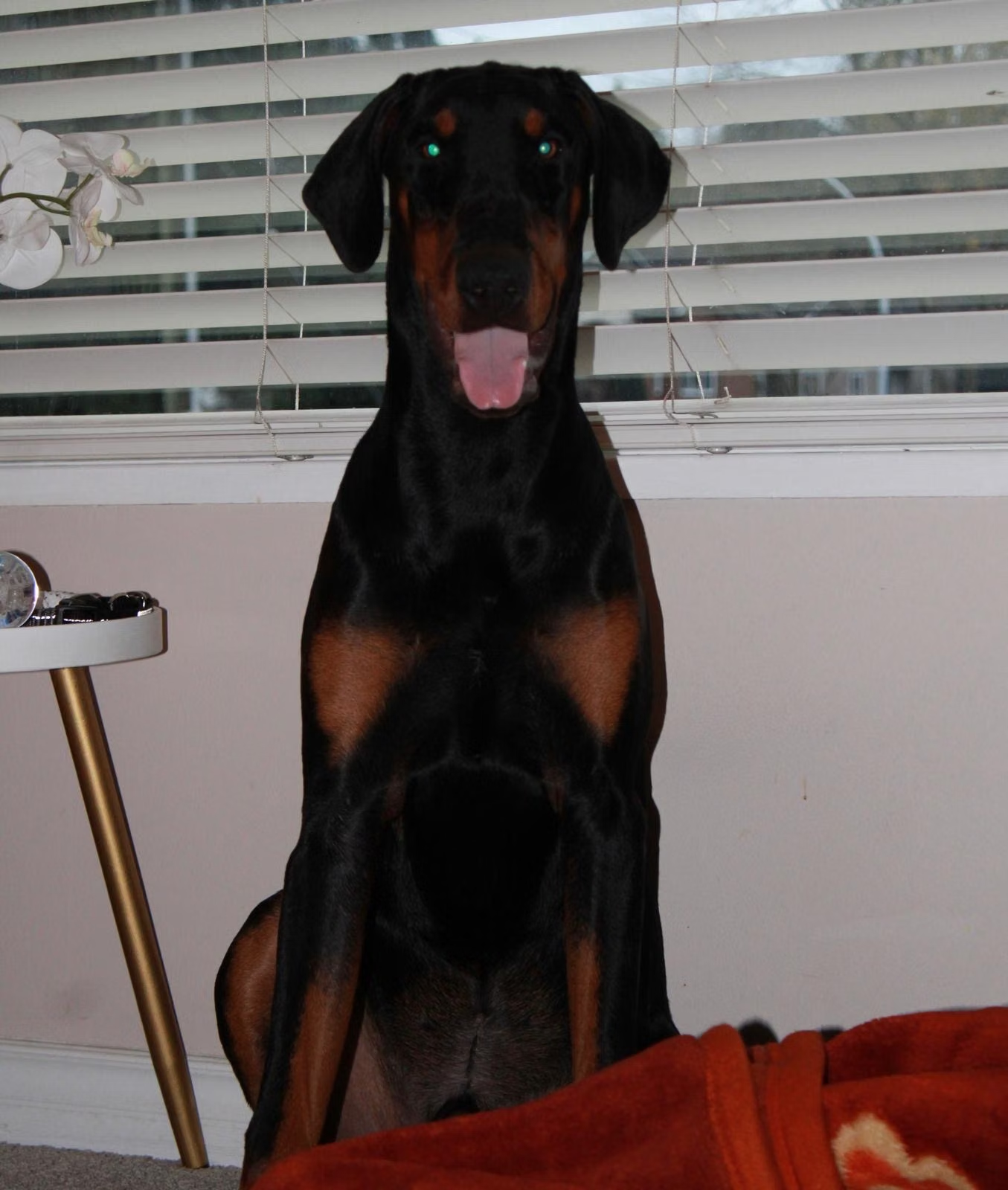
The Doberman Pinscher is a loyal, intelligent breed renowned for its alertness, elegance, and fearless devotion as a guardian.
How the Doberman Pinscher coat is built, and what that means when you groom it.
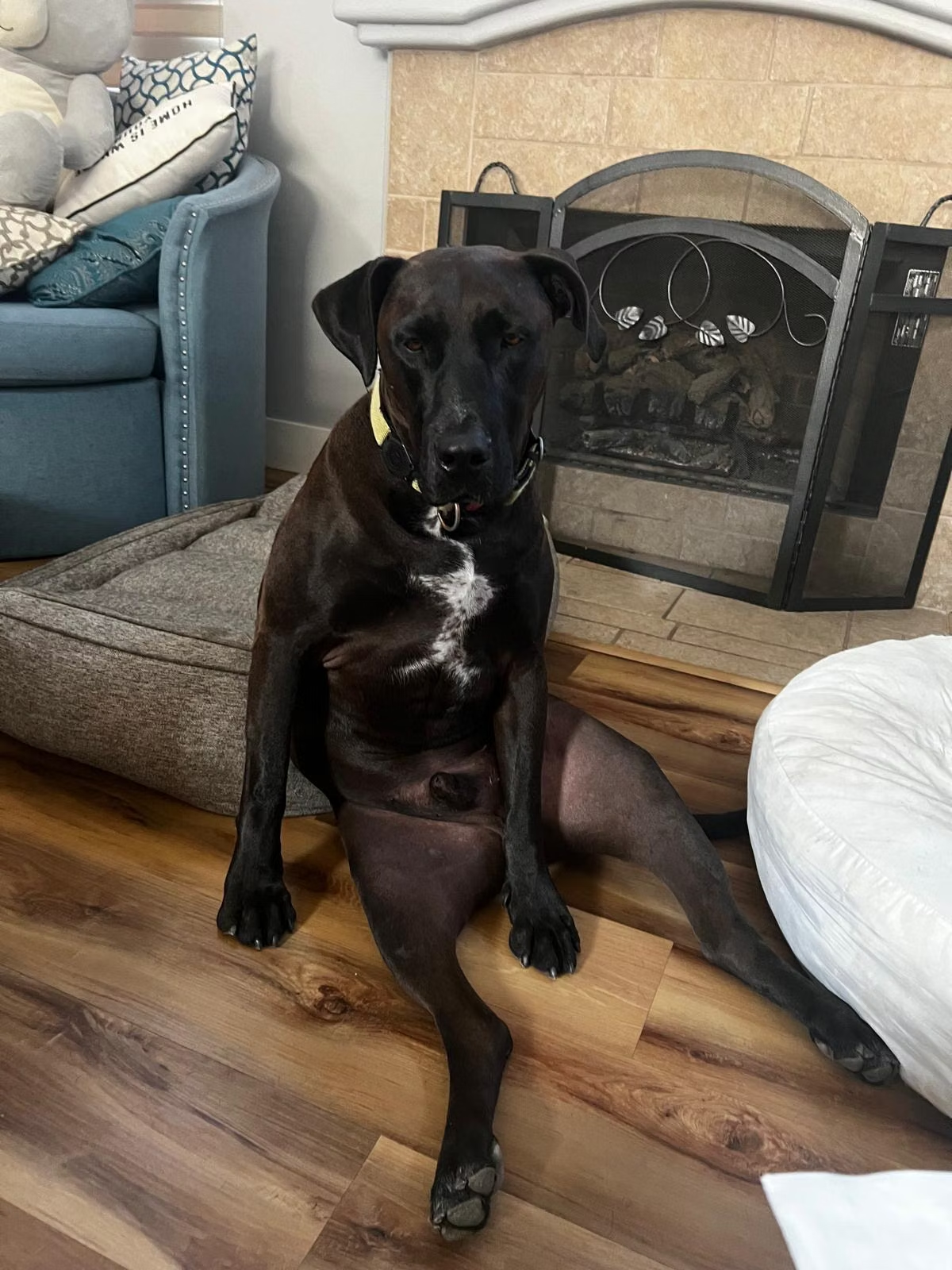
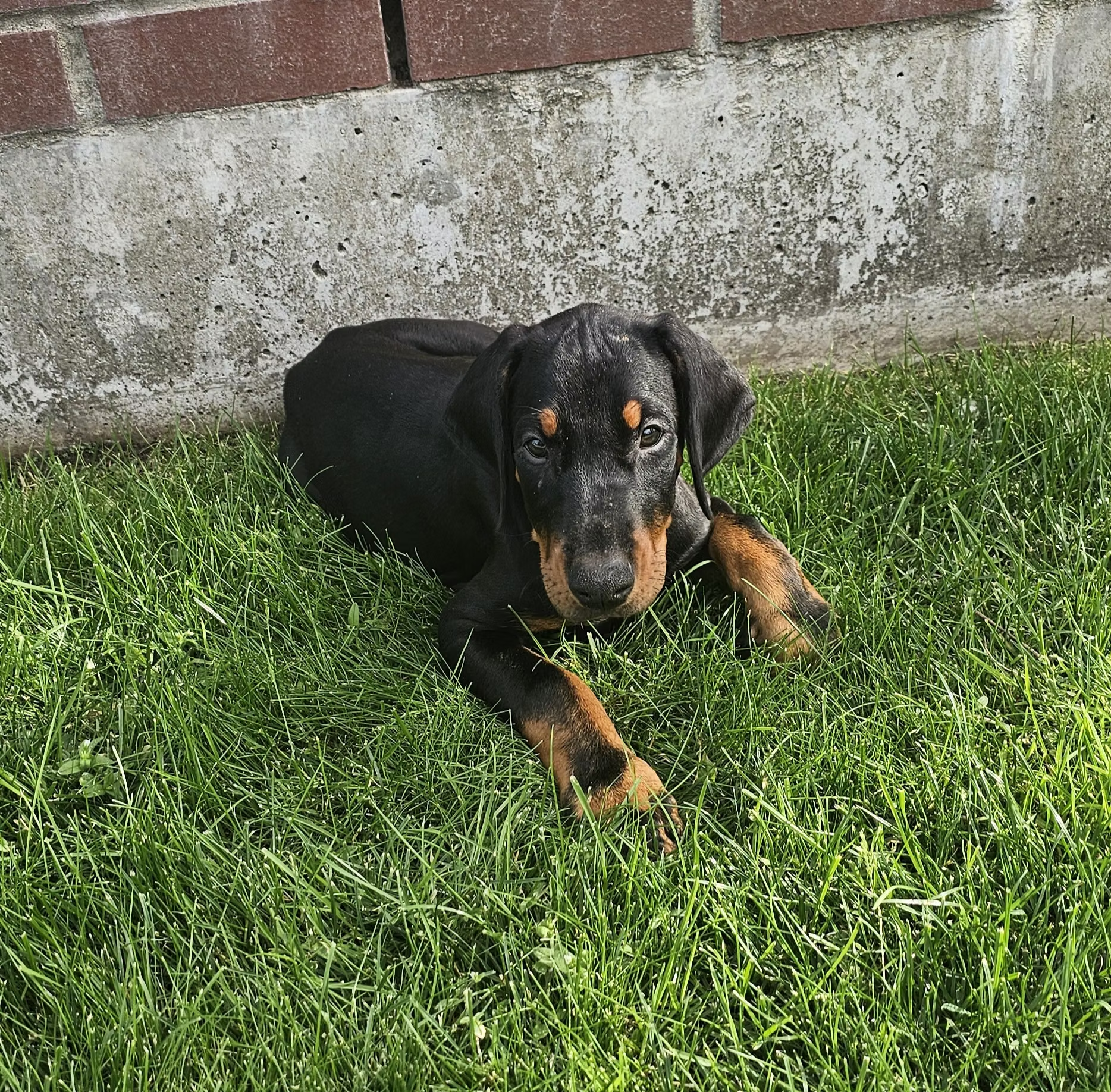
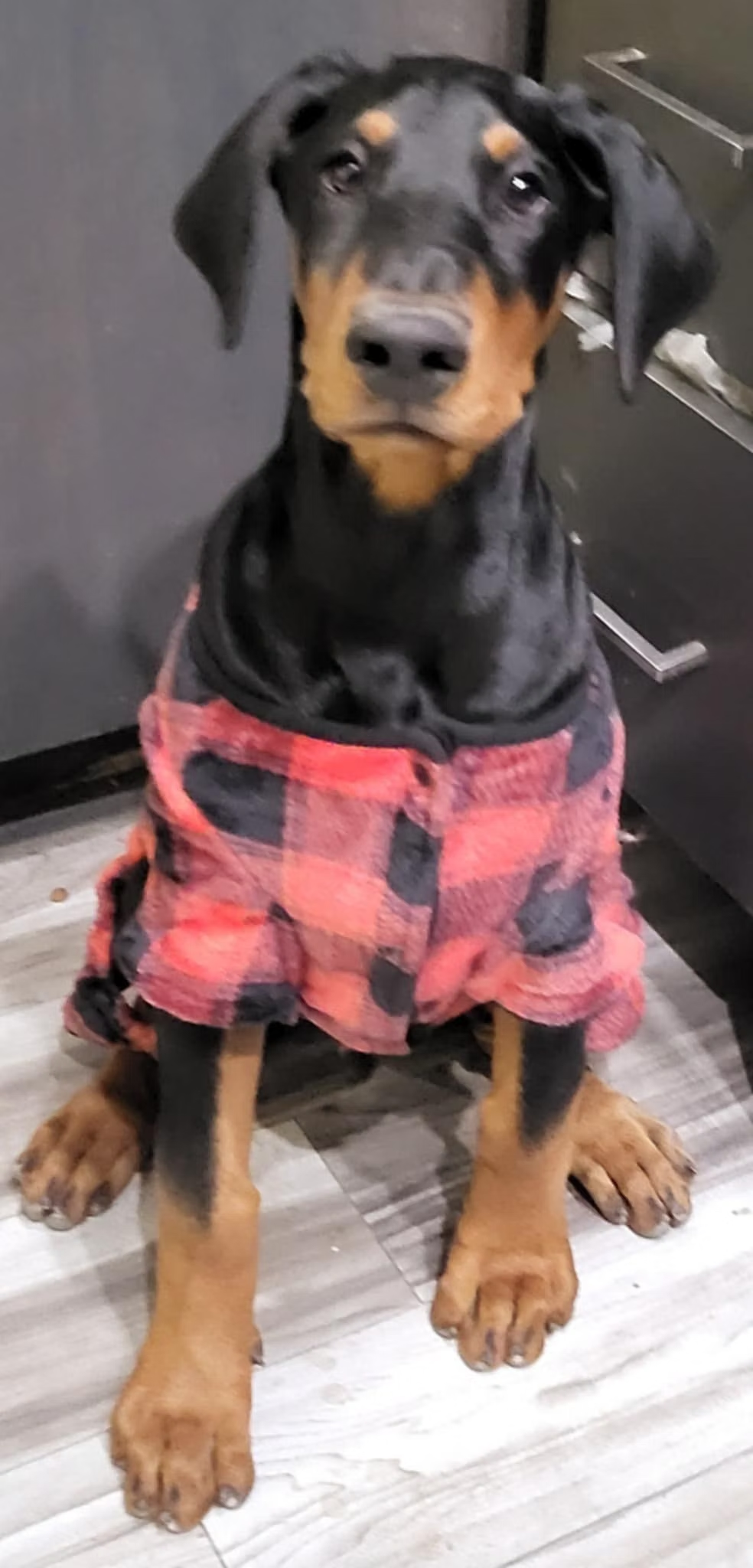
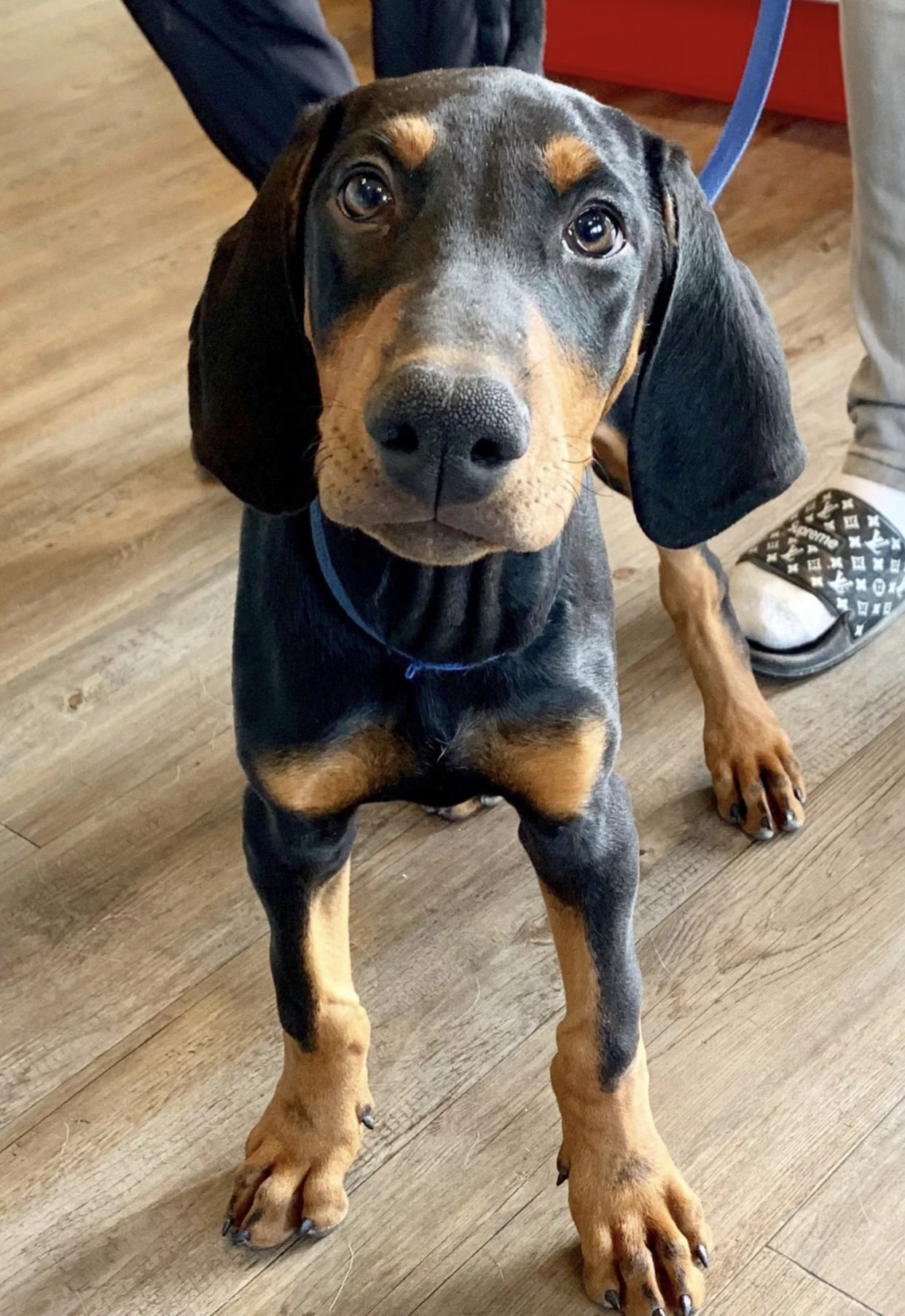
A few of the Doberman Pinscher profiles members have added to United Pet Club.
The Doberman Pinscher is a large German working dog standing 61 to 71 cm and weighing 27 to 45 kg; in Singapore it is registered with the Singapore Kennel Club and suited to condominiums with management approval or landed property, not HDB flats.
Under Singapore law, every dog must be licensed through NParks/AVS and microchipped before it comes home. For a Doberman Pinscher, there is an additional step: confirming that your housing type permits a large dog. The breed is not included on the HDB approved list, so it requires private landed property or a condominium whose management committee has approved large breeds.
The Doberman Pinscher is a German breed developed as a working guardian. It has a compact, muscular build, a square outline, and a confident posture. Adults weigh roughly 27 to 45 kg, with males standing 66 to 71 cm and females 61 to 66 cm at the shoulder.
This is an intelligent dog that bonds strongly with its household and stays close to the people it lives with. The attentiveness that makes it a capable guardian also makes it sensitive to its environment and to the mood of its handler. Daily physical and mental activity is not optional: a Doberman that lacks an outlet becomes restless.
| Attribute | Detail |
|---|---|
| Origin | Germany |
| Size | Large (27 to 45 kg) |
| Lifespan | 10 to 13 years |
| Group / role | Working breed; guardian and companion |
| Good with | Committed families, experienced owners, other pets when socialised early |
The breed suits an owner who is at home regularly, committed to daily exercise and training, and living on property that accommodates a large dog. It is a poor match for someone frequently away from home or expecting minimal involvement, because the Doberman needs both close contact with its people and consistent structure.
Karl Friedrich Louis Dobermann, a German tax collector working in 1880s Thuringia, developed the breed as a personal protection dog; Otto Goeller refined the type after Dobermann died in 1894, and the breed reached international recognition in the early twentieth century.
The Doberman served in both World Wars as a messenger, scout, and sentry dog, a role that shaped the breed's reputation for reliability under pressure. That record was built on a foundation laid in 1880s Germany, when a tax collector named Karl Friedrich Louis Dobermann began developing the breed in Apolda, Thuringia.
Dobermann also ran the local dog pound, giving him access to a wide range of animals. He wanted a dog large enough to be a deterrent, alert enough to warn of danger, and willing to work alongside him as he collected money on his rounds. He did not keep precise breeding records, and the exact combination of breeds used is not established with certainty. Historians name the old German Pinscher, the Rottweiler, the Black and Tan Terrier, and regional herding dogs as probable contributors, with function rather than appearance as the guiding criterion.
After Dobermann's death in 1894, Otto Goeller took the work forward and is credited with fixing the breed type. Formal recognition in Germany followed before the end of the century, and the breed reached other countries in the early 1900s. Today it is registered in Singapore with the Singapore Kennel Club (SKC).
The Doberman Pinscher has a square, muscular frame with a short, smooth coat in black, red, blue, or fawn, each colour carrying defined rust markings.
Four coat colours are recognised: black, red, blue, and fawn. Each carries sharply defined rust markings above the eyes, on the muzzle, throat, chest, legs, and feet. The coat itself is short, smooth, and hard, sitting close to the body and showing the musculature clearly.
| Trait | Description |
|---|---|
| Height | Males 66 to 71 cm; females 61 to 66 cm at the shoulder |
| Weight | Roughly 27 to 45 kg |
| Coat | Short, smooth, hard, lying close to the body |
| Colours | Black, red, blue, or fawn, each with rust markings |
| Eyes | Almond-shaped, dark in black and red dogs |
The Doberman's profile is close to square: height at the withers approximately equals length from chest to rump. The chest is deep, the neck arched, and the topline level. The head is long and wedge-shaped, and the dog carries itself with a naturally alert bearing. In Singapore, dogs are kept in their natural form; ear cropping is not practised here, and Dobermans retain their floppy ears and full tail.
The Doberman Pinscher is deeply loyal to its family, reserved with strangers, and requires thorough socialisation from puppyhood to remain steady and reliable in Singapore's dense urban environments.
Within its household the Doberman is affectionate and attentive. It tends to follow family members from room to room and dislikes being left alone for extended periods. This closeness is one of the breed's most consistent characteristics and means the dog requires owners who are genuinely present in its life.
With strangers, the Doberman is watchful by default. It does not typically approach unfamiliar people with enthusiasm, and it generally takes a cue from its owner before relaxing around a new person. That reserve is a normal feature of the breed, not shyness or instability. A well-bred Doberman is confident and steady rather than reactive.
For Singapore owners, socialisation must cover the specific textures of city life: lifts, car parks, the noise of nearby traffic and construction, strangers of varied appearances, and other dogs encountered on leash. A puppy introduced to these experiences early is far more manageable as an adult. Most Dobermans live peaceably with other pets when raised together, though some same-sex combinations benefit from managed introductions.
| Trait | Rating |
|---|---|
| Affection | 5 |
| Energy | 5 |
| Trainability | 5 |
| Vocalness | 3 |
| Shedding | 2 |
Grooming the Doberman is straightforward given its short coat, but Singapore's heat means every outdoor session must be timed for early morning or after dark to avoid heat stroke, which is a genuine risk at this latitude.
The Doberman should live indoors with its family, with access to aircon during the hottest parts of the day. A secured garden or shared outdoor area helps for play and training, but consistent human presence and structured activity matter more than space. Keeping this breed in an outdoor kennel without regular social contact is not suitable.
A Doberman needs a complete diet formulated for large, active breeds, divided into at least two meals daily to reduce the risk of bloat, with portions adjusted to maintain lean body condition.
Gastric dilatation-volvulus, commonly called bloat, is a life-threatening emergency for which deep-chested breeds such as the Doberman carry elevated risk. Dividing the daily ration into two meals reduces the chance of the stomach expanding dangerously. Avoid hard exercise for at least an hour before and after feeding. Fresh water should be accessible at all times, particularly important in Singapore's heat.
Choose a complete and balanced food formulated for large, active breeds, with quality protein listed first on the label. Start with the manufacturer's portion guidance and adjust based on the dog's body condition: ribs should be easy to feel but not visible at a distance.
| Life stage | Amount per day | Meals |
|---|---|---|
| Puppy (2 to 6 months) | Per label, growth formula | 3 to 4 |
| Adolescent (6 to 12 months) | Per label, adjust to body condition | 2 to 3 |
| Adult | Approx. 300 to 500 g dry food, by size and activity | 2 |
| Senior | Reduced calories to prevent weight gain | 2 |
Treats should make up no more than 10 per cent of daily calories to avoid disrupting balanced nutrition. A Doberman eating a complete commercial diet typically does not need supplements, though a vet may suggest joint support for older or working dogs. Introduce any new ingredient gradually over several days to avoid digestive upset.
The Doberman Pinscher lives 10 to 13 years and carries a significant risk of dilated cardiomyopathy, an inherited heart condition that is the leading cause of early death in the breed; regular cardiac monitoring and health-tested parents are central to responsible ownership.
The Doberman has a lifespan of 10 to 13 years and is generally active and sturdy. The inherited condition that shortens that lifespan most significantly is dilated cardiomyopathy, a disease of the heart muscle. It can be present without obvious signs for years before progressing to symptomatic heart failure. Because affected dogs can appear healthy while the disease advances, scheduled cardiac monitoring matters even in apparently well adults. Breeders who screen parents with echocardiograms and Holter monitors give buyers better prospects, though the condition cannot be eliminated through testing alone.
| Condition | Signs | Note |
|---|---|---|
| Dilated cardiomyopathy | Weakness, fainting, coughing, sudden collapse | Leading cause of death in the breed; screen with cardiac exams |
| Von Willebrand disease | Excess bleeding, slow clotting | Inherited clotting disorder; DNA test available |
| Hip dysplasia | Stiffness, limping, trouble rising | Choose hip-tested parents |
| Hypothyroidism | Weight gain, coat changes, low energy | Managed with daily medication |
| Gastric dilatation-volvulus (bloat) | Swollen belly, retching, distress | Emergency; deep-chested dogs at higher risk |
The Doberman learns quickly and is motivated to work with its handler, but it needs consistent, fair handling and early socialisation across Singapore's varied urban settings to reach its potential as a reliable companion.
In Singapore's dense residential environment, a large, powerful dog that is not thoroughly trained creates problems for its owner and neighbours alike. The Doberman's saving quality is that it is one of the most trainable working breeds. It picks up new commands quickly, remembers them, and engages willingly with tasks that involve its handler. Consistent, fair handling from puppyhood produces a dog that is both reliable and pleasant to live with.
Socialisation must cover the realities of condo living: lifts, shared corridors, underground car parks, maintenance workers, delivery personnel, and encounters with other dogs in common areas. A puppy socialised thoroughly in the first months is far easier to manage in these settings as an adult. The breed does not respond well to harsh correction, and works best with a handler who is calm, clear, and consistent. Reward-based training maintains the working relationship without creating anxiety.
Responsible Doberman breeding requires waiting until dogs are about two years old and health-tested for heart disease, von Willebrand disease, and hip status, with litters of six to eight puppies born after a gestation of about 63 days.
Dobermans reach sexual maturity between 6 and 12 months, but reputable breeders do not mate a dog before the age of about two years. That delay allows time for the health evaluations the breed requires: cardiac assessment for dilated cardiomyopathy, DNA testing for von Willebrand disease, and hip scoring. In Singapore, litters registered with the Singapore Kennel Club should come with documentation of these clearances, not merely verbal assurances.
Females cycle roughly twice a year. After a successful mating, gestation runs approximately 63 days. Litters typically contain six to eight puppies, though both smaller and larger litters occur. The dam usually whelps without intervention, but a breeder should be present and have a veterinary contact available if labour is prolonged or a puppy needs assistance.
Newborns depend on the dam through the first weeks. Weaning begins gradually around three to four weeks. Early, gentle handling by people during the first two months has a lasting effect on the puppy's confidence and social ease. Puppies should stay with the dam and littermates until at least eight weeks.
| Metric | Value |
|---|---|
| Sexual maturity | 6 to 12 months |
| Recommended breeding age | About 2 years |
| Gestation | About 63 days |
| Average litter size | 6 to 8 puppies |
| Weaning | Around 3 to 7 weeks |
| Leave for new home | 8 weeks or later |
AVS handles the licence; United Pet Club keeps a free, searchable record behind your Doberman Pinscher's microchip for life.
An AVS licence satisfies the rules; it does not tell a finder in another country how to reach you. Your Doberman Pinscher's free United Pet Club profile does exactly that, pairing your mobile with his photo and chip number for life. Register your dog once and the record follows him anywhere.
The AVS listing and a searchable contact record are two different things, and the second one is yours to set up. Register the microchip on the free lifetime plan: any chip brand a local vet implants qualifies, updates after a move between flats stay free, and the record can be pulled up 24 hours a day from anywhere. Create your free account and settle it tonight.
Set up a free United Pet Club account, key in your Doberman Pinscher's details and a photo, and save. The lifetime plan keeps the profile live at no cost for as long as he is with you, alongside whatever AVS requires.
Key the 15-digit chip number into your free account together with your address, mobile, and email. The lifetime plan covers the registration and every update free, whichever brand the clinic used.
Yes. AVS requires dogs to be licensed and microchipped by three months of age. The licence is the legal part; a registered, searchable record with your current mobile is the part that gets a lost Doberman Pinscher home, and that part is free.
Nothing. United Pet Club's lifetime plan covers the profile, the chip record, and unlimited updates, with no renewal, ever.
Questions commonly asked by prospective Singapore owners cover HDB rules, NParks licensing, size and space requirements, safe exercise in the heat, temperament, lifespan, and finding a health-tested puppy.
No. The Doberman is a large breed and is not on the HDB approved breed list. It must be kept in private landed housing or in a condominium whose management committee has specifically permitted large dogs. Confirm the condo's pet policy in writing before acquiring the dog.
All dogs in Singapore must be licensed with NParks/AVS and microchipped. Dogs must be on a leash in all public spaces. Check the NParks/AVS website for current requirements, as rules for large breeds may be updated.
Males typically stand 66 to 71 cm at the shoulder and females 61 to 66 cm, with weight ranging from about 27 to 45 kg depending on sex and build.
Walk before 8 a.m. or after 8 p.m. to avoid peak heat and humidity. Always carry water and check the pavement temperature before setting out. Stop immediately if the dog shows heavy panting, excessive drooling, or unsteady movement, and contact a vet. The breed needs 60 to 90 minutes of activity each day, divided across sessions.
Yes, when well bred and raised with them. The breed bonds closely with its household and is generally patient with children it has grown up alongside. Given the dog's size, supervision with very young children is sensible.
The typical lifespan is 10 to 13 years. Dilated cardiomyopathy is the condition most responsible for shortening it, which is why regular cardiac screening throughout the dog's life is important alongside choosing a puppy from health-tested parents.
Look for breeders who register litters with the Singapore Kennel Club and provide documented health clearances for dilated cardiomyopathy, von Willebrand disease, and hips. Be cautious of sellers who cannot supply these records or who have puppies available without waiting lists from multiple breeds simultaneously.