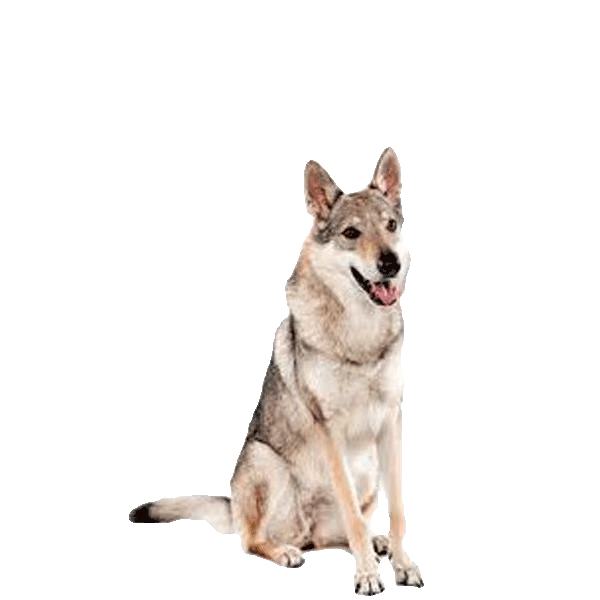
The Czechoslovakian Vlcak is a wolf-like, athletic breed known for its fierce loyalty, independence, and remarkable stamina.
How the Czechoslovakian Vlcak coat is built, and what that means when you groom it.
Critical: A Czechoslovakian Vlcak should not be shaved.
The undercoat keeps heat out as well as in, and the outer coat shields the skin from sun and insect bites. Clipping the whole coat off removes both. It often grows back patchy, soft or a different colour, and in some animals the guard hairs never return properly. Brush the undercoat out instead of cutting it off.
Information: A Czechoslovakian Vlcak drops its undercoat in heavy bursts.
The undercoat comes out in heavy bursts over a few weeks. An undercoat rake, or a bath followed by a proper blow-dry, clears it far faster than daily brushing. Clipping the coat down is not a shortcut for this.
A few of the Czechoslovakian Vlcak profiles members have added to United Pet Club.
The Czechoslovakian Vlcak is a large, wolf-like working dog from the Czech Republic, prized for loyalty, independence, and serious stamina, and better suited to landed homes than flats.
The Czechoslovakian Vlcak is a large working breed with an unmistakable wolf-like build. It carries a grey coat, amber eyes, and a light, efficient trot that recalls its wild ancestry. The breed was developed through a military programme in mid-twentieth-century Czechoslovakia and has stayed close to its working origins ever since.
This is an endurance athlete rather than a sprinter. A fit adult can trot for long stretches at a steady pace, a trait selected for during the breed's original border-patrol work. Energy levels stay high year-round, and in Singapore's warm, humid climate that stamina needs to be worked off during the cooler parts of the day rather than at midday.
Temperament runs loyal and independent. The Czechoslovakian Vlcak attaches firmly to its own household and stays reserved with people outside it. It tends to reason things out for itself rather than obey on command, a trait experienced handlers find rewarding and first-time owners often find demanding.
| Attribute | Detail |
|---|---|
| Origin | Czech Republic |
| Size | Large |
| Lifespan | 12 to 16 years |
| Group/role | Working breed, originally bred for military and patrol work |
| Good with | Experienced owners with an active lifestyle and secure housing; needs early socialisation with strangers and other pets |
This breed suits owners who can commit to firm, consistent guidance, daily physical exertion, and ongoing socialisation. It fits best with people who enjoy training, long park walks, or dog sports, and who want a dog that stays close rather than one that is instantly friendly with everyone. Given its size and exercise needs, it is a far better match for landed property with a secure, fully fenced garden than for an HDB flat or condominium; it is not among the breeds typically approved for HDB living, so intending owners should check the current NParks list before committing. It is a poor fit for owners who work long hours away from home or who want a laid-back, immediately sociable family dog.
The Czechoslovakian Vlcak was bred in 1950s Czechoslovakia by crossing German Shepherd Dogs with Carpathian wolves for military border patrol work, later recognised by the FCI.
The breed's story starts in 1955 in what was then Czechoslovakia, as a deliberate military experiment. Working German Shepherd Dogs were crossed with Carpathian grey wolves to see whether wolf traits could be combined with the trainability expected of a service dog. The early programme ran out of a military border-guard station.
The first litter paired a female wolf named Brita with a German Shepherd Dog, and later pairings added blood from a handful of other named wolves. Breeders selected for stamina, scenting power, night vision, and cold tolerance, all useful for patrolling a border in harsh conditions.
Through the 1960s and 1970s, the dogs were bred to one another rather than back to wolves, which fixed the type and settled the temperament. The programme's aim shifted from producing a working wolf cross to establishing a proper breed with predictable, repeatable traits.
Czechoslovakia recognised the breed nationally in 1982, and the Fédération Cynologique Internationale accepted it soon after. The Singapore Kennel Club, as Singapore's FCI-affiliated body, follows the same standard for any dog shown or registered locally, though the breed remains a rare sight here. Today the Czechoslovakian Vlcak is kept mainly as a companion and sport dog rather than for military work.
The Czechoslovakian Vlcak is a large, lean, wolf-grey dog with amber eyes and a light trotting gait, carrying a double coat that needs extra attention in Singapore's humid heat.
The overall look is that of a wolf. The body is rectangular and lean, the chest deep without being broad, and the legs long and straight. The head and neck carry low on the move, which adds to the wild silhouette, and the gait is light and ground-covering, a trademark of the breed.
| Trait | Detail |
|---|---|
| Height | Males from 65 cm at the withers; females from 60 cm |
| Weight | Males from about 26 kg; females from about 20 kg |
| Coat | Straight, close double coat that thickens seasonally |
| Colours | Yellow-grey to silver-grey, with a lighter mask |
| Eyes | Amber, small, set obliquely |
The coat is a weatherproof double coat built for a temperate climate, with a much heavier winter layer and dense underfur in the breed's native range. In Singapore's constant heat and humidity, that undercoat becomes more of a grooming challenge than a cold-weather asset, and dogs kept mostly indoors in air-conditioning tend to shed on a steadier, less seasonal pattern. Accepted colours run from yellow-grey to silver-grey, always with the breed's characteristic pale mask on the face. The hair is short to medium and lies close to the body, and erect triangular ears with a low-carried, bushy tail complete the wolf-like outline.
The Czechoslovakian Vlcak is loyal and protective with family, independent-minded, and reserved with strangers, and it copes badly with being left alone for long stretches.
The Czechoslovakian Vlcak bonds hard with its family and will stand its ground to defend them. At home it is typically playful and attentive, and it prefers to stay within sight of its owners rather than off on its own. The breed reads its handler's body language closely and is sensitive to tone and mood.
Around strangers it turns watchful and reserved. Open friendliness on a first meeting is rare, and the dog needs steady, ongoing socialisation to stay comfortable with unfamiliar people and situations, including the mix of neighbours, delivery riders, and passers-by typical of daily life here. Without that exposure, wariness can harden into something harder to manage.
The independent streak runs deep. This is a dog that weighs up a command before deciding whether to comply, a trait carried over from its working and wolf ancestry. Prey drive toward small animals can be high, so it generally does best raised alongside any resident cat or small dog from puppyhood. It wants company, human or canine, and copes badly with being left alone for long stretches, worth noting in a country where most households are out at work for much of the day.
| Trait | Rating |
|---|---|
| Affection | 4 |
| Energy | 5 |
| Trainability | 3 |
| Vocalness | 2 |
| Shedding | 4 |
The Czechoslovakian Vlcak needs heavy daily exercise, secure fenced space, and seasonal coat care, with grooming demands that spike during the breed's two annual moults.
The breed needs room to move and a securely fenced, escape-proof area, since it jumps and digs well. That makes a landed home with a solid garden fence a far better fit than a flat; the breed does not suit apartment or HDB living, and being left alone for long stretches suits it even less. Despite its dense coat, it copes with Singapore's heat reasonably well as long as it has constant access to shade, water, and a cool spot indoors. On hot, humid days keep hard exercise to the early morning or evening, and during the mid-year haze period check the day's PSI reading before any strenuous outdoor session.
The Czechoslovakian Vlcak needs a complete, protein-forward diet sized to its high activity level, fed in measured portions with constant access to fresh water.
Feed a complete and balanced diet suited to a large, active working dog. Protein needs to support real muscle work, and total calories should track actual workload, which can swing widely between a quiet day at home and a long trail hike. Many Singapore owners rely on a good-quality commercial kibble, often imported, while some use a carefully formulated raw or fresh diet under professional guidance, with extra attention to cold storage given the local heat. Fresh water should be available at all times, especially given the humidity.
| Life stage | Amount per day | Meals |
|---|---|---|
| Puppy (2 to 6 months) | Per food label, split into small meals | 3 to 4 |
| Adolescent (6 to 18 months) | Per food label for growth | 2 to 3 |
| Adult | About 400 to 600 g dry food, adjusted for activity | 2 |
| Senior | Slightly reduced to hold a healthy weight | 2 |
Keep treats to a small share of daily calories, roughly 10 percent, to avoid weight gain. A properly balanced complete diet usually covers what a healthy adult needs without extras. Talk to a vet before adding any supplement, such as joint support for an older dog or one in heavy training.
The Czechoslovakian Vlcak is generally robust with a 12 to 16 year lifespan, though hip dysplasia and a handful of inherited conditions occur in the breed.
The Czechoslovakian Vlcak is a hardy breed that often reaches 12 to 16 years. Its close-to-wild genetics and a fairly narrow founder base mean responsible breeders screen for inherited disease and select carefully for sound structure. A lean, fit dog that stays active tends to hold up well into old age.
| Condition | Signs | Note |
|---|---|---|
| Hip dysplasia | Stiffness, limping, difficulty rising | Choose stock from hip-screened parents |
| Elbow dysplasia | Front-leg lameness, reluctance to exercise | Confirmed through veterinary imaging |
| Degenerative myelopathy | Gradual weakness in the hind limbs | A genetic test is available |
| Pituitary dwarfism | Stunted growth, coat changes | Carrier testing helps breeders avoid affected litters |
The Czechoslovakian Vlcak is intelligent but independent-minded, so training works best with an early start, consistency, and reward-based methods.
The Czechoslovakian Vlcak is intelligent and capable, but it is not a naturally obedient breed. It questions commands and reacts badly to harsh handling or repetitive drilling. Training works when it starts early, stays consistent, and gives the dog an actual reason to cooperate. Short, varied sessions hold its attention far better than long ones, and socialisation with people, places, and other animals matters as much as obedience, starting from puppyhood.
Czechoslovakian Vlcak breeding follows a once-yearly female cycle, roughly 63 days of gestation, and careful selection from health-tested, imported parent stock.
Females of this breed often cycle once a year rather than twice, a trait closer to the wolf than to most domestic dogs. Breeding should wait until both parents are physically mature and have cleared the relevant health screening, including hip evaluation and available genetic tests. Mating is timed to the female's fertile window.
Gestation runs about 63 days. Litters tend to be medium-sized for a large breed. The dam usually whelps and raises the pups with little help, though a quiet, secure whelping area and a vet on standby matter. Puppies open their eyes at around two weeks and start weaning from roughly three to four weeks.
Early socialisation is central to raising this breed well. Because it is naturally reserved, breeders handle the pups daily and expose them to a wide range of sights, sounds, and people well before they leave for new homes, usually at eight weeks or later. In Singapore, where the breed is rarely bred locally, most puppies arrive through import from an established European breeder, a process that runs through the Animal & Veterinary Service (AVS) for the import permit and quarantine arrangements, alongside choosing the right breeder. Matching each puppy to an owner ready for an active, independent dog helps head off problems later.
| Metric | Value |
|---|---|
| Sexual maturity | Around 1 to 2 years |
| Female cycle | Often once a year |
| Gestation | About 63 days |
| Typical litter | Several puppies (medium litter for a large breed) |
| Weaning | About 6 to 8 weeks |
| Earliest rehoming | 8 weeks or later |
AVS handles the licence; United Pet Club keeps a free, searchable record behind your Czechoslovakian Vlcak's microchip for life.
Key in your Czechoslovakian Vlcak's name, his date of birth, and a clear photo, attach your mobile, and save: a lifetime record, no charge now or later. Dog registration sits happily alongside the AVS paperwork and takes the chip number whenever you have it.
Your Czechoslovakian Vlcak's chip went in before his third month, as the rules require; whether the number leads anywhere is a separate question. Give it a live answer with United Pet Club: registration free for life, every brand accepted, every update free. Microchip registration plus a free account, and the whole thing is squared away.
Set up a free United Pet Club account, key in your Czechoslovakian Vlcak's details and a photo, and save. The lifetime plan keeps the profile live at no cost for as long as he is with you, alongside whatever AVS requires.
Key the 15-digit chip number into your free account together with your address, mobile, and email. The lifetime plan covers the registration and every update free, whichever brand the clinic used.
Yes. AVS requires dogs to be licensed and microchipped by three months of age. The licence is the legal part; a registered, searchable record with your current mobile is the part that gets a lost Czechoslovakian Vlcak home, and that part is free.
Nothing. United Pet Club's lifetime plan covers the profile, the chip record, and unlimited updates, with no renewal, ever.
Common questions about the Czechoslovakian Vlcak cover its size, temperament, care demands, lifespan, family suitability, and where to find one in Singapore.
It is a large breed. Males stand from 65 cm at the withers and weigh from about 26 kg, while females stand from 60 cm and weigh from about 20 kg.
The breed is loyal and protective with its family, independent-minded, and reserved with strangers. It bonds tightly with its own people and needs early, ongoing socialisation to stay comfortable around unfamiliar people and animals.
It is demanding. The breed needs one to two hours of daily exercise, mental stimulation, secure fencing, and consistent training. Its size and exercise needs also make it a poor match for HDB flats or condominiums, so it is best kept in landed housing. It is not recommended for first-time owners or for households where everyone is out at work all day.
The typical lifespan is 12 to 16 years, and the breed is generally robust when kept fit and fed properly.
It can be devoted to a family it has grown up with, but it suits active, experienced owners best. Its prey drive and natural reserve mean it needs early socialisation with children and other pets, and close supervision around smaller animals.
The breed is uncommon outside its region of origin, and there is no meaningful local breeding population in Singapore. Most prospective owners join a waiting list with a responsible European breeder who health-tests and socialises their litters, then arrange the import and quarantine process through AVS.
Yes. The double coat sheds steadily year-round and goes through two heavy moults a year, during which daily brushing helps manage the loose undercoat, a task made a little trickier by Singapore's constant humidity.



