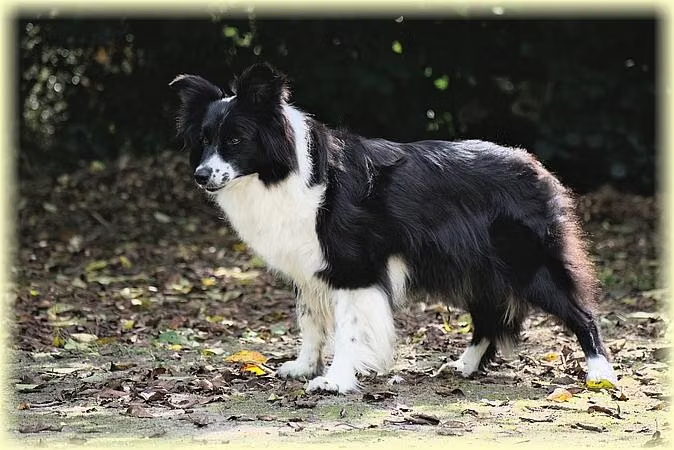
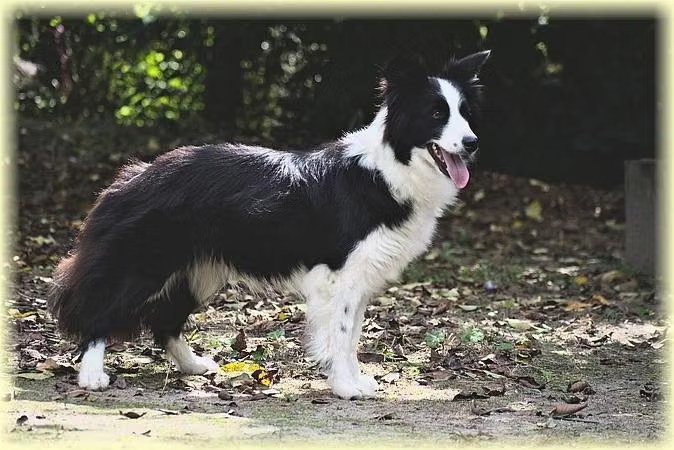
The Border Collie is widely regarded as the most intelligent dog breed, prized for its intense focus and unmatched herding drive.
How the Border Collie coat is built, and what that means when you groom it.
Critical: A Border Collie should not be shaved.
The undercoat keeps heat out as well as in, and the outer coat shields the skin from sun and insect bites. Clipping the whole coat off removes both. It often grows back patchy, soft or a different colour, and in some animals the guard hairs never return properly. Brush the undercoat out instead of cutting it off.
Information: A Border Collie drops its undercoat in heavy bursts.
The undercoat comes out in heavy bursts over a few weeks. An undercoat rake, or a bath followed by a proper blow-dry, clears it far faster than daily brushing. Clipping the coat down is not a shortcut for this.
A few of the Border Collie profiles members have added to United Pet Club.
The Border Collie is a medium-sized herding dog from the United Kingdom, widely considered the most intelligent breed and known for its intense focus and drive to work.
The Border Collie is a medium-sized working dog that developed in the border country between Scotland and England, bred to herd sheep. It is built for stamina and sharp changes of direction rather than bulk, moving in a low, crouching gait and using an intense stare, known as the eye, to control livestock.
The breed is often called the most trainable and quickest to solve problems among companion dogs. Adults usually weigh 12 to 20 kg and stand 46 to 56 cm at the shoulder, and the same drive that suits farm work carries over into a busy temperament at home. Most Border Collies live 12 to 15 years.
A Border Collie needs a job to do. Without daily exercise and mental work, the drive that makes it excel at herding and dog sports comes out instead as pacing, barking, and habits such as chasing cars, bicycles, or children.
| Attribute | Detail |
|---|---|
| Origin | United Kingdom (Scottish and English border) |
| Size | Medium (12 to 20 kg) |
| Lifespan | 12 to 15 years |
| Group / role | Herding dog |
| Good with | Active families, older children, experienced owners; supervise around small pets |
This breed suits owners who want an active partner and can set aside time every day for exercise and training. It thrives in households that take part in herding, agility, obedience, or flyball, or that run and hike regularly. It is a poor fit for anyone away from home for long hours, anyone who wants a low-key pet, or a household without a safe outlet for its energy. First-time owners can manage a Border Collie, but only with consistent structure and a real commitment to keeping the dog occupied.
The Border Collie descends from herding dogs of the Scotland-England border and was shaped by 19th and early 20th-century sheepdog trials that rewarded working ability over looks.
Herding dogs have worked sheep in Britain for centuries, and the Border Collie traces to the collie-type dogs of the hill country along the border between Scotland and England. Collie is an old term for the working sheepdogs of that region, and early breeders judged dogs on their ability to gather and move flocks across open ground rather than on appearance.
Organised sheepdog trials, first held in Wales in 1873, gave breeders a shared standard for testing working ability. Dogs that placed well were used heavily at stud, and this competition gradually fixed the gathering style, the low approach, and the controlling eye seen in the breed today.
A dog named Old Hemp, born in 1893 in Northumberland, is generally recognised as the breed's key foundation sire. He worked stock quietly and effectively, and a large share of modern Border Collies trace back to him, which helped fix the calm, intense working style associated with the breed today.
The name Border Collie came into common use in the early 20th century, distinguishing these working dogs from other collie types. The International Sheep Dog Society, formed in 1906, kept working records that supported the breed, and kennel club recognition for the show ring followed much later. In Singapore, the breed is recognised by the Singapore Kennel Club, the national registry body, though many lines worldwide are still bred chiefly for working ability rather than the show ring.
The Border Collie is a medium, athletic dog of moderate build with a double coat in two lengths, most often black and white but seen in many other colours.
The Border Collie is balanced and athletic, slightly longer than tall, built for speed, endurance, and sudden changes of direction. The head is moderate with a defined stop, the ears are medium-sized and may stand erect or semi-erect, and the expression is alert and intent. The tail is moderately long, set low, and carries an upward swirl at the tip when the dog is excited. Movement is smooth and tireless, often dropping into a low, stealthy crouch when the dog is working or concentrating.
| Trait | Standard |
|---|---|
| Height | Males 48 to 56 cm; females 46 to 53 cm at the shoulder |
| Weight | Males 14 to 20 kg; females 12 to 19 kg |
| Coat | Double coat in two types: rough (medium to long) and smooth (short) |
| Colours | Black and white, red and white, tricolour, blue merle, red merle, sable, and solid colours |
| Eyes | Oval, usually brown; merles may have blue or partly blue eyes |
Both coat types have a weather-resistant outer layer and a soft undercoat that handles cold, wet field conditions. The rough coat carries feathering on the legs, chest, and tail, while the smooth coat is short and coarser throughout. Black and white is the most familiar pattern, but the breed also comes in red and white, tricolour, sable, and merle. Working lines place far less value on coat and colour than on herding ability, so a wide range of markings is normal and acceptable.
The Border Collie is intelligent, intensely focused, and energetic, closely bonded to its handler and eager to work, but can turn reactive or destructive without enough of an outlet.
The Border Collie is alert, sensitive, and closely bonded to the people it works with. It reads body language and routine quickly and often anticipates what happens next, which is why it picks up commands in very few repetitions. The same quickness means it learns unwanted habits just as fast.
With family the breed is affectionate and devoted, usually attaching strongly to one or two people. It tends to be reserved rather than openly friendly with strangers, and early socialisation helps prevent shyness or wariness. The strong herding instinct can show up as nipping at heels or circling people, especially children, so households with young children need supervision and training to redirect that drive.
Around other dogs the Border Collie is generally sociable, though its staring and stalking can be misread by dogs unfamiliar with herding behaviour. With cats and small pets the chase and herd instinct can run strong, so introductions should be careful and supervised. A bored Border Collie becomes a problem dog: under-stimulation leads to obsessive habits such as shadow chasing, spinning, fence running, and constant barking.
| Trait | Rating |
|---|---|
| Affection | 4 |
| Energy | 5 |
| Trainability | 5 |
| Vocalness | 4 |
| Shedding | 3 |
The Border Collie needs moderate coat care and, above all, heavy daily exercise and mental work; it is a demanding breed that copes poorly when left idle.
A garden large enough for free running is rare in most Singapore homes, and many Border Collies here live in HDB flats. The breed can adapt to a flat if the daily exercise plan is strict and unwavering, with regular trips to a dog run, park, or open field taking the place of a yard. Singapore's hot, humid climate calls for exercise in the cooler morning or evening hours, with shade and water always available, since the dense double coat handles cold and wet conditions far better than tropical heat. Long hours alone or a mostly indoor routine without a serious daily outlet do not suit this breed.
The Border Collie does well on a complete diet matched to its high activity level, fed in measured meals that meet energy needs without leading to weight gain.
Feed a complete, balanced dog food suited to the dog's age, size, and activity level. Active and working Border Collies burn a great deal of energy and may need more calories or a performance formula, while less active pets need carefully measured portions to avoid putting on weight. Keep fresh water available at all times, and increase the amount on days of heavy exercise. Adjust portions to keep the dog lean, with ribs easy to feel but not to see.
| Life stage | Amount per day | Meals |
|---|---|---|
| Puppy (2 to 6 months) | Per product guide for growth, divided through the day | 3 to 4 |
| Junior (6 to 12 months) | Roughly 200 to 320 g of dry food | 2 to 3 |
| Adult (1 to 7 years) | Roughly 150 to 300 g of dry food by weight and activity | 2 |
| Senior (7 years and older) | Slightly reduced calories, adjust to weight | 2 |
Keep treats to about 10 percent of daily calories, and use small, low-calorie rewards for the frequent training this breed needs. Good options include small pieces of plain cooked meat or commercial training treats. Most Border Collies on a complete diet need no extra supplements; discuss joint support or omega-3 oils with a vet for active or older dogs rather than adding them as a matter of course.
The Border Collie is generally healthy with a lifespan of 12 to 15 years, though it carries several inherited eye, hip, and neurological conditions that responsible breeders screen for.
The Border Collie is a hardy, long-lived breed, and most dogs reach 12 to 15 years of age. As a population it carries fewer exaggerated physical features than many breeds, but it is still prone to a number of inherited disorders. Buying from breeders who health-test their stock lowers the risk of the more serious conditions considerably. Keeping the dog at a healthy weight protects its joints over a long working life.
| Condition | Signs | Note |
|---|---|---|
| Collie Eye Anomaly (CEA) | Often none; vision problems in severe cases | Inherited; detectable by DNA test and eye examination |
| Hip dysplasia | Stiffness, limping, difficulty rising | Reduce risk with hip scoring of parents and a lean weight |
| Epilepsy | Seizures, often starting in young adults | Manageable with veterinary care; avoid breeding affected lines |
| MDR1 drug sensitivity | Adverse reactions to certain common drugs | DNA test guides safe medication choices |
| Progressive retinal atrophy | Night blindness progressing to vision loss | DNA test available; not painful |
The Border Collie is widely rated the most trainable dog breed and learns very fast, so training should be positive, consistent, and mentally engaging from the start.
Few breeds learn as fast as the Border Collie, which often picks up a new command in five repetitions or fewer and then obeys reliably on the first cue. That speed is an advantage and a responsibility: the dog learns bad habits just as readily as good ones, and it will invent its own activities when left without direction. Training sessions should be short, varied, and rewarding, and should continue throughout the dog's life to keep its mind occupied. The breed is sensitive, so harsh corrections tend to produce anxiety or shutdown rather than better behaviour.
The Border Collie reaches breeding maturity at about two years, has litters averaging six to eight puppies after roughly 63 days of gestation, and benefits from health testing of both parents.
Responsible breeding of the Border Collie focuses on temperament, working ability, and health rather than appearance alone. Breeders should wait until both parents are physically and mentally mature, generally around two years of age, and screen them for the eye, hip, and DNA-tested conditions known in the breed before mating. Females are usually bred on a later season rather than their first.
Gestation lasts about 63 days. Litters average six to eight puppies, though smaller and larger litters do occur. Puppies are born blind and deaf, with the eyes opening at around two weeks and weaning starting near four weeks. The mother handles most of the early care, while the breeder keeps a warm, clean whelping area and monitors weight gain.
The early weeks shape adult behaviour in this sensitive, intelligent breed. Gentle handling, gradual exposure to household sights and sounds, and early problem-solving play build confident, stable adults. Puppies usually move to new homes at around eight weeks, by which point socialisation should be well underway.
| Metric | Value |
|---|---|
| Breeding maturity | About 2 years |
| Gestation | Around 63 days |
| Average litter size | 6 to 8 puppies |
| Eyes open | About 2 weeks |
| Weaning | Around 4 to 7 weeks |
| Ready for new home | About 8 weeks |
AVS handles the licence; United Pet Club keeps a free, searchable record behind your Border Collie's microchip for life.
An AVS licence satisfies the rules; it does not tell a finder in another country how to reach you. Your Border Collie's free United Pet Club profile does exactly that, pairing your mobile with his photo and chip number for life. Register your dog once and the record follows him anywhere.
Your Border Collie's chip went in before his third month, as the rules require; whether the number leads anywhere is a separate question. Give it a live answer with United Pet Club: registration free for life, every brand accepted, every update free. Microchip registration plus a free account, and the whole thing is squared away.
Set up a free United Pet Club account, key in your Border Collie's details and a photo, and save. The lifetime plan keeps the profile live at no cost for as long as he is with you, alongside whatever AVS requires.
Key the 15-digit chip number into your free account together with your address, mobile, and email. The lifetime plan covers the registration and every update free, whichever brand the clinic used.
Yes. AVS requires dogs to be licensed and microchipped by three months of age. The licence is the legal part; a registered, searchable record with your current mobile is the part that gets a lost Border Collie home, and that part is free.
Nothing. United Pet Club's lifetime plan covers the profile, the chip record, and unlimited updates, with no renewal, ever.
Common questions about Border Collie size, temperament, care difficulty, lifespan, suitability, and availability.
It is a medium-sized breed. Adults stand 46 to 56 cm at the shoulder and usually weigh 12 to 20 kg, with males slightly larger than females.
It is intelligent, focused, energetic, and devoted to its handler. It is affectionate with family, often reserved with strangers, and carries a strong herding drive that needs a proper outlet.
It is a demanding breed. Grooming is moderate, but it needs one to two hours of exercise daily plus mental work. It is not a low-maintenance pet and copes poorly when left idle or alone for long stretches.
Most live 12 to 15 years. Health testing of the parents, a healthy weight, and routine veterinary care all support a long life.
It suits active families, ideally with older children, who can meet its exercise and training needs. Supervision is wise around young children and small pets because of its herding and chase instinct.
Yes. The breed is widely considered the most trainable dog and learns very quickly with positive, consistent methods. That same intelligence means it needs ongoing mental work to stay well behaved.
Border Collies are common and widely available from working and show breeders, and they also appear in rescue groups. Look for breeders who health-test for eye, hip, and DNA-tested conditions.