The Belgian Malinois is an intensely intelligent, hardworking dog famed for its drive, athleticism, and elite working ability.
How the Belgian Malinois coat is built, and what that means when you groom it.
Critical: A Belgian Malinois should not be shaved.
The undercoat keeps heat out as well as in, and the outer coat shields the skin from sun and insect bites. Clipping the whole coat off removes both. It often grows back patchy, soft or a different colour, and in some animals the guard hairs never return properly. Brush the undercoat out instead of cutting it off.
Information: A Belgian Malinois drops its undercoat in heavy bursts.
The undercoat comes out in heavy bursts over a few weeks. An undercoat rake, or a bath followed by a proper blow-dry, clears it far faster than daily brushing. Clipping the coat down is not a shortcut for this.
A few of the Belgian Malinois profiles members have added to United Pet Club.
The Belgian Malinois is a large, highly driven working breed from Belgium prized for its intelligence, athleticism and record in protection, detection and herding work.
The Belgian Malinois is a large herding breed that was developed in Belgium to move livestock and guard farms. It ranks among the most capable working dogs anywhere and turns up constantly in police, military and detection work because of its focus and stamina. The breed is one of four Belgian shepherd varieties, set apart by its short fawn to mahogany coat and black mask.
This is a dog built for a job. A Malinois carries high energy and a strong drive to work through most of its day, and it forms a tight bond with a handler who gives it clear direction. Without structured activity and training, that same drive turns into pacing, chewing and other problem behaviour. The breed does best with a clear purpose.
Adult dogs typically live 14 to 16 years, which is a long run for a dog this size. Owners describe the Malinois as intense, loyal and quick to learn, with a temperament suited to experienced handlers rather than first time dog owners.
| Attribute | Detail |
|---|---|
| Origin | Belgium |
| Size | Large |
| Lifespan | 14 to 16 years |
| Group / role | Herding and working (protection, detection, sport) |
| Good with | Experienced handlers, active households, older children with supervision |
The Belgian Malinois suits an active owner who can commit to daily exercise and ongoing training. It does well in dog sports such as Schutzhund, agility and obedience, and in working homes that give it a defined role. It is a poor match for a sedentary household, an owner who is out most of the day, or anyone after a low maintenance pet.
The Belgian Malinois originated in Mechelen, northwest Belgium, in the late 1800s as one of four regional herding varieties, later adopted worldwide for police and military work.
The Belgian Malinois takes its name from Malines, the French name for Mechelen, a city in northwest Belgium. In the late nineteenth century, Belgian shepherds kept hardy herding dogs of mixed coat and colour, and breeders began sorting them into recognisable types. The Malinois is the short haired fawn variety within this group.
The Club du Chien de Berger Belge was formed in 1891 to study and standardise the native shepherd dogs. Professor Adolphe Reul of the Cureghem veterinary school examined dogs from across the country and grouped them by coat type. Four varieties were eventually recognised: the Malinois with its short fawn coat, the Tervuren with a long fawn coat, the Groenendael with a long black coat, and the Laekenois with a rough coat. All four share the same underlying build.
Early Malinois worked as livestock and farm dogs, but their trainability soon drew interest beyond herding. Belgian police took up the breed for patrol work in the early 1900s, and the dogs served as messengers and sentries through both World Wars. This working record is what built the breed's name for reliability under pressure.
Through the later twentieth century the Malinois spread into police and military programmes worldwide, often chosen over larger breeds for its lighter frame, agility and quick recovery between tasks. In Singapore, the breed is recognised by the Singapore Kennel Club, the national registry body, though it remains far more common in working and sport circles here than as a household pet.
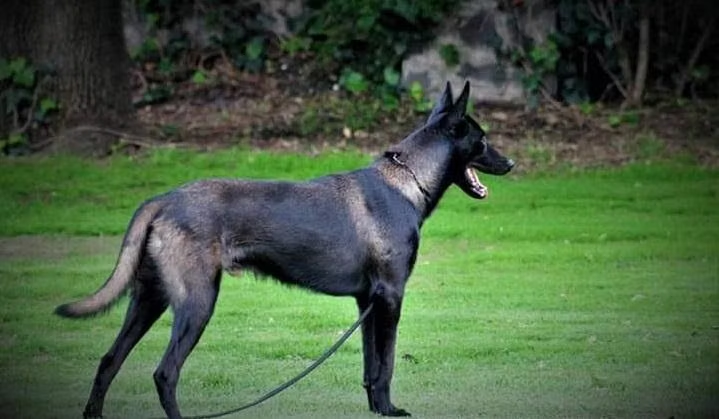
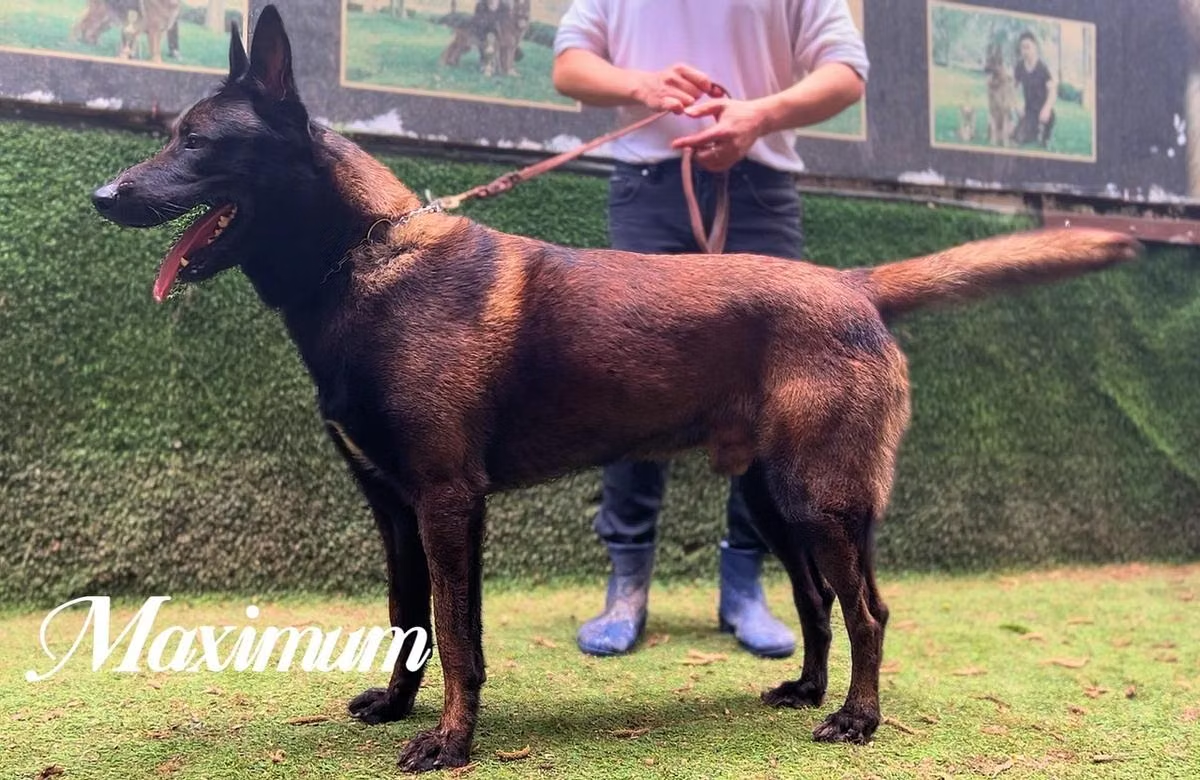
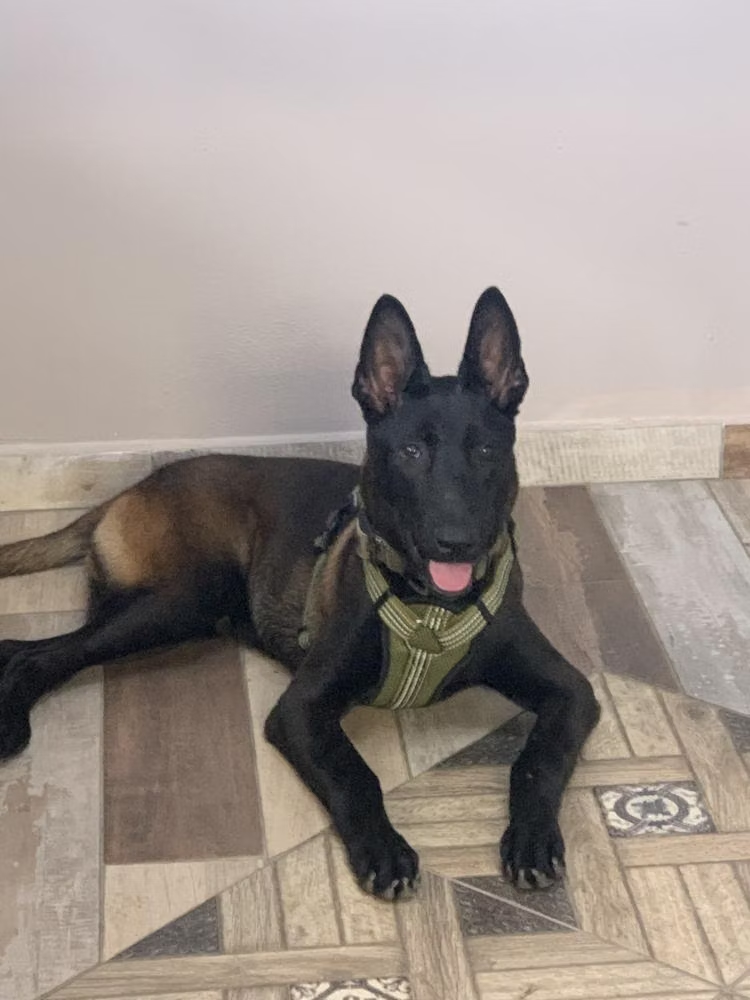
The Belgian Malinois is a square, athletic dog with a short fawn to mahogany coat, a black mask and ears, and a build suited to sustained working effort.
The Belgian Malinois has a square, balanced outline, standing roughly as tall at the shoulder as it is long from chest to rump. The build is athletic rather than heavy, shaped for endurance and quick movement over sheer bulk. The head is clean and well proportioned, with triangular, erect ears and an alert, questioning expression.
The overall impression is strength carried lightly. Muscle is firm without being exaggerated, and the dog moves with a smooth, tireless gait that lets it work for long stretches without tiring.
| Trait | Detail |
|---|---|
| Height | Males 24 to 26 in (61 to 66 cm); females 22 to 24 in (56 to 61 cm) |
| Weight | Males 60 to 80 lb (27 to 36 kg); females 40 to 60 lb (18 to 27 kg) |
| Coat | Short, straight, hard topcoat with dense undercoat |
| Colours | Fawn to mahogany with black mask and black tipped hairs |
| Eyes | Brown, medium size, almond shaped |
The coat is short and weather resistant, with a hard outer layer over a thick undercoat that fills out further in cooler months. Accepted colour runs from light fawn through deep mahogany, with a black overlay across the tips of the hairs. A black mask covers the muzzle and rings the eyes, and the ears are black. The undercoat blows out heavily twice a year, with lighter shedding continuing in between.
The Belgian Malinois is intelligent, intensely focused and protective, devoted to its handler but wary of strangers, and needs consistent training and daily work.
The Belgian Malinois is alert, driven and closely attached to its handler. It wants to be engaged at all times and reads its owner well, which makes it quick to train but just as quick to pick up bad habits when left bored. Mental work counts for as much as physical exercise with this breed.
With family the Malinois is affectionate and loyal, and it often settles on one person as its main bond. It can get on well with older children when raised alongside them, though its herding instinct may surface as chasing or nipping at fast movement, so supervision around young children is sensible. With strangers it is naturally reserved and watchful, and it will guard its home, which is why early and ongoing socialisation matters.
Around other pets, outcomes depend on the individual dog and how well it was socialised. Many Malinois live comfortably with dogs they are raised with, but a strong prey drive can make them unreliable with cats, small animals or unfamiliar dogs. This is a sensitive, high output breed that does best with a confident, consistent owner.
| Trait | Rating |
|---|---|
| Affection | 4 |
| Energy | 5 |
| Trainability | 5 |
| Vocalness | 3 |
| Shedding | 3 |
The Belgian Malinois needs little coat care but heavy daily exercise and mental stimulation, and does best with space and an owner able to keep it occupied.
Coat care for the Belgian Malinois is straightforward, but its exercise and mental needs are considerable. Most of the effort in owning this breed goes into keeping its mind and body occupied rather than into the brush.
The Malinois suits a home with a securely fenced garden and an owner who is present and active. Singapore's climate is hot and humid all year round, so exercise is best planned for the cooler parts of the day, with shade and water on hand throughout. Space is a real constraint too: most households here live in HDB flats, and a breed with this much drive needs deliberate daily outlets, both physical and mental, to make up for the lack of room to range freely. Without that level of commitment, this is not a breed suited to flat living.
The Belgian Malinois needs a high quality, protein rich diet matched to its activity level, fed in measured meals to keep its athletic frame lean.
The Belgian Malinois is an active, muscular dog that needs a complete diet built around quality protein and enough fat for energy. Working and sport dogs burn more calories than companion dogs and may need bigger portions or a performance formula. Keep the dog lean, since extra weight puts strain on the joints of an athletic breed. Fresh water should always be on hand, especially around exercise.
| Life stage | Amount per day | Meals |
|---|---|---|
| Puppy (2 to 6 months) | Per puppy formula label, divided | 3 to 4 |
| Adolescent (6 to 12 months) | 2 to 3 cups | 2 to 3 |
| Adult | 2.5 to 4 cups | 2 |
| Senior / less active | 2 to 3 cups | 2 |
Keep treats to around 10 percent of daily calories and factor them into the day's meals. Many handlers use part of the daily ration itself as training rewards. Joint supplements such as glucosamine may help active or older dogs, but check with a vet before starting any supplement.
The Belgian Malinois is generally a hardy breed with a 14 to 16 year lifespan, though hip and elbow dysplasia, eye conditions and certain cancers can occur.
The Belgian Malinois is a robust, long lived breed, with most dogs reaching 14 to 16 years. Its athletic build and active lifestyle keep many dogs sound well into old age. Responsible breeders screen for the inherited conditions known in the breed, and buyers should ask to see health testing results for both parents before committing to a puppy.
| Condition | Signs | Note |
|---|---|---|
| Hip dysplasia | Stiffness, limping, trouble rising | Inherited; screen breeding stock |
| Elbow dysplasia | Foreleg lameness, reluctance to exercise | Inherited joint malformation |
| Progressive retinal atrophy | Night blindness, vision loss | Inherited; eye testing available |
| Cataracts | Cloudy eye, reduced vision | May be treatable surgically |
| Cancer | Lumps, weight loss, lethargy | Varies by type; early vet review helps |
The Belgian Malinois is one of the most trainable breeds, learning fast and excelling in work and sport, but needs early socialisation and consistent, reward based handling.
The Belgian Malinois learns quickly and works with real intensity, which is why it dominates police, military and dog sport programmes. That same sharpness means it will train its owner if the owner is inconsistent. Start training and socialisation from puppyhood, keep sessions short and engaging, and give the dog a clear job to do. Harsh methods tend to backfire with this sensitive breed and can damage the working bond.
Belgian Malinois reach breeding maturity around two years, carry litters of roughly six to ten puppies after a nine week gestation, and should only come from health tested parents.
Belgian Malinois should only be bred by knowledgeable breeders who test for the joint and eye conditions known in the breed and who select for sound temperament. Dogs reach physical maturity earlier, but most breeders hold off until around two years of age so that health screening and temperament assessment can be completed first.
Gestation runs about 63 days, or roughly nine weeks. Litters typically range from six to ten puppies. The dam needs increased nutrition through late pregnancy and lactation, along with a quiet, clean whelping area. Puppies start weaning at about three to four weeks and should stay with the litter until at least eight weeks to learn bite inhibition and social behaviour. Early handling and gentle exposure during this window shape the adult dog considerably, which matters for a breed with this much drive.
| Metric | Value |
|---|---|
| Breeding maturity | About 2 years |
| Gestation | About 63 days (9 weeks) |
| Average litter size | 6 to 10 puppies |
| Weaning age | 3 to 4 weeks (begins) |
| Earliest rehoming | 8 weeks |
AVS handles the licence; United Pet Club keeps a free, searchable record behind your Belgian Malinois's microchip for life.
Key in your Belgian Malinois's name, his date of birth, and a clear photo, attach your mobile, and save: a lifetime record, no charge now or later. Dog registration sits happily alongside the AVS paperwork and takes the chip number whenever you have it.
Your Belgian Malinois's chip went in before his third month, as the rules require; whether the number leads anywhere is a separate question. Give it a live answer with United Pet Club: registration free for life, every brand accepted, every update free. Microchip registration plus a free account, and the whole thing is squared away.
Set up a free United Pet Club account, key in your Belgian Malinois's details and a photo, and save. The lifetime plan keeps the profile live at no cost for as long as he is with you, alongside whatever AVS requires.
Key the 15-digit chip number into your free account together with your address, mobile, and email. The lifetime plan covers the registration and every update free, whichever brand the clinic used.
Yes. AVS requires dogs to be licensed and microchipped by three months of age. The licence is the legal part; a registered, searchable record with your current mobile is the part that gets a lost Belgian Malinois home, and that part is free.
Nothing. United Pet Club's lifetime plan covers the profile, the chip record, and unlimited updates, with no renewal, ever.
Common questions about the Belgian Malinois cover its size, temperament, care demands, lifespan, suitability as a pet, and availability in Singapore.
It is a large breed. Males stand about 24 to 26 inches at the shoulder and weigh 60 to 80 pounds, while females are about 22 to 24 inches and 40 to 60 pounds.
It is intelligent, intensely focused, athletic and protective. The breed is loyal and affectionate with its handler but reserved with strangers, and it needs a job to stay balanced.
Grooming is easy, but the exercise and training demands are high. The breed needs 1 to 2 hours of vigorous activity plus mental work every day, so it suits experienced, active owners rather than beginners.
Most live 14 to 16 years, which is long for a dog of this size, especially with good nutrition, exercise and veterinary care.
It can, in an active household that gives it structure and training. It bonds closely with family and can live with older children, but its drive and herding instinct make it a poor fit for a sedentary household or a first time owner.
The breed is widely used in working and sport circles, and reputable breeders exist in the region, with the Singapore Kennel Club serving as the national registry. Demand for working lines can mean waiting lists, so it pays to research breeders who health test their dogs.
They shed moderately year round and heavily during two seasonal coat changes. Weekly brushing, stepped up during shedding seasons, keeps it manageable.