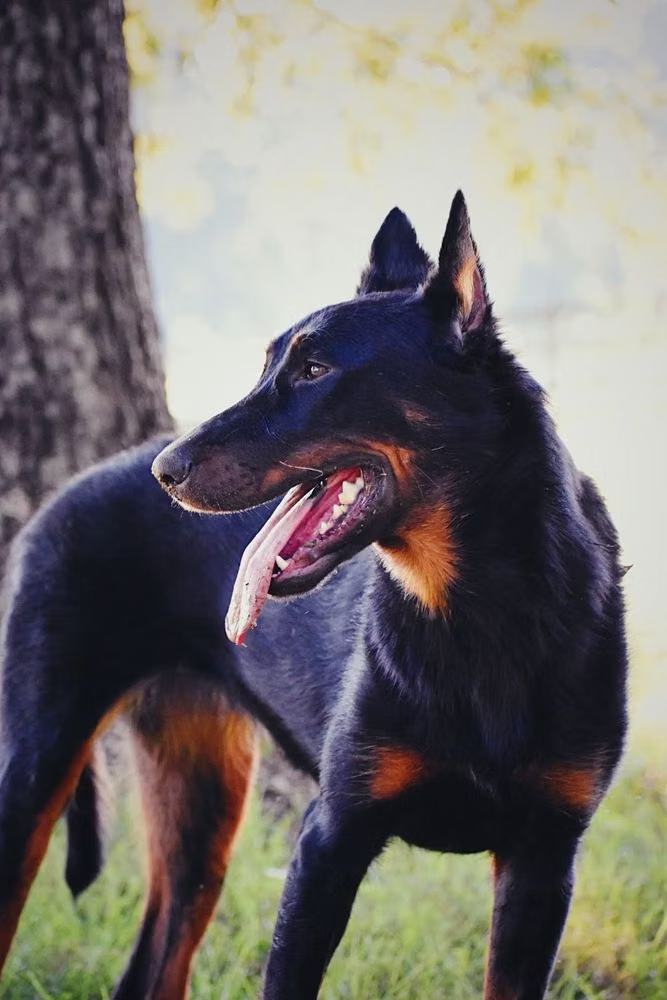
The Beauceron is a loyal, powerful French herding dog prized for its intelligence, courage, and steadfast guarding instinct.
How the Beauceron coat is built, and what that means when you groom it.
Critical: A Beauceron should not be shaved.
The undercoat keeps heat out as well as in, and the outer coat shields the skin from sun and insect bites. Clipping the whole coat off removes both. It often grows back patchy, soft or a different colour, and in some animals the guard hairs never return properly. Brush the undercoat out instead of cutting it off.
Information: A Beauceron drops its undercoat in heavy bursts.
The undercoat comes out in heavy bursts over a few weeks. An undercoat rake, or a bath followed by a proper blow-dry, clears it far faster than daily brushing. Clipping the coat down is not a shortcut for this.
A few of the Beauceron profiles members have added to United Pet Club.
A large, intelligent French herding and guard dog, the Beauceron suits experienced owners with space, structure and a firm daily exercise routine.
The Beauceron is a large working dog from France, bred to herd sheep and cattle and to guard livestock and property. Adult dogs stand between about 61 and 70 centimetres at the shoulder and weigh from around 32 to 50 kilograms, with a deep chest, dense bone and an athletic build. The breed is also known as the Berger de Beauce, or by its nickname Bas Rouge, a reference to the tan markings running down its legs.
This is a self-assured, intelligent dog with a strong sense of duty. The Beauceron forms a close bond with its family and stays reserved with strangers, observing before it warms up. Its herding background shows in constant alertness, a drive to manage movement, and stamina for long hours of work.
The coat lies short and dense over the body, with slightly longer hair under the tail and on the back of the legs. Most Beaucerons carry a black and tan coat, though a grey, black and tan combination called harlequin also occurs. A distinguishing trait of the breed is the double dewclaws on each hind leg, a feature specified in the breed standard.
| Attribute | Detail |
|---|---|
| Origin | France |
| Size | Large (about 32 to 50 kg) |
| Lifespan | 10 to 12 years |
| Group / role | Herding and guarding |
| Good with | Family and older children when raised and trained; needs early socialisation with other pets |
The Beauceron fits an owner who can commit to consistent training, daily physical work and clear leadership. It does well with people who keep an active routine, such as long walks, running, herding trials, tracking or protection sports. In Singapore, a dog of this size does not fall within the HDB list of approved breeds for flat dwellers, so it is generally better suited to a landed property with a securely fenced garden. First-time owners often find the breed demanding given its size, intelligence and guarding drive, and it copes poorly with being left alone for long stretches.
The Beauceron developed on the plains of northern France as a working farm dog, formally described by French naturalists in the nineteenth century.
The Beauceron takes its name from the Beauce, an agricultural plain to the southwest of Paris. French farmers relied on these dogs to move and guard flocks of sheep and herds of cattle. The work called for stamina to cover open ground, intelligence to manage livestock, and courage to protect stock from predators and thieves.
The breed was first described in detail in 1809 by the priest Abbe Rozier, who documented French herding dogs and separated the short-coated plains dog from its long-coated mountain cousin. The long-coated relative became the Briard, while the short-coated dog became the Beauceron. The two were recognised as distinct breeds towards the end of the nineteenth century.
In 1893 the veterinarian Pierre Megnin set down a clear description of the breed, and the Club des Amis du Beauceron, the first breed club, was founded in France in 1922. A written standard followed soon after, fixing traits such as the black and tan coat, the double hind dewclaws and the herding build.
Through the twentieth century the Beauceron served in both World Wars as a military and messenger dog, carrying communications, detecting mines and tracking. The breed still works in France today in herding, police and military roles, and in protection sports, alongside its place as a family companion. It remains uncommon in Singapore, where it is recognised through the Federation Cynologique Internationale (FCI) breed standard rather than kept in any large local numbers.
The Beauceron is a large, muscular dog with a short black and tan coat, double hind dewclaws and a balanced, powerful outline built for sustained work.
The Beauceron is a substantial herding dog with a rectangular, well-muscled body and a confident, upright stance. The head is long and in proportion, with a flat or slightly rounded skull, a strong muzzle and dark brown eyes set fairly wide apart. Ears may be left natural, folding close to the head, or in some regions were historically cropped to stand erect, though cropping is not practised in Singapore. The chest runs deep and the legs are straight and strong, giving the dog an easy, ground-covering gait.
| Trait | Standard |
|---|---|
| Height | Males about 65 to 70 cm; females about 61 to 67 cm |
| Weight | About 32 to 50 kg |
| Coat | Short, dense and coarse on the body; slightly longer on tail and hind legs |
| Colours | Black and tan; grey, black and tan (harlequin) |
| Eyes | Dark brown; one wall eye permitted in harlequins |
The outer coat lies short, about 4 centimetres long on the body, flat and dense, with a thick undercoat that historically helped the breed work through cold, wet conditions in northern France. The most common pattern is black and tan, with rich tan markings on the legs, chest, eyebrows, muzzle and under the tail. The leg markings give rise to the nickname Bas Rouge, meaning red stockings.
The harlequin pattern combines patches of grey with black and tan, and the standard favours a balanced spread of colour without too much grey. A defining feature of the breed is the double dewclaws on each hind leg, set low and forming well-separated toes. A single hind dewclaw, or its absence, counts as a fault in the show ring.
The Beauceron is loyal, intelligent and protective, devoted to its family though watchful with strangers, and needs a working outlet for its drive.
The Beauceron is a self-assured, level-headed dog with a deep attachment to its family. It tends to settle calmly at home once mature, though it keeps a guarding instinct that leaves it alert to its surroundings. With its own people it is affectionate and cooperative, often following family members from room to room and staying close at hand.
With strangers the Beauceron stays naturally reserved. It sizes up new people before accepting them and rarely greets visitors with open enthusiasm. Early and ongoing socialisation matters, so that this caution does not harden into suspicion. The breed is patient with children it has grown up alongside, though its size and energy mean interactions with very young children call for supervision.
Around other animals the Beauceron can live well with pets it is raised with, though its herding instinct can prompt it to chase or try to control movement, and some individuals show dominance towards other dogs. Steady introductions and consistent rules help it settle into a household with several pets. This is a working breed that needs a job, and a Beauceron without enough mental and physical activity can grow bored and difficult to manage.
| Trait | Rating |
|---|---|
| Affection | 4 |
| Energy | 5 |
| Trainability | 5 |
| Vocalness | 2 |
| Shedding | 3 |
The Beauceron needs daily exercise, regular brushing and a home with space and structure suited to its working energy and Singapore's climate.
The Beauceron is a low-maintenance breed where grooming is concerned, but a high-demand breed where activity and engagement are concerned. Its care centres on meeting its physical and mental needs rather than on coat upkeep.
The Beauceron does best in a home with a securely fenced garden and an active household, which in practice usually means a landed property rather than a flat. Its dense undercoat suits cold climates and copes less well with Singapore's heat and humidity, so shade, ventilation and constant access to water matter, and strenuous exercise is best kept to early morning or evening. The breed is not suited to long stretches of isolation or to close confinement.
The Beauceron needs a balanced diet suited to a large, active dog, fed in measured portions to support its working build and protect its joints.
A Beauceron should eat a complete and balanced diet formulated for large, active dogs. Daily amounts depend on age, weight and activity level, with working dogs needing more than companions kept to a moderate routine. Because the breed is deep-chested, splitting the daily ration into two meals rather than one large meal is common practice and helps lower the risk of bloat.
| Life stage | Amount per day | Meals |
|---|---|---|
| Puppy (2 to 6 months) | About 350 to 600 g, split across meals | 3 to 4 |
| Adolescent (6 to 12 months) | About 350 to 480 g | 2 to 3 |
| Adult | About 350 to 600 g by size and activity | 2 |
| Senior | Adjusted lower for reduced activity | 2 |
Keep treats to about 10 percent of daily calories so the main diet stays balanced. For a large, athletic breed, some owners and vets use joint support such as glucosamine, though any supplement should be discussed with a vet first. Provide constant access to fresh water, particularly around exercise in the heat. Avoid heavy meals immediately before or after vigorous activity, to lower the risk of stomach upset and bloat.
The Beauceron is generally healthy with a lifespan of 10 to 12 years, though as a large, deep-chested breed it can face joint problems and bloat.
The Beauceron is a hardy working breed with a typical lifespan of 10 to 12 years. Responsible breeding and routine veterinary care help keep the breed sound, but its size and deep chest bring conditions owners should watch for. Buying from breeders who screen their stock for hip and heart issues lowers the chance of inherited disease.
| Condition | Signs | Note |
|---|---|---|
| Hip dysplasia | Stiffness, limping, trouble rising | Screen breeding dogs; keep the dog lean |
| Gastric dilatation-volvulus (bloat) | Swollen belly, retching without vomiting, distress | Emergency; deep-chested breeds carry higher risk |
| Dilated cardiomyopathy | Tiredness, cough, fainting | Detected through cardiac screening |
| Osteochondritis dissecans | Lameness in a young, growing dog | Linked to rapid growth and joint stress |
The Beauceron is highly intelligent and trainable, responding well to consistent, fair handling and early socialisation from a confident owner.
The Beauceron ranks among the more trainable working breeds, quick to learn and keen to work with a handler it respects. That intelligence comes paired with independence, so the breed responds best to an owner who stays consistent, calm and clear about rules. Harsh handling tends to backfire and can damage trust, while fair, structured training builds a reliable partner. Because the breed matures slowly, often not settling mentally until around two to three years of age, patience over a long timeline pays off.
Socialisation should begin in puppyhood and continue throughout the dog's life. Exposing a young Beauceron to a wide range of people, places, sounds and other animals, including the sights and sounds of void decks, markets and public transport, helps temper its natural wariness and supports a balanced adult temperament.
The Beauceron reaches breeding maturity slowly, carries average litters for a large breed, and benefits from health screening of the parents.
The Beauceron matures slowly, both physically and mentally, and responsible breeders wait until a dog is fully grown and health-tested before breeding. Females are usually not bred until they are at least two years old, by which point hip and heart screening results are available. Mating follows the female's heat cycle, and gestation in dogs runs to about 63 days on average.
Litter size in the Beauceron tends to run moderate to large, commonly around six to eight puppies, though larger litters occur. Newborn puppies carry the hind dewclaws that define the breed, and breeders assess these along with coat colour and structure. Puppies are weaned at around 6 to 8 weeks, with early handling and socialisation beginning within the litter to support the calm, confident temperament the breed is known for. Given the breed's working background and guarding drive, careful selection of breeding stock for sound temperament matters as much as physical health. Anyone bringing a litter into Singapore should also confirm import and quarantine requirements with AVS ahead of time.
| Metric | Value |
|---|---|
| Female breeding age | Usually from about 2 years |
| Gestation | About 63 days |
| Average litter size | About 6 to 8 puppies |
| Weaning age | About 6 to 8 weeks |
| Recommended screening | Hip evaluation and cardiac check of parents |
AVS handles the licence; United Pet Club keeps a free, searchable record behind your Beauceron's microchip for life.
An AVS licence satisfies the rules; it does not tell a finder in another country how to reach you. Your Beauceron's free United Pet Club profile does exactly that, pairing your mobile with his photo and chip number for life. Register your dog once and the record follows him anywhere.
Your Beauceron's chip went in before his third month, as the rules require; whether the number leads anywhere is a separate question. Give it a live answer with United Pet Club: registration free for life, every brand accepted, every update free. Microchip registration plus a free account, and the whole thing is squared away.
Set up a free United Pet Club account, key in your Beauceron's details and a photo, and save. The lifetime plan keeps the profile live at no cost for as long as he is with you, alongside whatever AVS requires.
Key the 15-digit chip number into your free account together with your address, mobile, and email. The lifetime plan covers the registration and every update free, whichever brand the clinic used.
Yes. AVS requires dogs to be licensed and microchipped by three months of age. The licence is the legal part; a registered, searchable record with your current mobile is the part that gets a lost Beauceron home, and that part is free.
Nothing. United Pet Club's lifetime plan covers the profile, the chip record, and unlimited updates, with no renewal, ever.
Common questions about the Beauceron cover its size, temperament, care demands, lifespan, suitability and how easily it can be found in Singapore.
The Beauceron is a large breed. Males stand about 65 to 70 centimetres at the shoulder and females about 61 to 67 centimetres, with weight ranging from roughly 32 to 50 kilograms depending on size and sex.
It can be a devoted family dog for households that can meet its needs. It bonds closely with its people and is patient with children it is raised with, though its size and guarding instinct mean young children need supervision and the dog needs early socialisation. Its size also fits a landed home with a garden far better than an HDB flat.
Grooming is simple, but the breed is demanding in exercise and training. It needs 1 to 2 hours of activity a day plus mental work, does best with an experienced, active owner who provides structure, and needs shade and rest during the hottest hours given its dense, cold-climate coat.
The typical lifespan is 10 to 12 years. Keeping the dog at a lean weight, providing routine veterinary care, and choosing health-screened breeding lines support a full, healthy life.
It is usually not recommended as a first dog. Its intelligence, working drive and protective nature call for confident, consistent handling that suits owners with prior experience.
The breed is well established in France and present in a number of other countries, but it is far less common than popular companion breeds, and it remains uncommon in Singapore. Finding a puppy usually means contacting a dedicated overseas breeder, confirming AVS import requirements, and waiting for a planned litter.
Double dewclaws on each hind leg are a traditional feature of the breed and are called for in the breed standard. They mark a long-standing identifying trait rather than a flaw.