The Australian Shepherd is an intelligent, energetic herding dog known for its versatility, drive, and loyal devotion.
How the Australian Shepherd coat is built, and what that means when you groom it.
Critical: A Australian Shepherd should not be shaved.
The undercoat keeps heat out as well as in, and the outer coat shields the skin from sun and insect bites. Clipping the whole coat off removes both. It often grows back patchy, soft or a different colour, and in some animals the guard hairs never return properly. Brush the undercoat out instead of cutting it off.
Caution: A Australian Shepherd coat mats easily.
Fine or long hair tangles at the base of the coat, out of sight, where the mats tighten and pull on the skin. Brushing has to reach right down to the roots in sections, not just skim the surface.
Information: A Australian Shepherd drops its undercoat in heavy bursts.
The undercoat comes out in heavy bursts over a few weeks. An undercoat rake, or a bath followed by a proper blow-dry, clears it far faster than daily brushing. Clipping the coat down is not a shortcut for this.
A few of the Australian Shepherd profiles members have added to United Pet Club.
The Australian Shepherd is a medium-sized herding dog from the United States, valued for its intelligence, drive and strong bond with its owner.
The Australian Shepherd is a medium-sized working dog bred to move livestock across open range. Despite the name, the breed was developed in the western United States, not Australia. It is one of the most capable herding dogs available to ranchers, and it remains popular in dog sports today.
The breed is built for stamina rather than bulk. A typical adult weighs between 18 and 32 kilograms and carries a weather-resistant double coat suited to a working life outdoors. The Aussie is alert, quick to learn, and happiest when given a job to do, whether that is herding, agility, search work, or simply a structured daily routine with its owner.
This is a dog that forms strong attachments to its family. It tends to bond closely with one household and can be reserved with strangers until it has had time to assess them. Owners describe the breed as devoted, tireless, and highly responsive to training.
| Attribute | Detail |
|---|---|
| Origin | United States |
| Size | Medium |
| Lifespan | 12 to 15 years |
| Group / role | Herding dog |
| Good with | Active families, experienced owners, other dogs when socialised |
The Australian Shepherd suits people who can commit to daily physical exercise and real mental work, not just a walk round the block. It does well with runners, hikers, agility handlers and households built around training and sport. In Singapore, that points more towards landed property or a house with a secure garden than a small flat. HDB (Housing and Development Board) rules permit only breeds on an approved list, generally smaller dogs, so anyone in a flat should check with the Animal and Veterinary Service before bringing one home. This is a poor match for anyone out at work all day with no plan for exercise or company, since an under-exercised Aussie tends to dig, chew or bark to fill the time.
The Australian Shepherd was developed by ranchers in the western United States, and the breed standard was formalised in the late 20th century.
The breed's name is misleading. The Australian Shepherd was developed in the western United States, and its working ancestry traces through a mix of European herding dogs brought west by shepherds and stockmen during the 1800s.
One common account links the name to flocks of sheep imported to North America from Australia in the 19th century. Dogs that worked alongside those flocks picked up the association, and the label stuck even though the breed itself took its modern form on American ranches.
Through the early and mid-20th century, ranchers in California and the western states bred these dogs for working ability rather than looks. Stamina, biddability and herding instinct were what mattered, not coat colour or conformation. The breed gained wider public attention after the Second World War, helped along by rodeo performers and the spread of western horse culture.
Breed clubs were organised in the United States from the 1950s onwards, and the American Kennel Club recognised the Australian Shepherd in 1991. Many lines today still descend from proven working stock, which is why drive and herding instinct remain strong across the breed. In Singapore the Aussie is still an uncommon sight next to popular companion breeds, but it has a small following among owners active in dog sports and obedience training through the Singapore Kennel Club.
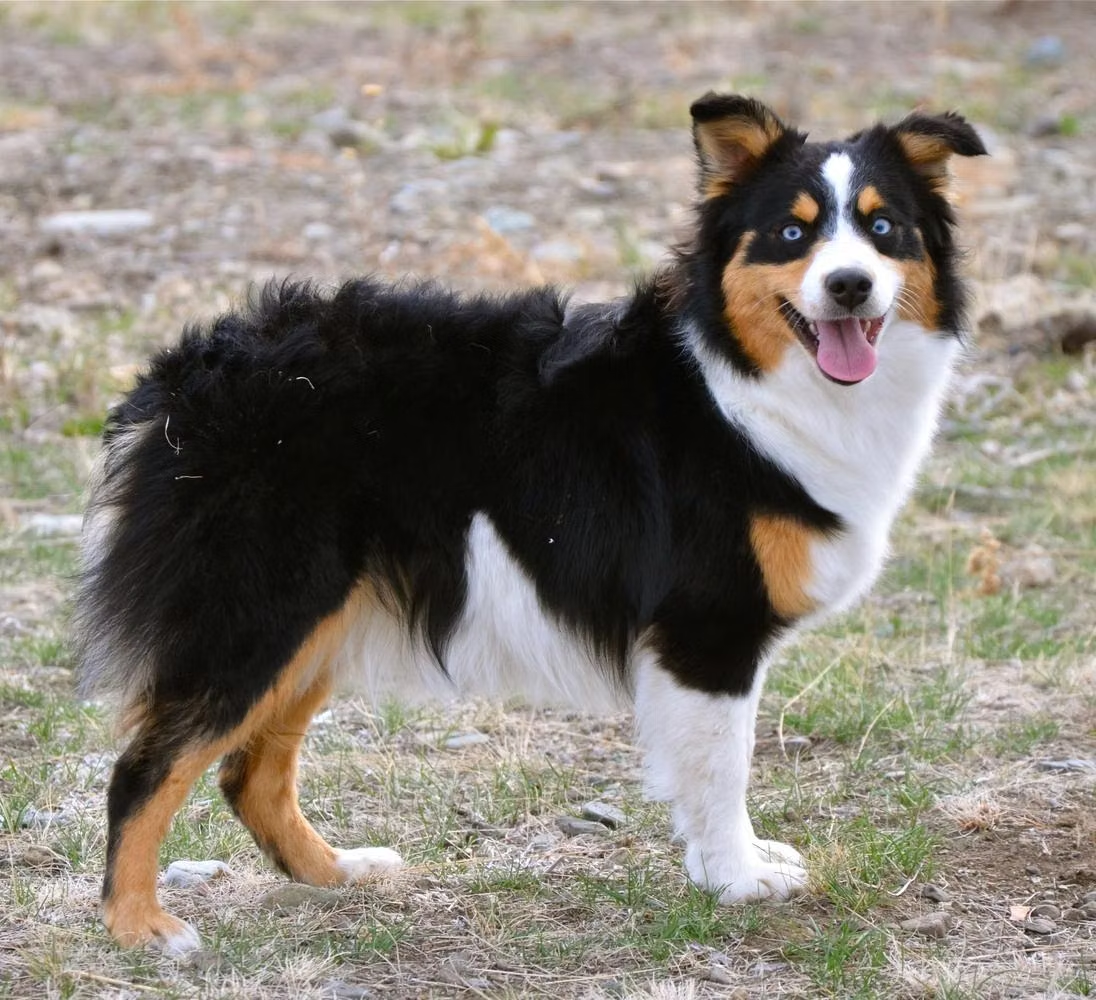
The Australian Shepherd is a well-balanced dog with a weather-resistant double coat in black, blue merle, red and red merle, often with white and tan markings.
The Australian Shepherd is slightly longer than it is tall, with a level topline and a body built for agility and endurance. The head is clean-cut and strong, the ears are triangular and set high, and the expression is alert. Some Aussies are born with a natural bobtail, while others carry a full tail.
The coat is medium in length, weather-resistant and double layered, with a coarser outer coat over a softer undercoat. Hair is shorter on the head and the front of the legs, and longer behind the legs and around the neck.
| Trait | Detail |
|---|---|
| Height | Males 51 to 58 cm; females 46 to 53 cm at the shoulder |
| Weight | Males 23 to 32 kg; females 18 to 25 kg |
| Coat | Medium-length, weather-resistant double coat |
| Colours | Black, blue merle, red, red merle, often with white and tan |
| Eyes | Brown, blue, amber or any combination, including marbled eyes |
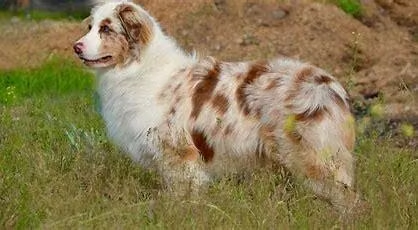
The four recognised base colours are black, blue merle, red and red merle. White markings and copper or tan points can appear on any of them. The merle pattern produces mottled patches over a lighter background. Two merle dogs should never be paired together, because the double merle combination is linked to hearing and vision defects. Eye colour varies widely, and a single dog may have two different coloured eyes.
The Australian Shepherd is loyal, intelligent and energetic, devoted to its family but often reserved with strangers and quick to want to herd.
The Australian Shepherd is a thinking dog. It learns fast, reads its handler closely, and looks for a task to complete. With its own family it is affectionate and steady. With people it does not know, it is often watchful and may hold back until it has decided the situation is safe, which is why early socialisation matters so much.
The herding instinct stays switched on even in pet homes. An Aussie may try to gather running children, other dogs or moving objects by circling and nudging them. This is normal for the breed and can be redirected with training. It generally gets on well with other dogs and with pets it grows up alongside, though its drive means a small animal darting past can trigger a chase.
This is a high-energy breed, and boredom is the main cause of problem behaviour. An Aussie that does not get enough exercise and mental work may bark, dig, chew or become anxious. Give it a job and consistent leadership, and it is calm, reliable and deeply attached to its people.
| Trait | Rating |
|---|---|
| Affection | 5 |
| Energy | 5 |
| Trainability | 5 |
| Vocalness | 3 |
| Shedding | 4 |
The Australian Shepherd needs regular brushing for its double coat and a high level of daily exercise and mental work to stay balanced in Singapore's climate.
The Australian Shepherd does best in a home with secure outdoor space and an active household, which in Singapore usually means a landed property rather than a flat. HDB rules allow only breeds on an approved list, generally smaller dogs, so check with the Animal and Veterinary Service (AVS) before keeping one in a flat, and note that all dogs here must be licensed and microchipped regardless of housing type. The coat was bred for cooler climates and runs warm in tropical humidity, so the dog needs shade, fresh water and, ideally, access to air conditioning during the hottest part of the day rather than being left outdoors.
The Australian Shepherd needs a balanced, protein-rich diet matched to its high activity level, with portions adjusted for life stage and workload.
The Australian Shepherd is an active breed, and its diet should support sustained energy without extra weight. A complete dog food with good-quality animal protein suits most Aussies. Working dogs and dogs in heavy training need more calories than pets with light activity, so portions should track actual workload rather than a fixed number on the bag.
Feed adults twice a day rather than one large meal. Split feeding supports steady energy and lowers the risk of bloat in deep-chested dogs. Keep fresh water available at all times, especially after exercise in Singapore's heat.
| Life stage | Amount per day | Meals |
|---|---|---|
| Puppy (2 to 6 months) | Per product guide, adjusted for growth | 3 to 4 |
| Adolescent (6 to 12 months) | About 250 to 350 g dry food | 2 to 3 |
| Adult (1 year and over) | About 200 to 350 g dry food | 2 |
| Senior | Slightly reduced, watch weight | 2 |
Use treats in moderation and count them towards the day's calories to stop weight creeping up. Most Australian Shepherds on a complete diet do not need supplements. Owners of working dogs sometimes add omega-3 oils for coat and joint support, but check with a vet before adding anything.
The Australian Shepherd is generally healthy, living 12 to 15 years, though it can be prone to hip dysplasia, eye disorders and MDR1 drug sensitivity.
The Australian Shepherd is a hardy breed that typically lives 12 to 15 years. Responsible breeding and health screening have kept most lines sound, but the breed does carry a few inherited risks that owners should know about. A notable one is the MDR1 gene mutation, which makes some Aussies sensitive to certain common medications. A genetic test identifies affected dogs so a vet can adjust drug choices accordingly, and it is worth telling every vet or groomer you see about the result, not just your regular clinic.
| Condition | Signs | Note |
|---|---|---|
| Hip dysplasia | Stiffness, limping, reluctance to jump | Screen breeding stock; manage weight |
| Collie eye anomaly | Often none; found on eye exam | Inherited; test before breeding |
| Cataracts | Cloudy eye, reduced vision | May need surgery |
| Epilepsy | Seizures | Manageable with veterinary care |
| MDR1 drug sensitivity | Severe reaction to certain drugs | Genetic test; inform every vet |
The Australian Shepherd is one of the most trainable breeds, doing well in obedience, herding and dog sports when given consistent, reward-based work.
The Australian Shepherd ranks among the easiest breeds to train. It picks up commands fast, holds onto them well, and seems to enjoy the process. That intelligence cuts both ways: an untrained or bored Aussie will invent its own activities, and those are often destructive ones. Consistent training from puppyhood channels the breed's drive into something useful.
Early socialisation matters because the breed can be wary of strangers. Introduce puppies to new people, places and other animals while they are young, including lifts, void decks and the crowds and noise of daily life in Singapore. Deal with the herding instinct early too, by teaching the dog what it may and may not chase or gather.
Australian Shepherds reach breeding maturity at one to two years and carry litters of about six to seven puppies after a nine-week pregnancy.
Responsible breeding of Australian Shepherds depends on health testing and careful pairing. Females are usually not bred until they are physically and mentally mature, generally after their first or second year. Breeding stock should be screened for hip dysplasia, eye conditions and the MDR1 mutation before any pairing goes ahead.
A central rule for the breed is to avoid merle-to-merle pairings. Crossing two merle dogs produces double merle puppies with a high risk of deafness and blindness. Pairing a merle with a solid-coloured dog avoids this outcome entirely.
Pregnancy lasts about 63 days. Litters commonly hold six to seven puppies, though the number varies. Puppies are weaned at around seven to eight weeks, and gentle handling and socialisation during this window shape adult temperament. Some puppies are born with natural bobtails, which is normal for the breed.
Anyone breeding or importing an Australian Shepherd in Singapore also needs to work through AVS licensing requirements for the breeding premises and for each litter, on top of the usual health screening.
| Metric | Value |
|---|---|
| Breeding maturity | 1 to 2 years |
| Gestation | About 63 days |
| Average litter size | 6 to 7 puppies |
| Weaning age | 7 to 8 weeks |
| Key rule | Never breed merle to merle |
AVS handles the licence; United Pet Club keeps a free, searchable record behind your Australian Shepherd's microchip for life.
Key in your Australian Shepherd's name, his date of birth, and a clear photo, attach your mobile, and save: a lifetime record, no charge now or later. Dog registration sits happily alongside the AVS paperwork and takes the chip number whenever you have it.
The AVS listing and a searchable contact record are two different things, and the second one is yours to set up. Register the microchip on the free lifetime plan: any chip brand a local vet implants qualifies, updates after a move between flats stay free, and the record can be pulled up 24 hours a day from anywhere. Create your free account and settle it tonight.
Set up a free United Pet Club account, key in your Australian Shepherd's details and a photo, and save. The lifetime plan keeps the profile live at no cost for as long as he is with you, alongside whatever AVS requires.
Key the 15-digit chip number into your free account together with your address, mobile, and email. The lifetime plan covers the registration and every update free, whichever brand the clinic used.
Yes. AVS requires dogs to be licensed and microchipped by three months of age. The licence is the legal part; a registered, searchable record with your current mobile is the part that gets a lost Australian Shepherd home, and that part is free.
Nothing. United Pet Club's lifetime plan covers the profile, the chip record, and unlimited updates, with no renewal, ever.
Common questions about the Australian Shepherd cover its size, temperament, care needs, lifespan, suitability for Singapore homes and where to find one.
It is a medium-sized dog. Males stand about 51 to 58 cm at the shoulder and weigh 23 to 32 kg, while females stand 46 to 53 cm and weigh 18 to 25 kg.
Aussies are loyal, intelligent and energetic. They bond closely with their family, are often reserved with strangers, and have a strong herding instinct that needs an outlet, especially in a small household.
They are demanding in exercise and mental stimulation rather than grooming. They need 1 to 2 hours of activity plus mental work every day, along with weekly brushing. Between the exercise needs and Singapore's HDB rules on dog size, they are not a good match for most flat living.
The typical lifespan is 12 to 15 years with good care, regular vet check-ups and a healthy weight.
Yes, for active families who can meet their exercise needs. They are affectionate and trainable, though their herding instinct can lead them to try to gather young children, which training can manage. Space matters too: this is a breed that fits a landed home far more comfortably than a small flat.
Yes. The double coat sheds year-round and more heavily during coat blows, which happen roughly twice a year but do not follow a fixed season the way they would in a temperate country. Regular brushing keeps shedding under control, and it matters more if the dog spends a lot of time indoors under air conditioning.
Not especially. The breed is far less common here than popular companion breeds, and most come through overseas breeders or occasional local litters. Anyone buying or importing one needs to work with AVS on licensing and import requirements, and it is worth checking health screening records, including MDR1 status, before committing.