
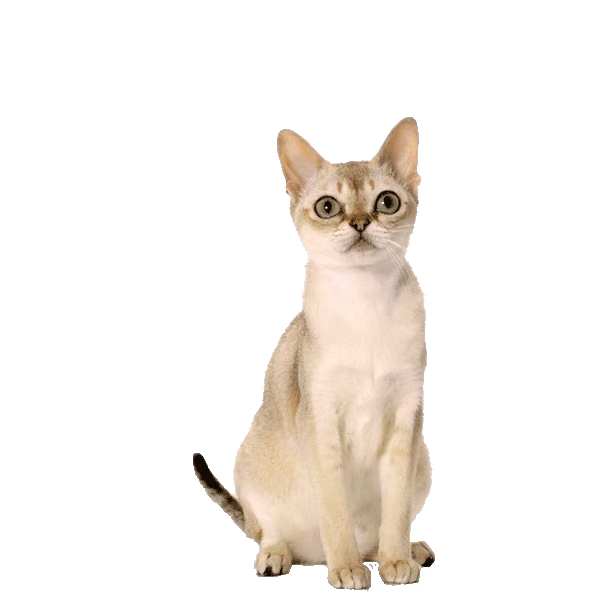
Singapura
The Singapura is one of the smallest cat breeds, prized for its curious, affectionate personality and big-eyed, pixie-like charm.
- Size
- Small
- Lifespan
- 11–15 years
- Origin
- Unknown
- Temperament
- Curious
- Standard colors
- Sable
Characteristics
Coat and grooming
How the Singapura coat is built, and what that means when you groom it.
- Coat layers
- Single coat
- Coat texture
- Smooth
- Coat length
- Short
- Shedding
- Low shedding
Singapura colors and patterns
What each club's breed standard says about every Singapura color and pattern. Point at a ruling to see the club's own wording.
Breed standards describe the Singapura in Sable. Standard patterns: Ticked tabby and Sepia.
| Color or pattern | TICA | CFA | FIFE | GCCF |
|---|---|---|---|---|
| Sable | Standard (“Sable Ticked”) | Standard (“Sepia agouti”) | Standard (“Seal sepia”) | Standard (“sepia brown”) |
| Patterns | ||||
| Ticked tabby | Standard (“Ticked tabby”) | Standard (“agouti”) | Standard (“ticked”) | Standard (“ticked”) |
| Sepia | Standard (“Sepia”) | Standard (“Sepia”) | Standard (“sepia”) | Standard (“sepia”) |
%22%3E%3Cg%20fill%3D%22none%22%20stroke%3D%22%231C1C1C%22%20stroke-width%3D%221.25%22%20stroke-linecap%3D%22round%22%20stroke-linejoin%3D%22round%22%3E%3Cpath%20d%3D%22M55.8%2023.1l-0.3%201.9M7.5%2020.6l0.6%201.7M43.9%2028.2l-0.3%201.7M39.2%2031.8l0.6%201.1M9.8%2028l-0.3%201.8M20.7%2029.6l0.1%202M39.9%2031.8l0.2%201.3M17.1%2022.1l0.7%201.1M38.7%2052.5l0.9%201.4M45.2%2051l0.6%201.2M50.4%2024.5l0.1%201.9M18.8%2054.3l0%202.1M17.3%2036l0.3%201.2M25.9%2029.2l0.2%201.6M49.4%2036.5l0.7%201.3M40.1%2025l-0.6%202.1M27.5%2025.6l0.4%201.2M8.8%2024.9l0.1%201.8M47.9%2022.8l0.5%201.3M32.8%2031.8l0.8%201.9M23.4%2050.6l-0.2%202.2M28.4%2023.9l-0.5%201.6M24.9%2040.6l0.4%201.7M58.1%2015.3l-0.5%201.7M29.6%2021.6l1.1%201.9M49.8%2029.3l0.4%202M5.8%2019.1l0%201.3M13.1%2025.3l0.6%201.5M52%2027l0.6%201.7M8%2022.4l0.5%201.1M18.4%2031.3l-0.1%201.6M24.8%2021.5l-0.6%202.1M53.6%2021.9l0.2%201.5M53.2%2022.7l0.3%201.6M33.5%2028.3l-0.6%201.7M22.9%2020.9l-0.4%201.3M57.4%2010.8l-0.2%202M48%2053.3l-0.6%201.8M17%2015.6l0.6%201.1M25.7%2031.6l0.9%201.1M22.6%2053.7l0.1%201.6M17.5%2017.5l-0.4%201.7M19.4%2046.5l0.1%201.8M27.3%2037.2l-0.6%202M12.9%2024.8l0.5%201.8M28.5%2030.1l0.3%201.5M17.7%2021.4l-0.4%201.2M18%2052.8l-0.3%201.8M9.1%2021.6l1.3%201.8M38.4%2043.5l0.1%201.9M32.1%2021.8l1.1%201.6M32%2034.5l0%201.9M53.8%2022.7l0.1%202M18.2%2028.8l0.4%201.8M19.3%2019.5l-0.2%201.3M40.4%2028.1l0.8%201.1M46.7%2037.8l-0.2%201.3M51.2%2029.1l-0.6%201.8M20.7%2031l0.1%201.9M30.6%2035.4l0.9%201.9M36.3%2021.9l-0.5%201.9M45.9%2039.6l0.1%201.8M35.5%2035.5l-0.3%201.3M43.2%2024.8l-0.2%201.9M42.8%2023.2l0.8%201.8M15.8%2026l0.8%201.5M38.2%2048.8l-0.4%201.3M35.2%2029.3l-0.6%202M42.9%2029.6l-0.1%201.2M30%2034.8l1%201.4M30.1%2027l0.6%202M45.5%2033.7l0.7%201.1M49.1%2028.9l0.5%201.4M52%2029.1l-0.6%202M29.5%2027.2l-0.6%202M55.9%2016.3l-0.5%201.7M29%2022.9l0.6%201.7M34.3%2029.2l0.4%202.1M29.4%2024.1l0.1%201.5M21.6%2040.3l-0.1%201.6M43.5%2034l0.8%201.8M46.1%2048.7l0.4%201.9M40.8%2052.9l0.4%201.5M45.9%2039.5l-0.1%202.1M7.6%2028.3l0.2%201.7M16.7%2054.8l0.7%201.2M24.8%2033.3l-0.3%201.2M25.6%2038.4l-0.1%201.9M24.4%2052.5l0.6%201.4M40.7%2047.1l0.2%202.1M37.8%2047.4l0.6%201.3M10.2%2022l0.2%202.1M7.3%2017.6l0.8%201.9M44.8%2042.9l0.4%201.1M38.2%2029l-0.1%201.9M56.6%2015.8l-0.2%201.5M38.1%2033.9l1.1%201.6M42.9%2027.2l-0.3%201.2M6%2020.9l0.7%201.1M55.5%2013.2l-0.2%201.3M19.6%2028.9l0.3%202M35.9%2034l-0.2%202.1M12.8%2016l0.2%202.1M45.9%2038.9l-0.2%201.2M46.5%2029.8l-0.3%201.7M31.1%2037l0.7%201.6M37.7%2030.8l0.8%201.6M20.5%2024.7l1.2%201.5%22%2F%3E%3Cpath%20d%3D%22M21.8%2031.8l0.7%202M12.1%2027.4l0.1%202.1M6.5%2020.9l-0.3%201.3M37.6%2048l1%201.6M47.8%2039.2l0.7%201.3M47.3%2050l-0.5%201.5M43.9%2033.6l-0.4%202.1M39.8%2032.3l-0.1%201.3M18.2%2018.3l0.1%201.5M25.1%2038.2l0.7%201.4M42.9%2028.2l0.9%201.9M17.3%2029.8l0.9%201.9M50.6%2028.2l0.5%201.9M40.1%2025.6l0%201.2M29.6%2023.7l0%201.8M57.7%2013.6l0.5%201.5M22.7%2030.1l-0.1%202.2M46.8%2049.4l0.6%201.1M47.8%2052.5l-0.4%201.6M31.5%2020.6l0.6%202M20.5%2030.6l0.6%201.6M37.3%2027.1l-0.2%201.8M36.4%2037.5l0.9%201.1M21.7%2042.2l-0.2%201.2M42.8%2022.6l0.4%201.8M37.9%2040.4l0.5%201.5M52.6%2023.4l0.4%202M34.2%2027.8l0.8%201.4M16.1%2023l1.1%201.5M55.6%2021.9l0.4%201.6M17.6%2053.4l0.9%201.5M41.9%2030l1%201.7M16.8%2054.6l0.4%202.2M40.3%2030.9l0.6%201.4M18.9%2034.3l1.3%201.6M34.5%2021.7l0.5%201.8M42.4%2036.5l1%201.8M23.3%2040.2l-0.3%201.7M21.1%2029.8l0.5%201.4M58%2010.8l0%202M41.7%2035.4l0.8%202M10.3%2021.9l-0.2%201.7%22%2F%3E%3C%2Fg%3E%3Cpath%20d%3D%22M15%2047H50M15%2051H50%22%20fill%3D%22none%22%20stroke%3D%22%231C1C1C%22%20stroke-width%3D%221.6%22%20stroke-linecap%3D%22round%22%20stroke-linejoin%3D%22round%22%2F%3E%3Ccircle%20cx%3D%2259.8%22%20cy%3D%227.8%22%20r%3D%222%22%20fill%3D%22%231C1C1C%22%2F%3E%3Cpath%20d%3D%22M12.6%2015.5l.6%204.2M15%2015.5l-.2%204.2%22%20fill%3D%22none%22%20stroke%3D%22%231C1C1C%22%20stroke-width%3D%221%22%20stroke-linecap%3D%22round%22%20stroke-linejoin%3D%22round%22%2F%3E%3C%2Fg%3E%3Cuse%20href%3D%22%23s%22%20fill%3D%22none%22%20stroke%3D%22%233B2A20%22%20stroke-opacity%3D%220.6%22%20stroke-width%3D%221%22%20stroke-linejoin%3D%22round%22%2F%3E%3Cpath%20d%3D%22M3.4%2022.3L5.4%2022.5L4.3%2024Z%22%20fill%3D%22%23E8A0B4%22%2F%3E%3Ccircle%20cx%3D%229.6%22%20cy%3D%2221.2%22%20r%3D%221.1%22%20fill%3D%22%231C1C1C%22%2F%3E%3C%2Fsvg%3E)
%22%3E%3Crect%20x%3D%220%22%20y%3D%220%22%20width%3D%2264%22%20height%3D%2264%22%20fill%3D%22%23847865%22%20fill-opacity%3D%220.7%22%2F%3E%3Cpath%20d%3D%22M5.5%2017L7.5%207L12%2015ZM14%2015L17.5%207L20%2018.5Z%22%20fill%3D%22%23847865%22%2F%3E%3Cellipse%20cx%3D%227.6%22%20cy%3D%2223.6%22%20rx%3D%225%22%20ry%3D%225.2%22%20fill%3D%22%23847865%22%2F%3E%3Crect%20x%3D%220%22%20y%3D%2244%22%20width%3D%2264%22%20height%3D%2220%22%20fill%3D%22%23847865%22%2F%3E%3Cpath%20d%3D%22M50%2027L53.5%205L64%203L64%2013L59%2024L53%2033Z%22%20fill%3D%22%23847865%22%2F%3E%3C%2Fg%3E%3Cuse%20href%3D%22%23s%22%20fill%3D%22none%22%20stroke%3D%22%233B2A20%22%20stroke-opacity%3D%220.6%22%20stroke-width%3D%221%22%20stroke-linejoin%3D%22round%22%2F%3E%3Cpath%20d%3D%22M3.4%2022.3L5.4%2022.5L4.3%2024Z%22%20fill%3D%22%23E8A0B4%22%2F%3E%3Ccircle%20cx%3D%229.6%22%20cy%3D%2221.2%22%20r%3D%221.1%22%20fill%3D%22%231C1C1C%22%2F%3E%3C%2Fsvg%3E)
| Color or pattern | TICA | CFA | FIFE | GCCF |
|---|---|---|---|---|
| Hazel | Standard (“hazel”) | Standard (“hazel”) | Standard (“hazel”) | Standard (“hazel”) |
| Copper | Standard (“copper”) | No ruling | No ruling | No ruling |
| Yellow | No ruling | Standard (“yellow”) | No ruling | Standard (“yellow”) |
| Gold | Standard (“gold”) | No ruling | No ruling | No ruling |
| Green | Standard (“Celadon green, green”) | Standard (“green”) | Standard (“brilliant green”) | Standard (“green”) |
| Blue | Disqualifying (“definite blue”) | Disqualifying (“blue”) | No ruling | No ruling |
| Aqua | Disqualifying (“aqua”) | No ruling | No ruling | No ruling |
| Color or pattern | TICA | CFA | FIFE |
|---|---|---|---|
| Pink | Standard (“pale to dark salmon”) | Standard (“pale to dark salmon”) | Standard (“pale to dark salmon”) |
What the rulings mean
- Standard
- Described by the club's breed standard.
- Disqualifying
- The club's breed standard disqualifies an animal of this colour or pattern.
Color changes
How a Singapura's colors can change over its life.
Pinkchanges toSeal
Nose · With age · from 1 to 52 weeks
Pinkchanges toBlue
Nose · With age · from 1 to 52 weeks
Pinkchanges toChocolate
Nose · With age · from 1 to 52 weeks
Pinkchanges toLilac
Nose · With age · from 1 to 52 weeks
Sources
Each ruling comes from the club's published breed standard or color list.
About the Singapura
The Singapura is Singapore's own breed, descended from the small ticked cats that lived on the island's streets and drains in the 1970s, known locally as drain cats or kucinta. No other English-speaking country can claim this cat as its own.
In the 1970s, the small, ticked cats that foraged along Singapore's drains and back lanes were unremarkable to most people who walked past them. Locally they were called longkang cats, drain cats, or kucinta, a Malay word of affection. Nobody could have predicted that these same cats would become the genetic foundation of an internationally recognised pedigreed breed bearing Singapore's own Malay name.
Singapura in Malay is Singapore. The breed carries the city's name because the original founding animals were said to come from here. That story has been contested over the decades, with questions raised about whether all the founding cats genuinely arrived from Singapore or whether some were already in the United States before the breeding programme began. What is not contested is that the cats associated with this breed look and behave like the small ticked cats that have shared Singapore's urban environment for generations.
Adults weigh between 1.8 and 3.6 kilograms, compact and muscle-dense beneath an ivory and brown ticked coat. The eyes are notably large, almond-shaped, and expressive. The ears are wide and prominent. This is a cat that looks alert because it is alert, taking in everything happening in the room with an observant interest it never outgrows.
For Singaporeans living in HDB flats, where roughly 80 percent of the population resides, this small, quiet, low-shedding cat is a genuinely practical choice. The Singapore Cat Club (SCC) maintains records of local breeders, and the Animal and Veterinary Service (AVS) sets the regulatory framework governing pet ownership across the island.
| Attribute | Detail |
|---|---|
| Origin | Singapore (founding story disputed; origin listed as unknown) |
| Local name | Drain cat, longkang cat, kucinta |
| Size | Small (1.8 to 3.6 kg) |
| Lifespan | 11 to 15 years |
| Group / role | Shorthaired companion cat |
Who it suits
The Singapura suits Singapore households of any size, from a one-room HDB flat to a landed house in Bukit Timah, provided the cat receives daily attention and interaction. It is well suited to multi-cat households, which helps in smaller spaces where a second companion animal provides company during working hours. Homes that are consistently empty from morning to evening may find this breed restless without a companion animal present.
History and origin
The Singapura's story begins on the streets of Singapore, travels to the United States for formal development, and returns in the 1990s in a moment of national pride and conservation interest.
Small ticked cats have lived alongside Singaporeans for as long as anyone can remember. They sheltered in drains, foraged near hawker centres, and moved through the city in the way that common cats do in tropical port cities across Southeast Asia. In the 1970s, American breeders brought some of these cats, or cats claimed to come from this population, to the United States and began the breeding programme that produced the registered Singapura breed.
The founding history became a point of controversy. Documents surrounding the original imports were disputed. Some accounts proposed that the founding cats had been in the United States before any Singapore connection was established. International registries investigated and ultimately listed the verified origin as unknown, a position that reflects the inconclusive evidence rather than any discredit to the breed.
The controversy reached Singapore itself in the 1990s. The Singapore Tourism Board had adopted the Singapura as a national mascot for promotional purposes, and the historical questions created some discomfort. What followed was a period of heightened local interest in the breed, with efforts made to document the population of small ticked cats still living on the island and to consider what conservation of this type might look like.
Today the Singapura is bred by a small number of dedicated SCC-registered breeders in Singapore. The breed is a source of quiet pride, a pedigreed animal that carries the island's name in every registry worldwide. Even the ongoing origin question, which initially seemed damaging, has become part of the story rather than a conclusion to it.
Appearance
The Singapura is small and dense, with one recognised coat colour in a ticked pattern, prominent almond-shaped eyes, and ears that suit the alert, engaged expression this breed carries throughout life.
The Singapura looks small because it is small, one of the tiniest pedigreed cats in existence. What surprises people who handle one for the first time is how solid it feels. The body is compact and well muscled, the coat lies flat, and the cat carries itself with a quiet confidence. The rounded head holds wide, open ears and the breed's most striking feature: its eyes, which are very large relative to the face, almond-shaped, and full of expression.
| Feature | Standard |
|---|---|
| Height | Approximately 15 to 20 cm at the shoulder |
| Weight | 1.8 to 3.6 kg |
| Coat | Short, fine, close-lying, ticked tabby |
| Colour | Sepia agouti: warm ivory base with dark brown ticking |
| Eyes | Large, almond-shaped; hazel, green, or yellow |
Coat and colour
The Singapura has one accepted coat pattern: sepia agouti ticking. Each hair carries alternating bands of ivory and dark brown, producing a warm, layered coat that changes subtly with the light. Faint tabby markings appear on the face, and the underside is lighter than the back. The coat lies very close to the skin and requires minimal grooming, which in Singapore's year-round tropical humidity is a practical attribute. No deep conditioning, no de-matting, no specialist grooming appointments: a weekly brush is sufficient.
Temperament
The Singapura is affectionate and sociable, deeply attached to its household, and maintains a kitten-like playfulness throughout its life in Singapore's warm, busy homes.
Singapore households move quickly. Work, school, family obligations, and the city's intense social pace leave limited time for high-maintenance pets. The Singapura is not high-maintenance. It is present, affectionate, and engaged, but it is not loud or destructive about any of this. It communicates in soft murmurs and chirps. It positions itself near whoever is home, joins in when invited, and retreats to its perch or warm corner when the household quietens.
For HDB flat dwellers, where keeping certain breeds is restricted and noise nuisance is a real concern, the Singapura is a thoughtful choice. It is small enough to live comfortably in a smaller flat, quiet enough to avoid complaints from neighbours through shared walls, and sociable enough to remain a genuinely engaging companion despite its compact size.
The breed is cooperative with other cats, which is helpful in flats where having two cats together provides mutual company during Singapore's typical long working days. It is generally at ease with calm dogs and responds well to children who interact with it gently.
| Trait | Rating |
|---|---|
| Affection | 5 |
| Energy | 4 |
| Trainability | 4 |
| Vocalness | 2 |
| Shedding | 2 |
Care and grooming
The Singapura is easy to groom and well matched to Singapore's climate, but needs daily play, company, and regular ear checks given the year-round humidity.
Grooming
- Brush the short coat weekly with a soft rubber mitt or bristle brush.
- Trim claws every two to three weeks.
- Check ears each week: Singapore's humidity can encourage moisture and wax accumulation in the ear canal, which can progress to infection if left unaddressed.
- Start tooth brushing in kittenhood and schedule professional dental checks as your vet advises.
- Bathing is rarely necessary given the coat's short, self-maintaining nature.
Exercise
- Offer at least two interactive play sessions daily with a wand toy or thrown ball.
- Provide a cat tree or wall-mounted shelves so the cat can climb, observe, and perch above floor level.
- Rotate toys every week or two to hold the interest of a quick, perceptive mind.
- Keep play sessions in air-conditioned or well-ventilated rooms during the hottest parts of the day.
Environment
The Singapura is built for Singapore. The tropical climate that produced its ancestors is the same climate it lives in here: warm, humid, and consistent year-round. An air-conditioned room provides a comfortable retreat from peak afternoon heat, and a window perch with a view over the corridor, void deck, or street keeps an alert cat entertained between play sessions. HDB flat owners should verify current AVS pet guidelines, as regulations on breeds and pet limits in public housing are periodically updated.
Nutrition and feeding
Careful portioning of a high-protein complete diet suits this small cat's frame, with wet food particularly valuable for hydration in Singapore's tropical conditions.
Singapore has excellent access to quality cat food from local and international brands, available through major pet chains, specialty stores, and online platforms. For the Singapura, choose a complete food listing a named animal protein first. The breed's small size means calorie requirements are modest, and even a slightly generous hand at feeding can translate to weight gain on a 2-kilogram frame.
Wet food is the more practical choice in Singapore's heat: it adds directly to daily fluid intake, supporting kidney and urinary health over a cat's lifetime. A ceramic water fountain placed away from the food station encourages more consistent drinking than a static bowl.
| Life stage | Amount per day | Meals |
|---|---|---|
| Kitten (to 12 months) | Per label, fed to appetite | 3 to 4 |
| Adult (1 to 7 years) | Approximately 100 to 140 g wet, or label amount dry | 2 |
| Senior (7 years and older) | Adjust to body condition and activity level | 2 |
Treats and supplements
Limit treats to a small share of the day's total intake. A cat eating a complete commercial diet does not ordinarily need supplements. Before adding fish oil, joint support, or any other product, discuss it with a veterinarian from a licensed Singapore clinic. The AVS maintains a list of licensed veterinary practices across the island.
Health and lifespan
The Singapura is healthy and typically lives 11 to 15 years; Singapore's excellent veterinary infrastructure supports thorough preventive care throughout the breed's life.
The Singapura is generally a healthy breed. The small founding gene pool means inherited conditions are present and that health screening before breeding is not optional. Singapore's veterinary infrastructure is among the best in Southeast Asia. Licensed practices are accessible across the island, specialist referral is available, and the standard of feline medicine here meets international levels.
SCC-registered breeders are expected to maintain health testing standards. The AVS provides guidance on responsible pet ownership, including vaccination requirements, microchipping obligations, and licensing for certain exotic or restricted breeds.
| Condition | Signs | Note |
|---|---|---|
| Pyruvate kinase deficiency (PKDef) | Lethargy, pale gums, anaemia-related weakness | Inherited; DNA test available; verify both breeding parents are tested before purchasing a kitten |
| Uterine inertia | Labour stalls in queens; kittens cannot be delivered unaided | Associated with small body size; veterinary attendance at whelping is essential |
| Dental disease | Odour, drooling, reluctance to eat | Managed with tooth brushing and professional cleanings from your Singapore vet |
Preventive care
- Follow the vaccination schedule recommended by your licensed Singapore veterinarian.
- Maintain flea and parasite prevention appropriate to the local tropical environment.
- Schedule annual health checks; twice-yearly from around age seven.
- Include dental assessment in every routine veterinary visit.
- Ask SCC-registered breeders for PKDef DNA test results for both parents.
Training
Quick-witted and people-oriented, the Singapura picks up household rules and simple training goals faster than most cats, making it an unusually cooperative companion in a Singapore home.
The Singapura is attentive in a way that makes structured training possible and even enjoyable. It notices patterns, links actions to outcomes, and responds consistently to cues that are delivered clearly and positively. For Singapore owners in HDB flats where scratched walls or furniture is a shared-property concern, teaching scratching post habits early is genuinely important and easily achieved with this breed.
The SCC show environment also rewards a well-handled, carrier-habituated Singapura. A cat trained to accept grooming, handling, and confinement calmly from kittenhood performs better and experiences less stress at events. Starting that conditioning from the first week in the home is the most efficient approach.
Basics
- Position a clean litter box in a quiet, low-traffic corner before the kitten arrives home.
- Direct every scratch toward an appropriate post and reward the cat immediately when it uses it.
- Say the cat's name before every positive interaction until the response is automatic.
- Introduce one new behaviour at a time in brief, five-to-ten-minute sessions.
- Leave the carrier accessible with familiar bedding inside between journeys to make it a neutral object in the cat's environment.
Breeding
Singapore's homegrown breed produces small litters and presents whelping challenges for queens, making responsible SCC-registered breeding a carefully managed, veterinarian-supported process.
Singapuras reach sexual maturity at roughly 7 to 12 months. SCC-registered Singapore breeders wait until physical maturity is fully established before mating a female for the first time, typically at 15 to 18 months. Gestation runs 63 to 67 days. Average litters of two to three kittens are typical, meaning that even in the breed's nominal homeland, kittens are not plentiful.
The queen's compact body is associated with a higher-than-average incidence of uterine inertia, where labour commences but contractions fail to deliver the kittens. Singapore's licensed veterinary practices, including those with 24-hour emergency facilities, are the resource breeders depend on at whelping time. Planning veterinary support before the due date, not after labour starts, is the standard for responsible breeders here.
DNA testing for pyruvate kinase deficiency must cover both parents in any breeding pair. Kittens remain with their mother for at least 12 weeks before going to new homes. The SCC provides breeders with guidance on registration, health testing expectations, and the standards that govern responsible breeding of this breed within Singapore.
| Metric | Value |
|---|---|
| Sexual maturity | About 7 to 12 months |
| Gestation | 63 to 67 days |
| Average litter size | 2 to 3 kittens |
| Weaning age | About 8 weeks |
| Recommended rehoming age | 12 weeks or older |
Registering your Singapura under the new cat rules
With cat licensing phased in from 2024, a free United Pet Club record keeps your Singapura's chip pointing at your current mobile.
Singapura registration and microchipping in Singapore
Start the paperwork where it costs nothing: your Singapura's name, her colouring, a photo, your contact details, saved. The profile lasts her lifetime, takes any chip number the clinic issues, and never sends a bill. Cat registration is the five-minute version of responsible ownership.
The chip under your Singapura's skin is a number; the registry is what makes it a phone call. United Pet Club keeps that registry entry free for life, accepts every brand, and never charges when your details change. Microchip registration first, then the free account wraps up the profile.
How do I register my Singapura in Singapore?
Create a free United Pet Club account, add her name, colouring, and a photo, and save the profile. The lifetime plan holds it at no cost for her whole life, flat cat or wanderer.
How do I register my Singapura's microchip?
Enter the 15-digit number from the clinic's paperwork into your free account with your current contact details. The lifetime plan never charges for the record or for updates, whatever the chip brand.
Do cats need to be licensed and chipped in Singapore?
Yes, AVS is phasing in licensing and microchipping for pet cats from 2024. The licence answers the rules; the United Pet Club record answers the scanner, and it stays free for your Singapura's whole life.
What does it cost to register a Singapura?
Not a cent. Profile, microchip registration, and all future updates are covered by the free lifetime plan, with nothing to renew.
Frequently asked questions
Questions from Singapore residents about the Singapura's origin, HDB suitability, AVS regulations, care in tropical conditions, and how to find a kitten here.
Is the Singapura really from Singapore?
The founding story connects the breed to Singapore's drain cat population in the 1970s. The exact origin is officially listed as unknown due to contested historical documentation, but the cats look and behave like the small ticked cats still present in Singapore today. The breed carries Singapore's Malay name and is a recognised part of the country's cultural identity.
Can I keep a Singapura in an HDB flat?
HDB rules permit cats of specific types; check the current AVS guidelines for any updates, as regulations change periodically. The Singapura is small, quiet, and low-shedding, which makes it among the most practical pedigreed cats for HDB living from a practical standpoint.
Where do I find an SCC-registered Singapura breeder in Singapore?
Contact the Singapore Cat Club (SCC) directly for a current list of registered breeders. Given the small number of breeding pairs active on the island, expect waiting lists and limited availability at any given time.
How does Singapore's climate affect the Singapura?
Very comfortably. The breed's roots are in a tropical city, and Singapore's year-round warmth is its natural climate. Ear health deserves attention given the humidity. Beyond that, this is a cat that wears the tropics well.
Is the Singapura suitable for a busy Singapore household?
Yes, with a caveat. The breed handles Singapore's working-day rhythms well if a second cat or regular lunchtime check-in provides some company. Long days entirely alone are harder for a breed this socially oriented.
How big does a Singapura get?
Adults weigh 1.8 to 3.6 kilograms and stand about 15 to 20 centimetres at the shoulder. Despite the compact size, the body is muscular and feels denser than it looks. The cat moves with noticeable energy and speed.